Best rod leash for kayak fishing
There's nothing quite like the freedom of kayak fishing on a serene Vermont lake or a gentle river, the water lapping softly as you glide along. But that feeling can turn to sheer panic in an instant if your prized fishing rod, the one that’s landed countless Green Mountain lunkers, slips overboard and disappears into the depths. This guide is all about preventing that heartache, helping you choose and use the best rod leash to keep your gear secure and your focus on the fish, not on retrieving lost equipment.
Why You Absolutely Need a Rod Leash for Kayak Fishing in Vermont
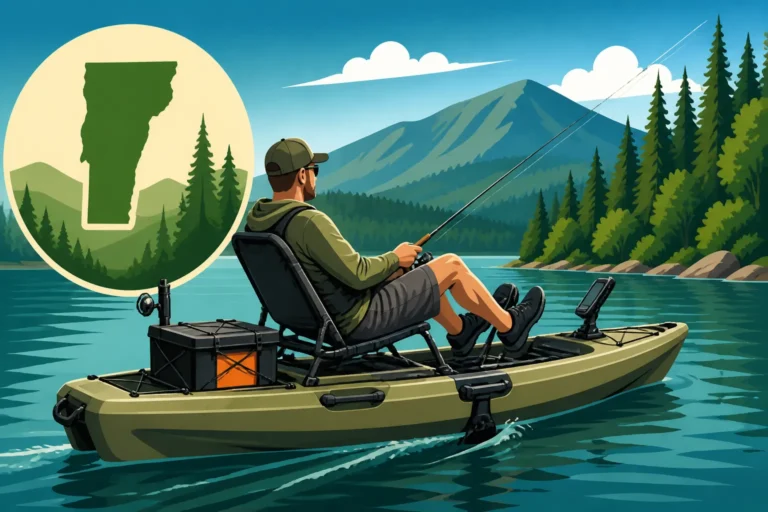
Kayaks offer an incredible, intimate way to experience Vermont's diverse waterways, from the vastness of Lake Champlain to the winding currents of the Winooski River. However, with that closeness to the water comes a unique set of challenges, and one of the biggest is keeping your gear from going for an unplanned swim. A rod leash might seem like a small accessory, but it's a critical piece of safety equipment for any serious kayak angler.
The Heartbreak of a Lost Rod
Let's be honest, we've all had those moments where we've fumbled a rod, or a big fish has pulled it unexpectedly from our grasp. In a larger boat, it might just clatter to the deck, but in a kayak, it's often a one-way ticket to the bottom. Imagine hooking into a monster Lake Champlain walleye or a powerful Battenkill River trout, and in the heat of the moment, your rod gets pulled right out of the rod holder or your hand. The sinking feeling in your stomach as you watch it disappear is truly gut-wrenching.
Beyond the immediate frustration, there's the significant financial blow. Quality fishing rods and reels aren't cheap, and replacing them can put a serious dent in your fishing budget. Then there's the sentimental value – perhaps it was a gift, or the rod you caught your personal best on. Losing it isn't just about the money; it's about losing a cherished tool and the memories tied to it. Furthermore, it completely disrupts your fishing trip, forcing you to either cut it short or try to make do with suboptimal gear, turning a relaxing day into a stressful ordeal.
Safety and Practicality on the Water
The benefits of a rod leash extend far beyond simply preventing loss. Think about those moments when you need both hands free: paddling to a new spot, retying a difficult knot, or, most critically, landing a feisty fish. Without a leash, you might find yourself precariously balancing your rod between your knees or trying to tuck it under an arm, which is not only inefficient but also dangerous. A rod leash allows you to secure your rod and focus entirely on the task at hand, knowing it's not going anywhere.
Moreover, a loose rod in a kayak can become a safety hazard. It can get tangled in your paddle, snag on submerged branches, or even poke you in the eye during a sudden movement. In choppier waters, like a breezy day on Lake Champlain, an unsecured rod can bounce around violently, potentially damaging itself or other gear, or worse, knocking something else overboard. By having your rod tethered, you maintain a more organized and safer fishing platform, which is especially crucial when navigating currents in rivers like the Lamoille or Missisquoi.
Types of Rod Leashes: Finding Your Perfect Match
Just like there's a range of kayaks for different fishing styles, there's also a variety of rod leashes designed to meet specific needs. Understanding the differences can help you pick the one that best suits your fishing adventures across Vermont's diverse waters. It's not a one-size-fits-all world, and what works perfectly for one angler might not be ideal for another.
Coil Leashes: The Classic Choice
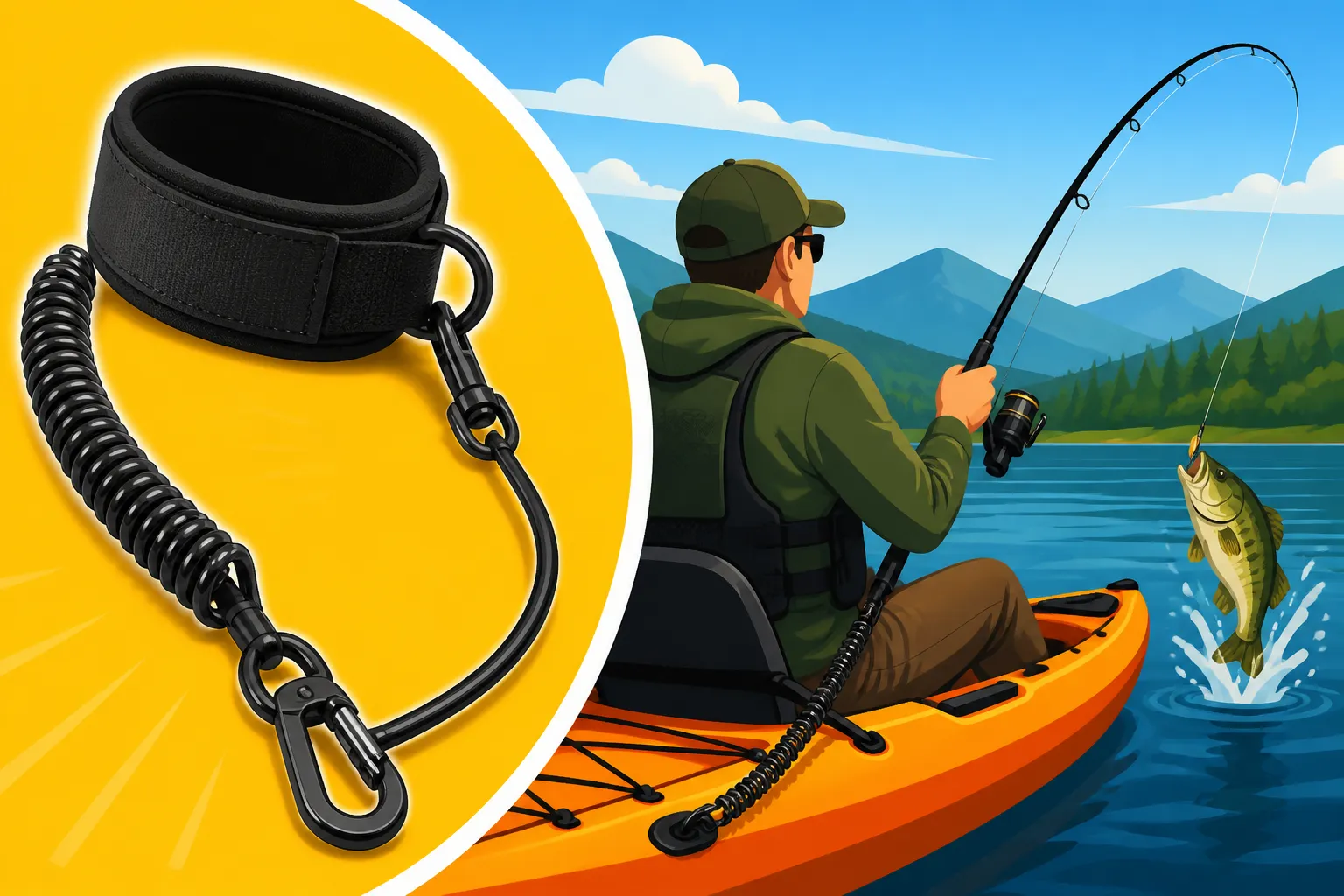
Coil leashes are arguably the most common type you'll encounter. They're typically made from a durable plastic or polyurethane coil that stretches significantly when pulled but retracts to a compact size when not under tension. Many anglers appreciate their spring-like action, as it keeps the leash relatively out of the way until needed, reducing clutter in the often-tight confines of a kayak. You'll often find these with a small carabiner on one end and a loop or Velcro strap on the other.
These leashes are great for general-purpose kayak fishing on calmer lakes and ponds, providing enough give to allow for casting and moving the rod around without feeling overly restricted. However, their elasticity can be a double-edged sword. In situations with strong currents or if a very large fish makes a sudden, powerful run, the constant stretching and recoiling might eventually wear down the coil's integrity. Also, while they retract, they can still sometimes get snagged on other gear or even tangle around your paddle if not positioned carefully. Brands like those found at Bass Pro Shops often carry a wide selection of these, usually in bright, high-visibility colors.
Webbing Leashes: Simple and Strong
Webbing leashes offer a more direct and often more robust connection. These are typically made from flat nylon or polyester webbing, similar to seatbelt material, and feature buckles or clips for attachment. Unlike coil leashes, webbing leashes have a fixed length, meaning there's no stretch. This provides an incredibly secure connection, making them a favorite for anglers who prioritize brute strength and minimal play in their tethering system.
The main advantage here is sheer durability and reliability. A webbing leash won't lose its elasticity over time because it never had any to begin with. They're excellent for use in strong river currents, such as the White River or Otter Creek, where you absolutely cannot afford for your rod to be swept away. They're also preferred by anglers targeting larger, more powerful species that could potentially put extreme strain on a coil leash. The downside is their fixed length can sometimes feel restrictive, and you need to be mindful of where you attach them to ensure they don't impede your casting motion. You might need to experiment with different lengths or attachment points to find the sweet spot.
DIY Solutions and Hybrids
For the resourceful angler, or those with very specific needs, going the DIY route or creating a hybrid leash can be a viable option. A homemade leash often involves using sturdy cordage like paracord, bungee material, or even old climbing rope, combined with marine-grade carabiners or clips. The benefit here is complete customization – you can tailor the length, strength, and attachment methods precisely to your kayak and rod setup. This is particularly appealing if you have a unique rod holder or prefer a very specific anchor point on your Best Kayak for Lake Champlain.
However, a word of caution: when dealing with valuable fishing gear and potentially dangerous situations on the water, reliability is paramount. If you opt for a DIY leash, ensure you use high-quality, weather-resistant materials and practice strong knot-tying techniques. Test its strength thoroughly before entrusting it with your favorite rod on a serious fishing trip. Some anglers also create hybrid leashes, for example, using a short piece of webbing for the rod connection for strength, and then connecting that to a short coil section for a bit of flex. This can offer the best of both worlds, combining the robust security of webbing with a little bit of shock absorption.
Key Features to Consider When Choosing a Rod Leash
Selecting the right rod leash isn't just about picking between a coil or webbing. There are several subtle but important features that can make a huge difference in how practical and effective your leash is on the water. Thinking through these details will help you avoid frustrating snags and ensure your leash is a helpful tool, not a hindrance.
Attachment Points and Mechanisms
The way a rod leash attaches to both your rod and your kayak is paramount. On the rod end, common attachments include Velcro straps, quick-release buckles, or small loops that can be knotted. Velcro straps are popular because they're easy to use and can quickly secure around the butt section of most rods. However, ensure the Velcro is robust and won't slip under tension, especially when battling a strong fish. Some leashes have a small clip designed to attach directly to a reel seat or a designated leash point on the rod. For ultimate security, a leash that you can girth hitch or knot directly to the rod can be very reliable, though less convenient for quick changes.
On the kayak end, you'll typically find carabiners, clips, or specialized connectors designed for d-rings, padeyes, or even scupper holes. A marine-grade carabiner is often a solid choice, offering secure attachment and easy clipping onto existing deck rigging or seat frames. Ensure any clips or carabiners are made of corrosion-resistant materials, especially if you plan to fish in Lake Champlain, which has slightly saline water, or if your gear will be exposed to persistent moisture. The ability to quickly detach the leash from the kayak can be crucial if you need to pass a rod to a fishing partner or transport your gear efficiently after a successful outing. Many options can be found on online retailers like Amazon, often with detailed descriptions of their attachment mechanisms.
Length, Strength, and Material
The ideal length of your rod leash is a delicate balance. Too short, and it will restrict your casting, reeling, and ability to move the rod freely in the kayak. Too long, and it becomes a tangling hazard, potentially getting caught on your paddle, your feet, or other gear. A good rule of thumb is a length that allows you full range of motion for casting and handling a fish, but keeps the rod safely tethered close to the kayak if it goes overboard. For most kayak anglers, a leash that extends to about 3-4 feet when fully deployed (for coil leashes) or a fixed length of 2-3 feet (for webbing leashes) tends to work well.
Material strength is another critical factor. The leash needs to be strong enough to withstand the pull of a struggling fish or the force of a rod being snatched from your hand without breaking. Look for materials that are rated for outdoor use, including UV resistance to prevent degradation from sun exposure, and resistance to abrasion from rubbing against the kayak or other gear. Nylon, polyester, and quality polyurethane are common and reliable materials. Remember, the leash is only as strong as its weakest link – check the stitching, crimps, and clips carefully.
Visibility and Ergonomics
While perhaps not as critical as strength, visibility and ergonomics can significantly improve your experience. Brightly colored leashes (think neon yellow, orange, or green) are highly visible, which can be a huge advantage if you accidentally drop the rod in murky water or during low light conditions. If your rod goes overboard and the leash is a high-visibility color, it's much easier to spot and retrieve before it potentially sinks or drifts too far.
Ergonomics refers to how comfortable and unobtrusive the leash is to use. Does it tangle easily? Does it get in the way of your paddle stroke? Is it easy to attach and detach with one hand? A well-designed leash should blend seamlessly into your fishing routine, requiring minimal thought once attached. Consider how it feels in your hand, if it has any sharp edges, and how easily it can be stored when not in use. Some leashes come with small pouches or wraps to keep the coil tidy when packed away.
Setting Up Your Rod Leash for Optimal Kayak Fishing in Vermont
Getting the right rod leash is only half the battle; knowing how to properly set it up on your kayak for maximum effectiveness and minimal interference is equally important. A poorly rigged leash can be more of a nuisance than a help, so let's dial in the details for smooth sailing (and fishing!) on Vermont's beautiful waters.
Strategic Placement on Your Kayak
Where you attach the leash to your kayak can dramatically impact your fishing experience. The goal is to find an anchor point that keeps the leash out of your way while paddling and casting, yet remains accessible and secure should a rod go overboard. For most sit-on-top kayaks, common attachment points include D-rings near the seat, padeyes along the gunwales, or even bungees on the deck rigging. If your kayak has a rudder system, sometimes the attachment points for the rudder lines can be repurposed for a leash. For sit-in kayaks, the rim of the cockpit or internal anchor points might be suitable.
Consider your primary fishing style. If you primarily troll, you might want your leashes attached near your flush-mount rod holders in the stern. If you're actively casting, a point closer to the cockpit, perhaps on the side rail or seat frame, might be better to allow for full range of motion. Test different placements on shore before you hit the water. Sit in your kayak, perform casting motions, and simulate reeling in a fish to see if the leash snags or restricts you. The last thing you want is a leash that gets tangled around your Best Trolling Motor for a Fishing Kayak or impedes your paddle stroke when you need it most.
Attaching the Leash to Your Rod
The rod end of the leash needs to be secured in a way that is both steadfast and doesn't compromise the rod's function or balance. The butt section of the rod, just above the reel seat, is often the most practical and secure place. Using a Velcro strap or a small loop around this part of the rod allows the reel to operate freely and doesn't interfere with the rod's flex or action. Avoid attaching the leash to the reel itself, as this can put undue stress on the reel's components or interfere with its drag settings.
Some rods even come with a small, built-in loop specifically for a leash, which is a fantastic feature. If your leash has a clip, ensure it's a secure one that won't accidentally open. For webbing leashes or those with a loop, a simple girth hitch or a snug knot around the rod butt can be incredibly reliable. Always double-check that the attachment is tight and won't slip, but also that it can be reasonably removed if you need to quickly swap rods or hand one off. Having a backup method or a small pair of pliers on hand can be useful, just in case. Consider checking out fishing forums or YouTube for visual guides on how various anglers secure their leashes; you might pick up some clever tricks.
Maintenance and Care
Like all fishing gear, rod leashes require a bit of care to ensure their longevity and reliability. After each trip, especially if you've been out on Lake Champlain or a muddy river, give your leash a quick rinse with fresh water. This helps remove salt, dirt, and grit that can degrade the material or jam the clips over time. Pay close attention to any metal components, as corrosion can weaken them.
Regularly inspect your leash for signs of wear and tear. Look for fraying in webbing, cracks or kinks in coil material, stretched-out springs in clips, or any signs of UV damage like discoloration or brittle spots. If you notice significant wear, it's far better to replace the leash proactively than to wait for it to fail when a trophy fish is on the line. Proper storage also helps: keep your leashes untangled and out of direct sunlight when not in use. Coiled leashes can benefit from being stored in a relaxed state rather than constantly stretched, to maintain their elasticity. Taking these small steps will ensure your rod leash is ready to perform when you need it most, helping you focus on the How to Catch Smallmouth Bass in Vermont Lakes rather than worrying about your gear.
| Leash Type | Pros | Cons | Ideal For | Common Attachment to Kayak | Common Attachment to Rod |
|---|---|---|---|---|---|
| Coil Leash | Expands/retracts, less clutter, often high-visibility | Can tangle, may lose elasticity, less brute strength | Calm lakes, general casting, lighter tackle | Carabiner, quick-clip | Velcro strap, small loop |
| Webbing Leash | Very strong, durable, no stretch, reliable | Fixed length can be restrictive, more prone to snagging | Rivers, rough water, heavy tackle, trolling | Carabiner, robust clip, fixed knot | Girth hitch, secure knot, strong buckle |
| Hybrid/DIY | Customizable length/strength, specific needs | Requires skill, potential for weaker points, time-consuming | Unique setups, specific conditions, experienced users | Varies (e.g., rope, bungee, clips) | Varies (e.g., custom loops, knots) |
This article is for general informational purposes only and does not constitute professional advice. Laws, prices and regulations vary by location and change over time. Consult a qualified professional for guidance on your specific situation.