Non-native trout species stocked in Vermont
It's easy to get a little confused when you're thinking about trout fishing in Vermont. With its pristine waters and stunning mountain landscapes, you might assume every trout you reel in is a wild, native brook trout. But the reality is a bit more nuanced, and understanding the differences between Vermont's native and non-native trout species, especially those that are regularly stocked, can really enhance your angling experience and ensure you're fishing responsibly. This guide will walk you through the non-native trout that call many Vermont waters home, why they're here, and how to identify them.
Understanding Vermont's Trout Landscape Beyond the Natives
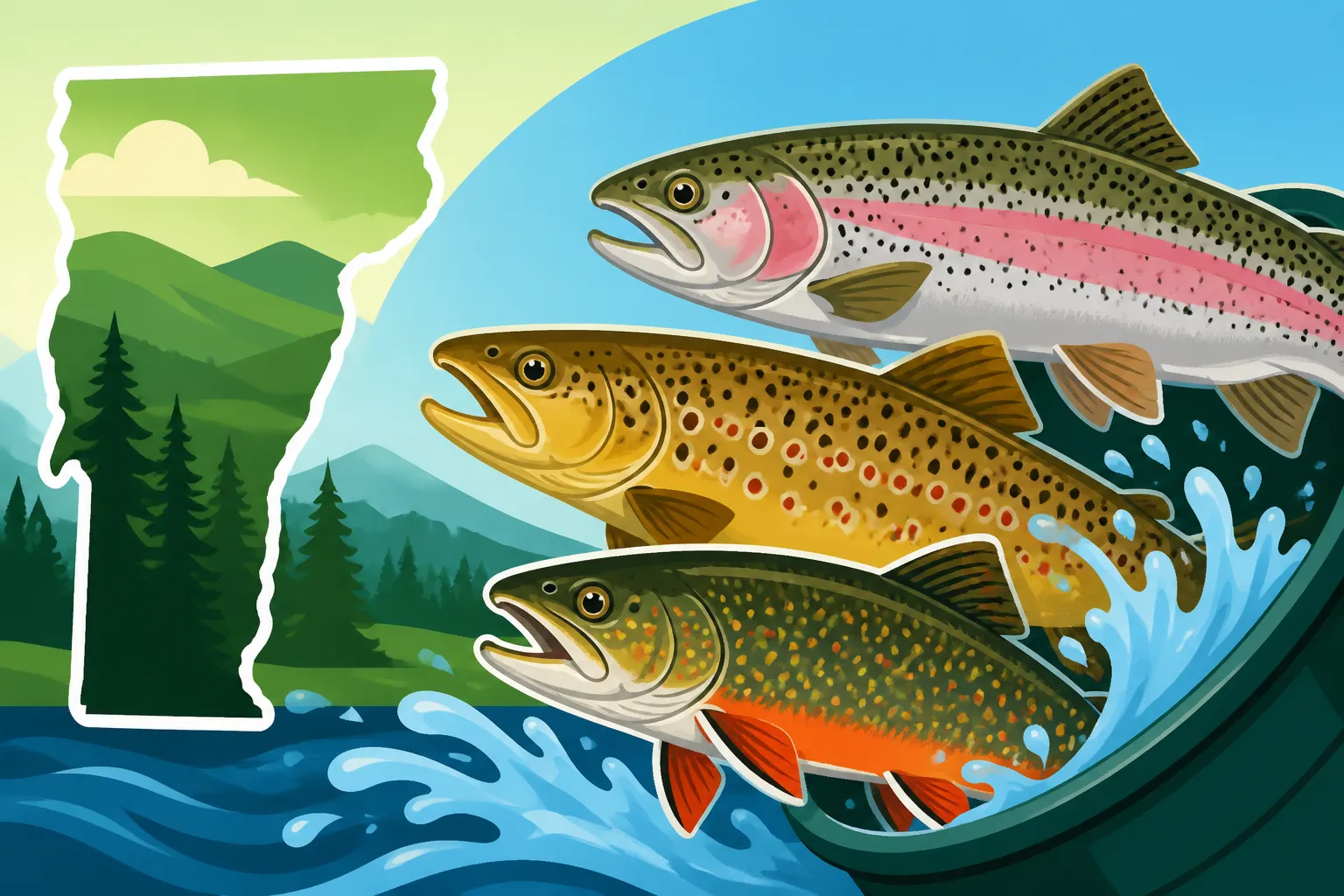
When we talk about trout in Vermont, many folks immediately picture the vibrant, speckle-sided brook trout, the state's official coldwater fish. And for good reason – they're magnificent creatures. However, the Green Mountain State's aquatic ecosystems are also home to a couple of other popular trout species that aren't native to the region but have been introduced over time: rainbow trout and brown trout. These species play a huge role in providing diverse and exciting fishing opportunities across the state, especially in waters that might not naturally sustain robust populations of native brook trout.
The reasons for introducing non-native trout are multifaceted. Sometimes, it's about providing a fishery in waters where the habitat has been altered and no longer supports native species as strongly as it once did. Other times, it's simply about meeting angler demand for a different kind of fight or a different fishing experience. These stocked fish are often easier to catch, especially for beginners or families, and they help relieve pressure on more sensitive native populations in other areas. It's a careful balancing act, managed by the Vermont Fish & Wildlife Department, to ensure both conservation and recreation are addressed.
Rainbow Trout: The Colorful and Energetic Stocker
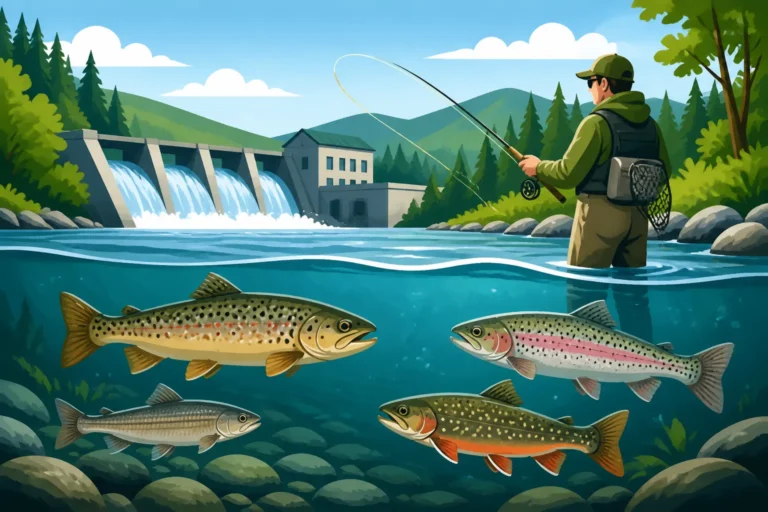
Rainbow trout are probably the most recognizable of the stocked trout species for many anglers. Known for that distinctive iridescent pinkish-red band running along their flanks, which can intensify during spawning season, they're truly beautiful fish. They also have small, dark spots scattered over their bodies, fins, and tail, which is typically squared or slightly forked. What makes rainbow trout so popular with anglers isn't just their looks; it's their spirited fight. They're known for acrobatic jumps and powerful runs when hooked, making for an exhilarating experience.
You'll find rainbow trout stocked in a wide variety of Vermont waters, from many of our smaller ponds and lakes to larger rivers and streams. They're quite adaptable and can thrive in diverse conditions, though they generally prefer cool, clean water with good oxygen levels. Many state park ponds and easily accessible rivers are prime spots for catching stocked rainbows. Anglers often target them right after stocking events, when they are still adjusting to their new environment and are quite eager to bite. If you're looking for where these beauties are planted, you'll want to check the Vermont Fish Stocking Search Tool, Explained for specific locations and dates.
When it comes to fishing for rainbows, they're not usually picky eaters, especially when fresh from the hatchery. Worms, corn, PowerBait, and small spinners or spoons are often incredibly effective. Fly anglers will find success with attractor patterns, nymphs, and streamers. They offer a fantastic opportunity for anglers of all skill levels to enjoy consistent action, which is a big part of why the state continues its Rainbow Trout Stocking in Vermont program.
Brown Trout: The Wary European Import
Brown trout, originally native to Europe and western Asia, have earned a reputation among anglers for being cunning, elusive, and often growing to impressive sizes. Their appearance can vary widely depending on their habitat, but they typically have a golden-brown or olive-brown body, often with larger, sparse dark spots, some of which are surrounded by a pale halo, and frequently distinct red or orange spots along their sides. Their tail is usually square or slightly forked, and may have a few spots but generally fewer than a rainbow's. They often blend in beautifully with rocky or woody stream bottoms, making them masters of camouflage.
Unlike the often-eager rainbow, brown trout are notorious for their wariness and can be quite a challenge to catch, especially larger, wilder specimens. They thrive in larger rivers and streams, and some of Vermont's bigger lakes, where they can find ample cover like undercut banks, submerged logs, and deep pools. They're also more tolerant of warmer water temperatures than brook trout, which allows them to inhabit a wider range of Vermont's waterways. You'll often find them alongside rainbow trout in many of the same stocked rivers, but they tend to be much more sensitive to pressure and will seek out deeper, more secluded lies.
Fishing for brown trout requires a bit more finesse and patience. They're less likely to fall for brightly colored, aggressively presented baits. More natural presentations with live bait like minnows or nightcrawlers, or artificials that mimic their forage (think small crankbaits, jerkbaits, and natural-colored spinners), tend to work best. Fly fishing for browns often involves carefully presented nymphs, emergers, and streamers, especially during low light conditions or when they're actively feeding on specific hatches. Learning about the Brown Trout Habits in Vermont Streams can give you a real edge when pursuing these challenging but rewarding fish.
The Role of Stocking Programs in Vermont
The Vermont Fish & Wildlife Department manages an extensive fish stocking program that's vital for maintaining robust fisheries across the state. This program isn't just about putting fish in the water; it's a carefully planned effort to enhance fishing opportunities, support local economies, and sometimes, to introduce or re-establish populations where they might have declined. While native brook trout are also stocked in certain areas, non-native species like rainbow and brown trout make up a significant portion of these efforts, especially in accessible waters popular with the general public.
These stocking programs provide numerous benefits. For one, they create a reliable source of fish for anglers, which is especially important in areas heavily fished or where natural reproduction might be limited. This takes pressure off wild populations in more pristine, remote areas. Secondly, by stocking different species, the department offers a variety of fishing experiences, catering to different angler preferences. Some folks love the fight of a rainbow, while others prefer the challenge of a brown. It's all about providing quality recreation for residents and visitors alike, ensuring that there's always something biting in Vermont.
Of course, there's always a delicate balance to strike between stocking non-native fish and protecting native ecosystems. The department conducts careful assessments to ensure that stocked fish don't negatively impact wild populations or introduce diseases. They focus stocking non-native trout primarily in waters where native populations are already absent, sparse, or where the non-native species have proven to coexist without major issues. It's a dynamic approach that seeks to maximize recreational value while minimizing ecological risk.
Where and When Non-Native Trout are Stocked
Stocking is a year-round effort for the Vermont Fish & Wildlife Department, but certain species and waters follow predictable seasonal patterns. Non-native trout, particularly rainbows, are often stocked in spring and fall, when water temperatures are cool and conducive to their survival and dispersal. You'll typically find them in "Tier 1" waters – those easily accessible lakes, ponds, and rivers that are popular with anglers and can handle a good amount of fishing pressure.
To stay on top of where and when the stocking trucks are rolling, the best resource is always the Vermont Fish & Wildlife Department's official website. They usually have a searchable database or a detailed schedule outlining which waters will receive fish. This information is invaluable for planning your trips, especially if you're keen to experience the excitement of fishing for freshly stocked trout. Remember that these schedules can sometimes change due to weather or operational factors, so it’s always a good idea to check closer to your planned outing.
The impact on local fisheries from these stocking events is generally positive for recreational opportunities. Stocked fish provide an immediate boost to catch rates, drawing anglers to various locations around the state. However, it's worth noting that these fish often behave differently from their wild counterparts. They might be less wary initially and more concentrated in certain areas, which is part of what makes them so accessible. Over time, some stocked fish "hold over" and adapt to the wild environment, becoming more like resident trout, but the primary goal of many non-native trout stockings is to provide immediate fishing gratification. You can also explore Vermont Trout Season and Stocking Rules for more general guidance.
The "Put-and-Take" Fishery: Managing Expectations
Many non-native trout stocking programs in Vermont operate on what's often called a "put-and-take" model. This means fish are stocked with the expectation that anglers will catch and keep them relatively quickly. These fish are raised in hatcheries and are often fed pellets, so they're not accustomed to hunting for natural forage in a wild environment. When first released, they're often quite hungry and less cautious, making them eager to bite. This is fantastic news for anglers looking for action and a good meal.
Understanding the "put-and-take" nature of these fisheries helps manage expectations. While some stocked trout do survive and become "holdovers," adapting to the wild and becoming more challenging to catch, the majority are intended to be harvested within a season or two. This is perfectly acceptable and, in fact, encouraged in many stocked waters, as it helps prevent overcrowding and ensures that new fish can be stocked in subsequent seasons. It’s a different philosophy than strict catch-and-release fishing for native or wild trout, where the emphasis is on protecting the resource for future generations.
So, when you're fishing a pond or stream that has just been generously stocked with rainbows or browns, don't feel guilty about keeping a few for the dinner table. Just make sure you're adhering to all the local Vermont Bag and Possession Limits by Species and regulations. It’s part of the fun and an integral aspect of how these particular fisheries are managed. Embrace the opportunity for a productive day on the water and enjoy the fresh taste of Vermont trout!
Identifying Non-Native Stocked Trout
Correctly identifying the trout you catch is more than just academic curiosity; it's often crucial for adhering to specific regulations that can vary by species and waterbody. While all trout share some similarities, there are distinct visual cues that can help you differentiate between a native brook trout, a stocked rainbow, and an introduced brown. Taking a moment to examine your catch carefully helps you become a more knowledgeable and responsible angler. You can also dive deeper into this with a comprehensive Trout Species Identification Guide for Vermont.
For instance, some waters might have different length or creel limits for certain species. Misidentifying a fish could inadvertently lead to violating regulations. Plus, knowing what you've caught adds to the enjoyment of the sport. You can appreciate the specific characteristics of each species and understand why it might fight or feed in a particular way. Let's break down the key identifiers for our non-native friends.
Visual Cues for Rainbow Trout
Rainbow trout are generally slender and torpedo-shaped. The most striking and consistent feature is the prominent, iridescent pink or reddish stripe that runs horizontally along their lateral line, from their gill plate to their tail. This stripe can be very vibrant, especially in males during spawning, or somewhat muted depending on the fish's diet and environment.
Beyond the stripe, look for:
- Small, distinct dark spots: These spots are usually found on the head, back, sides, and throughout the dorsal and caudal (tail) fins. The spots on the tail fin are often quite noticeable and cover a good portion of the fin.
- Tail fin shape: Typically square or only very slightly forked.
- Mouth: Their mouth generally doesn't extend past the back of the eye.
- Overall coloration: Often a silvery or olive-green back, fading to white on the belly. The "rainbow" sheen is often visible when the light hits them just right.
When comparing to a native brook trout, the rainbow's lack of worm-like markings (vermiculations) on its back and the absence of white leading edges on its lower fins are key distinctions.
Visual Cues for Brown Trout
Brown trout have a more robust, sometimes almost stocky, build compared to rainbows. Their coloration is famously variable, ranging from golden-brown to olive to silvery, often influenced by the water clarity and bottom composition of their habitat.
Key identifiers include:
- Spots with halos: Brown trout have scattered dark spots on their back and sides, but many of these spots, especially on their flanks, are surrounded by a pale, almost cream-colored halo. They also typically have distinct red or orange spots, sometimes ringed with a blue-gray halo, predominantly along their lateral line.
- Tail fin shape: Usually square or only very slightly forked, often with few or no spots, particularly towards the edge.
- Mouth: A good indicator for brown trout, especially larger ones, is that their upper jaw often extends noticeably past the back of the eye. They have a more formidable-looking mouth than a rainbow.
- Overall coloration: Can be very gold or bronze, especially in river fish, with a lighter, often yellowish-white belly.
Again, contrast this with a brook trout: brook trout have light worm-like markings on a dark background on their back, and their lower fins (pelvic, anal, and caudal) have distinct white leading edges backed by a black stripe, a feature absent in brown trout.
Here's a quick comparison table:
| Feature | Native Brook Trout | Non-Native Rainbow Trout | Non-Native Brown Trout |
|---|---|---|---|
| Coloration | Dark back with light worm-like markings; red spots with blue halos; often vibrant. | Silvery or olive back; prominent pink/red stripe on side. | Golden-brown to olive; dark spots with pale halos; red/orange spots (sometimes with blue halos). |
| Spots | Small, light worm-like markings on back; red spots with blue halos on sides. | Small, numerous dark spots on head, back, sides, and fins (especially tail). | Fewer, larger dark spots with pale halos; distinct red/orange spots on sides. |
| Tail Fin | Square or slightly forked; sometimes spotted but not heavily. | Square or slightly forked; heavily spotted. | Square or slightly forked; few or no spots on fin. |
| Lower Fins | Distinct white leading edge, backed by a black stripe. | No prominent white leading edges. | No prominent white leading edges. |
| Mouth Extent | Generally does not extend past eye. | Generally does not extend past eye. | Upper jaw often extends past back of eye (especially in larger fish). |
| Typical Habitat | Cold, clean, well-oxygenated streams/ponds (often high elevation). | Stocked in varied waters; prefers cool, clean. | Larger rivers, streams, lakes; more tolerant of warmer water. |
Gear and Techniques for Stocked Trout
One of the great things about fishing for stocked trout is that you don't need a huge investment in specialized gear to be successful. Many non-native trout, especially fresh from the hatchery, are quite eager to bite and can be caught on relatively simple setups. This makes it a fantastic starting point for beginners, kids, or anyone just looking for a relaxing day with some consistent action. However, even experienced anglers can have a blast targeting these fish, often refining their techniques for a bigger challenge.
Whether you're hitting a local pond or a flowing river, having the right basic tackle can make all the difference. You don't need to break the bank, but reliable equipment will enhance your experience. Many anglers find that a quick browse on Amazon can yield excellent deals on beginner-friendly combos and essential tackle, making it easy to get started without a fuss. Just remember to keep it simple and focus on presentation.
Essential Gear for Success
For stocked trout, a light to ultralight spinning rod and reel combo is often the perfect choice. This setup allows for casting light baits and lures, which stocked trout often prefer.
- Rod: Look for a rod in the 5 to 6.5-foot range, with a light or ultralight action. This sensitivity will help you feel those subtle bites. You can find many affordable options designed for panfish and trout on Amazon.
- Reel: A small spinning reel (size 1000-2000) will balance nicely with a light rod.
- Line: Spool your reel with 4-6 pound test monofilament or fluorocarbon line. Lighter line is less visible to the fish and allows for better bait presentation.
- Terminal Tackle: Stock up on small hooks (size 8-12), split shot weights, and small bobbers or strike indicators.
- Baits & Lures: This is where the fun begins! PowerBait (in various colors like neon green, rainbow, or chartreuse), canned corn, and small worms (nightcrawlers, mealworms) are classic, highly effective baits. For artificials, small inline spinners (like Panther Martins or Mepps) and tiny spoons (such as Kastmasters or Little Cleos) are excellent choices.
- Net: A small, rubberized landing net is always a good idea, especially for catch-and-release, as it minimizes harm to the fish. Many anglers pick up good quality, inexpensive nets on Amazon as part of their Best Gear for Vermont Trout Fishing kit.
Effective Techniques for Stocked Trout
The beauty of stocked trout fishing is its versatility. You can often find success with a variety of methods:
- Bait Fishing (Still Fishing): This is arguably the easiest and most popular method for stocked trout.
- Setup: Use a small hook, a split shot weight a foot or so above the hook, and a small bobber if you're fishing still water or very slow current.
- Presentation: Cast your bait out and let it sit. If using PowerBait or corn, mold it around the hook to conceal it. Worms can be threaded onto the hook. Watch your bobber closely for any dips or movement. For bottom fishing without a bobber, use enough weight to keep your bait on the bottom and watch your line for subtle tugs. This is often the go-to method for Best bait for opening day trout in Vermont.
- Spin Fishing (Casting Lures): This active method involves constantly retrieving an artificial lure.
- Setup: Tie a small inline spinner or spoon directly to your line (you might use a small swivel to prevent line twist with spinners).
- Presentation: Cast your lure out and reel it back at a steady pace. Vary your retrieve speed and depth until you find what the fish are reacting to. These lures imitate small baitfish or insects and can trigger aggressive strikes.
- Fly Fishing: While stocked trout can be caught on simple fly patterns, this is where you can truly refine your skills.
- Setup: A 3 to 5-weight fly rod is ideal. Use a floating line with a 4X-6X leader and tippet.
- Patterns: For fresh stockers, simple attractor patterns like Woolly Buggers (black, olive, or white), San Juan Worms, or various nymphs (Prince Nymph, Hare's Ear) are often highly effective. You can find comprehensive guides to Fly Patterns for Vermont Trout Streams to expand your knowledge.
- Presentation: For nymphs, dead-drift them under an indicator. For streamers, strip them through deeper pools or along current breaks. Even simple dry flies can work if trout are rising to surface insects.
The key across all these methods is often experimenting with different colors, retrieves, and depths until you find what the fish are keying into on a given day. Don't be afraid to try something new, and remember to check local regulations for any specific gear restrictions on certain waters.
Disclaimer
This article is for general informational purposes only and does not constitute professional advice. Laws, prices and regulations vary by location and change over time. Consult a qualified professional for guidance on your specific situation.