What American eel look like and where they live
It's always a bit of a mystery, isn't it? You hear whispers of eels in Vermont's waterways, but what do they truly look like, and where on earth would you even find one in our Green Mountain State? Many anglers, myself included, have spent years on our lakes and rivers, never quite knowing the full story of this fascinating, often misunderstood, creature. This guide will pull back the curtain on the American eel, revealing its unique appearance and shedding light on the hidden corners of Vermont it calls home.
The Distinctive Appearance of the American Eel
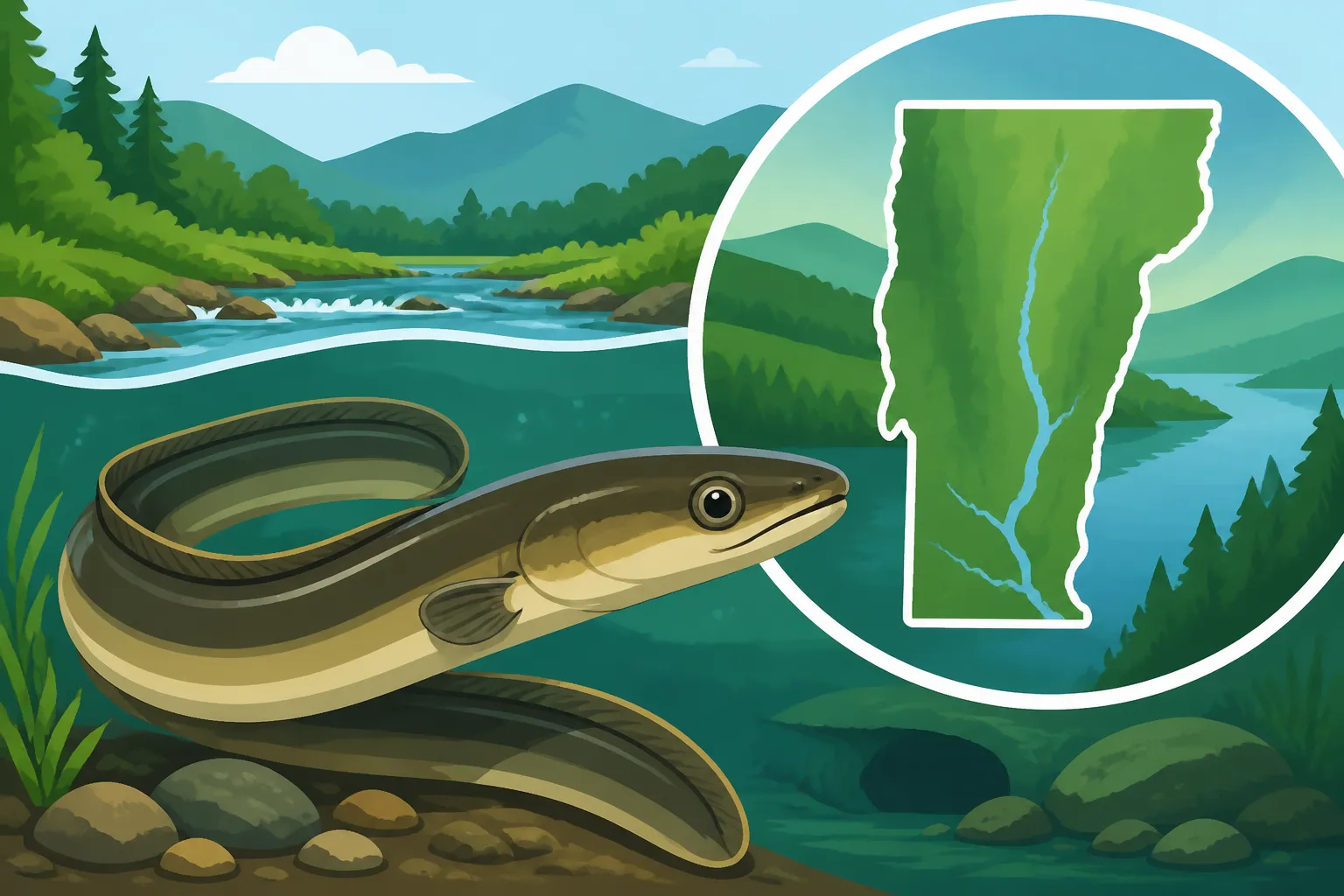
When you think of an eel, your mind might conjure images of a snake, and that's a perfectly natural association given their incredibly elongated, serpentine bodies. But let me tell you, the American eel ( Anguilla rostrata) is a fish, pure and simple, albeit one that looks unlike almost any other freshwater fish you'll encounter in Vermont. They have a truly unique silhouette that sets them apart.
Slippery, Scaleless Skin and Fin Structure
One of the first things you'd notice about an American eel, if you were lucky enough to see one up close, is its skin. It's incredibly smooth and, to the touch, feels quite slimy. That sliminess isn't just for show; it's a protective mucus layer that helps them navigate tight spaces, protects against parasites, and allows them to absorb some oxygen directly from the water. Despite appearances, they actually do have tiny, embedded scales, but they're so small and deeply set that the skin feels utterly scale-less, almost like velvet.
Their fin structure is another key identifier. Unlike most fish with distinct dorsal, caudal, and anal fins, the American eel possesses a single, continuous fin that runs along their back, wraps around their tail, and extends along their underside almost to their vent. This continuous fin is what gives them that fluid, undulating swimming motion, allowing them to glide through water with incredible grace and power. They do have small pectoral fins located just behind their heads, which they use for steering and stabilization, but these are often hard to spot.
Coloring and Size Variations
The coloration of an American eel can vary quite a bit, depending on their life stage and environment. Younger eels, often called "elvers" or "yellow eels," tend to have a yellowish-brown or olive-green back that fades into a lighter, often yellowish or white belly. This coloring provides excellent camouflage against riverbeds and lake bottoms, helping them blend in with mud, rocks, and aquatic vegetation.
As they mature and prepare for their incredible migratory journey back to the ocean (a stage known as "silver eels"), their appearance shifts dramatically. Their backs become darker, often a metallic black or bronze, and their bellies turn a striking silvery-white. This "silvering" isn't just a fashion statement; it's a physiological change that prepares them for saltwater life and helps them hide from predators in the open ocean.
In terms of size, American eels found in Vermont can range from just a few inches as elvers to impressively large adults. While most you might see in a river could be a foot or two long, mature females in larger lakes like Lake Champlain can reach lengths of over three feet and sometimes even exceed four feet, weighing several pounds. Imagine reeling in something that long and powerful – it would certainly be a story to tell!
Here's a quick look at their key characteristics:
| Feature | Description |
|---|---|
| Body Shape | Very long, slender, snake-like, cylindrical |
| Skin | Smooth, slimy, covered in protective mucus; tiny, embedded scales |
| Fins | Continuous dorsal, caudal, and anal fin; small pectoral fins behind head |
| Color (Yellow Eel) | Olive-green or yellowish-brown back, lighter/yellowish belly |
| Color (Silver Eel) | Dark, metallic black/bronze back, silvery-white belly |
| Size | Typically 1-4 feet in length in Vermont, can weigh several pounds |
| Jaws | Mouth extends to below the eye, fine teeth |
Navigating Vermont: Where American Eels Live
The American eel's habitat in Vermont is far more extensive than many people realize, primarily because of their remarkable migratory nature. These creatures are catadromous, meaning they spend most of their lives in freshwater but migrate to the ocean to spawn. This means that any river or lake connected to the Atlantic Ocean could potentially host American eels.
River and Lake Dwellers
In Vermont, you'll find American eels primarily in rivers and large lakes that offer a direct migratory path to the sea. The most prominent example, of course, is Lake Champlain. This vast lake, connected to the Richelieu River which flows north to the St. Lawrence River and eventually the Atlantic, is a significant stronghold for eels. They thrive in the lake's diverse habitats, from shallow, vegetated bays to deeper, rockier structures. If you're out fishing for walleye or bass on Lake Champlain, don't be surprised if you occasionally encounter an eel; they're very much a part of the ecosystem there. You can learn more about this incredible fishery in our Lake Champlain Fishing Guide.
Beyond Lake Champlain, many of Vermont's larger rivers also provide essential habitat. The Connecticut River, forming much of Vermont's eastern border, is another vital pathway. Eels migrating up this river from the Atlantic will disperse into its tributaries. Rivers like the Winooski River, the Lamoille River, and Otter Creek, which all drain into Lake Champlain, also support healthy eel populations. These rivers offer a mix of pools, riffles, and slower-moving sections where eels can hunt for food and find shelter. If you want to explore some of these fantastic river systems, check out our articles on Winooski River Fishing Spots, Lamoille River Fishing Guide, and Otter Creek Fishing Spots.
Eels are particularly fond of soft, muddy bottoms where they can burrow during the day, emerging at night to hunt. They also hide under rocks, logs, and dense aquatic vegetation. This nocturnal lifestyle is one reason they're not often seen by casual observers. You might have them in a local stream and never even know it!
Overcoming Obstacles: Dams and Waterways
Historically, American eels were even more widespread throughout Vermont's smaller streams and ponds. However, the construction of dams for hydropower and other uses has significantly impacted their ability to reach their traditional upstream habitats. Dams act as formidable barriers, blocking their migratory routes. While some dams have fish ladders or other passage solutions, these aren't always effective for eels, especially the smaller elvers trying to make their way upstream. This challenge is a major factor in why their populations have declined in many areas.
Despite these challenges, their incredible determination means they will try to find a way around obstacles. They can even travel short distances over damp land at night, using their slimy skin to stay moist, making their way from one pool to another. This incredible adaptability highlights their resilience.
Understanding where eels live is crucial for their conservation. If you're interested in the broader picture of aquatic life, you might find our guide on Fish species unique to the Lake Champlain basin insightful, as it touches on other fascinating inhabitants of these waters.
The American Eel's Incredible Life Journey
The life cycle of the American eel is one of the most astonishing migratory sagas in the animal kingdom, a true testament to nature's enduring wonders. It's a journey that spans thousands of miles and multiple habitats, beginning and ending in a very specific place in the Atlantic Ocean.
Spawning in the Sargasso Sea
Every American eel, whether it lives in a Vermont stream or a Florida swamp, begins and ends its life in the Sargasso Sea. This vast, warm-water region in the western Atlantic Ocean, famous for its Sargassum seaweed, is the sole known spawning ground for the entire species. Mature "silver eels" from all over North America undertake an epic migration, often thousands of miles, to reach this destination. They cease feeding during this journey, relying solely on stored energy reserves.
Once in the Sargasso Sea, they spawn in deep waters and then, their life's purpose fulfilled, they perish. It's a single, massive reproductive event for each individual, a true "big bang" of their existence. The sheer scale and coordination of this migration, across vast ocean distances to a single breeding ground, is truly mind-boggling and something scientists are still working to fully understand.
Larval Stages and Ocean Drift
After hatching from eggs in the Sargasso Sea, the eels enter their first larval stage, known as a leptocephalus (meaning "thin head"). These larvae are tiny, transparent, leaf-shaped creatures that are completely unlike the adult eels we recognize. For months, or even a year or more, these delicate leptocephali drift on ocean currents, slowly making their way northward along the Gulf Stream and other currents towards the North American coast.
As they approach the continental shelf, they undergo a metamorphosis, transforming into what's called a "glass eel." These are still transparent, but they've taken on the more familiar eel shape, though they're only a few inches long. It's at this stage that they begin to enter estuaries and freshwater rivers, sometimes by the millions, marking the beginning of their journey upstream.
Freshwater Growth and Maturation
Once in freshwater, the glass eels gradually develop pigmentation, becoming "elvers" – small, dark, finger-sized eels. They continue their upstream migration, often against strong currents, sometimes even wriggling over wet land to bypass small waterfalls or shallow areas. This is the stage where they are most vulnerable and also most determined to push as far inland as possible.
They will spend anywhere from 5 to 20 years, or even longer, in Vermont's rivers and lakes, growing and maturing. During this "yellow eel" stage, they are opportunistic nocturnal predators, feeding on a wide variety of prey, including insects, crustaceans, small fish, and worms. They play an important role in the food web, both as predators and as prey for larger fish and birds. Monitoring their populations is a key part of fisheries management, which you can learn about in the Reading the Vermont Fishing Regulations Guide.
After reaching maturity, typically around 10-20 years for females and 5-10 years for males, they begin their transformation into "silver eels." Their bodies change, their eyes enlarge, and their digestive system atrophies as they prepare for their final, epic journey back to the Sargasso Sea to complete the cycle.
The American Eel's Ecological Role and Conservation in Vermont
While often overlooked, the American eel plays a critical role in Vermont's aquatic ecosystems, acting as both predator and prey. Their long migratory journey also makes them a fascinating indicator of the health and connectivity of our waterways.
Ecosystem Contribution
As mentioned, American eels are opportunistic feeders, consuming a wide range of invertebrates and smaller fish. This helps to regulate populations of various species and contributes to the overall balance of the aquatic food web. They're also a food source for numerous predators, including larger fish (like lake trout and northern pike), birds (such as ospreys and eagles), and even mammals (like otters and raccoons), especially during their upstream and downstream migrations. Their presence indicates a healthy, connected aquatic environment.
Furthermore, their burrowing habits can help aerate sediments in lake and river bottoms, much like earthworms do in soil, which can influence nutrient cycling and habitat for other benthic organisms. They are truly an integral part of the biological tapestry of Vermont's waters. If you're curious about other species that share these habitats, exploring American Eel in Vermont Rivers might provide more insight into their co-inhabitants.
Conservation Status and Efforts
Unfortunately, American eel populations have experienced declines across much of their range, including in some parts of Vermont. This is a concern for wildlife managers and conservationists. The primary threats include habitat loss and fragmentation due to dams, which block their migratory paths, and sometimes overfishing in other parts of their range (though fishing for eels is not a major recreational activity in Vermont). Changes in ocean currents and habitat quality in the Sargasso Sea could also play a role.
Because of these concerns, the American eel is often a species of focus for conservation efforts. This involves looking at ways to improve fish passage at dams, protecting and restoring freshwater habitats, and monitoring population trends. While not currently listed as federally endangered, they are a species of special concern in many states, and managing their populations responsibly is a priority. Understanding species at risk, like those highlighted in Endangered and Protected Fish Species in Vermont, helps us appreciate the fragility of these ecosystems.
Efforts to help eels often involve studying their movements and understanding the impacts of various barriers. Sometimes, conservation groups might use special traps and transport systems to move eels past large dams, ensuring they can reach crucial upstream habitats. It's a challenging endeavor, given the vast distances and complex life cycle of these incredible fish. For more general fishing rules and how they contribute to conservation, you can check Vermont Fishing Regulations Explained.
Observing and Appreciating American Eels in Vermont
Encountering an American eel in the wild is a special experience, given their nocturnal habits and often reclusive nature. While you might not specifically "fish" for them in Vermont, understanding their presence enriches your overall appreciation for the state's diverse aquatic life.
Ethical Angling Practices and Accidental Catches
As an angler, it's possible you might accidentally catch an American eel while targeting other species, especially if you're using bait on the bottom in eel-rich waters like Lake Champlain or the Connecticut River. Eels have incredibly strong jaws and a very slimy body, which can make them tricky to unhook. If you do catch one, handle it gently. Use a pair of long-nosed pliers to remove the hook carefully. It's often easier to release them by cutting the line close to the hook if the hook is deeply embedded, as this causes less stress and injury to the fish than trying to forcefully remove it. Always return them to the water as quickly and safely as possible.
Remember, responsible angling is about respecting all species in the water. For those who want to be extra prepared for any type of catch, an essential piece of gear like a good pair of fishing pliers, often found readily on Amazon, can make all the difference in a quick and safe release.
Where to Potentially Spot an Eel
While direct observation can be challenging, if you're keen to catch a glimpse or at least know where they might be, focus on their preferred habitats. Nighttime is your best bet, as they are most active then. Exploring the quieter, slower-moving sections of major rivers, especially those with muddy or rocky bottoms, could be fruitful. Look for areas with submerged logs, rock piles, or dense aquatic vegetation – these are prime eel hiding spots.
For safety, if you venture out at night near the water, a reliable headlamp is a must. Many excellent, waterproof options are available on Amazon that can illuminate the banks without disturbing the aquatic life too much. For a more general approach to exploring our waterways, knowing about Best Boats for Vermont Lakes and Rivers can help you reach these spots safely.
Further Learning and Resources
If you've been fascinated by the American eel and want to delve deeper into their world or the broader ecology of Vermont's waters, there's a wealth of information available. Local fish and wildlife resources are invaluable, and you can often find comprehensive field guides or books about Vermont's freshwater fish. Many of these educational materials, including detailed guides on aquatic ecosystems, are easily accessible through retailers like Amazon. Arming yourself with knowledge is one of the best ways to appreciate and protect these unique residents of the Green Mountain State.
Disclaimer
This article is for general informational purposes only and does not constitute professional advice. Laws, prices and regulations vary by location and change over time. Consult a qualified professional for guidance on your specific situation.