Do Atlantic Salmon Still Run in Vermont Rivers?
It's a question that echoes through the Green Mountains and along our historic waterways: do Atlantic salmon still run in Vermont rivers? For many of us, especially those who cherish Vermont's rich natural heritage, the thought of these magnificent fish returning to their ancestral spawning grounds evokes a powerful sense of nostalgia and hope. While the glory days of vast, naturally reproducing Atlantic salmon runs are, unfortunately, a thing of the past for Vermont, the story isn't one of complete despair. There's a dedicated, decades-long effort underway, particularly within the Connecticut River basin, to bring them back. This guide will dive deep into the history, the challenges, and the current status of Atlantic salmon in our beautiful state.
The Historical Grandeur of Atlantic Salmon in Vermont
To truly understand the question of their return, we first need to appreciate what was lost. Atlantic salmon weren't just another fish in Vermont's waters; they were a cornerstone of the ecosystem and a vital resource for early settlers.
A Legacy of Abundance
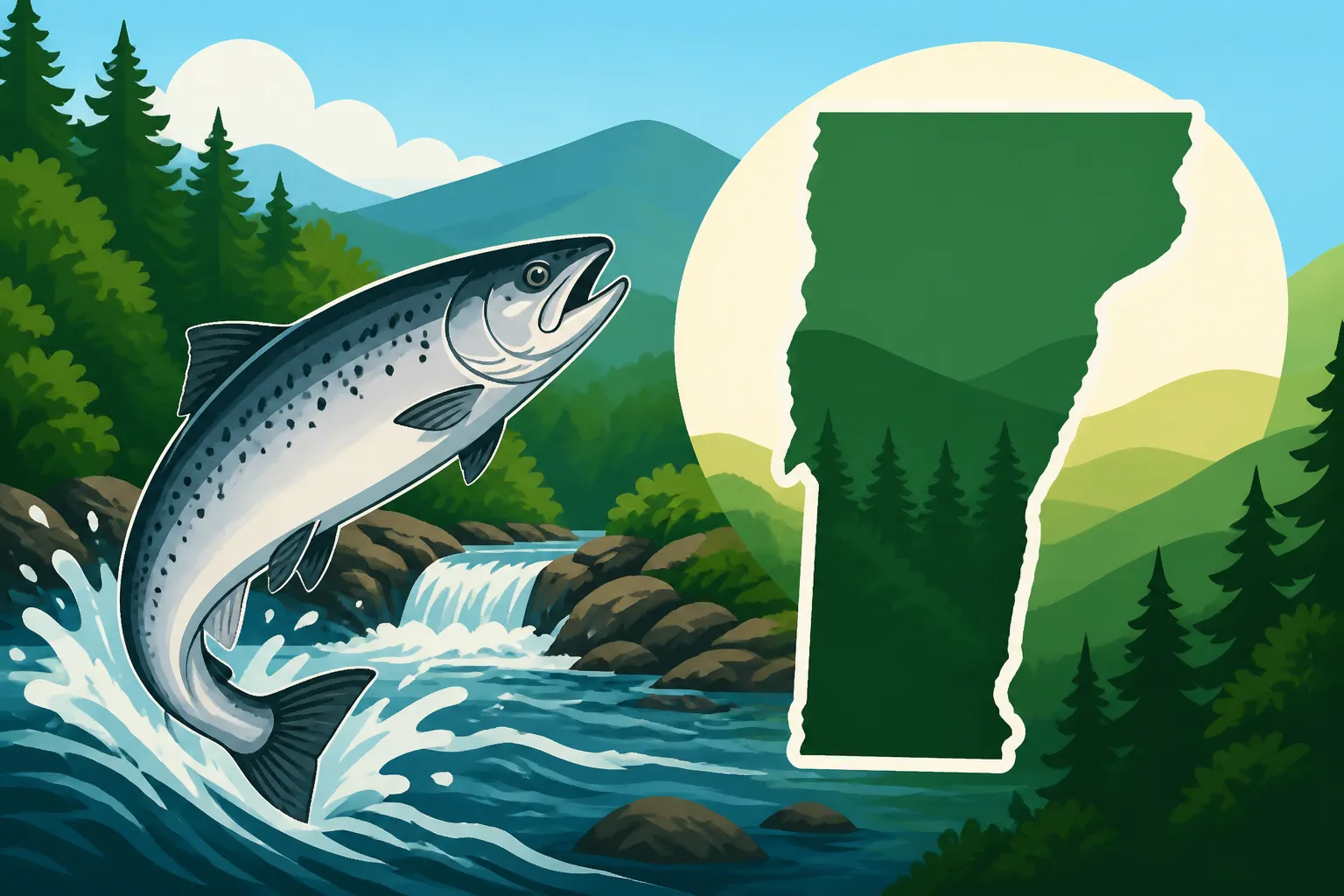
Imagine Vermont's rivers and streams centuries ago, long before European settlement brought dams and widespread industrialization. These waters, especially the Connecticut River and its numerous tributaries like the White River, the Ottauquechee, and the Black River, teemed with migratory fish. Among the most impressive were the Atlantic salmon. These powerful, silver-sided fish would make incredible journeys from the ocean, swimming hundreds of miles upstream, leaping waterfalls, and navigating strong currents to reach their natal spawning grounds.
They were an anadromous species, meaning they were born in freshwater, migrated to the sea to grow into adults, and then returned to freshwater to reproduce. This cycle was a predictable, awe-inspiring annual event, providing a crucial food source for indigenous peoples and early European colonists. The sheer numbers were staggering, with reports describing rivers so packed with salmon during their runs that you could almost walk across their backs. These fish were a symbol of the wild, untamed nature of our state, deeply ingrained in the natural rhythms of the land.
The Decline and Disappearance
Sadly, this era of abundance began to fade with rapid expansion and development. The industrial revolution, particularly the construction of mills and factories, led to a proliferation of dams on nearly every major river. These dams, built without fish ladders or any consideration for migratory species, effectively blocked the salmon's passage upstream to their spawning grounds. One dam might have been overcome, but a series of them created an insurmountable barrier.
Simultaneously, increasing populations led to overfishing, both commercially and for subsistence, adding further pressure. Pollution from burgeoning towns and industries, coupled with habitat degradation like deforestation and agricultural runoff, further compromised the health of the rivers, making them unsuitable for sensitive salmon eggs and juvenile fish. By the late 1800s, the majestic Atlantic salmon runs in Vermont, and indeed throughout much of New England, had all but vanished. It was a profound ecological loss, leaving a void in the natural tapestry of our river systems.
Modern-Day Atlantic Salmon: Restoration Efforts in the Connecticut River Basin
Despite the grim history, the story of Atlantic salmon in Vermont isn't over. For decades, a dedicated coalition of federal and state agencies, alongside non-profits, has been working tirelessly on a monumental task: the Atlantic Salmon Restoration in the Connecticut River.
The Connecticut River Atlantic Salmon Restoration Program
This ambitious program, which began in the mid-20th century, is one of the longest-running and most intensive anadromous fish restoration efforts in North America. Vermont, as part of the Connecticut River basin, has been a key player. The goal was, and largely still is, to re-establish a self-sustaining population of Atlantic salmon in the Connecticut River and its tributaries. This isn't a simple task of just putting fish in the water; it's a holistic approach addressing all the factors that led to their demise.
The program focused on several critical areas. First and foremost was overcoming the dam problem. This involved retrofitting existing dams with modern fish ladders and lifts, as well as negotiating dam removals where feasible. Enhancing water quality, controlling pollution, and restoring critical spawning and nursery habitat were also crucial. It's a testament to incredible collaboration and persistence across multiple states, including New Hampshire, Massachusetts, Connecticut, and, of course, Vermont. The vision was to once again see wild salmon migrating through hundreds of miles of river.
Hatchery Programs and Stocking
Given the complete absence of wild spawners, the restoration effort heavily relied on hatchery propagation. Fish hatcheries became the nurseries for a hopeful future. Salmon eggs, often sourced from populations in Canada or from existing hatchery broodstock, were raised in controlled environments. These young salmon, known as smolts, would then be released into various tributaries of the Connecticut River within Vermont. The idea was that these stocked smolts would imprint on the river, migrate to the ocean, mature, and then, guided by their innate homing instinct, return to the very rivers they were released into to spawn naturally.
This process is incredibly complex. The journey for a salmon smolt is fraught with peril. Once released, they face predation, disease, and the long, dangerous migration through the river, past remaining hydroelectric dams, and into the vast Atlantic Ocean. After years at sea, growing to adult size, they then face the gauntlet of the return journey. The success of these stockings, while measurable in terms of returning adults, has always been an uphill battle. Vermont has seen releases into rivers like the White, West, and Williams, all critical tributaries to the Connecticut. You can learn more about how agencies manage these efforts through resources like the Vermont Fish Stocking Search Tool, Explained.
The Current Status of Wild Atlantic Salmon Runs in Vermont
So, after all these efforts, what's the answer to our burning question? Do Atlantic salmon still run in Vermont rivers? It's a nuanced answer that requires a bit of clarification.
Defining "Run" in the Modern Context
When we talk about an "Atlantic salmon run" in the traditional sense, we envision thousands upon thousands of naturally spawned fish, born in the river, spending years at sea, and returning to reproduce, contributing to a self-sustaining population. By this definition, no, there are no established, self-sustaining wild Atlantic salmon runs in Vermont rivers today. The dream of rivers once again teeming with solely wild, naturally reproduced salmon, independent of human intervention, has not yet been realized.
The challenge is immense. While some returning adult salmon do occasionally make it back to the tributaries, the critical hurdle is successful natural reproduction and the subsequent survival of those wild-born offspring through multiple life stages. The complex life cycle of Atlantic salmon requires pristine freshwater habitat, safe passage to and from the ocean, and favorable ocean conditions for growth. These conditions are incredibly difficult to maintain and restore across such a vast migratory pathway.
Evidence of Returning Fish
However, that doesn't mean there are no Atlantic salmon in Vermont rivers. Thanks to the hatchery programs and fish passage improvements, adult Atlantic salmon, primarily of hatchery origin, do occasionally return to the Connecticut River and some of its Vermont tributaries. These are often individual fish or small groups, rather than large-scale "runs." Anglers sometimes report sightings, and occasionally, one might even be caught, though they are a protected species and must be released immediately. These returning fish are a testament to the decades of hard work and the incredible resilience of the species.
The most likely place you might hear about these rare returning fish is in the lower sections of Vermont tributaries that feed directly into the Connecticut River, particularly those with fish passage facilities. Seeing one is a special event, a glimpse into a historical past and a hopeful future. It's important to differentiate these occasional returns of hatchery-origin fish from the natural, large-scale wild runs that once defined our rivers. Understanding the Vermont fishing regulations explained is crucial if you're ever lucky enough to encounter one.
Challenges and Future Outlook for Atlantic Salmon in Vermont
The journey to bring back Atlantic salmon has been long and arduous, and significant challenges remain.
Persistent Hurdles to Restoration
Despite monumental efforts and expenditures, several persistent hurdles make full restoration incredibly difficult. The sheer number of hydroelectric dams on the Connecticut River and its tributaries continues to be a major obstacle. While many have improved fish passage, none are 100% effective, and each one represents a mortality risk for migrating smolts heading out to sea and returning adults trying to get upstream. Competing interests for water resources also complicate matters.
Beyond the dams, ocean survival rates for Atlantic salmon have seen a significant decline in recent decades. Scientists aren't entirely sure why, but factors like climate change, changes in ocean currents, reduced food sources, and increased predation in marine environments are all believed to play a role. A fish can successfully navigate every river obstacle only to perish in the ocean before it has a chance to return and spawn. Finally, localized habitat degradation, even in seemingly clean rivers, can still impact the sensitive eggs and juvenile salmon that need cold, clear, oxygenated water with gravel bottoms to thrive. You can learn more about the critical habitat needs of fish in articles like What American eel look like and where they live, as eels also depend on healthy river systems.
Hopes for the Future
Despite the immense difficulties and the fact that the original restoration goal of a self-sustaining population hasn't been met, the efforts continue, albeit with evolving strategies. There's a growing focus on dam removal where feasible, rather than just fish passage, to restore truly free-flowing rivers. Habitat restoration efforts, such as riparian planting, erosion control, and stream improvements, are always ongoing. The commitment from agencies like the Vermont Fish & Wildlife Department, working with partners like the US Fish & Wildlife Service and various conservation groups, remains strong.
The story of Atlantic salmon in Vermont is a powerful reminder of how interconnected our ecosystems are and how past actions have lasting impacts. While the sight of massive wild salmon runs is still a distant dream, every returning fish, every improved river mile, and every dedicated conservationist brings us a step closer to healing our waterways. Perhaps one day, future generations will once again witness the magnificent spectacle of truly wild Atlantic salmon running strong in Vermont's rivers. If you're passionate about river health, understanding resources like Reading the Vermont Fishing Regulations Guide can inform your own efforts to protect these vital waterways for all species.
Here's a quick comparison of the historical and current state of Atlantic salmon in Vermont:
| Feature | Historical (Pre-1800s) | Current (Post-Restoration Efforts) |
|---|---|---|
| Population Status | Abundant, self-sustaining wild runs | Absent as self-sustaining wild runs |
| Origin of Fish | Wild-born, naturally reproduced | Primarily hatchery-stocked |
| River Accessibility | Free-flowing rivers, unimpeded migration | Numerous dams, some with fish passage solutions |
| Ocean Survival | Generally high and stable | Significantly reduced, highly variable |
| Reproduction | Widespread natural spawning | Minimal to no widespread natural reproduction |
| Conservation Status | Healthy, vital ecosystem component | Endangered/threatened, subject to intensive restoration |
| Angling Status | Harvestable fishery (before decline) | Protected, catch-and-release only (if encountered) |
This table clearly illustrates the massive shift from historical abundance to the current challenges and ongoing restoration efforts. For those interested in migratory fish, it's also worth exploring the different species that make seasonal journeys, such as when landlocked salmon run up Vermont tributaries. Even though they are different species, the principles of river health and fish passage are critical for both.
Disclaimer
This article is for general informational purposes only and does not constitute professional advice. Laws, prices and regulations vary by location and change over time. Consult a qualified professional for guidance on your specific situation.