The biggest crappie ever caught in Vermont
For many anglers, chasing that elusive state record or even just a personal best can feel like a lifelong quest, especially when it comes to panfish like crappie, which are often overlooked in the pursuit of bigger game. If you've ever wondered just how big crappie get in the Green Mountain State, and what it takes to land a truly monumental one, you're in the right place. This guide will dive deep into the world of Vermont crappie fishing, exploring what makes a crappie a trophy, how these records are set, and how you might just catch your own behemoth.
Unraveling Vermont's Crappie Records
There’s something truly special about catching a fish that pushes the boundaries of what you thought possible. For crappie anglers in Vermont, the state record is a beacon, a testament to the potential hidden beneath our beautiful lakes and ponds. While I can't give you up-to-the-minute details, the Vermont Fish & Wildlife Department maintains official records for various species, including crappie, which serve as the gold standard for what's considered "the biggest." These records represent incredible catches that have been verified through a rigorous process to ensure their legitimacy.
The Elusive State Record Crappie
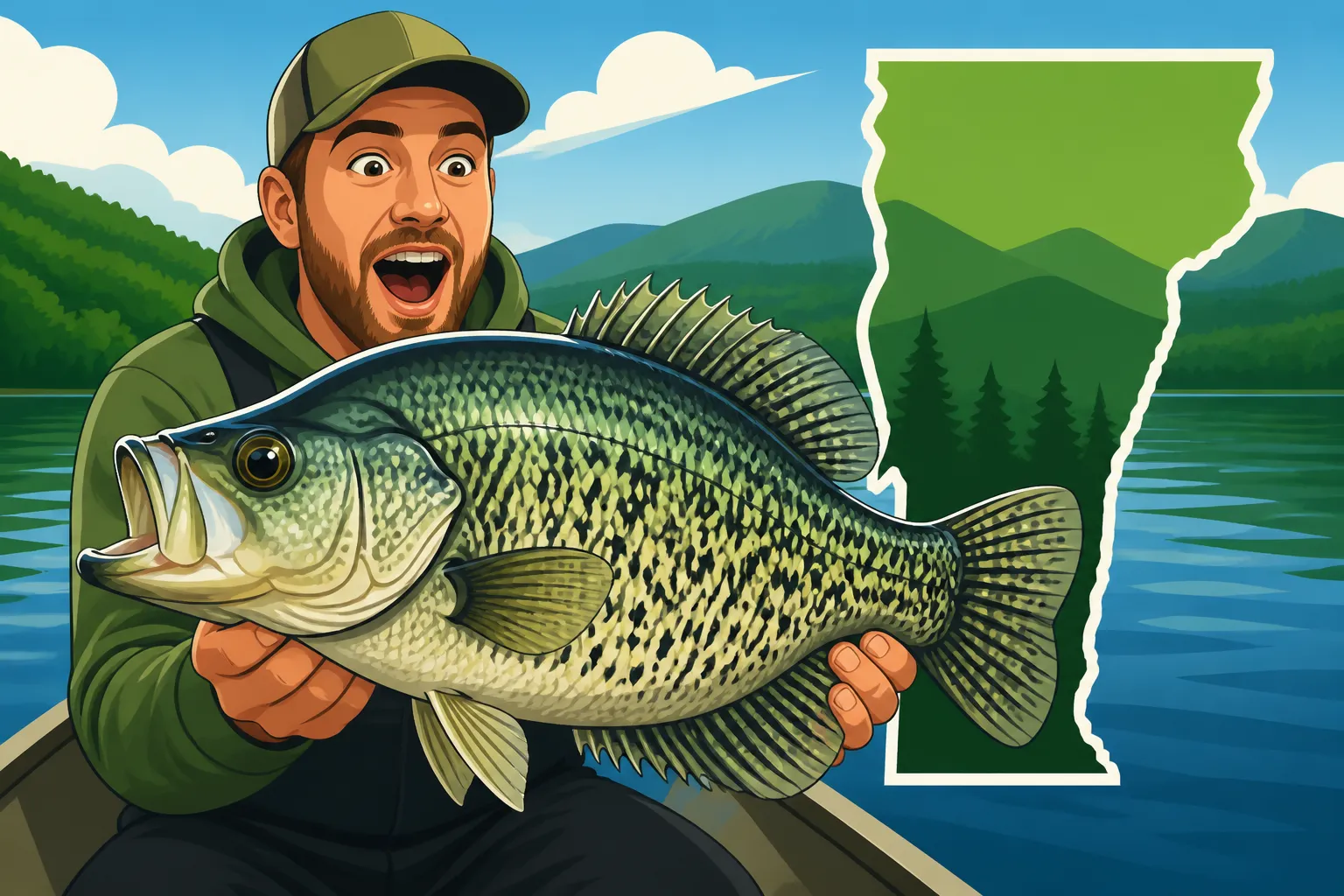
When we talk about "the biggest crappie ever caught in Vermont," we're referring to the official state record. This isn't just a big fish story; it's a documented achievement that requires precise measurements and weight, often witnessed and verified by Fish & Wildlife personnel. Imagine the excitement of reeling in a crappie so substantial that it makes you wonder if it's truly a crappie! These fish are often caught by anglers who dedicate themselves to understanding crappie behavior and habitat, or sometimes, by sheer luck and being in the right place at the right time. For most of us, just knowing that such a monster swims in Vermont waters is enough to fuel our passion. It tells us that these often-small, feisty panfish can grow to impressive sizes given the right conditions and enough years of avoiding hooks.
What Makes a Crappie "Trophy-Sized" in Vermont?
Beyond the absolute state record, what truly constitutes a "trophy" crappie can be a bit subjective, but there are some general benchmarks. For many Vermont anglers, a crappie over 12 inches is certainly something to brag about. Once you start getting into the 14-inch range, you're looking at a truly exceptional fish. These are the crappie that have survived multiple seasons, found abundant food, and avoided predators. They often have a deep body and a robust appearance, looking more like dinner plates than the smaller panfish many of us are accustomed to catching. The joy of a trophy catch isn't just in its size; it's in the challenge of finding and fooling such an old, wise fish. It's a testament to your skill and patience, and frankly, it just feels fantastic.
Diving Deep into Vermont's Crappie Population
To catch a trophy crappie, you first need to understand the fish themselves. In Vermont, we primarily deal with two species: the black crappie and, less commonly, the white crappie. Both are fantastic sport fish and delicious table fare, but they have subtle differences in appearance and preferred habitat that can influence where and how you might target a truly large one. Understanding their nuances is key to increasing your odds of a memorable catch. For a broader look at the state's panfish options, check out Panfish Fishing in Vermont.
Black Crappie vs. White Crappie: Key Differences
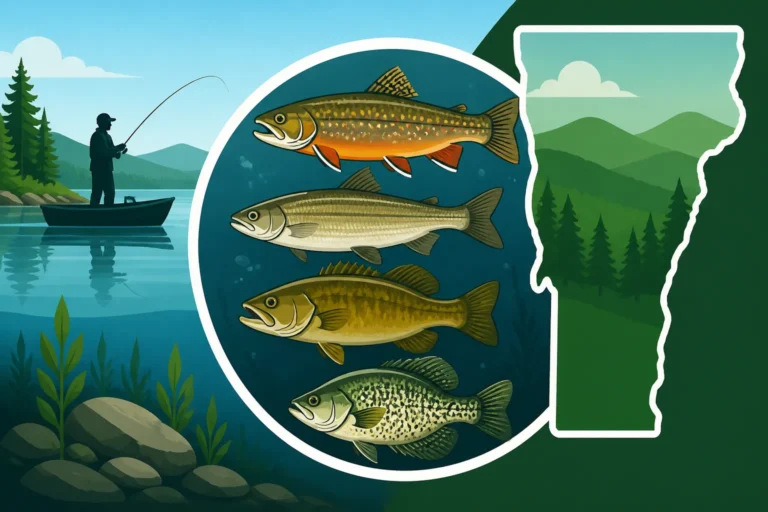
While many anglers might just see "crappie," there are distinct differences between the black crappie and the white crappie. Black crappie are generally more common in Vermont and are often found in clearer, cooler waters with more vegetation. They tend to have a deeper body and a more speckled pattern, with seven or eight dorsal spines. White crappie, on the other hand, typically prefer murkier water and tend to be found in slower-moving rivers or larger, more turbid lakes. They have a slightly more elongated body shape and usually have six dorsal spines, with vertical bars often visible along their sides. Both can grow large, but black crappie seem to dominate the trophy conversations in many northern fisheries, including ours. Identifying which species you're targeting can help you fine-tune your approach. Our Panfish Species Identification Guide for Vermont can help you tell them apart.
Where Vermont's Crappie Thrive and Grow Large
Crappie, regardless of species, are structure-oriented fish. They love submerged timber, brush piles, docks, weed beds, and any other cover that offers both ambush points for feeding and protection from predators. In Vermont, this means targeting lakes and larger ponds that have ample amounts of such habitat. Lake Champlain, with its vast bays and diverse structure, is a prime example, but don't overlook smaller, lesser-known ponds tucked away in different corners of the state. These hidden gems can sometimes hold undisturbed populations of crappie that have the opportunity to grow to impressive sizes. Look for areas with a good food supply, like schools of baitfish, and you're likely to find crappie. They are creatures of comfort, often seeking out stable water temperatures and depths where they feel secure.
Here’s a quick overview of some differences between black and white crappie:
| Feature | Black Crappie | White Crappie |
|---|---|---|
| Dorsal Spines | 7-8 | 5-6 |
| Body Shape | Deeper, more round | More elongated |
| Coloration | Speckled pattern, irregular spots | Fainter spots, often vertical bars |
| Preferred Water | Clearer, vegetated lakes | Murkier, slower rivers, large lakes |
| Commonality | More common in Vermont | Less common in Vermont |
The Quest for a Trophy: Tactics and Gear
Catching a trophy crappie isn't always about fancy equipment, but having the right tools and techniques certainly helps. It's often more about finesse, patience, and understanding the subtle bites of these finicky fish. Whether you're casting from shore or navigating a boat, there are specific approaches that will increase your chances of connecting with a bigger fish. For broader panfish strategies, consider reading Best Techniques for Panfish in Vermont.
Essential Gear for Targeting Big Crappie
When you're after big crappie, light tackle is your friend. A sensitive ultralight or light action spinning rod, typically 5 to 7 feet long, paired with a small spinning reel spooled with 2 to 6-pound test monofilament or fluorocarbon line, is ideal. This setup allows you to feel the lightest bites, which trophy crappie often deliver. For baits, small jigs (1/32 to 1/16 ounce) tipped with soft plastic bodies, mini tubes, or small grubs are deadly. Crappie jigs often come in a myriad of colors, and sometimes subtle changes can make a huge difference. Live bait, such as small minnows, hooked lightly through the lip or back, is also incredibly effective, especially when suspended under a bobber. You can find a vast selection of these items, from ultralight rods to a rainbow of jig colors, on platforms like Amazon, making it easy to stock up on the essentials.
Don't forget the small but mighty accessories! A good pair of polarized sunglasses will help you spot structure or even crappie cruising in shallower water. A small tackle box or bag to keep your jigs, weights, and bobbers organized is also crucial. And a small landing net, especially one with rubberized mesh for fish care, is invaluable for safely landing a big crappie, as their mouth tissue can be delicate. For more gear specifics, check out Best Tackle for Panfish.
Seasonal Strategies for Trophy Crappie
Crappie behavior changes significantly with the seasons, and understanding these patterns is vital for targeting larger fish.
- Spring: As water temperatures rise, crappie move into shallower waters to spawn. This is often the best time to find them concentrated in accessible areas like weed beds, around submerged brush, or near docks. Small jigs and minnows fished shallow are incredibly effective.
- Summer: During the heat of summer, crappie often retreat to deeper, cooler water, congregating around submerged structures, deep weed lines, or brush piles. Vertical jigging or slow trolling with jigs or minnows at various depths can produce results. Early morning and late evening can also bring them shallower to feed.
- Fall: As water temperatures cool, crappie become more active again, feeding aggressively to build up fat reserves for winter. They'll often be found in transition areas between shallow and deep water, such as points or submerged humps. This can be a fantastic time for both numbers and size.
- Winter (Ice Fishing): Vermont's ice fishing season is a prime time for crappie, especially larger ones. They school up in predictable deep-water basins or around specific structures. Small jigs, often tipped with a grub or a wax worm, jigged slowly through the ice can be irresistible. Many anglers use flashers or fish finders to locate schools. For techniques that can translate to crappie through the hard water, look into Jigging for Perch Through the Ice. Remember to consult Vermont Ice Fishing Season Dates to plan your trips.
Locating Crappie Hotspots in Vermont
The key to finding big crappie is structure, structure, structure! Look for:
- Submerged Timber and Brush Piles: These are crappie magnets, offering cover and ambush points. If you know of any sunken trees or brush, fish them thoroughly.
- Docks and Piers: Especially older, larger docks provide shade and cover, attracting crappie. Fish around the pilings and under the boat slips.
- Weed Beds and Lily Pads: The edges of healthy weed beds provide oxygen, food, and cover. Look for pockets within the weeds where crappie might be holding.
- Channel Edges and Drop-offs: Crappie will often suspend along the edges of deeper channels or where a flat drops off into deeper water. A fish finder is invaluable here.
- Creek Mouths and Inflows: Especially after a rain, these areas can concentrate baitfish, which in turn attract crappie.
Remember that crappie are schooling fish, so where you catch one, there are likely more. Once you find a productive area, work it thoroughly.
The Official Route: Verifying a State Record
So, you've hooked into what feels like the fish of a lifetime, and it looks suspiciously large. What do you do? The journey from a great catch to an official state record is a precise one, designed to ensure fairness and accuracy for all anglers. It's not enough to simply take a picture and claim it; there's a protocol to follow, and understanding it beforehand can save you a lot of heartache if you ever find yourself in this incredible situation. Every state's Fish & Wildlife department has guidelines, and Vermont is no exception. More details on overall records can be found in Vermont State Fish Records by Species.
Immediate Steps After Landing a Potential Record
The moment you realize you might have a record-breaker on your hands, precision becomes paramount. First, handle the fish with extreme care. While you want to show it off, its health and condition are important. If you intend to release it after verification, keep it in a livewell or a large net in the water. For verification purposes, you'll need to get it to an official weigh station as quickly and safely as possible. This means no detours!
Second, resist the urge to clean or process the fish. It needs to be presented in its natural state for accurate identification and measurement. Third, take clear photographs from multiple angles, especially if you plan to release it. These photos can be critical evidence if any questions arise later, showing the fish's full length and girth. It's wise to carry a tape measure on your boat or in your tackle bag (which you might purchase from Amazon) just to get an initial sense of the length, though official measurements will be taken later.
The Verification Process: Weighing, Measuring, and Identifying
Once you get to an official weigh station, typically a certified scale at a bait shop, general store, or sometimes directly with Fish & Wildlife personnel, the real process begins. The fish will be weighed on a scale that has been certified for accuracy. This isn't your kitchen scale; these are scales calibrated to a specific standard. The weight should be recorded to the nearest ounce or even a fraction of an ounce, as records are often broken by very slim margins.
Next, the fish will be measured for length and girth. Length is usually taken from the tip of the snout to the end of the tail with the lobes compressed. Girth is the widest part of the fish's body. These measurements, along with the weight, help confirm the fish's size. Finally, positive species identification is crucial. While you might know it's a crappie, a Fish & Wildlife expert will confirm if it's a black crappie or a white crappie, as some states keep separate records. This meticulous process ensures that the records stand as true benchmarks for all anglers to aspire to.
Beyond the Official Record: Your Personal Trophy
While chasing the state record is an exciting prospect, the vast majority of us will never achieve that specific milestone. And honestly, that's perfectly fine! The true joy of fishing often comes from personal accomplishments, the stories we create, and the connection we build with nature. A "trophy" can mean so much more than just the official record books.
Celebrating Your Personal Best
Imagine landing a crappie that's bigger than any you've ever caught before. That's a personal best, and it's a trophy in its own right. Maybe it's the first crappie you've ever landed over a foot long, or perhaps it's the largest crappie your child has ever caught. These moments are incredibly valuable and create lasting memories. They represent growth as an angler, improved skill, or just a truly lucky day on the water. Document these moments with photos, share them with friends, and savor the feeling of accomplishment. Every big fish, whether it makes the news or not, is a testament to the thrill of the catch.
The Role of Conservation in Trophy Fisheries
Our ability to continue catching large crappie, and indeed any fish, relies heavily on good conservation practices. This means understanding and adhering to Vermont Fishing Regulations Explained, including Vermont Bag and Possession Limits by Species. Practicing catch and release, especially for larger breeding fish, helps ensure healthy populations for future generations. Releasing a big crappie, even if it's your personal best, can be one of the most rewarding parts of fishing. It allows that fish to continue growing and reproducing, contributing to an even better fishery down the line. Using proper handling techniques, like wet hands and minimizing time out of water, increases the survival rate of released fish. This long-term thinking is what keeps Vermont fishing fantastic for everyone.
Finding Your Own Crappie Hotspots
Sometimes the best crappie fishing isn't in the well-known spots, but in the ones you discover yourself. Take the time to explore new ponds, rivers, and lake sections. Use resources like bathymetric maps to identify potential structure, or even just drive around, looking for public access points to smaller bodies of water. Talking to local bait shop owners or fellow anglers can also provide invaluable insights. You might just stumble upon a forgotten honey hole that holds some truly massive crappie, waiting for someone to drop a jig in their face. And remember, the journey of discovering these spots, the trial and error, the quiet moments on the water, are often just as rewarding as the catch itself.
Disclaimer
This article is for general informational purposes only and does not constitute professional advice. Laws, prices and regulations vary by location and change over time. Consult a qualified professional for guidance on your specific situation.