How to tell a largemouth from a smallmouth bass
It’s a common scenario: you’ve just landed a beautiful bass in a Vermont lake or river, and your fishing buddy instantly asks, "Is that a largemouth or a smallmouth?" For many anglers, especially those new to the Green Mountain State’s diverse waters, telling these two popular species apart can be surprisingly tricky, leading to confusion and sometimes even regulatory missteps. This guide is here to untangle that mystery, offering clear, detailed methods to confidently identify a largemouth from a smallmouth bass, ensuring you fish smarter and stay compliant with Vermont’s specific fishing rules.
The Tale of Two Bass: Why Identification Matters in Vermont Fishing
Vermont is home to both largemouth and smallmouth bass, and while they share the "bass" moniker, they are distinct species with different behaviors, preferred habitats, and, critically, sometimes different fishing regulations. Misidentifying your catch isn't just a matter of pride; it can impact your fishing strategy, conservation efforts, and even lead to unintentional violations of catch limits or size restrictions. Understanding these differences fundamentally enhances your angling experience in Vermont.
Beyond Bragging Rights: The Real-World Impact on Your Fishing Trip
When you're out on the water, whether it's the vast expanse of Lake Champlain or a quiet pond in the Northeast Kingdom, knowing what kind of bass you're targeting or have just caught goes far beyond simple bragging rights. Each species often requires different techniques, lures, and even times of day to be most successful. For instance, a lure that slays largemouth in a weedy cove might be completely ignored by smallmouth patrolling a rocky point. If you’re trying to put together a consistent pattern, correctly identifying the bass you’re catching helps you replicate success. Are you finding them in thick cover? Sounds like a largemouth pattern. Are they suspended over deep rock piles? That’s classic smallmouth behavior. This distinction informs everything from your tackle selection to your boat positioning. It's about becoming a more effective and knowledgeable angler, connecting more deeply with the specific characteristics of Vermont's fisheries.
Understanding Vermont's Bass Regulations
Here in Vermont, while many regulations apply broadly to "bass," there can be nuances, particularly concerning minimum length limits, daily creel limits, and specific seasons, especially for certain trophy waters or during catch-and-release periods. Imagine landing a really nice fish, only to realize later that you weren't entirely sure which species it was, and thus, whether it met the legal size for retention or if you should have released it immediately. Vermont fishing regulations are designed to protect fish populations and ensure sustainable angling for everyone. For example, there might be a general bass season, but specific rules for Vermont Bass Catch-and-Release Season, Explained or different minimum length requirements could be in effect for a particular body of water. Always consult the latest Vermont Fish and Wildlife regulations, which are readily available online or through local fishing license vendors. Keeping a copy handy, perhaps even a digital version on your phone, can be a game-changer when you're out on the water and need to make a quick identification and regulatory decision. Understanding these rules is a vital part of responsible angling in Vermont. You can learn more about Vermont Bass Minimum Length Limits and Vermont Bass Daily Bag Limit to ensure you're always fishing legally.
Spotting the Differences: Key Visual Cues
While both largemouth and smallmouth bass belong to the black bass family, a closer look reveals several distinct anatomical features that make identification straightforward once you know what to look for. These aren't just subtle variations; they are reliable markers that Mother Nature has put in place, acting like a built-in field guide right on the fish. Let's break down the most consistent visual differences you can use.
Mouth Size: The Most Obvious Clue
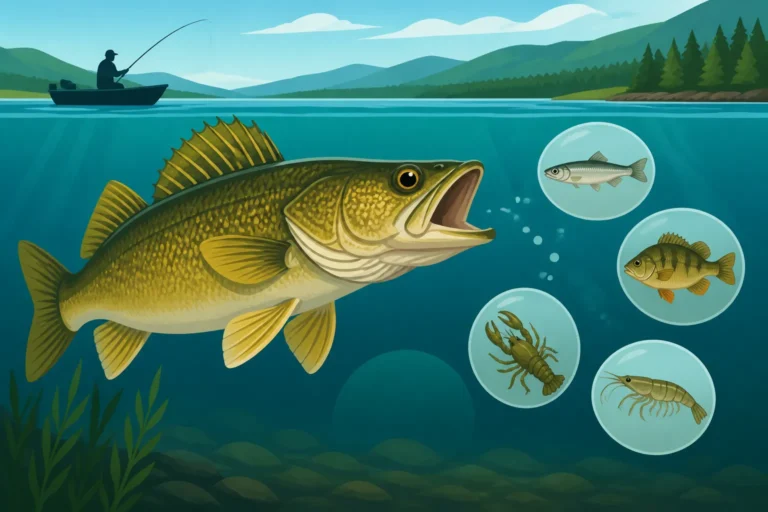
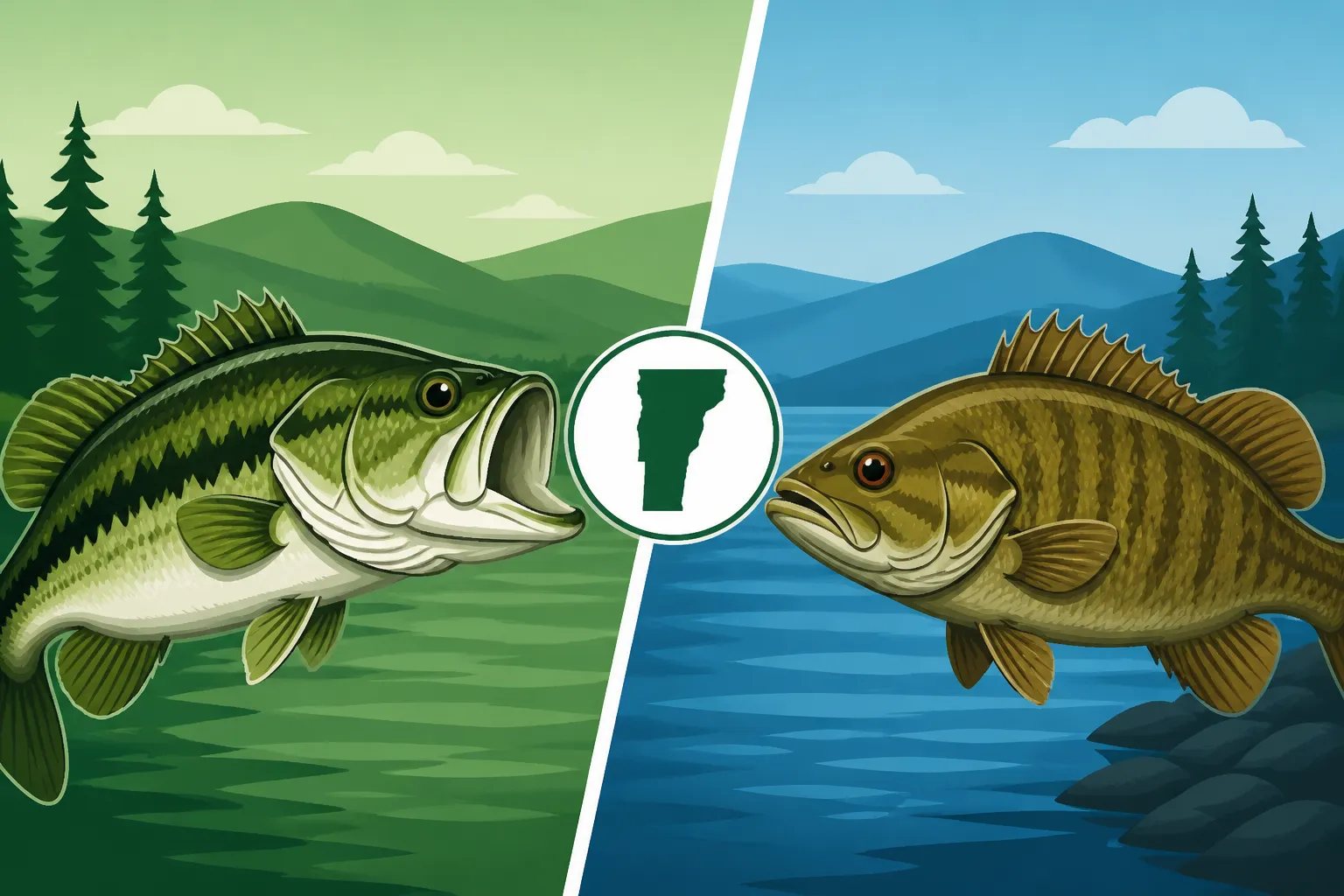
This is often the first and most widely known differentiator, and it’s right there in their names! The largemouth bass, true to its moniker, has a noticeably larger mouth. To identify this, gently close the fish’s mouth. If the corner of its jaw extends beyond the back of its eye, you're almost certainly holding a largemouth bass. Think of it like a cartoon character with an oversized grin – that's your largemouth. They’re built to gulp down larger prey, which makes sense given their preferred diet and ambush tactics in heavy cover.
On the other hand, the smallmouth bass has a jawline that typically only extends to about the middle of its eye, or at most, just to the back edge of the eye, but rarely beyond it. It’s a more proportionate, almost "normal-sized" mouth relative to its head. If you perform the same jaw-closing test and find the jaw stops well short of or right at the eye's center, you're looking at a smallmouth. This difference in jaw structure is not just cosmetic; it dictates the types of prey they can effectively consume and is a key adaptation to their different feeding strategies and habitats.
Dorsal Fin: A Subtle But Sure Indicator
While the mouth might be the headline act, the dorsal fin is the subtle, undeniable co-star in the identification show. This fin, located along the fish's back, offers a critical clue. For the largemouth bass, you'll observe a distinct, deep notch in the dorsal fin, almost giving the appearance that it's two separate fins joined at the very base. It's like a divot or a deep valley that clearly divides the spiny front portion from the softer-rayed back portion. Run your finger along it gently, and you'll feel that pronounced separation.
Conversely, the smallmouth bass has a dorsal fin that appears much more continuous, with only a shallow depression or a barely perceptible dip where the two sections meet. It feels and looks like a single, flowing fin along its back. The spiny and soft-rayed sections are clearly connected without that deep, dividing notch. This feature might require a closer look, especially if the fish is thrashing, but once you train your eye, it becomes a very reliable characteristic. Keep this in mind when you're looking at a fish, and you'll quickly confirm what your initial mouth assessment might have suggested.
Body Shape and Coloration: More Than Just Camouflage
Beyond the mouth and fins, the overall body shape and coloration provide strong hints, though these can vary somewhat based on water clarity, diet, and even the specific body of water the fish inhabits. Largemouth bass tend to have a more elongated, somewhat flatter body shape, often appearing chunkier or more "plump" in profile, particularly when they're well-fed. Their typical coloration ranges from a dark green to olive green on the back, fading to lighter sides and a white belly. The most iconic largemouth feature is a prominent, often jagged, horizontal dark stripe or a series of blotches running along its lateral line. This stripe can be very distinct in clear water or more mottled in murkier environments.
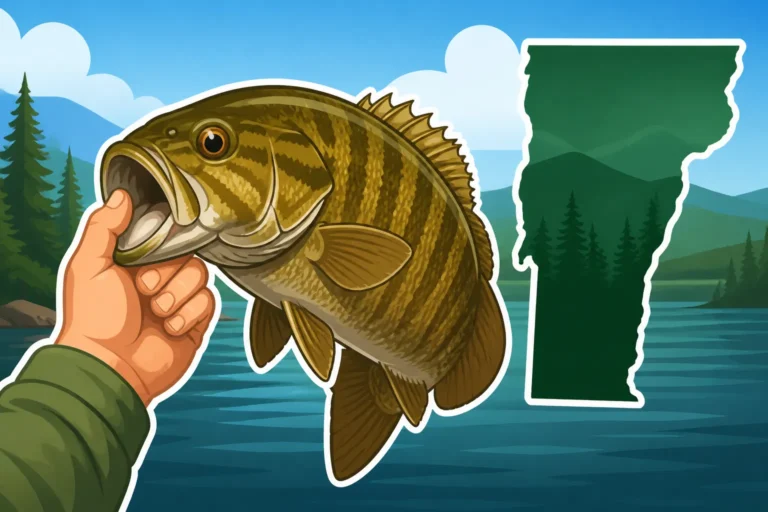
Smallmouth bass, by contrast, generally possess a more compact, almost football-shaped body. They often appear deeper-bodied and more streamlined, a characteristic suited for battling currents in rivers or navigating rocky structures in lakes. Their coloration is typically a beautiful bronze, golden-green, or brownish hue on the back and sides, often adorned with subtle vertical bars or a mottled pattern rather than a distinct horizontal stripe. These bars are usually more pronounced on younger smallmouths and can fade in larger, older specimens or in certain water conditions. These subtle but consistent differences in overall appearance contribute significantly to a confident identification.
Lateral Line and Markings: Nature's Fingerprints
The lateral line is a sensory organ that runs along the side of a fish, appearing as a faint or distinct line of scales. For largemouth bass, this lateral line is often quite pronounced, and as mentioned, it's frequently accompanied by a dark, irregular horizontal stripe or a series of blotches. Think of it like a bold, somewhat broken line painted down the fish's side. The markings above and below this line tend to be more uniform or subtly mottled.
Smallmouth bass usually have a less distinct lateral line. Instead of a horizontal stripe, they are more commonly characterized by a series of dark, vertical bars or blotches that stretch from their back down their sides, sometimes fading towards the belly. These vertical bars can give the smallmouth a camouflaged appearance, especially when they're holding tight to rocky structures. In some clear-water smallmouths, these bars can be quite vivid, resembling tiger stripes. The overall pattern is one of vertical rather than horizontal emphasis. Observing these unique "fingerprints" can be the final confirmation you need, especially if other features seem ambiguous at first glance. They are perfectly adapted to blend into the differing environments each species prefers. You might find a good field guide on Amazon that illustrates these differences beautifully.
Habitat and Behavior: Where You'll Find Each Bass in Vermont
Understanding where these two bass species prefer to live can be just as helpful for identification as their physical characteristics. In Vermont, our diverse waterways cater to both, but their ecological niches are quite distinct. Knowing these preferences allows you to anticipate what kind of bass you might encounter in a particular spot, and fine-tune your approach. For more details on where to find these fish, check out our guides on Largemouth Bass Fishing in Vermont and Smallmouth Bass Fishing in Vermont.
Largemouth: The Lover of Weeds and Shallow Cover
The largemouth bass is undeniably a creature of cover. You'll typically find them in warmer, shallower waters with abundant vegetation, submerged timber, or other structures that provide ambush points. Think of those classic Vermont ponds and the quieter, shallower bays of larger lakes, especially those choked with lily pads, cattails, or dense weed beds. They love to lie in wait, perfectly camouflaged, ready to explode on unsuspecting prey. These fish thrive in water that might feel too warm for other species, often preferring temperatures in the 70s Fahrenheit.
In Vermont, this means targeting largemouth in locations like smaller, fertile ponds, the many state park lakes, and the protected, weedy coves of larger bodies of water like Lake Champlain. They'll hug fallen trees, docks, and thick clumps of hydrilla or milfoil. If you're fishing a spot with lots of visible surface cover, shallow water, and a softer bottom, odds are good you're in largemouth territory. Their behavior aligns with this preference: they are ambush predators, often making short, explosive strikes from cover. If you're targeting largemouth, you'll want to focus on casting into pockets in the weeds or along the edges of structure. You can learn specific techniques in Best Techniques for Largemouth Bass in Vermont Ponds.
Smallmouth: The Rock and Current Dweller
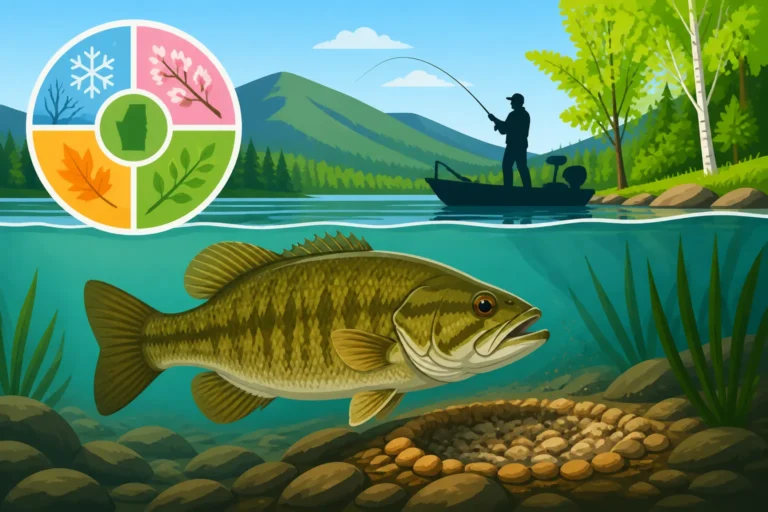
In stark contrast, the smallmouth bass is a fan of cooler, clearer, and often deeper water, preferring hard bottom structures like rocks, gravel, and ledges. They are also much more comfortable in moving water and are frequently found in river currents. Unlike their largemouth cousins, smallmouths don't rely on dense vegetation for ambush. Instead, they use underwater contours, rock piles, and current breaks to their advantage, often chasing down their prey rather than waiting for it. Their more compact, muscular body is perfectly designed for fighting currents and navigating rocky terrain.
In Vermont, you'll encounter smallmouth bass in the deeper, rockier sections of major lakes like Lake Champlain, Lake Memphremagog, and Lake Bomoseen. They are also the dominant bass species in many of Vermont's larger rivers, such as the Connecticut River and the Otter Creek, where they thrive in riffles, runs, and around submerged boulders. If you're fishing a clear, cool lake with extensive rock formations, or a river with noticeable current and rocky banks, you’re almost certainly in smallmouth country. They often school up more than largemouth, and their fights are legendary for their acrobatic jumps and powerful runs. Understanding Smallmouth Bass Habits on Lake Champlain can give you an edge when targeting these feisty fish. Knowing the difference between these two preferred habitats is a powerful tool in your Vermont fishing arsenal, helping you choose the right spots, and the right gear, like finding the Best Tackle for Vermont Smallmouth Bass on Amazon.
Practical Tips for Anglers: Confirming Your Catch
Even with all the knowledge in the world, sometimes a fish can throw you for a loop. Maybe it's a smaller juvenile, or perhaps it's a "hybrid" looking specimen (though true largemouth-smallmouth hybrids are incredibly rare and usually sterile; often it’s just an atypical example of one species). Don't fret! There are practical ways to quickly confirm your catch on the water, ensuring you make the right decisions regarding regulations and release.
A Quick Field Guide Checklist
When you land a bass, and you're not immediately certain which species it is, take a moment to run through a quick mental or actual checklist. This systematic approach can clear up any doubts in seconds. Here's a handy table summarizing the key distinguishing features. You could even print this out or save it to your phone for quick reference while you're out enjoying Best Fishing Lakes in Vermont or Best Fishing Rivers in Vermont.
| Feature | Largemouth Bass | Smallmouth Bass |
|---|---|---|
| Mouth Jawline | Extends beyond the back of the eye | Extends to or just before the middle of the eye |
| Dorsal Fin Notch | Deep, almost separating into two fins | Shallow, continuous, appears as one fin |
| Body Shape | More elongated, often chunkier | More compact, football-shaped, deeper-bodied |
| Primary Coloration | Dark green to olive | Brown, bronze, golden-green |
| Side Markings | Prominent, jagged horizontal stripe or blotches | Vertical bars or mottled patterns |
| Typical Habitat | Weeds, lily pads, submerged timber, shallow, warmer water | Rocky bottoms, ledges, current, clear, cooler water |
Running through this checklist for each fish, especially if you're aiming for a specific species or ensuring regulatory compliance, will quickly make you an expert in bass identification. It takes a little practice, but soon it'll be second nature.
What to Do if You're Still Unsure
Let's face it, sometimes even with a good checklist, you might catch a bass that just doesn't fit neatly into one box, or maybe the lighting is bad, or you're just having an "off" day. It happens to the best of us! If you've gone through the checklist and are still genuinely unsure whether you have a largemouth or a smallmouth bass, especially concerning length or creel limits, the safest and most responsible course of action is almost always to practice catch and release.
Take a quick photo if you want to identify it later with a friend or a fishing forum, then carefully release the fish back into the water. It’s far better to err on the side of caution than to accidentally keep an undersized fish or one that exceeds a specific bag limit. When in doubt, let it swim. You can also consult official Vermont Fish and Wildlife resources, which often have detailed species guides. Some anglers even keep a small, laminated field guide, perhaps one picked up from Amazon or a local tackle shop, clipped to their vest or tackle box for those uncertain moments. Responsible angling is about respecting the resource, and sometimes that means acknowledging when you're not 100% sure and choosing conservation over a potential misstep. For general guidance on fishing rules, remember to consult Vermont Fishing Regulations Explained.
Disclaimer
This article is for general informational purposes only and does not constitute professional advice. Laws, prices and regulations vary by location and change over time. Consult a qualified professional for guidance on your specific situation.