How to euro nymph a mountain freestone stream
Many anglers dream of chasing wild trout in the pristine, intimate waters of Vermont's mountain streams, but the tight quarters, erratic flows, and spooky fish can make it feel like an impossible challenge with traditional fly fishing methods. If you've ever felt frustrated by drag, missed strikes, or flies not getting deep enough in those boulder-strewn runs, then this comprehensive guide to Euro nymphing these unique freestone environments is exactly what you need to unlock their secrets and consistently hook up with beautiful fish.
Decoding Vermont's Mountain Freestone Streams for Euro Nymphing
Before you even think about casting a line, understanding the very nature of a mountain freestone stream is paramount. These aren't your typical wide, slow-moving rivers; they are dynamic, ever-changing waterways that demand a specific approach.
What Makes a Freestone Stream "Freestone"?
When we talk about "freestone" streams in Vermont, we're referring to rivers and brooks that aren't primarily fed by groundwater springs (like spring creeks) or controlled by dam releases (like tailwaters). Instead, their flow is largely dictated by precipitation and snowmelt, which means they can fluctuate wildly in depth and current speed. You'll find a chaotic but beautiful landscape of rocks, boulders, gravel, and sand, all constantly rearranged by the water's power. This geological characteristic means the water is often well-oxygenated, but also prone to turbidity after heavy rains. Think of the small, picturesque streams tumbling down from the Green Mountains – those are classic freestone environments. They typically feature a higher gradient than larger rivers, leading to more distinct riffles, runs, and plunge pools. This highly varied bottom structure creates a multitude of hiding spots and feeding lanes for trout, but also presents challenges for getting your flies into the strike zone.
Reading the Water: Identifying Prime Lies
Reading the water in a mountain freestone stream is less about finding expansive flats and more about identifying micro-currents and hydraulic anomalies. Trout in these high-energy environments are constantly seeking out places where they can expend the least amount of energy while still having access to a conveyor belt of food. Look for "seams" – the lines where fast water meets slow water, creating a natural drift lane for insects. Undercut banks offer crucial cover from predators and strong currents, and often hold larger, more cautious fish. Boulder pockets, formed by large rocks obstructing the flow, create quiet eddies immediately downstream or to the sides, acting like natural fish hotels. Plunge pools, often found below small waterfalls or cascades, are classic holding areas, providing depth and oxygen. Even small depressions or changes in the stream bed can create subtle current breaks where a trout might be patiently waiting. Being able to quickly assess these features and predict where a fish might be hiding is a cornerstone of effective Euro nymphing, allowing you to present your flies with precision and efficiency. For more general advice, consider exploring How to fish a run and pool trout stream which discusses some of these concepts in a broader river context.
Understanding Aquatic Insect Life Cycles (and Their Importance for Nymphing)
While you don't need to be an entomologist, a basic understanding of the aquatic insects that inhabit Vermont's freestone streams is incredibly helpful for choosing your nymphs. Caddisflies, mayflies, and stoneflies are the big three, and their larval and nymphal forms make up the bulk of a trout's diet. Caddis larvae are often found clinging to rocks or in their distinctive cases, while mayfly nymphs typically crawl or swim along the bottom. Stonefly nymphs, larger and more robust, prefer oxygen-rich, rocky bottoms. The beauty of Euro nymphing is that you're often imitating these insects drifting along the streambed, where trout do the majority of their feeding. Your nymph selection should broadly reflect the size and general profile of what's available in the stream, but don't overthink it. Often, a few versatile patterns that cover different sizes and colors will suffice. The key is presenting them naturally, which the Euro nymphing method excels at. If you want to dive deeper into insect imitation, check out Fly Patterns for Vermont Trout Streams.
Essential Gear for Euro Nymphing Vermont Freestones
Euro nymphing isn't just a technique; it's also a gear-specific discipline. While you can certainly adapt conventional fly fishing gear, having the right tools makes a world of difference in your success and enjoyment.
Rod, Reel, and Specialized Line Setups
The core of a Euro nymphing setup starts with the rod. Forget your standard 9-foot, 5-weight general-purpose rod. For mountain freestone streams, you're looking for something longer and lighter – typically a 10 to 11-foot rod in a 2 to 4-weight. This extra length isn't for casting distance, but for line control, extending your reach to fish pockets and runs without wading, and keeping as much line off the water as possible to prevent drag. The lighter weight allows for incredibly sensitive bite detection and protects light tippets. Many reputable brands offer rods specifically designed for this technique, and you can often find great deals and a wide selection on Amazon.
Your reel choice is less about advanced features and more about balance. A large arbor reel is common, not necessarily for fighting huge fish, but because it helps counterbalance the long rod and retrieves line quickly. As for the line itself, this is where it deviates most from traditional setups. Instead of a standard weight-forward fly line, many Euro nymphing setups use a very thin, level monofilament line or a specialized Euro nymphing line that is incredibly thin and designed for minimal sag. The idea is to have almost no fly line on the water, relying instead on your leader system and the weight of your nymphs to get down to the fish. For more on rod choices, consider reading Best Fly Rods for Vermont Trout Streams.
The Importance of a Purpose-Built Leader System
This is arguably the most critical component of your Euro nymphing rig. A standard tapered leader simply won't cut it. A Euro nymphing leader is typically quite long, often 20 feet or more, and consists of several distinct sections:
- The Butt Section: This is usually a thicker monofilament or fluorocarbon section, often 10-20 lb test, extending from your fly line. Its purpose is to provide stiffness and transfer energy from the cast.
- The Sighter (or Indicator) Section: This is a crucial element, typically 2-3 feet of highly visible monofilament, often bi-colored (e.g., pink and chartreuse, or black and white). This section is built into your leader and acts as your strike indicator. Any subtle twitch, stop, or acceleration of this sighter indicates a take. It's not a float, but rather a visual aid to track your drift and detect strikes. You might knot two different colors together for even more visibility against varying backgrounds.
- The Tippet Ring: A tiny metal ring (often 2mm or smaller) connects your sighter section to your tippet. This allows you to easily change tippet sizes without cutting back into your sighter. You can find these small but mighty accessories on Amazon, and they’re truly a game-changer.
- The Tippet Section: This is the fine diameter fluorocarbon that extends from your tippet ring to your flies. Fluorocarbon is preferred due to its low visibility underwater and its faster sink rate compared to monofilament. You'll often run two flies (a "point fly" at the bottom and a "dropper" attached to a tag end above it), so your tippet section needs to be long enough to accommodate this, often 3-6 feet. The length and diameter of your tippet will vary depending on water depth, current speed, and fish spookiness.
This multi-part leader system is designed for maximum sensitivity and minimal drag, allowing your nymphs to sink quickly and drift naturally, precisely what you need in freestone streams. Many anglers like a Best Nymph Rig for High Mountain Streams that incorporates these elements effectively.
Nymph Selection and Rigging for Success
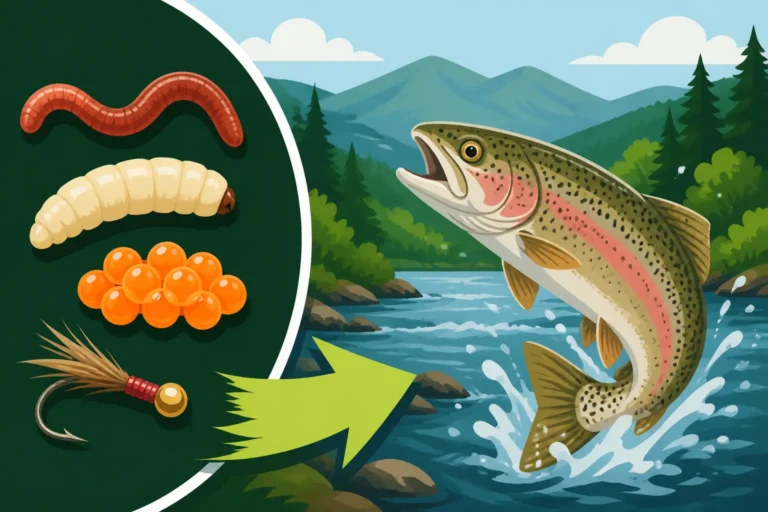
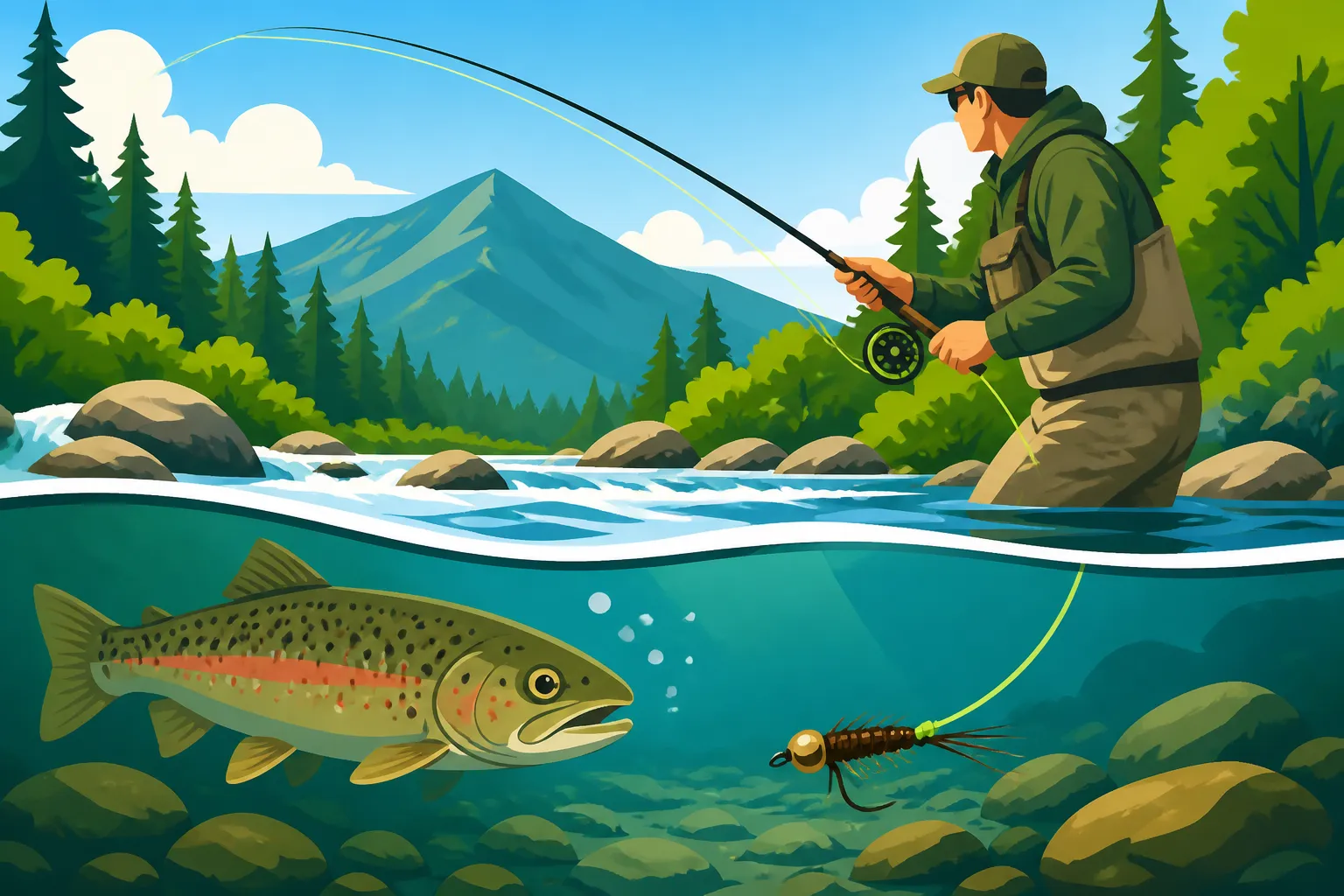
When selecting nymphs for Vermont's freestone streams, focus on patterns that sink quickly and imitate the various aquatic insects present. Tungsten-beaded nymphs are your best friends here. Unlike brass beads, tungsten is much denser, meaning a smaller bead can get your fly down faster. Jig hooks are also highly favored, as they allow the fly to ride hook-point up, reducing snags on the rocky bottom and improving hook-ups.
Popular patterns include:
- Perdigons: These are slim, heavily weighted, and often brightly colored nymphs that cut through the water column quickly.
- Frenchies: A classic, simple pattern with a hot spot, imitating various mayfly nymphs.
- Pheasant Tail Nymphs (with tungsten beads): A versatile pattern that mimics a wide array of mayflies.
- Hare's Ear Nymphs (with tungsten beads): Another classic, effective for caddis and mayfly imitations.
- Stonefly Nymphs: Larger, heavier patterns that are great for searching deeper pockets, especially in spring.
For rigging, most Euro nymphers use a two-fly system. The heavier fly, the "point fly," is tied directly to the end of your tippet. Your "dropper" fly is then tied to a tag end (usually 6-12 inches long) off the point fly's hook bend, or more commonly, off a knot higher up on your tippet section, several inches to a foot above the point fly. This allows you to fish two different depths or imitate two different insects simultaneously, increasing your chances.
Other Must-Have Accessories for the Freestone Angler
Beyond the core rod and leader setup, a few other items are non-negotiable for tackling Vermont's freestone waters:
- Waders and Wading Boots: You'll be doing a lot of wading, often over slippery, uneven terrain. Breathable chest waders are essential for staying dry, while quality wading boots provide critical traction. You'll often find anglers debating Best Wading Boots for Rocky Streams – felt soles offer superior grip on slick rocks, but rubber soles are better for walking on trails and less prone to transporting invasive species. Choose what best suits your local conditions and personal preference. You can browse a wide selection of both on Amazon. For specific recommendations, check out Best Waders for Vermont Trout Streams.
- Wading Staff: This isn't just for old-timers! A sturdy, collapsible wading staff for fast current provides crucial stability in strong currents and helps probe uncertain depths, preventing falls and ensuring safer navigation.
- Net: A good landing net, ideally with a rubberized, knotless mesh, is vital for safely landing and releasing trout, especially in snaggy environments. A long-handled net is often preferred to extend your reach while standing in the stream. Consider Best Landing Net for Trout for optimal choices.
- Sling Pack or Vest: Keep your flies, tippet spools, nippers, and other essentials organized and easily accessible. A sling pack often allows for quick access without taking it off.
- Polarized Sunglasses: These are not just for comfort; they cut glare, allowing you to see into the water, spot structure, and even sight fish in clearer conditions.
Mastering Euro Nymphing Techniques on the Water
Once you have your gear dialed in, it's time to put it to use. Euro nymphing is an active, hands-on style of fishing that requires constant engagement with your line and flies.
The Art of the Controlled Drift
The cornerstone of successful Euro nymphing is maintaining a controlled, drag-free drift. This means keeping your rod tip high and as much of your line (especially your sighter) off the water as possible. Your goal is to guide your nymphs along the stream bottom at the exact speed of the current. You'll be constantly "leading" your flies, moving your rod tip to match their drift, ensuring there's always a slight tension to feel the subtle takes. This continuous contact is what allows for the exceptional sensitivity of the method. In highly turbulent freestone sections, you might need to mend your line upstream or downstream with micro-movements of your rod to counteract conflicting currents. The idea is to make your nymphs look like natural insects tumbling downstream, completely at the mercy of the water, not being pulled or pushed by a tight line.
Casting and Presentation in Tight Quarters
Mountain freestone streams are often characterized by dense overhanging vegetation, steep banks, and limited backcasting room. This means traditional overhead casts are often impractical or impossible. Instead, Euro nymphing relies on specialized casts that prioritize accurate, quiet presentation in confined spaces:
- Roll Cast: A fundamental cast that uses the rod's load to propel the line forward without a backcast. Perfect for getting your flies out when there's an obstruction behind you.
- Flip Cast / Water Load Cast: A subtle, short-range cast where the weight of the flies and a small amount of water tension are used to "flip" the leader and flies upstream or downstream.
- Bow-and-Arrow Cast: For extremely tight spots where even a roll cast isn't feasible, you can hold the leader or fly with one hand, flex the rod, and release, essentially "shooting" the flies to a target.
The goal is always a soft, quiet entry of your flies into the water, minimizing disturbance that could spook wary trout. Remember, you're not trying to cast a long line; most effective Euro nymphing happens within 10-30 feet of your position. For general information on stream fishing, you might also find Drift Fishing for Trout in Vermont Rivers helpful, though it covers a broader range of techniques.
Detecting Strikes and Setting the Hook
This is where the magic (and often, the initial frustration) of Euro nymphing comes in. With the direct connection provided by your specialized leader, strikes are primarily detected visually through your sighter, or sometimes by feel. Any unnatural movement of your sighter – a hesitation, a subtle twitch, a sudden stop, or even an accelerated downstream movement – warrants a hook set. Sometimes, you'll feel a faint "tick" through the rod, especially when a larger fish takes the fly.
The hook set itself is typically a swift, short lift of the rod. It's not a dramatic sweep like with a dry fly. Because you're in constant contact, a quick, positive lift is usually all it takes. Often, you'll be setting the hook on something that just "felt different" or on a movement of your sighter that wasn't a definitive pull. If in doubt, set the hook! You'll hook many more fish this way than by waiting for a definitive tug.
Navigating and Wading Safely
Wading in Vermont's freestone mountain streams can be treacherous. The bottom is often uneven, consisting of slick, moss-covered rocks, loose gravel, and sudden drop-offs. Safety should always be your top priority.
- Foot Placement: Take small, deliberate steps. Shuffle your feet rather than lifting them high, feeling for stable footing with each movement.
- Wading Staff: As mentioned earlier, a wading staff for fast current is invaluable. Use it to maintain three points of contact with the stream bed and to probe depths before committing your weight.
- Current Awareness: Be constantly aware of the current's strength and direction. Avoid wading into water that feels too strong or too deep. If the water reaches above your knees in a strong current, it's generally best to find another route or spot.
- Planning Your Route: Before stepping in, look downstream and upstream. Identify potential hazards, easy crossing points, and areas where you can comfortably fish without putting yourself at risk.
- Layer Up: Even in summer, mountain water can be cold. Dress in layers, and always be prepared for changing weather conditions. For more detailed advice, refer to Wading Techniques for Vermont Trout Streams.
Adapting to Conditions and Maximizing Your Catch
The dynamic nature of freestone streams means conditions are rarely static. Being able to adapt your Euro nymphing approach to varying water levels and temperatures will significantly increase your success.
High Water vs. Low Water Strategies
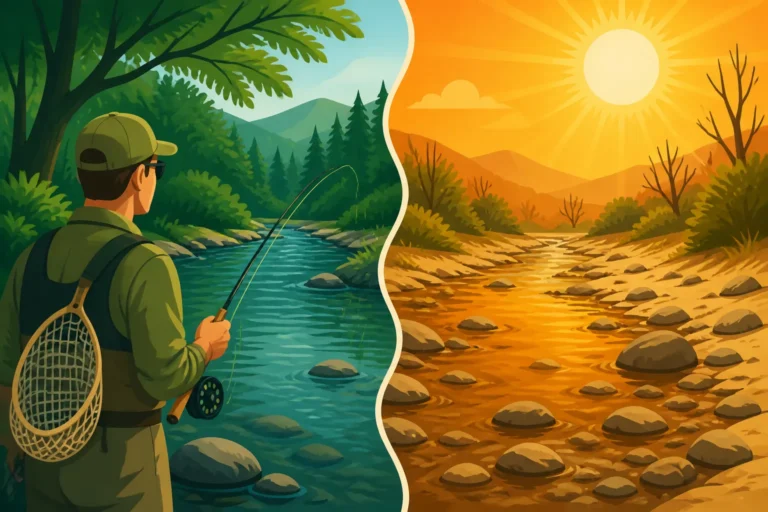
- High Water: After heavy rains or during spring snowmelt, freestone streams can become swollen and murky. Trout will often move out of the main current and seek refuge in slower, softer water along the banks, in eddies, or behind large boulders. Your strategy here should be to fish these calmer margins and eddies. Use heavier nymphs to get down quickly in the faster water near the edges, and perhaps larger, darker patterns to offer better visibility in stained water. Focus on areas where food might be washed into slower zones, like current seams along the bank or below structures.
- Low Water: During dry spells, freestone streams can run very low and clear. This makes trout incredibly spooky. Your approach needs to be stealthy and your presentations delicate. Use longer, finer tippets (e.g., 6x or 7x fluorocarbon) and smaller, more natural-looking nymphs. Cast from further away, staying low and out of sight as much as possible. Focus on deeper pools and shaded areas where trout will congregate, and ensure your drift is absolutely perfect, as trout have ample time to inspect your flies. In these conditions, you might want to look for Best technique for fishing pocket water specifically.
Cold Water vs. Warm Water Tactics
- Cold Water (Early Spring/Late Fall): When water temperatures are low, trout are often lethargic. Their metabolism slows, and they're less likely to chase food. Your presentation needs to be slow and deliberate. Focus on getting your nymphs right on the bottom, often in deeper, slower pools where trout are conserving energy. Consider using slightly larger, more protein-rich patterns like stonefly imitations or worm patterns that offer a substantial meal. The fish won't move far for food, so precise placement is key. Keep an eye on local regulations for Vermont Trout Season and Stocking Rules to know when these cold-water opportunities arise.
- Warm Water (Mid-Summer): As summer progresses, freestone streams can warm up significantly. Trout become more active and will often hold in faster, oxygenated water like riffles and the heads of pools. They'll also feed more actively. You can often get away with slightly faster drifts and sometimes even brighter "hot spot" patterns. However, be mindful of water temperature – if it gets too warm, trout can become stressed, and it's best to give them a break. Consult resources like When Vermont trout streams get too warm to fish for guidance on responsible warm-water angling.
Ethical Angling and Conservation in Mountain Streams
Part of the joy of fishing Vermont's pristine mountain streams is being a steward of these delicate ecosystems. Practicing ethical angling ensures these resources remain vibrant for future generations.
- Catch and Release: Many mountain streams contain wild, self-sustaining trout populations. Practicing catch and release, especially for native brook trout (Vermont's state fish, which you can learn more about in Brook Trout: Vermont's Native Trout), is crucial. Handle fish gently with wet hands, keep them in the water as much as possible, and use a knotless, rubberized net to minimize harm.
- Minimize Impact: Stay on established trails, avoid trampling stream banks, and pack out all your trash. Consider the concept of "leave no trace."
- Know the Regulations: Always be intimately familiar with the Vermont Fishing Regulations Explained for the specific body of water you're fishing. Regulations can vary widely from stream to stream, with special restrictions on certain sections or species. For instance, Brown Trout Habits in Vermont Streams often dictates certain regulations.
By understanding the unique environment of Vermont's mountain freestone streams and applying these specialized Euro nymphing techniques with a mindful approach, you'll transform your fly fishing experience, connecting with wild trout in some of the state's most beautiful and challenging waters.
| Leader Section | Material & Strength | Purpose | Notes |
|---|---|---|---|
| Butt Section | Mono/Fluoro, 10-20 lb | Connects to fly line, provides stiffness for turnover | ~5-10 feet, depending on rod length |
| Sighter Section | Bi-color Mono, 4-8 lb | Visual strike detection, drift indication | ~2-3 feet, highly visible colors |
| Tippet Ring | Micro Ring (1.5-2mm) | Connects sighter to tippet, allows easy tippet changes | Found on Amazon, crucial for efficiency |
| Tippet (Upper) | Fluorocarbon, 3-6 lb (4x-6x) | Connects tippet ring to dropper fly's tag end | ~1-3 feet, low visibility, fast sink |
| Tippet (Lower) | Fluorocarbon, 2-5 lb (5x-7x) | Connects dropper fly to point fly | ~1-3 feet, often finer for presentation |
Disclaimer
This article is for general informational purposes only and does not constitute professional advice. Laws, prices and regulations vary by location and change over time. Consult a qualified professional for guidance on your specific situation.