Best streamer patterns for Vermont brown trout
It's a common frustration for many fly anglers: you're standing on the banks of a beautiful Vermont river, the brown trout are notoriously finicky, and you're staring at your fly box wondering which streamer pattern will finally entice that elusive, wary fish. We've all been there, feeling the pressure to pick just the right imitation to fool one of Vermont's wariest predators. This comprehensive guide is here to cut through the guesswork, helping you understand the best streamer patterns for brown trout in Vermont's diverse waters, and how to fish them effectively.
Understanding Vermont Brown Trout Habits and Habitat
Before we even talk about specific fly patterns, it's crucial to understand the creature you're trying to outsmart. Vermont's brown trout are cunning, opportunistic predators, and their behavior dictates which streamers will perform best. They aren't always easy to catch, which is part of their allure!
The Elusive Nature of Brown Trout
Brown trout, particularly the larger specimens that hold true trophy potential, are masters of camouflage and survival. They're incredibly wary, often spooked by shadows, vibrations, or even an errant fly line landing too hard. These fish are predators, but they're also survivors, meaning they'll prioritize energy conservation and safety. This is why a well-presented streamer that accurately mimics a vulnerable baitfish or sculpin is so effective. They tend to be more active feeders in low light conditions—dawn, dusk, or overcast days—but will seize an easy meal at any time if the opportunity arises. Their predatory instincts mean they often key in on larger food sources that offer more caloric payoff, making streamers a prime choice. For more on their tendencies, you might want to delve into Brown Trout Habits in Vermont Streams.
Where Brown Trout Hide in Vermont Rivers
Brown trout are structure-oriented fish, meaning they gravitate towards areas that offer protection from predators and current, as well as ambush points for prey. In Vermont's many rivers and streams, from the renowned Battenkill to the smaller, wilder tributaries of the White River, you'll find them holding in specific types of water. Look for undercut banks where the current has carved out a safe overhead sanctuary, providing shade and cover. Fallen timber, submerged logs, and rock piles are also prime real estate, creating current breaks and hiding spots. Deep pools, especially those with some current flow or a complex bottom, are often holding areas for larger brown trout, allowing them to conserve energy while waiting for prey. Riffle seams, where fast water meets slower water, are also key feeding lanes where disoriented baitfish might get swept past. Understanding these preferred lies is half the battle; your streamer needs to get to where the fish are hiding. Consider exploring specific locations mentioned in our guide to Best Fly Fishing Rivers in Vermont to apply this knowledge.
Seasonal Movements and Feeding Patterns
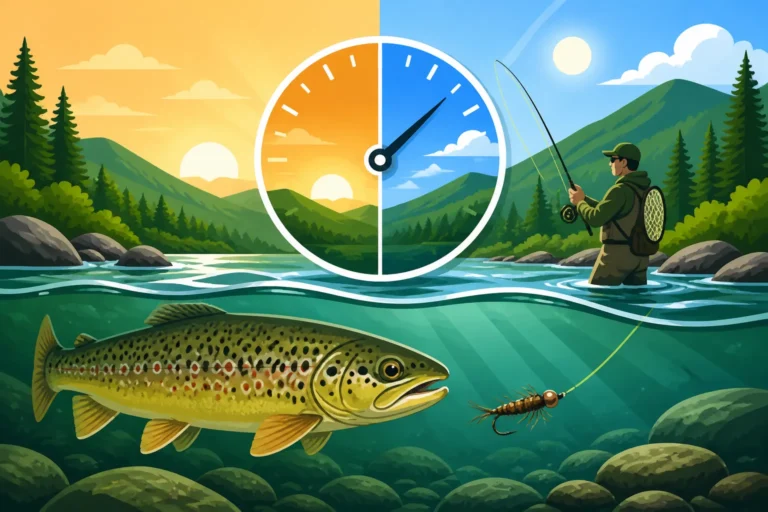
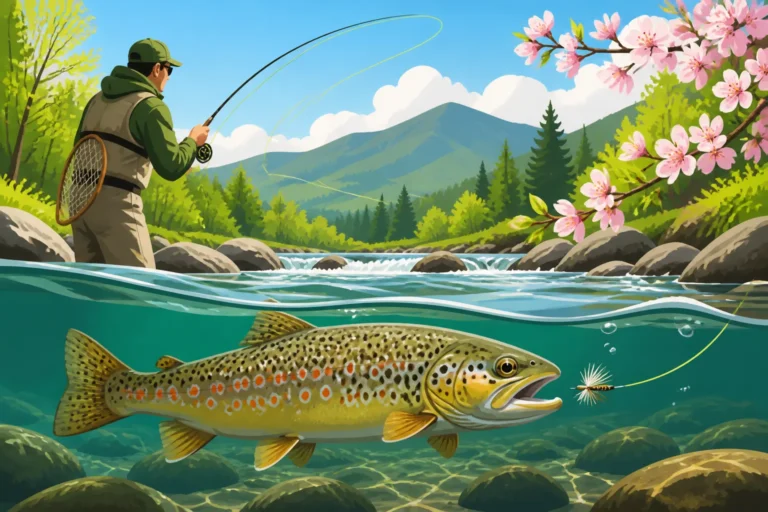
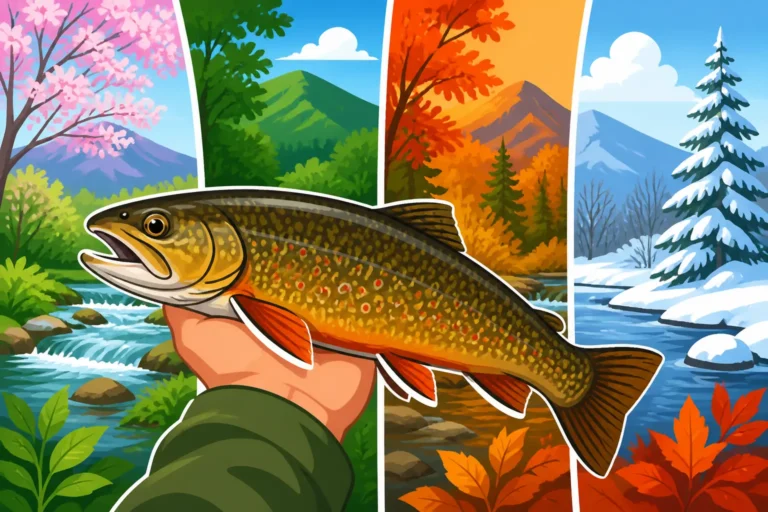
Vermont's seasons play a massive role in brown trout behavior. In the spring, after ice-out, brown trout are often eager to feed heavily, recovering from the lean winter months. They'll be looking for larger meals, and streamers can be incredibly effective during this time, especially in higher, cooler water. As waters warm in summer, brown trout might become more nocturnal or seek out cooler, deeper oxygenated water, making early morning or late evening streamer fishing particularly productive. Fall is another prime streamer season, as trout feed aggressively in preparation for winter and the spawning season. During this time, they become incredibly territorial and will often strike a streamer not just out of hunger, but also out of aggression towards an perceived intruder in their spawning redds or holding lies. Knowing when and where to present your streamer dramatically increases your chances. You can learn more about specific seasonal strategies in Spring Trout Fishing Techniques for Vermont Streams and Best Time of Year to Fish in Vermont.
Key Characteristics of Effective Brown Trout Streamers
Choosing the "best" streamer isn't just about a name; it's about understanding what makes a pattern effective under varying conditions. It's about how the fly behaves in the water, what it looks like, and how it appeals to a brown trout's predatory senses.
Size, Profile, and Action
When selecting a streamer, think about the prey fish in the water you're fishing. Are there abundant sculpins? Dace? Smelt? Your streamer should mimic the size and profile of these common forage species. For Vermont brown trout, streamers often range from 2 to 6 inches, with larger patterns reserved for bigger fish or aggressive feeding periods. The profile—how the fly looks from the side—is crucial. A bulky fly might imitate a stout sculpin, while a slender fly could mimic a shiner.
Most importantly, consider the action of the fly in the water. Does it swim, dart, and undulate like a baitfish? Materials like rabbit strip (zonker strips), marabou, and various synthetic fibers are fantastic for creating lifelike movement, even with minimal stripping action. Articulated streamers, which have multiple segments, are designed specifically to enhance this swimming action, allowing the fly to bend and move more naturally, often provoking aggressive strikes from larger brown trout.
Color Theory for Vermont Waters
Color choice can feel like a dark art, but there's some science to it, especially when targeting brown trout.
- Natural Colors: Olive, brown, black, and grey are staples. These colors imitate sculpins, dace, and other common forage fish found in Vermont streams and lakes. They work exceptionally well in clear water or during bright conditions when trout are more likely to inspect your offering closely. A black streamer, for instance, often creates a stark silhouette against the sky, making it highly visible to fish looking up.
- Attractor Colors: White, yellow, chartreuse, and even bright orange or pink can be incredibly effective, especially in stained or murky water, or during low light conditions. These colors don't necessarily imitate a specific baitfish but rather trigger an aggressive reaction from the trout. Think of it as waving a red flag in front of an angry bull—it's meant to provoke, not necessarily to deceive. Sometimes, a "hot spot" of color, like a chartreuse head on an olive body, can be the subtle trigger needed.
Ultimately, carrying a range of natural and attractor colors allows you to adapt to the water clarity, light conditions, and mood of the fish.
Weight and Sink Rate
Getting your streamer to the fish is paramount, and that often means getting it down to their level in the water column. Many brown trout, especially the larger ones, hold deep in pools, undercuts, or near the bottom in current breaks.
- Weighted Flies: Many streamers come tied with lead eyes (like the Clouser Minnow) or lead wire wrapped on the shank. These internal weights help the fly sink quickly and swim with a jigging motion when stripped.
- Sink-Tip or Full-Sinking Lines: Even with weighted flies, a floating line might not get your fly deep enough in strong currents or deep pools. This is where a sink-tip or full-sinking fly line becomes invaluable. A sink-tip line has a sinking section at the front, allowing your leader and fly to get down while maintaining a floating running line for easier mending and casting. Full-sinking lines are for getting deep and staying there, often favored in lakes or very deep river sections. For a comprehensive look at the necessary gear, check out Best Gear for Vermont Trout Fishing and Best Fly Rods for Vermont Trout Streams.
Top Streamer Patterns for Vermont Brown Trout
Now, let's talk about the specific patterns that have earned their stripes on Vermont's brown trout waters. These aren't just flies; they're proven fish-catchers that belong in every serious angler's box.
Classic Patterns That Always Produce
These are the workhorses, the flies that have been fooling trout for decades, and for good reason. They are versatile, effective, and relatively easy to fish.
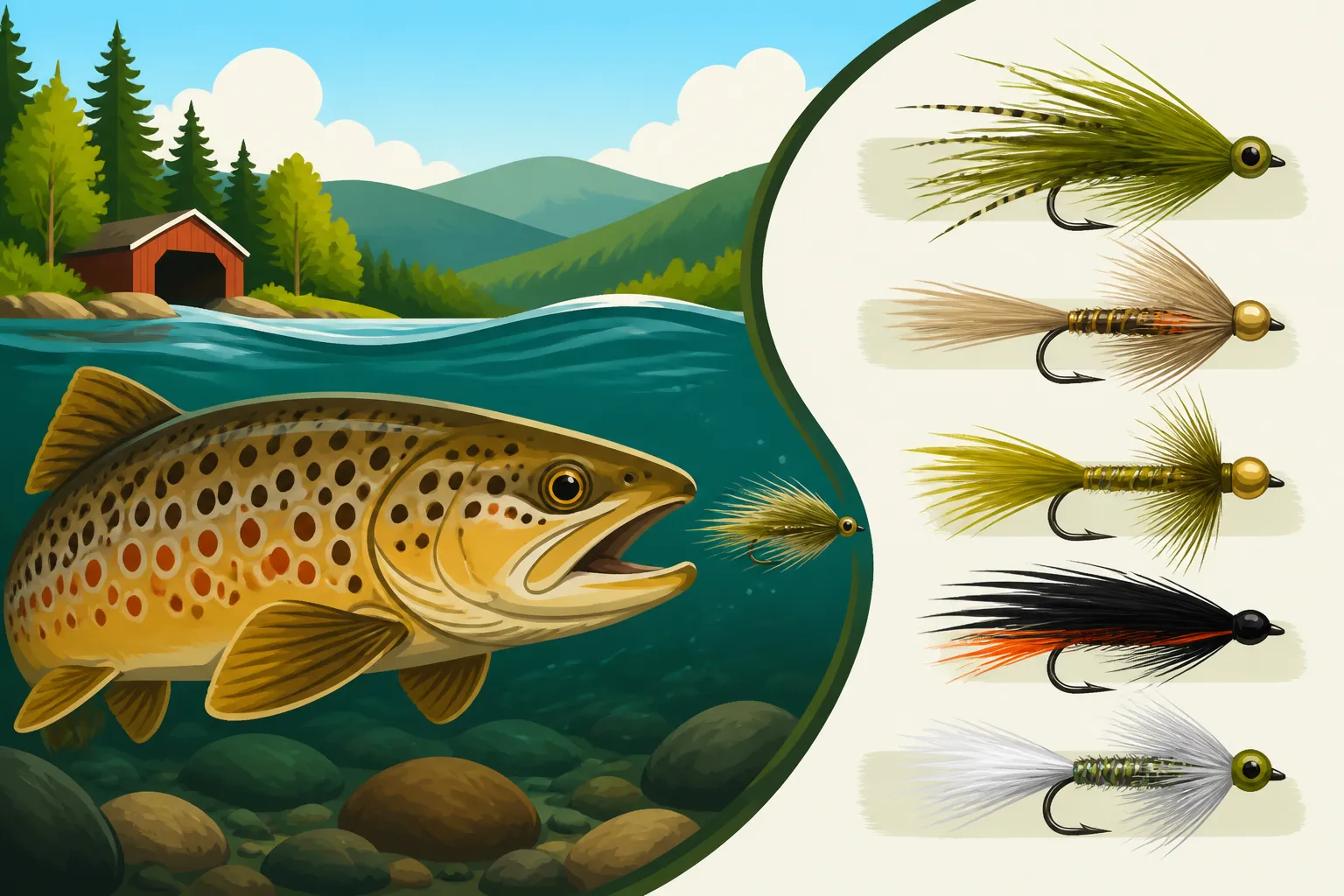
- The Woolly Bugger: If there's one streamer you absolutely must have, it's the Woolly Bugger. Its simple design—a chenille body, palmered hackle, and marabou tail—creates incredible movement in the water, mimicking a wide range of prey from baitfish and leeches to aquatic insects. It can be fished in virtually any water condition and retrieved in countless ways. Try it in black, olive, brown, or white. You can pick up a variety pack on Amazon to start your collection without breaking the bank. This fly is especially effective when targeting fish that are less selective or when you're exploring new water.
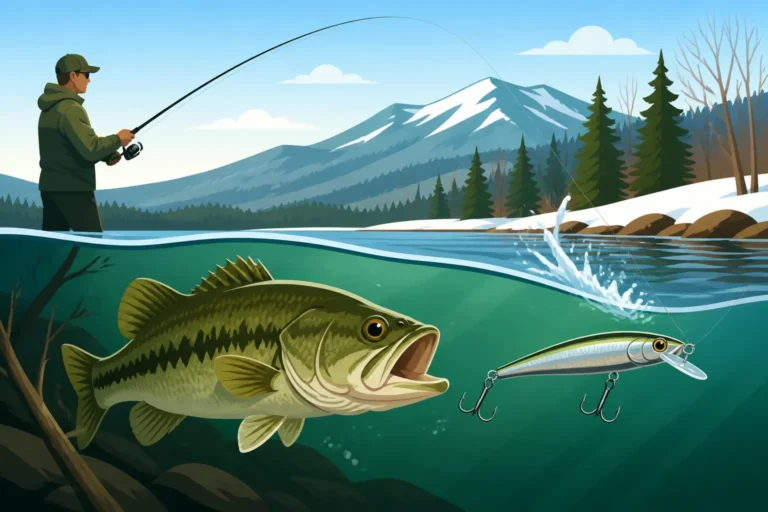
- Clouser Minnow: Developed for saltwater, the Clouser Minnow quickly proved its worth in freshwater for bass and trout. Its dumbbell eyes give it a distinct jigging action and help it sink fast. Tied with bucktail, it maintains a slender profile in the water, perfectly imitating baitfish like shiners or dace. Chartreuse/white, blue/white, and olive/white are excellent color combinations for Vermont. It's particularly good for fishing faster currents or deeper pools where you need to get down quickly.
- Zonker: The Zonker's main appeal is its rabbit strip wing, which undulates enticingly in the water, giving it an incredibly lifelike swimming action. It's often tied with a flashy body, adding an extra element of attraction. Natural colors like olive, black, and natural rabbit fur colors are fantastic for imitating sculpins or other bottom-dwelling baitfish. The natural movement of the rabbit strip is often irresistible to larger, predatory brown trout.
Modern Articulated Streamers for Big Browns
For those looking to target the truly big, aggressive brown trout, articulated streamers are a game-changer. These patterns are designed to have maximum movement and often imitate larger prey, triggering a predatory response.
- Drunk & Disorderly: This pattern, often tied with a deer hair head, pushes a significant amount of water and has an erratic, swimming action that drives big trout wild. Its articulated body gives it a sinuous movement that larger baitfish exhibit. When retrieved with aggressive strips and pauses, it looks like a struggling or injured baitfish, an easy target for a trophy brown. Colors like olive, black, and natural baitfish patterns (grey/white, brown/white) are popular.
- Sex Dungeon (by Kelly Galloup): Don't let the name deter you; this is a highly effective, articulated streamer designed to imitate larger baitfish and even sculpins. It has a bulky profile and a composite loop head that pushes water, creating a strong wake. The articulation allows for incredible movement. It’s particularly deadly when fished in deep pools or along undercut banks where large brown trout are known to hide. Again, natural shades are key, but don't shy away from some flash. You might find some excellent variations of these patterns for sale on Amazon, ready to fish.
Specialty Patterns for Specific Conditions
Sometimes, you need something a bit more specific to match the hatch, or rather, the "forage."
- Sculpin Patterns: Sculpins are a primary food source for larger brown trout in many Vermont rivers and streams. Patterns like the Muddler Minnow (classic and versatile), or more realistic conehead sculpin imitations, are excellent. These flies often have a flattened, bulky head and mottled colors (browns, olives) to mimic the bottom-dwelling sculpin. They are best fished on or near the bottom, with short strips and pauses, simulating a sculpin darting from rock to rock.
- Baitfish Imitations (Smelt, Dace, Shiner): In larger waters like Lake Champlain or the Connecticut River, or rivers connected to lakes where smelt runs occur, specific baitfish imitations can be key. Patterns tied with flash (like Flashabou or Krystal Flash) in silver, white, or light blue can mimic smelt. Dace or shiner imitations might incorporate grey, tan, or light brown. Matching the local forage can be incredibly effective when trout are keyed in on a particular food source. You might want to consider the dynamics of baitfish in Vermont Landlocked Salmon Regulations or Vermont Lake Champlain Fishing Rules as these baitfish can influence trout behavior.
Rigging and Presentation Techniques for Streamers
Having the right streamer is just one part of the equation; knowing how to rig it and present it effectively is where the real magic happens. Even the best fly won't catch fish if it's not presented correctly.
Rod, Reel, and Line Setup
When streamer fishing for brown trout in Vermont, you'll generally want to step up your gear compared to traditional dry fly or nymphing setups.
- Rod: A 6 or 7-weight fly rod, typically in a fast action, is ideal. This heavier rod allows you to cast large, sometimes wind-resistant streamers, handle heavier lines, and fight larger fish more effectively. For heavier articulated patterns or very large brown trout, an 8-weight might even be appropriate.
- Reel: A reliable reel with a smooth drag and adequate backing capacity is important, especially if you hook into a truly big brown trout that decides to run. You don't need anything overly fancy, but it should balance your rod well.
- Line: As mentioned earlier, a floating line is fine for shallow water, but for deeper pockets and faster currents, a sink-tip (e.g., a 200-grain or 250-grain) or even a full-sinking line will make a huge difference in getting your fly down to where the fish are holding. The specific length and sink rate of the tip will depend on the depth and current of the water you're fishing.
Leader and Tippet Considerations
Streamer leaders are generally shorter and heavier than those used for dry flies or nymphs.
- Leader: A typical streamer leader might be 4-7 feet long, with a heavier butt section to turn over the heavy fly, tapering down to a 0X or 1X tippet. Shorter leaders are easier to cast and help transmit the action of your retrieve directly to the fly.
- Tippet: Fluorocarbon tippet is highly recommended for streamer fishing. It has a similar refractive index to water, making it nearly invisible, which is crucial for wary brown trout. It's also much more abrasion-resistant than monofilament, which is important when your fly is bouncing off rocks or being chomped by toothy predators. Use 0X, 1X, or even 2X fluorocarbon for most brown trout streamer fishing in Vermont, depending on the size of the fly and the size of the fish you're targeting.
Retrieval Techniques
This is where you bring your streamer to life and entice those brown trout. The "best" retrieve often varies daily, so be prepared to experiment!
- The Strip: This is the most common retrieve. Make a cast, let the fly sink to the desired depth, and then retrieve with short, erratic strips of your fly line. Vary the speed and length of your strips, adding pauses. Many strikes occur on the pause as the fly appears to be injured or dying.
- The Swing: Cast your streamer quartering downstream, allow it to swing across the current, and retrieve it slowly as it finishes its arc. This can be deadly in riffle-run sections. The current itself imparts action to the fly, making it look like a baitfish struggling against the flow.
- The Dead Drift: Sometimes, especially when imitating a stunned or injured baitfish, a dead drift (with occasional subtle twitches) can be incredibly effective. This means casting upstream and allowing the fly to drift naturally with the current, mending your line to avoid drag, just like you would with a nymph. This is a technique you might employ after studying Wading Techniques for Vermont Trout Streams.
- The Figure-Eight: For some very specific situations, especially in slower pools or when fishing near structure, a slow figure-eight retrieve can be used to impart subtle, continuous movement to a streamer.
Remember, the goal is to make your streamer look like a living, breathing meal that is either vulnerable or aggressively darting. Experiment with different retrieves, depths, and angles until you find what triggers a strike. Sometimes, a big, aggressive strip followed by a long pause is the ticket; other times, a subtle, slow retrieve is what they want.
Here's a quick reference table for some of the top streamer patterns:
| Streamer Pattern | Primary Imitation | Ideal Conditions | Key Characteristics | Best Retrieve Techniques |
|---|---|---|---|---|
| Woolly Bugger | Leeches, Sculpins, Baitfish | Versatile; all water types, most conditions | Marabou tail, palmered hackle; excellent movement. Various colors (olive, black). | Strip, swing, dead drift, varying speeds. |
| Clouser Minnow | Baitfish (Shiner, Dace) | Faster currents, deeper pools, clear water | Dumbbell eyes for jigging action, bucktail wing; slender profile. | Aggressive strips, jigging. |
| Zonker | Sculpins, Baitfish | All water types, effective for larger fish | Rabbit strip wing for lifelike undulation; often with flashy body. | Short strips, pauses, allowing rabbit to move. |
| Drunk & Disorderly | Larger Baitfish | Aggressive fish, deeper water, low light | Articulated body, deer hair head; pushes water, erratic swimming action. | Aggressive strips, long pauses. |
| Sex Dungeon | Large Baitfish, Sculpins | Trophy browns, deep pools, undercut banks | Bulky profile, articulated body, composite head; maximum movement. | Erratic strips, aggressive movements. |
| Muddler Minnow | Sculpins, Baitfish | Bottom-dwelling areas, structured water | Deer hair head (buoyant or weighted), excellent sculpin imitation. | Short strips, bounces off bottom. |
When you're out there, remember that brown trout can be incredibly rewarding but also incredibly frustrating. Don't be afraid to change flies, change depths, or change your retrieve. That's part of the fun of Trout Fishing in Vermont. So next time you hit the river, armed with these patterns and techniques, you'll be well on your way to hooking into some beautiful Vermont brown trout.
Disclaimer
Please note that fishing regulations can change. Always consult the most current Vermont Fish & Wildlife Department regulations before heading out on the water. This guide is for informational purposes only and does not constitute legal advice.