How to fish a jerkbait for early spring bass
That chill in the air might make you want to stay bundled up inside, but for us dedicated Vermont anglers, early spring means one thing: bass fishing. And let's be real, those first few weeks after ice-out can be incredibly frustrating. The bass are sluggish, spread out, and seem to have lockjaw, making it tough to get a bite. But don't despair! There's one lure that consistently saves the day and puts chunky smallmouth and largemouth in the boat during this notoriously challenging period: the jerkbait. This guide is all about helping you understand the magic of the jerkbait and how to wield it effectively to fool those finicky, cold-water bass in Vermont.
Why Jerkbaits Shine in Early Spring for Vermont Bass
Early spring bass fishing in Vermont is a different beast entirely compared to the warmer months. You can't just power fish like you might in July. The key to success lies in understanding the unique biology of bass in cold water, and how a jerkbait perfectly exploits that.
Understanding Cold Water Bass Behavior
Imagine waking up from a long nap, still groggy and not quite ready for a full-on sprint. That's pretty much a bass in early spring. Their metabolism, which dictates how quickly they digest food and how much energy they have, is significantly slowed down by the cold water. This means they're not chasing down fast-moving prey with the same gusto they will later in the year. They often hold tight to structure, conserving energy, and any feeding they do is usually opportunistic, meaning they're looking for an easy meal that doesn't require much effort.
You'll often find these bass suspended in the water column, rather than hunkered right on the bottom. They might be relating to points, submerged humps, or the edges of drop-offs, but they're not necessarily glued to them. Their strike zone is also much smaller. This makes traditional fast-moving baits less effective because the bass simply don't have the inclination or energy to pursue them. This is why a subtle, enticing presentation becomes absolutely critical.
The Irresistible Action of a Jerkbait
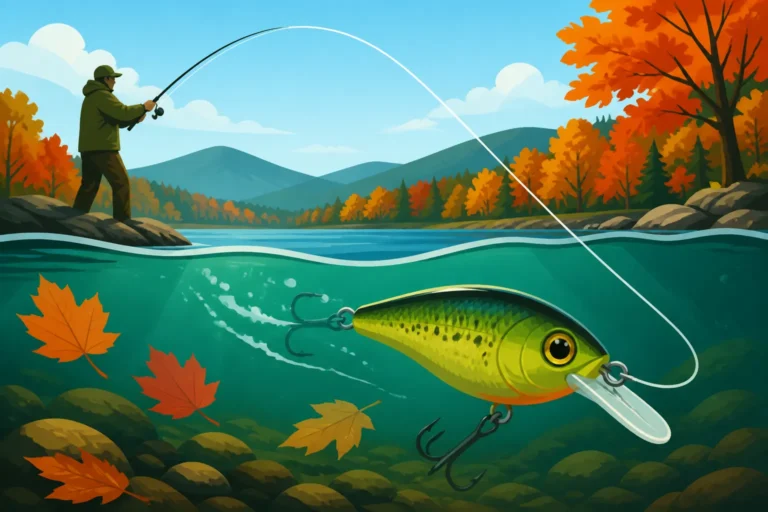
This is where the jerkbait truly comes into its own. What makes a jerkbait so devastatingly effective in cold water is its ability to imitate a dying or disoriented baitfish – the ultimate easy meal. When you retrieve a jerkbait, it darts erratically from side to side, mimicking a distressed minnow. But the real magic happens when you pause. A good suspending jerkbait, as its name suggests, will hang perfectly still in the water column right in front of a bass's face.
This pause is the trigger. That motionless lure, often wobbling slightly from the residual energy of the jerk, is an invitation the sluggish bass finds hard to resist. It's a "take it or leave it" moment. A bass can eye it, approach it slowly, and then, often out of pure instinct or irritation, inhale it. The length of that pause is critical and we'll dive deeper into that, but for now, just know that this combination of erratic movement followed by absolute stillness creates a presentation that is simply too tempting for early spring bass to ignore. Many anglers swear by the action of specific jerkbait models like the Megabass Vision Oneten or the Lucky Craft Pointer, which you can often find available for purchase on platforms like Amazon.
Essential Jerkbait Gear for Early Season Success
Having the right gear isn't just about comfort; it's about making your jerkbait perform exactly as intended, giving you the best chance to trick those wary bass. Don't skimp on these details.
Rod and Reel Setup for Optimal Jerkbait Performance
When it comes to jerkbaits, your rod is your primary tool for imparting that lifelike action. You'll want a rod with a medium-light to medium power rating, usually around 6'6" to 7 feet long. The key feature is a fast action tip, meaning the tip bends easily but the rest of the rod remains stiff. This allows you to snap the lure with quick, sharp jerks without moving the entire bait too far or too fast, while still having enough backbone to drive hooks home. A common choice for many anglers is a 6'8" to 7' medium power, fast action casting rod. However, for lighter jerkbaits or if you prefer the feel, a good quality spinning rod can also be very effective. If you're looking for a versatile option, consider checking out some of the Best Spinning Rods for Smallmouth Bass for ideas.
As for reels, you have a choice between spinning and baitcasting. For lighter jerkbaits, especially those under half an ounce, a spinning reel often offers better casting distance and less backlash. For heavier jerkbaits, a baitcasting reel gives you more control and power. Regardless of your choice, a reel with a moderate gear ratio (around 6.3:1 to 7.1:1) is generally preferred. You're not trying to burn the lure back to the boat; rather, you need to pick up slack quickly after each jerk and still have enough torque to fight a strong bass. Some anglers even prefer a slower gear ratio (5.3:1) for really slow retrieves in extremely cold conditions, forcing themselves to slow down.
Line Selection: The Unsung Hero
Line choice might seem like a minor detail, but it can make or break your jerkbait fishing. For early spring bass in Vermont, fluorocarbon line is almost universally recommended, and for good reason. First, fluorocarbon has very low stretch, which is crucial for transmitting every twitch of your rod tip down to the lure, giving you maximum control over its action. Second, it's incredibly sensitive, allowing you to feel even the most subtle taps from a sluggish bass. Finally, and perhaps most importantly in clear Vermont waters, fluorocarbon is nearly invisible underwater, minimizing line-shy fish. You can often find great deals on fluorocarbon line on Amazon.
Your line test strength is also important. For most early spring jerkbait applications, 8-12 pound test fluorocarbon is ideal. Going too heavy (e.g., 15-20 lb) can significantly dampen the lure's action, making it less enticing. Going too light (e.g., 6 lb) might increase bites but risks break-offs on larger fish or snags. If you're fishing in exceptionally clear water or with smaller baits, you might opt for the lower end of that spectrum. Remember, lighter line often equals better action. For more detailed insights on this topic, check out our guide on Best Fluorocarbon Line for Clear Lake Water.
Choosing the Right Jerkbait
The market is flooded with jerkbaits, so picking the right one can feel overwhelming. In early spring, less is often more.
- Size: Smaller to medium-sized jerkbaits (3-5 inches) tend to be more effective. Cold-water bass aren't usually looking for a massive meal; a more compact profile often gets more attention.
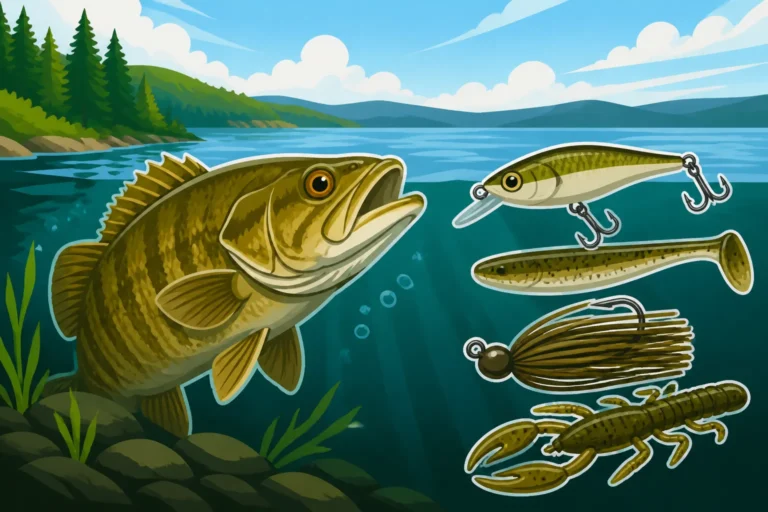
- Color: Natural patterns are king. Think silver, chrome, perch, ghost minnow, or clear patterns with a hint of flash. These imitate the natural forage bass are accustomed to. However, don't be afraid to experiment with brighter colors like chartreuse or fire tiger if you're fishing in stained or slightly muddy water. Sometimes, a bright, obnoxious color can trigger an aggressive reaction from an otherwise lethargic fish. Our guide on Best lure color for muddy water bass fishing has more on this.
- Action: Crucially, you want a suspending jerkbait. This means when you pause it, it hovers at that depth rather than floating up or sinking down quickly. Some jerkbaits are "slow float" or "slow sink," and these can be effective in specific scenarios, but a true suspending lure gives you the most control over that critical pause. Experiment with different models to find one that suspends perfectly in your local water temperatures.
Mastering the Jerkbait Retrieve for Finicky Bass
This is where the artistry comes in. Anyone can tie on a jerkbait, but truly mastering the retrieve for early spring bass is what separates good anglers from great ones.
The Classic "Jerk, Jerk, Pause" Technique
The fundamental retrieve is quite simple: jerk, jerk, pause. But the devil is in the details, especially the pause.
- Cast it out: Make a long cast to cover water, aiming near any likely structure or cover.
- Engage and slack: Immediately engage your reel. Point your rod tip down towards the water (or even slightly below the surface) and give a sharp, downward twitch of the rod. This is your "jerk."
- Recover slack: As the lure darts, your line will go slack. Quickly reel up the slack while keeping your rod tip pointed at the lure. This is important because most bites will happen on the pause, and you need to be ready to set the hook.
- The Cadence: The standard cadence is often "jerk, jerk… pause." Two quick jerks, then a stop. However, in early spring, the length of that pause is paramount. We're talking anywhere from 5-10 seconds, sometimes even longer in extremely cold conditions. It can feel painstakingly slow, but resist the urge to retrieve faster. Count in your head: "one Mississippi, two Mississippi…"
- Rod Tip Position: Keeping your rod tip down helps the lure dive and prevents it from jumping out of the water. It also puts you in a better position to sweep-set the hook quickly when a bass hits during the pause.
Experiment with your cadence. Sometimes a single jerk, then a long pause, is best. Other times, three rapid jerks might elicit a strike. The key is to start slow and gradually vary your retrieve until you find what the fish want that day. This often takes patience and a willingness to try different things.
Adjusting to Conditions: Depth, Water Temp, and Clarity
Vermont's early spring conditions can vary wildly from one day to the next, and your jerkbait retrieve needs to adapt.
- Water Temperature: This is the biggest factor. The colder the water, the longer your pause needs to be. When water temps are in the low 40s, a 10-15 second pause might be necessary. As it creeps into the mid-to-high 40s and low 50s, you can shorten the pause to 3-5 seconds. Our article on Best water temperature for smallmouth bass fishing offers more insights into ideal ranges.
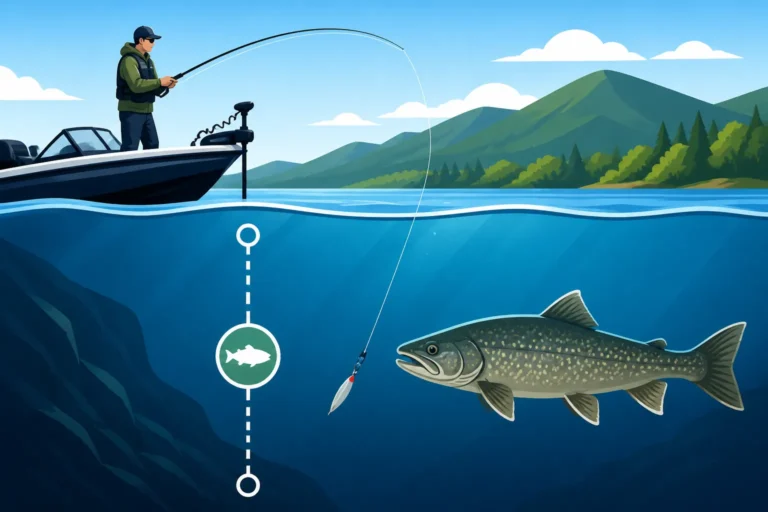
- Depth: Match your jerkbait's diving depth to where the bass are holding. If fish are suspended 5-10 feet down, use a jerkbait designed to run in that zone. If they're shallower, a bait with a shorter lip might be better. Keep an eye on your fish finder; if you see baitfish or bass suspended at a certain depth, make sure your jerkbait gets there. Modern fish finders, which you can learn more about in our Best Fish Finders for Vermont Lakes guide, are invaluable for this.
- Water Clarity: In clear water, natural colors and a slightly slower, more subtle action are usually best. In stained or slightly muddy water, a brighter colored jerkbait (like a fire tiger or chartreuse) or one with more internal flash can help bass locate it. You might also increase the aggressiveness of your jerks slightly to create more disturbance in lower visibility. If you're dealing with a sudden cold front, remember our Cold Front Fishing Tactics for Vermont Bass to adjust your approach further.
Common Mistakes and How to Avoid Them
Even seasoned anglers can fall into these traps. Being aware of them will help you improve your jerkbait game.
- Retrieving Too Fast: This is by far the most common mistake. It's human nature to want to keep the lure moving, but in cold water, a fast retrieve is almost guaranteed to spook sluggish bass. Force yourself to slow down.
- Not Pausing Long Enough: Again, patience is key. That 10-second pause can feel like an eternity, but that's often exactly when the bass will strike. Don't cut it short.
- Using Too Heavy Line: As mentioned, heavy line kills the bait's action and makes it less responsive. Stick to fluorocarbon in the 8-12 lb range.
- Ignoring Subtle Bites: Cold water bites can be very subtle. Instead of a violent strike, you might just feel a slight "tick," or the line might go slack, or simply feel heavy. Pay close attention to your line and feel for anything out of the ordinary during the pause. If something feels off, set the hook!
- Not Varying Your Cadence: While sticking to a slow retrieve is important, don't be afraid to occasionally throw in a longer pause, or a series of three quick jerks instead of two. Sometimes a slight change is all it takes to trigger a strike.
Where to Target Early Spring Bass with Jerkbaits in Vermont
Knowing how to fish a jerkbait is one thing, but knowing where to throw it in early spring in Vermont is another. Bass aren't everywhere; they concentrate in specific areas that offer the best conditions for their cold-water needs.
Shallow Bays and Northern Shores
As the sun begins to warm the landscape, certain areas of Vermont's lakes and ponds will heat up faster than others. Shallow bays, especially those with dark, rocky or mucky bottoms, are prime targets. Darker bottoms absorb more sunlight, raising the water temperature a few crucial degrees, which can be enough to draw in hungry bass. Northern shores also receive more direct sunlight throughout the day, making them warmer.
Look for areas with some type of cover or structure. Rock piles, docks that absorb heat, and especially submerged wood (like fallen trees or stumps) in these shallow bays provide ambush points for bass. These are often the first places you'll find active fish after ice-out, and they can hold both smallmouth and largemouth bass. Many of the Best Bass Fishing Lakes in Vermont will have these types of shallow, warming areas. On larger bodies of water like Lake Champlain, these shallow, protected bays are often the first to give up good bass fishing. For specific spots on Champlain, check out our Lake Champlain Smallmouth Bass Fishing guide.
Transition Zones and Drop-offs
While bass might move into the shallows to feed, they don't always live there. Early spring bass often stage in transition zones, which are areas where shallow water quickly meets deeper water. These can be points extending into a lake, channel swings, or the edges of flats. The bass use these areas as highways, moving up into the warmer, shallower water to feed, and then retreating to the security and stable temperatures of deeper water.
A jerkbait is excellent for working these transition zones. Cast it towards the shallower side and retrieve it over the drop-off, letting it suspend at various depths as it comes back. If you have a good fish finder, look for baitfish or bass suspended along these edges. Targeting these areas gives you the best of both worlds – access to fish that are moving shallower, and those that are still holding deeper.
River Systems and Tributary Mouths
Vermont is blessed with numerous rivers, and these can be fantastic for early spring bass fishing. Rivers often warm up faster than large lakes due to their shallower nature and constant flow. Tributary mouths, where smaller streams feed into larger rivers or lakes, are also excellent spots. These incoming waters can carry warmer temperatures, nutrients, and baitfish, creating a buffet for hungry bass.
When fishing rivers, focus your jerkbait efforts on current breaks. Eddies, the downstream side of large rocks or logs, and slow-moving pools adjacent to faster currents are prime holding spots. Bass will sit in these calmer areas, conserving energy, waiting for food to be swept past them. A jerkbait worked with the current or slowly across these seams can be incredibly effective. Our guide on How to Fish a River for Smallmouth Bass provides more insights into river fishing techniques that can be applied here. Remember that even in river systems, the principles of a slow, deliberate retrieve with extended pauses remain crucial for success.
| Water Temperature Range | Suggested Jerkbait Cadence | Length of Pause (approx.) |
|---|---|---|
| Below 40°F (4°C) | Single twitch, long pause | 10-20 seconds |
| 40-45°F (4-7°C) | Jerk, pause, single jerk, long pause | 7-15 seconds |
| 45-50°F (7-10°C) | Jerk, jerk, pause | 5-10 seconds |
| 50-55°F (10-13°C) | Jerk, jerk, pause (can be slightly more aggressive) | 3-7 seconds |
| Above 55°F (13°C) | Jerk, jerk, pause (faster, shorter pauses) | 1-3 seconds |
Disclaimer
This article is for general informational purposes only and does not constitute professional advice. Laws, prices and regulations vary by location and change over time. Consult a qualified professional for guidance on your specific situation.