Best multi-day paddle fishing trips in Vermont
There's nothing quite like the dream of an extended escape into the wild, especially when it involves the tranquility of paddling combined with the thrill of fishing. Many of us yearn for more than just a quick day trip; we want to truly immerse ourselves in Vermont's incredible natural beauty, waking up to misty waters and casting lines as the sun rises. This guide will walk you through everything you need to know to plan and execute unforgettable multi-day paddle fishing trips across the Green Mountain State.
The Allure of Multi-Day Paddle Fishing in Vermont
Let's be honest, the modern world can be a relentless treadmill. The constant pings, the endless to-do lists, the feeling of always being "on"—it all accumulates. A multi-day paddle fishing trip in Vermont isn't just a vacation; it's a deliberate act of unplugging, a re-engagement with something primal and profoundly satisfying. It's an opportunity to truly breathe, to slow down to the rhythm of the paddle and the pulse of the water.
Escaping the Everyday Grind
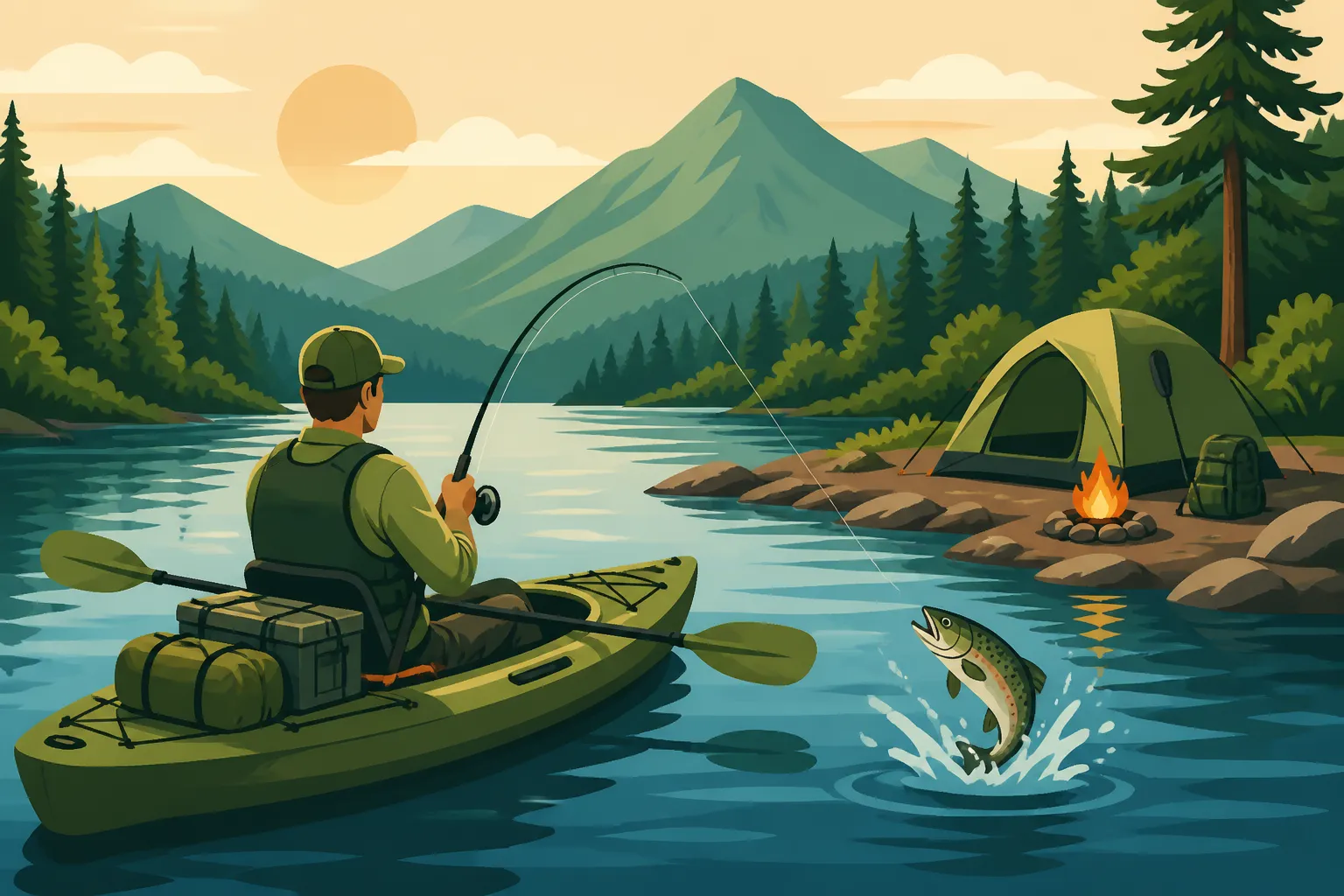
Imagine this: no alarm clock, just the gentle chirping of birds and the sloshing of water against your boat. You're not rushing to beat traffic or meet a deadline. Instead, your biggest decision is what lure to tie on first or which cove to explore next. This kind of sustained immersion in nature provides a unique form of therapy, washing away the stress and mental clutter that often builds up in our daily lives. You’ll find yourself noticing the subtle changes in light, the intricate patterns of ripples on the water, and the quiet movements of wildlife in a way that a fleeting day trip simply doesn't allow. It's about reconnecting with yourself and the wild, experiencing the serenity that only comes from being truly off the grid, even if just for a few days.
From a kayak or canoe, your perspective changes entirely. You become part of the water, silently gliding over hidden structure or sneaking into shallow backwaters that larger, noisier boats can't access. The sounds of distant traffic fade, replaced by the dip of your paddle, the splash of a rising fish, or the call of an osprey overhead. There's a certain satisfaction that comes from knowing everything you need for survival and comfort is stowed carefully in your boat, making you utterly self-reliant. This isn't just fishing; it's an expedition, a journey that rejuvenates the spirit and provides stories that will last long after the tan fades.
Unlocking Secluded Fishing Opportunities
One of the biggest frustrations for many anglers is crowded access points and pressured fish. Multi-day paddle trips are the ultimate antidote. By venturing beyond the immediate reach of boat ramps and parking lots, you gain access to stretches of water that see far less angling pressure. Think about those hidden coves, remote islands, or long river stretches that are too far to paddle to and back in a single day. These are the places where fish can grow larger, where they're less wary of a perfectly presented bait or fly, and where you might just find that untouched honey hole you've always dreamed of.
In the vastness of Lake Champlain, for example, there are countless islands and distant shores that make for ideal multi-day expeditions. You can paddle out, set up camp on a remote island, and spend several days exploring different fishing grounds without having to break down and pack up daily. Similarly, on the larger rivers, portaging around a challenging section or simply committing to a longer float allows you to fish diverse habitats, from riffles and runs to deep pools and oxbow lakes, all while moving at a pace dictated by nature, not a schedule. This deep access isn't just about catching more fish, though that's certainly a bonus; it's about the opportunity to explore truly wild places, to witness wildlife undisturbed, and to feel a deeper sense of discovery that few other fishing experiences can offer.
Top Vermont Waters for Extended Paddle Adventures
Vermont offers a diverse array of waterways perfectly suited for multi-day paddle fishing. From massive lakes to winding rivers and serene reservoirs, each presents unique opportunities and challenges for the adventurous angler.
Lake Champlain: Vastness and Variety
Lake Champlain is Vermont's crown jewel, and for good reason. Its sheer size – over 120 miles long with roughly 587 miles of shoreline – makes it ideal for multi-day exploration. You could spend weeks here and barely scratch the surface. For paddle anglers, the lake offers incredible diversity. You can target smallmouth and largemouth bass in the numerous bays and around rocky structures, chase walleye in deeper channels, or even go for northern pike and lake trout in specific areas.
A popular multi-day approach on Lake Champlain involves island hopping. Imagine launching your kayak or canoe from a state park like Sand Bar or Alburgh Dunes, then paddling to one of the many islands within the Lake Champlain Islands chain or even down towards the expansive waters near Split Rock and Button Bay State Park. Many of these islands offer primitive camping sites or are close enough to shoreline parks where you can reserve a spot. This allows you to set up a base camp and explore the surrounding waters for a few days. The fishing can be phenomenal; early mornings or late evenings are prime times to cast for bass along rocky points or weed lines. When planning your trip, be sure to consult a good Lake Champlain Fishing Guide to understand the best spots and target species. For covering vast distances efficiently, many anglers opt for specialized Best Kayaks for Vermont Fishing that are designed for stability and storage. Keep an eye on weather forecasts, as Champlain can get rough quickly, making a multi-day trip more challenging.
Connecticut River: Scenic Flows and Diverse Fisheries
The Connecticut River forms Vermont's eastern border and provides excellent opportunities for multi-day paddle trips. Unlike a lake, a river journey offers a constantly changing landscape and the unique experience of drifting with the current. The character of the river changes significantly along its length in Vermont; in the northern sections, it's often narrower and quicker, while downstream it broadens and calms. This allows for a variety of fishing experiences.
Anglers on the Connecticut can expect to encounter smallmouth bass, northern pike, various panfish, and even some trout in specific tributaries or cooler sections. Many islands along the river are managed by the U.S. Fish and Wildlife Service or local land trusts and offer primitive camping, perfect for stringing together several days on the water. Popular stretches might include the calmer waters near Brattleboro, or the more remote sections further north. You'll want to plan your put-in and take-out points carefully, often requiring a shuttle vehicle. Before you go, it's always wise to check out a guide on the Best Fishing Rivers in Vermont for insights into specific access points and fish populations. The current provides a natural drift, making it ideal for float-fishing techniques, casting towards submerged timber, rocky banks, and eddy lines where fish ambush prey.
Remote Ponds and Smaller Lakes: Serenity and Solitude
For those seeking a truly tranquil experience away from the crowds, Vermont's numerous remote ponds and smaller lakes are absolute gems for multi-day paddle fishing. Places like Waterbury Reservoir, Harriman Reservoir, and some of the more secluded lakes in the Northeast Kingdom (like Island Pond or Seymour Lake) offer expansive waters, often with primitive camping accessible only by boat.
These waters are typically prime for brook trout, rainbow trout, panfish like yellow perch and black crappie, and sometimes even largemouth bass. The lack of easy road access means fewer powerboats and a more intimate connection with nature. You might need to portage your gear and boat a short distance to reach some of the truly remote spots, but the reward is often a fishery that sees minimal pressure. Setting up a lakeside camp and spending a few days exploring every cove and structure by paddle can be incredibly rewarding. You'll find yourself casting to rising trout at dusk or jigging for panfish in deep pockets, all against a backdrop of pristine Vermont wilderness. To maximize your chances, familiarize yourself with the Best Fishing Lakes in Vermont and look for those that offer primitive or boat-in camping options. Remember, packing light and efficiently is key for these types of expeditions.
Planning Your Vermont Paddle Fishing Expedition
Embarking on a multi-day paddle fishing trip in Vermont is an incredible adventure, but it requires careful planning to ensure it's both enjoyable and safe. Skipping essential steps can lead to unnecessary frustrations, so let's break down the key considerations.
Researching Regulations and Permits
The first and arguably most crucial step is to understand the legal landscape. Vermont has specific rules for fishing and boating that apply to residents and non-residents alike, and these can vary by water body. You absolutely need a valid Vermont fishing license. These can be purchased online through the Vermont Fish & Wildlife Department website, or from authorized vendors. Depending on your residency, costs for a Vermont Fishing License Guide for 2026 will vary. For instance, a Vermont Resident Fishing License Cost 2026 will be different from a Vermont Nonresident Fishing License Cost 2026. Don't forget to check the specific fishing regulations for the waters you plan to visit. Different lakes and rivers may have special rules regarding bag limits, length limits, or even specific gear restrictions, particularly for trout or salmon waters. It's smart to review the comprehensive Vermont Fishing Regulations Explained before you finalize your trip.
Beyond fishing, you also need to be aware of Vermont Boating Laws for Anglers. This includes understanding personal flotation device (PFD) requirements; wearing a PFD is not only smart but legally mandated for certain age groups and conditions, so always be prepared with the proper Life Jacket Requirements for Vermont Boaters. If you plan on camping on public lands, such as state parks or designated wilderness areas, you may need permits or reservations for overnight stays. For example, some islands on Lake Champlain or along the Connecticut River require prior booking. Always check with the relevant land management agency (e.g., Vermont State Parks, U.S. Forest Service, or local town offices) well in advance. Ignoring these regulations isn't just a minor oversight; it can lead to hefty fines and ruin your adventure.
Route Planning and Logistics
Once you've got the legalities sorted, it's time to chart your course. Think about your desired trip length, your paddling experience, and the fitness level of everyone involved. A leisurely two-day float down a calm river is vastly different from a four-day expedition across a large lake with potential for high winds. Identify your put-in and take-out points. For river trips, this often means arranging a shuttle vehicle or coordinating with a friend. For lake trips, ensure there's safe, long-term parking at your launch site.
Consider potential camping spots along your route. Are there designated campsites, or will you be looking for primitive spots? If primitive, understand the rules for dispersed camping on public lands (e.g., distance from water, existing fire rings). Always have a backup plan in case your primary camping spot is occupied or unsuitable. Map out your daily mileage, taking into account potential headwinds, currents, and fishing time. Overestimating your paddling speed is a common mistake that can lead to exhaustion and late arrivals. Resources like Vermont Fish & Wildlife access point maps or topographical maps are invaluable. You might even find local outfitters or guides through platforms like FishingBooker who can provide shuttle services, gear rentals, or even guide a portion of your trip, offering invaluable local knowledge. They can help navigate the nuances of a specific stretch of river or lake.
Safety First: Weather, Navigation, and Emergency Preparedness
Safety on a multi-day trip is paramount. Vermont weather can be unpredictable, especially in the mountains and on large bodies of water. Always check the forecast leading up to your trip and have contingency plans for storms, high winds, or sudden drops in temperature. Pack appropriate gear for all conditions, including rain gear and extra layers, even in summer. On large lakes like Champlain, marine weather forecasts are essential. A weather radio or satellite communication device can be a lifesaver where cell service is spotty.
Navigation is another critical aspect. Don't rely solely on your phone; bring physical maps and a compass, and know how to use them. A reliable GPS device or app is a great supplement, but batteries die. Clearly communicate your float plan or itinerary with a trusted person who is not on the trip, including your expected return time and contact information. For emergencies, a well-stocked first-aid kit is non-negotiable, and knowing basic wilderness first aid can make a huge difference. Consider carrying bear spray in bear country and always store food in bear-resistant containers or hung from trees away from your campsite. Remember, you are often many hours, if not days, from professional medical help, so prevention and preparedness are your best allies.
Essential Gear for Your Multi-Day Trip
Packing for a multi-day paddle fishing adventure in Vermont is a careful balancing act. You need enough gear to be comfortable and prepared for anything, but not so much that you're overloaded or can't easily manage your paddlecraft. Every item must earn its place in your dry bags.
Paddlecraft and Propulsion
The choice between a kayak and a canoe is often the first big decision. Both have their merits for multi-day trips.
- Canoes generally offer more open space and higher weight capacity, making them excellent for hauling lots of gear, especially if you're bringing a substantial amount of camping equipment or fishing tackle. They can also be easier to portage over short distances with two people. However, they can be more susceptible to wind on large, open water.
- Kayaks, particularly sit-on-top fishing kayaks, offer greater stability and maneuverability, which can be a huge advantage when fishing. They're also less affected by wind and easier to manage solo. The trade-off is often less overall storage space, though modern fishing kayaks are increasingly designed with ample hatches and deck rigging for multi-day excursions. Understanding the Best Kayaks for Vermont Fishing will help you choose a model that balances stability, speed, and storage for your specific needs. Regardless of your choice, ensure your paddlecraft is in good repair and has enough capacity for you, your gear, and your catch.
Beyond the boat itself, don't skimp on a quality paddle. A lightweight, efficient paddle will make a world of difference over many miles. Always bring a spare paddle, or at least a breakdown emergency paddle, especially on a multi-day trip where losing one could be disastrous. And as mentioned, a properly fitting Personal Flotation Device (PFD) is non-negotiable. Wear it.
Fishing Tackle and Tactics
When packing your fishing gear for an extended trip, versatility and efficiency are key. You can't bring your entire tackle shop. Instead, focus on a streamlined setup that can handle a variety of species and conditions you might encounter. A medium-light to medium power spinning rod, perhaps a 7-foot model, is a fantastic all-around choice for many Vermont species, from bass and pike to larger trout. Pair it with a reliable reel spooled with 10-15 lb braided line, along with some fluorocarbon leaders in different weights. Check out a guide to Best Tackle Box Setup for Vermont Anglers to help you consolidate your essentials.
For lures and baits, select a compact assortment of tried-and-true producers. Think small crankbaits, spinnerbaits, soft plastics (tubes, worms, grubs) for bass, a few spoons for pike or lake trout, and perhaps some jigs for panfish. If you're targeting trout, a selection of inline spinners, small spoons, and perhaps a fly rod with a few versatile fly patterns will be your best bet, especially if you've researched Best Gear for Vermont Trout Fishing. Always pack extra line, hooks, weights, and a multi-tool. A good pair of fishing pliers and a small cutting board for processing fish are also invaluable. Local knowledge is golden; sometimes a quick chat with a local outfitter or even browsing a platform like FishingBooker can give you intel on what's currently working best on your target waters, helping you fine-tune your tackle selection before you go.
Camping and Personal Essentials
This is where the bulk of your gear will fall. Everything must be packed into dry bags to protect it from splashes, rain, and accidental capsizing.
- Shelter: A lightweight, compact tent that can withstand potential rain and wind is essential. If you're going ultra-light, a tarp setup might suffice.
- Sleep System: A comfortable sleeping bag rated for the lowest temperatures you might encounter, plus a sleeping pad for insulation and comfort.
- Cooking: A compact backpacking stove and fuel, a small pot/pan, and utensils. Freeze-dried meals are lightweight and easy, but don't underestimate the joy of a fresh-caught fish cooked over a campfire (where permitted).
- Water: A reliable water filter or purification tablets are non-negotiable. Carry enough water for your first day, then plan on filtering.
- Food Storage: Bear bags, bear canisters, or ursacks are crucial in bear country. Plan your meals carefully to be nutritious, lightweight, and non-perishable.
- Clothing: Layers are your friend. Even in summer, evenings can be cool. Pack quick-drying synthetics, a warm fleece or puffy jacket, and dedicated Best Rain Gear for Vermont Anglers. Don't forget a wide-brimmed hat, polarized sunglasses, and bug spray.
- Navigation & Safety: As discussed, maps, compass, GPS, first-aid kit, headlamp/flashlight with extra batteries.
- Personal Hygiene: Small towel, biodegradable soap, toothbrush/paste, toilet paper, and a trowel for catholes (remember Leave No Trace principles!).
Comparison of Kayak vs. Canoe for Multi-Day Paddle Fishing
| Feature | Fishing Kayak (Sit-on-Top) | Canoe |
|---|---|---|
| Stability | Generally very stable, excellent for standing to cast | Good stability, but can feel tippy when standing or in rough water |
| Speed/Efficiency | Faster, more efficient for solo paddling, less wind resistance | Can be slower solo, better for tandem paddling and heavier loads |
| Storage Capacity | Ample, but often compartmentalized (hatches, deck space) | Large, open interior ideal for bulky gear, easier access |
| Weather Impact | Lower profile, less affected by wind | Higher profile, more susceptible to wind |
| Maneuverability | Excellent, easy to turn and navigate tight spaces | Good, but requires more effort or tandem coordination to turn quickly |
| Comfort | Often features comfortable seats, good back support | Varies, can add comfortable seats; good leg room |
| Portaging | Can be heavy and awkward for solo portage | Easier for two people to carry, but still bulky |
| Best For | Solo trips, windy conditions, standing to fish, aggressive angling | Tandem trips, hauling lots of gear, relaxed touring, calmer waters |
Making the Most of Your Adventure
A multi-day paddle fishing trip is about more than just the fish you catch; it’s about the journey, the challenge, and the profound connection you forge with Vermont’s wild landscapes. To ensure your trip is truly unforgettable for all the right reasons, keep these final considerations in mind.
Practicing Leave No Trace Principles
As stewards of these beautiful waterways, it's our responsibility to leave no trace that we were ever there. This means carrying out everything you carry in, including all trash, food scraps, and even fish entrails (pack them out or dispose of them deep in moving water). When camping, use existing campsites when possible, and if you must create a new one, choose a durable surface away from water sources. Minimize campfire impact by using established fire rings or opting for a stove for cooking. Proper human waste disposal is crucial: dig catholes at least 200 feet from water, trails, and campsites, and pack out all toilet paper.
Respect wildlife by observing from a distance and never feeding animals. Avoid disturbing sensitive vegetation or fragile ecosystems. The goal is to leave the natural environment as pristine, if not more so, than you found it, allowing future adventurers to enjoy the same wild beauty. Adhering to these principles ensures that Vermont's paddle fishing destinations remain healthy and accessible for generations to come.
Embracing the Journey and the Fishing
While the fishing is undoubtedly a primary motivator, remember to savor the entire experience. There will be times when the fish aren't biting, when the wind kicks up, or when a paddle feels heavy. These are all part of the adventure. Embrace the solitude, the quiet moments of observation, and the physical challenge. Balance your paddling time with dedicated fishing time. Sometimes, the best fishing spots are found by slowing down, thoroughly exploring a single promising cove, or waiting for the prime feeding window. Don't feel rushed to cover vast distances if it means missing out on a fantastic fishing opportunity in a smaller area.
Take photos, keep a journal, and simply sit back and absorb the scenery. These multi-day trips offer a rare chance to truly disconnect and allow your senses to fully engage with your surroundings. Learn to read the water, observe the wildlife, and appreciate the nuances of the ecosystem. If you're feeling overwhelmed with planning the fishing aspect, remember that you can always explore options for guided trips through services like FishingBooker, especially if you want to dial in on a specific species or technique, ensuring you get the most out of your time on the water. Ultimately, the success of your multi-day paddle fishing trip isn't just measured by the size of your catch, but by the richness of the memories you create and the rejuvenation you find in Vermont's wild embrace.
Disclaimer
The information provided in this guide is for general informational purposes only and does not constitute professional advice. Vermont's fishing regulations, boating laws, and camping policies can change, and it is the responsibility of each individual to research and comply with all current local, state, and federal laws and regulations before embarking on any outdoor activity. Always prioritize safety, check weather conditions, and be prepared for emergencies. Neither the author nor the publisher assumes any liability for any accidents, injuries, or other damages that may result from the use of this information.