Best night fishing spots for bass in Vermont
Trying to find the best bass fishing action in Vermont can be a real challenge, especially when the summer sun makes the fish lethargic and shy. Many anglers pack up their gear as dusk approaches, missing out on some of the most exciting and productive fishing opportunities. This guide is here to unravel the mystery of night fishing for bass in Vermont, showing you where to go, what to bring, and how to safely navigate the darkness to catch those elusive nocturnal lunkers.
Why Night Fishing Unlocks Vermont's Best Bass Action
During the bright, hot days of summer, Vermont's bass often retreat to deeper, cooler waters or bury themselves in dense cover, becoming notoriously difficult to tempt. The constant boat traffic, swimmers, and general commotion don't help either. But when the sun dips below the horizon, a switch flips. The water cools, the noise dies down, and a whole new world of opportunity opens up for bass anglers. This isn't just about escaping the heat; it's about tapping into a fundamental behavioral shift in the fish themselves.
The Nocturnal Advantage for Bass
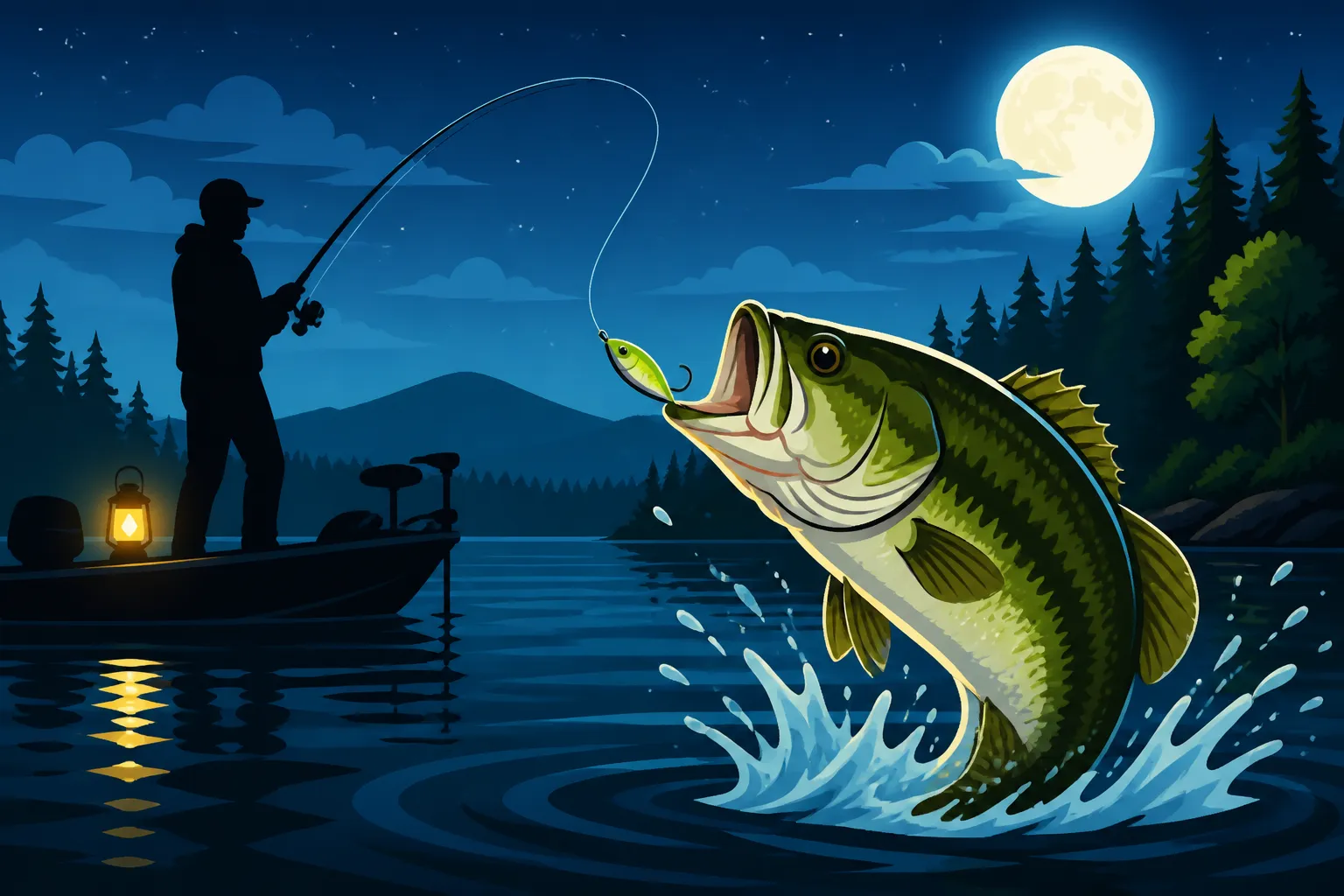
Bass, particularly largemouth, are ambush predators that thrive in low-light conditions. Under the cover of darkness, they feel safer moving into shallower waters to feed. This means those spooky giants that wouldn't touch a lure during the day suddenly become active and far less wary. The cooler water temperatures are also a huge factor, invigorating the fish and making them more aggressive. Think of it this way: for a bass, nighttime is prime hunting time, and you, as the angler, are there to meet them on their terms. This shift in behavior makes it an incredibly rewarding experience, often leading to bigger fish and more consistent bites than you'd find in broad daylight.
Escaping the Crowds and Heat
One of the most immediate and palpable benefits of fishing after dark is the peace and quiet. Vermont's popular lakes, bustling with activity during the day, transform into serene havens under the moonlight. You'll often have prime spots all to yourself, free from the incessant drone of pleasure boats or the pressure of other anglers casting over your hot spots. This tranquility isn't just good for your nerves; it's fantastic for the fishing. Less disturbance means fish are more likely to settle into their feeding patterns undisturbed. Plus, let's be honest, those Vermont summer days can get warm. Night fishing offers a comfortable, often breezy alternative, allowing you to focus on the fishing without battling the elements. It’s a completely different vibe, one that many find deeply therapeutic and exhilarating.
Prime Vermont Waters for Night Bass Action
When it comes to targeting bass under the cloak of night in Vermont, certain bodies of water truly shine. These lakes offer the perfect combination of habitat, forage, and a healthy population of largemouth and smallmouth bass that are eager to feed once the sun goes down. Knowing where to focus your efforts is half the battle won.
Lake Champlain: The Obvious Powerhouse
You simply can't talk about bass fishing in Vermont without mentioning Lake Champlain, and it truly comes alive after dark. This massive lake, bordering New York, is a veritable smorgasbord for bass, with an incredible diversity of habitat. From shallow, weed-choked bays to rocky points and drop-offs, there's a spot for every night fishing scenario. Largemouth bass will often move into the thick weed lines and lily pads in bays like Malletts Bay, Missisquoi Bay, and the South Bay area, especially on warmer nights. Smallmouth, while typically deeper during the day, will cruise rocky shores and points under the cover of darkness, ambushing baitfish.
The key here is understanding the contours and structure you fished during the day. Those seemingly "dead" shallow flats that warmed up too much during the day can become bass buffets at night. Areas with transition zones from deep to shallow, particularly those with rock piles, submerged timber, or sparse weeds, are magnets for feeding bass. Using your electronics during the day to mark these structures can give you a significant advantage when darkness falls. If you're new to the lake, consider looking for a local guide on FishingBooker who specializes in evening or night trips; they can be invaluable in pinpointing productive areas. This comprehensive Lake Champlain Fishing Guide is a great resource to get acquainted with the lake's vast potential.
Lake Bomoseen: A Largemouth Mecca After Dark
Nestled in west-central Vermont, Lake Bomoseen is another fantastic destination, particularly for largemouth bass night fishing. Bomoseen is Vermont's third-largest lake, and it's famous for its abundant aquatic vegetation, which largemouth absolutely adore. At night, these fish become incredibly active around the edges of weed beds, through lily pad fields, and near docks and boat lifts where they can ambush prey. The numerous coves and shallow flats that heat up during the day become prime feeding grounds once the temperature drops.
Target areas around the state park access points or the private docks along the shoreline. Bass will often patrol these structures, especially if there's any ambient light from shore, which can attract baitfish. Focus your efforts on flipping jigs or throwing topwater lures right along the edges of the thickest cover. A quick look at a Lake Bomoseen Fishing Guide will show you just how much structure and cover there is to explore. Anglers report great success working plastic worms or jigs slowly along the bottom near these areas. The lack of boat traffic at night allows these fish to move freely and feed without inhibition, offering some truly memorable catches.
Lake Dunmore: Deeper Water, Active Smallmouth
Lake Dunmore, south of Middlebury, offers a different flavor for night bass fishing, leaning more towards smallmouth. While it also holds largemouth in its shallower bays, Dunmore is known for its clear, deeper waters and rocky structure, which are perfect for smallmouth bass. As night falls, smallmouth will often move up from deeper main lake points and humps to feed in shallower rock rubble areas, especially those with access to deep water nearby.
Think about offshore humps, submerged islands, and rocky points that might be too exposed during the day. These areas, when combined with cooler night temperatures, become excellent hunting grounds. Techniques involving slow-moving jigs, creature baits, or even subtle topwater presentations can be highly effective. The clear water here means stealth is still important, even at night. For specific hotspots and strategies on this beautiful lake, refer to the Lake Dunmore Fishing Guide. Booking a night trip with a local expert through FishingBooker could provide excellent insights into these deeper, more nuanced patterns.
Other Notable Spots: Ponds and Smaller Lakes
Don't overlook Vermont's numerous smaller lakes and ponds for night bass fishing, especially if you're looking for less pressure and easier access. Ponds like Lake St. Catherine, Waterbury Reservoir, or even smaller, unnamed impoundments can offer fantastic opportunities. These smaller bodies of water tend to cool down faster at night, and their shallower, weedier characteristics make them ideal for active largemouth.
- Lake St. Catherine: Similar to Bomoseen, St. Catherine is rich in aquatic vegetation and holds a strong population of largemouth. Its diverse shoreline, with plenty of docks, lily pads, and weed lines, becomes a nocturnal playground for bass. Check out the Lake St Catherine Fishing Guide for more specific insights into this lake's structure.
- Waterbury Reservoir: While known for its excellent trout and pike fishing, the Waterbury Reservoir also has a healthy population of both largemouth and smallmouth bass, particularly around its numerous islands and coves. The vast amount of submerged timber and irregular bottom structure makes it a great candidate for night fishing, where bass will use these features for ambush points. The Waterbury Reservoir Fishing Guide can help you navigate its extensive waters.
These smaller venues are often less intimidating to navigate at night than the vastness of Lake Champlain, making them great choices for anglers looking to get started with night bass fishing in Vermont. The principles remain the same: target shallow cover, structure, and areas where bass have easy access to deeper water for retreat.
Essential Gear and Techniques for Vermont Night Bass Fishing
Night fishing for bass isn't just daylight fishing in the dark; it requires a slight adjustment to your gear and a thoughtful approach to techniques. Safety, visibility, and sensitivity become paramount. Having the right tools and knowing how to use them will make all the difference between a frustrating night and a memorable one.
Lighting and Safety Gear
First and foremost, safety cannot be overstated. Navigating a boat or even fishing from shore in the dark requires proper lighting.
- Headlamp: A good quality headlamp with both a bright white light and a red light option is crucial. The red light preserves your night vision, which is essential for tying knots, unhooking fish, and navigating without blinding yourself or your companions.
- Boat Navigation Lights: If you're in a boat, ensure your navigation lights (red/green bow lights and white stern light) are fully functional and properly displayed. This isn't just a recommendation; it's a legal requirement under Vermont Boating Laws for Anglers and ensures other boaters can see you.
- Handheld Spotlight: A powerful handheld spotlight can be incredibly useful for spotting channel markers, identifying distant shorelines, or briefly illuminating a potential hazard.
- Life Jackets: Always wear a life jacket, especially at night. Accidents can happen quickly, and the darkness only amplifies the danger.
- First Aid Kit & Communication: Carry a well-stocked first aid kit and ensure your phone is charged or have a marine radio for emergencies. Let someone know where you're going and when you expect to return.
- Insect Repellent: Vermont nights, especially near water, can be buggy. Good repellent will make your experience much more pleasant.
Rods, Reels, and Line
While your favorite daylight bass setup will work, some considerations can improve your night fishing success.
- Rods: A medium-heavy to heavy power rod, 6'6" to 7'6" in length, is ideal. This provides the backbone needed to pull big bass out of heavy cover and launch larger night lures. Sensitivity is also important, so a graphite rod is a good choice.
- Reels: Baitcasting reels are often preferred for their power and casting accuracy with heavier lures, but a reliable spinning reel with a smooth drag works just fine for lighter presentations.
- Line: Opt for heavier line than you might use during the day. 15-20 lb fluorocarbon or monofilament, or 30-50 lb braided line, is a good starting point. Braided line offers superior sensitivity, which can be critical for detecting subtle bites in the dark. Fluorocarbon's low stretch is also a plus, and its invisibility is less important at night but still a factor.
Lure Selection for Night Bass
Night fishing calls for lures that are easily detected by bass in low visibility, often relying on sound, vibration, or a larger profile.
- Dark-Colored Jigs and Plastic Worms: Black, blue, and purple are classic night colors. These create a strong silhouette against the lighter night sky or water surface, making them easier for bass to see. A big jig with a bulky plastic trailer or a substantial Texas-rigged plastic worm worked slowly along the bottom or through cover can be deadly.
- Large Spinnerbaits and Chatterbaits: These lures excel at producing vibration and flash, which bass can feel and see even in the darkest conditions. Choose models with oversized blades and dark skirts. The thumping action of a chatterbait can also be incredibly effective at drawing strikes.
- Topwater Lures: This is where night fishing truly shines for many anglers. Big poppers, prop baits, and walking baits (like a Zara Spook or a Whopper Plopper) can elicit explosive strikes. The sound and commotion these lures create on the surface are irresistible to active bass. Again, dark colors are often preferred, but sometimes a black silhouette is all you need. You'll find more tips on this in our guide to Topwater Fishing for Smallmouth Bass in Vermont.
- Swim Baits: Larger, dark-colored soft or hard swimbaits can imitate larger baitfish that bass feed on at night. Slow-rolled or retrieved with an erratic action, these can tempt trophy-sized bass.
Night Fishing Techniques
The general rule for night fishing is to slow down and focus on methodical presentations.
- Slow Down Your Retrieve: Bass rely more on sound and vibration at night. A slower retrieve allows them more time to locate and strike your lure. When fishing plastics, really let them soak in potential strike zones.
- Target Key Structures: Focus on distinct features like weed lines, rock piles, submerged timber, and docks. Bass will relate to these structures as ambush points. Casting parallel to a weed line or dock can be highly effective.
- Utilize Sound and Vibration: Choose lures that create a lot of commotion. The "thump" of a spinnerbait, the gurgle of a popper, or the rattle of a jig can draw fish in from a distance.
- Stealth is Still Important: Even in the dark, sudden noises or bright lights can spook fish in shallow water. Try to be as quiet as possible in your boat or on shore.
- Feel for the Bite: With reduced visibility, you'll rely more on feeling the bite. Pay close attention to any unusual tap, slackening of the line, or sudden weight. This is where sensitive line and a good rod become critical.
- Practice Knot Tying: Tying knots in the dark takes practice. Consider pre-tying leaders or having a small light available for knot work.
When planning your trip, remember to consult Vermont Fishing Regulations Explained to ensure you are compliant with all rules, as some waters may have specific night fishing restrictions or rules regarding access. Finding a local guide through FishingBooker who has experience with night bass fishing in Vermont can be an excellent way to fast-track your learning and ensure a productive and safe outing.
Safety Considerations and Regulations for Night Fishing
While the allure of Vermont's nocturnal bass bite is strong, it's absolutely crucial to prioritize safety and understand the specific regulations that apply to fishing after dark. The darkness, while beneficial for the fishing, also introduces unique challenges and potential hazards.
Navigating in Low Light Conditions
Operating a boat or even moving along unfamiliar shorelines at night demands heightened awareness. Reduced visibility significantly increases the risk of accidents.
- Know Your Waters: Never venture into unfamiliar waters at night. Stick to areas you've thoroughly explored and understood during daylight hours. Hidden rocks, shallow sandbars, or submerged timber can turn a great night into a disaster. Utilize GPS and sonar (if available) to aid navigation, but don't rely on them exclusively. Having a good Fish Finders for Vermont Lakes can be a lifesaver, allowing you to identify underwater hazards before you're on top of them.
- Slow Speeds: Operate your boat at a significantly reduced speed at night. This gives you more time to react to unexpected obstacles, whether it's a floating log or another unlit vessel.
- Maintain Visual Contact: Always keep an eye on your surroundings. If you're on Lake Champlain, for example, remember that there can be commercial traffic or larger pleasure boats even at night.
- Buddy System: Whenever possible, fish with a partner. Having an extra set of eyes and hands can be invaluable in an emergency. If fishing alone, ensure someone knows your float plan.
Understanding Vermont's Fishing Regulations After Dark
Vermont's fishing regulations are generally year-round for many species, but it's always wise to double-check for specific waters or species, especially for bass.
- General Fishing Seasons: Most of Vermont's general fishing seasons, including those for bass, don't have specific "curfew" hours. However, always verify the current Vermont Fishing Season Dates and Closures for your target species and water body.
- Access Point Hours: Be mindful of public access points, boat launches, or state parks. While fishing might be legal, the physical access points themselves might have posted closing times. You don't want to get locked in or have your vehicle towed.
- Lighting on Boats: As mentioned earlier, proper navigation lights on your boat are not optional; they are mandatory. Refer to Vermont Boating Laws for Anglers for detailed requirements, including the types of lights and their visibility. Violations can result in significant fines.
- Permit Requirements: Make sure your Vermont Fishing License Guide for 2026 is up-to-date and easily accessible. Even at night, game wardens conduct patrols.
Emergency Preparedness
Being prepared for the unexpected is key to a safe night fishing trip.
- Emergency Contact Information: Have important phone numbers readily available (VFWD, local police, friends/family).
- Flares or Signaling Devices: In addition to your boat lights, carry flares, a whistle, or other signaling devices to attract attention if you break down or need help.
- Tools and Spare Parts: A basic toolkit, spare prop, and extra fuel can prevent a minor issue from becoming a major predicament far from shore.
- Weather Monitoring: Weather conditions can change rapidly in Vermont. Check the forecast before you go, and be prepared for sudden storms, strong winds, or temperature drops. A reliable marine weather app can be a great asset. If the weather looks iffy, it’s best to postpone your trip.
By taking these safety considerations seriously and adhering to all relevant regulations, you can ensure your night fishing adventures in Vermont are not only productive but also safe and enjoyable. The thrill of hooking a big bass under the moonlight is truly unmatched, but it's a thrill best experienced with proper planning and respect for the environment and its rules.
Mastering Your Night Fishing Setup for Vermont Bass
Equipping yourself properly for night fishing in Vermont goes beyond just having a headlamp. It involves thoughtful choices in your terminal tackle, organizational strategies, and specific considerations for different types of fishing, whether you're chasing smallmouth in rocky depths or largemouth in weedy shallows. A well-organized and adapted setup enhances both your efficiency and enjoyment, ensuring you spend less time fumbling in the dark and more time landing fish.
Terminal Tackle: The Details That Matter
In the dark, fumbling with tiny snaps or mis-tying knots is a real headache. Simplify your terminal tackle and make sure everything is robust.
- Hooks: Use sharp, strong hooks that are appropriate for the size of your bait and target fish. Many night-time presentations use larger, bulkier lures, which means larger hooks. For weedless applications, make sure your offset worm hooks are stout enough to handle heavy cover and powerful bass. Brands like Gamakatsu or Owner produce excellent hooks that hold their sharpness.
- Weights: For soft plastics, use tungsten weights. Their smaller profile compared to lead of the same weight means they create less resistance when punching through weeds, and their increased density transmits more bottom feel up your line – crucial when you can't see what's happening. A range of sizes (from 1/4 oz to 3/4 oz) will cover most scenarios.
- Swivels and Snaps: If you're tying directly, minimize the use of extra hardware. If using leaders or changing lures frequently, invest in high-quality, sturdy snaps or swivels that are easy to manipulate in low light, even by feel.
- Leader Material: Even at night, a good fluorocarbon leader can offer abrasion resistance, which is vital when fishing around rocks, docks, or submerged wood. A 15-20 lb test fluorocarbon leader, like those from Seaguar or Berkley, tied to braided mainline, gives you the best of both worlds: sensitivity from the braid and stealth/durability from the fluoro. This is a common setup for targeting smallmouth in clearer waters, as discussed in our Best Fluorocarbon Line for Clear Lake Water guide.
Organization: A Place for Everything, and Everything in Its Place
Nothing wastes more time and causes more frustration in the dark than a disorganized tackle box.
- Pre-Rigged Setups: Prepare several rod and reel combos with different lures and presentations already tied on. For instance, have one rod with a topwater bait, one with a jig, and one with a Texas-rigged worm. This allows for quick changes without fumbling with knots or re-tying in the dark.
- Streamlined Tackle Box: Don't bring your entire tackle collection. Select only the lures and terminal tackle you anticipate using for night bass. Organize them into smaller, easily accessible trays or soft-sided tackle bags. Clear plastic boxes can be helpful, but at night, rely more on muscle memory and the distinct feel of items.
- Dedicated "Night Kit": Create a small bag or box specifically for night fishing essentials: headlamp, extra batteries, insect repellent, line cutters, and a small, high-intensity flashlight. Keep it separate and always stocked.
- Tools on Lanyards: Attach essential tools like line cutters, pliers, and even a small measuring tape to lanyards so they're always within reach and less likely to be dropped overboard. Pliers are especially important for easily unhooking bass and are covered in more detail in our Best Pliers for Unhooking Pickerel guide.
Specialized Considerations for Vermont's Waters
Different bass species and habitats in Vermont call for slightly different approaches.
- Lake Champlain's Expansiveness: For a vast lake like Champlain, investing in good mapping on your fish finder or a dedicated GPS unit is paramount. Mark your daytime hotspots (weed lines, rock piles, drop-offs, points) so you can easily return to them at night. Consideration of Best Fish Finders for Vermont Lakes will aid in effective navigation and targeting.
- Weedy Lakes (Bomoseen, St. Catherine): When fishing dense cover, make sure your gear is up to the task. Heavy action rods, strong braided line, and weedless presentations are key. Flipping jigs and Texas-rigged plastics into holes in the vegetation or along its edges are highly effective. You'll need the power to quickly get a fish out of the weeds before it buries itself.
- Clear, Deep Lakes (Dunmore): In clearer waters, while bass might be less spooky at night, subtle presentations can still be very effective. Work jigs or finesse worms slowly on deeper structure. The ambient light from the moon can penetrate surprisingly deep in clear water, so a slightly longer fluorocarbon leader might still be beneficial for smallmouth.
By preparing your gear with these details in mind, you'll be more effective, safer, and ultimately more successful on your Vermont night bass fishing adventures. Remember, the goal is to make your movements and presentations as fluid and confident in the dark as they are in daylight.
Planning Your Vermont Night Bass Fishing Trip
Successfully planning a night bass fishing trip in Vermont involves more than just picking a lake and showing up after dark. It requires strategic thinking about the time of year, weather conditions, and even understanding the general behavior of bass leading up to your trip. A well-thought-out plan maximizes your chances of success and significantly enhances the overall experience.
Best Time of Year for Night Bass
While night fishing can be productive throughout the warmer months, certain periods offer peak opportunities for Vermont bass.
- Late Spring/Early Summer (Late May to July): This is often considered prime time. As water temperatures begin to rise steadily after the spawn, bass become highly active and transition to their summer feeding patterns. The days are long and hot, driving bass into nocturnal feeding frenzies as they seek cooler water and less pressure. The warmer water also means that topwater action can be explosive at night. This period aligns well with the general Best Time of Year to Fish in Vermont for many species.
- Mid-Summer (July to August): Still excellent, especially on clear, hot nights. Bass are fully in their summer patterns and will be heavily reliant on night feeding to escape the intense daytime sun and boat traffic. Focus on the darkest, warmest nights for the most aggressive bites.
- Early Fall (September to Early October): As temperatures begin to cool, bass will still feed actively at night, preparing for winter. However, as the days shorten and water cools more dramatically, the peak night bite might shift to earlier in the evening or be more concentrated around specific moon phases. The overall window of opportunity might narrow compared to mid-summer.
Weather and Moon Phase Considerations
Weather and moon phases, often overlooked by novice night anglers, can profoundly impact night bass fishing success.
- Stable Weather is Key: Avoid nights immediately following a major cold front or severe thunderstorms. Cold Front Fishing Tactics for Vermont Bass are different, and bass tend to be sluggish during such periods, even at night. Stable, warm weather with light winds provides the best conditions.
- Cloud Cover vs. Clear Skies: While many anglers prefer dark, overcast nights for ultimate stealth, a bright full moon can also be incredibly productive. Under a full moon, bass often feed heavily because the increased light allows them to see prey better. This can lead to exceptional topwater action. Conversely, extremely dark nights (new moon or heavy cloud cover) can make bass rely more on sound and vibration, making lures like spinnerbaits and chatterbaits shine.
- Wind and Water Clarity: Light wind is generally favorable, creating a slight ripple on the surface that can break up your silhouette and provide a natural current. Excessive wind can make boat control and casting difficult. Water clarity is also a factor; clearer water might necessitate a stealthier approach even at night, while stained water might call for more noisy lures.
Scouting During the Day
One of the most effective strategies for night fishing success is to scout your chosen spot during the day.
- Identify Key Structures: Spend time during daylight hours locating weed lines, rock piles, submerged timber, docks, points, and other potential bass habitats. Use your electronics to mark these spots precisely. Understand how fish might move onto and off these structures.
- Observe Baitfish Activity: Note where you see schools of baitfish. Bass will follow their food source, and baitfish are often concentrated around the very same structures that attract bass.
- Plan Your Routes: Mentally (or physically, with GPS waypoints) map out safe travel routes, especially if you're boating. Identify any hazards like shallow areas, submerged stumps, or rock formations that you'll need to avoid in the dark.
- Practice Casting: If you're new to a spot, practice casting to your target areas during the day. This builds muscle memory, which will be invaluable when you can't rely on sight.
- Consider a Guide: If you're visiting Vermont or new to night fishing, a local fishing guide is an invaluable resource. Services like FishingBooker can help you find experienced captains who know the local waters and nocturnal bass patterns like the back of their hand. They can provide insights into current conditions, specific hot spots, and advanced techniques.
By putting in the effort to plan thoroughly, consider the nuances of weather and moon phases, and scout your chosen locations, you'll dramatically increase your chances of having a successful and truly memorable night bass fishing experience in Vermont.
| Key Night Fishing Lure Types for Vermont Bass | Best Conditions / Approach | Key Characteristics for Night |
|---|---|---|
| Topwater Lures (Poppers, Frogs, Walkers) | Calm, warm nights, full moon | Loud "plops" and "chugs," strong silhouette, dark colors |
| Jigs & Soft Plastics (Worms, Creatures) | All conditions, especially dark nights, heavy cover | Large profile, strong scent (optional), black/blue colors, slow retrieve |
| Spinnerbaits & Chatterbaits | Windy nights, stained water, active fish | High vibration, flash (large blades), dark skirt colors, varied retrieve speeds |
| Swim Baits | Targeting trophy bass, larger baitfish schools | Realistic profile, subtle action, larger size, slow-rolling retrieve |
Disclaimer
Fishing conditions and regulations in Vermont can change. Always consult the latest Vermont Fish and Wildlife Department regulations before heading out. Safety should be your number one priority on the water, especially when fishing at night.