Best Fish Finder for Deep Lake Fishing
The frustration of hitting a pristine Vermont lake, dropping a line, and just feeling… nothing… is real. You know there are fish down there, especially in those deeper, colder waters where the lunkers often lurk, but without eyes beneath the surface, it feels like you're fishing blind. This guide is all about shedding light on those hidden depths, helping you understand how to choose the best fish finder specifically designed for deep lake fishing, so you can stop guessing and start targeting those elusive trophy catches that call Vermont's vast lakes home.
The Unique Challenges of Deep Lake Fishing in Vermont
Fishing deep lakes isn't just about dropping a heavy weight and hoping for the best. Vermont's deep bodies of water, from the expansive Lake Champlain to the clear, cold depths of Lake Willoughby, present specific hurdles that a standard, entry-level fish finder simply won't overcome. You're dealing with immense water columns, often intricate bottom structures, and fish that behave very differently than their shallow-water cousins.
Battling Depth and Signal Attenuation
Imagine trying to shout across a football field versus trying to whisper from one end to the other. That's a bit like what a fish finder's sonar signal experiences in deep water. As the sound waves travel down through hundreds of feet of water and then bounce back up, they naturally lose strength, a phenomenon known as signal attenuation. This means a fish finder designed for shallow ponds might struggle to even detect the bottom, let alone differentiate between a rock and a lunker lake trout. For serious deep-water anglers, this isn't just an inconvenience; it's a barrier to finding the fish you're after. You need a unit with enough power and a transducer capable of pushing a strong, focused signal through that massive water column and accurately interpreting the weak return signals.
Identifying Structure and Fish in Vast Waters
Vermont's deep lakes aren't uniform bowls. They feature dramatic drop-offs, underwater humps, submerged timber, intricate rock piles, and even old river channels. These structures are magnets for fish, offering cover, ambush points, and feeding grounds. The problem? From the surface, these features are invisible. Without a capable fish finder, you might spend hours drifting over barren, featureless plains, completely missing the subtle contours that hold schools of perch or a cruising landlocked salmon. Furthermore, fish in deep water often school tightly or hold very close to structure. Distinguishing between a bait ball, a lone suspended trout, or a snag requires a high level of clarity and detail from your sonar unit, far beyond what basic models can provide. It’s the difference between seeing a vague blob and identifying individual fish arches.
Essential Fish Finder Technologies for Deep Water
Navigating the world of fish finder technology can feel like learning a new language, but for deep lake fishing, understanding the core technologies is crucial. These aren't just fancy buzzwords; they represent distinct ways your fish finder "sees" under the water, each offering unique advantages when you're targeting fish in the challenging depths of a Vermont lake.
Understanding 2D Sonar: The Foundation
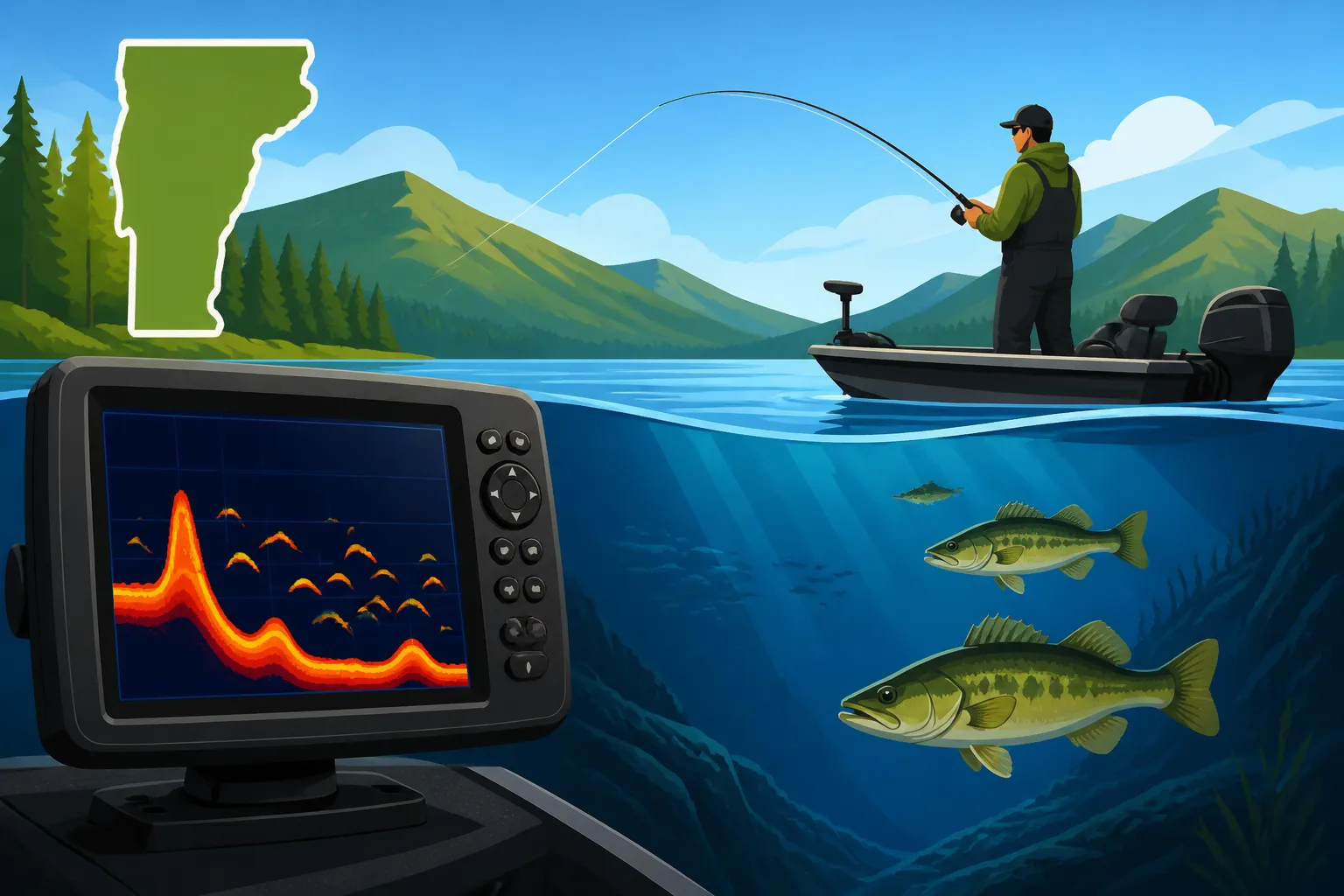
Traditional 2D sonar, often called broadband or conventional sonar, is the bedrock of all fish finding. It works by sending out a cone-shaped sound wave and interpreting the echoes that bounce back. Think of it like shouting into a canyon and listening for the echoes – the stronger the echo, the harder the surface, and the sooner it returns, the shallower the object. On your screen, fish typically appear as arches (or "fish arcs") due to the cone passing over them, and the bottom is depicted as a line. For deep water, a powerful 2D sonar is essential because it's typically the most effective at penetrating great depths and maintaining a consistent signal.
A good 2D sonar for deep water will offer multiple frequencies, allowing you to switch between them. Lower frequencies (like 50 kHz) have longer wavelengths, which means they can penetrate deeper, but they offer less detail. Higher frequencies (like 200 kHz) provide finer detail and better target separation in shallower to medium depths but struggle to reach extreme depths. The ability to utilize both or a frequency in between (like 83 kHz) gives you versatility. When you're drifting over the deep abyss of Lake Champlain, a strong 50 kHz signal is often your best bet for finding the bottom and any large fish lurking near it. You'll often see these features bundled into what manufacturers call "CHIRP Sonar" which we'll discuss shortly.
The Clarity of DownScan and SideScan Imaging
While 2D sonar excels at depth penetration and showing fish arches, DownScan Imaging (often called DownVü or DownVision) and SideScan Imaging (often called SideVü or SideVision) offer a photographic-like view of what's directly beneath or to the sides of your boat. These technologies use much higher frequencies and narrower, fan-shaped beams to create incredibly detailed images.
- DownScan Imaging provides a remarkably clear, almost photographic picture of the water directly below your boat. Instead of fish arches, you'll see fish appear as distinct blobs or dots, and submerged timber, rock piles, and other structures look incredibly lifelike. This is invaluable for deep water because it allows you to truly distinguish between a bait ball and a cluster of lake trout relating to a specific piece of structure. If you're dropping a jig down to a marked anomaly on your 2D sonar, DownScan helps confirm exactly what you're targeting.
- SideScan Imaging takes this clarity horizontally, allowing you to see detailed images of the bottom and structure up to several hundred feet on either side of your boat. For vast lakes like Lake Champlain, where you might be looking for subtle rock piles or points extending far from shore, SideScan is a game-changer. It enables you to cover a much larger area efficiently, scanning for promising structure without having to drive directly over it. Imagine cruising along, and seeing a submerged weed bed or a boulder field off to your left, complete with individual fish holding tight to it – that’s the power of SideScan. This can significantly cut down on your search time when trying to locate How deep lake trout go in summer or find new productive areas.
The Power of CHIRP Sonar
CHIRP (Compressed High-Intensity Radiated Pulse) sonar is not a separate technology but rather an advanced way that traditional 2D sonar, and often DownScan/SideScan, transmits and receives signals. Instead of sending out a single frequency pulse, CHIRP sends a continuous sweep of frequencies (from low to high) within a specified range. This "chirp" of frequencies allows the fish finder to put more energy into the water, process a wider range of information, and ultimately create much clearer, more detailed, and more accurate sonar returns.
For deep lake fishing, CHIRP technology is truly a must-have. It dramatically improves:
- Target Separation: You can distinguish individual fish within a school, or a fish holding tight to the bottom structure, rather than just seeing a single blob. This is vital when targeting specific species like landlocked salmon or lake trout that might be relating to baitfish.
- Clarity and Detail: CHIRP provides much sharper images, making it easier to identify different types of bottom composition, subtle contours, and even thermoclines in deep water.
- Depth Penetration: By sending more energy into the water across a range of frequencies, CHIRP units are inherently better at penetrating deeper water and providing usable returns even at extreme depths, which is crucial in Vermont's deeper basins.
Many top-tier units from brands like Humminbird or Lowrance integrate CHIRP into their 2D, DownScan, and SideScan offerings, providing a comprehensive and powerful view beneath your boat. When you're trying to locate fish in the deep, cold waters of Lake Willoughby, having a CHIRP-enabled unit gives you a distinct advantage.
Key Specifications: What to Look for in a Deep Lake Fish Finder
When you're ready to invest in a fish finder for deep lake fishing, simply picking the biggest screen or the most expensive model isn't always the right answer. It's about matching the specifications to the challenging environment of deep water and your specific fishing style. Paying close attention to these details will ensure your unit can perform reliably and give you the information you need.
Transducer Frequencies and Cone Angles
The transducer is the unsung hero of your fish finder; it's the part that actually sends and receives the sonar waves. For deep water, its specifications are paramount.
- Frequencies: As mentioned earlier, different frequencies serve different purposes.
- Low Frequencies (e.g., 50 kHz): These are your deep-water workhorses. They penetrate the water column farthest, making them ideal for finding the bottom and large fish arches at extreme depths (think 200+ feet). The trade-off is less detail.
- High Frequencies (e.g., 200 kHz): Great for detail and target separation in shallower to medium depths (up to about 100-150 feet), but they won't reach those truly deep pockets effectively.
- Medium Frequencies (e.g., 83 kHz or CHIRP ranges like 80-160 kHz): Offer a good compromise between depth penetration and detail. Many CHIRP transducers sweep a range of frequencies, giving you the best of both worlds. For systems with DownScan and SideScan, you'll often see ultra-high frequencies (e.g., 455 kHz, 800 kHz, or Mega Imaging ranges) which provide incredibly sharp images but have very limited depth or side-range penetration.
- Cone Angles: The cone angle refers to the width of the sonar beam.
- Narrow Cone Angles (e.g., 10-20 degrees): Provide greater depth penetration and better target separation. However, they cover a smaller area, meaning you might miss fish or structure if you're moving fast.
- Wide Cone Angles (e.g., 40-60 degrees): Cover a larger area, making it easier to find fish and structure, especially when drifting or searching. But they sacrifice some depth penetration and target separation.
- Dual Beam/Multiple Frequencies: The best transducers for deep water will offer multiple cone angles and frequencies, or utilize CHIRP technology to effectively manage these. This allows you to use a wide cone to find fish and then switch to a narrower, higher-frequency beam for more detailed target identification. When you're Trolling Techniques for Vermont Lake Trout, having a transducer that can adapt to changing depths and conditions is invaluable.
Display Size, Resolution, and Screen Brightness
What good is cutting-edge sonar technology if you can't clearly see the results on your screen, especially when the Vermont sun is glinting off the water?
- Display Size: This is largely a matter of personal preference and boat size, but for deep lake fishing, a larger screen is almost always better. When you're running multiple sonar views (2D, DownScan, map) simultaneously, a bigger display (7 inches or more) prevents the screen from becoming too cluttered and allows you to discern details more easily. On a choppy Lake Champlain, you'll appreciate not having to squint at a tiny screen.
- Resolution: This refers to the number of pixels on the screen (e.g., 800×480, 1024×768). Higher resolution means a crisper, more detailed image, which is crucial for interpreting subtle sonar returns and photographic-like DownScan/SideScan images. A higher pixel count makes those faint arches clearer and allows you to differentiate between a small baitfish and a larger game fish.
- Screen Brightness and Clarity: Look for units with bright, vibrant displays that are easy to read in direct sunlight. Many modern units feature optically bonded displays that reduce glare and improve visibility. Good color rendition is also important, as different manufacturers use color palettes to represent signal strength and depth, which can aid in interpretation. Investing in a quality unit ensures you can interpret your Best sonar settings for finding structure on Lake Champlain clearly.
Power Output and Battery Considerations
Power output is directly related to depth penetration. The more wattage a fish finder has, the stronger its sonar pulse, and the deeper it can effectively "see."
- RMS (Root Mean Square) Power: This is the continuous power output of the transducer. For deep water (over 150-200 feet), you'll want a fish finder with an RMS power of at least 500 watts, and ideally 1000 watts or more, especially if you plan to fish lakes like Champlain or Willoughby that plunge to significant depths. Peak-to-peak (PTP) power is often advertised, but RMS is the more reliable indicator of true performance.
- Battery Life and Draw: High-powered units, especially those with large, bright screens and advanced features like SideScan, can draw a significant amount of power. Ensure your boat's battery system is robust enough to handle the sustained draw, or if you're running a portable unit, that your battery can last a full day on the water. Many anglers fishing Vermont's deeper waters for extended periods carry auxiliary batteries or run a dual-battery setup to prevent mid-day power loss.
Navigational Aids: GPS and Mapping Integration
Finding fish in deep water isn't just about what's under your boat; it's also about knowing where your boat is, where you've been, and where you want to go. This is where integrated GPS and mapping capabilities transform a fish finder into a comprehensive navigational and fish-finding command center, especially vital on Vermont's larger, more complex bodies of water.
The Importance of Accurate GPS for Waypointing
Imagine you've just found a sweet rock pile on Lake Champlain, 80 feet down, holding a nice school of walleye. Without accurate GPS, that spot is gone the moment you drift off it. An integrated GPS receiver allows you to:
- Mark Waypoints: Instantly "drop a pin" on any productive spot—a submerged hump, a thermocline holding baitfish, a specific drop-off where you landed a nice lake trout. These waypoints are saved for future trips, letting you return with precision, even years later. This is incredibly valuable for returning to those secret spots on Best Fishing Lakes in Vermont.
- Track Your Course: Your unit can record your boat's path, allowing you to see exactly where you've trolled or drifted. This is fantastic for identifying patterns, covering ground efficiently, or even retracing your steps to find a lost lure.
- Navigate with Confidence: On large lakes, fog can roll in quickly, or familiar shorelines can disappear in the vastness. GPS provides your exact location, speed, and heading, ensuring safe navigation back to the boat launch or to your next fishing spot.
- Speed Tracking: Accurate boat speed is critical for many deep-water techniques, especially trolling for Lake Trout Fishing in Vermont or landlocked salmon. The GPS provides precise speed over ground, helping you dial in your presentation.
A high-quality GPS antenna, often internal but sometimes external for larger boats, will provide faster, more accurate fixes, which is important for precise waypoint marking and smooth chart plotting.
Preloaded vs. Customizable Lake Maps
Once you have GPS, integrating it with mapping capabilities opens up a whole new world of understanding the water you're fishing.
- Preloaded Maps: Many fish finders come with base maps that show general contours and shorelines. Higher-end units, however, often come preloaded with incredibly detailed charts, sometimes called "lakemaps" or "hot spots," for thousands of lakes across the country. For Vermont anglers, look for units that specifically feature high-definition bathymetric (underwater contour) maps for major lakes like Lake Champlain, Lake Memphremagog, and others. These maps can show depth contours down to a foot, highlighting ledges, humps, channels, and other structure that are impossible to see from the surface. This is a huge advantage for pre-fishing and understanding the deep topography. Many popular mapping solutions, often available as separate purchases or included with premium units, offer this level of detail.
- Customizable Mapping (User-Generated Contours): Some advanced fish finders, particularly from brands like Lowrance with their Genesis Live or Humminbird with AutoChart Live, allow you to create your own custom, high-definition contour maps in real-time as you drive your boat. As your transducer scans the bottom, the unit maps the depth contours directly onto your screen, filling in details that might be missing from preloaded maps or allowing you to map smaller, unchartered bodies of water. This is an incredibly powerful tool for exploring new spots or getting even finer detail on known areas, creating your own personalized map of productive structure. It’s like having an underwater cartographer on board, continually improving your knowledge of the lake's hidden features.
Consider which lakes you fish most often. If it's primarily Lake Champlain, ensure the unit has excellent preloaded mapping for it, or the ability to purchase an upgrade. If you explore many smaller, lesser-known deep ponds, the real-time mapping feature might be a more important consideration. Companies like Bass Pro Shops and Amazon often carry a wide range of units with various mapping options and regional chart packs available.
Installation, Mounting, and Maintenance Tips
Getting the right fish finder is only half the battle; properly installing it and maintaining it ensures you get the most out of your investment for years to come. Poor installation can render even the most advanced unit useless, especially when dealing with the demands of deep water and varied boat speeds on Vermont's lakes.
Transducer Placement for Optimal Performance
The transducer is the single most critical component for deep water performance. Its placement can make or break your fish finder's accuracy.
- Location, Location, Location: The transducer needs to be mounted in a spot where it has a clear, unobstructed "view" of the water beneath your boat. This means avoiding areas prone to air bubbles, prop wash, or obstructions like the keel, strakes, or other transducers. Bubbles create "noise" that interferes with the sonar signal, especially at higher speeds, making it impossible to get clear readings.
- Transom Mount: This is the most common and easiest installation, attaching to the back of the boat. Ensure it's mounted slightly below the hull and perfectly level, both horizontally and vertically. If it's too high, it will lose contact at speed; too low, and it creates excessive drag and spray.
- Through-Hull Mount: For boats with specific hull designs or those seeking maximum performance, a through-hull transducer is drilled directly into the hull, allowing the transducer face to be flush with the bottom. This offers superior performance at high speeds by completely avoiding turbulence, but it's a more involved installation that often requires professional help.
- In-Hull (Shoot-Through) Mount: These transducers are epoxied directly to the inside of a solid fiberglass hull, shooting the signal straight through the fiberglass. While it's a clean installation with no external parts, there's always some signal loss due to the hull material, which can affect deep water performance. This might be acceptable for depths up to 100-150 feet but less ideal for truly extreme deep-water fishing like you'd experience on Lake Willoughby Fishing Guide.
- Trolling Motor Mount: Many units offer transducers that attach directly to the shaft or head of a trolling motor. This is excellent for slow trolling or spot-locking, providing a clear view away from prop wash, but it's often a secondary transducer or paired with a transom/through-hull for higher speeds.
Always follow the manufacturer's specific instructions for your transducer model. Testing the transducer at various speeds on the water is essential to ensure it maintains a clear signal.
Powering Your Deep Water Fish Finder
A reliable power source is non-negotiable for a deep-water fish finder, especially one with a large, bright screen and advanced sonar technologies.
- Dedicated Power Source: Whenever possible, wire your fish finder directly to a dedicated 12V marine battery, or at least to a clean power bus that isn't shared with other noisy electronics (like bilge pumps or engine starters) that can introduce electrical interference.
- Appropriate Wiring: Use heavy-gauge marine-grade wire for your power connections. Undersized wire can lead to voltage drops, causing your unit to reboot, display incorrect readings, or underperform, especially when pulling high wattage for deep-water sonar. Always fuse the power wire close to the battery to protect your electronics and boat.
- Portable Power: For kayak anglers or those using smaller boats without permanent wiring, high-capacity portable lithium batteries are excellent options. They are lighter, last longer, and provide more consistent voltage than traditional lead-acid batteries. Just ensure the battery capacity (measured in amp-hours) is sufficient for your unit's power draw and your desired fishing time. You can often find suitable portable power solutions at Bass Pro Shops or on Amazon.
- Grounding: Ensure your unit and transducer are properly grounded according to the manufacturer's recommendations to prevent electrical noise and ensure optimal performance.
Protecting Your Investment in Vermont's Conditions
Vermont's weather can be unpredictable, and fishing environments are tough on electronics. Protecting your fish finder ensures its longevity.
- Weather Protection: Most modern fish finders are water-resistant, but they aren't fully submersible. Always use a protective cover when trailering or storing your boat to shield the screen from dust, debris, and UV rays. When fishing in heavy rain, consider a marine electronics cover.
- Temperature Extremes: Avoid leaving your unit exposed to extreme cold for prolonged periods, especially if it's not designed for ice fishing. If possible, remove the head unit from the boat and store it indoors during the off-season.
- Cleanliness: Regularly wipe down the screen and housing with a soft, damp cloth. Avoid harsh chemical cleaners that can damage the screen coating. Ensure the transducer face is clean and free of marine growth, which can significantly impede its performance.
- Software Updates: Like any advanced electronic device, fish finders receive firmware updates. Regularly check the manufacturer's website for updates. These can improve performance, fix bugs, and even add new features. Updating your unit can be as critical as physical maintenance for ensuring peak functionality when you're out chasing Landlocked Salmon Fishing in Vermont.
Matching Your Fish Finder to Vermont's Deep Lakes
Vermont's diverse deep lakes each present unique characteristics and fishing opportunities. What works perfectly on the vast expanse of Lake Champlain might be overkill or underpowered for a smaller, clearer mountain lake. Understanding these nuances will help you tailor your fish finder choice for optimal performance wherever you drop a line in the Green Mountain State.
Considerations for Lake Champlain's Expansive Depths
Lake Champlain is a beast, a freshwater inland sea stretching over 120 miles with depths exceeding 400 feet in some areas. It’s a renowned fishery for everything from smallmouth bass and walleye to lake trout and salmon. Fishing this lake requires a robust fish finder capable of handling serious depth, vast areas, and diverse species.
- Extreme Depth Penetration: For the deepest parts of Champlain, you absolutely need a unit with powerful 2D CHIRP sonar, ideally with 1000W RMS power or more, capable of running low frequencies (e.g., 50 kHz or a wide CHIRP band). This ensures you can consistently mark the bottom and any suspended fish or thermoclines at great depths.
- Side-Scanning is a Game Changer: Given Champlain's sheer size, using SideScan Imaging is invaluable for efficiently covering water and locating subtle structures like rock piles, old foundations, or transition areas that hold fish. You can scan wide swaths of water as you motor along, pinpointing promising areas to then investigate with your more focused DownScan or 2D. This is particularly useful for finding structure that attracts Best Trolling Gear for Lake Champlain Walleye.
- Advanced Mapping: High-definition bathymetric charts of Lake Champlain are a must. Look for units that come preloaded with these detailed maps or offer an upgrade option. The ability to create your own custom maps (like Lowrance's Genesis Live or Humminbird's AutoChart Live) can also be incredibly beneficial for exploring new areas or refining existing charts. A thorough Lake Champlain Fishing Guide often emphasizes the importance of good mapping.
- Large Display: With so much data to process (map, 2D, DownScan, SideScan all at once), a large, high-resolution display (9 inches or larger) will significantly enhance your experience on Champlain, allowing for clear, split-screen viewing without crowding.
Targeting Landlocked Salmon in Deep, Clear Mountain Lakes
Vermont is home to several deep, clear mountain lakes like Lake Willoughby and Seymour Lake, famous for their landlocked salmon and lake trout fisheries. These lakes, while not as vast as Champlain, present their own challenges due to their incredible clarity and often steep, rocky drop-offs.
- High-Resolution Clarity: In such clear water, fish can be spooky. You'll want a fish finder that offers exceptional target separation and clarity, so you can distinguish individual fish from bait balls or rocks. CHIRP 2D sonar is excellent, and DownScan will give you precise details on suspended fish or those relating tightly to structure. This clarity is crucial when seeking How to Catch Landlocked Salmon in Vermont.
- Temperature Readings: Landlocked salmon and lake trout are highly sensitive to water temperature. A fish finder with an accurate temperature sensor and the ability to display temperature graphs or detect thermoclines will help you identify the preferred depth range of these cold-water species. Often, you'll find them suspended just above or in the thermocline.
- Waypoint Management: These lakes often have specific humps, points, or deep basins where fish congregate. The ability to mark precise waypoints and easily navigate back to them is critical. This helps you efficiently work known productive areas on a Lake Willoughby Fishing Guide.
- Transducer Selection: For trolling or drifting in these lakes, a quality through-hull or transom-mounted CHIRP transducer capable of accurate readings at trolling speeds is ideal. The clarity of the water means even small signals can be important.
Specific Features for Ice Fishing Deep Water
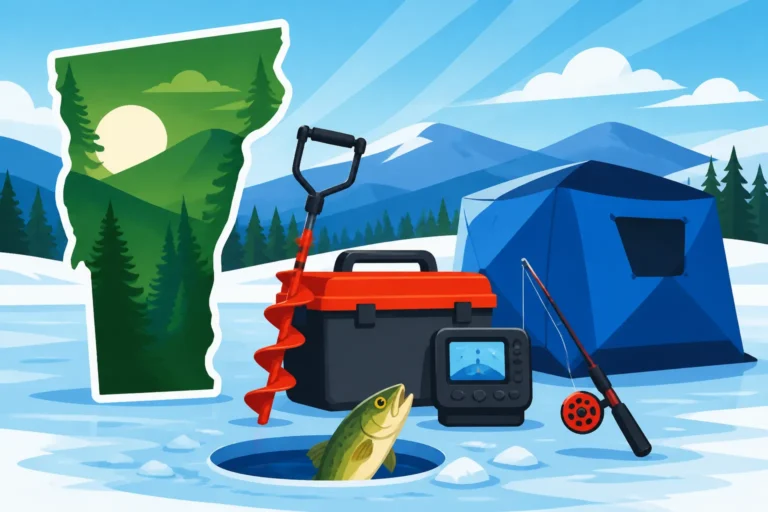
Ice fishing transforms your approach, but a good fish finder remains indispensable, especially when targeting deep-dwelling species through the ice. Vermont's long winters make Ice Fishing in Vermont a popular activity, often on these same deep lakes.
- Flashing Display (Flasher Mode): Many modern fish finders have a dedicated "flasher mode" which displays sonar returns in a circular, real-time format, similar to traditional ice fishing flashers. This instantaneous feedback is critical for jigging, allowing you to see your lure, incoming fish, and their reaction to your presentation in real-time.
- Portability: If you plan to move between holes, a portable ice fishing transducer kit is essential. These kits typically include a float for the transducer and a small, robust battery pack. You can also find specialized portable units that are designed to be easily carried in a bucket or sled.
- Narrow Cone Angle: For ice fishing, you typically want a narrower cone angle (e.g., 9-20 degrees). This helps you focus the signal directly beneath your hole, reducing interference from other anglers' gear or nearby structure, and giving you a clear view of your lure and fish.
- Target Separation: Being able to clearly distinguish your small ice jig from a perch, walleye, or lake trout is vital for successful deep-water ice fishing. CHIRP sonar excels at this, giving you crisp, clear returns.
- Battery Life: Cold weather drains batteries faster. Ensure your portable power source for ice fishing has ample capacity, especially for a full day of targeting deep-dwelling Lake Trout Fishing in Vermont. Many dedicated ice fishing bundles include specialized cold-weather batteries. Having a robust and reliable system is crucial to truly optimize your Best Ice Fishing Gear for Vermont.
Here's a quick comparison of key fish finder features for different deep lake scenarios in Vermont:
| Feature/Consideration | Lake Champlain (Vast, Deep, Diverse) | Mountain Lakes (Deep, Clear, Trout/Salmon) | Ice Fishing (Deep Water) |
|---|---|---|---|
| Sonar Type | High-Power CHIRP 2D, DownScan, SideScan | CHIRP 2D, DownScan | CHIRP 2D (Flasher Mode), High-Res |
| Power Output (RMS) | 1000W+ recommended | 500W+ recommended | 500W+ (often lower for portable units) |
| Transducer Frequencies | Low (50kHz), CHIRP wide range, high for DS/SS | Low/Medium (83kHz), CHIRP range, high for DS | Low/Medium (83kHz), CHIRP narrow range |
| Cone Angle | Dual Beam/Multi-frequency, wide for SS | Dual Beam/Medium | Narrow (9-20 degrees) |
| Display Size | 9" – 12"+ recommended | 7" – 9" recommended | 5" – 7" (compact and portable) |
| Resolution | High (e.g., 1024×768+) | High (e.g., 800×480+) | Good enough for flasher detail (480×480+) |
| Mapping/GPS | Essential: HD Charts, Custom Mapping | Highly Recommended: HD Charts, Waypointing | Basic GPS for waypointing holes is useful |
| Battery Life | Robust boat system | Robust boat system | Excellent, cold-weather portable battery |
| Mounting | Transom/Through-hull, Trolling Motor | Transom/Through-hull | Portable kit (float transducer) |
No matter which deep lake in Vermont calls to you, choosing the right fish finder and understanding its capabilities will drastically improve your success rate and enjoyment on the water. It’s an investment that truly pays off in more bites and more memorable catches.
Disclaimer
This article is for general informational purposes only and does not constitute professional advice. Laws, prices and regulations vary by location and change over time. Consult a qualified professional for guidance on your specific situation.