How to tell landlocked salmon from lake trout
It's an age-old conundrum for anglers in Vermont's beautiful, cold waters: you reel in a magnificent, silver-sided fish, and for a moment, you're not entirely sure if you're looking at a landlocked salmon or a lake trout. They both inhabit similar deep, clear lakes, and at first glance, their general appearance can be strikingly alike. This guide is here to untangle that confusion, providing clear, actionable ways to confidently tell these two prized species apart, ensuring you stay within regulations and truly appreciate your catch.
Body Shape and Overall Demeanor
When you first bring a fish to hand, its overall shape and how it feels can offer immediate, albeit subtle, clues before you even dive into the finer details. Both are members of the salmon family, Salmonidae, which contributes to their similar streamlined bodies, but they've evolved to suit slightly different niches.
The Sleek, Agile Landlocked Salmon
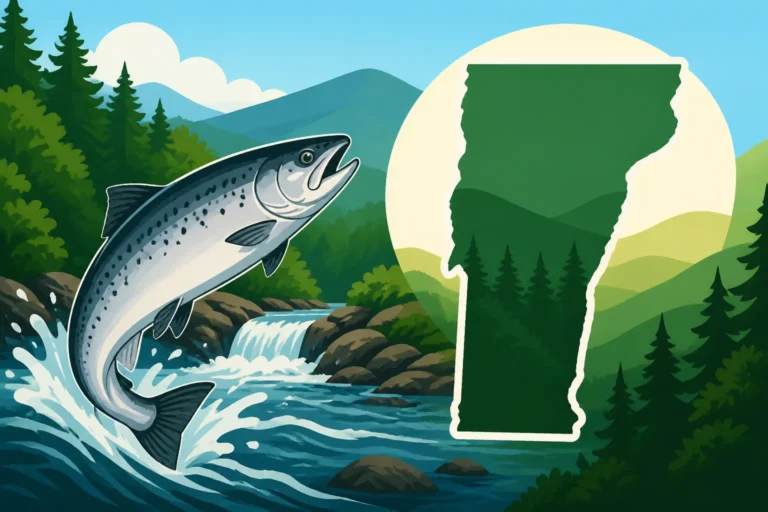
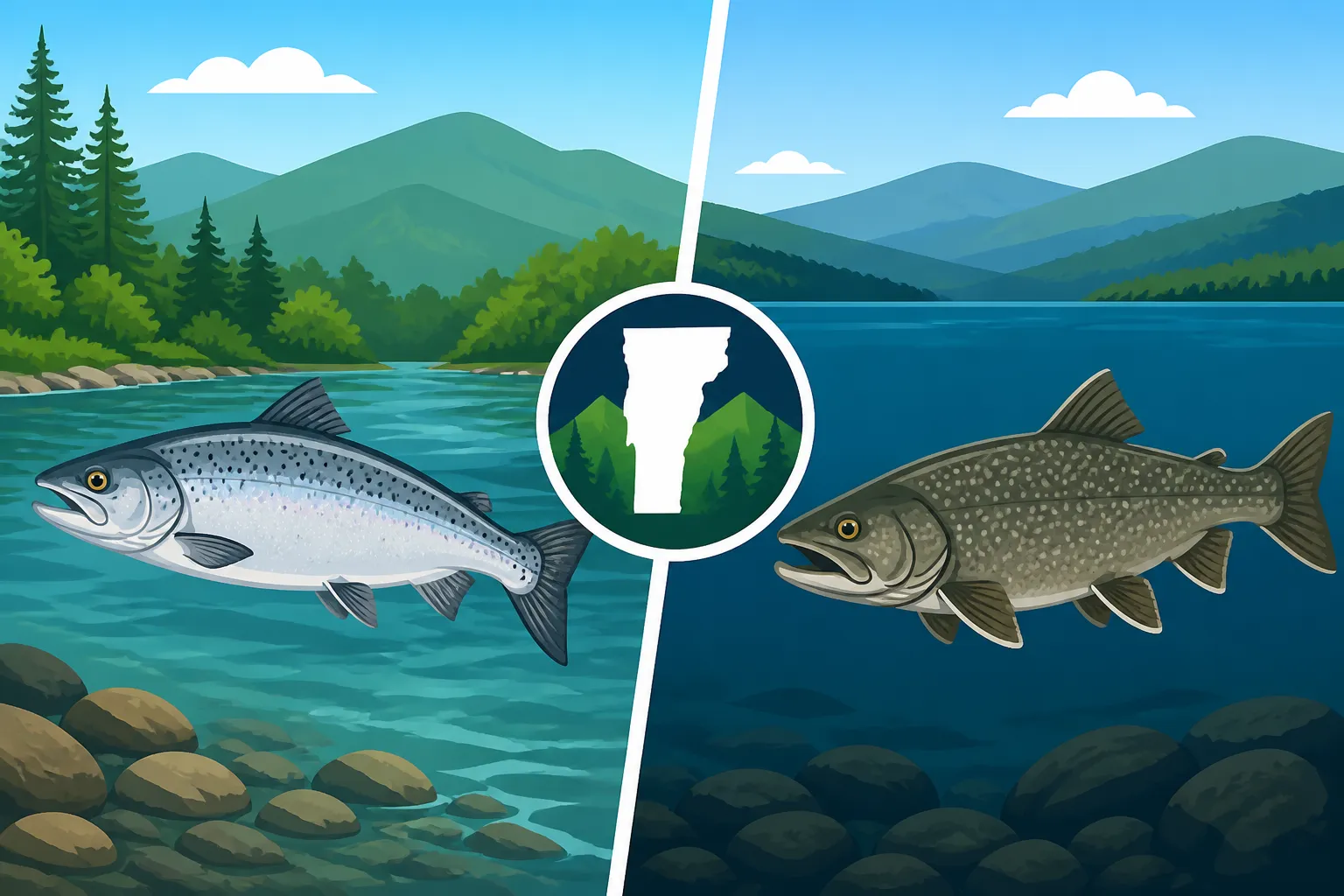
Think of a landlocked salmon, and picture athleticism. These fish are built for speed and chasing baitfish in the open water columns of Vermont's larger lakes like Lake Champlain and Lake Willoughby. They tend to have a more torpedo-like, elongated body that tapers gracefully from head to tail. Their profile is generally slender, giving them a very "fishy" or "classic salmon" look. When you hold one, it often feels incredibly muscular and compact. They are often described as having a "steelhead" or "ocean salmon" appearance, even though they live their entire lives in freshwater. Their jaws can be quite pronounced, especially in larger males (known as "kypes"), giving them an aggressive, predatory look. In the wild, their active, pelagic lifestyle means they're constantly on the move, chasing down schools of smelt and other forage fish. Landlocked Salmon Fishing in Vermont often requires covering a lot of water.
The Stout, Deep-Water Lake Trout
Lake trout, on the other hand, often present a more robust, chunky profile. While still streamlined, they tend to be deeper-bodied and can feel heavier for their length than a salmon. These fish are adapted to the cold, dark depths of Vermont's deepest lakes, spending much of their lives near the bottom or suspended over deep structure. Their body shape reflects this, being a bit stockier and less acutely tapered. You might describe them as having a more "football" shape, particularly as they grow larger and older. Their heads can appear proportionally smaller in relation to their broad shoulders. Lake trout are less about explosive, sustained chases in open water and more about ambushing prey or scavenging on the bottom, which influences their less overtly athletic build. Many anglers pursuing Lake Trout Fishing in Vermont will often target deep water structures.
Spotting Patterns and Coloration Clues
This is where things start to get really distinctive, and often, it's the first place most experienced anglers look for a quick identification. While general silver coloration is common to both, the size, shape, and distribution of spots are critical differentiators.
The Subtle, Sparse Spots of a Landlocked Salmon
Landlocked salmon generally have fewer, more X-shaped or irregular spots. These spots are typically concentrated on their upper flanks, back, and dorsal fin, and they rarely extend below the lateral line in any significant way. The spots themselves are often lighter, almost faded, and might even be absent or very faint on smaller fish. You'll notice a distinct lack of spots on their caudal (tail) fin, which is a major giveaway. The overall body color is a shimmering silver, often with a darker, bluish-green back, fading to white on the belly. During spawning, males can develop a bronze or reddish hue, but outside of that, silver dominates. Think "clean" sides with minimal, scattered markings. The Landlocked Salmon Life Cycle in Vermont Lakes sees them transition through various life stages, but this spotting pattern remains relatively consistent.
The Profuse, Worm-like Spots of a Lake Trout
Lake trout are notorious for their prolific, light-colored spots. These spots are typically rounder or more elongated, often described as "worm-like" or "vermiculated." Crucially, these spots are present all over their body, including well below the lateral line, on their dorsal fin, and most importantly, on their caudal (tail) fin. This spotting on the tail is perhaps the single most reliable visual cue. The spots might even extend onto their head. The base color of a lake trout varies greatly depending on the water they inhabit and their diet, ranging from a dark green or gray to even a lighter olive or brown, all mottled with those distinctive light spots. Their belly is usually off-white or cream-colored. Imagine a canvas splattered generously with lighter paint. Sometimes, on larger fish, these spots can be very subtle, blending in, but they will almost always be present on the tail. For a detailed visual, you might look up an online Trout Species Identification Guide for Vermont or a physical field guide available on Amazon to see side-by-side comparisons.
Fin and Mouth Features: The Definitive ID Points
While body shape and spotting are great starting points, a closer look at the fins and mouth will provide the absolute certainty you need. These anatomical differences are the result of millions of years of evolution, tailored to their distinct environments and feeding habits.
Tail Shape: The Forked Fin vs. The Slightly Forked Fin
This is often the most reliable feature for differentiating these two fish in Vermont.
- Landlocked Salmon: Possess a noticeably forked tail (caudal fin). The two lobes of the tail are quite distinct and concave, forming a deep "V" shape. This deep fork is another adaptation for speed and agility in open water, allowing for rapid changes in direction and bursts of acceleration. The tail typically has no spots.
- Lake Trout: Have a tail that is less deeply forked, or sometimes described as merely "notched" or "square-ish" with a slight indentation. While there might be a subtle fork, it's never as pronounced or deep as that of a landlocked salmon. Crucially, as mentioned, the tail will almost always have distinct spots, even if faint.
Mouth and Teeth: Predator vs. Scavenger
Another telling feature lies within their mouths, reflecting their feeding strategies.
- Landlocked Salmon: Their mouths typically extend back to around or just past the middle of their eye. They have sharp, well-defined teeth, especially in the upper jaw, designed for grasping and holding onto active prey like smelt and other baitfish. Their overall jaw structure can be quite strong and predatory.
- Lake Trout: Their mouths are generally larger and extend further back, often well past the eye. They possess numerous small, sharp teeth in their jaws, on their tongue, and on the roof of their mouth (vomerine teeth). This larger, toothier mouth is adapted for consuming a wider variety of prey, from baitfish to larger invertebrates and even other fish, often ambushed or scavenged from the depths. The difference in the extent of the mouth past the eye is a very strong indicator.
Dorsal Fin and Adipose Fin
Both species have a soft-rayed dorsal fin and a small, fleshy adipose fin (common to all salmonids), but there can be subtle differences.
- Landlocked Salmon: The dorsal fin is typically clear or has only a few very faint spots.
- Lake Trout: The dorsal fin will almost always exhibit distinct, often vermiculated (worm-like) spots, consistent with the rest of its body.
Here's a quick comparison table to keep things clear:
| Feature | Landlocked Salmon | Lake Trout |
|---|---|---|
| Body Shape | Slender, elongated, torpedo-like; very athletic | Stouter, deeper-bodied, more "football" shaped; robust |
| Body Spots | Few, small, irregular/X-shaped; mostly above lateral line; often faint; no spots on tail | Numerous, round/worm-like; found all over body, including on tail |
| Tail Shape | Deeply forked ("V" shape); no spots | Less deeply forked or notched; often with spots |
| Mouth Extent | Upper jaw extends to middle or just past the eye | Upper jaw extends well past the eye |
| Dorsal Fin | Few to no spots | Distinct, often worm-like spots |
| Coloration | Shimmering silver sides, dark blue/green back | Darker base color (green, gray, brown); mottled with light spots |
Behavioral and Habitat Distinctions
Knowing where and how these fish typically behave in Vermont's waters can also offer strong clues to their identity. While there's always overlap, their preferred habitats and feeding patterns differ significantly.
Open Water Cruisers: Landlocked Salmon
Landlocked salmon are creatures of the open water column, particularly in large, deep, cold lakes. They spend much of their lives actively hunting schools of baitfish, especially rainbow smelt. You'll often find them cruising just below the surface in spring and fall, and deeper in the thermocline during summer months, always in pursuit of their prey. Their schooling behavior and pursuit of bait often lead anglers to troll for them with fast-moving lures, covering vast expanses of water. They are known for their spectacular acrobatic jumps and powerful runs when hooked, a testament to their open-water existence. In Vermont, places like Lake Champlain and Lake Willoughby are prime Landlocked Salmon Fishing in Vermont destinations. Understanding their habitat is key to How to Catch Landlocked Salmon in Vermont.
Deep Water Dwellers: Lake Trout
Lake trout, conversely, are typically found in the deepest, coldest parts of Vermont's lakes, often hugging the bottom or suspended near deep structure. They are less prone to chasing fast-moving schools in the open water and more likely to be found near ledges, drop-offs, underwater islands, and other features where they can ambush prey or scavenge. While they will eat baitfish, their diet is often broader, including invertebrates and whatever they can find in their deep-water domain. They are strong, powerful fighters, but unlike the salmon's acrobatic leaps, lake trout tend to make deep, bulldogging runs. Anglers targeting Lake Trout Fishing in Vermont often use downriggers or heavy jigs to reach them in the depths. Trolling Techniques for Vermont Lake Trout usually involve slower speeds and deeper presentations.
Why Accurate Identification Matters
Beyond satisfying your curiosity, correctly identifying your catch is absolutely crucial for responsible angling, especially here in Vermont where both species are highly regulated. Making a mistake could lead to legal repercussions, and more importantly, it can harm conservation efforts.
Adhering to Vermont's Fishing Regulations
Vermont has specific bag limits, possession limits, and sometimes even length limits that vary between landlocked salmon and lake trout. For example, Vermont Landlocked Salmon Regulations might differ significantly from Vermont Lake Champlain Lake Trout Regulations. You might also encounter special regulations for specific waters, or even during certain times of the year, like spawning seasons. Unintentionally keeping a fish of the wrong species or size because of misidentification can result in fines and the loss of fishing privileges. Always consult the most current Vermont fishing guide before heading out. Having a reliable measuring device, perhaps a waterproof tape measure you picked up on Amazon, is always a good idea.
Conservation and Responsible Angling
Both landlocked salmon and lake trout are valuable components of Vermont's aquatic ecosystems. Landlocked salmon are often stocked to support recreational fisheries, and their populations are carefully managed. Lake trout are slow-growing and long-lived, making them particularly vulnerable to overfishing. Misidentification can contribute to the accidental overharvest of one species when targeting another, undermining the efforts of the Vermont Fish and Wildlife Department to maintain healthy populations. If you're practicing catch and release, quick and accurate identification helps you release the fish safely and legally. For those interested in the long-term health of these fish, understanding their Landlocked Salmon Growth Rate to Trophy Size and Lake Trout Average Size in Vermont Lakes can help you appreciate their journey.
Enjoying Your Catch (and Not Confusing It!)
Finally, knowing exactly what you've caught allows you to fully appreciate the unique characteristics of each fish. Whether you're taking a photo for a memory book, planning a delicious meal, or simply sharing the story of your angling adventure, being able to say with confidence, "I caught a beautiful Vermont landlocked salmon!" or "Look at this chunky lake trout!" adds immeasurably to the experience. For aspiring anglers, studying detailed images, perhaps from a high-resolution camera available on Amazon for capturing your catches, can help solidify identification skills.
So next time you're on the water and that silver flash comes to the net, take a moment. Check the tail for that deep fork or subtle notch, scan the body for spots extending below the lateral line or on the tail, and peek into that mouth. With these clear distinctions in mind, you'll be a master of identifying Vermont's magnificent salmon and lake trout in no time. Best Tackle for Vermont Trout Fishing often applies to both species, but knowing which one you're after can help refine your approach!
Disclaimer
This article is for general informational purposes only and does not constitute professional advice. Laws, prices and regulations vary by location and change over time. Consult a qualified professional for guidance on your specific situation.