Brown Trout Habits in Vermont Streams
There’s something uniquely challenging about chasing brown trout in Vermont’s streams. Unlike the eager brookies that might dart out from under a log or the rainbow trout that often give away their presence with splashy rises, brown trout often feel like ghosts. They're wily, secretive, and demand a deeper understanding of their world to consistently find them. This guide will peel back the layers of mystery surrounding brown trout habits in Vermont streams, offering insights to help you connect with these beautiful, cunning fish.
The Elusive Nature of Vermont Brown Trout
Brown trout have a reputation, and it's well-earned. They aren't the most flamboyant fish, but their cunning and ability to survive and thrive in challenging environments make them a true prize for any angler. Understanding why they're so different is the first step in unlocking their secrets.
Why Brown Trout are Different from Other Trout
When we talk about trout in Vermont, we often think of three main species: brook trout, rainbow trout, and brown trout. Each has its own personality, but browns stand out. Brook trout, Vermont's native jewels, are often quite bold, especially in smaller, high-gradient streams. They'll readily hit a dry fly or a small spinner if you present it reasonably well. Rainbow trout, known for their acrobatic jumps and spirited fights, can often be found actively cruising and feeding, sometimes quite visibly, especially during hatches or in faster water.
Brown trout, however, are a different beast entirely. They are inherently more cautious, wary, and often nocturnal, particularly the larger specimens. Their coloration provides exceptional camouflage against stream bottoms and undercut banks, making them incredibly difficult to spot. They're quick to spook from vibrations, shadows, or clumsy casting, and once they bolt, they can be incredibly hard to tempt again that day. It's this innate sense of self-preservation that makes them such a captivating challenge for seasoned anglers. They demand stealth, patience, and a nuanced understanding of their environment.
Unlike the other trout species, brown trout often prefer to hold tight to significant cover. They're not as inclined to sit out in the open current unless conditions are absolutely perfect, such as a heavy hatch during low light. Instead, they’ll hug the bottom of a deep pool, lurk under an undercut bank, or hide deep within a logjam. This preference for heavy structure means you often need to get your offering right into their living room, which can be tricky without snagging. It's why many anglers find them so frustrating yet ultimately so rewarding when they finally connect with a large, wild brown.
Wild vs. Stocked Brown Trout Behavior
It's crucial to differentiate between the behavior of recently stocked brown trout and their wild, naturally reproduced counterparts in Vermont streams. When brown trout are released by the Vermont Fish and Wildlife Department, they are often disoriented and less wary than fish that have grown up in the wild. These newly stocked fish tend to congregate in easily accessible areas, like bridge pools, slower runs, or just below culverts, making them relatively easier targets for anglers for a short period after stocking. They haven't yet learned the intricate survival tactics of their wild brethren.
However, given time, many of these stocked browns, especially those released into suitable habitat, "wilden up." They learn to avoid predators, become more selective in their feeding, and quickly adopt the secretive habits of true wild brown trout. They'll seek out the best cover, feed more opportunistically, and become increasingly difficult to fool. This transformation is part of the appeal; catching a brown trout a season or two after it was stocked, once it has fully assimilated into the stream environment, can feel just as satisfying as catching a truly wild fish.
Wild brown trout, on the other hand, are the ultimate survivors. Born and raised in the stream, they have an intimate knowledge of every rock, log, and current seam. They are fiercely territorial, often claiming the prime lies with the best cover and feeding opportunities. These fish are incredibly sensitive to pressure and can become completely nocturnal, feeding only under the cloak of darkness if they feel too much daytime disturbance. Targeting these truly wild specimens requires extreme stealth, precise presentations, and an understanding of the subtle nuances of their specific stream section.
Preferred Habitats and Stream Characteristics
Brown trout are incredibly adaptable and can be found in a wide variety of Vermont streams, from smaller freestone creeks tumbling down the Green Mountains to larger, slower rivers with fertile bottoms. However, they consistently show a preference for certain types of habitat within these waterways. What they crave most is a combination of cover, cooler water, and a reliable food source. Think of it as a comfortable, defensible home with a good pantry nearby.
Deep pools are classic brown trout sanctuaries. These aren't just any deep spots; they're often pools with submerged boulders, fallen timber, or significant depth changes that offer a sense of security. Undercut banks are perhaps the quintessential brown trout lie. These are literally hollowed-out sections of the bank where the current has eroded the soil beneath, creating a dark, protective overhang. A large brown can sit comfortably in the shadows, out of the main current, waiting for food to drift by. Logjams and dense rootwads provide similar impenetrable cover, offering refuge from predators and strong currents. You can often find some of the biggest browns tucked deep within these snags. For tips on where these types of waters might be, check out Best Trout Streams in Vermont.
Beyond just deep water and cover, brown trout also favor specific current dynamics. They often hold in current seams—the boundary where fast water meets slow water—as this is where food items are funneled and concentrated, but they don't have to expend much energy fighting the main current. The tails of deep pools, where the water begins to shallow out and accelerate into a riffle, can also be productive feeding lies, especially during hatches. Conversely, the head of a pool, where faster water enters and creates eddies, also provides excellent ambush points. Understanding these preferred holding spots is paramount, as brown trout rarely stray far from their chosen lie.
Understanding Brown Trout's Diverse Diet and Feeding Strategies
One of the reasons brown trout are so adaptable is their incredibly varied diet. They aren't picky eaters by nature, which can be both a blessing and a curse for anglers. Knowing what they're likely to be munching on at any given time can make all the difference in your approach.
Primary Food Sources Across Seasons
Brown trout are true omnivores of the aquatic world, and their diet changes dramatically with their size and the availability of food throughout the year. For smaller, juvenile brown trout, their menu is largely dominated by aquatic insects: nymphs, larval forms of mayflies, caddisflies, and stoneflies that live on the stream bottom. They'll also readily rise to adult insects that fall onto the surface or emerge from the water. As they grow, their diet expands significantly.
Larger brown trout become more predatory. While they'll still opportunistically feed on insects, their focus shifts towards larger protein sources. This includes small baitfish like sculpins, dace, and shiners, which provide a substantial meal. They are also known to consume crustaceans, particularly crayfish, which are abundant in many Vermont streams. Beyond these aquatic staples, big browns aren't above ambushing terrestrial creatures that fall into the water, such as mice, shrews, frogs, and even small snakes. This willingness to consume almost anything that presents itself as a meal is a key aspect of their survival and growth to trophy size.
The seasonal availability of these food sources dictates much of a brown trout's feeding strategy. In spring, after the long winter, they are often hungry and will gorge on emerging insects and any small fish that are vulnerable. Summer sees a lot of insect activity, but larger browns often prefer the cool depths, coming out at dawn and dusk to chase baitfish. Fall is a major feeding period as they bulk up for the spawn, making them aggressive towards streamers and larger nymphs. Winter is lean, with fish conserving energy and eating whatever they can find in deep, slower pockets.
Daily and Seasonal Feeding Patterns
Brown trout exhibit distinct feeding patterns that are heavily influenced by the time of day, season, and prevailing weather conditions. During the warmer months of summer, when water temperatures are at their highest and sunlight is intense, brown trout typically become most active during the low-light periods of dawn and dusk. This is when insects are often most active, and the cooler water temperatures allow the trout to feed comfortably without expending excessive energy. During the bright, hot parts of the day, larger browns will retreat to the deepest, coolest, and most sheltered parts of the stream, becoming almost entirely inactive.
As seasons change, so do their feeding behaviors. In spring, post-spawn and with rising water temperatures and increased insect activity, brown trout become much more aggressive and will feed throughout the day. This is a prime time for both nymphing and dry fly fishing, especially as major hatches begin. Fall sees another surge in activity. As water temperatures drop and the spawning season approaches, brown trout go on a feeding frenzy to build up reserves. During this period, they are often less selective and will aggressively strike at larger flies, spinners, or bait, even in broad daylight.
Winter presents the toughest conditions. With very cold water, brown trout's metabolism slows significantly. They move less and primarily occupy deep, slow pools or runs where they can conserve energy. Feeding is opportunistic and generally happens during the warmest part of the day, which might still only be a few hours. Presentations need to be slow and deliberate, often using heavy nymphs or small baitfish imitations presented right on the bottom. Understanding these shifts is crucial; you wouldn't fish a summer afternoon the same way you'd fish a brisk fall morning, and adapting your tactics is key to success.
Mastering the "Match the Hatch" Principle
The concept of "matching the hatch" is fundamental to successful trout fishing, particularly for brown trout, which can be incredibly selective, especially when key insect hatches are occurring. It's not just about throwing a fly that looks vaguely like an insect; it's about presenting an imitation that closely mimics the size, shape, color, and behavior of the natural insects that the trout are feeding on at that moment. This requires observation, a bit of entomological knowledge, and a well-stocked fly box or lure selection.
To truly match the hatch, you need to become an observer. Spend time watching the water surface for rising fish, but also look for insects flying around, clinging to streamside vegetation, or floating dead in the current. If fish are rising, try to identify the size and color of the naturals they're keying in on. Flick over rocks in the riffles to see what nymphs are crawling around on the bottom. Knowing the common insect life cycles in Vermont, such as the various caddisflies, mayflies (like Hendricksons, Sulphurs, and Green Drakes), and stoneflies, can give you a significant advantage. A good field guide purchased from Amazon can be an invaluable tool for identifying these insects on the fly.
Presentation is just as important as the imitation itself. A perfectly tied fly, if presented poorly, will likely be ignored by a wary brown trout. Your cast needs to be accurate, your fly or lure needs to drift naturally without drag, and you need to minimize any unnatural disturbance to the water. This is especially true in clearer, slower sections of stream where brown trout have more time to inspect your offering. Sometimes, a subtle emerger pattern fished just below the surface can be more effective than a dry fly, even if fish are rising, because brown trout often feed on insects struggling to break the surface film. For those keen on fly fishing for trout, learning Fly Fishing for Trout in Vermont is a great next step.
Brown Trout Spawning and Reproduction in Vermont
The life cycle of brown trout is a fascinating journey, and their spawning habits are critical to the continuation of wild populations in Vermont streams. Understanding this process not only sheds light on their behavior during certain times of the year but also highlights the importance of conservation efforts.
The Critical Autumn Spawning Cycle
Brown trout are autumn spawners, a characteristic that sets them apart from rainbow trout (which typically spawn in spring) and aligns them with brook trout. In Vermont, the brown trout spawning season generally kicks off in late October and can extend through November into early December, depending on water temperatures and flow. As the days shorten and water temperatures begin their steady decline, adult brown trout start to move into their spawning grounds, often migrating upstream into smaller tributaries or seeking out specific gravel-bottomed areas within the main stem of larger rivers.
The spawning process begins with the female, or hen, selecting a suitable area to create a "redd." A redd is a shallow depression excavated in clean, oxygenated gravel, typically found in areas of consistent, moderate current, such as the tail end of a pool or a shallow riffle. She uses her tail to fan away silt and finer sediments, exposing clean, loose gravel where her eggs can settle and be properly aerated. Often, you'll see a distinct change in the stream bed – a clean, light-colored patch of gravel contrasting with the darker, algae-covered bottom. This is a tell-tale sign of a redd.
Once the redd is prepared, the female is joined by one or more males, or bucks, who compete for the opportunity to fertilize her eggs. The female deposits her eggs into the redd, and as she does so, the male simultaneously releases milt to fertilize them. This process can be repeated multiple times over several days, with the female depositing thousands of eggs, depending on her size and health. After fertilization, the female covers the eggs with gravel, protecting them from predators and the current. It's incredibly important for anglers to avoid wading on these redds, as disturbing them can destroy eggs and severely impact future trout populations. For more information on season rules, refer to Vermont Trout Season and Stocking Rules.
Early Life Stages and Survival Challenges
After the eggs are deposited and covered in the redd, they enter a crucial incubation period. Buried beneath the gravel, they are protected from most predators and fluctuations in light, but they remain vulnerable to other environmental factors. The incubation time is largely dependent on water temperature; colder water means a longer incubation period. In Vermont, with its cold winters, brown trout eggs typically hatch in late winter or early spring, often in February or March, while still under the gravel.
Upon hatching, the young trout are known as alevins. These tiny fish are still equipped with a yolk sac, which provides them with nourishment during their initial days. They remain hidden within the gravel, slowly absorbing their yolk sac and developing. Once the yolk sac is fully absorbed, the alevins emerge from the gravel and become fry. At this stage, they are incredibly small, vulnerable, and must immediately begin feeding on microscopic organisms in the water. Their survival depends heavily on finding suitable nursery habitat—areas with slow currents, abundant cover, and a reliable food source.
The transition from egg to fry is fraught with challenges, and mortality rates are extremely high. Fluctuations in water flow, heavy siltation, predation by other fish and birds, and lack of adequate food can all decimate young populations. This high attrition rate underscores the importance of healthy stream ecosystems, with stable flows, clean water, and diverse habitat, to support successful natural reproduction and the continued vitality of brown trout populations in Vermont streams.
Factors Influencing Growth and Lifespan
The growth rate and ultimate size of brown trout in Vermont streams are influenced by a complex interplay of environmental factors. One of the most significant is food availability. Streams with a rich and diverse insect population, healthy populations of baitfish, and plenty of crustaceans will naturally support faster-growing and larger brown trout. Conversely, lean, sterile streams, even if they have excellent water quality, will typically produce smaller, slower-growing fish due to limited food resources.
Water temperature also plays a crucial role. Brown trout thrive in cool, well-oxygenated water, generally preferring temperatures in the mid-50s to low-60s Fahrenheit. Within this optimal range, their metabolism is efficient, allowing them to digest food and grow effectively. Prolonged exposure to warmer water (above 70°F) can stress them, reduce their feeding, and hinder growth, while very cold water slows their metabolism and feeding activity. Stream size and flow also contribute; larger rivers with more diverse habitat and consistent flows often support bigger trout than small, ephemeral creeks.
While brown trout can live for several years, often 5-10 years in ideal conditions, many do not reach old age. The largest, most impressive brown trout are typically older, solitary individuals that have learned to be incredibly efficient predators and masters of evasion. These trophy fish, often referred to as "brutes" or "loners," stake out the best lies and can be incredibly difficult to catch, often only feeding under the cover of darkness. Their impressive size is a testament to their survival skills and the richness of their home waters.
Optimal Conditions for Pursuing Vermont Brown Trout
Knowing where brown trout live is only part of the equation; understanding when they are most active and vulnerable is the other half. Timing your fishing efforts with optimal conditions can drastically improve your chances of success.
Water Temperature, Clarity, and Flow Dynamics
Water temperature is arguably the most critical factor influencing brown trout activity. Their metabolism and feeding behavior are directly linked to the temperature of their environment. Brown trout are most active and feed most enthusiastically when water temperatures are in the mid-50s to mid-60s Fahrenheit (around 13-18°C). Below this range, they become sluggish, and above it, they become stressed and seek refuge in cooler, deeper pockets or spring-fed areas. This is why spring and fall are often considered prime brown trout seasons.
Water clarity and flow are equally important. After a heavy rain, streams can become high and muddy, or "off-color." While some anglers shy away from these conditions, brown trout can actually become quite active. The stained water provides them with a sense of security, allowing them to move more freely and aggressively hunt for food that might be washed into the current. In these situations, larger, darker flies, spinners, or bait that create a strong profile and vibration can be very effective.
Conversely, during periods of low, clear water, brown trout become extremely wary. Every shadow, every clumsy step on the bank, every splashy cast can put them down. In these conditions, stealth is paramount. Long, fine leaders, subtle presentations, and small, natural-looking flies or lures are often necessary. Anglers must be incredibly observant, approach carefully, and cast with precision to avoid spooking these easily alarmed fish. Understanding how these factors interact is key to adapting your approach.
Weather, Barometric Pressure, and Light Conditions
Beyond water conditions, the ambient weather, barometric pressure, and light levels play a significant role in brown trout behavior. Overcast, cloudy days are often considered ideal for trout fishing. The reduced light penetration makes fish feel more secure and encourages them to move out from heavy cover and feed more actively throughout the day. A light drizzle can also be beneficial, as it washes terrestrial insects into the water and further obscures an angler's presence.
Barometric pressure is a subtle but impactful factor that many experienced anglers pay close attention to. A steady or slowly falling barometer, indicative of an approaching weather front, often triggers an increase in feeding activity. Fish, sensing a change, may gorge themselves in anticipation of adverse conditions. However, a rapidly falling or low, stable barometer, often associated with a strong front passing through, can put fish completely off the bite, making them lethargic and uncooperative. Rising pressure after a front can also lead to a temporary slowdown before fish resume normal activity.
Light conditions, as mentioned, are critical, especially for larger, wild brown trout. While small stocked fish might eat anytime, the biggest browns often prefer low light. This means fishing at dawn, dusk, or even into the night can be incredibly productive, particularly during warmer months. During bright, sunny days, fish will hug tight to cover, making them harder to spot and entice. Adjusting your fishing times to match these preferences can significantly increase your chances of encountering that elusive trophy brown.
Best Seasons and Time-of-Day Strategies
Combining our knowledge of water conditions, weather, and light, we can pinpoint the most opportune times to pursue brown trout in Vermont streams. While browns can be caught year-round in open water, certain seasons offer distinct advantages. Spring, particularly after the initial high-water runoff has subsided and before summer heats up, is a phenomenal time. Fish are recovering from winter and spawning, actively feeding on emerging insects. The water is often at an ideal temperature, and flows are good. For specific techniques, check out Spring Trout Fishing Techniques for Vermont Streams.
Fall is arguably the premier season for targeting large brown trout. As water temperatures cool and daylight hours diminish, brown trout enter a pre-spawn feeding frenzy. They become aggressive, territorial, and more willing to chase larger streamers and lures. The stunning fall foliage provides a beautiful backdrop, and the crisp air makes for incredibly enjoyable fishing. This is when anglers often have their best shot at catching a true trophy brown.
During the height of summer, the best strategy shifts dramatically. Forget mid-day fishing in many streams unless you're targeting high-elevation, spring-fed waters. Instead, focus exclusively on the cooler periods of dawn and dusk. Night fishing can also be incredibly productive for the largest, most cautious browns, who feel safe to roam and feed under the cover of darkness. In winter, with frozen rivers and streams, ice fishing is the main game, but for open water, target slow, deep pools during the warmest part of a sunny day, using subtle presentations. Knowing when to go can be as important as knowing where, especially for that special Best Techniques for Vermont Trout Opening Day.
Identification and Locating Productive Brown Trout Holds
To consistently catch brown trout, you need to not only understand their behavior but also be able to correctly identify them and, crucially, locate their preferred holding spots in the stream. This requires a keen eye and a good understanding of stream dynamics.
Distinguishing Brown Trout from Other Salmonids
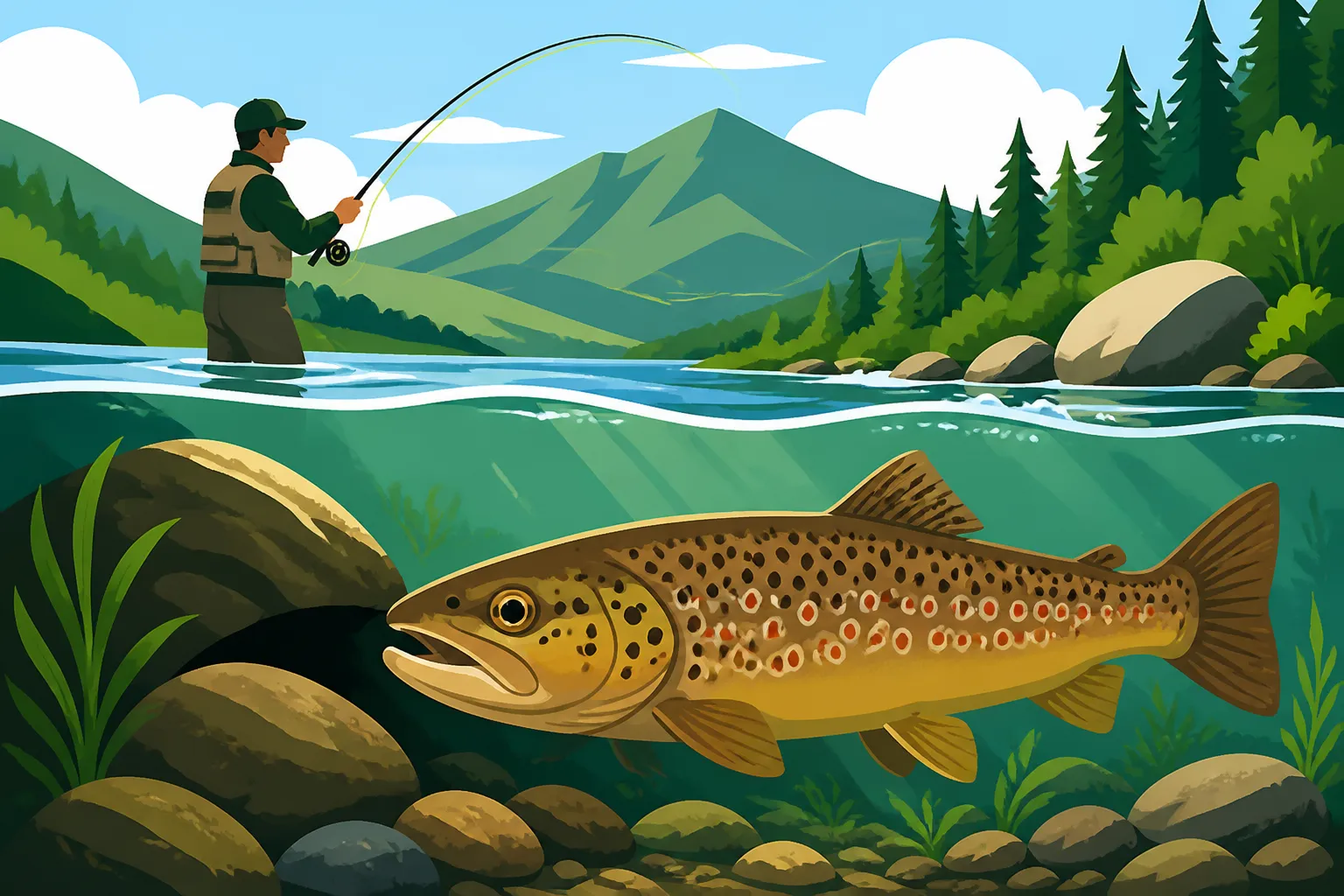
When you hook a trout in a Vermont stream, it’s always exciting to identify your catch. Brown trout have several distinct characteristics that set them apart from brook trout and rainbow trout. Brown trout typically have a body coloration that ranges from golden brown to olive, with a paler, sometimes yellowish, belly. Their most defining feature is the presence of dark spots, often ringed with a lighter "halo," scattered across their sides and dorsal fin. Many wild brown trout also display prominent red or orange spots, sometimes with light halos, primarily along their lateral line. Their tail fin is usually square or only very slightly forked.
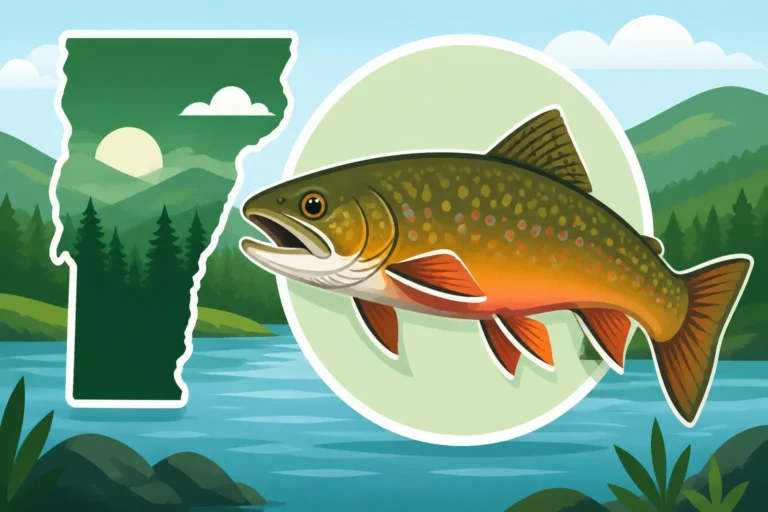
In contrast, brook trout, Vermont's state fish, have a darker body, often with a marbled or "vermiculated" pattern (worm-like markings) on their back and dorsal fin. Their sides display vibrant red or orange spots, often with blue halos, but no dark spots. A key identifying feature is the white leading edges on their pectoral, pelvic, and anal fins, often bordered by a thin black stripe. Rainbow trout, on the other hand, are typically silvery-blue to greenish on their back, fading to a silvery belly. They are characterized by a distinct, iridescent pink or red stripe running along their lateral line, from gill plate to tail. Their entire body, including the dorsal, adipose, and tail fins, is usually covered in small, distinct black spots, and their tail is often deeply forked. Having a good field guide or even just recalling these key features can help you differentiate your catch. For a deeper dive into identification, you can read Trout Species Identification Guide for Vermont or How to tell a brown trout from a rainbow trout.
To help clarify these differences, here’s a quick comparison table:
| Feature | Brown Trout | Brook Trout | Rainbow Trout |
|---|---|---|---|
| Body Color | Golden-brown to olive, pale belly | Dark olive to nearly black, marbled back | Silvery-blue/green, silvery belly |
| Body Spots | Dark spots with light halos, red/orange spots (often with halos) | Red/orange spots with blue halos, no dark spots | Small, distinct black spots all over |
| Dorsal/Tail | Dark spots on dorsal, square tail | Vermiculated dorsal, square tail | Black spots on dorsal/tail, forked tail |
| Fin Edges | Plain or slightly darkened | White leading edges on lower fins (pectoral, pelvic, anal) | Plain |
| Lateral Stripe | Absent | Absent | Distinct pink/red stripe (often) |
Reading the Water: Identifying Prime Lies
Successfully finding brown trout often boils down to your ability to "read the water" – to interpret the current, structure, and depth to identify potential holding spots, or "lies." Brown trout, especially larger ones, are energy-efficient predators. They want to hold in a spot where they are protected from the main force of the current, have easy access to passing food, and are close to significant cover for safety.
Undercut banks are arguably the most classic brown trout lie. These are hollowed-out sections of the bank where the stream current has eroded the soil beneath, creating a dark, protective overhang. A big brown can sit comfortably in the cool, dark shadows, safe from aerial predators and out of the main current, waiting for an insect or baitfish to drift by. Logjams, fallen trees, and large submerged boulders provide similar impenetrable cover. These structures break up the current, create eddies, and offer crucial hiding spots. Getting your lure or fly right into these tight spots, often requiring a roll cast or a difficult side-arm approach, is key. Many anglers find themselves losing gear trying to tempt fish from these areas, but the reward can be immense.
Beyond distinct cover, brown trout also favor specific current configurations. Look for current seams, where faster water meets slower water, or the edges of deep pools where food is funneled. The transition areas between riffles (fast, shallow water) and pools (slow, deep water) are also prime. Trout will often hold in the deeper, slower water at the head or tail of a pool, darting out into the riffle or main current to snatch food. Pay attention to changes in bottom structure, like gravel bars transitioning to rock ledges. Stealth is crucial when approaching these areas; even walking heavily on the bank can send vibrations through the water and spook fish.
Interpreting Signs of Brown Trout Presence
Unlike the splashy, often obvious rises of rainbow trout, brown trout can be incredibly subtle in their feeding and activity. Sometimes, the only sign of a feeding brown is a barely perceptible "sip" or bulge on the water's surface, particularly when they are keying in on tiny insects or emergers. You might see a slight dimple, or a momentary swirl, rather than a full-blown splash. These subtle rises indicate a sophisticated, selective feeder, and your approach needs to be equally refined.
However, when brown trout are feeding on larger prey, such as bigger terrestrial insects, baitfish, or crayfish, their activity can be more aggressive. You might see a strong, deliberate splash as a fish lunges for a grasshopper that fell into the water, or a boil on the surface as it chases a minnow. These more forceful displays are often indicative of a larger fish, one that's confident in its position and willing to expend more energy for a substantial meal. Observing the type of rise can give you clues about what they are feeding on and how best to present your offering.
Beyond direct feeding activity, you might also look for indirect signs of brown trout presence. These include fresh "mudding" on the stream bottom, indicating a fish has recently dug in the gravel (perhaps a pre-spawning activity or dislodging nymphs). Sometimes, you'll see a flash of gold-brown as a fish darts from cover, spooked by your approach. While it means you've likely spooked that particular fish, it confirms a brown trout was holding in that spot. Learning to identify these subtle cues and interpret them correctly is a skill that develops over time and with experience, but it is one of the most rewarding aspects of pursuing these enigmatic fish.
Responsible Angling and Conservation for Brown Trout in Vermont
Catching a beautiful brown trout from a Vermont stream is a privilege, and with that privilege comes the responsibility to protect these fish and their habitat. Ethical angling practices are paramount to ensuring healthy populations for future generations.
Practicing Effective Catch and Release
For brown trout, especially the larger, wild specimens that contribute most to natural reproduction, practicing effective catch and release is not just a suggestion – it's crucial. These fish are often old and wily, having survived many seasons, and their genetics are valuable to the overall health of the fishery. Minimizing stress and injury during the catch and release process ensures their best chance of survival.
The first step is to use appropriate gear. Barbless hooks, or hooks with pinched barbs, are highly recommended as they make removal much easier and cause less damage to the fish's mouth. When you hook a fish, try to land it as quickly as possible to minimize exhaustion. Once landed, keep the fish in the water as much as possible. Use wet hands when handling them, as dry hands can remove the fish's protective slime layer, making it vulnerable to disease. Avoid squeezing the fish, especially around its belly or gills. If you need to take a picture, do it quickly, with the fish still mostly submerged if possible, and then get it back in the water immediately. A good rubber net, easily found on Amazon, is excellent for holding fish gently in the water while you prepare for release.
Finally, ensure the fish is fully revived before letting it go. Hold the fish gently in the current, facing upstream, allowing water to flow over its gills. Don't push it back and forth; rather, let the natural flow do the work. The fish will often signal its readiness by trying to swim away forcefully. Once it does, let it go. Watching a strong brown trout swim away is often more rewarding than any dinner plate. For those interested in deeper conservation, explore Vermont Catch and Release Fly Fishing Only Waters.
Respecting Access and Regulations
Anglers are stewards of the environment, and part of that role involves respecting land and water. In Vermont, many prime fishing spots are on or adjacent to private land. Always assume that land is private unless clearly marked as public access. If you wish to fish on private property, always seek permission from the landowner first. A simple knock on the door, a polite request, and an offer to clean up any trash can go a long way in fostering good landowner-angler relationships. Without permission, you are trespassing, which not only carries legal consequences but also jeopardizes access for all anglers.
Beyond private property, it's essential to understand and abide by all state fishing regulations. This includes having a valid Vermont fishing license, adhering to specific season dates for different species and waterbodies, understanding bag and possession limits, and following any special regulations for particular streams or rivers. These rules are in place to manage fish populations sustainably and protect vulnerable species or spawning grounds. Ignorance of the law is not an excuse, and violating regulations can result in fines and loss of fishing privileges. Taking the time to read and understand the annual Vermont Fishing Guide is crucial – if you haven't recently, make sure to read Reading the Vermont Fishing Regulations Guide.
Being a responsible angler also means leaving no trace. Pack out everything you pack in, and if you see trash left by others, consider picking it up. Park in designated areas, or if parking roadside, ensure you are not blocking driveways or impeding traffic. These small acts of courtesy and respect contribute to a positive public image for anglers and help ensure that access to Vermont's beautiful streams remains open for everyone to enjoy.
Protecting and Enhancing Brown Trout Habitat
The long-term health of brown trout populations in Vermont streams hinges on the quality and availability of their habitat. Anglers, perhaps more than anyone, appreciate pristine rivers and healthy fish, and we have a role to play in protecting and enhancing these vital ecosystems. Clean, cold water is non-negotiable for brown trout. They are highly sensitive to pollution, siltation, and elevated water temperatures. Supporting efforts that promote water quality, such as advocating for healthy riparian buffers (the vegetated zones along stream banks), which filter runoff, stabilize banks, and provide shade, is incredibly important.
Beyond water quality, the physical structure of the stream habitat is paramount. Brown trout need those deep pools, undercut banks, logjams, and clean gravel beds for spawning. Projects that restore degraded stream banks, install in-stream structures to create more complex habitat, or remove barriers to fish migration directly benefit brown trout. Avoiding disturbance to spawning redds, as discussed earlier, is a direct way to protect future generations of trout.
Finally, educating ourselves and others about the ecological needs of brown trout and supporting local conservation organizations are vital. These groups often work tirelessly on stream restoration projects, habitat improvements, and public education initiatives that have a tangible impact on the fishery. By being informed, respectful, and engaged, we can all contribute to ensuring that Vermont's streams remain healthy, vibrant homes for brown trout for many years to come, offering countless opportunities for challenging and rewarding angling experiences.
Disclaimer
This article is for general informational purposes only and does not constitute professional advice. Laws, prices and regulations vary by location and change over time. Consult a qualified professional for guidance on your specific situation.