What muskellunge and northern pike hybrids look like
It's happened to almost every angler out there: you hook into something big, something with teeth, and as it gets closer to the boat or shore, you start to wonder, "Is that a pike? Is it a muskie? Or is it… something else entirely?" That moment of confusion is often thanks to the remarkable creature known as the tiger muskie, a fascinating hybrid that combines traits from both of its formidable parents. Understanding what these fish look like is key to identifying them correctly and appreciating their unique place in Vermont's waters.
What Exactly is a Tiger Muskie?
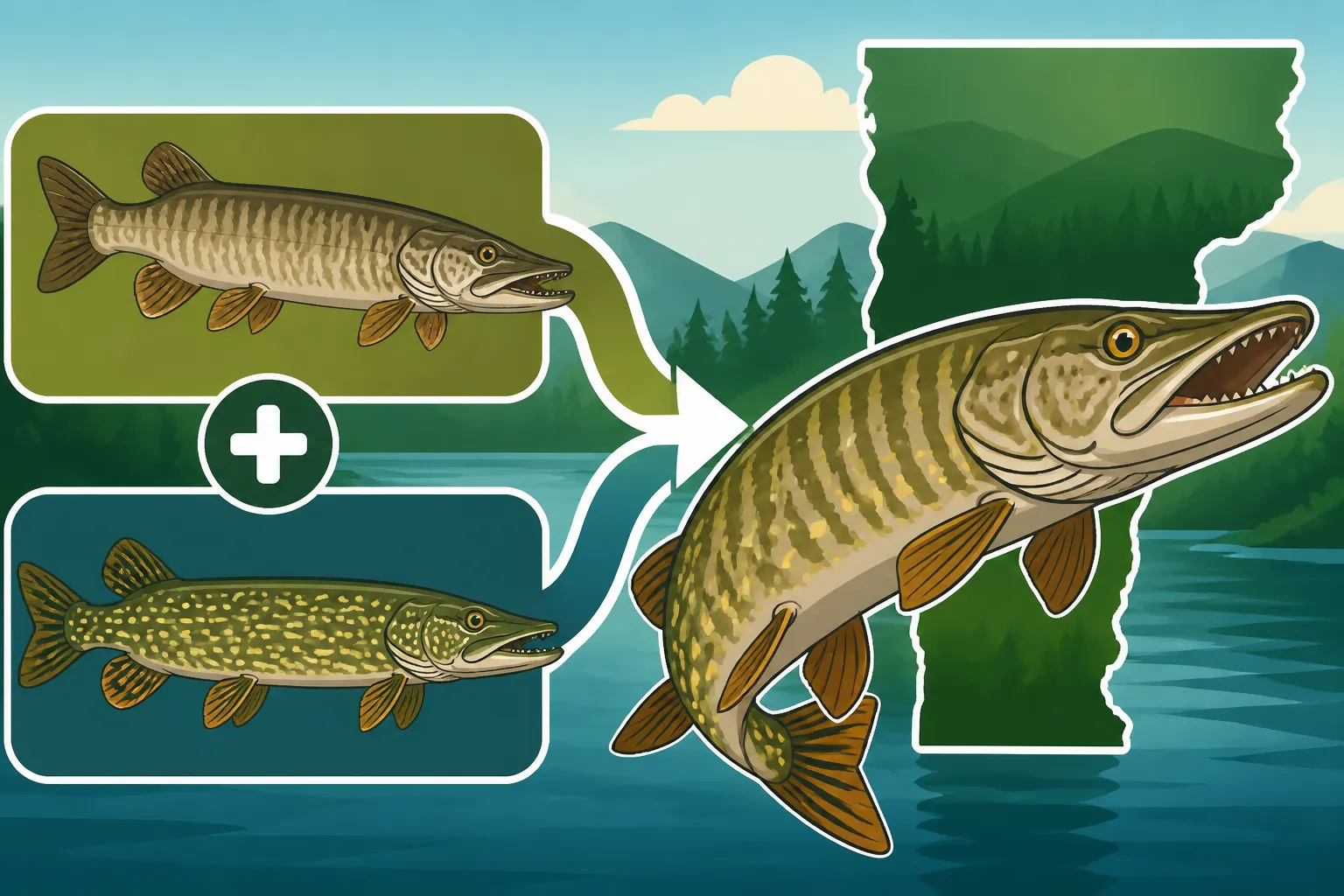
A tiger muskie isn't a separate species in the biological sense; it's a sterile, first-generation cross between a northern pike ( Esox lucius) and a muskellunge (Esox masquinongy). Think of it like a mule – a hybrid of a horse and a donkey. While both pike and muskellunge belong to the Esox (pike) family, they are distinct species, and when they reproduce, their offspring often exhibit a fascinating blend of characteristics that can make them a real head-scratcher for even seasoned anglers.
The Genetic Blending: A Unique Combination of Traits
When a northern pike and a muskellunge successfully spawn, their genetic material combines to create an individual that often displays a mosaic of features from both parents. This blending is what gives the tiger muskie its distinctive appearance. It doesn't look exactly like a pike, and it doesn't look exactly like a muskie. Instead, it carries genetic markers for both, resulting in a fish that can trick the eye, especially when you're caught up in the excitement of a retrieve. The growth rate can be quite impressive, sometimes even surpassing that of purebred muskellunge in certain conditions, inheriting the hardiness of the pike and the potential size of the muskie.
Why the Hybrid Exists: Nature's Cross and Stocking Programs
Tiger muskies can occur naturally in waters where both northern pike and muskellunge coexist and spawn at similar times and locations. It’s not an everyday event, but it happens. For example, if you have a section of Lake Memphremagog or Lake Champlain where both species are present and their spawning rituals overlap, there's a chance a natural tiger muskie could arise. Beyond natural occurrences, tiger muskies are also widely stocked in many states and provinces as a sport fish. They are often favored for stocking programs because they grow quickly, fight hard, and, being sterile, they don't impact the genetic integrity of purebred muskie populations. While Vermont does not currently have an active tiger muskie stocking program, the potential for natural hybrids to appear where their parent species overlap is always there, creating an exciting, albeit rare, catch for local anglers.
Key Physical Characteristics of a Tiger Muskie
Identifying a tiger muskie requires a keen eye and knowing exactly what subtle cues to look for. It's not always as simple as a glance, especially if you're not used to seeing them. The devil is in the details, from their unique markings to their distinct fin structure and even the number of sensory pores under their jaw. These are the traits that truly set them apart.
Markings and Coloration: The Signature Stripes
The most striking and often easiest way to identify a tiger muskie is its distinct pattern. Unlike the typically solid green or olive body of a northern pike with its characteristic light, bean-shaped spots, or the variable spots/bars of a purebred muskellunge, the tiger muskie sports irregular, vertical, wavy bars or blotches on a lighter background. These markings give it a "tiger-striped" appearance, hence the name. The color scheme is usually a darker green, gray, or brown on the back, fading to a lighter, silvery belly, with the darker markings standing out vividly. Sometimes these bars can be broken or look more like large, elongated spots, but they almost always run vertically, or at least diagonally, unlike the horizontal spots you might see on some muskie variants. This distinct pattern is your first major clue.
Fin Shape and Number of Pores: Diagnostic Features
Beyond the striking pattern, you need to look closely at the fins, particularly the caudal (tail) fin, and count the sensory pores on the underside of the jaw.
- Caudal Fin: A northern pike typically has a more rounded caudal fin. A purebred muskellunge, on the other hand, often has a more pointed or forked tail fin. The tiger muskie usually falls somewhere in between, with a fin that might appear somewhat rounded but often has a slight fork or more defined points than a pure pike. It’s a subtle difference but important when you’re doing a side-by-side comparison.
- Sensory Pores (Submandibular Pores): This is one of the most reliable diagnostic features for differentiating between these fish. These small, pit-like pores are located on the underside of the lower jaw.
- Northern Pike: Will typically have 5 or fewer pores on each side of the jaw.
- Muskellunge: Will typically have 6 to 9 pores on each side of the jaw.
- Tiger Muskie: Because it's a hybrid, it will usually have an intermediate number, generally 5 to 7 pores on each side. Counting these can be a little tricky on a lively fish, but if you can manage a quick, careful count, it’s a definitive sign. This is where a good quality fish identification book, available on Amazon, can be an invaluable tool to cross-reference what you’re seeing.
Body Shape and General Appearance: A Blend of Proportions
While the markings and pores are key, the overall body shape also contributes to the tiger muskie's unique look. They tend to have a body that is stockier than a typical muskie but perhaps a bit more streamlined than some of the bulkier northern pike. Their heads are usually somewhat elongated, similar to a muskie, but can sometimes exhibit the broader, duck-bill shape more characteristic of a pike. The dorsal fin (the one on the back) and anal fin (underneath, near the tail) are typically located far back on the body, which is a common trait among all Esox species, but their specific positioning can also show a blend of the parents. Look for a sense of robust power and sleekness, a truly formidable predator built for ambush.
Differentiating Tiger Muskies from Northern Pike and Purebred Muskellunge
Successfully telling these fish apart in the heat of the moment can be challenging, but it’s crucial for adhering to regulations and ensuring sustainable fishing practices. Let’s break down the key indicators in a clear way.
Spotting the Differences in the Field: A Practical Guide
When you've got a big fish boatside, you need quick, clear ways to identify it. Here's how to apply what we've learned:
-
Check the Pattern First: This is your fastest initial identifier.
- Northern Pike: Light, horizontal, bean-shaped spots on a dark body. Often a uniform greenish hue.
- Muskellunge: Dark spots, bars, or blotches on a lighter background, but often more irregular or scattered than a tiger muskie, and sometimes with a very "clear" (unmarked) body depending on the strain. The spots or bars are rarely as distinctively wavy and vertical as a tiger muskie.
- Tiger Muskie: Distinct, wavy, vertical dark bars or blotches on a lighter, often silvery-green background. This "tiger" pattern is usually unmistakable once you know what to look for. Polarized sunglasses, like many great options on Amazon, can help you see these subtle patterns on fish even underwater.
-
Count the Pores: If the pattern isn't 100% clear (or even if it is, for confirmation!), gently (and safely!) flip the fish to examine the underside of its jaw.
- Northern Pike: 5 or fewer pores per side.
- Muskellunge: 6-9 pores per side.
- Tiger Muskie: 5-7 pores per side. This overlap is key; if you see 5 or 6, it could be either a pike or a muskie on the low end, or a tiger muskie. But if you see 7, it's almost certainly a tiger muskie or a purebred muskie. If you see 8 or 9, it’s a muskie. If you only see 4, it’s a pike.
-
Examine the Fin Tips: While a secondary indicator, it can help.
- Northern Pike: Generally more rounded fins.
- Muskellunge: Often more pointed or deeply forked fins.
- Tiger Muskie: A blend, sometimes slightly pointed, sometimes rounded, but rarely as distinctly forked as a muskie or as uniformly rounded as a pike.
Here’s a quick reference table to help visualize these differences:
| Feature | Northern Pike | Muskellunge | Tiger Muskie (Hybrid) |
|---|---|---|---|
| Body Markings | Light, bean-shaped spots on dark body | Dark spots/bars on light body, or clear | Dark, wavy vertical bars on light body |
| Submandibular Pores | 5 or fewer on each side | 6 to 9 on each side | 5 to 7 on each side |
| Caudal Fin Shape | Typically rounded | Often pointed or deeply forked | Intermediate, often slightly pointed |
| Overall Shape | Stockier, "duck-bill" snout | More elongated, slender, pointed snout | Robust, blend of parent body types |
Why Proper Identification Matters: Regulations and Conservation
Getting your identification right isn't just about showing off your fish knowledge; it has real implications for conservation and adherence to fishing regulations in Vermont. Different species often have different minimum length limits, daily creel limits, and even season dates. For instance, Vermont Muskellunge Regulations on Lake Memphremagog are very specific, and these might differ significantly from Vermont Northern Pike Limit. Catching a tiger muskie and mistakenly identifying it as a northern pike, and then keeping it when it falls under muskie regulations, could lead to legal issues.
Furthermore, correct identification is vital for conservation efforts. When biologists track populations, accurate angler reporting helps them understand the health and distribution of each species. Releasing a rare tiger muskie when it's allowed ensures that these unique fish continue to exist in the ecosystem. Always consult the most current Vermont Fishing Regulations Explained before heading out. A sturdy landing net, with many options on Amazon, is essential for safely handling any large fish, especially toothy predators like pike, muskie, or their hybrid offspring, minimizing harm during the identification and release process. After a catch, consider a measuring board or digital scale, also easily found on Amazon, to quickly record details before a safe release.
Where You Might Encounter Them in Vermont
Given that tiger muskies are a hybrid of northern pike and muskellunge, you're most likely to find them in waters where both parent species are present. In Vermont, that primarily points to the large, interconnected waters of Lake Champlain and, more specifically for muskie, Lake Memphremagog. While they are a rare catch, the possibility is always there in these environments.
Typical Habitats: Following the Parent Species
If you're looking for a tiger muskie, you're essentially looking for prime northern pike and muskellunge habitat.
- Lake Champlain: This vast lake holds robust populations of both northern pike and a growing population of muskellunge. Pike are often found in weedy bays, shallow flats, and around submerged structures, while muskie tend to prefer deeper points, rock structures, and open water, but will move into shallower areas to feed. Any area of Lake Champlain where these habitats overlap, especially during spawning periods, could potentially produce a natural tiger muskie. The large bays and river mouths on Lake Champlain are particularly good spots to explore. You might even find specialized muskie or pike gear on Amazon that helps you differentiate between species more easily with their specific designs.
- Lake Memphremagog: This lake is famous for its muskellunge, and it also supports a healthy population of northern pike. The deep, clear waters with plenty of rocky structure and submerged weed beds create ideal conditions for both parent species. Anglers targeting Muskellunge Fishing on Lake Memphremagog or focusing on Northern Pike Waters in Vermont here should be especially vigilant for the telltale tiger stripes.
These hybrids, like their parents, are ambush predators, so they'll often be found lurking near cover – submerged timber, weed lines, rock piles, or sharp drop-offs – waiting for an unsuspecting baitfish to swim by. They're built for explosive strikes, and their unique genetic makeup seems to grant them excellent survival instincts.
The Rarity Factor: A Special Catch
It's important to remember that tiger muskies are generally rare in Vermont, particularly natural ones. They aren't specifically stocked in the state, so any you encounter are either natural hybrids or perhaps strays from other jurisdictions where they are stocked. Because of their rarity, catching a tiger muskie is often considered a true trophy by many anglers, a testament to their unique beauty and fighting prowess. If you're fortunate enough to land one, take a moment to admire its distinctive markings, count those pores, and appreciate this unique blend of Vermont's formidable esocids before carefully releasing it back to the water, following Muskellunge catch and release survival tips. Every such encounter adds to the rich tapestry of Vermont's diverse and exciting fishing opportunities.
Disclaimer
This article is for general informational purposes only and does not constitute professional advice. Laws, prices and regulations vary by location and change over time. Consult a qualified professional for guidance on your specific situation.