How to catch bass around submerged timber
It's incredibly frustrating when you know bass are hiding in that dense, submerged timber, but every cast seems to end in a snagged lure or a spooked fish. We've all been there, losing expensive baits and wondering how the pros manage to pull lunkers from those seemingly impenetrable underwater jungles. This comprehensive guide is here to demystify the art of fishing submerged timber in Vermont, equipping you with the knowledge, gear, and techniques to confidently target and land more bass from their favorite woody hideouts.
Why Bass Gravitate Towards Submerged Timber and How to Pinpoint It
Submerged timber isn't just a random collection of underwater sticks; it's a vibrant ecosystem within a lake or river, offering a sanctuary and hunting ground for bass. Understanding why bass love these areas is the first step to successfully fishing them.
The Habitat Advantage: Shelter, Ambush, and Forage
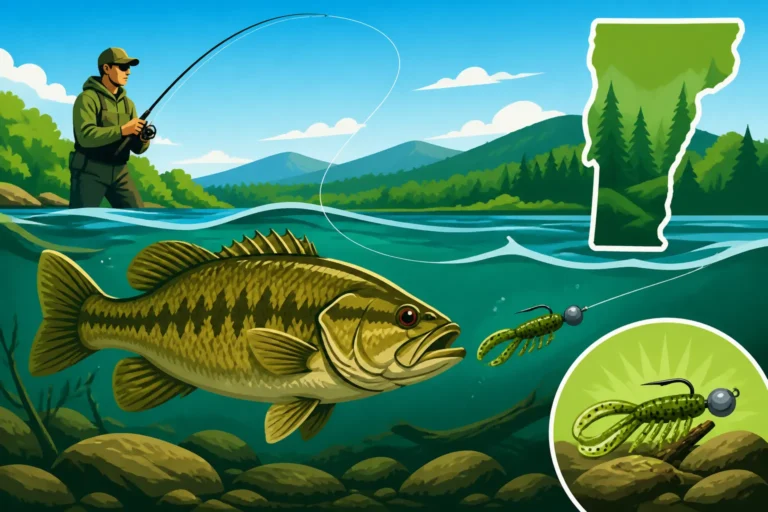
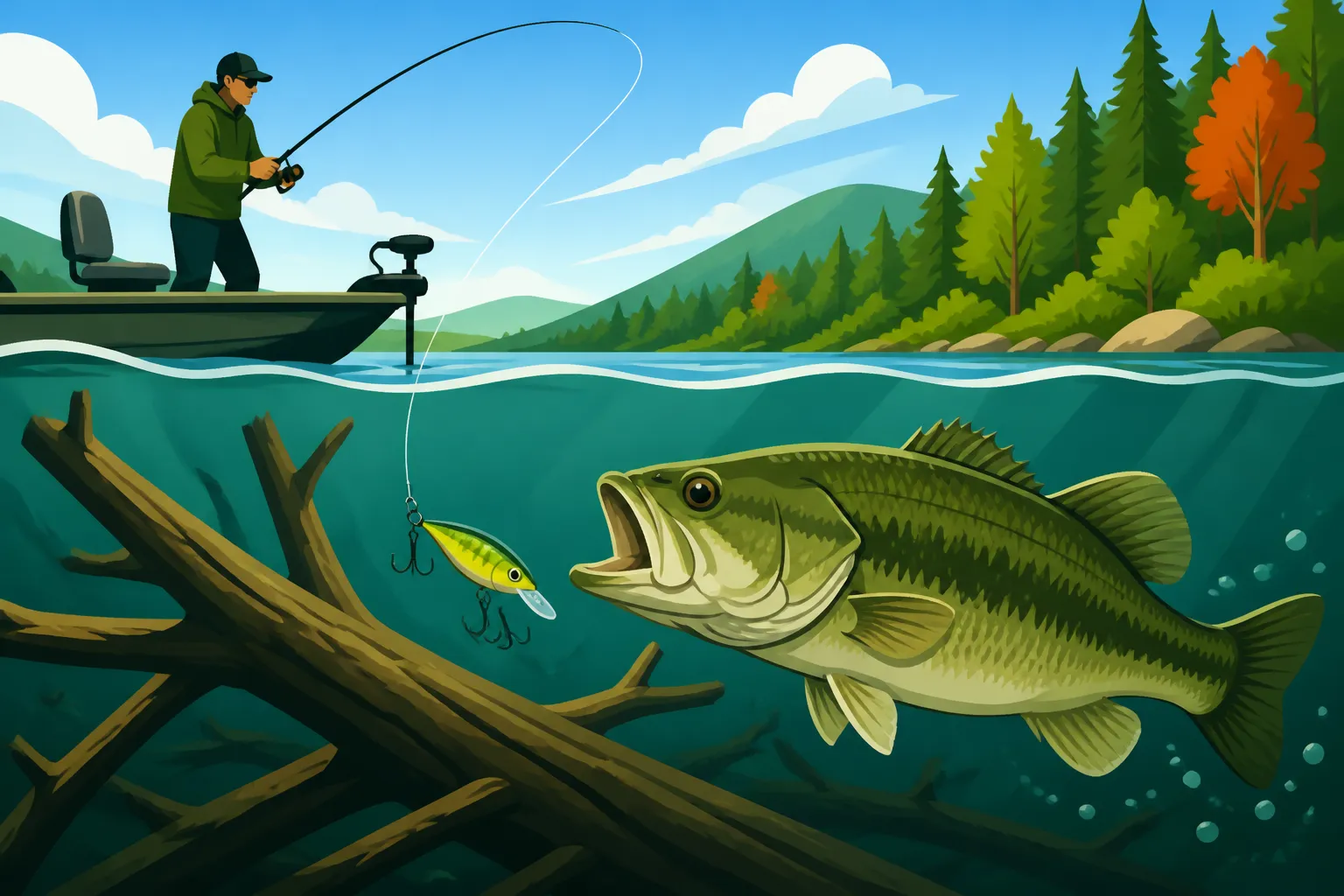
Think of submerged timber as the underwater equivalent of a dense forest. For a bass, it provides everything they need for survival and ambush predation. Firstly, timber offers crucial shelter. In bright sunshine, the dense canopy of branches creates shade, which bass appreciate as they are light-sensitive. This shade provides comfort and helps them conserve energy. It's like having a natural umbrella underwater. During periods of heavy boat traffic or increased predator activity, timber also offers a secure hiding spot, a place where they feel safe.
Secondly, and perhaps most importantly, submerged timber creates exceptional ambush points. A bass can tuck itself behind a thick log, a gnarled stump, or within a brush pile, waiting for unsuspecting baitfish, crawfish, or even frogs to swim by. They can dart out, grab a meal, and quickly retreat to cover. The irregular structure of timber breaks up current, creating eddies and slack water where baitfish naturally congregate. This makes it a prime feeding zone. The complex structure also nurtures a healthy invertebrate population, which forms the base of the food chain, drawing in smaller fish, which in turn attract the bass. For anglers targeting these elusive fish, understanding the bass's instinct to seek refuge and ambush opportunities in timber is key to effective lure presentation.
Reading the Water: Identifying Productive Timber Hotspots
Finding submerged timber isn't always as simple as spotting a fallen tree on the bank. Much of the best timber is completely hidden beneath the surface. To become a timber-fishing maestro, you need to learn to "read" the water and employ technology. Start by looking for visible clues: old stumps on the shoreline, dead trees hanging over the water, or even a sudden change in bottom composition that might indicate an old riverbed or a submerged forest from a past logging operation. These visual cues often suggest there's more timber hidden below.
The real game-changer, however, is your electronics. A good fish finder with side imaging and down imaging capabilities is invaluable. Side imaging allows you to scan wide areas to either side of your boat, revealing entire fields of submerged trees, isolated stumps, or massive brush piles that would be invisible otherwise. Down imaging gives you a clearer, photographic-like view directly beneath your boat, helping you differentiate between a solitary log and a dense cluster of branches. Look for distinct shapes and shadows; bass will often show up as arcs or dots suspended right in or around the cover. Pay close attention to depth contours as well. Timber at the edge of a sharp drop-off, or timber located on a point or submerged hump, can be particularly productive as it offers bass easy access to different depths and changing water temperatures. Sometimes, an old stream bed that once flowed into a lake before it was dammed or expanded can be a goldmine of submerged timber, and your map and sonar can help you locate these historical features. Remember, the deeper water timber might hold fish in the heat of summer, while shallower timber might be hot in spring or fall. To really dial in on these hotspots, you might want to read up on Best Fish Finders for Vermont Lakes.
Essential Gear and Tackle for Timber Tactics
Fishing around submerged timber is not for the faint of heart, nor for light tackle. This is heavy-cover fishing, demanding a robust setup that can not only get your lure into the thick stuff but, more importantly, get a bass out once it bites.
Rods, Reels, and Line: The Power Combo
When it comes to submerged timber, your gear needs to be tough. Forget your finesse ultralight setup; this is where heavy-action rods shine. A rod between 7 to 7.6 feet long, with a heavy power rating and a fast to extra-fast action, will give you the backbone needed to leverage a stubborn bass away from snags. The length provides casting distance and better line control, while the heavy power ensures you have the authority to turn a fish quickly. A fast action tip allows for accurate pitching and flipping into tight spots, while still having the power throughout the blank.
Pair this heavy rod with a reliable baitcasting reel that has a high gear ratio (7.1:1 or higher is excellent) for quickly taking up slack line and getting a fish moving. It also needs a robust drag system, because when a bass buries itself in the timber, you'll need that stopping power. As for fishing line, this is arguably the most critical component. Many anglers opt for braided line because of its incredible strength, lack of stretch, and abrasion resistance. A 40-65 pound test braid is common. The no-stretch quality gives you maximum sensitivity to feel those subtle bites and instantaneous hooksets. Some anglers prefer heavy fluorocarbon (17-25 lb test) for its invisibility and excellent abrasion resistance, especially in clearer water. While fluorocarbon does have some stretch, its density helps lures sink faster and stay in contact with the bottom. Monofilament isn't typically recommended for direct timber contact due to its stretch and lower abrasion resistance compared to braid or fluoro. Choosing the right line can make all the difference, and understanding line characteristics is crucial, so exploring Best Fluorocarbon Line for Clear Lake Water could be beneficial.
Lures Designed for the Wood
Successfully fishing timber means selecting lures that are either naturally weedless or designed to deflect off cover without snagging. Losing lures is part of the game, but minimizing it comes down to smart lure choice.
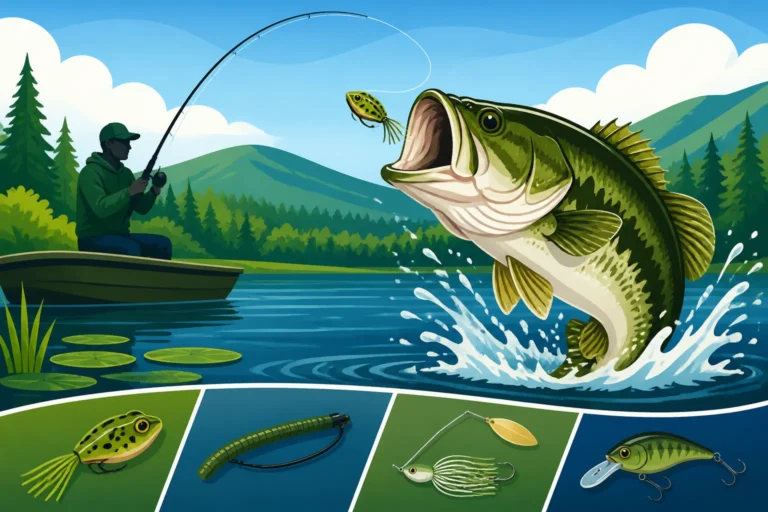
- Texas-Rigged Plastics: This is the bread and butter of timber fishing. A soft plastic worm, creature bait, or crawfish imitation rigged Texas-style with a heavy-gauge EWG (Extra Wide Gap) hook is incredibly snag-resistant. The hook point is embedded back into the plastic, allowing it to slide over branches and through dense cover. The weight of your bullet sinker (often 1/4 to 1 ounce) will depend on depth and how fast you want the bait to fall. You can find a huge selection of these plastics and hooks on Amazon.
- Jigs with Brush Guards: Flipping jigs and football jigs, often adorned with a skirt and a soft plastic trailer, are excellent for timber. The key is their brush guard – a cluster of stiff fibers that protects the hook point from snags while still allowing for solid hooksets. These are designed to penetrate dense cover.
- Spinnerbaits and Bladed Jigs (Chatterbaits): While not entirely snag-proof, these lures can be surprisingly effective around timber, especially if the wood isn't too dense. The spinning blades or vibrating blade helps them deflect off branches rather than getting hung up. They also create a lot of flash and vibration, triggering reaction strikes. You'll often want a heavy wire hook on these to avoid straightening it out on a snag or a big fish.
- Squarebill Crankbaits: These lipped diving baits, particularly those with a square bill, are fantastic for "cranking" timber. They are designed to "hunt" and deflect off cover. When they hit a log, they often kick out, mimicking a fleeing baitfish, which can trigger vicious strikes. Just be prepared to lose a few, especially if you're exploring new areas. Many anglers stock up on these versatile lures from online retailers like Amazon.
Proven Techniques for Extracting Timber Bass
Once you have the right gear and lures, it's time to talk about presentation. Fishing timber is all about precision, patience, and knowing how to work your bait effectively in close quarters.
The Pitching and Flipping Approach
Pitching and flipping are surgical techniques designed for presenting lures silently and accurately into tight pockets of cover, often just feet from your boat. This isn't about long casts; it's about controlled, quiet drops.
- Pitching: This involves letting out a small amount of line, swinging your rod tip forward, and guiding the lure with your thumb on the spool to land softly near your target. It's a pendulum-like motion, keeping the lure close to the water.
- Flipping: For even closer targets, you literally "flip" the lure underhanded, using the rod tip to propel it forward while keeping a tight line. You'll usually have only about 5-10 feet of line out, controlling the lure's descent and placement almost entirely with your rod.
In both techniques, the goal is a silent entry. You want your Texas-rigged plastic or jig to slip into the water with minimal splash, ideally landing exactly where you want it – right next to a stump, a log, or into the heart of a brush pile. Once it hits the water, let it fall naturally on a semi-slack line, but keep enough tension to feel the bite. Many times, a bass will strike on the fall. If it reaches the bottom, make short hops, shakes, and drags, always feeling for that distinctive "thump" or spongy resistance that signals a bite. When you feel it, set the hook hard and immediately start reeling to pull the fish away from the timber. This swift action is critical because a bass will instinctively try to bury itself deeper into the cover once hooked. To improve your accuracy and understanding of bass behavior, you might find insight in How to Catch Largemouth Bass in Vermont.
Cranking and Bumping the Wood
While pitching and flipping target specific pieces of timber, cranking and bumping are about covering more water and generating reaction strikes by deliberately colliding your lure with cover. This technique is particularly effective with squarebill crankbaits.
The magic of a squarebill crankbait around timber lies in its design. Its wide, flat bill helps it deflect off obstacles rather than digging in and snagging. To execute this technique, cast your crankbait past the submerged timber you want to fish. As you retrieve, aim to make the lure collide with the wood. When the crankbait hits a log or branch, pause your retrieve for a split second, or give your rod a slight twitch. This erratic action often mimics a panicked baitfish trying to escape, triggering an aggressive strike from nearby bass. You'll feel the lure "bounce" or "crawl" over the timber. Keep your rod tip high to help the lure ride over snags, and use braided line or heavy fluorocarbon, as mentioned before, for better feel and abrasion resistance. Vary your retrieve speed; sometimes a slow, methodical retrieve that allows the bait to bounce repeatedly is best, while other times a faster retrieve with abrupt stops works wonders. Remember, the goal isn't to avoid snags entirely, but to use them to your advantage. Finding the right crankbait for the local conditions can be important, so take a look at Best Crankbaits for Vermont Smallmouth Bass.
Jigging and Dragging Deep Timber
Not all submerged timber is in shallow, visible areas. Some of the biggest bass can be found lurking in deep timber, requiring a different approach. This is where jigging and dragging come into play. This technique focuses on slow, methodical presentations to entice less active or deeper-dwelling bass.
Using heavy jigs (often 3/8 to 1 ounce or more, depending on depth and current) with soft plastic trailers or large creature baits, you'll work the lure vertically or drag it along the bottom. If you've located a submerged tree or brush pile with your fish finder, position your boat directly over or slightly upwind/upcurrent from it. Drop your jig down, letting it hit the bottom. Then, with small lifts of your rod tip, gently hop or drag the jig across the structure. The idea is to keep the lure in the "strike zone" for as long as possible, allowing bass ample time to inspect it. Sensitivity is paramount here. Watch your line for any slight twitch or jump, or feel for a subtle weightlessness or a distinct "thump." These can all indicate a bite. Sometimes, simply shaking your rod tip while keeping the jig stationary on a branch can trigger a strike. This slow, deliberate method can be incredibly effective when bass are reluctant to chase faster-moving baits. Vertical jigging spoons or heavy bladed jigs can also work in deep timber, especially if the fish are slightly more active. This technique requires patience, but the rewards can be significant, often leading to bigger, less pressured fish.
Overcoming Snags and Safe Angling Practices
Fishing submerged timber is inherently risky for your tackle. Snags are inevitable, but with the right mindset and a few tricks, you can minimize losses and safely enjoy this challenging yet rewarding style of fishing.
Minimizing Snags and Retrieving Lures
Accepting that you will get snagged is the first step. The goal is to reduce the frequency and have a plan for when it happens. One of the best ways to minimize snags is by always being aware of your lure's position relative to the timber. When pitching or flipping, try to land your lure softly and on the outer edges of the densest cover first, gradually working your way in. When retrieving, keep a tight line so you can feel the contact with wood and react quickly. If you feel your lure bumping timber, slow down, twitch your rod, or lift it over the obstruction.
When you do get snagged, don't just yank hard. This often buries the hook deeper. Instead, try to point your rod tip directly at the snag and manually pull the line. This applies force in a straight line, often freeing the lure. If that doesn't work, give the line some slack, then quickly snap your rod tip to create a "bow" in the line that can sometimes shake the lure free. If you're in a boat, maneuver directly over the snag and use a lure retriever. These telescoping poles or heavy weighted devices can often slide down your line and push the lure free. Having one in your boat is a wise investment, available on Amazon and other tackle shops. Using strong knots, like a Palomar or improved clinch knot, for tying your lures is also essential; a weak knot is a guaranteed lost lure in heavy cover.
| Lure Type | Pros | Cons | Ideal Conditions |
|---|---|---|---|
| Texas-Rigged Soft Plastic | Highly snag-resistant, versatile | Slower presentation, can miss subtle bites | Dense timber, picky bass, varied depths |
| Jigs with Brush Guards | Excellent penetration, good hook-up ratio | Can still snag in very dense cover | Brush piles, stumps, vertical presentations |
| Squarebill Crankbaits | Deflects off cover, reaction strikes | Prone to snagging in extreme cover | Scattered timber, faster retrieves, searching |
| Spinnerbaits / Bladed Jigs | Flash & vibration, covers water | Less snag-resistant than jigs/Texas rigs | Outer edges of timber, slightly clearer water |
Respecting the Environment and Fish
As responsible anglers, it's crucial to practice ethical fishing when targeting bass in timber. If you do get deeply snagged and can't retrieve your lure, avoid leaving excessive amounts of monofilament or fluorocarbon line in the water, as this can be dangerous for wildlife. Cut your line as close to the snag as possible.
When you successfully land a bass from the timber, practice proper fish handling, especially if you intend to release it. Bass caught from heavy cover often fight hard, exhausting themselves. Use a strong, rubberized landing net to minimize stress. Hold the fish horizontally, supporting its belly, and quickly remove the hook. If the hook is deeply embedded, consider cutting the line and leaving the hook in, as removing it might do more harm. Get the fish back into the water as quickly as possible. Understanding how to handle various species is a great asset for any angler, and you can learn more about specific bass types in Largemouth Bass vs Smallmouth Bass Identification. Remember, the goal is to enjoy the challenge of fishing these productive areas while ensuring the health of Vermont's incredible bass populations for future generations of anglers.
Disclaimer
This article is for general informational purposes only and does not constitute professional advice. Laws, prices and regulations vary by location and change over time. Consult a qualified professional for guidance on your specific situation.