Best technique for finding fall baitfish schools
There’s nothing more frustrating than heading out onto a beautiful Vermont lake or river in the fall, only to find the water seemingly barren and your bait untouched. The truth is, fall fishing can be incredible, but it often hinges on one critical factor: finding the baitfish. Without locating these schools, you’re essentially casting into an empty cupboard while the game fish are feasting elsewhere. This guide will walk you through the essential techniques and indicators to pinpoint those vital fall baitfish schools, helping you unlock some of the best fishing opportunities Vermont has to offer before winter sets in.
Why Finding Fall Baitfish is Crucial for Vermont Anglers
As the vibrant foliage of Vermont ignites the hillsides, a quiet but intense transformation happens beneath the surface of our lakes and rivers. This period, often called the "fall feeding frenzy," is driven by the urgent need for fish to pack on calories before the lean times of winter arrive. Understanding this dynamic is the first step to becoming a more successful fall angler.
The Fall Feeding Frenzy Connection
Think of it like this: fish are essentially trying to stock their pantries for the winter. Just as bears gorge on berries before hibernation, predatory fish like bass, walleye, trout, and salmon will relentlessly pursue and consume baitfish during the fall months. This isn't just a casual meal; it's a matter of survival, and it means they'll be concentrated wherever the food is most abundant. If you can find the dense schools of smelt, perch, or various minnows, you're almost guaranteed to find the bigger game fish hot on their tails.
This instinctual drive makes baitfish location paramount. A lake might have plenty of trout, but if the primary forage fish are congregating in one specific deep basin, those trout won't be spread out across the entire water body. Instead, they'll be tightly grouped, aggressively feeding, and providing a fantastic opportunity for anglers who know where to look. Ignoring the baitfish often leads to hours of fruitless casting in unproductive water, missing out on the action happening just a few hundred yards away.
Seasonal Changes and Baitfish Movement
The changing seasons play a huge role in where baitfish decide to hang out. As autumn progresses, a few key environmental shifts occur that dictate their movements:
Firstly, the water temperature begins its steady descent. During summer, baitfish might be scattered, hiding in shallow weeds or relating to specific pockets of warmer water. But as the lake or river cools, these smaller fish often move to areas where the temperature is more stable, which can often be deeper, open water. The shallower bays that were teeming with life in August might become ghost towns by October.
Secondly, the aquatic vegetation, which provided cover and food for many baitfish species during the summer, begins to die off. As these weed beds wither, the baitfish lose their protective sanctuaries and are forced to move into more open water or find refuge around harder structures like rock piles, deep points, or submerged timber. This forces them to school up more tightly for protection, making them easier for predators (and anglers!) to find with the right tools.
Finally, the clarity of the water often increases in the fall due to the die-off of algae blooms. This means baitfish have fewer places to hide and are more vulnerable. Schooling up becomes a primary defense mechanism, creating those dense bait balls you hope to find on your sonar. Understanding these fundamental shifts in behavior for Vermont's popular baitfish species, such as rainbow smelt, yellow perch, and various shiners, is crucial for predicting their fall locations. This knowledge is your secret weapon, allowing you to anticipate their movements rather than just react. For more on what forage fish mean to the ecosystem, check out Rainbow Smelt as Forage Fish in Vermont Lakes.
Essential Tools and Techniques for Locating Baitfish Schools
Finding baitfish in the vast expanse of Vermont's lakes and rivers can feel like searching for a needle in a haystack. However, with the right equipment and a keen eye for subtle clues, you can dramatically increase your odds. Modern technology, combined with traditional observation skills, forms a powerful arsenal for any angler.
Interpreting Your Electronics: Sonar and Side Imaging
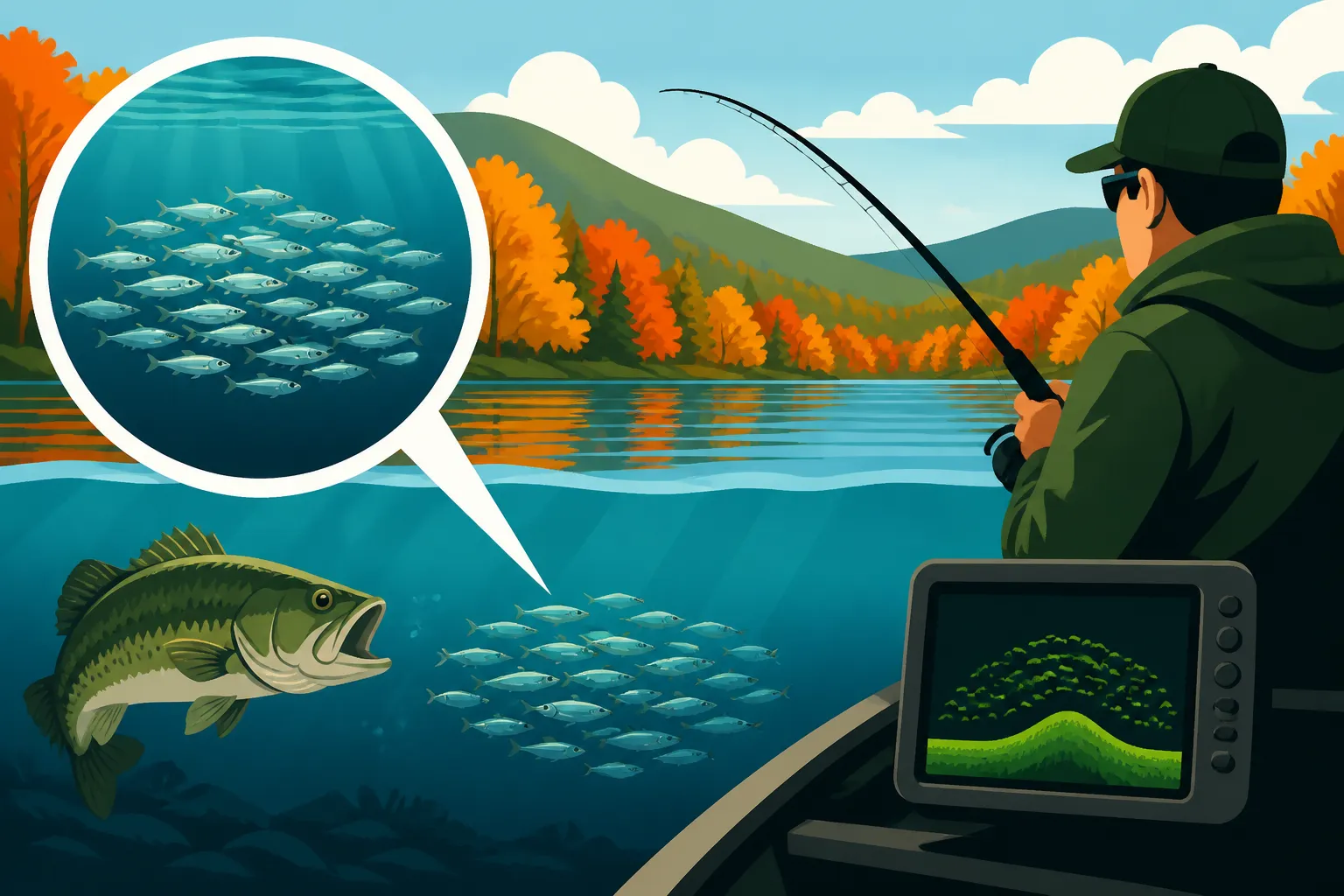
Your fish finder is arguably your most critical piece of equipment for locating fall baitfish. Instead of individual fish arches, you'll be looking for specific patterns on your screen. Baitfish schools typically appear as dense, amorphous clouds or tight, symmetrical balls. These "bait balls" can range from small, scattered groups to massive, dark masses that stretch across large portions of your screen.
It's vital to learn how to differentiate these baitfish clouds from bottom structure or even individual large fish. Bait schools usually have a distinct, often fuzzy appearance, and you'll typically see larger, predatory fish arches lurking just below, above, or within the edges of these clouds. Adjusting your sonar's sensitivity is key; too low, and you might miss scattered baitfish; too high, and your screen could be cluttered with noise. Many modern units, like those from popular brands you can find on Amazon, offer excellent clarity and customization options.
Side imaging technology takes this a step further, allowing you to scan wide swaths of water to your left and right. This is incredibly efficient for covering large areas quickly and identifying bait concentrations off to the side of your boat, saving you time and fuel. When you spot a promising bait school on side imaging, you can then switch to traditional 2D sonar or down imaging to get a more precise vertical view and determine the depth at which the bait (and likely the predators) are holding. Don't be afraid to experiment with your settings – the clearer you can see and interpret what's beneath you, the better your chances. Learning to use this technology effectively is a game-changer; for more detailed guidance, consider reading Best Fish Finders for Vermont Lakes.
Visual Cues and Natural Indicators
Sometimes, the best fish finder is simply your own two eyes and a keen sense of observation. Nature provides plenty of clues if you know what to look for:
- Bird Activity: Gulls, terns, and especially loons are often excellent indicators of baitfish. If you see these birds actively diving and feeding in a particular area, it's a strong sign that baitfish are concentrated there, likely being driven to the surface by predatory fish from below. Keep an eye out for frantic bird activity or large rafts of birds suddenly taking flight.
- Surface Disturbances: Look for subtle splashes, ripples, or even frantic "flicks" on the water's surface. These can be tiny baitfish being chased by larger predators. Sometimes, if the feeding frenzy is intense, you might even see large boils or fish jumping completely out of the water. This is a clear signal that something big is feasting.
- Current, Weeds, and Structure: While baitfish move to open water in fall, they still relate to current breaks, the last vestiges of dying weed lines, or specific underwater structures like humps, points, and channel edges. These areas offer both food and some form of refuge. Observe where the current creates eddies or where submerged structures create ambush points for predators – baitfish will often be nearby.
- Water Color and Clarity: As mentioned, fall usually brings clearer water. This means fish can be spookier, but it also means baitfish can be more visible near the surface on calm days. Pay attention to how the light penetrates the water and how it might reveal the presence of bait.
Understanding Baitfish Habitat and Patterns
Beyond just seeing bait, understanding why they are in a certain place is crucial for predicting where they'll be tomorrow. Fall baitfish in Vermont's larger lakes, such as Lake Champlain or Lake Memphremagog, often relate to the main lake basin, especially around deep humps, extensive points, and the edges of historical river channels. These areas offer stable temperatures, deeper water for safety, and access to plankton or other food sources.
Wind can also be a major factor. A strong, consistent wind can push baitfish schools to one side of a lake, concentrating them along wind-blown banks or points. This creates a "dinner bell" for predatory fish, making these areas highly productive. Conversely, current in rivers or in sections of larger lakes can also funnel baitfish into predictable areas like eddies, seams, or downstream of structure.
Consider the depth range. In early fall, bait might still be somewhat shallow, but as the water cools, they tend to drop deeper, often suspending over deep water. This means you might find them anywhere from 15 to 60 feet down, depending on the species and the water body. Learning the specific patterns for different baitfish and predator species in your favorite Vermont waters will give you a significant advantage. For insights into the wider seasonal picture, check out Best Time of Year to Fish in Vermont.
Strategies for Fishing Once Baitfish are Located
Spotting a massive ball of baitfish on your sonar is exciting, but it's only half the battle. The next step is effectively presenting your lure to entice the predatory fish that are undoubtedly lurking nearby. This requires careful consideration of your lure choice, presentation, and technique to mimic the natural forage.
Matching the Hatch: Lures and Presentations
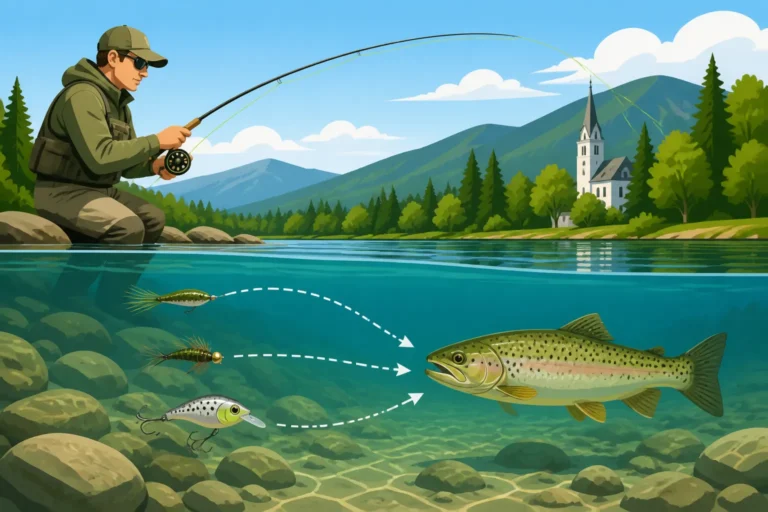
Once you've located the bait, your primary goal is to present a lure that closely imitates what the game fish are already eating. This is often referred to as "matching the hatch." Pay attention to the size, shape, and color of the baitfish you're seeing on your electronics or any you might observe near the surface.
- Lure Types:
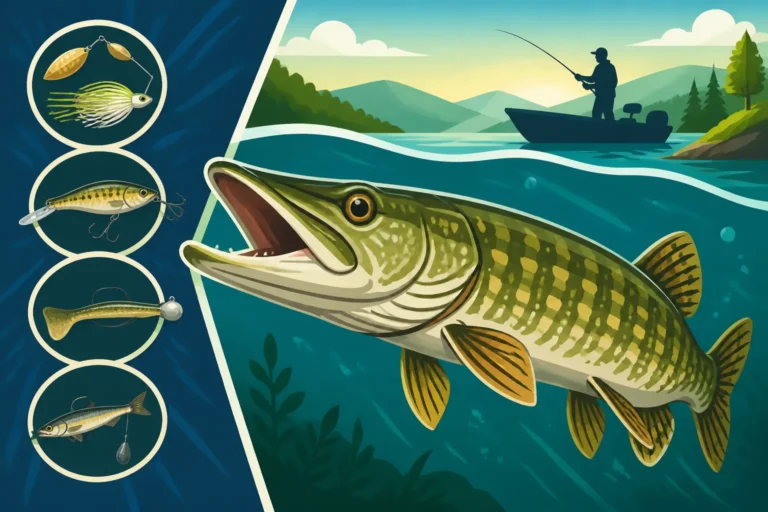
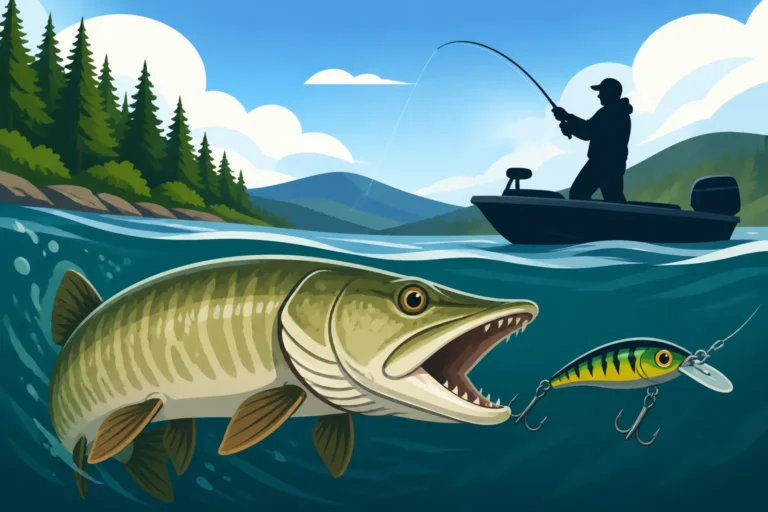
- Jerkbaits: These are excellent for mimicking dying or injured baitfish. A sharp twitch-twitch-pause retrieve can be irresistible to bass, walleye, and even lake trout that are feeding on suspended bait. Look for models with realistic finishes and a profile that matches the local smelt or shiners.
- Crankbaits: Deeper diving crankbaits can be trolled or cast to reach baitfish suspended at various depths. Shad- or perch-colored crankbaits are often highly effective. Vary your retrieve speed to find what triggers strikes.
- Swimbaits: Both soft plastic and hard-bodied swimbaits are incredibly realistic. Rigged weightless or on a jig head, they can be retrieved through bait schools to appear as a healthy, swimming forage fish. Many swimbait designs are specifically made to imitate common baitfish profiles.
- Spoons: Casting or jigging spoons are classic baitfish imitators, especially effective when vertically jigged through tight schools. The flash and flutter mimic an injured or frantic baitfish, often drawing aggressive reaction strikes.
- Size, Shape, and Color: If the baitfish are small, use smaller lures. If they are slender, choose slender lures. Colors like silver, chrome, white, or light blue often mimic natural baitfish effectively. However, sometimes a flash of chartreuse or orange can trigger a strike from a fish that's ignoring everything else, especially in stained water.
- Retrieve Speed and Depth: Experiment with how fast you retrieve your lure. Sometimes a slow, deliberate presentation is best, other times a fast, erratic retrieve is needed to trigger a reaction strike from an aggressive predator. Crucially, make sure your lure is running at the same depth as the baitfish and the predators you're marking. If the bait is at 20 feet, but your lure only dives to 10, you're missing the action. Best Tackle for Vermont Smallmouth Bass can offer more specific lure suggestions for one of Vermont's prized game fish.
Vertical Jigging and Trolling Through Schools
Once you've pinpointed a tight school of baitfish, and especially if you're marking game fish nearby or within the school, these two techniques become paramount:
- Vertical Jigging: This is an incredibly effective method when fish are suspended directly beneath your boat or you can position yourself over a concentrated bait ball. Drop a heavy spoon, a jigging rap, or a soft plastic swimbait on a heavy jig head directly into or just below the baitfish school. Watch your sonar closely! As your lure drops, you'll often see fish on the screen react to it. Vary your jigging retrieve: sharp rips, slow lifts, subtle quivers, and pauses. Many strikes happen on the fall or during a pause. This technique is often deadly for walleye, lake trout, and even suspended bass.
- Trolling Through Schools: When baitfish are scattered over a wider area or you want to cover more ground, trolling is highly effective. Deploy crankbaits, spoons, or stickbaits behind your boat, using lead core line, downriggers, or diving planes to get your lures to the exact depth of the bait and predatory fish. Pay close attention to your speed and direction. Often, a slight turn or a subtle change in speed can trigger a bite. Trolling along the edges of bait concentrations or directly through them can provoke aggressive strikes. If you're targeting specific species, like lake trout, understanding optimal trolling strategies is key; dive deeper into Trolling Techniques for Vermont Lake Trout.
Common Vermont Baitfish Species and Their Fall Habits
Vermont's diverse aquatic ecosystems support a variety of baitfish, each with its own preferred habitats and fall behaviors. Knowing the key characteristics of these species can help you predict where the predators will be feeding.
Alewives and Smelt
These are perhaps the most vital forage species for many of Vermont's trophy-sized coldwater game fish, particularly in large, deep lakes like Lake Champlain and Lake Willoughby.
- Alewives: While often associated with the Great Lakes, alewives are a significant forage base in Lake Champlain. They are silver, slender, and tend to suspend in open water, often relating to the thermocline (the boundary between warm and cold water) in early fall, before eventually dropping deeper as the lake cools completely. Lake trout, landlocked salmon, and even large walleye actively pursue alewives. Finding these dense, pelagic schools is often the key to unlocking trophy fishing on Lake Champlain.
- Smelt (Rainbow Smelt): These small, silvery fish are found in many of Vermont's deeper lakes and are a primary food source for landlocked salmon, lake trout, and sometimes large brown trout. In the fall, smelt will often form large schools and move from shallower summer habitats to deeper, cooler waters, suspending over main lake basins or around deep points. They are highly sought after by predatory fish, which will follow their movements religiously. If you can locate the smelt schools, you've likely found the salmon and lake trout. Check out Rainbow Smelt as Forage Fish in Vermont Lakes for more on this crucial species.
Yellow Perch and Panfish
While some might consider yellow perch a game fish in their own right, they are also an incredibly important forage species for larger predators, especially bass, northern pike, and walleye, across many of Vermont's warmer lakes and ponds.
- Yellow Perch: In the fall, yellow perch will often congregate in large schools, moving from shallow weed beds to deeper weed edges, rock piles, humps, or distinct drop-offs. They are still looking for smaller insects, crustaceans, and even smaller baitfish, but their schooling behavior makes them a prime target for opportunistic predators. If you find a dense school of perch on your electronics, it's highly probable that hungry bass or walleye are nearby. These fish are also delicious to eat, so it’s a win-win if you can find them. Learn more about them in Yellow Perch in Vermont Lakes.
- Other Panfish (e.g., Bluegill, Crappie): While generally smaller, schools of bluegill and crappie can also attract predators, especially largemouth bass, in shallower, weedy ponds and lakes. In fall, these panfish might move to slightly deeper water but still often relate to cover such as docks, submerged timber, or the remaining healthy weed growth. They provide an easy meal for bass bulking up for winter.
Minnows and Other Small Forage Fish
This broad category encompasses a wide array of smaller fish species that form the base of the food chain in many rivers, streams, and smaller lakes throughout Vermont.
- Various Shiners and Minnows: In river systems like the Lamoille or Winooski, or even smaller streams, different species of shiners and minnows (e.g., common shiners, fallfish, dace) are the primary food source for resident trout (brook, brown, and rainbow) and smallmouth bass. In fall, these smaller baitfish will often congregate in deeper pools, current seams, or around rocky structure, seeking refuge from the increased flow and colder temperatures.
- Riverine Baitfish Behavior: Unlike lake baitfish that might suspend in open water, river baitfish will almost always relate to structure and current breaks. Look for them in eddies behind large rocks, in the calmer water along river bends, or in deeper pockets where the current slows. Finding these concentrations means you're in the right place to target aggressive river predators.
By understanding which baitfish species inhabit your chosen fishing spot and how they behave in the fall, you can significantly narrow down your search for the hungry game fish that are pursuing them. This ecological knowledge is as valuable as any piece of gear on your boat. If you’re fishing Lake Champlain, for example, understanding the movements of its primary forage will greatly improve your Lake Champlain Fishing Guide.
| Baitfish Species | Typical Fall Location | Key Game Fish Predators | Notes on Behavior |
|---|---|---|---|
| Alewives | Deep basins, open water, suspend over structure | Lake Trout, Landlocked Salmon, Walleye | Highly pelagic, form dense schools, follow thermocline early fall |
| Rainbow Smelt | Deeper lake sections, suspend over open water and structure | Landlocked Salmon, Lake Trout, Brown Trout | Move from shallow to deep, school tightly |
| Yellow Perch | Deep weed edges, rock piles, humps, drop-offs | Smallmouth Bass, Largemouth Bass, Walleye, Northern Pike | School tightly, relate to structure more than open water |
| Shiners/Minnows | River pools, current seams, eddies, rocky structure | Brown Trout, Rainbow Trout, Brook Trout, Smallmouth Bass | Riverine species, always seek current breaks and cover |
Knowing where these crucial food sources are concentrating is the ultimate key to a successful fall fishing season in Vermont. With your electronics tuned, your eyes peeled, and a good understanding of seasonal patterns, you'll be well on your way to locating those epic fall feeding frenzies. So get out there, embrace the challenge, and enjoy the fantastic angling that Vermont has to offer! To prepare for catching these fish, you might want to learn How to Catch Walleye on Lake Champlain or How to Catch Smallmouth Bass in Vermont Lakes. And don't forget to check the Vermont Fishing Seasons by Month to know what to expect.
Disclaimer
This article is for general informational purposes only and does not constitute professional advice. Laws, prices and regulations vary by location and change over time. Consult a qualified professional for guidance on your specific situation.