Best technique for post-spawn smallmouth bass
If you've ever felt like smallmouth bass vanish into thin air right after they've finished spawning, you're absolutely not alone. That post-spawn period can be one of the most frustrating times for anglers, as those aggressive pre-spawn and spawning fish suddenly become incredibly difficult to tempt. This guide is here to shed light on why smallmouth bass act this way and, more importantly, to arm you with the best techniques to find and catch them during this often-challenging transition in Vermont's beautiful waters.
Understanding the Post-Spawn Smallmouth Bass Mindset in Vermont
The post-spawn period for smallmouth bass isn't a hard-and-fast date on the calendar, but rather a behavioral phase that follows immediately after they've completed their arduous spawning rituals. After the intense effort of nest building, guarding eggs, and protecting fry, these fish are often exhausted, hungry, and a bit disoriented. Their metabolism might be a little sluggish, and their aggressive nature takes a backseat as they prioritize recovery. Understanding this shift is key to unlocking success.
The Recovery Period: Why They're Finicky
Think about it from a smallmouth's perspective. They've spent days, sometimes weeks, fanning beds, chasing off predators, and often foregoing food to protect their offspring. It's a physically demanding time, and once their parental duties are largely over, they're not immediately snapping at everything that moves. Instead, they enter a recovery phase. During this time, they might be lethargic, resting in slightly deeper water or nearby cover, not actively hunting. Their caloric needs are high, but their willingness to expend energy chasing down a meal is low.
This means you can forget about the wild topwater bites or aggressive spinnerbait strikes you might have enjoyed earlier in the season. Post-spawn smallmouth often prefer an easy meal, something that requires minimal effort to consume. They might be holding tight to structure, just out of the main current or off the edge of a flat, simply trying to regain their strength. Patience becomes your greatest virtue, and subtle presentations often outshine power fishing tactics. It's a time when many anglers give up, but those who adapt can find some truly rewarding fishing.
Where Smallmouth Move After Spawning
Once the spawn is complete, smallmouth bass in Vermont's lakes and rivers don't just disappear; they transition. Their immediate post-spawn locations are often close to their spawning grounds, but slightly deeper or offering more protection. If they spawned on a shallow flat, they might pull back to the nearest drop-off or a rock pile at the edge of that flat. On a river, they might move from shallow, rocky eddies into deeper pools or behind current breaks.
As they recover, they'll gradually begin to disperse and move towards their summer haunts. This often means migrating to deeper main-lake points, offshore humps, rock reefs, or along contour lines where they can easily access both deeper water for safety and shallower feeding grounds. For instance, on a large body of water like Lake Champlain Fishing Guide, smallmouth might move from protected bays to deeper main lake points or rocky shoals. In a river like the Winooski River Fishing Spots, they might shift from the gravel bars where they spawned to the deeper scour holes or undercuts along the banks. Observing these subtle shifts in location is critical. They're looking for places that offer food, security, and comfortable water temperatures, and these aren't always the same places they were just weeks prior.
Top Techniques for Post-Spawn Smallmouth Bass
Because post-spawn smallmouth are often less aggressive and more focused on recovery, your tactics need to shift dramatically. This isn't the time for a "run and gun" approach with fast-moving baits. Instead, slow down, be methodical, and focus on presenting irresistible, easy meals.
Finesse Presentations: Less is More
When smallmouth are finicky, finesse is king. This means using lighter line, smaller baits, and slower retrieves. The goal is to imitate a natural, unassuming meal that doesn't require a lot of energy to catch.
- Drop Shot Rigs: This is a killer technique for suspended or bottom-hugging smallmouth. A small soft plastic, like a 3-inch minnow or worm imitation, is rigged on a hook above a weighted leader. The beauty of the drop shot is that you can keep your bait suspended at a specific depth, even when your weight is on the bottom, allowing for subtle shakes and twitches without moving the bait horizontally too much. It's fantastic for targeting fish holding on offshore humps or along sharp drop-offs. If you're wondering How to Fish Deep Structure for Summer Lake Trout, some of those principles of finding structure apply to smallmouth too, just at different depths. For gear, a good quality spinning reel and a medium-light rod are essential for feeling those light bites. You can find excellent options on Amazon.
- Ned Rigs: The Ned rig is incredibly simple but deadly. It's a small mushroom-head jig paired with a short, buoyant soft plastic stick bait. When fished on light line, it stands straight up on the bottom, mimicking a small foraging creature. Its subtle action and compact profile make it perfect for lethargic smallmouth. Cast it out, let it sink, and use a slow drag-and-pause retrieve, barely moving the bait along the bottom. The key is to be patient and let the bait do its work. This technique is especially effective when smallmouth are holding tight to rocky bottoms or gravel patches.
- Weightless Wacky Rigs: A weightless wacky-rigged stick worm (like a senko) falls slowly and tantalizingly, with both ends quivering as it descends. This slow, natural fall is often exactly what a post-spawn smallmouth can't resist. Cast it near cover, along points, or over submerged grass, and simply let it sink. Most strikes will occur on the fall, so pay close attention to your line. This is a very subtle presentation, but incredibly effective when fish are pressured or unwilling to chase.
Covering Water with Reaction Baits
While finesse often rules, there are times, especially as fish recover and become slightly more active, when reaction baits can still shine. The trick is often to use them a little slower or in specific situations.
- Jerkbaits: A good jerkbait, suspended or slow-sinking, can be deadly. After the spawn, smallmouth might not want to chase a fast-moving bait, but a jerkbait that hangs tantalizingly in the water column during pauses can trigger strikes from curious or recovering fish. Focus on long pauses – sometimes up to 10-15 seconds – between short twitches. This mimics a dying baitfish, an easy meal that doesn't require much effort. This is a great alternative to How to Fish a Jerkbait for Early Spring Bass once the water warms up a bit more.
- Small Crankbaits: Smaller, subtle crankbaits, especially those with tight wobbles, can work well. Instead of burning them back, try a slower retrieve, bumping them off rocks or submerged timber. The deflection can often trigger a reaction strike from a fish that wasn't actively feeding. Look for baits that dive to the depth where you expect the smallmouth to be holding. For specific options, check out articles like Best Crankbait Retrieve for Champlain Smallmouth.
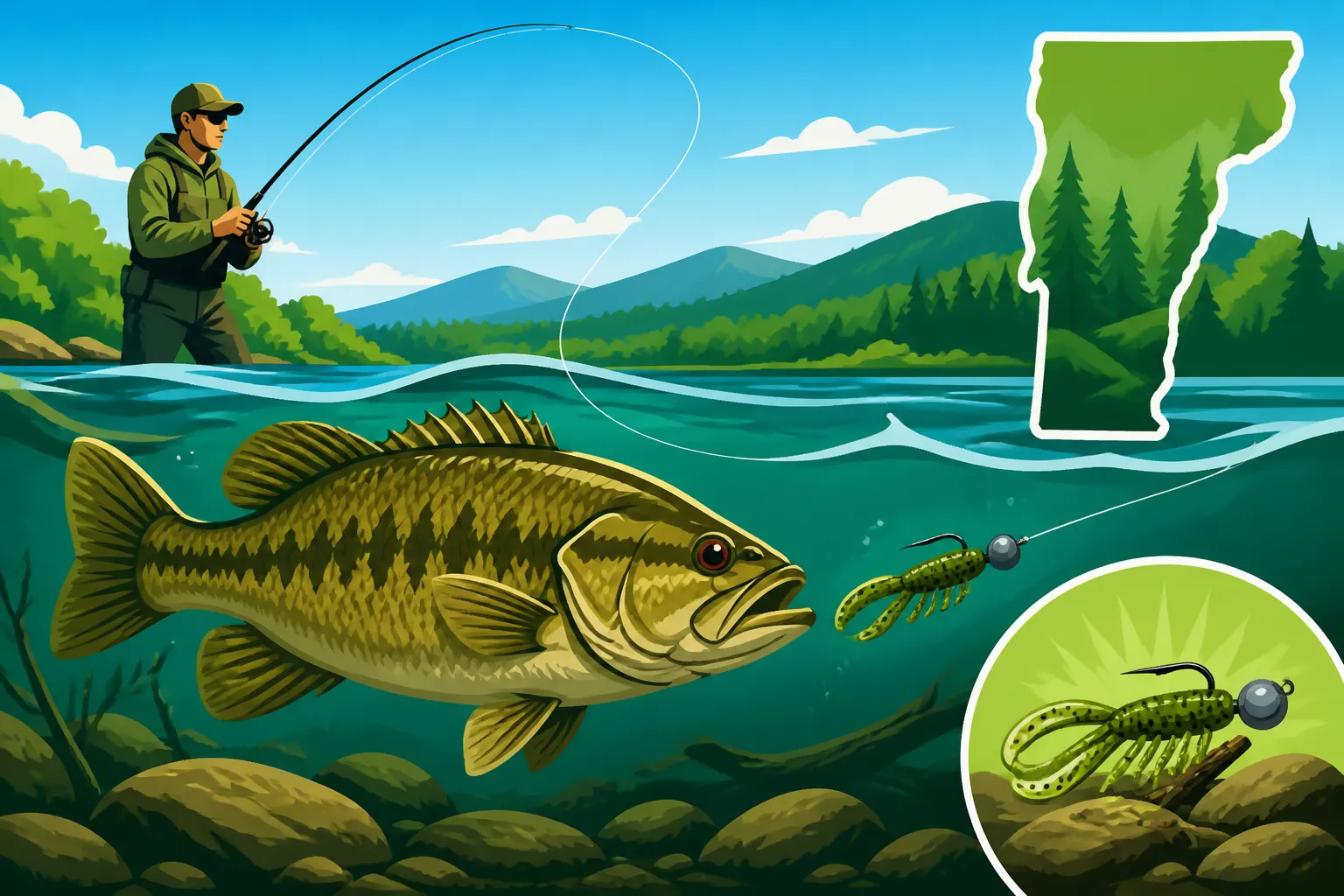
- Swimbaits: A small, soft plastic swimbait rigged on a lightweight jig head or a weedless hook can be very effective. It offers a realistic profile and a subtle tail kick that appeals to post-spawn fish looking for an easy meal. Cast it out and retrieve it just fast enough to get the tail moving, often just above the bottom or through submerged cover. The natural look and subtle action can be irresistible. You can find a wide variety of these on Amazon.
Targeting Specific Structure: Drop-offs and Humps
Post-spawn smallmouth are often drawn to specific structural elements that offer depth, cover, and proximity to food sources. Understanding these key areas is paramount.
- Shoreline Drop-offs and Transitional Areas: After leaving their shallow spawning beds, smallmouth will often retreat to the first significant drop-off nearby. This could be a rocky ledge, a channel swing, or simply where a shallow flat suddenly plunges into deeper water. These areas offer the fish a quick escape to deeper, cooler water if needed, while still being close enough to move shallow and feed when the mood strikes. Focus your efforts where these depth changes occur, using your electronics to identify submerged rocks, wood, or other features that might hold fish.
- Offshore Humps and Reefs: As the post-spawn recovery progresses and water temperatures stabilize, many smallmouth will migrate to offshore humps, reefs, and rock piles. These structures, often topping out in 10-25 feet of water, act as magnets for baitfish and, consequently, smallmouth. They offer current breaks, ambush points, and access to deep water. These are prime locations for techniques like drop shotting, Ned rigs, and even slow-rolled swimbaits. Pay close attention to the contours of these structures and try to identify any irregularities that might hold a school of fish. Knowing the Best Water Temperature for Smallmouth Bass Fishing can help you determine how deep they might be holding on these structures.
- Deep Points and Saddle Areas: Points extending into main lake basins, especially those with rocky composition or scattered boulders, are classic smallmouth holding areas post-spawn. Similarly, "saddle" areas – deeper sections connecting two humps or islands – act as travel corridors and ambush points. Fish will often stage on the deeper sides of these structures, moving up to the tops to feed during low light or when conditions are favorable. These areas are excellent for drifting with a tube jig or slow-rolling a jig with a grub, presenting a subtle offering to fish that are slowly regaining their energy.
Essential Gear and Tips for Post-Spawn Success
Having the right tools for the job can make a world of difference when chasing finicky post-spawn smallmouth. Don't underestimate the impact of lighter gear and attention to detail.
Rods, Reels, and Line for Finesse
When you're fishing finesse, your tackle needs to be tuned for sensitivity and precise presentations.
- Rods: Opt for medium-light to medium power spinning rods with a fast action tip. This combination gives you enough backbone to fight a strong smallmouth but a soft enough tip to cast light baits and detect subtle bites. A rod in the 6'6" to 7'2" range is versatile for most situations. For deeper presentations, a slightly longer rod can aid in casting distance and line control. Take a look at Best Spinning Rods for Smallmouth Bass for detailed recommendations.
- Reels: Pair your finesse rod with a high-quality spinning reel in a 2000 or 2500 size. Look for a reel with a smooth drag system, as you'll be using lighter line, and a smooth retrieve to help you feel every bump and tick. Good reels are an investment, but they pay off in sensitivity and durability, and you can find many great options on Amazon.
- Line: This is perhaps the most critical component for finesse fishing. Start with a mainline of 8-10 lb braided line, which offers incredible sensitivity and casting distance. Then, attach a 6-10 lb fluorocarbon leader. Fluorocarbon is nearly invisible underwater, extremely abrasion-resistant (great for rocky Vermont bottoms), and has minimal stretch, further enhancing your feel. The length of your leader can vary, but 6-8 feet is a good starting point. This combination allows you to fish effectively without spooking wary fish.
Interpreting the Conditions: Wind, Sun, and Water Temp
Environmental factors play a huge role in how and where smallmouth bass position themselves, especially after the spawn. Being able to "read the water" is a skill that will improve your catch rates significantly.
- Wind: Wind can be your friend or foe. A light chop on the water can break up the surface, making fish less wary and often positioning them to feed on wind-blown points or flats. However, too much wind can make boat control and feeling light bites nearly impossible. On windy days, focus on the leeward sides of islands or points where the water is calmer, or use a good trolling motor to maintain boat position. Don't forget that strong winds can also push baitfish, and smallmouth will often follow.
- Sunlight and Cloud Cover: Bright, sunny days often push post-spawn smallmouth deeper or into heavier cover, as they are light-sensitive. On these days, focus on deep-water structures like humps, drop-offs, or shaded areas like dock lines or submerged timber. Overcast days, however, can make fish more comfortable moving shallower and being more active throughout the day. This is when those reaction baits or even topwater (if they're really active) might come into play, especially during the Best Time to Fish Lake Champlain in Summer.
- Water Temperature: Post-spawn smallmouth are still sensitive to water temperature. While they’ve left the coldest depths of winter, extreme heat can also make them lethargic. They'll seek out their preferred thermal comfort zone, which often means slightly deeper, cooler water during the heat of the day, and moving shallower during cooler mornings or evenings. Knowing the Best Water Temperature for Smallmouth Bass Fishing for smallmouth (generally mid-60s to low 70s Fahrenheit) can help you predict where they might be holding and how active they'll be. Use a thermometer to keep an eye on surface temps and adjust your depth accordingly. If the surface water is too warm, look for cooler thermoclines or spring-fed areas.
Remember, persistence and experimentation are key during the post-spawn period. What worked yesterday might not work today, and conditions on one lake might differ from another. Be prepared to switch up your baits, depths, and retrieves until you crack the code.
| Factor | Typical Post-Spawn Smallmouth Behavior | Recommended Techniques | Prime Locations |
|---|---|---|---|
| Recovery Mode | Lethargic, finicky, seek easy meals. | Drop Shot, Ned Rig, Wacky Rig, Small Swimbait (slow) | Nearby drop-offs, sheltered points, light cover near spawning areas |
| Active Feeding | Becoming more aggressive, willing to chase. | Jerkbait (long pauses), Small Crankbait (slow roll), Tube Jig | Offshore humps, rocky points, saddle areas, deeper flats with scattered rock |
| Bright Sun | Deeper, in shade or tight to cover. | Vertical presentations (drop shot, jig), flipping into cover | Deep side of points, submerged timber, docks, deep rock piles |
| Cloud Cover | More comfortable moving shallower, more active. | Wider range of finesse and subtle reaction baits. | Tops of humps, shallower parts of points, rocky shorelines |
| Light Wind/Chop | Less wary, can push baitfish. | Fan cast reaction baits or drag finesse baits on wind-blown side of structure | Wind-blown points, flats, rocky banks |
Disclaimer
This article is for general informational purposes only and does not constitute professional advice. Laws, prices and regulations vary by location and change over time. Consult a qualified professional for guidance on your specific situation.