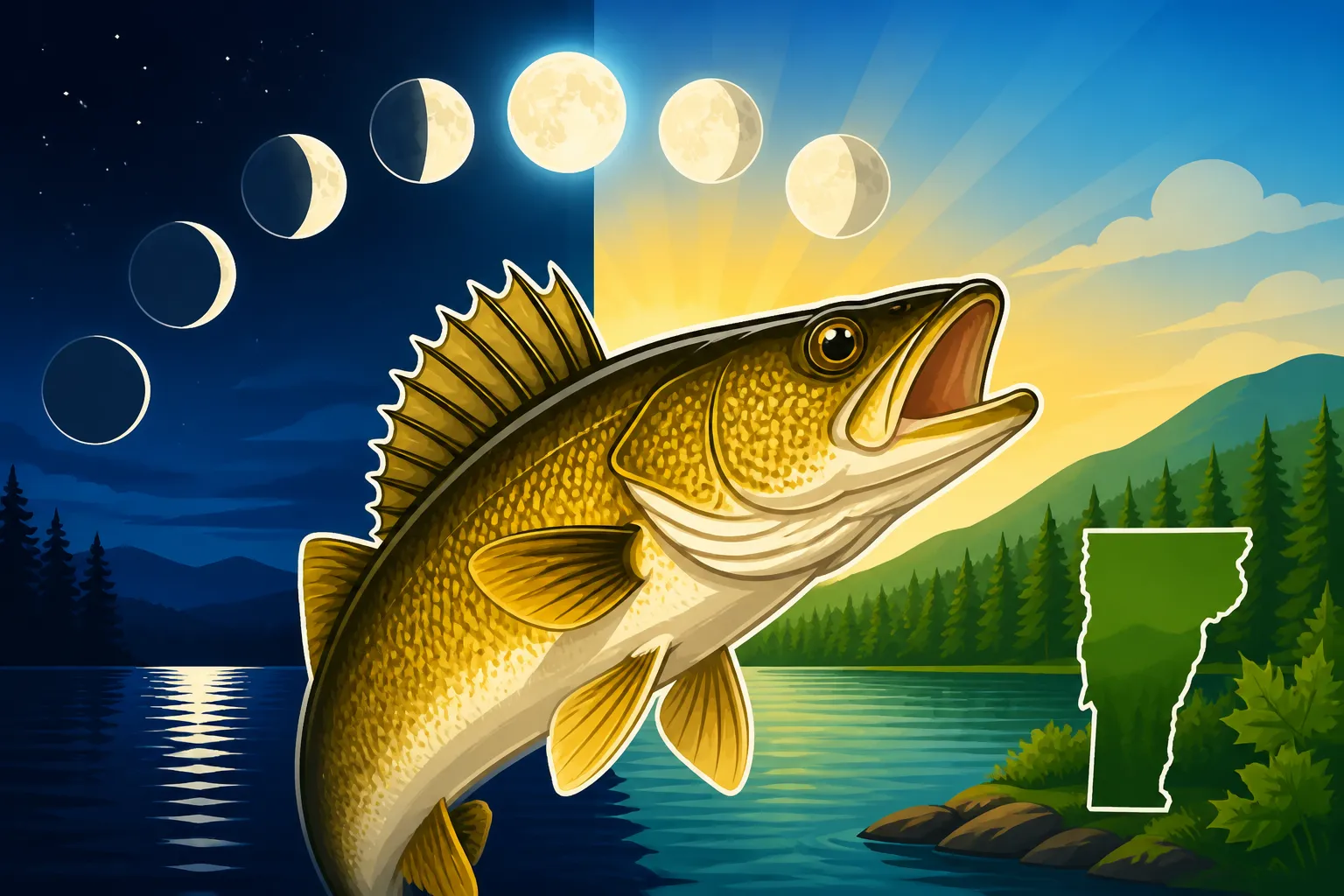
Best moon phase for walleye fishing
It's a familiar frustration for many walleye anglers in Vermont: you head out to your favorite spot on Lake Champlain or another promising waterbody, confident in your technique, only for the fish to remain elusive. You've checked the weather, the water temperature, but sometimes it feels like there's an unseen force at play influencing their bite. Many seasoned anglers believe the moon's phase might be that mysterious factor. This comprehensive guide will delve into the often-debated topic of how lunar cycles could potentially affect walleye behavior in Vermont, helping you understand if and when to adjust your fishing strategy.
Understanding Walleye Behavior and Environmental Factors
Walleye are notoriously finicky fish, making them a captivating challenge for any angler. Their behavior isn't dictated by a single factor, but rather a complex interplay of environmental conditions, biological needs, and, as some believe, celestial influences. Before we dive into the moon, it’s crucial to understand the baseline factors that already heavily influence their daily lives in Vermont's diverse waters.
Why Walleye Are Tricky to Predict
Catching walleye often feels like trying to solve a puzzle with constantly changing pieces. One day they're shallow, the next they're deep; one day they hit jigs, the next only trolled crankbaits will do. This variability stems from their keen adaptations. Walleye possess large, light-sensitive eyes, perfectly designed for low-light conditions. This means they often feed most actively during dawn, dusk, or on cloudy days, making them a prime target for Night fishing for Walleye on Lake Champlain. However, their sensitivity also means bright sunlight can drive them to deeper, darker waters or into dense cover where light penetration is minimal. Beyond light, factors like the availability of their primary forage, such as rainbow smelt and yellow perch, dictates their location. If the baitfish move, the walleye will follow, often making them seem to disappear overnight. Water temperature is another critical element; walleye prefer cooler waters and will seek out thermoclines or deeper sections as surface temperatures rise, particularly in large bodies like Lake Champlain. Strong winds can also push baitfish, and thus walleye, to specific shorelines or structures.
The Role of Light and Feeding Patterns
Light is perhaps the most significant environmental factor influencing walleye activity. As crepuscular feeders, meaning they are most active during twilight hours, walleye leverage their superior low-light vision to ambush prey. This natural advantage gives them an edge over many forage species that rely more on sight in brighter conditions. On a typical sunny day, you'll find walleye hunkered down in deeper water, under ledges, or in dense vegetation, waiting for the sun to dip low. Cloud cover, even during midday, can significantly improve your chances, as it diffuses sunlight and encourages walleye to move into shallower feeding areas. Similarly, stained or murky water reduces light penetration, allowing walleye to feed throughout the day. When considering where to find walleye on Lake Champlain, always think about how light is interacting with the water and structure. Understanding these fundamental patterns is your first step in predicting their movements and feeding windows, regardless of the moon.
Exploring Moon Phases and Their Potential Influence
Now, let's talk about the moon. While not as universally accepted as factors like water temperature or light, many anglers swear by the moon's influence, claiming it can turn an otherwise slow day into a banner one, or vice-versa. The theory posits that the moon's gravitational pull and the varying amounts of moonlight at night can subtly affect fish activity, metabolism, and feeding instincts.
Full Moon and New Moon: The Highs and Lows
The two extreme moon phases – the full moon and the new moon – are often considered the most impactful. Traditional fishing folklore suggests that these phases can trigger heightened activity in many species, including walleye.
During a full moon, the night sky is bathed in bright light, potentially extending the walleye's nocturnal feeding window. With more light to hunt by, some believe walleye may feed more aggressively through the night, leading to a slower bite during the day immediately following a full moon as they've already filled up. Conversely, others argue that the increased light visibility makes walleye more cautious, driving them deeper or into denser cover during the day. However, those targeting walleye at night during a full moon might find success, as the extra illumination could make it easier for them to track prey, and for anglers to fish! This is where knowing the Best walleye spots on Lake Champlain for night fishing can really pay off.
The new moon, on the other hand, brings the darkest nights. With minimal moonlight, walleye's exceptional low-light vision gives them an even greater advantage over prey. This profound darkness is thought to push walleye into a more intense, sustained feeding frenzy under the cover of night. Some anglers report that the days leading up to and immediately following a new moon can also be productive, perhaps because the fish are preparing for or recovering from these intense nocturnal hunts. While Vermont's inland lakes don't experience strong ocean tides, the moon's gravitational pull still has a subtle effect on all bodies of water, which some believe can influence fish metabolism and movement patterns, even if imperceptibly to us. This is a common belief that extends to many fish species.
Quarter Moons and In-Between Phases
While the full and new moons grab most of the attention, the quarter moons (first quarter and last quarter) and the waxing/waning periods in between also have their proponents. These phases represent periods of moderate moonlight and varying gravitational pull.
The general consensus among those who track moon phases is that fishing activity tends to be less pronounced during the quarter moons compared to the full or new moons. The rationale often stems from the idea that the less extreme light conditions don't provide the same strong "trigger" for feeding activity. However, this doesn't mean fishing is bad; it merely suggests it might be more consistent or less sporadic than during the more extreme phases. During these intermediate periods, walleye might revert to more predictable patterns dictated primarily by time of day (dawn/dusk) and other environmental cues like changing weather fronts.
Some anglers diligently follow "solunar tables," which predict peak feeding times based on the moon's position relative to the earth (overhead or underfoot). These tables often suggest specific windows of intensified activity, sometimes regardless of the moon's phase, proposing that these gravitational shifts alone can stimulate fish. While these theories are more nuanced and not universally accepted by the scientific community, many devoted anglers find them helpful, using them as one more tool in their arsenal to decide when to hit the water. It certainly doesn't hurt to check a solunar table before planning your next outing on a new moon or full moon cycle.
Practical Application for Vermont Walleye Anglers
So, what does all this mean for you, the Vermont angler chasing those elusive walleye? While it's tempting to put all your faith in the moon, a realistic approach is to consider it as one piece of a much larger, more critical puzzle. Focusing solely on the moon and ignoring other vital factors is a surefire way to come home empty-handed.
Combining Moon Phase with Other Key Factors
The most successful walleye anglers are those who can effectively synthesize various pieces of information. For walleye in Vermont, especially on a vast lake like Lake Champlain, understanding where the fish are and what they're eating is paramount. What walleye eat on Lake Champlain will largely dictate the lures and baits you use, and Best trolling depth for walleye on Lake Champlain is critical for presenting those offerings effectively.
- Water Temperature: This is a non-negotiable factor. If the water is too warm, walleye will seek deeper, cooler refuge. If it's too cold, their metabolism slows, and they become less active.
- Forage Presence: Walleye go where the food is. Use your fish finder to locate baitfish schools, especially around structure or drop-offs. If the bait is present, the walleye likely aren't far behind. Knowing When walleye spawn on Lake Champlain can also inform you of certain feeding patterns around that time.
- Time of Day: As discussed, walleye are primarily low-light feeders. Even if the moon phase isn't ideal, hitting the water at dawn or dusk, or on a heavily overcast day, significantly increases your odds.
- Weather Patterns: A stable weather system usually means more predictable fishing. Cold fronts, on the other hand, can shut down the bite for days. Pay attention to sudden changes in barometric pressure.
For example, if it's a full moon, but a strong cold front just rolled through, chances are the fish will be lethargic, no matter how bright the moon is at night. Conversely, if it's a new moon with stable weather and ideal water temperatures, you might experience an exceptional bite. Consider these factors alongside the moon phase as you plan your trip.
Adapting Your Approach Based on Moon Phase (and Reality)
So, how can you practically incorporate moon phase knowledge into your Vermont walleye fishing strategy?
First, don't let it discourage you from fishing. If you only fish during "prime" moon phases, you'll miss out on a lot of great days on the water. Instead, use it as a guideline to potentially adjust your approach.
- During a Full Moon: If you're fishing during the day around a full moon, consider targeting deeper structure or areas with heavier cover, as walleye might be seeking refuge from brighter conditions. If you're out at night, you might find the extended visibility allows for more precise presentations. Consider using lures that generate more vibration or sound if the fish are spread out due to increased visibility. You might also focus on areas where walleye typically school. You can always check for specific recommendations on Best lures for walleye trolling on Lake Champlain on sites like Amazon, to ensure you have the right tools for a full moon night bite.
- During a New Moon: With the darkest nights, walleye might be more aggressive nocturnal feeders. If fishing during the day, they might be recuperating, so a more subtle, finesse approach might be needed. Alternatively, focus on the immediate pre-dawn or post-dusk bite, which could be intensified. This is a great time to experiment with glow-in-the-dark jigs or baits, or use dark, silhouetted lures that stand out against the complete darkness.
- During Quarter Moons: These might be good times to stick to your tried-and-true methods and focus on the most reliable factors: structure, baitfish, and time of day. Don't overthink it; consistent effort often trumps chasing lunar theories during these phases.
A great tip is to keep a detailed fishing log. Record not only what you caught and with what lure, but also the weather conditions, water temperature, and, importantly, the moon phase. Over time, you might start to see patterns emerge specific to your favorite Vermont waters and even for specific species. This personal data will be far more valuable than any generalized moon phase theory. Remember, consistency in fishing means always checking the Vermont Fishing Regulations Explained and Vermont Walleye limit on Lake Champlain to ensure you're compliant.
| Moon Phase | Perceived Walleye Activity (General) | Suggested Approach | Caveats |
|---|---|---|---|
| New Moon | High activity, especially nocturnal | Focus on dawn/dusk, or night fishing with dark/glow lures; subtle daytime presentations. | Other factors (cold front, lack of bait) can easily override lunar influence. |
| Waxing Crescent | Moderate to increasing activity | Stick to reliable spots, focus on low-light periods. | Gradual increase, not as dramatic as full/new moon. |
| First Quarter | Moderate activity | Consistent methods, focus on structure and bait. | Often seen as less productive than full/new moon. |
| Waxing Gibbous | Moderate to increasing activity | Similar to waxing crescent, but watch for signs of pre-full moon intensity. | Approaching full moon, can have increased night feeding. |
| Full Moon | High activity (often nocturnal), or cautious | Night fishing can be good; daytime might require deeper, slower presentations. | Bright nights might lead to slower daytime bites due to extended overnight feeding. |
| Waning Gibbous | Moderate to decreasing activity | Walleye might be digesting; focus on morning bite. | Fish might be sluggish after a full moon feeding binge. |
| Last Quarter | Moderate activity | Standard techniques, focus on key environmental factors. | Similar to first quarter, generally less intense than extremes. |
| Waning Crescent | Moderate to increasing activity | Building towards new moon, look for signs of increasing aggressiveness. | Preparing for the intense darkness of the new moon. |
Ultimately, while the moon phase can be an interesting and potentially helpful factor to consider, it's rarely the sole determinant of a successful walleye outing in Vermont. The wise angler will combine this knowledge with a deep understanding of walleye behavior, local water conditions, and a flexible approach. Having the right gear, too, makes a difference – whether you're looking for Best fish finders for Vermont lakes or a new fishing setup on Amazon, always be prepared. Fish with confidence, pay attention to all the signals the environment provides, and you’ll increase your chances of reeling in those prized walleye.
Disclaimer
This article is for general informational purposes only and does not constitute professional advice. Laws, prices and regulations vary by location and change over time. Consult a qualified professional for guidance on your specific situation.