Best technique for fishing a riffle for trout
There's nothing quite like the sound of a Vermont trout stream, that gurgling, rushing music that whispers promises of hidden fish. But when you look at a section of fast-moving water, a "riffle," it can feel overwhelming, like a chaotic mess where no self-respecting trout could possibly hold. Many anglers just walk right past, convinced the deeper, calmer pools are where the action is. That's a huge mistake! Riffles are often teeming with hungry trout, and knowing how to effectively fish them can unlock some of the most exciting action on the river. This guide is going to break down exactly how to approach, read, and present flies and lures in those vibrant, oxygen-rich riffle sections, ensuring you don't miss out on some fantastic Vermont trout fishing opportunities.
Understanding the Riffle: A Trout's Pantry and Oxygen Bar
Before we even cast a line, let's get a good grasp of what a riffle truly is and why it's so appealing to trout. It’s not just random fast water; it’s a specific kind of shallow, turbulent section of a river or stream where the water flows quickly over rocks, gravel, and cobble. This creates a broken, aerated surface, lots of current, and a unique ecosystem that trout absolutely thrive in. If you've ever felt the spray off a small waterfall or rapids, you're experiencing the essence of a riffle.
The Dynamics of a Stream Riffle
Think about the dynamics at play in a riffle. The fast-moving water picks up oxygen, infusing the stream with life-sustaining air. This isn't just nice for the trout; it's essential, especially during warmer months when dissolved oxygen levels in slower, deeper pools can drop. Trout are cold-water fish, and they need that abundant oxygen to stay healthy and active. Furthermore, the turbulence breaks up the surface, making it harder for predators like eagles, ospreys, or even us anglers to spot a trout below. It offers a crucial layer of camouflage, allowing trout to feed more confidently.
Why Trout Live in Riffles
Beyond oxygen and cover, riffles are a veritable buffet for trout. The turbulent water dislodges nymphs, larvae, and other aquatic insects from the bottom, sending them tumbling downstream. This makes for easy pickings for a trout positioned correctly. Terrestrial insects, like grasshoppers or beetles, that accidentally fall into the water are also quickly swept into riffle zones. Think of it like a conveyor belt of food. Trout don't have to expend a lot of energy hunting; they just have to hold their position and let the meal come to them. This combination of abundant food, high oxygen levels, and excellent cover makes riffles prime real estate for trout, often holding many more fish than the seemingly more attractive calm pools.
Trout Behavior and Prime Holding Lies in Riffles
Now that we know why trout love riffles, let's dive into where they actually hold and what they're doing there. It's easy to assume fish are just scattered randomly in the current, but trout are incredibly efficient predators. They're looking for the sweet spot: a place where they can access food easily while expending minimal energy fighting the current. Identifying these "holding lies" is key to successful riffle fishing.
Current Seams and Cushioning
Trout are masters of using current to their advantage. In a riffle, look for subtle breaks in the current. These are often created by larger rocks, submerged logs, or even changes in the bottom contour. The key concept here is the "current seam" – the line where fast water meets slower water. Trout will often sit just out of the fastest current, in the slightly slower water, facing upstream. This allows them to dart quickly into the faster flow to grab a morsel of food drifting by, then retreat to their less energetic holding spot. Also, pay attention to the "cushion" of water just in front of a larger obstruction. The water hitting the rock creates a small area of slightly slower, often deeper water directly upstream of the obstacle. These cushions are classic trout lies, offering both protection from the strongest current and a prime ambush point.
Depth Changes and Structure
While riffles are generally shallow, even subtle changes in depth can create critical holding areas. A slightly deeper trench running through a riffle, or a depression behind a large rock, can offer trout a comfortable spot to rest. The increased depth provides a sense of security and a break from the surface turbulence. Submerged rocks and boulders aren't just current breaks; they also offer physical shelter. Think about a trout hugging the downstream side of a large boulder, using it as a shield from the full force of the current. This position also gives them a blind spot from predators above. These areas concentrate food and offer a critical sense of security, making them high-percentage spots to target. When you're Reading the Vermont Fishing Regulations Guide, you'll often see specific rules for different sections of rivers, and understanding how trout utilize structure in different currents helps you interpret where those rules might apply most effectively.
Food Delivery Lanes
Ultimately, trout are where the food is. As you observe a riffle, try to visualize how insects and other food items are drifting downstream. These are the "food delivery lanes." Often, these lanes will follow the main current but converge around larger structures or into deeper channels. A trout won't just sit anywhere; it will position itself precisely to intercept as many drifting morsels as possible with the least effort. For instance, if there's a submerged log angled across the current, insects will likely funnel along its upstream face. A trout might be tucked just behind the log, slightly out of the main current, waiting for that easy meal. Observing these lanes helps you predict where a trout might be holding and, more importantly, where to present your offering.
Essential Gear for Riffle Fishing Success in Vermont
Alright, so you know what a riffle is and where trout tend to hang out. Now, let's talk about the tools you'll need to get your fly or lure into those productive zones. When it comes to fishing fast, turbulent water, your gear choices can make a significant difference in your ability to present your offering naturally and effectively.
Rods and Reels for Stream Riffles
For fly fishing, a moderate-action 8-foot to 9-foot rod in a 3 to 5-weight range is typically ideal. A 9-foot, 5-weight is a versatile choice for many Vermont trout streams, offering enough backbone to handle a decent fish while still being delicate enough for subtle presentations. Look for something that gives you good line control, as you'll often be mending line in tricky currents. For spin fishing, a light to ultralight spinning rod, around 6 to 7 feet in length, with a fast action tip and a sensitive blank, will be your best friend. Paired with a small, smooth spinning reel spooled with 4-6 lb test monofilament or fluorocarbon, you'll have the sensitivity needed to detect subtle takes in the chop and the finesse to cast light lures accurately. You can find some excellent options for both on Amazon, which often provides a wide range of brands to compare.
Wading Gear: Staying Dry and Stable
Wading is almost a necessity for effectively fishing many riffles, as it allows you to approach from different angles and get closer to prime lies. Good wading gear isn't just about comfort; it's about safety. Breathable chest waders are a must, allowing you to venture into deeper sections without getting soaked. Combine these with sturdy wading boots, preferably with felt or rubber soles that offer good grip on slick, mossy rocks. A Wading Staff for Fast Current is a non-negotiable safety item. It provides an extra point of contact and helps you maintain balance in strong currents, preventing dangerous slips. Remember, safety first – a fall in fast, cold water is no joke. Don't be afraid to invest in quality gear for Best Waders for Vermont Trout Streams – your comfort and safety are worth it.
Line, Leaders, and Tippet: The Invisible Connection
Your line setup is crucial for presenting flies and lures naturally in a riffle. For fly fishing, a weight-forward floating fly line is standard. The leader setup, however, needs to be precise. A longer leader (9-12 feet) with a fine tippet (5X or 6X, sometimes even 7X for very wary fish) is often best for nymphing or dry fly fishing in clear, fast water. This longer, lighter tippet allows your flies to drift more naturally, mimicking actual insects. For spin fishing, use a main line that's sensitive but low-stretch, like a good monofilament, and then attach a 2-4 foot leader of fluorocarbon. Fluorocarbon is nearly invisible in water and has excellent abrasion resistance, which is important when your line might be rubbing against rocks. This stealthy connection is vital, especially when targeting wild trout in smaller, clear streams.
Fly and Lure Selection for Riffles
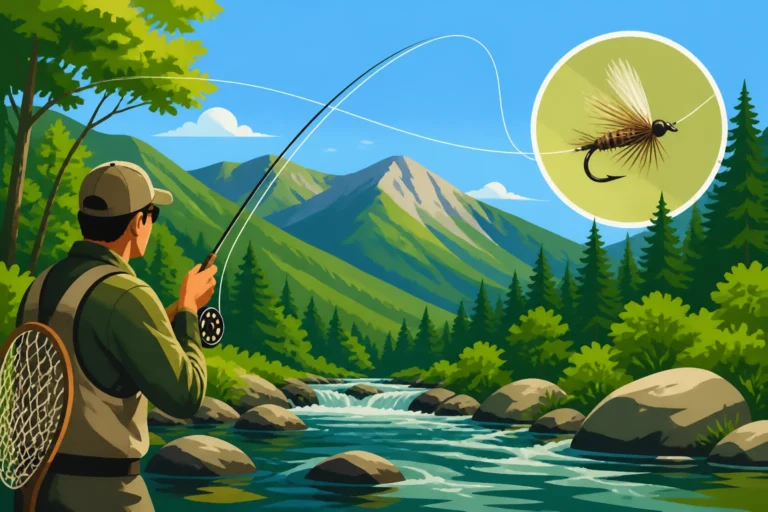
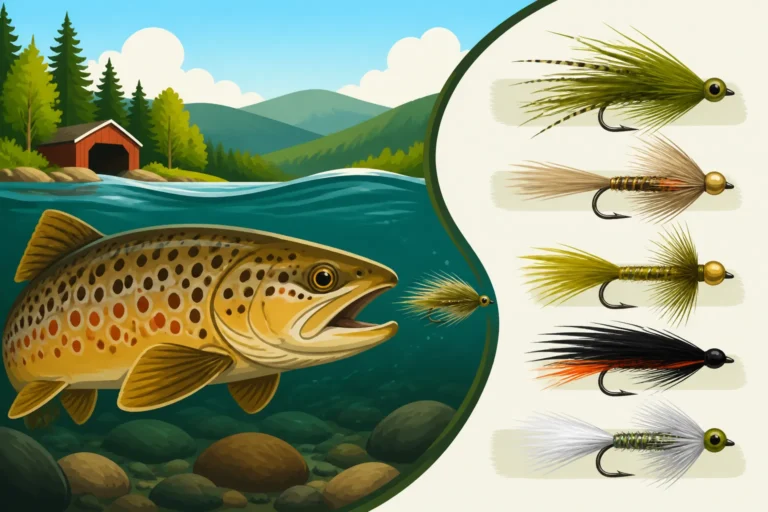
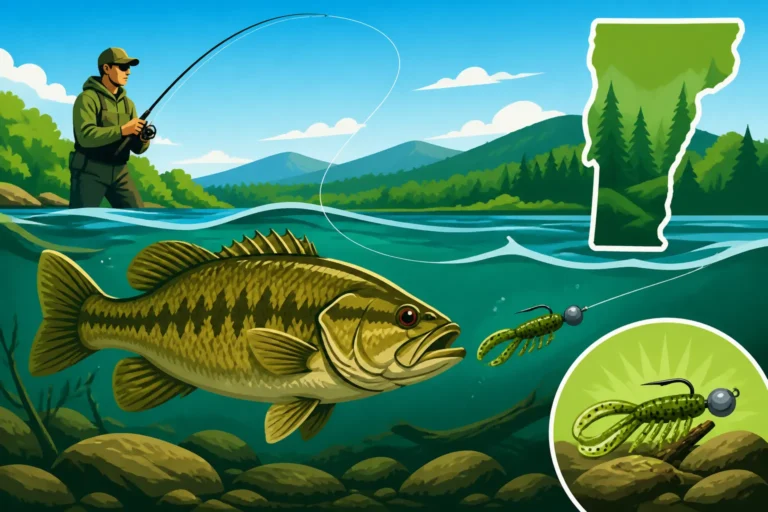
What you tie on depends on what the trout are eating. For fly fishing, nymphs are often king in riffles because most of a trout's diet consists of subsurface insects. Patterns like Hare's Ear, Pheasant Tail, Prince Nymph, Caddis Larva, and small stonefly imitations (like a Pat's Rubber Legs) in sizes 12-18 are excellent choices. For dry flies, smaller parachute Adams, Elk Hair Caddis, or attractor patterns can be effective during a hatch. Streamers like Woolly Buggers can also be deadly, imitating baitfish or larger nymphs. When it comes to spin fishing, small inline spinners (like Panther Martins or Mepps), tiny spoons, or micro jigs (rigged with a small plastic grub or worm) are fantastic. These lures mimic baitfish or larger insects and have enough weight to get down in the current. Always check local regulations, as Vermont Fishing Regulations Explained can specify artificial lure or fly-only sections. For specific patterns, consult a guide to Fly Patterns for Vermont Trout Streams.
Proven Techniques for Riffle Fishing Trout
Now for the exciting part: actually getting your presentation into the strike zone. Fishing a riffle effectively requires a blend of stealth, precision, and understanding how the current affects your line and lure. Here are some of the most effective techniques.
Nymphing: Drifting for Subsurface Success
Nymphing is arguably the most productive technique for fishing riffles, as trout are primarily feeding on subsurface insects. The goal is to get your weighted nymph down to the fish's level and drift it naturally, free of any drag.
- Indicator Nymphing: This involves using a small strike indicator (a fancy word for a bobber) on your leader to suspend your nymph at the desired depth. Cast slightly upstream and across the current, allowing your nymph to sink. Watch your indicator intently; any hesitation, pause, or movement against the current could mean a trout has taken your fly. This method helps you present your fly at the correct depth and detect subtle takes.
- Euro Nymphing (Contact Nymphing): This more advanced technique omits the indicator. Instead, you use a specialized fly line or a sighter on your leader and hold your rod tip high, maintaining direct contact with your nymphs. You're feeling for subtle bumps and strikes rather than seeing them. This offers incredible sensitivity and control, allowing for very precise drifts in complex currents. It’s perfect for getting a natural drift in the fast, choppy water of a riffle. Many anglers find Euro Nymphing gear on Amazon because it allows for easy comparison of different rod lengths and sighter options.
- The High-Stick Nymphing Approach: Regardless of whether you use an indicator or go "contact," the principle of high-sticking is crucial. Keep your rod tip elevated, stripping in or letting out line to match the speed of the current your fly is in. This minimizes line drag, allowing your nymph to tumble along the bottom as naturally as a dislodged insect.
Dry Fly Fishing: When the Hatch is On
While nymphs are usually the go-to, dry fly fishing in a riffle can be incredibly rewarding, especially during a strong hatch. When you see trout rising consistently in the choppy water, it’s time to switch.
- Short, Accurate Casts: The broken surface of a riffle means trout have a smaller window to spot your fly. Focus on short, precise casts upstream and across to the rising fish. You want your fly to land softly and drift directly into the feeding lane.
- Immediate Mends: As soon as your dry fly hits the water, perform an upstream mend with your fly line. This throws a bit of slack upstream, delaying the drag that the faster surface current will exert on your line, allowing your fly to drift naturally for longer.
- Watching the Seams: Trout often rise in the calmer pockets and seams within a riffle. Target these areas. If a fish takes your fly in the turbulence, set the hook quickly and decisively. The visual strike of a trout rising in a riffle is one of the most exciting experiences in fly fishing!
Spin Fishing: Lures in the Current
Spin fishing can be highly effective in riffles, especially if you're targeting larger trout or if the water is a bit stained.
- Upstream Cast and Retrieve: Cast your spinner or small spoon upstream and slightly across the current. Allow it to sink for a moment, then begin a slow to moderate retrieve as it drifts downstream. The current will help to spin your lure naturally, and the slow retrieve ensures it stays in the strike zone.
- Maintaining Bottom Contact: For jigs, cast upstream and let the jig bounce along the bottom with the current. This "drift-and-bounce" method imitates a struggling insect or baitfish. Pay close attention to your line, as strikes can be subtle. Use the lightest jig head possible that still allows you to feel the bottom.
- Reading the Current for Lure Placement: Just like with flies, understanding current seams and eddies is critical. Cast your lure so it swings into these slower sections, allowing the trout to ambush it without having to fight the main current. A good way to learn how different currents affect your presentation is to consider methods discussed in How to fish a run and pool trout stream, as the principles of current management apply broadly.
Reading the Riffle and Making Your Approach
Walking up to a trout stream and just blindly casting is a recipe for frustration. To truly excel at riffle fishing, you need to develop your "river eyes"—the ability to read the water and approach intelligently. This is where patience and observation pay off big time.
Stealth and Observation
Trout are incredibly wary, especially in shallower riffle sections where they feel more exposed. Your approach is paramount. Walk softly along the bank, staying low and out of the trout's line of sight. Avoid making sudden movements or casting a long shadow over the water. Before you even make your first cast, take a few minutes to observe the riffle. Look for rises, watch how the current flows, identify larger rocks or structure, and try to visualize those food delivery lanes. Where is the fastest water? Where does it slow down? Are there any obvious current seams? This initial scouting will inform your entire strategy. It's also helpful to consult a guide like Best Trout Streams in Vermont to know which streams have particular characteristics that might affect your approach.
Casting Angles and Presentation
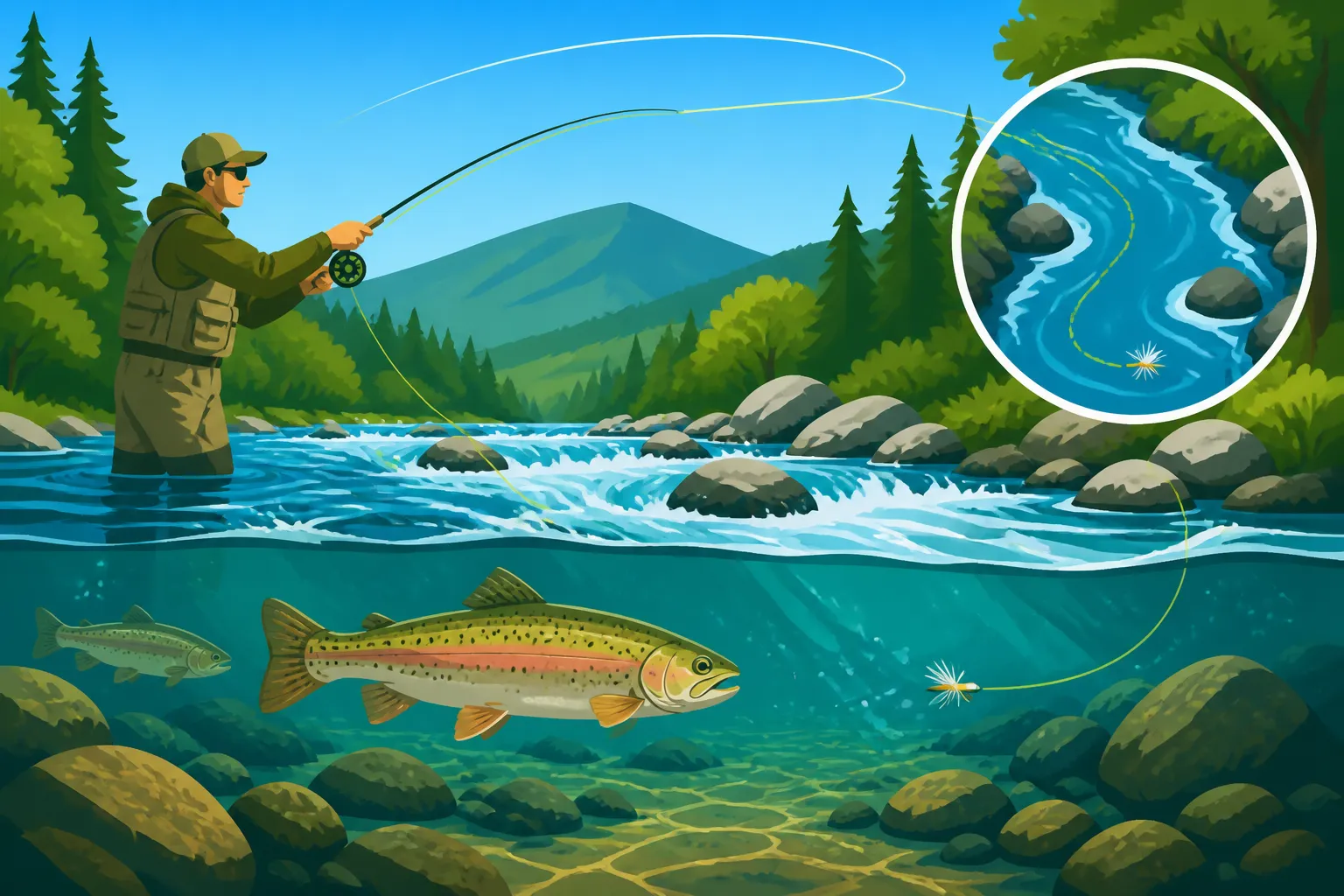
The angle of your cast relative to the current and the trout's position is critical. Generally, casting upstream and across is the most common and effective method for both fly and spin fishing in a riffle. This allows your fly or lure to drift naturally downstream, giving the fish time to see it and decide to strike.
- Upstream and Across: Aim your cast slightly upstream of where you expect the fish to be. This gives your presentation time to sink (for nymphs and jigs) or for you to begin your retrieve (for spinners) before it reaches the strike zone.
- The "Reach Cast" and Mending: For fly anglers, a reach cast or aggressive mending immediately after your fly lands is essential. A reach cast involves extending your rod upstream as the fly hits the water, creating a curve in your line that adds slack and delays drag. Mending involves flipping a loop of line upstream to achieve the same effect. The goal is to ensure your fly drifts at the same speed as the natural current, completely drag-free. Drag is the enemy of a natural presentation, making your fly look unnatural and alarming to trout.
- Targeting the Seams: Focus your casts on those current seams where fast water meets slow. This is where trout are holding. Try to land your fly or lure just on the fast side of the seam, letting it drift into the slower, more comfortable water where a trout is likely waiting.
Downstream vs. Upstream Wading
How you wade the river can significantly impact your success. For many riffle fishing scenarios, particularly with nymphs, an upstream approach is often preferred. This keeps you downstream of the fish, minimizing your chances of spooking them. As you slowly move upstream, you're fishing into undisturbed water.
However, sometimes a downstream wade is necessary, especially if there's an obstacle or deep water preventing an upstream approach. If wading downstream, be extra cautious with your movements and try to present your flies or lures from an angle that minimizes your visibility to the fish. Always be aware of your surroundings, and remember that Wading Techniques for Vermont Trout Streams emphasize safety above all else. A good Wading Staff for Fast Current becomes even more crucial when moving downstream in strong flows.
Common Mistakes and Troubleshooting in Riffle Fishing
Even experienced anglers can struggle with riffles sometimes. It's a challenging environment, but recognizing common pitfalls can help you troubleshoot and improve your success rate. Don't get discouraged if you're not instantly catching fish; it's all part of the learning curve.
Ignoring Drag and Improper Drift
This is, hands down, the biggest mistake anglers make in fast water. If your fly line or spinning line is being pulled faster or slower than your fly or lure, it creates "drag." To a trout, a dragging fly looks completely unnatural—like a panicked insect caught in the wrong current—and they will almost always refuse it.
- Troubleshooting Fly Fishing Drag: Watch your fly and your line. If your line is making a belly downstream or pulling your fly across the current, you have drag. Practice your mending skills. Cast upstream, then immediately flip an upstream mend. If fishing multiple flies, use heavier flies on the bottom to help them sink quickly and stay down.
- Troubleshooting Spin Fishing Drag: If your lure is zipping unnaturally fast or stopping dead, adjust your retrieve speed and casting angle. Let the current do some of the work. For jigs, ensure you're using a light enough jig head to allow for a natural drift with occasional bottom contact, rather than dragging it.
Incorrect Depth and Weighting
Another common issue is not getting your subsurface offering down to where the fish are feeding. Trout in riffles are often hugging the bottom, intercepting nymphs and larvae that are tumbling along. If your nymph or jig is just skimming the surface, you're missing them.
- Troubleshooting Fly Fishing Depth: Add more split shot to your leader, or switch to a heavier, weighted nymph. Experiment with different amounts until you occasionally tick the bottom. Use a strike indicator that allows for easy depth adjustment.
- Troubleshooting Spin Fishing Depth: For jigs, try a slightly heavier jig head. For spinners and spoons, allow them to sink for a few extra seconds before starting your retrieve. The goal is to present your lure at the fish's eye level, which in a riffle is usually very close to the bottom.
Improper Approach and Spooking Fish
We talked about stealth earlier, but it's worth reiterating. Riffles, especially clear ones, offer little cover for you. If you walk boldly up to the bank, you're likely sending every trout scurrying for cover before you even make a cast.
- Troubleshooting Spooking: Approach from downstream whenever possible. Stay low, crouch, or use bankside vegetation for cover. Avoid bright clothing. If you've just walked up to a riffle and haven't seen any action, move upstream a bit or cast to the very bottom of the riffle first, then slowly work your way up. Remember that a trout's vision is excellent, especially looking upwards from below the surface. This is why a good Best Landing Net for Trout should also be designed for quick, gentle release, minimizing disturbance. If you’re also exploring different areas, understanding specific locations like the Battenkill River Trout Fishing spots can help you anticipate how wary the fish might be.
Overlooking the "Sweet Spots"
Sometimes anglers just cast randomly into the chaos of a riffle, missing the concentrated holding lies. You're working harder, not smarter.
- Troubleshooting Spot Selection: Re-read the water. Look for those distinct current seams, the water cushions in front of large rocks, and the slightly deeper pockets. Visualize the food delivery lanes. Make targeted casts to these high-percentage areas. Don't waste casts on obviously unproductive, fast, uniform water. Focus on the edges of the main current, not necessarily the very center. When moving from one type of water to another, apply these principles to areas like those discussed in Best technique for fishing a plunge pool, as trout always seek the path of least resistance for feeding.
Fishing riffles for trout is a rewarding challenge. It teaches you to read water, master presentation, and embrace the wild energy of a flowing stream. With the right techniques and a bit of practice, you’ll soon find yourself looking forward to those turbulent sections, knowing they hold some of the most eager and aggressive trout Vermont has to offer.
Disclaimer
This article is for general informational purposes only and does not constitute professional advice. Laws, prices and regulations vary by location and change over time. Consult a qualified professional for guidance on your specific situation.