Best nymph rig for high mountain streams
There's nothing quite like the crisp air and challenging waters of Vermont's high mountain streams, but let's be honest, fishing these technical flows can sometimes feel like trying to thread a needle in a hurricane. Those feisty brook trout and wild browns aren't always keen on just any offering, and if your nymph rig isn't dialed in, you might spend more time untangling knots or spooking fish than actually feeling that satisfying tug. This guide is all about cutting through that frustration, helping you understand the unique demands of these beautiful, challenging waters and how to set up the perfect nymph rig to meet them head-on.
Understanding the Unique Demands of High Mountain Streams
Fishing high up in the Green Mountains, whether you're on a feeder stream of the Battenkill or tucked away in a remote brook, is a completely different ballgame than drifting flies on wider, more forgiving rivers. The environment itself dictates a lot about how you should approach your nymphing. These aren't your typical leisurely floats; they're often pocket water, steep gradients, and crystal-clear flows that demand precision and stealth.
Characteristics of High Mountain Waters
Imagine standing next to a mountain stream. What do you see? Often, it's a tight corridor of water, tumbling over rocks, dropping into deep little pools, and rushing through narrow runs. The water levels can fluctuate dramatically with rainfall, going from a gentle trickle to a raging torrent overnight. This ever-changing landscape means fish are constantly adjusting their holding lies, seeking protection from strong currents and predators. The substrate is usually rocky, making wading a genuine challenge, and the surrounding foliage often creates a dense canopy, limiting your casting room. All of these factors mean your gear needs to be adaptable, robust, and designed for close-quarters combat. The wild trout in these streams are survivors; they're incredibly wary and won't tolerate sloppy presentations.
How Fish Behave in Mountain Environments
The trout inhabiting Vermont's high mountain streams, especially the native brook trout, are generally smaller than their lowland cousins, but what they lack in size, they make up for in fight and elusiveness. They hold in specific spots—behind boulders, under cutbanks, in the deepest part of a plunge pool, or in the soft water seams next to a fast current. Because the water is often cold and highly oxygenated, they're typically active, but their feeding windows can be short and intense. They're opportunistic feeders, keying in on whatever insects are dislodged by the current. This makes nymphing incredibly effective, as it imitates the vast majority of a trout's diet. Understanding where these fish hold and how they react to shadows, vibrations, and poor drifts is crucial. They are masters of their domain, and you need to be a subtle intruder.
Essential Components of a High Mountain Nymph Rig
Building the right nymph rig is like assembling a specialized tool for a specific job. You wouldn't use a hammer to drive a screw, and similarly, a heavy-duty salmon rig isn't going to cut it on a delicate mountain brook. Every component, from your rod to your tippet, plays a critical role in delivering your fly naturally and detecting those subtle strikes that these wild fish are known for.
Rod, Reel, and Line Selection
For high mountain streams, you're looking for finesse and control, not necessarily long-distance casting power. A fly rod in the 7 to 9-foot range, rated for 2-weight to 4-weight line, is often ideal. A shorter rod gives you more control in tight quarters and allows for precise roll casts or bow-and-arrow casts under overhanging branches. Many anglers, myself included, really appreciate a slightly longer rod (like a 10-foot 3-weight) if you're leaning into techniques like European Nymphing, as it helps keep more line off the water and improves drift control. For an in-depth look at what rods perform best, check out our guide on Best Fly Rods for Vermont Trout Streams.
Your fly reel doesn't need to be a drag-system powerhouse for these small streams; its primary job is to hold your line. A simple, lightweight click-and-pawl reel is often preferred for its balance and classic feel. Pair this with a weight-forward fly line that matches your rod. If you're doing a lot of indicator nymphing, a general-purpose weight-forward floating line works great. For those venturing into specialized techniques, a thinner diameter European Nymphing line or a level line can offer distinct advantages for sensitivity and reduced drag. You can often find a good selection of these lines on Amazon, making it easy to get what you need delivered right to your door.
Leader, Tippet, and Indicators
This is where the magic (or misery) often happens. Your leader needs to be long and tapered to transfer energy from your fly line to your flies smoothly, turning over even weighted nymphs without a violent splash. A standard 7.5 to 9-foot 5X or 6X tapered leader is a good starting point for indicator nymphing. However, for tight-line or Euro Nymphing, many anglers opt for a specialized leader system. This often involves a long section of monofilament, sometimes with a sighter material (like multi-colored Amnesia or two-tone Euro Nymphing leaders), tied directly to the fly line, eliminating the traditional tapered leader for maximum sensitivity. To learn more about advanced nymphing, you might want to explore Euro Nymphing Vermont Trout Streams.
Your tippet is the final, crucial connection to your fly. For high mountain streams, you'll typically be using fine tippet, like 5X, 6X, or even 7X, especially in clear, low-water conditions where trout are incredibly shy. Fluorocarbon tippet is a favorite for nymphing because it sinks faster than monofilament and is nearly invisible underwater. The length of your tippet depends on the depth and speed of the water, but generally, you want enough to allow your flies to get down to the fish's feeding lane. For more on this critical component, consider reading Best tippet material for tiny mountain stream trout.
Strike indicators are your "eyes" on the water for many nymphing scenarios. They need to be sensitive enough to show the most subtle takes and light enough not to impede your drift. Small, buoyant indicators made of foam, yarn, or even pinch-on types are popular. For Euro Nymphing, the sighter itself acts as your indicator, allowing for direct contact with your flies.
Nymph Patterns and Weighting
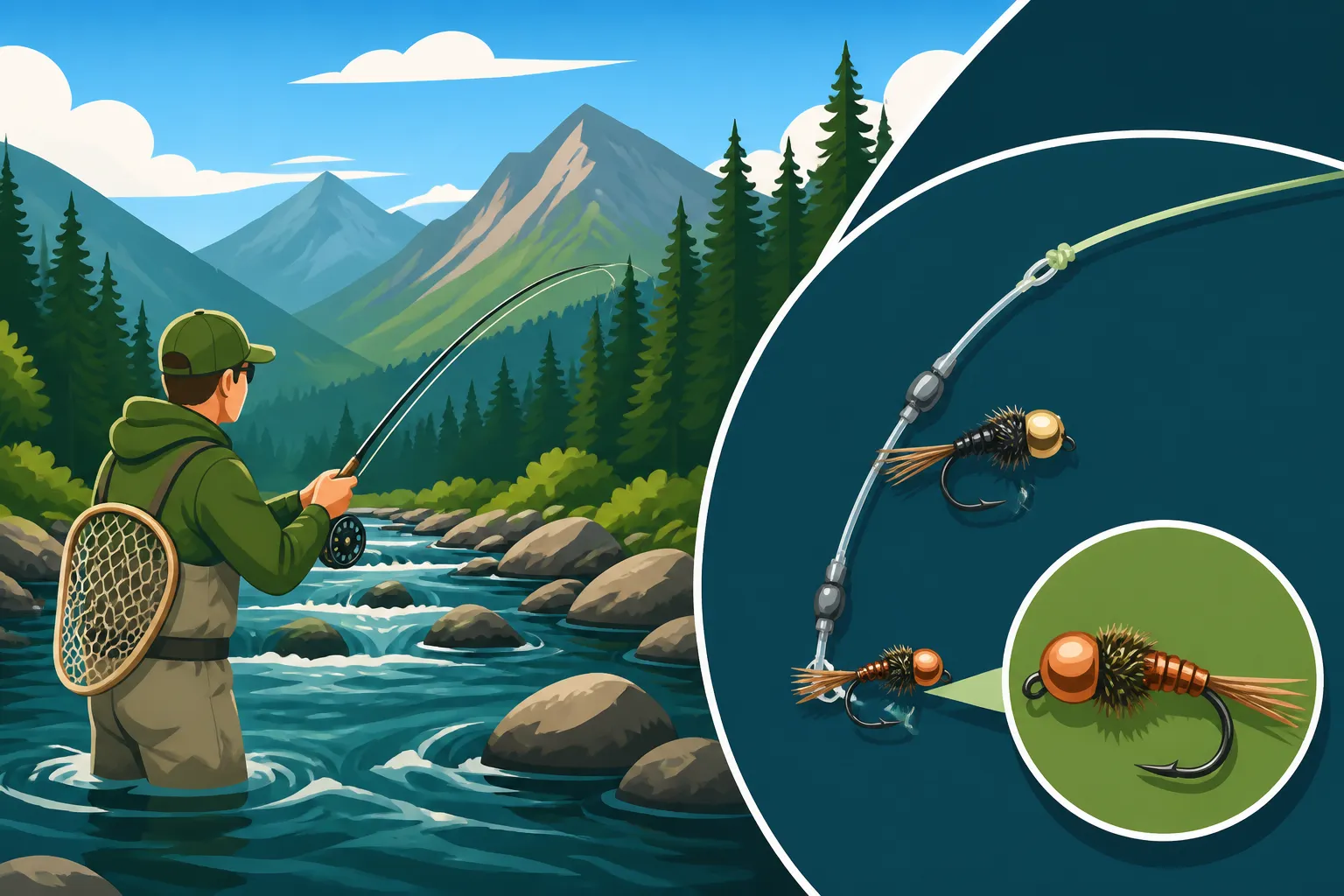
Choosing the right nymph patterns is both an art and a science. In high mountain streams, trout often key in on generalist patterns that imitate common aquatic insects like caddis larvae, mayfly nymphs, and stonefly nymphs. Some go-to patterns include the Prince Nymph, Hare's Ear Nymph, Pheasant Tail Nymph, and various Perdigon nymphs. Small sizes (14-20) are often the most productive. It's always a good idea to have a range of sizes and colors to match the local hatches or water conditions. Our guide on Fly Patterns for Vermont Trout Streams offers excellent suggestions.
Weighting is perhaps the most critical aspect of nymphing. Your flies need to sink quickly and naturally to the bottom where the fish are feeding. This can be achieved through:
- Weighted flies: Many nymphs are tied with beadheads (tungsten or brass) or lead wraps. Tungsten beads are preferred for their density, allowing smaller flies to sink faster.
- Split shot: Small, removable weights pinched onto your leader or tippet above your flies. Non-toxic options are available and encouraged. The key is to add just enough weight to get your flies down without "dragging" the bottom excessively.
- Sinking leaders: While less common for the delicate presentations needed in small mountain streams, sometimes a very short section of sinking leader can be used.
The goal is to get your flies into the "strike zone"—which is often very close to the bottom—with a natural, drag-free drift.
Assembling Your High Mountain Nymph Rig
Putting together your nymph rig isn't just about attaching things; it's about creating a harmonious system that works with the challenging environment of a mountain stream. Getting this right means more successful drifts and ultimately, more fish.
The Indicator Nymph Rig (Traditional Setup)
This is a fantastic starting point for many anglers. It's versatile and helps you visualize takes, especially when learning.
- Attach your fly line to your backing: Ensure this connection is strong and smooth.
- Add your tapered leader: A 7.5 to 9-foot 5X or 6X tapered leader is a good all-around choice. Connect it to your fly line with a Albright knot or a simple loop-to-loop connection.
- Tie on your first nymph (point fly): Use an improved clinch knot or a Davy knot. This is typically your heavier, larger nymph.
- Add your droppers (if using): From the bend of your point fly's hook, tie a short (6-12 inch) section of tippet (same or lighter X-rating) and attach your second, lighter nymph. Some anglers prefer to tie a tag end from a surgeon's knot on the main tippet instead of off the hook bend, as it can reduce tangles.
- Place your strike indicator: Position it on your leader, typically 1.5 to 2 times the estimated depth of the water from your top fly. You want your flies to be bouncing along the bottom, not dragging too far behind the indicator.
- Add split shot: If your flies aren't sinking fast enough, add small pieces of non-toxic split shot to your leader, generally 6-12 inches above your top fly. Start with less and add more if needed. A little goes a long way in these smaller streams, and too much will just snag you up.
This setup allows you to cast upstream or slightly quartering upstream, mend your line to reduce drag, and watch your indicator for any hesitation or movement that signals a bite.
The European Nymphing Rig (Tight-Line Setup)
For those who want maximum sensitivity and direct contact, Euro Nymphing is a game-changer on these technical streams. It's a method that minimizes or eliminates the use of a traditional strike indicator by using a specially constructed leader that acts as both your indicator and your connection to the fly line. This is particularly effective in tight quarters and turbulent pocket water where traditional indicators get thrashed around. For a deeper dive into this technique, check out How to euro nymph a mountain freestone stream.
- Connect your Euro Nymphing leader to your fly line: These leaders are typically 20-30 feet long, often made of a thin monofilament with a few feet of high-visibility sighter material built in. You can buy these pre-made or construct your own. The idea is to have a very long, thin leader to minimize sag and maximize contact.
- Tie on your point fly: Again, this is usually your heaviest nymph, designed to get down quickly.
- Add your dropper(s): From the bend of the point fly or a tag knot higher up, attach one or two lighter nymphs using a short section of fine tippet. Many Euro Nymphers use two or three flies, usually small, dense Perdigons or slim Pheasant Tails.
- No external indicator or split shot typically needed: The weight of the flies themselves and the fine leader/tippet is usually enough to get them down. The sighter section of your leader is what you watch for strikes. Any twitch, stop, or acceleration of the sighter indicates a fish.
This rig requires keeping almost all your fly line off the water, using the length of your rod and leader to control the drift. It's incredibly sensitive and excellent for feeling subtle takes.
| Rig Type | Key Features | Best For | Advantages | Disadvantages |
|---|---|---|---|---|
| Indicator Nymph | Strike indicator, 7.5-9ft tapered leader | Beginners, moderate currents, clear water | Easy to see strikes, good for varied depths, relatively simple to set up | Can create drag, less sensitive for subtle takes, indicator can snag |
| Euro Nymph | Long, thin sighter leader, no external indicator | Fast, complex pocket water, wary fish | Maximum sensitivity, reduced drag, excellent depth control, stealthy | Steeper learning curve, requires specific casting/line management skills |
Fishing Techniques and Presentation
Having the perfect nymph rig is only half the battle; knowing how to present it effectively in a high mountain stream is what truly brings success. It's all about precision, stealth, and adapting to the dynamic water conditions.
Reading the Water for Holding Lies
Before you even make a cast, take a moment to "read" the water. This is where experience really pays off. Look for prime holding lies:
- Seams: Where fast water meets slow water, creating a natural food conveyor belt.
- Current breaks: Behind large boulders, submerged logs, or ledges, where trout can rest out of the main current while still being close to drifting food.
- Deep pockets and plunge pools: Especially at the base of small waterfalls, these offer cover and depth.
- Undercut banks: Often overlooked, these provide excellent overhead cover and sanctuary.
- Riffles and runs: While fast, the transition zones into deeper water can hold active feeders.
Remember, trout are energy conservationists. They'll hold in places where they can expend minimal effort to stay put while maximizing their access to food. If you're on a productive stream, you can often find a fish in every plausible spot. Learning to identify these spots quickly will dramatically increase your hook-up rate.
Executing a Drag-Free Drift
This is the holy grail of nymphing, especially in the clear, often turbulent waters of a mountain stream. A drag-free drift means your flies are moving at the exact same speed as the natural current, mimicking a dislodged insect. Any unnatural speed or pull on your line will immediately tell a wary trout that something isn't right.
- Cast upstream or slightly quartering upstream: This gives your flies time to sink to the appropriate depth before they reach the fish.
- Mend your line: Immediately after your cast, make an upstream mend (a flip of your rod tip) to throw an arc of line upstream of your indicator or flies. This delays drag and allows your flies to drift naturally. In tight pocket water, you might need constant, small mends.
- Follow your indicator or sighter with your rod tip: Keep your rod tip high and move it downstream with your flies, maintaining a straight line to your indicator or leader. This allows you to stay in direct contact and detect strikes.
- Short drifts are often best: In complex pocket water, long drifts are nearly impossible to keep drag-free. Focus on making numerous short, precise drifts through individual likely-looking spots.
- Upstream approach: Always try to approach the stream from downstream and cast upstream. This keeps you out of the fish's direct line of sight and prevents spooking them. Consider wearing natural colors and moving slowly.
Setting the Hook and Fighting Fish
Trout takes on nymphs can be incredibly subtle, sometimes just a slight hesitation or twitch of your indicator, or a momentary stop in the drift of your sighter. This is where constant vigilance pays off.
- React quickly: At the slightest hint of a strike, set the hook with a sharp, upward, or sideways snap of your wrist. Don't go for a huge, sweeping motion, especially with fine tippet.
- Keep tension: Once hooked, keep steady pressure on the fish. Many mountain trout will try to dive under rocks or logs. Keep your rod tip high and use the flex of the rod to absorb their runs.
- Land quickly and carefully: These wild fish are precious. Use a soft, rubber-mesh landing net to minimize harm, and try to keep them in the water as much as possible for photos and release. For tips on ethical release, our article on Vermont Trout Limit and Possession Rules offers some good guidance on best practices.
Troubleshooting and Advanced Tips for High Mountain Nymphing
Even with the perfect rig and technique, high mountain streams throw curveballs. Conditions change, fish get picky, and snags are a constant companion. Knowing how to adapt and having a few tricks up your sleeve can make all the difference.
Common Challenges and Solutions
- Snags, snags everywhere!: It's inevitable in rocky, pocket water. The best defense is a good offense:
- Adjust weight: Reduce split shot if you're constantly snagging the bottom.
- Shorten drifts: Avoid dragging your flies through known snaggy areas.
- Lift and reposition: Keep your rod tip high, and "float" your flies over obstacles if possible.
- Use a heavier point fly: If you're running a two-fly rig, your heavier point fly can help protect your lighter dropper from snagging by getting it down quickly.
- Can't detect strikes:
- Check your leader/tippet: Is it too heavy? Is there too much slack?
- Re-position your indicator: Make sure it's at the correct depth.
- Improve line management: Keep as much line off the water as possible to reduce drag and increase sensitivity. For those tough takes, upgrading to a specialized Euro Nymphing leader can really boost your feel. You can find these leaders and other specialized fly fishing gear on Amazon.
- Flies not sinking fast enough:
- Add weight: More split shot or switch to heavier beadhead nymphs (tungsten is best).
- Increase tippet length: Allows flies more time to sink.
- Adjust casting angle: Cast higher upstream to give flies more time to descend before reaching the target zone.
- Overhanging branches and limited casting room:
- Roll casts: Master the roll cast; it's essential for tight spots.
- Bow-and-arrow casts: Hold the fly in one hand, bend the rod, and "shoot" the fly out. Great for extremely confined spaces.
- Reach casts: Extend your rod over obstacles to place the fly.
- Wade carefully: Position yourself to maximize casting room, even if it means getting a little wet. Good Best Waders for Vermont Trout Streams and Best Wading Boots for Rocky Streams make this much more comfortable.
Advanced Tips for Success
- Small stream stealth: On smaller, clearer mountain streams, trout are incredibly wary. Approach carefully, stay low, and avoid making sudden movements or casting a shadow over the water. Sometimes, kneeling or even crawling can make the difference.
- Fish the "micro-currents": Don't just cast to the big obvious spots. Look for tiny pockets of soft water behind small rocks, in eddies, or along the edges of fallen leaves. These often hold surprisingly good fish.
- Vary your drift speed: Sometimes trout want a fly that tumbles naturally, other times a slight "hesitation" or "jig" can trigger a strike. Experiment with tiny upstream mends to subtly speed up or slow down your flies.
- Go lighter than you think: Especially in ultra-clear, low-water conditions, downsizing your tippet to 6X or even 7X can make a big difference. Similarly, using smaller, more imitative fly patterns can be key.
- Carry a wading staff: Rocky, slippery streambeds are common in mountain streams. A wading staff provides crucial stability and safety, especially when exploring new sections of water. For those fast currents, a Best wading staff for fast mountain streams is a real game changer.
- Consider a minimalist setup: For long hikes into remote areas, streamline your gear. A small pack with just a few fly boxes, extra tippet, and essential tools can make the journey more enjoyable.
Mastering the nymph rig for high mountain streams in Vermont is an ongoing journey, but with these techniques and insights, you'll be well on your way to enjoying the incredible angling opportunities these pristine waters offer.
Disclaimer
This article is for general informational purposes only and does not constitute professional advice. Laws, prices and regulations vary by location and change over time. Consult a qualified professional for guidance on your specific situation.