How to fish a wooly bugger for trout
There’s nothing quite like the feeling of being out on a pristine Vermont trout stream, the cool air nipping at your cheeks, the sound of rushing water filling your ears. But let’s be honest, sometimes choosing the right fly feels like solving a complex puzzle. You want something versatile, something that works across different conditions and imitates a variety of food sources, something that just catches fish. If you've ever felt overwhelmed by endless fly box options, then this guide is for you, because we’re going to dive deep into one of the most effective and beloved trout flies ever created: the Wooly Bugger.
Understanding the Wooly Bugger: Why It's a Trout Slayer
The Wooly Bugger isn't just a fly; it's a legend. It's the kind of fly that old-timers swear by and beginners quickly fall in love with because, simply put, it works. Its success isn't some mystical secret; it's all about its design and the multitude of prey items it mimics, making it irresistible to hungry trout across all of Vermont's diverse waters.
Anatomy of a Versatile Fly
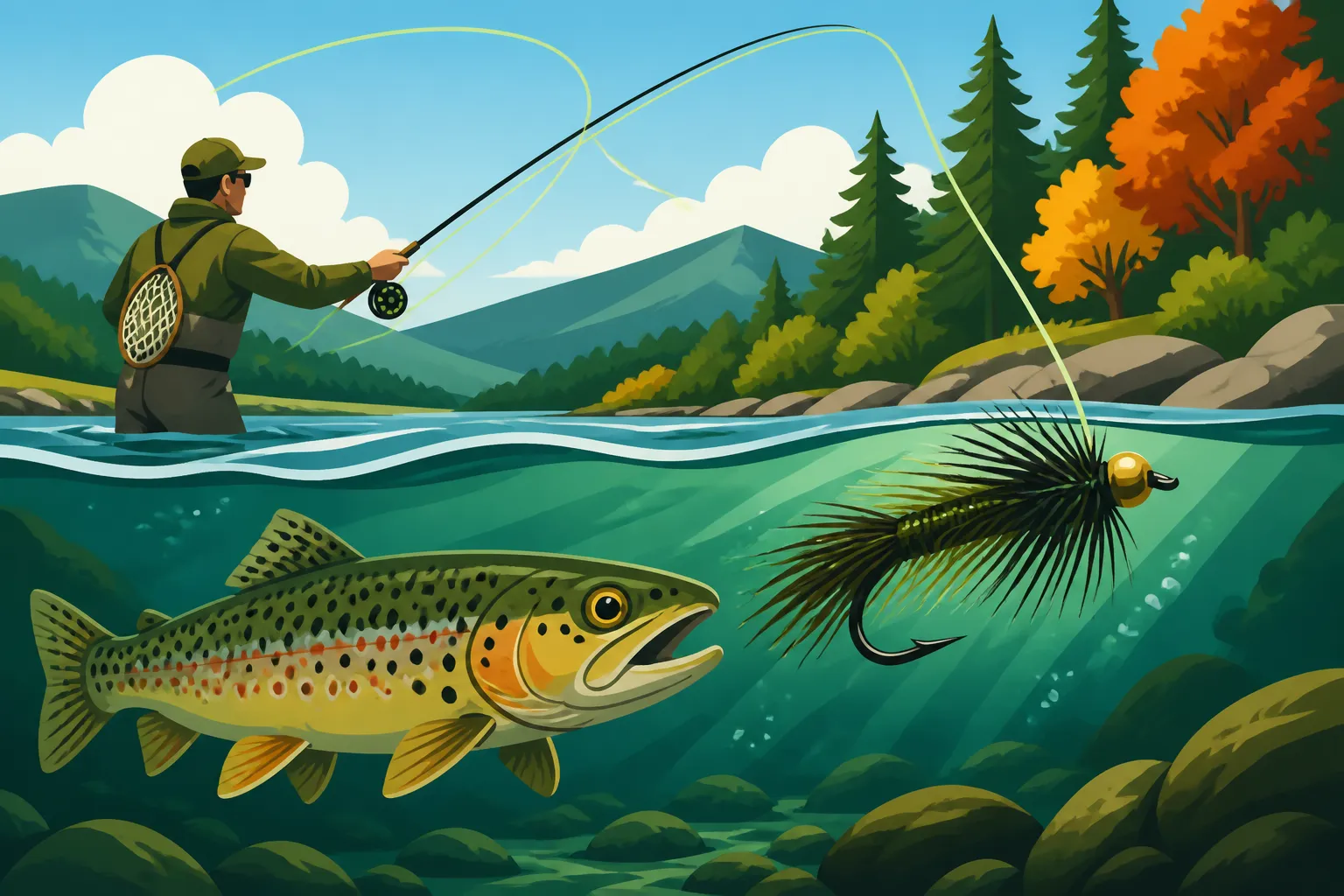
Let's break down what makes the Wooly Bugger so special. At its core, it's a streamer pattern, designed to imitate larger food sources. It typically features a marabou tail, which breathes and pulses enticingly in the water, giving it incredible lifelike action. This tail is often paired with a chenille body, providing bulk and a tempting profile, sometimes ribbed with wire for durability and segmentation. Finally, a hackle collar wraps around the front, adding even more movement and creating a jigging action when stripped.
Think about it: that marabou tail flaring and contracting, the chenille body pushing water, the hackle collar shimmering – it’s a symphony of motion and texture that screams "easy meal" to a trout. This isn't some delicate, subtle offering; it's a bold, confident presentation that appeals to the predatory side of these fish. You can find these patterns readily available at local fly shops or through online retailers like Amazon, making it easy to stock your fly box.
What it Imitates (and Why Trout Love It)
One of the Wooly Bugger's greatest strengths is its incredible versatility. It doesn't just look like one specific thing; it looks like many things, all of which are on a trout's menu.
- Sculpins: These small, bottom-dwelling fish are a primary food source for larger trout, especially browns and brook trout. A darker, olive or black Wooly Bugger, fished along the bottom, can be a perfect imitation.
- Leeches: Many trout, particularly in stillwaters or slower river sections, will readily consume leeches. A black or dark brown Wooly Bugger with a slow, undulating retrieve perfectly mimics a leech's movement.
- Crayfish: In waters where crayfish are present, particularly rocky riverbeds and lake bottoms, a brown or olive Wooly Bugger can pass for a small crayfish scuttling along. The jigging motion imparted by the hackle can even simulate a crayfish escaping.
- Large Nymphs & Larvae: Sometimes, a bigger, darker nymph like a stonefly nymph is what trout are keying in on. A smaller, heavily weighted Wooly Bugger can fill this role, especially when dead-drifted.
- Baitfish: In lakes and larger rivers, trout are opportunistic predators of various small baitfish. White or gray Wooly Buggers, or those with a bit of flash, can represent these forage fish, making them effective for species like landlocked salmon and lake trout.
Trout are naturally opportunistic. They're constantly on the lookout for a calorie-rich meal that doesn't require too much effort. The Wooly Bugger, with its lifelike motion and suggestive profile, triggers these primal instincts, often eliciting aggressive strikes even when fish aren't actively feeding on smaller insects. This is why it's a go-to choice for many anglers targeting trout in Vermont.
Essential Gear for Wooly Bugger Success
Before you even think about casting, it’s important to have the right tools for the job. While the Wooly Bugger itself is adaptable, your rod, reel, and line setup can significantly impact how effectively you present this fly and how well you fight a hooked fish. Don't worry, you don't need a high-end setup to get started, but understanding the basics will certainly help.
Rod, Reel, and Line Selection
Choosing the right fly fishing gear is crucial for enjoying your time on the water and successfully landing fish. When it comes to fishing Wooly Buggers for trout in Vermont, you'll want a setup that offers a good balance of casting power and finesse.
- Rods: For most trout fishing scenarios in Vermont, a 4-weight to 6-weight fly rod is generally ideal.
- A 4-weight rod is excellent for smaller streams, delicate presentations, and average-sized trout. It offers more finesse and makes even a modest brook trout feel like a trophy. However, it can struggle with larger, heavier Wooly Buggers or in windy conditions.
- A 5-weight rod is often considered the most versatile "all-around" trout rod. It handles most sizes of Wooly Buggers well, can cast a decent distance, and has enough backbone to fight larger trout while still providing a good fight for smaller ones. If you're looking for one rod to do it all, a 5-weight is a solid choice.
- A 6-weight rod comes into its own when you're targeting bigger trout, fishing larger rivers like the Winooski River, or casting bigger, weighted Wooly Buggers. It offers more power for punching through wind and can handle larger fish with greater ease, making it a good option if you’re specifically hunting for trophy brown trout.
- If you plan on chasing bigger species, perhaps even smallmouth bass on Lake Champlain or targeting large lake trout with hefty streamers, a 7-weight rod might be appropriate, but it would be overkill for most stream trout.
- Reels: Your fly reel primarily holds your line and provides drag to help fight fish. For the rod weights mentioned, a matching size reel (e.g., a 5/6 weight reel for a 5-weight rod) is usually sufficient. Look for a reel with a smooth, reliable drag system, as this will be critical when a feisty trout decides to run.
- Lines: This is where things get a bit more interesting for Wooly Buggers.
- Floating Line: A standard weight-forward floating line is versatile and works well for lighter, unweighted Wooly Buggers, or when you want to dead-drift them like nymphs. It's also great for fishing shallower water or when you want to control the depth with retrieve speed.
- Sink-Tip Line: This is often the preferred choice for fishing Wooly Buggers, especially in rivers. A sink-tip line has a floating running line, but the front section (usually 10-15 feet) sinks at a specific rate. This allows your fly to get down to the fish quickly without pulling your entire line under, making it easier to mend and control. Different sink rates (e.g., Type III, Type IV) allow you to target various depths.
- Full Sinking Line: For deep lakes or very fast, deep river sections where you need to get your fly down quickly and keep it there, a full sinking line can be effective. However, these are harder to cast and retrieve, making them less versatile for general trout fishing. Many anglers opt for a sink-tip instead.
Leaders and Tippet
The leader and tippet are the invisible connection between your fly line and your fly, and they're more important than many anglers realize. They need to be strong enough to handle a fish but fine enough to present the fly naturally.
- Leader Length: For Wooly Buggers, especially when casting with a floating or sink-tip line, a shorter leader is often more manageable than the long leaders used for delicate dry fly presentations. A leader ranging from 6 to 9 feet is a good starting point. If you're using a full sinking line, you might even go shorter, down to 3-5 feet, to ensure your fly gets to the target depth quickly.
- Leader Material:
- Monofilament (Mono) Leaders: These are common and affordable. They're generally good for floating lines and for fishing closer to the surface.
- Fluorocarbon Leaders: Fluorocarbon is less visible underwater due to its refractive index being similar to water, and it sinks faster than monofilament. This makes it an excellent choice for fishing Wooly Buggers, especially when you want the fly to sink and stay down. It's also more abrasion-resistant, which is a bonus when fishing around rocky bottoms or submerged timber.
- Tippet Size: Your tippet is the final, thinnest section of your leader, directly tied to the fly. For Wooly Buggers, you'll want a tippet that matches the size of your fly and the size of the fish you're targeting.
- For smaller Wooly Buggers (sizes #8-#12) and average stream trout, 3X or 4X tippet is usually appropriate.
- For larger Wooly Buggers (sizes #4-#6) and when targeting bigger fish or fishing in heavier current, 0X, 1X, or 2X tippet provides more strength. Remember, a heavier tippet gives you more control and a better chance of landing that trophy fish without breaking off.
It's always a good idea to carry extra spools of tippet in various sizes (e.g., 2X, 3X, 4X) so you can adapt to different conditions and fly sizes on the fly. You might even find some good multi-packs on Amazon to keep your vest stocked.
Techniques for Fishing a Wooly Bugger in Vermont Waters
Now that you've got the gear sorted, let's talk about how to actually fish this fantastic fly. The beauty of the Wooly Bugger lies not just in its looks but in the myriad ways you can present it. There's no single "right" way, and successful anglers are often those who experiment until they find what the fish want on a given day. Whether you're targeting brook trout in a small mountain stream or big browns in a powerful river, these techniques will serve you well.
Stripping the Bugger
This is perhaps the most iconic way to fish a Wooly Bugger, imitating a fleeing baitfish, sculpin, or a swimming leech. The key here is imparting action with your retrieve.
- The Retrieve: Cast your Wooly Bugger across or slightly downstream. Let it sink to your desired depth – often near the bottom in rivers or along drop-offs in lakes. Then, begin your retrieve by stripping the line in with your non-casting hand. The length and speed of your strips will dictate the fly's action.
- Short, Erratic Strips: Imagine a crayfish scuttling or a wounded baitfish. Short, quick strips (say, 6-12 inches) followed by a brief pause can be incredibly effective, especially in cooler water or when fish are lethargic. This gives the marabou tail a chance to pulse and settle, mimicking natural movement.
- Long, Steady Strips: This retrieve is great for imitating a swimming leech or a baitfish that's actively moving. Longer, smoother strips (1-2 feet) with fewer pauses can cover more water and provoke an aggressive chase. This often works well in warmer water when trout are more active.
- Strip-Pause-Strip: A highly effective retrieve that combines both. Strip a foot or two, pause for a second or two (allowing the fly to sink or "die"), then strip again. Strikes often occur on the pause as the fly appears vulnerable.
- Varying Depth: Use your line type (sink-tip is excellent here) and count-down method to control depth. Cast, count to 5, begin stripping. Next cast, count to 10. Find the zone where fish are holding.
- Strikes: When a trout hits a stripped Wooly Bugger, it's often a jarring, aggressive take. Don't lift your rod like you would with a dry fly. Instead, use a "strip strike" – firmly pull the line with your stripping hand while sweeping the rod to the side. This sets the hook effectively without pulling the fly directly out of the fish's mouth.
Dead-Drifting and Swinging
While stripping is popular, the Wooly Bugger is also incredibly effective when fished more passively, mimicking a natural drift or a swinging motion.
- Dead-Drifting (Nymphing with a Bugger): In many ways, you can fish a Wooly Bugger just like a heavy nymph. Cast upstream or quarter-upstream, mend your line to achieve a drag-free drift, and let the fly tumble naturally with the current. This is particularly deadly in runs, riffles, and seams where trout often hold, waiting for food to be delivered to them. A small strike indicator placed a few feet above your leader can help detect subtle takes, much like when you're Euro Nymphing Vermont Trout Streams. The weight of the fly itself, or added split shot, will get it down to the bottom. This technique is fantastic for imitating large stonefly nymphs or a dislodged crayfish.
- Swinging: This technique is a hybrid, combining aspects of a dead drift and an active retrieve. Cast across or slightly downstream, let the fly sink and begin its drift. As the current catches the line, the fly will "swing" across the river, presenting a broadside profile to holding fish. As it reaches the end of its swing, it will often rise slightly, which can trigger aggressive strikes.
- The "Leisenring Lift": This advanced swing technique involves a subtle lift of the rod tip at the end of the swing, causing the fly to rise enticingly. This upward motion often imitates an insect or baitfish trying to escape, and it can be incredibly effective.
- Holding the Swing: Sometimes, letting the fly hang and pulse in the current at the end of the swing, rather than retrieving it immediately, can provoke a take. This is particularly useful in deeper pools or at the tailout of a run.
Fishing Different Water Types
The versatility of the Wooly Bugger shines across all kinds of Vermont waters, from small brooks to vast lakes.
- Rivers and Streams:
- Pools: Cast into the deeper sections, let the fly sink, and then either strip it slowly or dead-drift it through the holding lies. Pay attention to structure like submerged logs or large rocks.
- Runs: Fish runs by casting upstream and dead-drifting, or by casting across and swinging the fly through the current. Trout will often sit along current seams or behind structure.
- Riffles: Don't overlook the turbulent, oxygenated water of riffles. Smaller, weighted Wooly Buggers dead-drifted here can imitate dislodged nymphs.
- Undercut Banks and Log Jams: These are prime holding spots for larger trout. Cast your Wooly Bugger tight to these areas and work it slowly, especially with short, erratic strips or by letting it swing into the structure. This is where many a trophy brown trout has been fooled.
- Lakes and Ponds:
- Shorelines and Drop-offs: Trout, especially in lakes, cruise shorelines looking for food. Cast parallel to the shore or target areas where the bottom drops off sharply. Strip the fly back at varying speeds.
- Structure: Submerged humps, weed lines, rock piles, and points are all excellent places to fish a Wooly Bugger. Use your fish finder if you have one, or simply target visible structure.
- Dams and Inlets: These areas often concentrate baitfish and current, making them hotspots for trout. Fish these zones thoroughly with both stripping and swinging techniques. For Lake Champlain Fishing Guide specifics, Wooly Buggers are excellent for smallmouth bass and even some lake trout presentations.
- Pond Fishing: Many of Vermont's small, stocked ponds offer excellent opportunities for Wooly Buggers. Cast to the center, let it sink, and retrieve slowly. Experiment with colors like black, olive, or even white, which can mimic minnows.
Remember that trout are masters of their environment. Think about where they'd naturally hold and what kind of food would be present. The Wooly Bugger is effective because it covers so many bases.
Common Mistakes and How to Avoid Them
Even with a fly as forgiving as the Wooly Bugger, there are common pitfalls that can reduce your success. Avoiding these mistakes can significantly increase your hook-up rate and your overall enjoyment on the water. It’s all about understanding trout behavior and adapting your approach.
Not Varying Your Retrieve
This is probably the single biggest mistake anglers make with Wooly Buggers. We tend to fall into a rhythm, especially when we're not catching fish, and just repeat the same retrieve over and over. But trout are finicky creatures; what worked yesterday, or even an hour ago, might not work now.
- The Problem: You cast, strip, strip, strip, retrieve. Cast, strip, strip, strip, retrieve. No fish. You assume the fish aren't there or aren't biting.
- The Solution: Think of your retrieve as a conversation with the fish. Experiment! Start with short strips, then try long ones. Add pauses, then eliminate them. Vary the speed dramatically. Try twitching the rod tip to impart subtle movement between strips. One day, a slow, methodical retrieve might be deadly, while the next, an aggressive, erratic "rip and stop" might be what triggers a bite.
- Real-life scenario: I remember a tough day on the Battenkill River, fishing for browns. I was stripping an olive Wooly Bugger with moderate speed, getting nothing. On a whim, I tried a much slower, almost imperceptible strip, letting the fly practically dead-drift between very short pulls. Suddenly, it was like flipping a switch – I started getting solid takes. The fish were there, but they wanted a lethargic meal, not an escaping one. It all boiled down to varying that retrieve.
Fishing Too Fast or Too Slow
Related to varying your retrieve, but specific to the speed, is the mistake of not matching your retrieve speed to the conditions. The optimal speed for your Wooly Bugger often depends on water temperature, current, and the trout's mood.
- The Problem: You’re in cold, early spring waters, stripping your bugger like a panicked minnow, or it’s the height of summer, and you’re barely moving your fly.
- The Solution:
- Cold Water (Early Spring, Late Fall, Winter Ice-Out): Trout are often lethargic in cold water. Their metabolism slows down, and they're less likely to chase. A very slow, deliberate retrieve, with longer pauses, is often more effective. Think of a dying baitfish or a slow-moving leech. You want to present an easy meal. This is also a good time to consider dead-drifting techniques for a more natural presentation. Check out Spring Trout Fishing Techniques for Vermont Streams for more tips.
- Warm Water (Summer): When water temperatures are higher and trout are more active, they might be willing to chase. This is when faster, more aggressive retrieves with fewer pauses can be highly productive. A fish looking for a fleeing baitfish will key into that rapid movement.
- Current: In fast currents, you might need a faster strip to keep the fly moving naturally and prevent it from simply being swept downstream. In slow water or still lakes, you have more control to vary speeds.
- Real-life scenario: I was once fishing a deep pool in the White River during a summer heatwave. My usual slow retrieve wasn't working. I switched to a very fast, almost violent strip with an olive Wooly Bugger, and suddenly a large brown trout hammered it. The fish were active, and they wanted something that looked like it was trying to escape rapidly.
Choosing the Wrong Color or Size
Just like with dry flies or nymphs, color and size can make a huge difference, especially in pressured waters or when trout are keying in on specific forage.
- The Problem: You always fish a black Wooly Bugger, no matter the conditions, or you're using a huge #4 when the fish are focused on smaller prey.
- The Solution: Have a variety of colors and sizes in your fly box.
- Colors:
- Black: A universal producer. Excellent for leeches, dark sculpins, and even general baitfish. Great in stained water or low light conditions.
- Olive: Another staple. Mimics sculpins, crayfish, and various other aquatic organisms. Often a good choice in clear water.
- Brown: Mimics crayfish, sculpins, and some large nymphs.
- White/Gray: Excellent for imitating baitfish like minnows or smelt, especially in lakes or larger river systems. Can be deadly on landlocked salmon or lake trout.
- Chartreuse/Bright Colors: While not always natural, sometimes a bright color can act as an "attractor," especially in off-color water or when fish are aggressive. Some anglers swear by chartreuse or "sex dungeon" type buggers.
- Sizes:
- #10-#12: Good for smaller streams, or when trout are wary and looking for smaller food items.
- #6-#8: The "standard" workhorse sizes, covering most trout fishing situations.
- #2-#4: For larger trout, bigger rivers, or when imitating substantial baitfish/crayfish.
- Matching the Hatch (or Forage): Observe your surroundings. Are there crayfish under rocks? Small minnows darting around? What's the water clarity? Match your Wooly Bugger to what you think the trout are eating. In clear water, more natural colors are usually better. In stained water, darker or brighter patterns can provide better contrast.
- Real-life scenario: I was fishing a clear, spring-fed pond in the Northeast Kingdom known for its healthy brook trout population. I started with a black Wooly Bugger, which usually worked like a charm. No bites. I switched to a smaller, olive Wooly Bugger with a bit of flash, and immediately started catching fish. The pond had small olive-colored nymphs and minnows, and the subtle flash caught their eye in the clear water, proving that sometimes, even a slight adjustment in color and size can make all the difference.
- Colors:
Pro Tips for Maximizing Your Wooly Bugger Catch Rate
You've got the basics down, you're avoiding common mistakes, and now you want to elevate your game. These pro tips are about fine-tuning your approach, adding subtle enhancements, and thinking strategically about your presentation to really unlock the full potential of the Wooly Bugger.
Adding Weight and Indicators
Sometimes, the fly itself isn't enough to get to where the fish are, or you need a little help detecting those subtle takes.
- Split Shot: If your Wooly Bugger isn't getting deep enough, even with a sink-tip line, don't hesitate to add a small amount of split shot. Pinch one or two small lead or tungsten weights onto your leader, about 12-18 inches above the fly. This gets your fly into the strike zone faster and keeps it there longer. Be mindful that too much weight can impede the fly's natural action. Experiment with different amounts. For specific strategies on How to fish a run and pool trout stream, split shot can be indispensable for getting your bugger to the bottom of deep pools.
- Weighted Flies: Many Wooly Buggers come with a bead head (brass or tungsten) or lead wire wrapped under the chenille body. These flies sink faster and offer a jigging action. Tungsten beads are smaller and heavier than brass, making them excellent for getting down without adding too much bulk to the fly.
- Strike Indicators: While often associated with nymphing, a small, subtle strike indicator can be useful when dead-drifting a Wooly Bugger, especially if it's lightly weighted or if you're fishing in turbulent water where takes are hard to see. It helps you monitor your drift and detect those gentle tugs that signify a fish has picked up your fly. Just remember, a large, brightly colored indicator might spook wary trout, so opt for smaller, more muted options if possible.
Enhancing Your Bugger
The standard Wooly Bugger is fantastic, but a few simple modifications can sometimes make it even more enticing.
- Flash: Many Wooly Buggers are tied with a few strands of Krystal Flash or similar flashy material incorporated into the marabou tail. This adds a bit of sparkle, mimicking the scales of a baitfish or the shimmer of a struggling insect. If your favorite bugger is lacking flash, you can carefully tie in a few strands yourself or choose patterns specifically designed with it. Just don't overdo it – a subtle glimmer is often more effective than a disco ball.
- Scent: Trout, especially brown trout, have a keen sense of smell. Applying a fish attractant scent to your Wooly Bugger, particularly those made for trout or for imitating crayfish or baitfish, can sometimes tip the odds in your favor. Brands like Pro-Cure or Mike's Salmon Eggs (used as an attractant gel) offer various options. Just apply a small dab to the chenille body or marabou tail. This can be especially effective in murky water or when fish are less active.
- Rubber Legs: Some Wooly Bugger variations include rubber legs tied into the body or collar. These add even more movement and "life" to the fly, particularly when it's still or moving slowly. The subtle wiggling of the rubber legs can be irresistible to trout, making the fly appear more like a crayfish or a large insect. You can even buy pre-made rubber leg material on Amazon and tie them onto existing buggers.
Strategic Presentation
It's not just about the fly or the retrieve; it's about how you position yourself and present the fly to the fish. Reading the water and understanding where trout hold is paramount.
- Reading the Water: Look for prime trout lies:
- Current Seams: The transition zone between fast and slow water is a highway for food and a comfortable resting spot for trout.
- Undercut Banks: Overhanging banks provide shade, cover from predators, and a natural ambush point.
- Deep Pools: Especially at the head (where the current enters) and tail (where the current exits) of the pool.
- Structure: Submerged logs, large rocks, boulders, and weed beds all create current breaks and hiding spots.
- Confluences: Where two streams meet, or a tributary flows into a larger river, is often a hotspot.
- Familiarize yourself with Best Fly Fishing Rivers in Vermont and learn to identify these features.
- Casting Accuracy: The more accurately you can place your Wooly Bugger into a prime lie, the higher your chances of a strike. Practice casting to specific targets.
- Fish Upstream, Across, and Downstream: Don't limit yourself to one casting angle.
- Upstream: Good for dead-drifting, especially in shallower water, as you drift the fly towards the fish before your line crosses over them.
- Across-Stream: Excellent for swinging the fly through a run or stripping it across a lake flat.
- Downstream: Can be surprisingly effective in some situations, especially for working the fly into deep pockets or under cover. Cast downstream, let the fly sink, and then strip it back upstream or swing it.
- Vary Your Angles: Even if you're fishing a seemingly uniform section of water, try different casting angles. A fish that ignored your fly when it came from the left might smash it when it approaches from a different angle.
- Cover the Water Thoroughly: Don't just cast to the same spot repeatedly. Work a section of water methodically, making casts to different depths and angles before moving on. Think of it like a fan pattern, covering everything from close to far, and left to right. This is especially true for Trout Fishing in Vermont where fish can be anywhere.
By combining the natural appeal of the Wooly Bugger with smart gear choices, varied techniques, and strategic presentation, you'll be well on your way to becoming a formidable trout angler in Vermont. This fly is a true workhorse, and with a little practice and experimentation, it will undoubtedly earn its permanent spot in your fly box.
Wooly Bugger Quick Reference Guide
To help you quickly decide which Wooly Bugger to tie on, here's a handy table summarizing common colors, sizes, and their typical applications.
| Wooly Bugger Color | Common Sizes | Primary Imitation | Ideal Conditions/Situations |
|---|---|---|---|
| Black | #4 – #12 | Leeches, Sculpins, Dark Nymphs, Baitfish | All-around, stained/low light, deep water, post-rain runoff |
| Olive | #4 – #12 | Sculpins, Crayfish, Larvae, Frogs | Clear to slightly stained water, rocky bottoms, general use |
| Brown | #4 – #10 | Crayfish, Large Nymphs, Sculpins | Rocky rivers, lake bottoms, clear to moderate clarity |
| White/Gray | #4 – #8 | Baitfish (Minnows, Smelt, Dace) | Lakes, larger rivers, clear water, target landlocked salmon |
| Chartreuse | #6 – #10 | Attractor, bright/dirty water, aggressive fish | Turbid water, stillwater, after heavy rains, target active fish |
Disclaimer
This article is for general informational purposes only and does not constitute professional advice. Laws, prices and regulations vary by location and change over time. Consult a qualified professional for guidance on your specific situation.