Best wading staff for fast mountain streams
There's nothing quite like the rush of a Vermont mountain stream, the crisp air, the vibrant green landscape, and the promise of a wily trout. But let's be honest, those beautiful, wild waters can be incredibly challenging to navigate. Slippery, uneven rocks and deceptively strong currents are a recipe for an unexpected dunking. This guide will walk you through everything you need to know to choose the best wading staff, ensuring you stay upright and confident on your next angling adventure in Vermont's fast-moving waters.
Why a Wading Staff is Non-Negotiable for Vermont's Mountain Streams
Many a seasoned angler, myself included, has learned the hard way that even a seemingly gentle riffle can hide treacherous footing. Vermont's freestone rivers and mountain brooks are stunning, but they demand respect – and a reliable wading staff is your best friend for maintaining that respect and your balance.
The Hidden Dangers of Fast Current and Rocky Beds
You're out there, focused on that perfect drift or searching for a rising fish, and your eyes are glued to the water's surface. That's precisely when the hidden dangers beneath can catch you off guard. Vermont's mountain streams, from the renowned Battenkill to lesser-known brook trout haunts, are characterized by their varied and often unforgiving bottoms. You might step from stable gravel onto a slick, algae-covered boulder, or into a deep pocket you didn't anticipate. The water itself, even if it only comes up to your knees, can exert immense pressure, especially when it's moving quickly. This combination of slick surfaces, uneven depths, and strong currents can easily sweep you off your feet, turning a peaceful outing into a scramble for safety.
Consider a scenario: you're wading across a swift section of the White River, carefully picking your way from rock to rock. Suddenly, one foot lands on a mossy, basketball-sized stone that rolls under your weight. Without a third point of contact to brace yourself, your chances of recovery are slim. Not only can a fall be embarrassing, but it can lead to injury, damage to your gear, or even worse, being carried downstream into more dangerous territory. These aren't just hypothetical tales; they're common experiences for those who underestimate the power of these beautiful, wild waterways.
Enhancing Stability and Confidence in Tricky Wading Situations
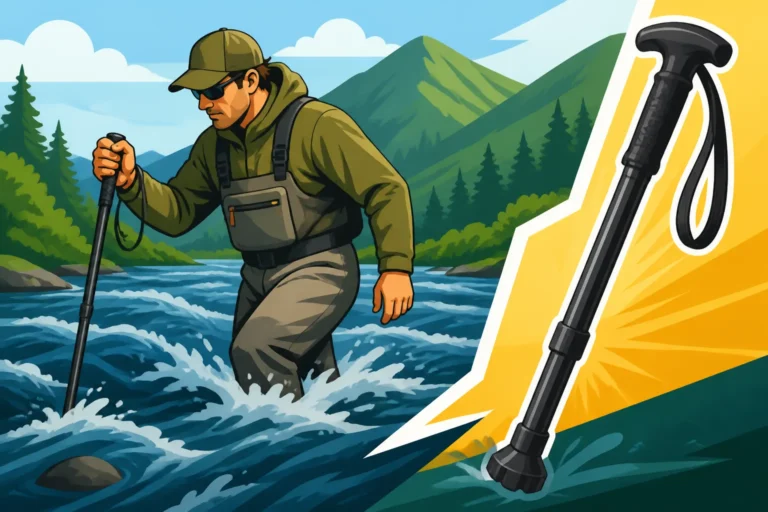
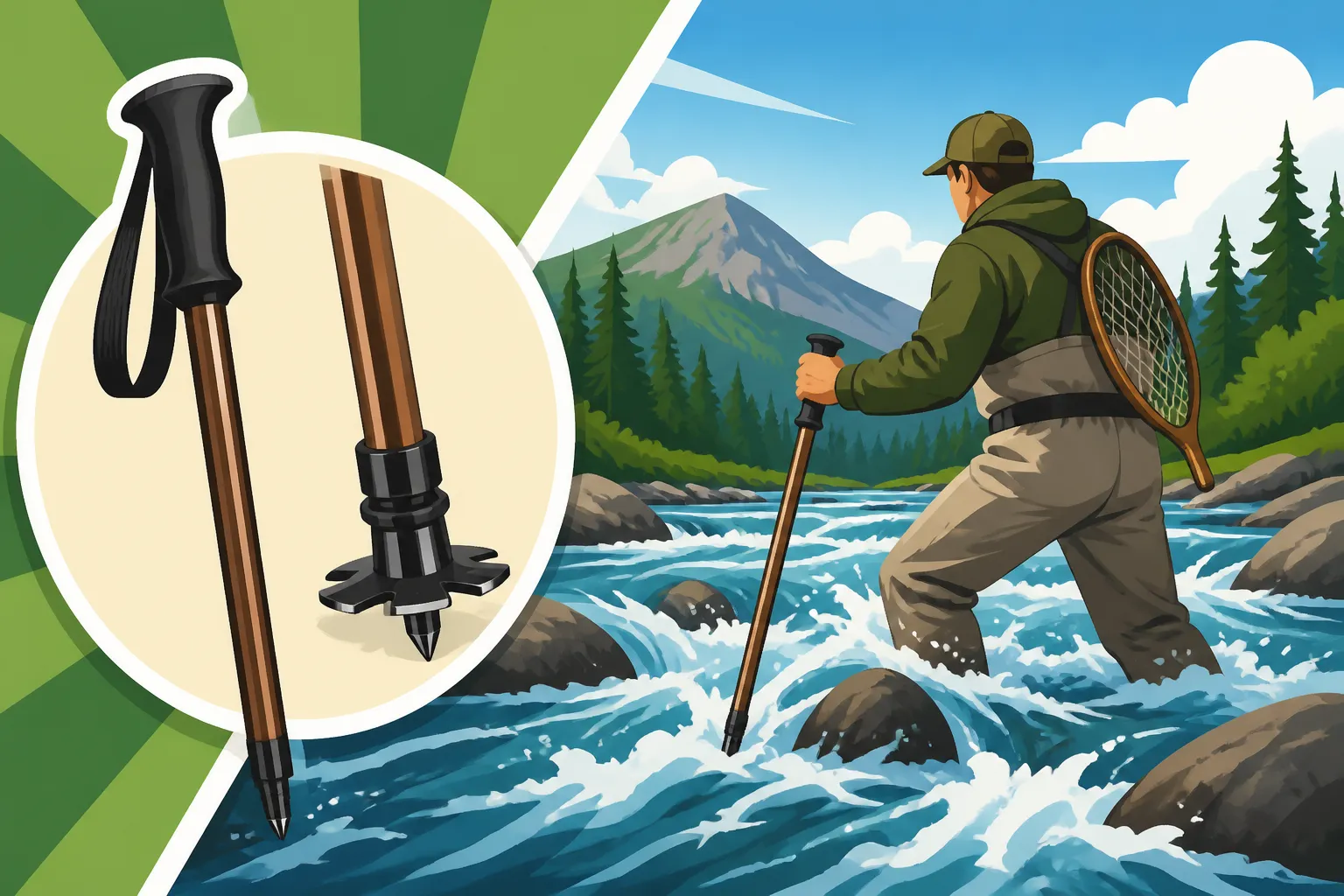
This is where a good wading staff earns its keep, acting as your indispensable third leg. The concept is simple but profoundly effective: by providing an additional point of contact with the stream bed, you significantly increase your stability. Before you commit your full weight to a step, you can use your staff to probe the depth of the water and test the firmness of the bottom. Is that dark spot a deep hole or just a shadow? Is that rock solid or wobbly? Your staff gives you the answers, allowing you to make an informed decision before shifting your weight.
Beyond the physical stability, a wading staff offers a tremendous psychological boost. Knowing you have that reliable support allows you to wade with greater confidence, focusing more on your fishing and less on the fear of slipping. This confidence translates into more deliberate, controlled movements, further reducing your risk of a fall. It also extends your reach, letting you safely navigate slightly deeper or faster sections of a stream that you might otherwise avoid, opening up new fishing opportunities. Whether you're navigating the slick bedrock of a tight gorge or carefully crossing a wide, swift run, a staff transforms hesitant steps into assured strides, letting you truly enjoy the peace and challenge of Fly Fishing for Trout in Vermont.
Key Features to Look for in a Quality Wading Staff
Not all wading staffs are created equal, and choosing the right one for Vermont's demanding waters means looking closely at a few critical features. You need something that's not just a stick but a purpose-built safety tool that can handle the abuse of rocky streams and frequent deployment.
Material and Durability: Aluminum vs. Carbon Fiber
When it comes to the core construction of your wading staff, you'll generally encounter two main materials: aluminum and carbon fiber. Each has its own set of advantages and considerations, especially for the rigorous conditions found in Vermont.
Aluminum staffs are known for their ruggedness and affordability. They can take a beating, often shrugging off impacts against rocks and drops onto hard surfaces. This makes them a popular choice for anglers who prioritize brute strength and aren't overly concerned with a few extra ounces of weight. However, aluminum can be susceptible to bending or denting under extreme stress, and while generally corrosion-resistant, prolonged exposure to water and neglect can lead to issues over time. For the angler who frequently abuses their gear or is on a tighter budget, a robust aluminum staff is a solid, dependable choice that you can find at most outdoor retailers like Bass Pro Shops.
Carbon fiber staffs, on the other hand, are the lightweight champions. They offer incredible strength-to-weight ratios, making them a joy to carry on long hikes to those remote, high-elevation trout streams in the Green Mountains. This lighter swing weight also reduces fatigue during extended wading sessions. While remarkably strong along their length, carbon fiber can be more brittle than aluminum when subjected to sharp, direct impacts or crushing forces. A carbon fiber staff might snap where an aluminum one would merely bend. They also tend to be more expensive. For serious backcountry anglers who prioritize minimal weight and don't mind investing a bit more, carbon fiber is an excellent choice, offering premium performance and reducing the burden on those arduous treks.
Foldability, Adjustability, and Grip Ergonomics
The practical design of a wading staff dictates its convenience and ease of use. A staff that's a hassle to deploy or uncomfortable to hold will quickly be left in the car, defeating its purpose.
Most modern wading staffs are designed to be collapsible, usually folding down into several shorter sections connected by an internal cord or elastic. This is an absolutely crucial feature for Vermont anglers, as many of the best fishing spots require a hike, sometimes through dense brush or over rugged terrain. A staff that folds neatly and compactly, securing with a Velcro strap or clip, can be tucked away into a backpack or strapped to a vest until needed. Look for mechanisms that allow for quick and easy deployment and collapse, as you'll be doing this often. The last thing you want is fumbling with your staff when you spot a rising fish or suddenly encounter tricky footing.
Adjustability in length is also vital. A good wading staff should be able to extend to a length that allows you to comfortably probe the streambed while standing upright, typically reaching to about your armpit or slightly higher. This ensures it's suitable for various water depths and for anglers of different heights. Smooth, reliable locking mechanisms that prevent accidental collapse are paramount. As for the grip, comfort is key. Look for handles made of cork, dense foam, or other ergonomic materials that offer a secure hold even when wet. A well-designed wrist lanyard is a non-negotiable safety feature, preventing you from losing your staff if you accidentally drop it in swift current. Many high-quality staffs sold on Amazon offer these thoughtful ergonomic designs, making them a pleasure to use all day.
Tip Design and Traction
The business end of your wading staff – the tip – is what makes direct contact with the stream bed, and its design profoundly impacts your stability. Vermont's rivers and streams feature a wide array of bottom compositions, from slick, rounded river rock to sharp, jagged shale, and sometimes soft mud or gravel.
The most common and effective tip material is carbide, a very hard metal that provides excellent grip on hard, slippery surfaces like mossy bedrock and smooth boulders. A carbide tip will dig in, preventing slippage where rubber might skate. Some staffs also come with a rubber tip cover, which can be useful when wading across very sensitive streambeds you don't want to damage, or for quieter wading on gravel. However, for maximum security on the typical challenging Vermont bottom, a carbide tip is usually preferred.
Another consideration is the size and shape of the tip. Some staffs feature a relatively narrow, pointed tip designed to penetrate gravel and soft bottoms, while others have a slightly wider, more aggressive profile for better purchase on solid rock. For most Vermont streams, a durable, aggressive carbide tip is your best bet for dependable traction. Over time, these tips can wear down, so ensure that replacement tips are readily available. The ability of your staff to consistently find purchase on the often-unpredictable streambloor directly translates to your safety and confidence while navigating demanding sections.
Types of Wading Staffs and Their Ideal Uses in Vermont
Just like there are different types of rods and reels for various fishing situations, wading staffs come in different forms, each suited to particular needs and environments found across Vermont. Understanding these distinctions can help you pick the perfect companion for your angling adventures.
Collapsible Folding Staffs: The Angler's Go-To
For the vast majority of anglers exploring Vermont's diverse waterways, the collapsible folding staff is the undeniable champion. These staffs are designed with portability and convenience in mind, typically breaking down into three or four short sections that are held together by an internal elastic cord, much like tent poles. When you're ready to use it, a flick of the wrist allows the sections to snap together, forming a rigid, full-length staff. When you're done wading or need to hike a distance, they fold back down just as easily, compact enough to stash in a vest pocket, a small backpack, or clip onto external gear loops.
This compact nature makes them ideal for anglers who frequently move between different spots, particularly those who enjoy exploring the more secluded sections of streams that require a bit of a hike. Imagine heading into the backcountry to fish for brook trout in a remote pond; a bulky, non-folding staff would be a hindrance. A collapsible staff, however, is barely noticeable until you need it. They offer an excellent balance of stability when deployed and discreet storage when not in use, making them perfect for covering a lot of ground, whether you're stalking trout on the Battenkill or exploring the upper reaches of the Lamoille River. Their quick deployment means you're never caught off guard when suddenly confronted with a tricky crossing.
Fixed-Length Staffs: Maximum Sturdiness for Extreme Conditions
While less common for the typical mobile trout angler, fixed-length staffs do have their place, particularly for those who prioritize absolute maximum sturdiness and don't require the portability of a collapsible model. These are essentially solid, non-folding poles, often made from wood, heavy-gauge aluminum, or even a sturdy ski pole conversion. Because they don't have multiple joints, they eliminate any potential points of weakness or flex that a collapsible staff might have.
Anglers who fish very large, deep, and fast-moving rivers, or who are less concerned with hiking long distances, might prefer a fixed-length staff. Think about a situation where you might be standing in chest-deep, powerful currents for extended periods, perhaps while targeting walleye on a rocky section of the Connecticut River. In such extreme conditions, the unwavering solidity of a fixed-length staff can provide an extra layer of confidence. However, their impracticality for carrying and storing means they are usually reserved for specific, demanding scenarios or for anglers who fish exclusively from a boat or from very accessible shorelines. They simply aren't suited for the "hike-in, wade-out" style of fishing common to many of Vermont's best trout streams.
Hybrid and Combination Staffs: Versatility for Varied Waters
The market has also seen the emergence of hybrid or combination staffs, which attempt to blend the best features of different designs or integrate additional functionalities. Some staffs might be primarily collapsible but feature a slightly thicker diameter or heavier-duty materials for enhanced rigidity. Others come with integrated tools or accessories, such as a built-in thermometer for checking water temperature (crucial for finding active fish!) or even a small, detachable measuring tape.
These versatile options can be a great choice for anglers who fish a wide variety of Vermont waters, from small, brushy brooks to larger, more open rivers like the Otter Creek. A hybrid staff might offer a slightly more robust feel than a typical ultra-light collapsible model, while still providing the convenience of packability. For example, a staff with a built-in camera mount could be appealing for those who like to document their catches without juggling extra gear. While they might come with a slightly higher price tag, the added utility can make them a worthwhile investment for those who value versatility in their equipment. It's all about finding the balance that suits your personal fishing style and the diverse environments you encounter in Vermont.
Using and Maintaining Your Wading Staff for Longevity
Having the best wading staff is only half the battle; knowing how to use it effectively and keep it in top shape ensures it will be a reliable companion for years to come. Proper technique and simple maintenance can make all the difference, especially when navigating the unpredictable waters of Vermont.
Proper Technique for Safe Wading
A wading staff isn't just a prop; it's a tool that, when used correctly, dramatically enhances your safety. The fundamental principle is to always maintain a "three points of contact" rule with the stream bed. This means at any given moment, you should have either two feet and the staff, or one foot and the staff, firmly planted before moving your remaining foot.
Here's how to apply it:
- Probe Before You Step: Before you lift your foot, use your staff to probe the area where you intend to place your foot. Feel for depth, current strength, and the firmness of the bottom. Don't commit until you're confident.
- Brace and Step: Once you've identified a safe spot, firmly plant your staff there. Use it to brace yourself as you lift one foot and place it next to the staff. Then, move your staff forward again to probe for your next step.
- Move Slowly and Deliberately: Rushing is the enemy of safe wading. Take small, controlled steps. Your staff should be slightly ahead and to the side of you, ready to take your weight.
- Wade Upstream or Across: When moving upstream, face the current, using the staff to brace against the flow. When crossing, angle slightly upstream (known as ferrying) to let the current help push you across, using your staff to maintain balance. Never turn your back to the current or cross directly downstream.
- Use a Wrist Lanyard: Always have the staff's lanyard securely around your wrist. If you stumble or drop the staff, it won't be swept away. This is critical for techniques described in Wading Techniques for Vermont Trout Streams.
By adhering to these simple techniques, your wading staff becomes an extension of your body, providing crucial support and information about the submerged world beneath your feet.
Care and Storage to Prevent Wear and Tear
Your wading staff works hard for you in often harsh conditions, so a little care goes a long way in ensuring its longevity. Neglecting maintenance can lead to sticky joints, corrosion, or a compromised tip, all of which diminish its reliability.
After every outing, especially if you've been in silty or sandy water, rinse your staff thoroughly with fresh water. Pay particular attention to the folding joints and the tip. This removes grit that can cause wear on internal mechanisms and prevents corrosion. Once rinsed, extend the staff fully and allow it to air dry completely before collapsing it for storage. Storing a damp staff can trap moisture and accelerate corrosion or mildew growth on grip materials.
Regularly inspect the tip for wear. Carbide tips, while durable, will eventually dull or wear down, especially if used on abrasive rock. Most quality staffs have replaceable tips, so keep a spare on hand. Check the elastic cord on collapsible models for fraying or stretching, as this is crucial for the staff's integrity. If it shows signs of wear, consider replacing it. Store your staff in a cool, dry place, ideally in its protective sleeve if it came with one, to prevent unnecessary exposure to elements or accidental damage.
When to Consider a Replacement
Even with the best care, wading staffs don't last forever. Knowing when to replace yours is an important safety consideration. If you notice any of the following signs, it's probably time to invest in a new one:
- Compromised Structural Integrity: Cracks in aluminum or carbon fiber shafts, significant dents, or a bent section indicate a weakening of the staff's structure. A compromised staff might fail when you need it most.
- Persistent Joint Issues: If your collapsible staff constantly sticks, struggles to lock into place, or frequently collapses unexpectedly, the internal mechanisms or cord might be worn out beyond simple repair. This is a major safety hazard.
- Excessive Tip Wear: If the carbide tip is severely worn down and no longer provides reliable grip, and replacement tips aren't available or effective, the staff has lost its primary function.
- Damaged Grip or Lanyard: While often repairable, a severely degraded grip or a frayed, unreliable lanyard can lead to loss of the staff or an inability to use it effectively.
- Uncertainty and Lack of Confidence: Ultimately, if you no longer feel confident trusting your weight to your wading staff, it's time for a new one. Your safety on the river is paramount, and a reliable staff is a key part of that confidence.
Just as you'd replace worn Best Waders for Vermont Trout Streams or Best Wading Boots for Rocky Streams, your wading staff deserves similar scrutiny to ensure it remains a dependable tool for navigating Vermont's beautiful, yet challenging, fishing waters.
| Feature | Aluminum Staffs | Carbon Fiber Staffs | Fixed-Length Staffs |
|---|---|---|---|
| Material | Durable, affordable metal alloy | Lightweight, high strength-to-weight ratio | Varies (wood, heavy aluminum), very robust |
| Portability | Good (collapsible), slightly heavier | Excellent (collapsible), extremely lightweight | Poor (non-collapsible), bulky for transport |
| Durability | Very strong, resistant to bending/dents | Strong along length, more susceptible to sharp impacts | Maximum rigidity, no folding points to fail |
| Tip Type | Typically carbide, often replaceable | Typically carbide, often replaceable | Varies, often carbide or reinforced steel |
| Adjustability | Common for collapsible models | Common for collapsible models | Generally non-adjustable |
| Best Use Case | General-purpose, rugged use, budget-friendly | Backcountry hiking, extended wading, weight-conscious | Extreme currents, minimal transport needs |
| Vermont Suitability | Excellent for most stream fishing scenarios | Excellent for remote high-elevation or long hikes | Niche use for specific large, deep rivers/locations |
In the end, a wading staff isn't just another piece of gear to accessorize your fishing kit; it's a fundamental safety tool that empowers you to explore more, wade with greater confidence, and ultimately enjoy your time on Vermont's breathtaking mountain streams more fully. Don't underestimate the power of these waters, and don't venture into them without the reliable support of a well-chosen and well-maintained wading staff. It's an investment in your safety and your angling enjoyment, ensuring that your focus stays on the fish, not on keeping your feet.
Disclaimer
This article is for general informational purposes only and does not constitute professional advice. Laws, prices and regulations vary by location and change over time. Consult a qualified professional for guidance on your specific situation.