Best months to catch smallmouth bass in Vermont
Trying to figure out the absolute best time to hit the water in Vermont for smallmouth bass can feel like cracking a secret code. You might spend hours casting in a spot that was hot last week, only to find it completely dead this week, leaving you wondering if you missed the memo. This guide is here to unravel those seasonal mysteries, detailing the prime months and conditions when Vermont's smallmouth bass are most active and willing to bite, helping you maximize your time on the water.
The Spring Awakening: Pre-Spawn and Spawning Frenzy
Spring in Vermont is a magical time, not just for the foliage emerging but for the awakening of smallmouth bass. After a long, cold winter under the ice, these feisty fish are hungry and starting to think about reproduction. Knowing their movements during this critical period is key to a successful outing.
Early Spring Pre-Spawn Preparations
As soon as the ice melts and water temperatures begin to climb, typically from late April into May, smallmouth bass start to stir. They're still a bit lethargic but are moving towards shallower areas where they can find food and warmer water. This is a crucial feeding period before they commit fully to spawning, and they're often grouped up, making them a prime target.
You'll want to focus on rocky points, transition areas where hard bottom meets softer bottom, and the mouths of tributaries flowing into larger lakes like Lake Champlain or Lake Bomoseen. These areas warm up faster and attract baitfish. The smallmouth will be gorging themselves on anything they can find, trying to pack on calories. Look for water temperatures ranging from the high 40s to low 50s Fahrenheit. Don't be afraid to fish slowly during this time; a slow retrieve with a suspending jerkbait or a jig can be incredibly effective. Sometimes, they're just waiting for an easy meal to swim by. Stocking up on a variety of suspending jerkbaits in natural baitfish colors from reliable retailers like Amazon can be a game-changer for this early spring period.
The Peak of the Spawn: May and Early June Action
The true smallmouth bass frenzy typically kicks into high gear from late May through mid-June, depending on water temperatures. When the water hits the mid-50s to low 60s, smallmouth move onto their spawning beds. These beds are usually located on hard bottom, like gravel or small rocks, in relatively shallow water (2-10 feet deep) in protected bays or shorelines. Think about the countless rocky coves and shoals you find on Lake Champlain, or the shallower portions of Lake Memphremagog.
During this time, male smallmouth will aggressively guard their nests, making them highly susceptible to a well-placed lure. Sight fishing can be incredibly productive if you have clear water and polarized sunglasses. Cast a tube jig, a creature bait, or a finesse worm near a visible bed, and watch for the male to dart over and grab it. However, ethical considerations are important here. Many anglers practice catch-and-release during the spawn to ensure a healthy population for future generations. While they are aggressive, removing a male from a bed can leave eggs vulnerable to predators, so consider releasing them quickly and carefully. If you're interested in Smallmouth Bass Habits on Lake Champlain, understanding their spawning patterns is crucial.
Summer's Bounty: Post-Spawn and Deepwater Tactics
As the heat of summer arrives, smallmouth bass transition from their shallow spawning grounds to deeper, cooler waters. This period, from late June through August, offers fantastic fishing, but it requires a different approach than the spring bite.
Post-Spawn Recovery and Feeding
After the rigors of spawning, smallmouth bass enter a recovery phase. Initially, they might be a bit lethargic and dispersed. However, as they regain their strength, they become incredibly active feeders, often forming schools. This post-spawn period, usually late June into early July, sees them patrolling adjacent deeper areas, structure, and weed lines just off their spawning flats.
They’ll be looking for easy meals, but they’ll also be more willing to chase. Topwater lures, like poppers and walk-the-dog baits, can be dynamite during low-light conditions (dawn and dusk) when smallmouth are venturing shallower to feed. During the day, moving baits like crankbaits and spinnerbaits worked over submerged rocks and points can be highly effective. The key is to find those transition zones where they can quickly access both shallow feeding grounds and deeper escape routes. For more specific insights on Best Bass Fishing Techniques for Lake Champlain, summer strategies often involve exploring these areas.
Mid-Summer Deepwater Dominance
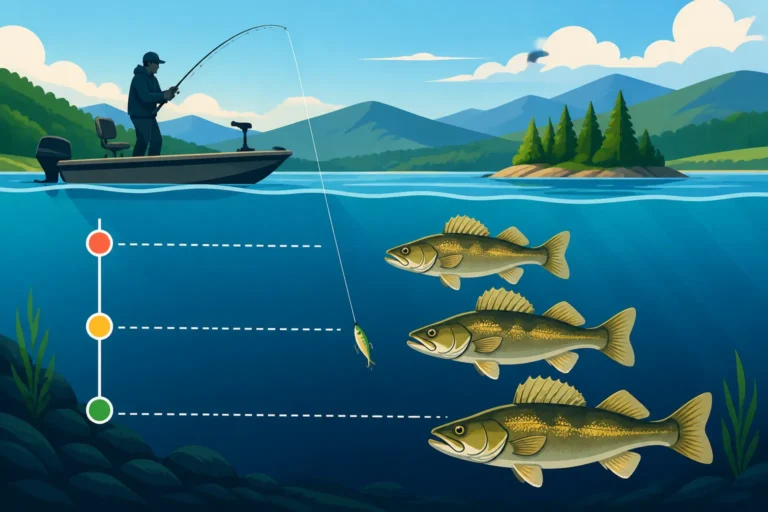
By mid-July and through August, when Vermont's lakes reach their warmest temperatures, smallmouth bass will largely retreat to deeper, cooler waters. This doesn't mean they're not catchable; it just means you have to adapt your strategy. They’ll congregate around deepwater structure: humps, rock piles, ledges, and drop-offs. On a vast lake like Lake Champlain, these spots can be miles from shore.
This is where electronics become your best friend. A good fish finder is invaluable for locating these subtle underwater features and the schools of baitfish (and bass) that relate to them. Vertical jigging with tubes, drop-shotting finesse worms, or slow-trolling deep-diving crankbaits are excellent techniques. Pay close attention to thermoclines – the layers of water where temperature changes drastically – as smallmouth often suspend just above or within these layers where oxygen levels are optimal. You can find an excellent selection of high-quality fish finders and deep-diving lures on Amazon to equip your boat for these summer pursuits. If you're pondering How to Catch Smallmouth Bass in Vermont Lakes, mastering deepwater tactics is essential for summer success.
Fall Feeding Frenzy: Packing on Pounds Before Winter
As the air cools and leaves begin to turn vibrant shades of red and gold, Vermont's smallmouth bass enter another incredible feeding period – the fall turnover. This season, from September through late October, is arguably one of the best times to catch trophy smallmouth.
September's Transitional Bite
September often brings a welcome cooling of water temperatures, signaling to smallmouth that winter is approaching. They become highly aggressive, trying to build up fat reserves. The fish, which might have been scattered in deep water during the peak of summer, will start to spread out more, often moving shallower during cooler days or low-light conditions, and retreating to slightly deeper breaks during bright, sunny days.
This transitional period offers a fantastic mixed bag of techniques. Topwater lures can still produce explosive strikes in the mornings and evenings, especially over rock shoals and shallow flats that still hold some warmth. Crankbaits, both medium and deep-diving, become incredibly effective as smallmouth chase schools of baitfish. Look for areas where baitfish are congregating, as the smallmouth won't be far behind. Often, points and humps that top out around 10-20 feet will hold active schools. If you're considering Best Fishing Lakes in Vermont for smallmouth, many of the larger, deeper lakes truly shine in the fall.
October's Last Hurrah: The Coldwater Crush
By October, water temperatures are consistently dropping into the 50s and even upper 40s. This is when the true "football" smallmouth, heavy with roe and fat, are often caught. The fish are less interested in chasing fast-moving baits and more focused on larger, slower-moving meals. They'll gravitate towards deeper structure, but unlike summer, they might be more concentrated and less suspended.
Jigging spoons, blade baits, and larger tube jigs fished slowly and deliberately on deep humps, ledges, and offshore reefs are excellent choices. Vertically jigging these baits right over the structure can trigger powerful strikes. The smallmouth won't expend much energy, so presenting the bait right in front of them is key. While the weather might be colder, the fishing can be exceptionally rewarding for patient anglers. The sheer size and fight of a fall smallmouth are unforgettable. Don't forget proper layering; waterproof and insulated fishing apparel, easily found on Amazon, will make those crisp fall days much more enjoyable.
Understanding Seasonal Patterns for Consistent Success
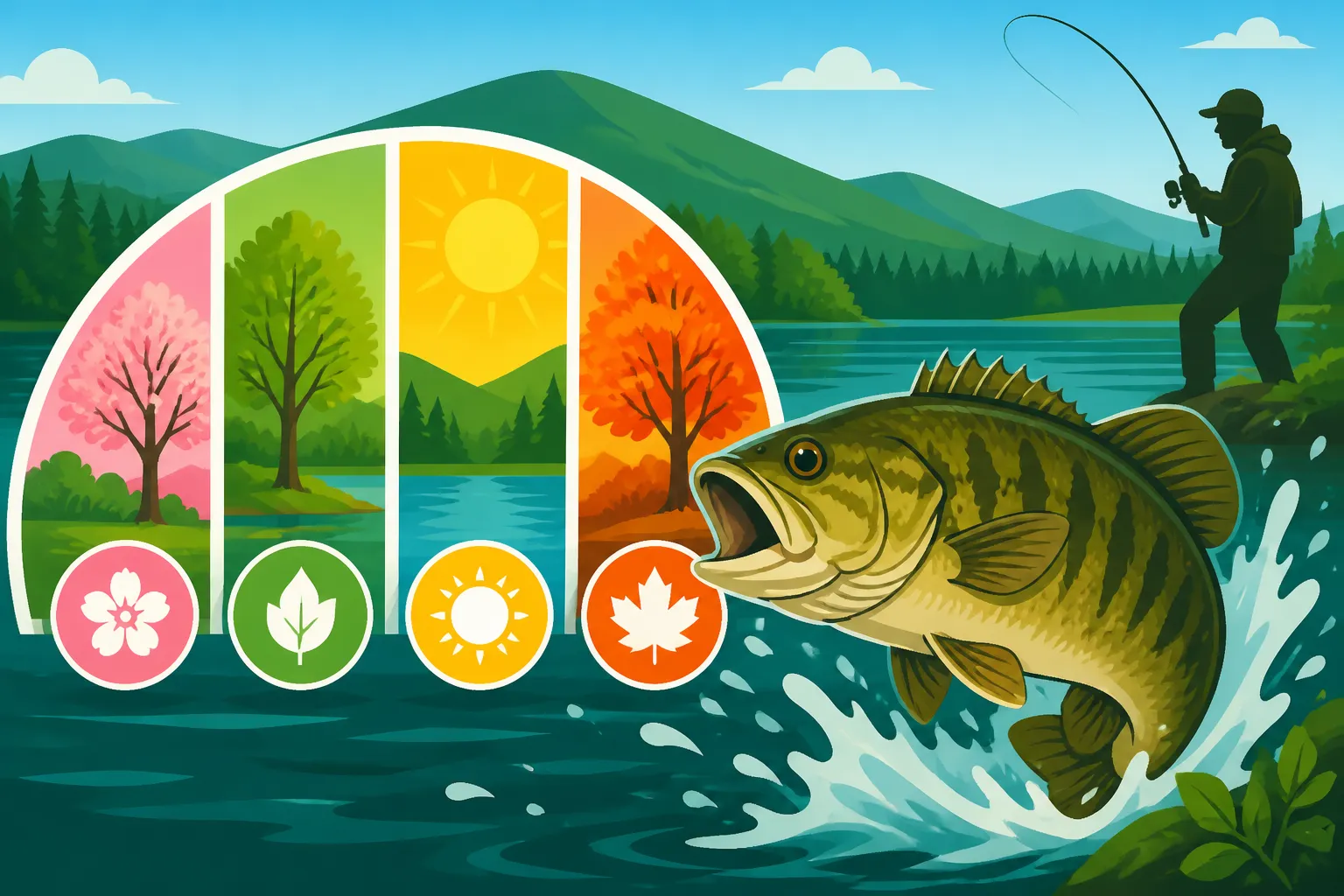
Smallmouth bass are creatures of habit, driven by water temperature, light conditions, and the availability of food. While the general timeline above holds true for much of Vermont, individual lakes and even specific areas within a lake can vary.
Water Temperature is Your Guide
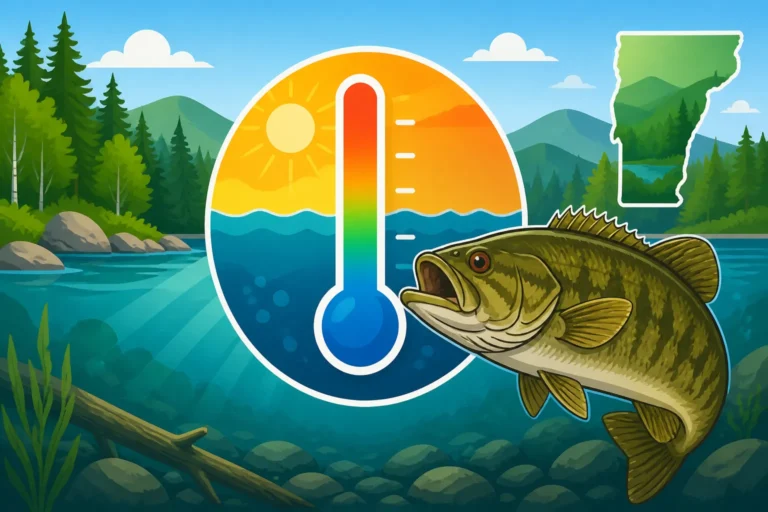
The single most important factor influencing smallmouth bass behavior is water temperature. They are cold-blooded and their metabolism directly correlates with the water around them.
Smallmouth Bass Seasonal Temperature Ranges:
| Season | Water Temperature Range | Typical Location | Key Behaviors |
|---|---|---|---|
| Early Spring | 45-55°F | Shallow flats, rocky points | Pre-spawn feeding, slow movements, schooling |
| Spawn | 55-62°F | Shallow gravel beds, coves | Aggressive nest guarding, paired up |
| Post-Spawn | 60-70°F | Adjacent deep breaks | Recovery, active feeding, forming schools |
| Mid-Summer | 68-75°F | Deep structure, thermocline | Retreat to cool water, suspend, relate to baitfish |
| Early Fall | 65-55°F | Points, humps, weed edges | Aggressive feeding, chasing baitfish |
| Late Fall | 55-45°F | Deep structure, main lake | Slow feeding, bulking up for winter, schooling |
Keeping an eye on water temperature through a boat's fish finder or a simple thermometer will give you a significant advantage in patterning fish. If you're planning a trip around the general Vermont Fishing Seasons by Month, remember that smallmouth movements are largely temperature-dependent.
The Impact of Weather and Fronts
Beyond just the seasonal changes, daily weather patterns can dramatically affect smallmouth bass fishing. Cold fronts, for instance, can shut down a bite quickly, making fish less active and driving them deeper. Conversely, stable weather with warming trends or overcast skies can often trigger aggressive feeding.
Always check the forecast before heading out. On days following a strong cold front, consider slowing down your presentation, using more finesse techniques, and focusing on deeper, more stable environments. During prolonged periods of stable, warm weather, smallmouth might be more willing to chase faster-moving baits or rise for topwater presentations. This understanding is key to making the most of your Best Time of Year to Fish in Vermont outings.
Navigating Different Water Bodies
Vermont offers a diverse range of fishing opportunities, from the expansive waters of Lake Champlain to smaller, more intimate lakes and even sections of the Connecticut River. The best months for smallmouth can subtly shift depending on the specific water body you're targeting.
On larger, deeper lakes like Lake Champlain, the thermal inertia means they warm up slower in the spring and cool down slower in the fall. This can extend the prime fishing windows slightly. For instance, Topwater Fishing for Smallmouth Bass in Vermont might last a bit longer into fall on Lake Champlain compared to a shallower pond. On smaller ponds or shallower sections of rivers, the water temperatures change more rapidly, meaning the peak bite might come earlier in spring and end sooner in fall. Always factor in the size and depth of your target fishery when planning your trip.
Essential Gear and Local Knowledge
Having the right gear and tapping into local knowledge can greatly enhance your smallmouth bass fishing success, regardless of the month.
Gearing Up for Vermont Smallmouth
A versatile medium-light to medium power spinning or casting rod, paired with a matching reel spooled with 8-12 lb fluorocarbon or braided line with a fluorocarbon leader, is a great all-around setup. For specific techniques, you might want specialized rods, such as a longer, softer rod for drop-shotting or a heavier power rod for throwing large crankbaits.
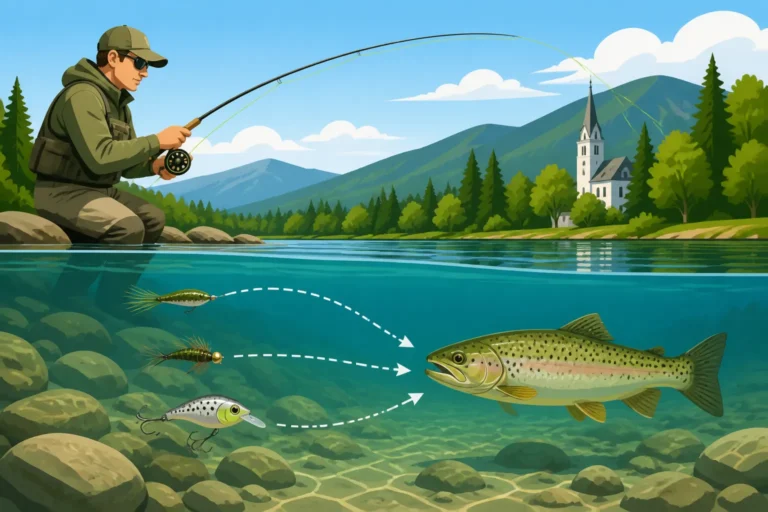
Your tackle box should reflect the seasonal changes. In spring and fall, suspending jerkbaits, jigs (tube, football, hair jigs), and finesse plastics are crucial. For summer, add deep-diving crankbaits, swimbaits, and topwater lures. Don't forget hooks, weights, and swivels. Many of these essential items, from a diverse range of lures to quality fishing line, can be conveniently purchased through Amazon. Considering Best Tackle for Vermont Smallmouth Bass involves understanding these seasonal variations.
Tapping into Local Expertise
One of the best ways to shorten the learning curve is to connect with local anglers. Visit local bait and tackle shops; they are a treasure trove of current information. Stores like 3rd Alarm Charters & Fishing Outfitters in South Burlington or the Vermont Field Sports in Middlebury often have passionate staff who can provide real-time updates on what's biting, where, and on what.
Online forums and local fishing groups can also be valuable resources for insights into Vermont Trout Opening Day Traditions and general fishing conditions. Respect local regulations, and always practice responsible angling. Share your successes and learn from others' experiences, and you'll find yourself enjoying Vermont's fantastic smallmouth bass fishery year-round.
Disclaimer
Please remember that fishing regulations, seasons, and licensing requirements can change. Always consult the latest Vermont Fish and Wildlife Department regulations before heading out on the water. This guide is for informational purposes only.