Best rig for bottom fishing for walleye
There’s nothing quite as frustrating as heading out to your favorite Vermont walleye spot, knowing those fish are down there, hugging the bottom, but feeling like your usual tactics just aren’t cutting it. You see them on the fish finder, maybe a nice school stacked up on a deep hump in Lake Champlain or lurking near a submerged rock pile in Lake Bomoseen, but getting them to commit to a bite can feel like cracking a secret code. This guide is all about demystifying bottom fishing for walleye, breaking down the most effective rigs and strategies to help you put more of these elusive, delicious fish in your cooler.
Understanding Walleye Behavior and Habitat in Vermont
Walleye are fascinating fish, known for their keen eyesight and preference for low-light conditions. But understanding why they often relate to the bottom, especially in Vermont's diverse waters, is the first step to choosing the right rig and strategy.
Why Walleye Go Deep
Walleye are highly light-sensitive, thanks to a reflective layer in their eyes called the tapetum lucidum. This gives them a significant advantage in dim light, but it also means they tend to seek refuge from bright sunlight.
- Light Sensitivity: During bright daylight hours, walleye will often retreat to deeper, darker waters or seek out shaded areas under cover. This explains why morning, evening, and overcast days are often prime times for walleye fishing, but it also tells us why they hug the bottom during the day when the sun is high. In a clear lake like Lake Champlain, this effect is even more pronounced.
- Water Temperature: Walleye are cool-water fish and have a preferred temperature range. During warmer months, especially in July and August, deeper water offers cooler, more comfortable temperatures, leading them to migrate away from shallower, warmer zones. They'll follow these temperature breaks, often finding their sweet spot close to the lakebed.
- Forage Fish Movement: Walleye are predators, and their movements are heavily dictated by where their food is. Many baitfish, like rainbow smelt (a key forage species in Vermont lakes), often suspend in deeper water or relate to the bottom. If the bait is deep, the walleye will be right there with them, looking for an easy meal. Understanding what walleye eat on Lake Champlain can give you a significant advantage in targeting them.
Identifying Bottom Structure and Cover
Just because walleye are on the bottom doesn't mean they're scattered everywhere. They're looking for specific features that offer ambush points, shelter, or access to food. Identifying these structures is crucial.
- Humps and Drop-offs: These are classic walleye magnets. A hump rising from the lakebed acts like an underwater island, concentrating baitfish and providing walleye with elevated positions to ambush prey. Drop-offs, where the bottom contour dramatically changes, are essentially underwater highways that walleye use to move between shallow and deep water. These transitional zones are always worth exploring.
- Rock Piles and Ledges: Rocky bottom is prime walleye territory. Rocks provide cover for both the walleye and their prey, and they often hold invertebrates that attract baitfish. Ledges offer vertical structure, allowing walleye to suspend at various depths while still being close to the bottom. These areas can be especially productive on lakes like Lake Bomoseen or Lake Dunmore.
- Submerged Timber and Weed Lines: While less common for deep bottom fishing, in shallower areas, submerged trees or the edges of dense weed beds (especially deep weed lines) can hold walleye. These spots offer excellent cover and ambush points. Always be mindful of snags when fishing these areas, as the cover can be thick. Using a good fish finder for Vermont lakes can help you pinpoint these structures.
The Essential Bottom Fishing Rigs for Walleye
When walleye are glued to the bottom, you need a rig that can get your bait or lure right into their strike zone, present it naturally, and minimize snags. Here are the tried-and-true setups that Vermont anglers rely on.
The Classic Lindy Rig
The Lindy Rig is arguably one of the most famous and effective walleye rigs, beloved for its natural presentation. It's a fantastic choice when walleye are finicky, suspended just above the bottom, or when drifting slowly.
- Components: A traditional Lindy Rig consists of a walking sinker (named because its shape allows it to "walk" over snags without getting hung up as easily), followed by a small barrel swivel, a long fluorocarbon leader (typically 4 to 8 feet), and a single hook. The walking sinker design allows the angler to feel the bottom while letting the bait trail freely and naturally behind it.
- How to Tie and Use It: To tie it, thread your main line through the walking sinker, then tie your main line to one end of the barrel swivel. To the other end of the swivel, tie your fluorocarbon leader. Finally, secure your hook to the end of the leader. When using a Lindy Rig, the key is a slow, controlled drift or very slow trolling. Allow the sinker to periodically tap the bottom, creating puffs of sediment that can attract curious walleye. The long leader ensures your bait moves enticingly in the current, appearing unattached to the weight.
- Pros and Cons: The primary advantage of the Lindy Rig is its incredibly natural presentation, which can fool even the wariest walleye. The walking sinker is also relatively snag-resistant. However, the long leader can sometimes lead to tangles, especially in windy conditions or with inexperienced anglers. It also requires a slower presentation, which might not be ideal when trying to cover a lot of water quickly.
The Versatile Bottom Bouncer Rig
When you need to cover ground, deal with stronger currents, or navigate moderately snaggy terrain, the bottom bouncer is your friend. It's especially popular for trolling for walleye.
- Components: A bottom bouncer is a uniquely shaped weight, usually made of wire, with a lead keel at the bottom and an arm that extends upwards where your main line attaches. A second, shorter arm extends horizontally, to which you attach your leader and bait or lure. They come in various weights, from 1/2 ounce to 3 ounces or more, depending on depth and current.
- How to Use It: The bottom bouncer's design keeps your line angled up and away from the bottom, preventing the weight from laying flat and snagging. You attach your main line to the top eye of the bouncer and your leader (typically 2 to 6 feet) to the side arm. This rig is fantastic for controlled drifts or trolling, allowing you to maintain consistent bottom contact while your bait dances enticingly behind it. It's often paired with a spinner rig, a live bait rig, or even a shallow-diving crankbait.
- Advantages in Snaggy Terrain: The wire arm acts as a deflector, bouncing over rocks, logs, and other bottom obstructions. This makes it a great choice for fishing areas on Lake Champlain that have variable bottom compositions, from soft mud to rocky reefs. You can often feel the bouncer "walk" over structure, giving you great feedback on the bottom type and helping you avoid hang-ups.
The Simple Slip Sinker Rig (Carolina Rig for Walleye)
Sometimes, simplicity is key. The slip sinker rig, often called a Carolina Rig in bass fishing circles, is a straightforward yet highly effective setup for bottom fishing walleye, especially when you're anchored or casting.
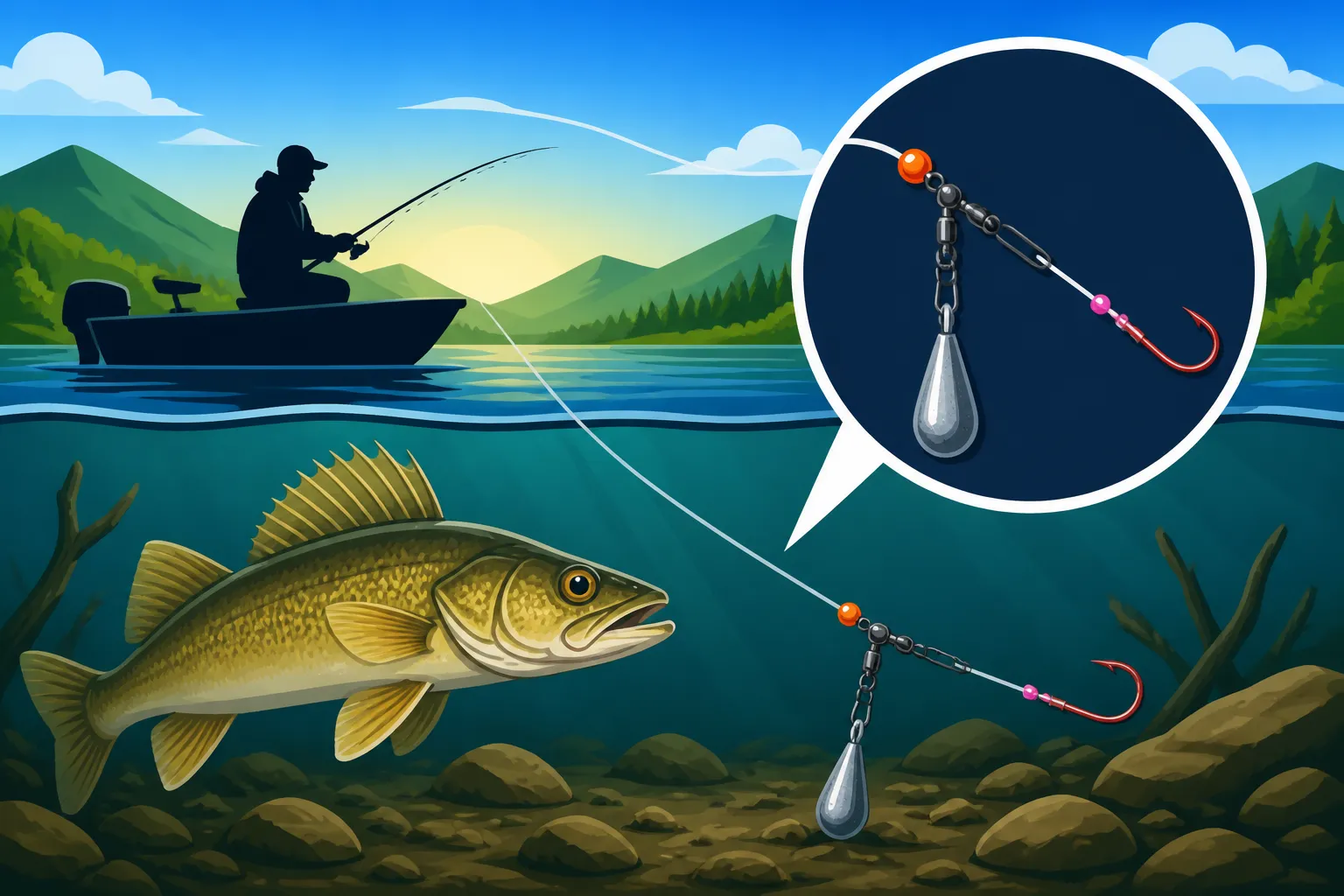
- Components: This rig starts with an egg sinker or bullet sinker threaded directly onto your main line, followed by a small bead (to protect the knot), and then a swivel. From the swivel, you tie a fluorocarbon leader (usually 18 inches to 3 feet) and then your hook.
- When to Use It: The beauty of the slip sinker is that the fish can pick up your bait and run with it without feeling the full weight of the sinker immediately. This makes it excellent for timid bites. It’s ideal for fishing from an anchored boat, casting from shore into deeper channels, or even slow-pitch jigging with live bait. It's a reliable choice if you're targeting specific humps or drop-offs you've identified, perhaps on a smaller lake like Lake Bomoseen or Lake Dunmore.
- Less Resistance for the Fish: The sinker slides freely on the main line, so when a walleye bites, it pulls the leader through the sinker, feeling minimal resistance. This often results in deeper, more confident hookups. It's also fairly easy to tie and doesn't tangle as easily as some other rigs, making it a good choice for beginners. For a more subtle approach, try using a lighter leader, like 6-8 lb fluorocarbon, which you can easily find on Amazon.
The Three-Way Swivel Rig
When you need to present multiple baits at different depths or have a heavy current, the three-way swivel rig offers incredible versatility and control.
- Components: As its name suggests, this rig uses a three-way swivel. Your main line ties to one eye of the swivel. To a second eye, you tie a short dropper line (usually 6-12 inches) with a sinker (bell sinker or pyramid sinker). To the third eye, you tie a longer leader (2-6 feet) that leads to your bait or lure.
- Good for Covering Water and Varying Depths: The three-way swivel allows your sinker to stay on or near the bottom, while your bait or lure trails at a set distance above it, often suspended enticingly in the walleye's strike zone. You can easily adjust the dropper length to change how high your bait rides off the bottom. This rig is excellent for covering a wide area by drifting or slow trolling, particularly on larger bodies of water like Lake Champlain.
- Useful for Targeting Walleye on Humps: Imagine finding a subtle hump or a rocky transition on your fish finder. With a three-way rig, you can let your sinker bounce along the contour, while your bait stays in the feeding zone just above it. It's also effective when you need to get down deep quickly in strong currents, like sections of the Missisquoi River that hold walleye, without your bait washing out.
Here's a quick comparison of these popular walleye bottom fishing rigs:
| Rig Type | Best Use Case | Key Components | Snag Resistance | Bait Presentation |
|---|---|---|---|---|
| Lindy Rig | Slow drift, finicky walleye, natural presentation | Walking sinker, swivel, long fluorocarbon leader, hook | Good | Very natural, subtle |
| Bottom Bouncer | Trolling, covering water, moderate snags, current | Bottom bouncer weight, leader, hook/lure | Excellent | Active, elevated |
| Slip Sinker Rig | Anchored fishing, casting, less resistance for fish | Egg/bullet sinker, bead, swivel, leader, hook | Moderate | Natural, free-moving |
| Three-Way Swivel | Strong current, targeting varying depths, multiple baits | Three-way swivel, dropper line (sinker), leader (bait/lure) | Moderate | Adjustable, elevated |
Baits, Lures, and Presentation for Bottom-Dwelling Walleye
Having the right rig is only half the battle; knowing what to put on the hook and how to present it will ultimately lead to more bites. Walleye can be particular, so having options and a nuanced approach is crucial.
Live Bait vs. Artificial Lures
Both live bait and artificial lures have their time and place when targeting bottom-dwelling walleye. The conditions in Vermont's waters often dictate which is more effective.
- Live Bait: When walleye are sluggish or experiencing a cold front, live bait is often the king. Nightcrawlers are a perennial favorite, especially when threaded onto a hook or snelled rig. They offer natural scent and action. Leeches are another fantastic option, particularly in warmer water, as they are incredibly hardy and enticing. Minnows, especially the slender, silvery varieties like shiners or rainbow smelt, are irresistible to walleye. In lakes like Lake Willoughby, where landlocked salmon also feed on smelt, it makes sense that walleye would too. You can purchase live bait from local bait shops across Vermont, or sometimes even find specific bait rigs on Amazon designed for minnows.
- Artificial Lures: Don't discount artificials, especially when fish are aggressive or you want to cover water more efficiently. Soft plastics, such as grubs, paddle tails, or even "fluke" style baits, can be deadly when rigged on a jig head and bounced along the bottom. Colors that mimic local baitfish (silvers, whites, greens) or provide high contrast (chartreuse, orange) are often good starting points. Small crankbaits with a good diving lip can also be excellent when trolled with a bottom bouncer, allowing the lip to "dig" into the bottom, kicking up sediment and drawing attention. Think about the profile of local baitfish to choose the best lures for walleye trolling on Lake Champlain, even if you're not strictly trolling.
Mastering the Presentation
Walleye are often described as having a "light bite," meaning their takes can be subtle. Mastering your presentation means paying attention to detail and developing a keen sense of feel.
- Slow and Steady Retrieve/Drift: Whether you're drifting with a Lindy Rig or slow-trolling with a bottom bouncer, a consistent, slow speed is critical. Walleye aren't usually chasing down fast-moving prey in deep water. You want your bait to appear vulnerable and easy to catch. If you're struggling with boat control, a drift sock can help slow you down in windy conditions on large lakes.
- Feeling for Bites, Subtle Takes: This is where a sensitive rod and good line choice come into play. A walleye bite can feel like a slight "tick," a sudden heaviness, or even just your line going slack. It's rarely a violent strike. Pay close attention to your rod tip and the feel of your line. If anything feels different, set the hook! The Walleye Fishing on Lake Champlain can be incredibly productive if you can detect these subtle bites.
- Importance of Line Choice: For your main line, many anglers prefer braided line because it has virtually no stretch, transmitting even the slightest tap directly to your rod hand. However, for leaders, fluorocarbon is almost always the choice. Its low visibility in water makes it nearly invisible to wary walleye, and its abrasion resistance is a huge plus when fishing around rocks and structure. A good quality fluorocarbon leader, like those you can find on Amazon, will significantly improve your chances.
Gear Recommendations for Successful Walleye Bottom Fishing
The right tackle makes a huge difference, not just in fighting the fish, but in detecting those subtle bites and presenting your bait effectively. Investing in quality gear for Vermont fishing conditions will pay dividends.
Rod, Reel, and Line Selection
Your rod, reel, and line are your direct connection to the fish, and choosing them wisely will enhance your bottom fishing success.
- Medium-Light to Medium-Heavy Rods, Fast Action: A good walleye rod is typically 6'6" to 7'6" in length. The "medium-light" to "medium-heavy" power provides enough backbone to handle a good-sized walleye, while the "fast action" means the rod bends mostly at the tip. This fast action is crucial for detecting those light bites and setting the hook quickly before the walleye spits the bait. Look for rods with a sensitive tip, often made from graphite.
- Spinning vs. Baitcasting Reels: For most bottom fishing applications, particularly with lighter rigs like the Lindy, a spinning reel is a popular choice. It's versatile, easy to cast, and excellent for subtle presentations. Look for a smooth drag system and a retrieve ratio that allows for slow, controlled retrieves. For heavier bottom bouncers and larger baits, or when doing a lot of trolling, a baitcasting reel offers more power and line capacity, giving you more leverage over bigger fish.
- Braided Main Line with Fluorocarbon Leader: As mentioned, braided line (10-20 lb test) is ideal for your main line due to its sensitivity and strength. Spool it up directly onto your reel. Then, attach a 6-10 foot fluorocarbon leader (8-15 lb test) using a strong knot like a FG knot or a Double Uni knot. This combination gives you the best of both worlds: sensitivity and stealth. This setup is perfect for the kind of deep water where walleye average size on Lake Champlain can get quite substantial.
Essential Accessories
Beyond your rod and reel, a few key accessories will make your bottom fishing more efficient and enjoyable.
- Fish Finder: This is non-negotiable for serious walleye anglers. A quality fish finder for Vermont lakes will show you bottom contours, identify humps and drop-offs, and most importantly, mark fish. Being able to see schools of baitfish and the walleye lurking beneath them is a game-changer. Models with side-imaging or down-imaging can paint an even clearer picture of the underwater world. You can find excellent options for every budget on Amazon.
- Drifting Socks / Drift Anchors: When fishing large, open bodies of water like Lake Champlain, wind can quickly push your boat too fast for an effective bottom presentation. A drift sock (or sea anchor) deploys in the water to create drag, slowing your drift to the ideal speed. This allows your baits to remain in the strike zone longer and prevents them from washing out behind your boat. This is critical for maximizing your time fishing How to Catch Walleye on Lake Champlain.
- Pliers and Net: A good pair of long-nosed pliers or forceps is essential for safely removing hooks, especially from toothy walleye. Always have a large, rubberized landing net on board. Rubberized nets are gentler on the fish if you plan to release them (check Vermont Walleye Limit on Lake Champlain regulations!), and they prevent hooks from getting tangled in the mesh. For boats, consider the Best Boats for Vermont Lakes and Rivers that offer ample space for these accessories.
Ultimately, the best rig for bottom fishing for walleye will depend on the specific conditions you encounter on any given day in Vermont. Experiment with these setups, pay attention to how the fish are reacting, and don't be afraid to switch things up. The more you understand the nuances of walleye behavior and adjust your tactics accordingly, the more success you'll find on the water. Remember, persistence is key, especially when targeting those elusive bottom-dwellers.
Disclaimer
Fishing regulations, license requirements, and safety guidelines can change. Always consult the latest Vermont Fish and Wildlife Department official regulations before heading out on the water. This guide is for informational purposes only and does not supersede official state regulations.