How to fish a spinnerbait for Vermont lake bass
Oh, the humble spinnerbait! If you've spent any time chasing bass in Vermont's beautiful lakes, you know how frustrating it can be to find that one lure that consistently produces, especially when conditions change. Sometimes it feels like you need a whole tackle shop just to cover your bases. But trust me, when it comes to versatile, fish-catching power for Vermont lake bass, the spinnerbait is a true hero, and knowing how to wield it effectively can dramatically boost your success. This guide is all about helping you unlock the full potential of spinnerbaits, from choosing the right one to mastering the retrieves that will entice those green and smallmouth beauties hiding in our waters.
Why Spinnerbaits are a Bass Angler's Best Friend in Vermont Lakes
You might look at a spinnerbait with its odd wireframe, blades, and skirt, and wonder what all the fuss is about. But for bass anglers targeting both largemouth and smallmouth bass across Vermont's diverse lake environments, this lure is a true workhorse. It shines where other lures falter, and its unique blend of attributes makes it an indispensable tool in your tackle box.
Versatility in Various Cover Types
One of the biggest headaches when fishing Vermont lakes is dealing with varying types of cover. You might have dense weed beds in one cove, then rocky points and submerged timber just around the bend. Tying on a different lure for every scenario gets tedious and cuts into your fishing time. This is where the spinnerbait truly excels. Its wireframe design makes it incredibly snag-resistant, allowing you to cast it directly into heavy cover that would foul up most other lures. Think about pitching it right into those lily pads on Lake Bomoseen or letting it tick off submerged logs in Lake Dunmore. The single hook, often shrouded by the skirt, minimizes hang-ups, letting you explore those fish-holding hideouts with confidence.
You're not just limited to heavy cover, though. Spinnerbaits are equally effective when retrieved along open water edges, over gravel flats, or around docks. This means you can keep the same lure tied on as you move between different types of structure, saving you precious time and keeping your bait in the strike zone longer. This kind of flexibility is a huge stress-reliever for any angler, especially when you're trying to cover a lot of water.
The Irresistible Combination of Flash and Vibration
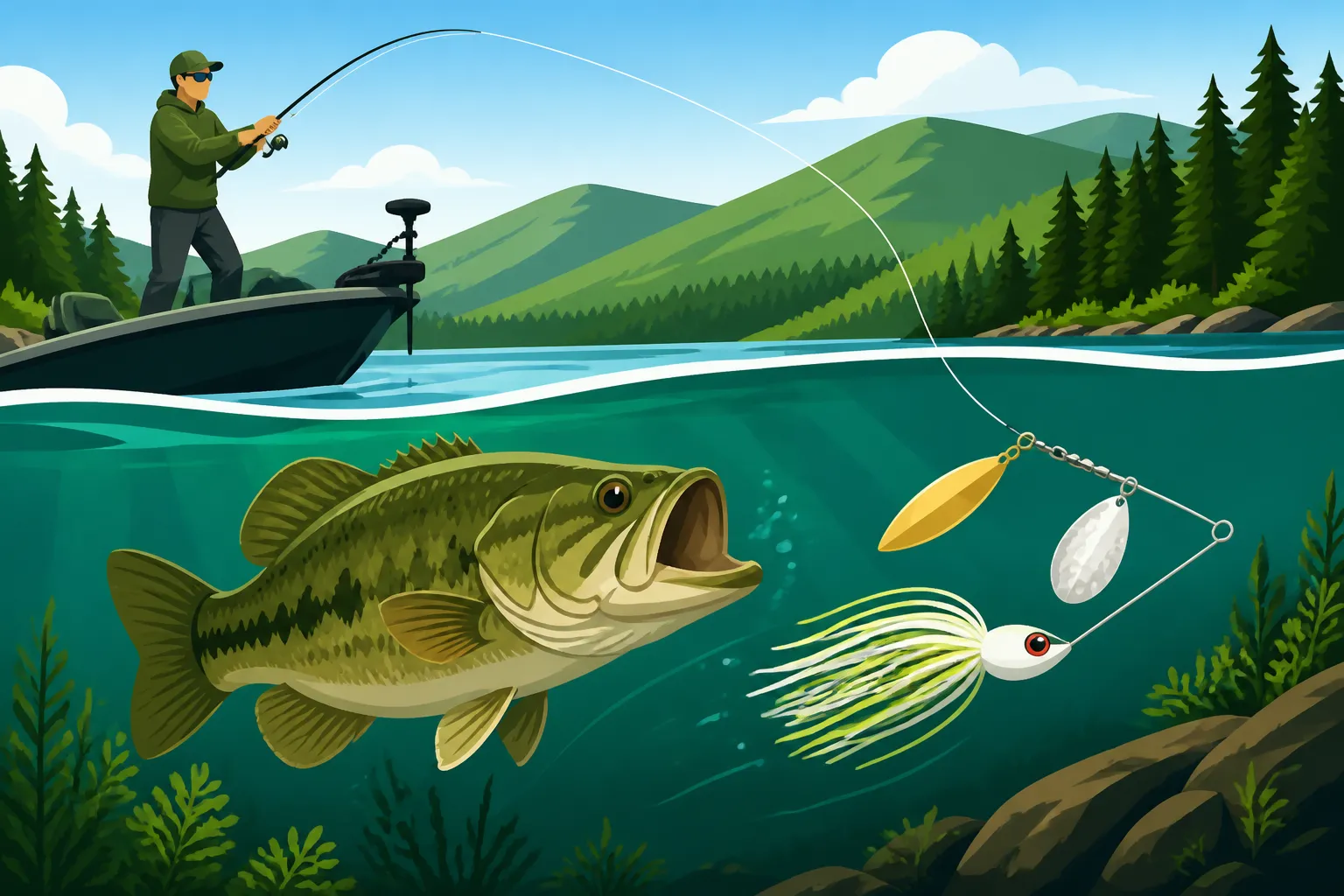
Bass are predators, and they react strongly to stimuli that mimic their prey. A spinnerbait provides a potent one-two punch that appeals directly to these instincts: flash and vibration. The rotating blades—whether they're willow leaf, Colorado, or Indiana styles—create bright flashes of light that imitate the scales of fleeing baitfish like alewives or perch, which are common forage in many Vermont lakes. Even in stained or murky water, that flash can catch a bass's eye from a surprising distance, drawing them in for a closer look.
But it's not just about what they see. Those spinning blades also displace water, creating a thumping or vibrating sensation that bass can detect through their lateral line system. This is crucial in low-visibility conditions or when bass are feeding by feel. That pulsing vibration tells the bass, "Hey, there's something alive and struggling here!" even if they can't quite see it yet. This dual sensory appeal is what makes a spinnerbait so effective, cutting through the noise and making itself known to hungry bass, whether you're targeting smallmouth bass on Lake Champlain or looking for a big largemouth.
Choosing the Right Spinnerbait for Vermont Waters
Stepping into an tackle shop or browsing online at Amazon for spinnerbaits can be overwhelming. There's a dizzying array of blade shapes, colors, weights, and skirt combinations. But don't fret! By understanding the nuances of each component and how they relate to the conditions you're fishing in Vermont, you can confidently select the perfect spinnerbait for the job.
Blade Types and Their Applications
The blades are the heart of the spinnerbait's appeal, responsible for its flash and vibration. Different blade types excel in different situations:
- Willow Leaf Blades: These are long, slender, and resemble a willow leaf (hence the name). They produce less vibration but a lot of flash, and their streamlined shape makes them ideal for ripping through weeds without getting hung up. They also allow for faster retrieves. I find these particularly effective on clear, deep lakes where bass rely more on sight, or when I'm trying to cover a lot of water quickly in search of aggressive fish. For example, when fishing the clearer sections of Lake Champlain or trolling open water, a willow leaf often gets the job done.
- Colorado Blades: These are round and cup-shaped, creating maximum vibration and lift but less flash. They're excellent in murky water, low light conditions (dawn, dusk, or overcast days), or when you want to slow down your retrieve significantly. The strong thumping vibration helps bass locate the lure even when they can't see it well. If I'm fishing after a heavy rain on Vermont rivers that feed into lakes, or targeting bass in a heavily stained farm pond, Colorado blades are my go-to for their vibration.
- Indiana Blades: A hybrid between willow leaf and Colorado, Indiana blades offer a good balance of flash and vibration. They're a versatile choice when you're unsure which blade type to commit to or when conditions are mixed. Think of them as a "jack of all trades" that can perform well in a wide range of situations. Many anglers keep a few of these handy for general-purpose fishing.
Often, spinnerbaits come with a combination of two blades – usually a smaller Colorado or Indiana in the front and a larger willow leaf in the back (tandem spinnerbaits). This combo gives you the best of both worlds: the strong throb of the front blade and the intense flash of the rear. This setup is incredibly popular and effective in most Vermont lake scenarios.
Choosing Skirt Colors and Weights
The skirt color is crucial for mimicking local baitfish or triggering a reaction strike. A good rule of thumb is "match the hatch," meaning try to select colors that resemble the forage fish bass are feeding on.
- Natural Colors: White, chartreuse, silver, and combinations of these are excellent for imitating baitfish like smelt, shiners, or perch. These are solid choices for most clear to moderately stained Vermont lakes. A white or white/chartreuse spinnerbait is almost always a good starting point, especially if you're not sure what the bass are keying on.
- Darker Colors: Black, blue, and purple work well in murky water or low light. The silhouette of a dark lure stands out better against a dim sky or dark bottom.
- Bright/Reaction Colors: Hot pink, bright orange, or fire tiger patterns can trigger aggressive reaction strikes, especially when bass are pressured or when you want to stand out from the crowd. Sometimes, when bass are sluggish, an obnoxious color can be just the ticket. You might also want to consult a guide on the Best lure color for muddy water bass fishing if you find yourself fishing in less-than-ideal conditions.
Spinnerbait weight also matters significantly. Lighter weights (1/4 to 3/8 ounce) are good for shallow water, slow retrieves, or when bass are higher in the water column. Heavier weights (1/2 to 3/4 ounce or more) are better for deep water, faster retrieves, or punching through thick vegetation. You want a weight that allows your lure to stay in the strike zone for the desired amount of time. For instance, if you're fishing a deep breakline on Lake Champlain, you'll want something heavier to get down there, but if you're just skimming over shallow weed tops, a lighter model is perfect.
Here's a quick reference table to help you get started:
| Condition | Primary Blade Type | Secondary Blade Type (Tandem) | Skirt Color | Weight (Oz) | Retrieve Speed | Notes |
|---|---|---|---|---|---|---|
| Clear Water, Sunny | Willow Leaf | Willow Leaf | White, Silver | 3/8 – 1/2 | Medium-Fast | Max flash, subtle vibration, good for sight feeders. |
| Murky Water, Overcast | Colorado | Indiana | Chartreuse, Black | 1/2 – 3/4 | Slow-Medium | Max vibration, strong silhouette, low visibility. |
| Weedy Areas | Willow Leaf | Willow Leaf | White, Green | 3/8 – 1/2 | Medium | Streamlined for snag prevention. |
| Rocky Areas, Deep | Colorado or Indiana | Willow Leaf | White, Perch | 1/2 – 1 | Slow-Roll | Strong throb for feeling structure. |
| Early Spring / Cold | Colorado | Indiana | White, Chartreuse | 3/8 – 1/2 | Very Slow | Max vibration at slow speeds, appealing to lethargic bass. |
| Mimicking Baitfish | Varies | Varies | Match Hatch | Varies | Varies | Key for realistic presentation. |
Mastering Retrieval Techniques for Vermont Lake Bass
Once you've got the right spinnerbait tied on, the real magic happens in how you present it. The beauty of a spinnerbait lies not just in its construction, but in the myriad ways you can retrieve it to trigger strikes from bass. It's not about speed, it's about action and mimicry.
The Classic "Slow Roll"
If there's one technique to master with a spinnerbait, it's the slow roll. This retrieve is exactly what it sounds like: a slow, steady retrieve that keeps your spinnerbait just above or bumping along the bottom. It's particularly effective in cooler water temperatures, like early spring when bass are still a bit lethargic or in the fall as the water cools down, or anytime bass are holding tight to structure.
To execute a slow roll, cast your spinnerbait out and let it sink to the desired depth. Then, begin a slow, constant retrieve, just fast enough to get the blades spinning. You want to feel that subtle throb of the blades through your rod. If you're fishing near the bottom, let it occasionally tick off rocks, logs, or the tops of submerged weeds. This contact with cover often triggers a reaction strike. The slow, tantalizing movement of the skirt and the constant flash and vibration can be irresistible to bass that aren't willing to chase a fast-moving bait. It’s also fantastic when fishing deep weed lines or the base of drop-offs in lakes like Lake Willoughby where bass might be hunkered down.
Burning and Waking the Bait
On the opposite end of the spectrum is "burning" a spinnerbait, a technique designed to trigger aggressive reaction strikes from active bass. This involves a very fast retrieve, often with your rod tip held high to keep the bait near the surface, or even breaking the surface. When a spinnerbait is burned, it creates a significant wake and commotion on the surface, mimicking a panicked baitfish fleeing for its life. This can be dynamite on warm summer days when bass are active and feeding aggressively, particularly around shallow cover or schooling baitfish.
The "waking" technique is a variation where you retrieve the spinnerbait just fast enough to make the blades churn and bulge the water on the surface, but not actually break it. This creates a subtle V-wake, similar to a buzzbait, and can be incredibly effective when bass are looking up for prey, especially during low light conditions like dawn or dusk. It's a great choice for working over shallow weed flats or along seawalls. For more tips on summer fishing, check out our guide on Best time to fish Lake Champlain in summer.
Deflecting Off Structure
Bass are ambush predators, and they love to hide near cover. This makes deflecting your spinnerbait off structure a highly effective strategy. Cast your spinnerbait so it will come into contact with a dock post, a submerged log, a rock pile, or the edge of a weed bed. As the lure hits the structure, let it momentarily stop or change direction, then continue your retrieve. This sudden, erratic movement often mimics a baitfish that has just bumped into something and is trying to escape, triggering an immediate strike from a nearby bass.
This technique requires a bit of finesse and a good feel for your lure. You want to be able to feel the contact with the structure without getting completely hung up. A medium-heavy rod with a sensitive tip is key here. This is especially productive when fishing boat docks on Lake St. Catherine or rocky outcroppings on Lake Dunmore. Don't be afraid to experiment with letting your lure fall briefly after a deflection; sometimes, that hesitation is all it takes.
Essential Gear for Spinnerbait Fishing in Vermont
Having the right rod, reel, and line can make a huge difference in your spinnerbait fishing success. While you might be able to get by with general-purpose gear, optimizing your setup will allow for better casting, control, and ultimately, more fish in the net.
Rod and Reel Setup
For spinnerbait fishing, a medium-heavy power casting rod, typically between 6'6" and 7'6" in length, is usually ideal. The medium-heavy power provides the backbone needed to cast heavier spinnerbaits, rip them through cover, and drive the hook home effectively. A fast action tip is beneficial for detecting subtle bites and making quick, accurate casts, especially when you're targeting specific pieces of cover. If you're looking for quality options, you can find a wide variety of excellent rods on Amazon that will fit the bill.
Pair your rod with a baitcasting reel with a gear ratio in the 6.3:1 to 7.1:1 range. This allows for versatile retrieves – slower gear ratios are good for slow rolling and high-speed ratios are great for burning the bait. A smooth drag system is also important to handle those hard-fighting Vermont bass. For beginners, a good Best Rod and Reel Combo for Beginners can be a great starting point before investing in specialized gear.
Line Choices
When it comes to line, you have a few good options, each with its own advantages:
- Fluorocarbon Line: This is a fantastic choice for spinnerbaits, especially in clearer Vermont lakes. Fluorocarbon is nearly invisible underwater, has low stretch for good sensitivity and solid hooksets, and sinks, which can help keep your spinnerbait at the desired depth. It's a great all-around line for this presentation, typically in 12-17 pound test. You might also want to explore our guide on the Best fluorocarbon line for clear lake water.
- Monofilament Line: Monofilament has more stretch than fluorocarbon, which can be beneficial when a bass engulfs the lure, providing a little give to prevent tearing the hook out. It also floats, which can be useful when you want to keep your spinnerbait higher in the water column for techniques like waking. It's generally more affordable and comes in a wide range of colors, though clarity is usually preferred.
- Braided Line: Braid offers incredible strength, sensitivity, and no stretch, making for powerful hooksets and excellent feel of your lure and any subtle bites. Its main drawback is its visibility in clear water. Many anglers will use braided line (30-50 pound test) as their main line and then tie a fluorocarbon leader (12-20 pound test) to the end. This gives you the strength and sensitivity of braid with the low visibility of fluorocarbon. This can be especially effective when you're targeting big bass in heavy cover, like those found in the trophy bass lakes of Vermont.
Seasonal Strategies for Spinnerbaits in Vermont Lakes
The effectiveness of a spinnerbait can shift with the seasons, as bass behavior and their preferred habitats change throughout the year in Vermont. Adapting your approach to the time of year will significantly improve your chances of success.
Spring: Post-Spawn and Transition Zones
Spring in Vermont, especially after the bass have spawned, is prime time for spinnerbaits. Bass are often recovering from the rigors of spawning and are looking to feed actively. During the pre-spawn, you'll find them moving from deeper wintering areas to shallower spawning flats. A slow-rolled spinnerbait along these transition lines or over budding weed growth can be deadly. Bass are often cruising the edges of drop-offs or shallow flats, and a spinnerbait presents a substantial, easy meal.
As bass move into post-spawn, they might be scattered or guarding fry. Look for them around shallow cover like docks, submerged brush, or newly emergent vegetation. A medium-speed retrieve, sometimes incorporating a deflection off cover, can draw strikes from protective bass. Don't be afraid to experiment with brighter colors in the spring, as bass can be very territorial and react aggressively to anything invading their space.
Summer: Weeds, Shade, and Deep Structure
When summer heats up in Vermont, bass often retreat to cooler, oxygen-rich areas. This means dense weed beds, shaded areas under docks or overhanging trees, and deeper structure like humps, ledges, and rock piles. This is where the snag-resistant nature of a willow leaf spinnerbait really shines. You can literally rip it through thick lily pads or hydrilla, pulling it over the top or letting it fall into pockets. The flash and vibration will call bass out from the dense cover.
For bass holding in deeper water, a heavier spinnerbait, slow-rolled along contours or bounced off the bottom, can be incredibly effective. Consider a Colorado blade for deep, slower retrieves, especially if the water is stained. Early mornings and late evenings, or overcast days, are also great times for burning or waking a spinnerbait over shallow flats as bass move out of their deeper haunts to feed. If you're fishing from a kayak, knowing the Best Kayak Fishing Techniques for Vermont Lakes will help you maneuver into prime summer spots.
Fall: Chasing Baitfish and Aggressive Feeding
Fall is another fantastic season for spinnerbaits in Vermont lakes. As water temperatures begin to drop, bass become highly active, aggressively feeding to fatten up for winter. They often form schools and chase baitfish, making a spinnerbait an ideal imitation. Look for bass congregated around points, channel swings, and large flats where baitfish are abundant.
During the fall, you'll want to experiment with both retrieve speeds and blade types. A fast retrieve with willow leaf blades can mimic fleeing baitfish effectively, especially if you see schools of bait breaking the surface. Alternatively, a steady, medium retrieve over deeper structure with tandem Colorado/willow leaf blades can entice larger, more sluggish bass. Pay close attention to current conditions; on clear, crisp fall days, a natural baitfish color might be best, while on overcast or windy days, a brighter, reaction color could be the ticket. Fall fishing often means bigger bass, and a spinnerbait is a top choice for targeting them.
Ultimately, learning to fish a spinnerbait for Vermont lake bass is about understanding the interaction between the lure, the environment, and the fish. It's a versatile tool that rewards experimentation and confidence. So grab a few different styles, head out to your favorite Vermont lake, and start exploring the magic of the spinnerbait. You'll be glad you did when you feel that satisfying thud of a bass engulfing your bait!
Disclaimer
This article is for general informational purposes only and does not constitute professional advice. Laws, prices and regulations vary by location and change over time. Consult a qualified professional for guidance on your specific situation.