Night Fishing for Walleye on Lake Champlain
One of the biggest frustrations for anglers on Lake Champlain is chasing elusive walleye all day only to come up empty-handed. It feels like they vanish with the sun! But what if I told you that the cover of darkness is precisely when these sought-after fish truly come alive? This guide will dive deep into the thrilling and often more productive world of night fishing for walleye on Lake Champlain, equipping you with the knowledge to turn those frustrating daytime blanks into successful nocturnal outings.
Why Night Fishing is a Game Changer for Lake Champlain Walleye
Fishing for walleye during the day on a massive, heavily fished body of water like Lake Champlain can be incredibly challenging. The bright sunlight pushes these light-sensitive predators into deeper, darker sanctuaries. But as the sun dips below the horizon, a different world emerges on the lake, one where the walleye become the undisputed kings of the shallows.
Understanding Walleye Nocturnal Habits
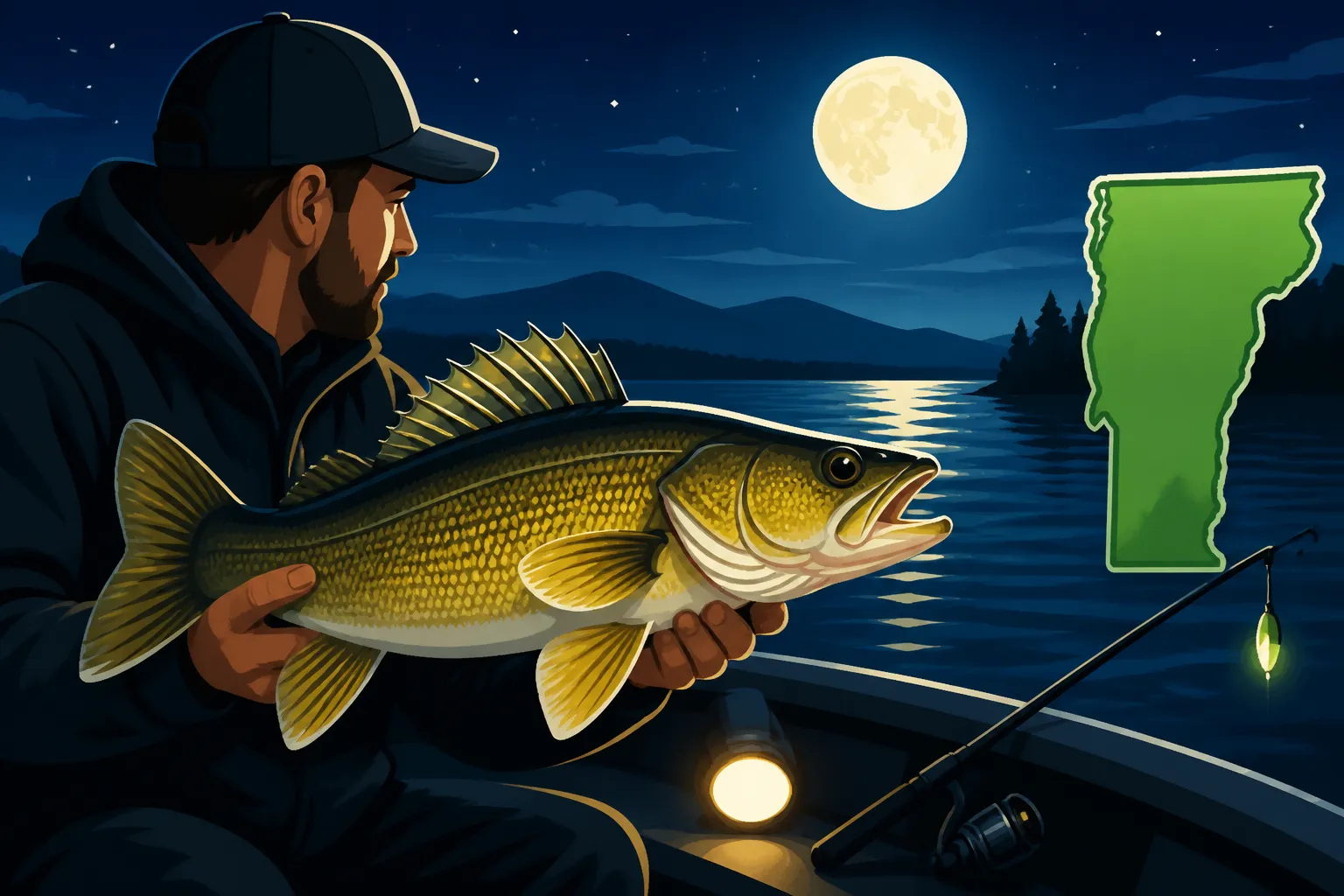
Walleye are incredibly well-equipped for low-light conditions. Their large eyes contain a reflective layer called the tapetum lucidum, which amplifies available light, giving them a significant advantage over their prey, and frankly, over us during the daytime. This unique adaptation means that while most other fish species are settling down for the night, walleye are just getting started.
Think about it: during the bright hours, the baitfish, like smelt and alewives, have the advantage of sight and can often evade predators more easily in the clear waters of Champlain. But once twilight hits, and especially under a new moon, the tables turn. Walleye can hunt efficiently, moving from their deep-water daytime haunts into shallower feeding flats, rocky points, and weed edges where baitfish often seek refuge. It's a natural shift in their behavior, driven by their superior night vision and the changing vulnerability of their prey. So, if you've ever spent a beautiful sunny day casting without a single bite, feeling like the walleye just aren't there, you're not wrong – they're just not there in a catchable sense. They're waiting for darkness, and so should you.
Escaping the Pressure of Daytime Anglers
Another significant benefit of fishing under the cloak of night is the drastic reduction in fishing pressure. Lake Champlain can be a busy place during the day, especially on weekends. Swarms of recreational boaters, pleasure cruisers, and even other anglers can create a cacophony of noise and disturbance that sensitive walleye will shy away from.
When you venture out after dark, you'll often find yourself in peaceful solitude. The absence of heavy boat traffic, the drone of countless outboard motors, and the constant casting pressure from dozens of lines makes a world of difference. Walleye, being naturally wary, are far more likely to feed aggressively and hold in prime locations when they don't feel constantly threatened. This reprieve from human activity allows them to relax their guard, move freely, and feed without interruption. It's a calmer, more serene experience for the angler too, allowing you to focus on subtle bites and the rhythm of the lake without distractions. Plus, there's a certain magic to being out on the water when the rest of the world is asleep, listening to the sounds of nature and feeling the crisp night air.
Essential Gear and Safety Considerations for Night Fishing
While the allure of catching walleye under the stars is strong, it's absolutely crucial to prioritize safety and be well-prepared. Night fishing on a large lake like Champlain presents unique challenges, and having the right gear isn't just about catching fish; it's about making sure you get back to shore safely.
Lighting, Navigation, and Safety Equipment
When the sun goes down, your reliance on artificial light becomes paramount. A good quality headlamp is your best friend. Look for models with a red light option, as red light preserves your night vision much better than white light, allowing your eyes to adjust quickly when you switch it off. You'll need more than just a headlamp, though. Your boat must be equipped with proper navigation lights—bow lights (red and green) and an all-around white stern light—as required by Vermont Boating Laws for Anglers. A powerful spotlight can be invaluable for navigating tricky sections, spotting buoys, or locating landmarks. However, use it sparingly as a powerful beam can spook fish in shallow water.
Beyond lighting, robust navigation tools are critical. A reliable GPS unit or a chart plotter with up-to-date Lake Champlain charts is non-negotiable. Knowing your exact position, understanding depths, and identifying submerged hazards is far harder in the dark. Always have a physical map as a backup, just in case electronics fail. A VHF radio is also a must for communication in an emergency, especially when cell service can be spotty on parts of the lake. Finally, and this cannot be stressed enough: everyone on board should wear a U.S. Coast Guard-approved life jacket. While it's tempting to take them off in calm waters, emergencies can happen in an instant, and finding a life jacket in the dark is a terrifying prospect. Review the Life Jacket Requirements for Vermont Boaters before you head out. Pack a comprehensive first-aid kit, extra batteries for all electronic devices, and even a spare anchor and rope. Remember, help can be a long way off at night.
Rods, Reels, and Lines Built for the Dark
When you're night fishing, your sense of touch becomes more important than ever. You won't always see the subtle twitch of a line indicating a bite; you'll have to feel it. This means your fishing tackle needs to be tuned for sensitivity.
For rods, consider a medium-heavy power rod with a fast or extra-fast action tip. This combination provides enough backbone to fight a strong walleye but also a highly sensitive tip that telegraphs even the lightest tap. Graphite rods excel in sensitivity compared to fiberglass. For reels, a smooth, reliable spinning or baitcasting reel with a consistent drag system is key. You'll want something that won't seize up or cause frustrations when trying to adjust drag in the dark. When it comes to fishing line, a low-stretch braided mainline is highly recommended because of its incredible sensitivity. You can feel everything from a baitfish bumping your lure to the most delicate walleye inhale. Pair that braid with a fluorocarbon leader, typically 8-12 lb test, which is virtually invisible underwater and offers excellent abrasion resistance against rocks and walleye teeth. Many anglers find high-quality fluorocarbon leader material on platforms like Amazon, ensuring they get the right strength and invisibility for the clear waters of Lake Champlain. When you're fishing in the dark, any advantage you can get, whether it's the feel of the line or the invisibility of your leader, becomes incredibly valuable. If you're looking to upgrade your setup, our guide on Best Fishing Rods for Vermont Lakes offers some excellent suggestions. Also, understanding the nuances of Best Fluorocarbon Line for Clear Lake Water can significantly boost your night fishing success.
Prime Locations and Structures for Nighttime Walleye on Lake Champlain
Knowing where walleye hunt after dark is arguably the most critical piece of the puzzle. While Lake Champlain is vast, certain types of structures consistently draw walleye in when the moon is high.
Shallow Reefs, Rocky Points, and Drop-offs
As evening descends and light levels drop, walleye move shallower, often following schools of baitfish that are also pushing into these areas. Shallow reefs and rocky points are absolute magnets. These underwater structures provide ambush points and foraging grounds for walleye, allowing them to corner prey against the hard bottom or rock faces. During the day, these areas might see heavy boat traffic or be too bright for comfort, but at night, they become prime real estate.
Look for reefs that top out anywhere from 5 to 20 feet, especially if they are surrounded by deeper water. Walleye will cruise the edges and the tops of these reefs, actively hunting. Rocky points that jut out into the lake, particularly those with a quick drop-off into deeper water, are also phenomenal. The walleye will often patrol these transition zones, moving between the shallow feeding areas and the safety of the deeper water. To find these spots, a good chart plotter is invaluable. You might even consider pre-fishing some areas during the day to mark these structures on your GPS, so you can navigate them confidently in the dark. Popular areas like the Four Brothers Islands or the reefs around Providence Island on Lake Champlain are notorious for holding night-feeding walleye. Our detailed guide on Where to Find Walleye on Lake Champlain and Best walleye spots on Lake Champlain can give you more specific geographical insights.
Weedy Edges and River Mouths
Another highly productive nighttime target area on Lake Champlain is along the edges of extensive weed beds and, crucially, near river mouths. Weed lines, especially those bordering deeper water, provide excellent cover for baitfish and, consequently, prime ambush spots for walleye. The walleye will patrol these edges, darting into the weeds to snatch a unsuspecting minnow.
River mouths are particularly potent. Rivers constantly introduce cooler, oxygenated water and a steady supply of nutrients and baitfish into the main lake. This convergence creates a feeding frenzy, and walleye will stack up in these areas, especially where current breaks create natural holding spots. Think of the mouths of the Lamoille River, Missisquoi River, or Otter Creek where they flow into Lake Champlain. The mixing of river water with lake water often creates turbidity, which walleye, with their excellent low-light vision, can exploit to their advantage, making it harder for baitfish to see them coming. Fishing these spots at night requires careful boat control to stay positioned without spooking the fish. Exploring a comprehensive Lake Champlain Fishing Guide can help you pinpoint these promising river mouth locations.
Tried-and-True Techniques for Night Walleye Fishing
Successfully catching walleye after dark isn't just about showing up; it's about employing specific techniques that leverage their nocturnal behavior and keen senses. While it requires a bit of adaptation, the payoff can be incredibly rewarding.
Trolling with Stickbaits and Crankbaits
Trolling is a highly effective method for covering water and locating active walleye at night. The key here is slow and controlled trolling. Walleye are less likely to chase down a fast-moving lure in the dark, preferring an easy meal. Aim for speeds between 1.0 and 2.5 mph, adjusting based on conditions and fish activity.
Stickbaits and crankbaits that dive to different depths are your go-to lures. When selecting lures for night fishing, consider both color and sound. Darker colors like black, purple, or blue can create a stronger silhouette against the moonlight or the faint glow of the surface, making them easier for walleye to spot. Lures with internal rattles or loud thumping actions are also excellent because the sound carries well through the water, drawing walleye in even if they can't see the lure perfectly. Glow-in-the-dark lures, or those that can be charged with a flashlight, also have their place, offering a distinct visual attraction. Many anglers find a good selection of these specialized lures readily available on Amazon. Experiment with different depths by using lead core line, snap weights, or by varying the length of line out. A common strategy is to run several lines at different depths to figure out where the fish are holding. Always use a long fluorocarbon leader (6-10 feet) between your mainline and lure for stealth. To really fine-tune your approach, consult our guide on the Best Lures for Walleye Trolling on Lake Champlain and learn about the Best trolling depth for walleye on Lake Champlain.
Jigging and Slip Bobber Fishing with Live Bait
For a more stationary or precise approach, jigging and slip bobber fishing are excellent choices, especially when you've pinpointed a specific structure or school of fish.
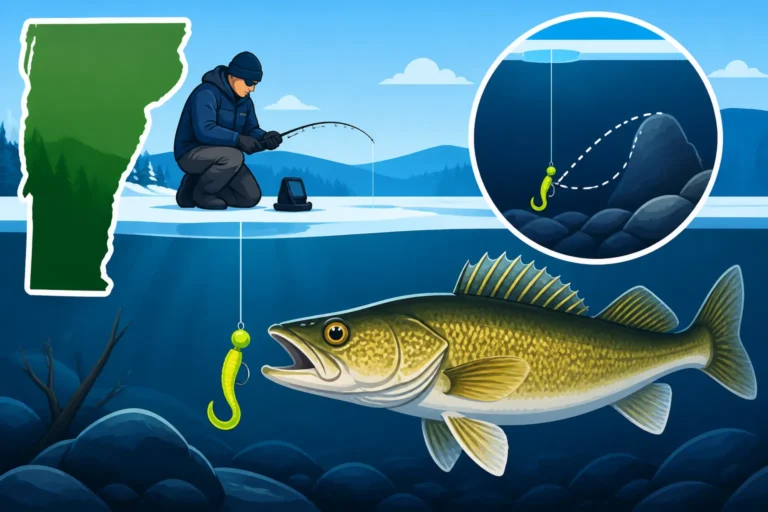
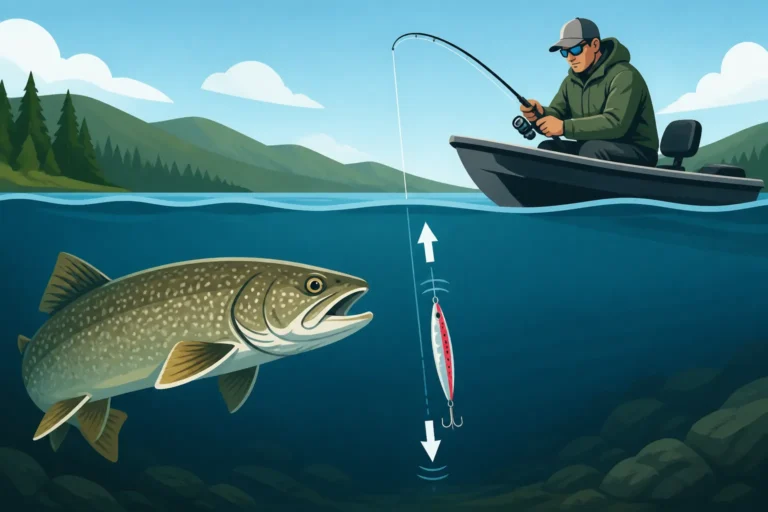
Vertical jigging is incredibly effective over shallow reefs, humps, or drop-offs where walleye are holding tight to the bottom. Use glow-in-the-dark jigs, bucktail jigs, or blade baits tipped with a piece of nightcrawler or a small minnow. The key is a subtle presentation: drop your jig to the bottom, give it a few short lifts and drops, then let it rest for a moment. The "thump" of the jig hitting the bottom, followed by a slight vibration on the lift, often entices a strike. Since you're relying on feel, pay close attention to any resistance or abnormal weight on the line.
Slip bobber fishing is fantastic for targeting walleye suspended over weed edges or in slightly deeper water around baitfish schools. Rig a slip bobber above a plain hook or a small jig head, baited with a lively minnow, shiner, or a juicy nightcrawler. Set your bobber stop to position your bait just above the depth where you expect the walleye to be. The natural movement of the live bait is often irresistible to walleye in the dark. This method requires patience and a keen eye (or ear, if you're listening for the bobber bell) to detect subtle takes. The right kind of sensitive slip bobbers, often glow-in-the-dark, can be found on Amazon, making it easier to see them disappear in the dark.
Mastering the Art of Casting and Retrieving
Sometimes, the most direct approach is casting. This technique is particularly effective when targeting shorelines, shallow rocky points, or around river mouths. You can cast the same crankbaits and stickbaits you'd troll, but also consider lipless crankbaits, swimbaits, or even weighted soft plastics.
The key to successful night casting is consistency and pattern recognition. Make long casts towards your target structure and experiment with retrieve speeds. Walleye often prefer a slower, steady retrieve with occasional pauses, allowing the lure to suspend or sink slightly before resuming movement. This erratic action can trigger a strike. If you're using soft plastics, a slow, drag-and-pause retrieve along the bottom can imitate a foraging baitfish or crayfish. Adding a scent to your lures, like Berkley Gulp! Alive! or similar attractants, can provide an extra edge, especially in dark conditions where the walleye's sense of smell becomes more dominant. Being able to cast accurately in the dark takes practice, so spend some time during daylight hours getting familiar with your casting distance and accuracy to specific points. For more detailed insights on general walleye techniques, our comprehensive guide on How to Catch Walleye on Lake Champlain is a fantastic resource.
Strategic Planning and Patience for a Successful Night Out
Night fishing for walleye on Lake Champlain isn't just about having the right gear and techniques; it's also about meticulous planning and a generous helping of patience. The lake can be a fickle beast, but with thoughtful preparation, you can tip the odds in your favor.
Weather, Moon Phase, and Water Conditions
Just like any fishing endeavor, the elements play a massive role in night walleye success. Stable weather patterns, especially calm nights with minimal wind, are generally ideal. High winds make boat control difficult, increase noise, and can make detecting subtle bites nearly impossible. A clear sky allows for some ambient light from the moon and stars, which can be helpful for navigation and visibility, but paradoxically, a new moon (the darkest phase) can sometimes be best for walleye, as their superior low-light vision gives them an even greater advantage over their prey. Some anglers swear by the dark of the moon, believing it makes walleye more aggressive feeders.
Water conditions are equally important. Look for stable water temperatures and clarity. Extremely muddy water from recent heavy rains can scatter fish, making them harder to locate, though walleye are somewhat tolerant of stained water due to their eyes. Conversely, crystal clear water can make them spooky, so a little tint can be beneficial. Always check the forecast before heading out. A sudden cold front can put walleye off the bite, pushing them deeper and making them lethargic. Understanding how these factors influence walleye behavior is part of the art. Knowing the Best time to fish for walleye at dusk can often lead to a successful transition into night fishing.
Mapping Your Approach and Staying Focused
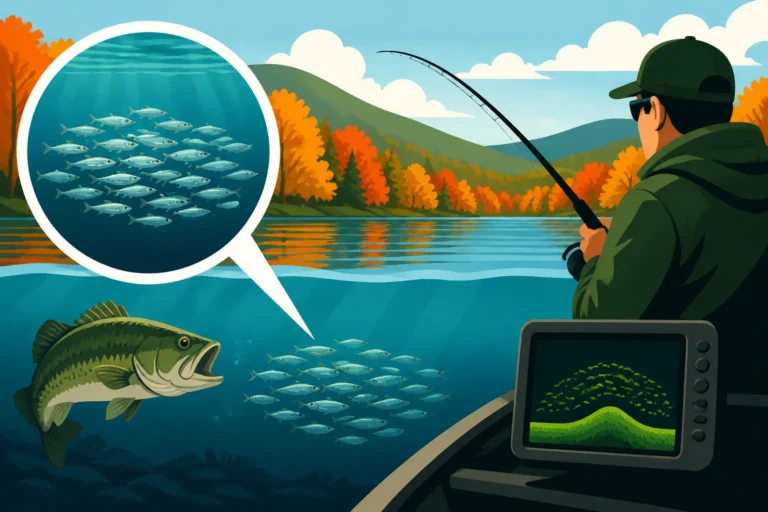
Before you even launch your boat, take the time to study your charts. Identify prime structures, depth changes, and potential hazards in the areas you plan to fish. If possible, "pre-fish" these spots during the day. This means going out in daylight, using your fish finder to mark specific humps, drop-offs, or weed lines on your GPS. This allows you to navigate confidently in the dark, knowing exactly where you're casting or trolling. Your fish finder, especially a good one designed for Best fish finder for Deep Lake Fishing, becomes an extension of your eyes, revealing contours and fish activity in the blackness.
Once you're on the water at night, execute your plan but be ready to adapt. Walleye might be in slightly different depths or relate to different parts of a structure than you anticipated. Stay focused, pay attention to every bump and subtle tap, and don't be afraid to change lures, depths, or techniques if something isn't working. Night fishing demands patience. Bites can be sporadic, sometimes coming in bursts. There might be long periods of inactivity, followed by a flurry of hookups. Don't get discouraged during the quiet times. Keep experimenting, keep moving slowly, and trust that the walleye are out there, waiting for the perfect presentation. The tranquility of night fishing allows for deep concentration, making those successful moments even sweeter.
| Feature | Daytime Walleye Fishing | Nighttime Walleye Fishing |
|---|---|---|
| Light Conditions | Bright, full sun, high visibility | Dark, low light, moon/starlight, artificial light |
| Walleye Behavior | Deeper water, less active, sensitive to light | Shallower water, more active, aggressive feeding |
| Angler Pressure | High, many boats and anglers | Low, fewer boats and anglers, more serene |
| Primary Senses Used | Sight, some lateral line | Lateral line (vibration), sight (low light), smell |
| Preferred Lures | Bright colors, natural patterns, deep divers | Dark colors, glow-in-the-dark, rattles, scented baits |
| Key Techniques | Deep trolling, jigging deep structure | Shallow trolling, casting, slip bobber over structure |
| Safety Emphasis | General boating safety | Enhanced navigation, lighting, personal flotation devices (PFDs) |
| Bite Detection | Visual cues, rod tip bends | Sensitive rod feel, line movement, subtle taps |
Disclaimer
Fishing can be an unpredictable activity. The information provided in this guide is for general informational purposes only and does not guarantee fishing success. Always exercise caution, adhere to all local fishing regulations, and prioritize safety on the water. Weather and water conditions can change rapidly, so be prepared and use your best judgment.