Wading Techniques for Vermont Trout Streams
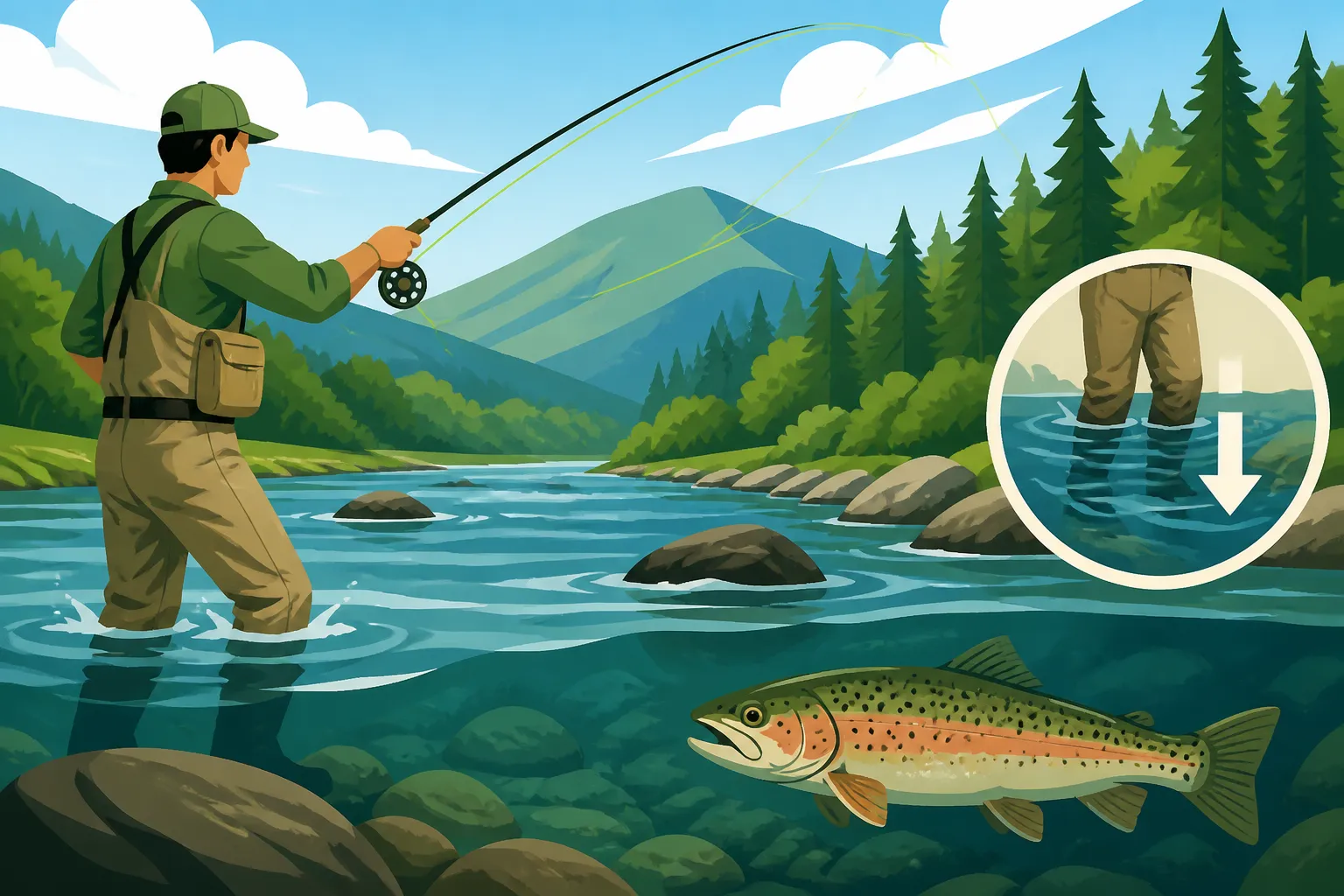
Wading into a Vermont trout stream can be one of the most rewarding parts of fly fishing, offering direct access to those elusive pockets where big trout often hide. However, it’s also one of the quickest ways to end a fishing day early with a bruised ego (and maybe a bruised backside) if you’re not careful. The rugged, often slippery, and unpredictable bottoms of our Green Mountain rivers and brooks demand respect and proper technique. This guide will walk you through everything you need to know to wade safely and effectively, transforming you from a hesitant bank-hugger into a confident stream explorer.
Why Wading is Essential for Vermont Trout Anglers
There's a reason why the image of an angler standing mid-stream, casting gracefully, is so iconic. It's not just for show; wading opens up a whole new world of fishing opportunities and is often the key to unlocking success on Vermont's diverse trout streams.
Accessing Prime Spots
Let's face it, many of the best holding lies for trout—those deep seams, undercut banks, plunge pools, and current breaks behind large boulders—are simply unreachable from the bank. Overhanging trees, thick brush, and steep terrain often block shore access, forcing bank anglers to settle for less productive water. Wading allows you to bypass these obstacles, giving you a direct line to where the trout are actively feeding or seeking refuge. Think about those beautiful sections of the White River or the Lamoille River where the current sweeps around a bend, creating a perfect eddy on the inside and a deep, fast run on the outside. From the bank, you might only be able to reach the eddy. Wading, however, could position you perfectly to present a fly or lure right into that prime feeding lane on the faster side, directly behind a submerged rock where a hungry brown trout is waiting. This ability to get into the heart of the river significantly increases your chances of finding and hooking fish that rarely see a fly.
Stealth and Presentation Advantages
Wading isn't just about reaching new water; it's also about how you approach that water. When you're standing in the stream, you're often able to get much closer to your target without creating a large silhouette against the sky, which can spook wary trout. Your movements are typically slower and more deliberate than stomping along the bank. More importantly, being in the water allows for far superior casting angles and drift management. Imagine trying to get a perfect, drag-free drift with a delicate dry fly over a feeding trout from 50 feet away on the bank, fighting crosswinds and shoreline vegetation. It’s nearly impossible. Now, picture yourself upstream and across from that same trout, positioned so you can cast directly downstream with minimal line on the water, allowing your fly to float naturally into the strike zone. That's the power of wading. It allows you to mend your line more effectively, adjust your angle of presentation, and keep your fly in the sweet spot for longer, all of which are critical for fooling educated Vermont trout, especially in popular waters like the Battenkill River trophy trout section. The subtle ripple of the water around your legs is often far less alarming to a fish than heavy footsteps crashing along the bank.
Essential Wading Gear for Vermont Streams
Before you even think about stepping into a Vermont trout stream, you need to be properly equipped. The right gear isn't just about comfort; it's about safety and effectiveness. Skimping on quality here can lead to a miserable, or even dangerous, day on the water.
Waders: Chest vs. Hip & Material Considerations
Waders are your first line of defense against Vermont's often chilly waters. The choice between chest waders and hip waders depends heavily on the type of water you plan to fish. Hip waders are great for small, shallow brooks or for crossing very narrow sections of a larger stream. They're lighter, less bulky, and can be more comfortable in hot weather. However, the moment you encounter water deeper than your mid-thigh, you'll instantly regret not having chest waders. For most trout fishing in Vermont, especially on rivers like the White River or the larger sections of Otter Creek, chest waders are almost always the superior choice. They give you the flexibility to navigate deeper runs, cross wider sections, and prevent cold water from splashing over the top when you inevitably stumble a bit.
When it comes to materials, you'll primarily find two types: neoprene and breathable. Neoprene waders are fantastic for cold weather and ice fishing, as they provide excellent insulation. However, they can be stiflingly hot during the warmer months, leading to excessive sweating and discomfort. For multi-season use in Vermont, especially from spring through fall, breathable waders made from Gore-Tex or similar proprietary fabrics are a game-changer. These materials allow perspiration to escape while still keeping external water out, making for a much more comfortable experience, particularly on those long summer days. While they might cost a bit more upfront, the comfort they provide is well worth the investment for serious anglers. You can often find great deals on quality breathable waders on platforms like Amazon.
Wading Boots: Sole Types and Support
Your wading boots are arguably the most critical piece of safety gear you own. A good pair of wading boots provides ankle support, protection, and crucial traction on slick, algae-covered rocks. Unlike regular boots, wading boots are designed to get wet and dry relatively quickly, and they accommodate the neoprene booties of your waders.
The debate over sole types often comes down to felt versus rubber. Felt soles offer unparalleled grip on slippery, mossy rocks, which are abundant in many Vermont streams. They essentially conform to the rock surface, providing excellent traction. However, felt can be problematic in other ways: they can pick up and transport invasive species between waterways (hence why some states have banned them), and they perform poorly in mud, snow, or on dry land, becoming very slippery. Rubber soles, on the other hand, are more versatile on land and acceptable in mud, and they don't carry invasives as readily. Modern rubber soles often feature special compounds and aggressive tread patterns designed to mimic some of felt's grip. Many anglers now opt for rubber soles with studs for added traction on particularly slick terrain. Studs, whether carbide or tungsten, punch through the slime and bite into the rock, offering excellent purchase. For navigating the diverse riverbeds of Vermont, from the smooth slate of some White River sections to the chunky boulders of Green Mountain brooks, a studded rubber sole generally provides the best all-around performance and safety. When choosing, always prioritize ankle support, as twisting an ankle on a rocky riverbed is a quick way to end your day. You can find a wide range of options for Best Wading Boots for Rocky Streams online, including at outdoor retailers and through Amazon.
Wading Staff: Your Best Friend on the Water
Many anglers, especially beginners, view a wading staff as an optional accessory. This is a mistake. A wading staff is not just helpful; it is an indispensable safety tool, particularly in Vermont's freestone rivers where currents can be strong and riverbeds uneven and unseen. Think of it as your third leg, providing an additional point of contact and stability.
A good wading staff allows you to probe the depth and composition of the riverbed before you commit your weight, helping you avoid sudden drop-offs or notoriously unstable "bowling ball" rocks that love to roll underfoot. When you're crossing a fast current, pushing the staff into the stream bottom upstream of you creates a pivot point and helps brace against the water's force. This simple action can mean the difference between maintaining your balance and taking an unexpected dip. Most wading staffs are collapsible and can be easily stowed on your wading belt or vest until needed. Look for one that's sturdy, lightweight, and has a comfortable grip. Some even feature integrated measurement markers, which can be handy for gauging water depth or fish length. Never underestimate the power of flowing water; even what looks like a gentle current can knock you off your feet if the bottom is uneven or slick. Using a Best Wading Staff for Fast Current should become second nature to any Vermont angler who values their safety and their gear.
| Sole Type | Traction (Slick Rock) | Versatility (Land/Mud) | Invasive Species Risk | Durability | Best For |
|---|---|---|---|---|---|
| Felt | Excellent | Poor | High | Moderate | Extremely slick, algae-covered rocks |
| Rubber | Good | Excellent | Low | High | General use, varied terrain, dry land hiking |
| Rubber with Studs | Excellent | Good | Low (but check studs) | High | All-around best for varied, slick conditions |
Prioritizing Wading Safety in Vermont
Even with the best gear, wading safely comes down to understanding the environment and employing smart techniques. Vermont's streams, while beautiful, can be deceptively dangerous.
Reading the Water and Identifying Hazards
One of the most crucial skills for any wading angler is learning to "read the water." This isn't just about finding fish; it's about identifying safe passages and potential hazards. Before you even step into the main current, take a moment to observe the flow, the color of the water, and any visible features. Look for distinct current seams, changes in water color (which can indicate depth changes or substrate variations), and obvious obstacles like large boulders or fallen trees.
Fast-moving, turbulent water often hides an uneven bottom and powerful currents. Avoid wading into sections where the water is rushing so hard it creates a standing wave or white foam, as this indicates significant power and potential obstacles. Slower, smoother sections are generally safer for crossings, but still, be cautious of deep pools that might be present. Undercut banks, while prime fish habitat, can be incredibly dangerous if you accidentally step into the void beneath them. Always assume the worst and probe with your wading staff. Remember that clear water can be deceptive; what looks like a shallow riffle might suddenly drop into a deep hole. Pay attention to local knowledge and guide advice for specific rivers. For instance, sections of the Missisquoi River or Winooski River can have rapidly changing depths, so constant vigilance is key.
Understanding Current and Water Levels
The power of water is often underestimated. Even a seemingly gentle current can exert immense pressure, especially when the water is above your knees. As a general rule, if the water is flowing fast and is deeper than your mid-thigh, reconsider wading or look for a safer crossing point. The faster the current, the more careful you need to be. When crossing, always face upstream and slightly angled against the current. This allows the force of the water to push against your body in a stable way, rather than broadsiding you and increasing your risk of falling.
Water levels in Vermont streams can change rapidly, particularly after rain events or during snowmelt in spring. Always check stream flows before heading out. Websites like the USGS water data portal provide real-time streamflow data for many Vermont rivers. A river that was perfectly wadeable yesterday could be a raging torrent today. High water not only increases current speed but also often reduces visibility, making it impossible to see the riverbed. During these conditions, it's often safer to stick to bank fishing or find smaller, lower-gradient streams. If you're planning a trip during the Spring Trout Fishing Techniques for Vermont Streams season, be especially mindful of runoff. Always tell someone where you're going and when you expect to return, especially if fishing alone.
Proper Wading Form and Techniques
Once you've assessed the water and decided on a path, proper wading technique is paramount. The general rule is to move slowly and deliberately, always maintaining three points of contact with the riverbed (two feet and your wading staff).
- The "Shuffle" Step: Instead of lifting your feet high, shuffle them along the riverbed. This minimizes disturbance to the bottom, reduces the chance of stumbling over an unseen obstacle, and allows you to feel changes in depth or substrate. Dragging your feet slightly also creates less splash, which is crucial for stealth when approaching spooky trout.
- Facing Upstream: When moving across a current, face slightly upstream and diagonally across the river. This presents the smallest profile to the current, allowing the water to flow around your legs and body rather than pushing against your entire side.
- Probing with Your Staff: Use your wading staff to probe the area directly in front of you before taking a step. Feel for stable footing, depth changes, and hidden obstacles. Once you've identified a stable spot, transfer your weight carefully.
- Controlled Retreat: Sometimes, the safest course of action is to retreat. If you encounter water that feels too deep or too fast, don't try to power through. Slowly and carefully back out the way you came, maintaining your three points of contact. There's no shame in admitting a section is unwadeable; your safety is far more important than catching one more fish. Mastering these movements will make a huge difference in your confidence and Wading Techniques for Vermont Trout Streams.
Strategic Wading for Different Stream Types
Vermont offers a fantastic variety of trout streams, each with its own unique character and challenges. Adapting your wading approach to the specific type of water you're fishing will significantly improve both your safety and your fishing success.
Small, Freestone Brooks and Mountain Streams
Vermont's Green Mountains are crisscrossed with countless small, freestone brooks and streams. These waters are often characterized by steep gradients, rocky bottoms, frequent plunge pools, and tight, brush-lined banks. While they might seem less intimidating than a large river, they present their own set of wading challenges.
In these smaller streams, stealth is absolutely crucial. Trout in these environments are often wild brook trout, known for their wariness. Heavy wading can easily spook fish in such confined spaces. Your approach should be slow, deliberate, and quiet. Often, the best strategy is to wade upstream, slowly picking apart each pool and riffle. This keeps you behind the fish's primary line of sight and prevents disturbed sediment from floating downstream to them. The bottoms can be a mix of small gravel, larger rocks, and sometimes slippery bedrock. Use your wading staff constantly to navigate the uneven terrain and test the depth of plunge pools, which can sometimes be surprisingly deep right at the head of a fast-moving section. Because these streams are typically narrower, hip waders might suffice in some very shallow areas, but chest waders still offer more flexibility for deeper pools or crossing sections with unseen boulders. The tight quarters often mean you'll be doing a lot of short, accurate casts, and being positioned in the stream can make these precise presentations much easier. Exploring Green Mountain Trout Stream Access can lead to some incredible, secluded fishing experiences.
Medium to Large Rivers and Tailwaters
Rivers like the White River, the Lamoille, and the Battenkill, or the tailwaters below some of Vermont's dams, offer a different wading experience entirely. These waters are typically wider, deeper, and often feature stronger, more consistent currents. The riverbeds can range from smooth gravel flats to large, slippery boulders, and often include extensive stretches of slippery bedrock.
Here, understanding current dynamics is paramount. When crossing, identify slower seams or shallow riffles that act as "bridges." Always angle yourself upstream and slightly across, using your wading staff as a brace. In wider sections, you might need to make multiple "stops" on stable footing to rest and reassess your path. Don't try to fight the current directly; instead, use its force to your advantage by leaning into it. Your weight should be distributed to maintain stability, pressing your feet firmly into the riverbed. These rivers often have deeper runs and channels that are unwadeable, even with chest waders. Respect these boundaries and use them as indicators of prime fish habitat that might be better fished from the bank or from a drift boat. The wider nature of these rivers also means you'll have more room for longer casts and broader drifts, making Fly Fishing for Trout in Vermont especially rewarding, but careful wading is still the cornerstone of success.
Navigating Deep Pools and Undercuts
Deep pools and undercut banks are often trout magnets, providing shelter, cooler water, and a steady supply of food. However, they also present significant wading challenges and potential hazards. Approaching these areas requires extra caution and a healthy respect for the unknown.
When you encounter a deep pool, especially one formed by an abrupt drop-off, never wade blindly into it. Use your wading staff to probe the depth at the edge of the pool. If it quickly drops beyond your comfort level or the top of your waders, it’s often best to find an alternative approach or fish it from the bank. Trying to force a crossing in water that’s too deep can lead to a dangerous fall and a rapidly filling wader. For undercut banks, the risk is not just falling but getting trapped underneath. These are usually formed by erosion, creating a void under the bank where the current scours away the substrate. Trout love these spots for shelter, but they are absolutely off-limits for wading directly into or over. Maintain a safe distance, casting to the edges of the undercut rather than trying to stand near or on top of it. Always assume there's a larger, deeper void than you can see. If you’re fishing a popular spot, observe how experienced local anglers navigate these features; they often know the safest lines through familiar water. Remember, your personal safety outweighs any potential fish.
Environmental Stewardship and Ethical Wading
As anglers, we are stewards of the environment. How we wade and interact with the stream ecosystem has a direct impact on its health and the fish we pursue. Ethical wading goes beyond personal safety; it's about protecting the resource for everyone.
Minimizing Stream Bed Disturbance
Every time you step into a stream, you disturb the riverbed. While some disturbance is unavoidable, minimizing it is crucial for protecting the aquatic ecosystem. The riverbed is home to countless macroinvertebrates—insect larvae and nymphs—which are the primary food source for trout. Excessive shuffling, kicking rocks, or walking in the same path repeatedly can crush these vital organisms, impacting the stream's food chain.
When wading, aim to lift your feet slightly rather than dragging them heavily, especially in gravel or cobble bottoms where insects reside. Move deliberately and thoughtfully, choosing a path that disturbs the least amount of substrate. If you need to cross a spawning redd (a clean, gravelly area where trout deposit eggs), avoid it at all costs. These areas are incredibly fragile, and even a single step can destroy developing eggs. Learn to identify redds, which often appear as lighter, cleaner patches of gravel compared to the surrounding streambed. By being mindful of your footsteps, you help maintain a healthy food supply for the trout and preserve the delicate balance of the stream environment.
Respecting Private Property and Access Points
Vermont is a beautiful state with abundant public land, but many productive fishing spots are bordered by private property. It is absolutely critical to understand and respect land ownership boundaries. Trespassing can lead to confrontation, fines, and, more broadly, a loss of angler access if landowners decide to close off sections of the river.
Before you go, research your chosen fishing spot and identify public access points. The Vermont Fish and Wildlife Department provides maps and information on public fishing access areas. Always park legally and responsibly, ensuring you don't block driveways or access roads. When wading, be aware that while you might be in public water, the streambed or banks may be private property. Stay in the water where legal, and if you need to exit, ensure you are on public land or have explicit permission from the landowner. A friendly wave and a polite "hello" to landowners can go a long way in fostering good relationships. Understanding Vermont Fishing Regulations Explained thoroughly will provide clarity on these crucial access rules. A respectful approach ensures that anglers continue to have access to these precious natural resources for years to come.
Protecting Fish and Their Habitat
Our actions in the water directly affect the fish themselves. Beyond protecting their food source and spawning grounds, ethical wading includes being mindful of the fish you encounter and ensuring their well-being.
When you're wading, try to avoid directly disturbing active feeding lanes or known holding lies unnecessarily. If you see fish actively rising or holding in a specific spot, try to approach from downstream or from a distance that won't spook them. The goal is to minimize stress on the fish. This extends to catch and release practices; wet your hands before handling fish, keep them in the water as much as possible, and use a suitable Best Landing Net for Trout to minimize handling time. Avoiding unnecessary wading through shallow, slow-moving sections during warm summer months is also vital. These areas can heat up quickly, and fish seeking refuge might be stressed. Wading through them can displace or further stress vulnerable fish. By prioritizing the health of the fish and their habitat, we ensure that Vermont's trout populations remain strong and healthy for future generations of anglers.
Advanced Wading Tips and Troubleshooting
Even experienced anglers encounter challenging wading conditions. Knowing how to handle these situations can make the difference between a successful outing and a frustrated retreat, or worse, a dangerous incident.
Cold Weather Wading Considerations
Wading in Vermont during colder months, especially early spring or late fall, adds an extra layer of challenge. The water can be frigid, and prolonged exposure without proper gear can lead to hypothermia. This is where your gear choices become even more critical.
First, invest in good thermal layering beneath your waders. Moisture-wicking base layers are essential, followed by insulating mid-layers like fleece or wool. Avoid cotton, as it loses its insulating properties when wet. Wool wading socks are far superior to cotton for warmth and moisture management. You might also consider neoprene socks over your regular socks for an extra layer of insulation. For your hands, fingerless gloves or convertible mittens allow for dexterity while keeping your hands warm. The biggest risk is a "cold water dump" – falling and filling your waders with icy water. This can be genuinely life-threatening. Always be extra cautious when wading in cold conditions, and carry a change of clothes in your vehicle, stored in a waterproof bag. A thermos of hot coffee or tea can also be a real morale booster and help regulate core temperature. Planning a trip in early spring, during Vermont Trout Opening Day Traditions, definitely requires extra attention to cold-weather preparation.
Dealing with Slips and Falls
It's not a matter of if you'll slip while wading, but when. Every angler who wades regularly will take a tumble at some point. The key is knowing how to react to minimize injury and prevent a more serious situation.
If you feel yourself losing balance, don't panic. Try to use your wading staff to brace yourself, or quickly get to your hands and knees. If you do go down, try to fall upstream, allowing the current to push over your back rather than directly against your face. This helps prevent your waders from acting like a parachute and getting immediately filled. Once you're down, stay calm. If you fill your waders, they will become heavy and make it difficult to stand. The most important thing is to get your feet downstream of you and float until you can reach a shallower, calmer section of the bank. Resist the urge to stand up in strong current while filled with water; it's almost impossible and can be dangerous. Instead, swim or crawl towards the nearest bank, letting the current help guide you. Once you're out, check your gear for damage and yourself for injuries. A dry bag containing essential items like a phone, first-aid kit, and an extra hat should always be part of your Best Tackle Bag for Bank Fishing or boat, just in case.
Wading with a Fishing Partner
While fishing alone can be wonderfully serene, wading with a partner adds a significant layer of safety, especially in challenging waters. A partner can spot hazards you might miss, provide a hand when crossing difficult sections, and, most importantly, be there to assist if you fall or encounter an emergency.
When wading with a partner, communicate constantly. Point out potential hazards, discuss your planned route, and ensure you're both comfortable with the water conditions. When crossing a challenging section, you can "buddy up" by facing each other, locking arms, or by one person wading slightly downstream of the other, acting as a brace. The downstream person breaks the current, making it easier for the upstream person to move. This technique is particularly effective in wider, faster rivers. Always maintain visual contact and agree on emergency signals. Having an extra set of hands for landing a large fish, especially a feisty brown trout in strong current, is also a huge bonus! Whether you're targeting big trout or just enjoying the Best Fishing Lakes in Vermont, having a partner can make the experience safer and more enjoyable.
Disclaimer
Please be aware that fishing regulations, conditions, and safety recommendations can change. Always consult the most current Vermont Fish & Wildlife Department regulations before heading out. Wading in rivers and streams carries inherent risks, including slippery surfaces, strong currents, and rapidly changing conditions. Always prioritize your safety and err on the side of caution. This guide is for informational purposes only and does not replace professional instruction or local expertise.