Lamoille River Fishing Guide
Trying to navigate a new river system can feel like deciphering an ancient map, especially when you're looking for those hidden gems that hold healthy fish. The Lamoille River in Vermont is a fantastic fishery, but its diverse stretches, from mountain streams to estuary waters, can be a bit overwhelming if you don't know where to start. This comprehensive guide is designed to cut through the confusion, offering you an insider's look at the Lamoille, its incredible fishing opportunities, and how to make the most of your time on its beautiful waters.
Discovering the Lamoille River's Unique Character for Anglers
The Lamoille River is one of Vermont's true treasures, a river that transforms itself dramatically from its headwaters in the mountains all the way to its mouth on Lake Champlain. For anglers, this means a constantly changing landscape and a wide variety of fishing experiences packed into one waterway. Understanding these different personalities is key to unlocking its full potential.
Tracing the Lamoille's Journey and Diverse Habitats
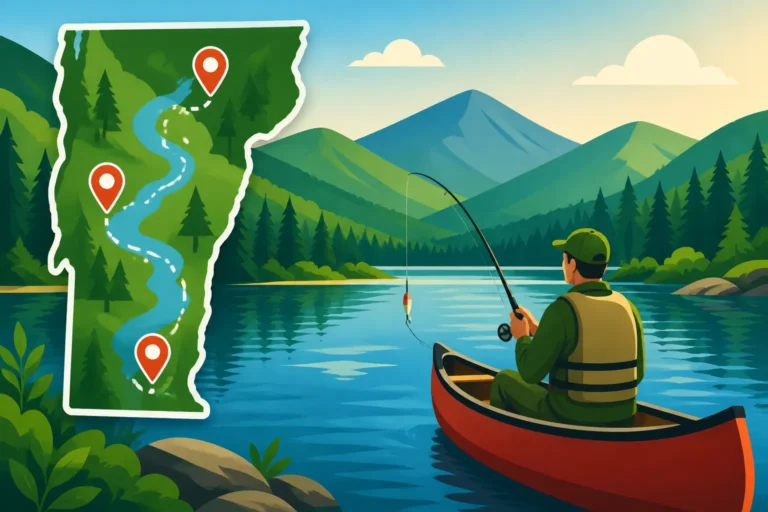
The Lamoille River begins its journey high in the northeastern mountains of Vermont, winding through pristine forests and remote valleys. In its upper reaches, it's a classic cold-water trout stream, often characterized by swift currents, rocky bottoms, and deep pools formed by fallen trees and boulders. As it flows westward, it gathers strength, passing through agricultural lands, small towns like Morrisville and Johnson, and eventually broadening into wider, slower sections. These mid-river stretches often have more varied bottoms, with gravel, sand, and occasional muddy areas, offering different holding patterns for fish. Finally, as it nears Lake Champlain, the river widens considerably, becoming a slow, deep estuary that feels more like a shallow lake than a river, heavily influenced by the lake's fish populations.
This incredible diversity means you can literally chase different species in different environments all within the same river system. You might be fly fishing for wild brook trout in a secluded upper branch in the morning, then casting for smallmouth bass or even northern pike in a wider, slower section by afternoon. The river's varying flow rates and bottom compositions mean that fish will hold in different types of cover and structure depending on where you are. Understanding these changes helps you select the right gear and approach for each unique stretch.
Key Fish Species You'll Encounter
The Lamoille River truly shines as a multi-species fishery, offering something for every type of angler. In the colder, swifter upper reaches and many of its tributaries, you'll find healthy populations of brook trout, brown trout, and rainbow trout. These sections are a haven for fly anglers, who often seek out the challenge of stalking these beautiful, wary fish in their natural habitats. The Vermont Trout Season and Stocking Rules dictate when and where you can target these species, so it’s always wise to check the latest regulations.
As you move downstream into the wider, warmer sections, the species mix shifts. Here, smallmouth bass become a primary target, especially during the warmer months. These feisty fish love the rocky bottoms, current breaks, and submerged structure found in these areas. You'll also encounter largemouth bass in some of the slower, weedy backwaters and oxbows. Beyond the bass, the Lamoille holds good numbers of panfish like yellow perch, bluegill, and black crappie, which can provide consistent action, particularly for families or beginner anglers. Closer to Lake Champlain, the river becomes an extension of the lake itself, and you might hook into walleye, northern pike, or even channel catfish, especially during their migratory periods. The incredible variety is one of the Lamoille’s biggest draws.
Understanding Seasonal Flow and Water Conditions
The Lamoille River, like most New England rivers, is heavily influenced by seasonal changes, which in turn dictate the best times and ways to fish. Spring, after the ice-out, often brings high, cold water from snowmelt. While challenging, this can be an excellent time for trout, especially as they become more active after winter. As spring progresses, the water levels typically drop, and temperatures rise, creating prime conditions for trout fishing. However, anglers should always be mindful of When Vermont trout streams get too warm to fish as heat stress can be dangerous for trout.
Summer fishing on the Lamoille usually means lower, clearer water, making trout more selective but also easier to spot for sight fishing. This is when smallmouth bass really turn on, especially in the middle and lower river sections, offering exciting topwater action. Fall brings cooler temperatures and often a renewed burst of activity for all species, as they feed heavily in preparation for winter. The vibrant foliage also makes for incredibly scenic fishing trips. Winter, of course, means ice fishing on the slower, wider sections and sometimes even the lower river mouth, where anglers target perch, pike, and walleye. Always check local river gauges and weather forecasts before heading out; river conditions can change rapidly in Vermont.
Essential Gear and Techniques for Lamoille River Success
Having the right tools and knowing how to use them can make all the difference between a frustrating day and a fantastic one on the Lamoille River. Because the river changes so much from its headwaters to its mouth, a versatile approach to gear and tactics will serve you best.
Rods, Reels, and Line Choices for River Fishing
Given the Lamoille's varied character, you'll want to tailor your setup to the section you plan to fish. For the upper, trout-heavy sections, a lightweight spinning rod (6' to 7' light or ultralight action) paired with a small spinning reel spooled with 4-6 lb monofilament or fluorocarbon line is ideal. This setup allows for delicate presentations of small spinners, spoons, or bait. Fly anglers will find a 7'6" to 9' fly rod in a 3- to 5-weight suitable for most trout scenarios, matched with a weight-forward floating line. When considering your Best Gear for Vermont Trout Fishing, remember that stealth and precision are often more important than brute strength.
For the mid-to-lower river sections where smallmouth bass are prevalent, you'll want to step up your gear. A medium-light to medium action spinning rod (6'6" to 7'6") with 8-12 lb test fluorocarbon or braid is a solid choice. This gives you enough backbone to handle larger bass in current and cast heavier lures like crankbaits and jigs. If you prefer baitcasting, a similar action rod will work well. The greater casting distance and power of a baitcaster can be advantageous when targeting larger bass or pike in wider areas. Using fluorocarbon leaders, even with braided mainline, is often a good idea, especially in the clearer water found during summer, as it's less visible to fish.
Top Baits and Lures for Trout and Bass
When chasing trout in the Lamoille's upper reaches, classic offerings like small inline spinners (Mepps Aglia, Panther Martin) in sizes #0 to #2 are often deadly. Small spoons like Kastmasters or Little Cleos can also entice bites. For bait fishing, garden worms, nightcrawlers, or PowerBait can be highly effective, especially for freshly stocked trout. Fly anglers should carry a diverse selection of patterns: nymphs like Hare's Ears, Pheasant Tails, and Prince Nymphs are year-round producers, while dry flies mimicking caddis, mayflies, and stoneflies shine during hatches. Streamers such as Woolly Buggers are also excellent for tempting larger trout from deeper pools.
For smallmouth bass in the Lamoille's mid-to-lower sections, a wide array of lures can be effective. Early season and cooler water often calls for jigs (tube jigs, football jigs) fished slowly along the bottom or small crankbaits that mimic crawfish or baitfish. As water temperatures rise, topwater lures like poppers, walking baits, and buzzbaits can create explosive strikes, especially during dawn and dusk. Spinnerbaits and chatterbaits are excellent for covering water and fishing around submerged wood or rocky points. Soft plastics, rigged Texas or Carolina style, are also fantastic for working deeper structure. Don't forget that Best Baits for Smallmouth Bass on Lake Champlain often translate well to the Lamoille's lower sections, particularly for the larger specimens influenced by the lake.
Mastering Wading and Bank Fishing Strategies
The Lamoille River offers fantastic opportunities for both wading and bank fishing, but each requires a slightly different approach to maximize your chances. For trout fishing in the upper and middle river, wading is often the most effective method, allowing you to access prime holding water that's unreachable from the bank. However, safety is paramount. Always use a sturdy Best Wading Staff for Fast Current, wear appropriate Best Waders for Vermont Trout Streams with good traction (felt or rubber depending on bottom type), and know your limits. Move slowly and deliberately, reading the water for current seams, eddies, and submerged structure where fish might hide. Keep a low profile to avoid spooking wary trout.
Bank fishing can be very productive, especially in the more accessible areas with public access points, bridges, or designated fishing areas. Focus on casting to current breaks, undercut banks, and around any visible cover like fallen trees or large rocks. These spots often provide ambush points for both trout and bass. Kayak fishing is also an increasingly popular way to explore the Lamoille, allowing you to cover long stretches of river while maintaining stealth. A Best Kayak for River Fishing in Vermont can get you to spots unreachable by foot and allows for quiet approaches to fish-holding structure. Always be aware of your surroundings, potential hazards, and changing water levels, especially if you're venturing out on a kayak.
Prime Fishing Spots Along the Lamoille River
The Lamoille River is a tapestry of different environments, each offering its own unique fishing experience. Knowing where to go and what to expect in each section can make your trip significantly more productive and enjoyable. From remote wilderness to bustling town centers, the Lamoille truly has it all.
Upstream: Wilderness Sections and Tributary Junctions
In its upper reaches, roughly from the origins in Greensboro and Craftsbury down to areas around Johnson and Morrisville, the Lamoille River and its many tributaries offer a more intimate, wilderness fishing experience. These sections are typically colder, swifter, and feature classic freestone stream characteristics: riffles, runs, deep pools, and plenty of rocky cover. This is prime territory for native brook trout, as well as wild and stocked brown and rainbow trout. Access can sometimes be challenging, requiring a bit of hiking or bushwhacking, which adds to the adventure and helps keep fishing pressure lower.
Look for areas where smaller feeder streams, like the Brewster River or Sterling Brook, flow into the main stem of the Lamoille. These junctions often create nutrient-rich eddies and current breaks that attract and hold fish. Public lands and state forests in this region, such as those near the Long Trail corridor, often provide good access points, though they may not always be marked. Fly Fishing for Trout in Vermont is particularly effective here, especially with dry flies during hatches or nymphs drifted through deeper slots. These pristine sections require a respectful approach, emphasizing catch-and-release to preserve the wild populations.
Midstream: Public Access Points and Town Pools
As the Lamoille River flows through towns like Johnson, Jeffersonville, Cambridge, and Fairfax, it transitions into broader, more accessible stretches. Here, you'll find more obvious public access points, often near bridges, parks, or designated fishing access areas maintained by the Vermont Fish & Wildlife Department. These sections often have a mix of faster runs and deeper, slower pools, making them excellent for both trout and smallmouth bass, depending on the season and water temperature. The river bottom here can be a mix of gravel, rock, and some sandy areas, providing varied habitat.
Town pools, like those found near the covered bridge in Jeffersonville or in the village of Johnson, are popular spots and often receive trout stockings. While they can see more pressure, they're convenient and can produce well, especially early in the season or during evening hours. For smallmouth bass, target the eddy lines, current seams behind large boulders, and areas with submerged timber or rock piles. These spots are often best fished by wading, or from the bank with longer casts. Many of these mid-river sections also offer opportunities for float fishing from a canoe or kayak, allowing you to explore miles of productive water that bank anglers can't reach.
Downstream: Lake Champlain Influence and Estuary Fishing
The Lamoille River's final, impressive stretch flows into Lake Champlain, creating a significant estuary environment near the towns of Milton and Colchester. Here, the river widens considerably, slows down, and deepens, becoming heavily influenced by the lake's diverse fish populations. This section offers a completely different fishing experience than the upper and middle river, feeling more like a large, shallow lake or bay. The water here is often warmer and can be stained, with a soft, silty bottom in many areas, though rocky points and ledges do exist.
This estuary is prime habitat for species like northern pike, walleye, yellow perch, and a mix of largemouth and smallmouth bass. During spawning runs or seasonal migrations, fish from Lake Champlain will move up into this lower river section, creating fantastic opportunities. Boat access is plentiful, with public ramps available in Milton and other nearby communities. Trolling, casting large spinnerbaits or crankbaits, and jigging can be highly effective here. Ice fishing is also popular in the wider, shallower bays of the lower Lamoille during winter months, where anglers target panfish and pike. You might even stumble upon some good Walleye Fishing on Lake Champlain right where the river meets the lake. When fishing this expansive lower stretch, using a detailed map or a fish finder can be invaluable for locating submerged channels, weed beds, and structure. If you're looking to book a guided trip to explore this section, services available through platforms like FishingBooker can help you connect with local captains who specialize in the Lamoille River's lower reaches and Lake Champlain.
Navigating Regulations and Ethical Practices on the Lamoille
Before you even make your first cast into the Lamoille River, it's crucial to understand and adhere to Vermont's fishing regulations. Not only does this keep you on the right side of the law, but it also ensures the sustainability and health of this incredible fishery for generations to come.
Deciphering Vermont's General Fishing Rules
Vermont has a comprehensive set of fishing regulations designed to protect its diverse fish populations. The first and most important step is always to secure a valid Vermont fishing license. Whether you're a resident or a nonresident, and regardless of your age, most anglers will need one. You can find detailed information on obtaining your license in the Vermont Fishing License Guide for 2026 or understand Vermont Fishing License Age Requirements if you're unsure. Beyond the license, you must be familiar with statewide rules regarding daily bag limits, possession limits, and minimum length limits for various species. These can vary not only by fish type but also by water body, so always check the latest Vermont Fish & Wildlife Department regulations booklet.
The Lamoille River, while generally falling under statewide regulations, may also have specific, localized rules that apply to certain stretches or species. For example, some areas might have special fly-fishing-only restrictions, or catch-and-release mandates for certain trout species during specific times of the year. Always consult the "Special Regulations" section of the Vermont Fishing Guide for the Lamoille River specifically. Understanding these nuances is critical, and ignorance of the law is not an excuse for violations. The Vermont Fishing Regulations Explained resource can provide a great overview, but nothing beats reviewing the official guide each year.
Catch-and-Release Practices and Conservation
For many anglers on the Lamoille River, especially those targeting wild trout or larger bass and pike, catch-and-release is a deeply ingrained practice. It's not just a trend; it's a vital conservation strategy that helps maintain healthy fish populations, particularly for species that are slow-growing or have limited natural reproduction. If you intend to release fish, it’s essential to do so in a way that maximizes their survival. Handle fish as little as possible, keep them in the water, and wet your hands before touching them to protect their protective slime coat.
Use barbless hooks or crimp down the barbs on your hooks to make removal easier and less damaging. This is especially true when Vermont Bass Catch-and-Release Season, Explained is in effect or when fishing for trophy trout. Carry a good pair of long-nosed pliers or forceps for quick and easy hook removal. If a fish is deeply hooked, it's often best to cut the line as close to the hook as possible rather than tearing internal organs. Understanding how to properly revive a tired fish, by holding it gently in the current until it swims away under its own power, is also crucial. Practicing responsible catch-and-release is one of the best ways we can all contribute to the long-term health of the Lamoille River fishery.
Respecting Private Property and River Etiquette
Accessing the Lamoille River responsibly means understanding and respecting property rights. While Vermont has a strong tradition of public access to waterways, much of the land bordering the river is privately owned. Always assume land is private unless clearly marked as public access. Trespassing is illegal and can lead to fines, confrontations, and ultimately, a reduction in public access points for everyone. Look for designated public fishing access areas, state parks, or areas explicitly marked for public use. If you're unsure, it's always better to err on the side of caution or ask for permission.
Beyond property lines, general river etiquette is essential. Be mindful of other anglers; give them plenty of space, especially if they are wading or fly fishing. Avoid loud noises or splashing that could disturb fish or other wildlife. Pack out everything you pack in, leaving no trace of your visit. This includes all trash, discarded fishing line, and bait containers. Polystyrene worm cups, for example, are a common sight in some fishing spots, and we can all do our part to reduce that. Leaving the river cleaner than you found it is always the goal. Additionally, if you're planning a trip with a guide, consider using services like FishingBooker to find reputable local operators who are well-versed in local regulations and etiquette, ensuring a smooth and responsible outing.
| Section of Lamoille River | Primary Fish Species | Typical Habitat | Recommended Gear | Access Considerations |
|---|---|---|---|---|
| Upper River | Brook, Brown, Rainbow Trout | Swift, cold, rocky freestone; deep pools, riffles | Ultralight spinning (4-6lb line), 3-5wt fly rod | Often requires hiking; limited public access; private land common |
| Mid River | Brown, Rainbow Trout; Smallmouth Bass; Panfish | Mixed flows, moderate depth; gravel, rock, some sand | Light-medium spinning (6-10lb line), 5-6wt fly rod | Public access points, bridges, some town parks; good wading |
| Lower River/Estuary | Smallmouth/Largemouth Bass; Walleye; Pike; Perch | Wide, slow, deeper; silty bottom, weed beds, channels | Medium-heavy spinning/baitcasting (10-20lb line) | Good boat access, public ramps; limited bank access; can be muddy |
Maximizing Your Lamoille River Experience
Fishing the Lamoille River is more than just catching fish; it's about soaking in the natural beauty of Vermont, challenging yourself with diverse conditions, and making memories. To truly get the most out of your trip, a little extra planning and an open mind can go a long way.
Best Times of Day and Year to Fish
The Lamoille River offers fishing opportunities year-round, but certain times of day and seasons are undoubtedly more productive, especially for specific species. For trout, early morning and late evening (dawn and dusk) are almost always the best times, particularly during warmer months. This is when trout are most actively feeding and less wary. During the heat of summer, look for shaded pools or deeper, cooler sections during the midday sun. Spring and fall often provide excellent all-day trout fishing, as water temperatures are more stable and comfortable for the fish.
Smallmouth bass, while active throughout the day, often exhibit peak feeding periods during early morning and late evening, especially on topwater lures. Overcast days or periods just before a storm can also trigger aggressive bites. In the lower estuary, walleye and pike can be targeted throughout the day, but often become more active during low light conditions or at night. Understanding Vermont Fishing Seasons by Month is crucial, as various species will have their peak activity and availability during different parts of the year. Always factor in weather patterns, barometric pressure changes, and recent precipitation, as these can significantly impact fish behavior and river conditions.
Planning Your Trip: Lodging, Guides, and Local Amenities
Vermont offers a wide range of lodging options to suit any budget and preference, from cozy bed and breakfasts in small towns to larger hotels in more populated areas like Stowe or Burlington, which are within a reasonable drive of many Lamoille River fishing spots. Many local towns along the river, such as Morrisville, Johnson, and Jeffersonville, have charming inns and motels that cater to outdoor enthusiasts. Booking accommodation in advance, especially during peak foliage season or summer weekends, is always a good idea.
If you're new to the Lamoille River or want to hone specific techniques, considering a local fishing guide can be an invaluable investment. A good guide knows the river intimately, understands current conditions, and can put you on fish much faster than trying to figure it out yourself. They can also provide insights into specific local regulations, access points, and effective patterns or lures. Websites like FishingBooker can be a great resource for finding experienced, licensed guides who specialize in the Lamoille River, whether you're after trout in the upper reaches or bass and pike in the lower estuary. You’ll also find plenty of local tackle shops in towns like Morrisville or Fairfax that can provide up-to-date reports, bait, and last-minute gear, as well as share invaluable local knowledge.
Exploring Beyond Fishing: Paddling and Scenic Views
While fishing is undoubtedly the main draw, the Lamoille River valley is a spectacular place to explore even when you're not casting a line. The river itself is popular for paddling, with several designated access points for canoes and kayaks. The Lamoille Valley Rail Trail runs parallel to significant portions of the river, offering fantastic opportunities for hiking, biking, and wildlife viewing. This trail provides easy access to many scenic overlooks and offers a unique perspective on the river's varied landscape.
You could spend a morning chasing trout in the upper river, then pack up your gear and enjoy a leisurely afternoon bike ride along the rail trail. The fall foliage in the Lamoille River valley is legendary, transforming the surrounding hillsides into a breathtaking palette of reds, oranges, and golds, making it a truly picturesque time to visit. Many state parks and natural areas in the vicinity offer additional recreational opportunities, from hiking to camping. Combining your fishing trip with these other activities can turn a simple outing into a truly memorable Vermont adventure.
Disclaimer
Please note that fishing regulations, conditions, and access points can change. Always consult the latest official Vermont Fish & Wildlife Department regulations guide before heading out on the water. This article is intended for informational purposes only and does not constitute legal advice. Adherence to all local, state, and federal laws is the responsibility of the individual angler.