What rainbow smelt are and why they matter to salmon
You're out on a crisp Vermont morning, maybe on the vast expanse of Lake Champlain or the crystal-clear depths of Lake Willoughby, casting for that elusive landlocked salmon. You feel a tug, set the hook, and after a thrilling fight, a beautiful silver fish comes to the net. But have you ever stopped to wonder what fueled that fish's impressive size and incredible fight? Often, the unsung hero of this story is a small, silvery fish with a distinctive cucumber-like smell: the rainbow smelt. For many anglers, understanding the complex food web beneath the surface can feel like trying to solve a puzzle in the dark, but this guide is here to shed light on exactly what rainbow smelt are and why they are absolutely indispensable to Vermont's salmon populations.
The Humble Rainbow Smelt: A Profile of Vermont's Essential Baitfish
Rainbow smelt ( Osmerus mordax ) are often overlooked by the casual angler, yet they play a colossal role in the aquatic ecosystems of Vermont's larger, colder lakes. They might not be the trophy fish you're dreaming of, but without them, those trophies wouldn't exist in the vibrant, healthy populations we enjoy.
What Do They Look Like and Where Do They Live?
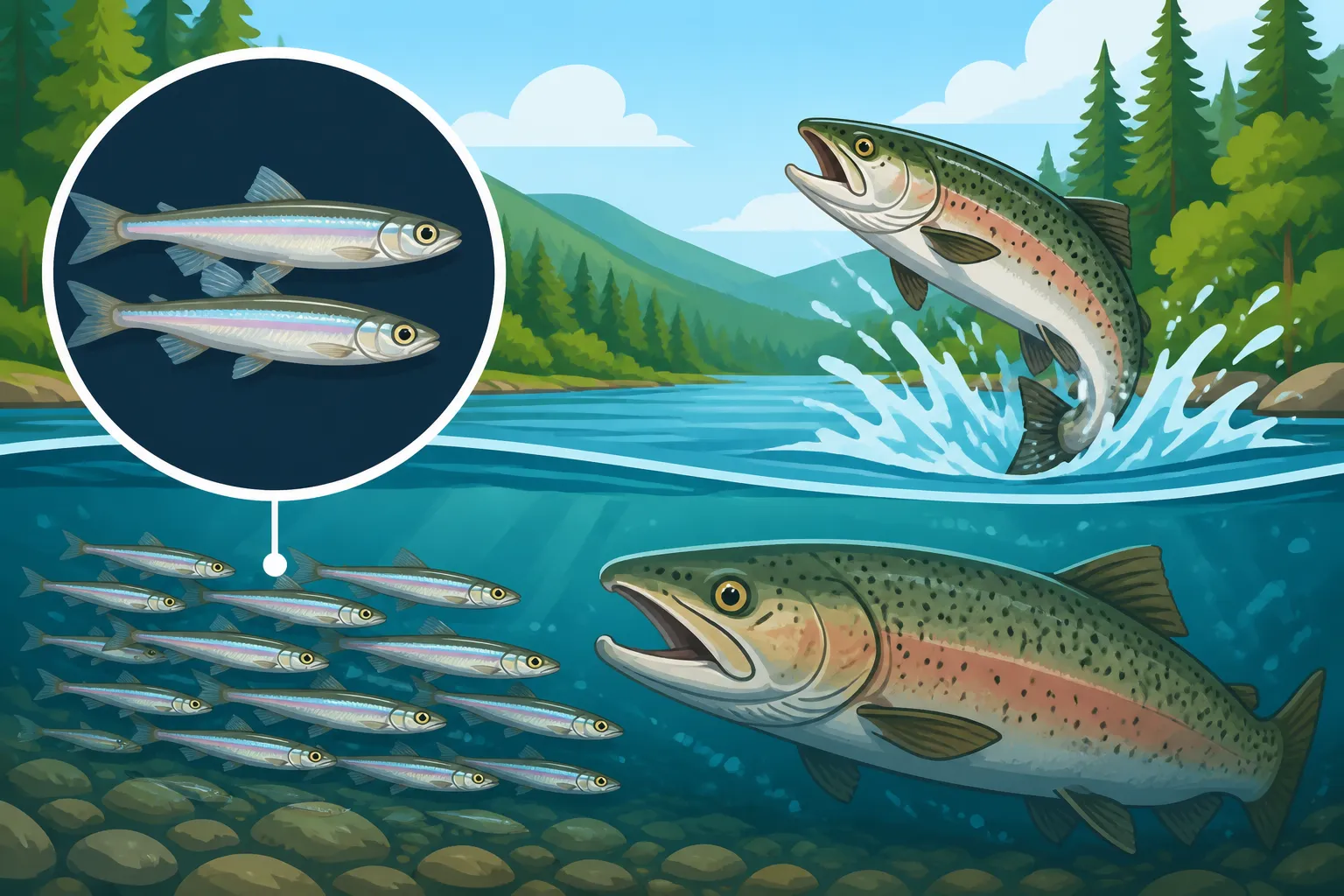
Imagine a fish that's long, slender, and flashes silver under the water, often with a subtle greenish-blue tint on its back. That's your typical rainbow smelt. They rarely grow very large in most Vermont waters, usually topping out at around 6-9 inches, though some exceptional individuals can be larger. One of their most distinctive traits, however, isn't visual; it's olfactory. If you've ever held a fresh smelt, you'll immediately notice a faint, pleasant smell, often described as similar to a freshly cut cucumber. It's truly unique in the fish world!
These fish are cold-water creatures, preferring the deep, clear, oxygen-rich environments found in many of Vermont's iconic lakes. Think of the vast deeps of Lake Champlain Fishing Guide, where they can retreat during warmer months, or the pristine, cold waters of Lake Willoughby Fishing Guide, which are famous for both their smelt and the salmon that feed on them. They are schooling fish, meaning they swim together in large groups, often in open water, making them an efficient food source for predators who can find and engulf many at once. Their presence indicates a healthy, cold-water lake ecosystem, capable of supporting the entire food chain that relies on them.
The Smelt Lifecycle: A Fast-Paced Existence
Rainbow smelt generally have a relatively short, but very active, lifespan. Most live for only a few years, but within that time, they are incredibly prolific spawners. Each spring, typically right after ice-out, as water temperatures begin to climb into the low 40s (Fahrenheit), smelt embark on one of nature's most impressive migrations. They leave the deeper parts of their lake homes and move into tributary rivers and streams, or sometimes even along shallow, rocky shorelines, to spawn. This mass migration is often referred to as a "smelt run."
During these runs, thousands upon thousands of smelt will move upstream, often at night, to deposit their sticky eggs on gravelly bottoms, rocks, or submerged vegetation. This is a critical time, not just for the smelt themselves, but for every predator in the ecosystem. Not only are the adult smelt concentrated and vulnerable, providing a feast for everything from predatory fish to birds and even bears, but the sheer volume of eggs provides an incredible boost to the aquatic food web. After spawning, the adult smelt often return to the lake, exhausted. The eggs hatch relatively quickly, and the tiny larval smelt drift back down to the lake, beginning their own journey to grow and eventually become the next generation's vital forage.
The Lifeline for Landlocked Salmon
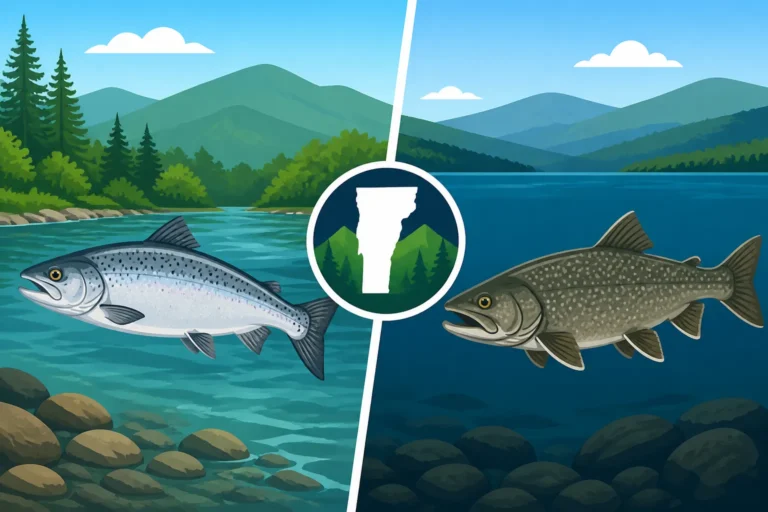
When we talk about the importance of rainbow smelt, the conversation almost always turns to landlocked salmon. These magnificent fish, essentially Atlantic salmon that have adapted to live their entire lives in freshwater, are the apex predators in many of Vermont's cold, deep lakes. And for them, rainbow smelt aren't just a food source; they are the food source.
The Primary Forage Base: More Than Just a Meal
Landlocked salmon are highly piscivorous, meaning their diet consists almost exclusively of other fish. In the specific cold-water environments where they thrive in Vermont, rainbow smelt are by far the most abundant, accessible, and nutritionally rich prey available. Imagine a vast underwater buffet: smelt are the most readily available and energy-packed dish on the menu. Their schooling behavior makes them relatively easy for salmon to hunt efficiently, allowing a single salmon to consume many smelt in one feeding frenzy.
Without a robust population of rainbow smelt, the landlocked salmon in our lakes would simply not be able to grow to the sizes and maintain the health that makes them such prized game fish. Their entire existence, from rapid growth to strong fighting capabilities, is intrinsically linked to the abundance and health of the smelt populations below them. This is why when fisheries biologists talk about the health of a salmon fishery, they are often monitoring the smelt population just as closely. You might even find yourself using lures specifically designed to mimic these slender baitfish when learning How to Catch Landlocked Salmon in Vermont.
Fueling Growth and Fight: A Direct Correlation
The connection between a healthy smelt population and large, strong salmon is incredibly direct. Smelt are packed with fat and protein, providing the high-energy diet necessary for salmon to grow quickly. When smelt populations are booming, salmon often exhibit faster growth rates, reaching trophy sizes more consistently. Conversely, if a smelt population crashes due to environmental factors, over-harvest, or invasive species, the salmon fishery will almost certainly suffer, with fish showing slower growth, poorer condition, and potentially lower survival rates.
Think of it this way: a champion athlete needs a high-quality, high-energy diet to perform at their peak. For a landlocked salmon, rainbow smelt are that peak performance diet. The powerful runs, the aerial acrobatics, the sheer stamina that makes catching a salmon such an exhilarating experience – much of that energy comes directly from the hundreds, if not thousands, of smelt they've consumed throughout their lives. This relationship is a key factor in Landlocked Salmon Growth Rate to Trophy Size.
Seasonal Movements and Salmon Behavior
One of the most fascinating aspects of this predator-prey relationship is how the movements of rainbow smelt dictate the behavior and location of landlocked salmon throughout the year. As the seasons change, so do the habits of smelt, and salmon are right there, following their food source.
In the spring, when smelt move into shallow areas or rivers to spawn, salmon will often congregate near these staging areas, lying in wait for an easy meal. This is a prime time for anglers to target salmon, knowing where their primary food source is concentrated. After spawning, as the lake waters warm, smelt retreat to the deeper, cooler parts of the lake. Salmon will follow them down, often suspending at similar depths where thermoclines provide optimal temperatures and easy access to schooling smelt. Then, in the fall, as lake temperatures cool, smelt might become more active in shallower zones again, and salmon will follow suit, often feeding heavily to build up reserves for winter. Understanding these movements is crucial for knowing the Best Time of Day to Catch Landlocked Salmon and where to find them.
This continuous dance between predator and prey is a testament to the intricate balance of nature, and for the angler, it's a vital piece of the puzzle for consistent success. Knowing What lures imitate the smelt landlocked salmon eat can be a game-changer.
Beyond Salmon: Smelt's Role in the Broader Ecosystem
While landlocked salmon are the poster fish for rainbow smelt dependence in Vermont, their ecological importance extends far beyond just one species. These little fish are a linchpin in the cold-water food webs of our larger lakes, supporting a diverse array of aquatic and even terrestrial life.
Supporting Other Apex Predators
It's not just the salmon who have a taste for smelt. Other large predatory fish in Vermont's waters also eagerly consume them. Lake trout, another cold-water specialist found in deeper lakes like Champlain and Willoughby, rely heavily on smelt as a primary food source. Much like salmon, the health and size of a lake trout population are often directly linked to the abundance of smelt. If you're targeting Lake Trout Fishing in Vermont, you're likely fishing in areas where smelt are also present.
Even species like walleye, particularly in Lake Champlain Walleye Fishing scenarios, will key in on smelt, especially during specific times of the year or in certain sections of the lake where smelt are abundant. Best Lures for Walleye Trolling on Lake Champlain often include lures that imitate the size and flash of a smelt. Even northern pike, though generally more opportunistic feeders, won't pass up a chance to ambush a school of smelt. This highlights how critical smelt are to the overall health and productivity of these diverse fisheries.
A Key Link in the Food Web
Rainbow smelt act as an incredibly efficient bridge in the aquatic food web, transferring energy from the lower trophic levels (like zooplankton, which the young smelt eat) to the higher predators. They essentially package microscopic energy into a convenient, calorie-dense meal for larger fish. When smelt populations are robust, that energy transfer is efficient, leading to healthier, more abundant game fish. When smelt numbers decline, that energy transfer is disrupted, and the entire ecosystem can feel the ripple effect.
Consider the intricate balance:
| Species Role | Primary Diet/Focus | Reliance on Smelt |
|---|---|---|
| Rainbow Smelt | Zooplankton, small insects | Bridge from microscopic to macroscopic |
| Landlocked Salmon | Rainbow Smelt | Primary forage, crucial for growth/survival |
| Lake Trout | Rainbow Smelt, other baitfish | Key forage, especially in deep, cold water |
| Walleye (some areas) | Various baitfish, including smelt | Opportunistic, but significant where smelt are abundant |
| Northern Pike | Any available fish, including smelt | Opportunistic predator of schooling smelt |
| Birds (e.g., Loons) | Small fish, including spawning smelt | Feast on vulnerable smelt during spawning runs |
| Mammals (e.g., Otter) | Various aquatic life, including smelt | Opportunistic predator |
This table clearly illustrates how foundational smelt are to the entire cold-water ecosystem. Their abundance or scarcity sends ripples up and down the food chain.
Human Influence and Conservation
For generations, smelt runs have been a cultural tradition in many parts of Vermont, with families heading to stream mouths after ice-out to "dip" for smelt using nets. This activity is often regulated, and understanding Vermont Smelt Dipping License Requirements is important if you plan to participate. While a managed recreational harvest is usually sustainable, large-scale impacts, whether from over-harvest, habitat degradation of spawning streams, or the introduction of invasive species, can severely damage smelt populations.
The health of smelt populations is constantly monitored by fisheries biologists. Efforts to protect and restore spawning habitats, manage fishing pressure, and control invasive species that compete with or prey on smelt are vital for ensuring that these crucial baitfish continue to thrive, thereby supporting the incredible salmon and lake trout fisheries that Vermont is so famous for. Protecting the little fish is really about protecting the big fish and the entire aquatic community.
Angler's Advantage: Using Smelt Knowledge for Success
As anglers, having a deeper understanding of rainbow smelt isn't just academic; it's a powerful tool that can significantly improve your success on the water, especially when chasing landlocked salmon, lake trout, or even walleye in certain areas. Knowledge truly is power when it comes to fishing.
Targeting Salmon: Matching the Hatch
One of the most effective strategies in fishing is "matching the hatch"—meaning, using lures or baits that closely imitate what the fish are currently feeding on. For landlocked salmon, this almost always means imitating rainbow smelt.
- Lure Selection: Focus on lures that are silver, slender, and have a darting action. Long, thin stickbaits, spoons, and soft plastic jerkbaits are excellent choices. Many popular brands create baits specifically designed to mimic smelt. You can find a fantastic selection of these on platforms like Amazon or at your local tackle shop.
- Depth and Location: Remember that salmon follow smelt. If smelt are deep in the summer, the salmon will be deep. If smelt are staging near stream mouths in the spring, that's where you'll find the salmon. Using your fish finder to locate schools of baitfish (which are often smelt) is a direct path to finding predatory game fish.
- Time of Year: The Vermont Fishing Seasons by Month can give you clues as to when smelt might be most active and vulnerable, and therefore when salmon might be most aggressively feeding on them. For instance, right after ice-out, as smelt are preparing to spawn, salmon can be found in more accessible, shallower waters.
By thinking like a smelt, you can start to predict where the salmon will be and what they'll be willing to strike. It's a game of chess, and the smelt are the pawns.
Smelt Dipping: A Unique Vermont Tradition
Beyond their role as forage, rainbow smelt offer a unique recreational opportunity for many Vermont families: smelt dipping. This age-old tradition typically takes place in early spring when smelt run up streams to spawn. Armed with dip nets and often under the cover of darkness, people gather at designated access points (check local regulations and obtain the proper licenses, like Vermont Smelt Dipping License Requirements) to catch buckets of these silvery fish.
It's a fantastic way to introduce kids to fishing, experience a piece of Vermont's outdoor culture, and gather some delicious fish for the frying pan. Freshly caught smelt, lightly battered and fried, are a true delicacy. While it's a fun and popular activity, always remember to respect the regulations and ensure you're practicing ethical harvesting to maintain healthy populations for both future dippers and, of course, the salmon that depend on them. You might even find a simple fishing net or headlamp on Amazon to make your experience more enjoyable!
Observing the Ecosystem: Becoming a Better Angler
Ultimately, understanding the importance of rainbow smelt encourages us to look at the entire aquatic ecosystem with more appreciation and curiosity. Pay attention to signs of baitfish activity—nervous schools of fish on your sonar, birds diving, or even seeing the distinctive flash of a smelt jumping. These observations are clues that can lead you to the bigger fish.
The health of the smelt population is a barometer for the overall health of our cold-water fisheries. By recognizing their critical role, we become more informed and responsible anglers, ready to appreciate the full picture of what makes Vermont's fishing opportunities so special. So next time you're out on the water, take a moment to consider those small, silvery fish. They're doing some heavy lifting in the ecosystem, ensuring that the big ones keep biting!
Disclaimer
This article is for general informational purposes only and does not constitute professional advice. Laws, prices and regulations vary by location and change over time. Consult a qualified professional for guidance on your specific situation.