What lures imitate the smelt landlocked salmon eat
Catching landlocked salmon in Vermont can feel like solving a mystery, especially when those elusive silver bullets are keying in on a specific forage. If you've ever spent hours trolling or casting without a bite, it's often because your presentation isn't quite matching what's on the menu – and for salmon, that's usually smelt. This guide dives deep into the world of smelt imitation, helping you pick the right lures and techniques to fool even the most finicky landlocked salmon.
Why Imitating Smelt is Crucial for Landlocked Salmon Success
When you're chasing landlocked salmon, whether it's on the vast expanse of Lake Champlain, the deep, clear waters of Lake Willoughby, or the productive depths of Lake Memphremagog, understanding their diet is your golden ticket. These powerful, acrobatic fish are primarily predators of smaller baitfish, and in many of Vermont's prime salmon waters, rainbow smelt are at the very top of their preferred food list. It's not just a casual preference; it's often an obsession.
The Smelt Connection: A Primary Forage Fish
Imagine a buffet laid out for a gourmet. For landlocked salmon, especially the larger, more mature fish, a school of smelt is exactly that. Smelt are small, slender, silvery fish, typically ranging from a few inches up to around seven or eight inches in length. They school together in open water, providing an abundant and easy-to-target food source for salmon. Their rich, oily flesh also offers high caloric value, which is essential for the salmon's rapid growth and sustained energy for those incredible fights we all love.
Lakes like Willoughby and Memphremagog are classic landlocked salmon fisheries precisely because they host robust populations of rainbow smelt. The salmon in these waters are genetically wired to hunt them. If you're not presenting something that looks, moves, and even sometimes feels like a smelt, you're essentially offering a dish the salmon isn't interested in. Matching the hatch, as fly anglers say, is just as critical here, but with lures designed to replicate these vital baitfish. If you want to learn more about where these fish thrive, check out our Lake Willoughby Landlocked Salmon Fishing guide.
How Salmon Hunt Smelt
Salmon are opportunistic predators, but they're also incredibly efficient hunters. They'll often cruise open water, relying on their keen eyesight and lateral line to detect schools of smelt. When they locate a school, they might herd them towards the surface or into shallower areas, making it easier to pick off individual fish. This behavior can change throughout the day and with seasonal shifts.
In early spring, right after ice-out, salmon might be found closer to the surface or around tributary mouths where smelt are staging to spawn. As summer progresses and water temperatures rise, both salmon and smelt will often retreat to deeper, cooler water. Understanding these movements is key to presenting your smelt imitation at the right depth and in the right strike zone. They often target smelt that are injured or isolated from the main school, which is why certain lure actions are so effective.
Top Lure Categories for Smelt Imitation
So, how do we mimic these crucial baitfish? Anglers have developed a range of lures over the years that do an incredible job of looking, swimming, and flashing just like a smelt.
Minnow-Style Stickbaits
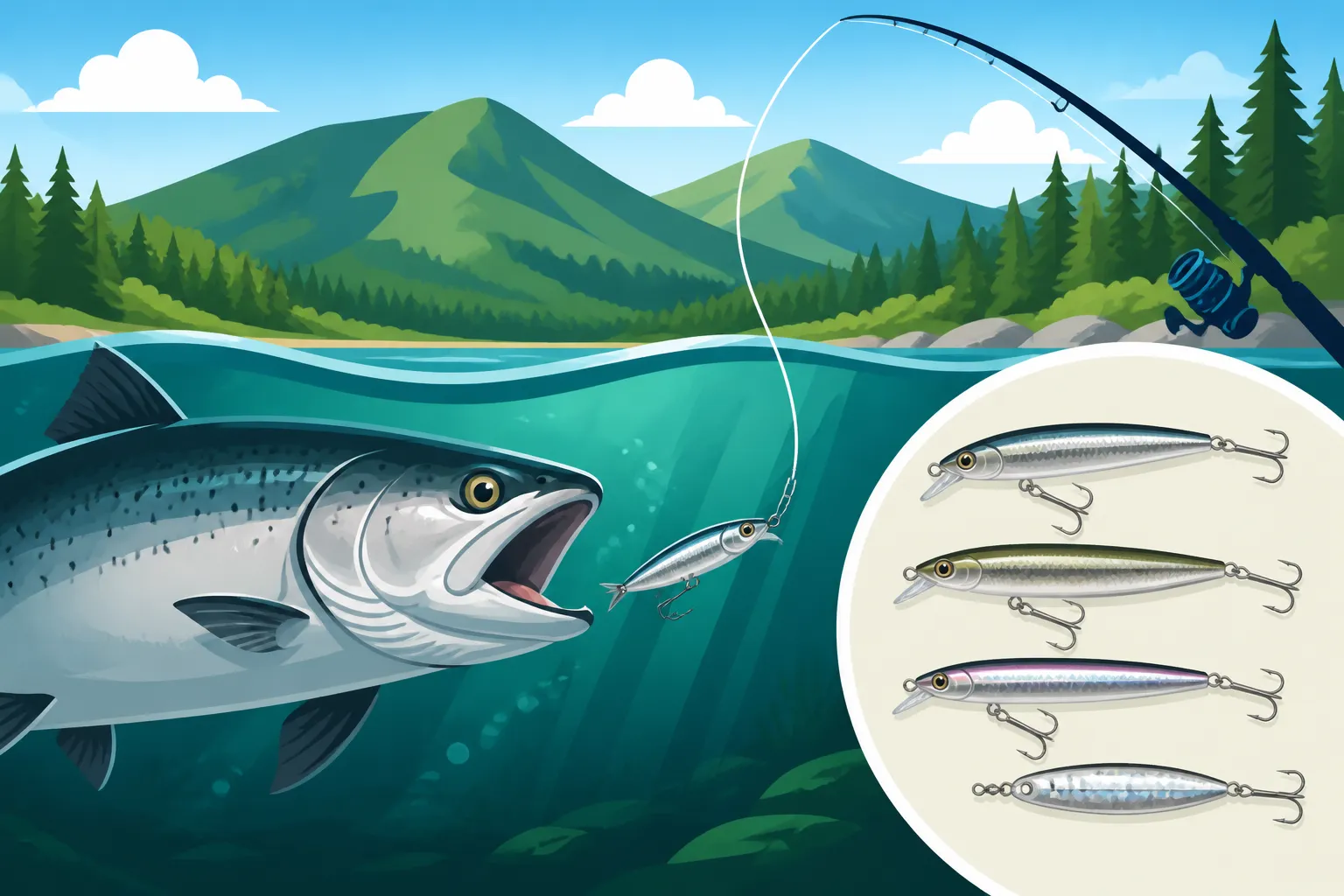
When you think of a lure that looks like a small fish, a minnow-style stickbait is probably what comes to mind. These lures are slender, often have a subtle wobble, and come in a dazzling array of finishes that perfectly replicate a smelt's silvery flash. They are perhaps the most popular choice for imitating smelt.
Brands like Rapala, Yo-Zuri, and Bomber offer a multitude of options. Look for stickbaits in natural baitfish patterns – silver, blue, green, and iridescent hues. Sizes typically range from 3 to 6 inches, which matches the average size of smelt in Vermont's salmon lakes. These lures are incredibly versatile; they can be trolled at various depths using lead core or downriggers, or cast and retrieved with a jerk-pause action. Trolling them near thermoclines or along structure can be deadly. You can often find a wide selection of these versatile lures on Amazon, making it easy to compare options and read reviews from other anglers.
Spoons and Flutter Spoons
Spoons might seem like a simpler lure, but their effectiveness for landlocked salmon, especially when imitating a distressed smelt, is undeniable. A good spoon will have an erratic, wounded-fish action when trolled or jigged, mimicking a smelt struggling to keep up with its school or one that's been injured. This "wounded baitfish" presentation is often irresistible to predatory salmon.
Flutter spoons, in particular, are designed to have a wider, more erratic side-to-side wobble on the retrieve or when dropped. They shimmer and flash intensely, making them highly visible even in deeper, darker water. Finishes like silver, chrome, or even white with a blue or green stripe are classic smelt patterns. They can be trolled directly, or tipped with a small piece of worm or bait for added attraction. Experiment with different weights and sizes to match the depth and speed you're trying to achieve. For instance, a light, wide spoon might be perfect for slower trolling at shallower depths, while a heavier, more compact spoon could sink faster for deep-water jigging. Remember that Best Trolling Gear for Lake Champlain Walleye often applies to salmon as well, especially when it comes to spoons and their action.
Soft Plastic Swimbaits and Jerkbaits
Soft plastic lures have come a long way, offering incredible realism and versatility. Swimbait and jerkbait styles made from soft plastic can be rigged in numerous ways to achieve a lifelike smelt imitation. The soft, supple body material allows for incredibly natural movement, even at slow speeds.
These lures typically come with a paddle tail or a slender, tapering tail that provides a subtle kicking action, mimicking a swimming smelt. Colors again should lean towards natural baitfish – pearl white, silver fleck, or translucent patterns with glitter. They can be rigged on a plain jig head for casting and retrieving, or on a weighted treble hook for trolling. Some anglers even use them on umbrella rigs or Alabama rigs (where legal) to create a "school" of smelt. The beauty of soft plastics is their ability to be fished at almost any depth, from shallow flats to deep breaks, simply by adjusting the weight of your jig head. A quick search on Amazon will reveal countless options from brands like Keitech, Berkley, and Z-Man, offering a vast selection of sizes, colors, and rigging options to perfectly match your local smelt population.
Key Characteristics of Effective Smelt Lures
It's not just about picking a lure type; it's about understanding the nuances that make it truly effective as a smelt imitation. Small details can make a huge difference in enticing a wary salmon.
Color and Flash
The most striking feature of a smelt is its brilliant silver, almost iridescent flank. This flash is what helps them blend into their surroundings in open water, but it also makes them highly visible to predators when they turn or dart. Therefore, your lures should replicate this.
Look for lures with chrome, silver, or highly reflective finishes. Many successful smelt imitators also incorporate hints of blue, green, or even purple in their backs, mimicking the subtle coloration found on natural smelt. The flash on a lure works by reflecting available light, mimicking the scales of a baitfish. This is why highly polished or holographic finishes are so popular. Even in low light or deep water, this flash can attract attention, causing a salmon to investigate further.
Size and Profile
Salmon are not shy about eating a large meal, but they are also incredibly efficient. They'll key into the size of the predominant forage. If the smelt in your target lake are typically 4-5 inches long, then a 4-5 inch lure will likely be more effective than a much larger or smaller one.
The profile of the lure should also be slender, mirroring the natural shape of a smelt. Chunky, wide-bodied lures might be effective for other species, but for imitating the streamlined smelt, a thin, elongated body is paramount. This slender profile also contributes to a more natural swimming action, making the lure less resistant to water and allowing for subtle movements. As seasons change, the average size of smelt might shift slightly, so having a range of lure sizes can be beneficial.
Action and Vibration
The way a lure moves in the water is often the final piece of the puzzle. A healthy smelt swims with a subtle, fluid motion. An injured smelt might dart erratically, flutter, or struggle. Your lures need to be able to replicate these actions.
- Subtle Wobble: Many minnow-style stickbaits are designed to have a tight, subtle wobble that mimics a healthy swimming smelt.
- Erratic Darting: Jerkbaits, both hard and soft, excel at this. With a twitch of the rod, they dart side-to-side, then pause, perfectly imitating a panicked or wounded baitfish.
- Fluttering Fall: Spoons, especially flutter spoons, are fantastic for imitating a dying or injured baitfish as they fall or are trolled slowly. The flash and erratic movement on the drop can often trigger a strike from a following salmon.
The key is often a combination of movement and pause. Salmon are ambush predators, and a momentary pause in a lure's action can often be the trigger that convinces them to strike. Consider how Best Trolling Speed for Landlocked Salmon directly affects the action of your lure; too fast, and a subtle lure might spin unnaturally; too slow, and a flutter spoon might not achieve its intended action.
Techniques for Presenting Smelt-Imitating Lures
Having the right lure is only half the battle; knowing how to present it effectively to landlocked salmon is equally important. These fish are often found in open water, requiring specific strategies.
Trolling for Success
Trolling is hands down one of the most effective methods for covering water and finding active landlocked salmon, especially in large Vermont lakes like Lake Champlain or Lake Memphremagog. It allows you to present your smelt-imitating lures at precise depths and speeds where salmon are feeding.
- Depth Control: This is paramount. Salmon will often suspend at specific depths, usually where water temperatures are optimal and baitfish are concentrated. Downriggers, lead core line, or even heavy inline sinkers (dipsy divers are less common but can work) are essential tools for getting your lures into the strike zone. If you're wondering How deep to troll for lake trout on Lake Champlain, many of those principles apply directly to salmon as well, as they often share similar thermal preferences.
- Speed: Landlocked salmon are fast, but they don't always want a lure zooming past them. Experiment with trolling speeds, typically between 1.5 and 3.0 miles per hour, adjusting until you find what triggers bites. Watch your rod tips for the desired lure action.
- Spread: Running multiple lines at different depths and distances behind the boat, creating a "trolling spread," increases your chances of encountering fish. Use planer boards to get lures out to the side of the boat, covering a wider swath of water. This is where understanding Best Trolling Spread for Landlocked Salmon can really pay off.
- Location: Focus on areas with known smelt populations, near deep-water structure, sharp drop-offs, or suspended over deep basins. Your fish finder will be an invaluable tool for locating both baitfish and salmon.
Casting and Retrieving in Specific Scenarios
While trolling dominates open water, there are specific situations where casting smelt-imitating lures can be incredibly effective, especially in smaller lakes or during certain times of the year.
- Shoreline and Drop-offs: In early spring or late fall, salmon might cruise closer to shore, particularly near rocky points, ledges, or where tributaries enter the lake. Casting minnow-style stickbaits or soft plastic jerkbaits into these areas and retrieving them with an erratic jerk-pause action can be very productive.
- Visible Bait Schools: If you spot schools of smelt on the surface or near structure, casting a soft plastic swimbait or a small spoon into the melee can often draw an aggressive strike. The key is to match the frantic behavior of the bait.
- River Mouths: During periods when smelt are entering rivers to spawn, or in the fall when salmon are staging, casting lures into river mouths can be highly effective. The current will impart additional action to your lure, making it even more appealing.
- Retrieve Styles:
- Jerk-Pause: This is classic for minnow-style lures. Cast out, let it sink to your desired depth, then twitch your rod tip sharply a few times, reeling in the slack, followed by a pause. Many strikes occur on the pause as the lure suspends or slowly rises/falls.
- Steady Retrieve: For spoons or swimbaits, a steady retrieve, varying speed occasionally, can be effective, mimicking a healthy, swimming smelt. Ensure your lure is deep enough to be in the salmon's feeding zone.
Knowing Best time of day to catch landlocked salmon on Willoughby can also influence whether casting or trolling is more effective, as salmon often feed aggressively during low light hours near the surface, making casting a viable option.
Smelt Imitation Lure Overview
Here's a quick look at some top lure categories and their best uses for imitating smelt for landlocked salmon:
| Lure Type | Best for Imitating | Key Features for Smelt Imitation | Primary Technique | Considerations |
|---|---|---|---|---|
| Minnow-Style Stickbaits | Healthy, swimming smelt | Slender body, silver/blue/green finishes, subtle wobble | Trolling, Casting | Vary retrieve speed, experiment with suspending models |
| Flutter Spoons | Injured, dying smelt | Erratic flash, wide wobble, various weights | Trolling, Jigging | Good for vertical presentations, sensitive to speed changes |
| Soft Plastic Swimbaits | Live, swimming smelt | Realistic profile, natural tail kick, soft body | Trolling, Casting | Rig with appropriate jig head for desired depth/action |
| Soft Plastic Jerkbaits | Erratic, panicked smelt | Flexible body, darting action on twitch | Casting, Trolling | Best with quick rod movements and pauses |
Remember, the goal is always to present your lure in a way that makes a salmon believe it's an easy, tasty meal. With the right smelt imitation and proper technique, you'll be well on your way to hooking into some incredible Vermont landlocked salmon.
Disclaimer
This article is for general informational purposes only and does not constitute professional advice. Laws, prices and regulations vary by location and change over time. Consult a qualified professional for guidance on your specific situation.