Which lakes get tiger muskie stockings
Trying to figure out where Vermont stocks those elusive, hard-fighting tiger muskies can feel like searching for a needle in a haystack, especially when you're dreaming of tangling with one of these incredible hybrids. It's not always clear which waters hold them, and without that crucial information, planning your next big fishing adventure can be tough. This guide is here to cut through the confusion, revealing the specific Vermont lakes that receive regular tiger muskie stockings, so you can focus on rigging up and hitting the water with confidence.
Understanding Tiger Muskie in Vermont
Before we dive into the "where," let's chat a bit about what a tiger muskie actually is and why Vermont's fisheries management even considers stocking them in the first place. These aren't your typical native Vermont fish, but they've found a special place in the hearts of many anglers who appreciate their unique challenge and impressive size.
What Exactly is a Tiger Muskie?
A tiger muskie, often simply called a "tiger," isn't a naturally occurring species in the traditional sense. It's a sterile hybrid, meaning it's the result of cross-breeding two distinct species: a muskellunge (muskie) and a northern pike. Think of it like the mule of the fish world—it's incredibly robust and strong, but it can't reproduce on its own. This sterility is actually a key reason why they are stocked in certain waters.
Visually, tigers are absolutely stunning. They typically inherit the elongated body shape of both parents, but their most distinguishing feature is their striking coloration. They sport a distinctive pattern of dark, irregular vertical bars or spots over a lighter background, giving them a striped, tiger-like appearance. It's truly a sight to behold when you pull one of these beauties out of the water! They combine the aggressive nature of a northern pike with the larger size potential and longer lifespan of a true muskellunge, making them a formidable game fish. While not native to Vermont, their introduction has provided exciting opportunities for anglers seeking a thrilling fight and a chance at a truly memorable catch. If you're curious about identifying fish, check out our Trout Species Identification Guide for Vermont or Panfish Species Identification Guide for Vermont for other common species.
Why Vermont Stocks Tiger Muskie
So, why would Vermont choose to stock a hybrid fish that can't reproduce? The decision often comes down to several factors, primarily revolving around fisheries management goals and angler interest. Firstly, because they are sterile, they don't pose the same long-term ecological risks as introducing a self-sustaining non-native species might. They grow large, they're voracious predators, and they provide an exciting trophy fishery without the worry of them overpopulating or disrupting the delicate balance of a specific ecosystem indefinitely.
Secondly, tiger muskies are fantastic for controlling populations of undesirable or overabundant forage fish, acting as apex predators in certain environments. They help keep smaller, faster-breeding species in check, which can sometimes benefit the overall health of the lake. But perhaps most importantly, anglers absolutely love catching them. Their aggressive strikes, powerful runs, and sheer size offer an unparalleled fishing experience that keeps people coming back for more. It's a way for the state to provide a unique recreational opportunity without impacting native populations in the same way stocking fertile, non-native species might. This makes them a really cool, niche option in Vermont's diverse fishing landscape.
Key Vermont Lakes for Tiger Muskie Stockings
Now for the information you've been waiting for! While tiger muskie stockings aren't as widespread as, say, trout or bass, there are specific waters in Vermont that have historically been and continue to be targeted for these exciting fish. Understanding which lakes get these special introductions is crucial for planning your next big adventure. If you're interested in the details, you might also want to look into Are Tiger Muskie Stocked in Vermont? for a broader overview of the program.
Specific Stocked Lakes and Their Characteristics
The Vermont Fish & Wildlife Department has carefully selected a few lakes that offer the ideal habitat and forage for tiger muskies to thrive. These are generally larger water bodies with diverse structure, ample food sources, and enough depth to support these large predators, especially through the warmer months.
-
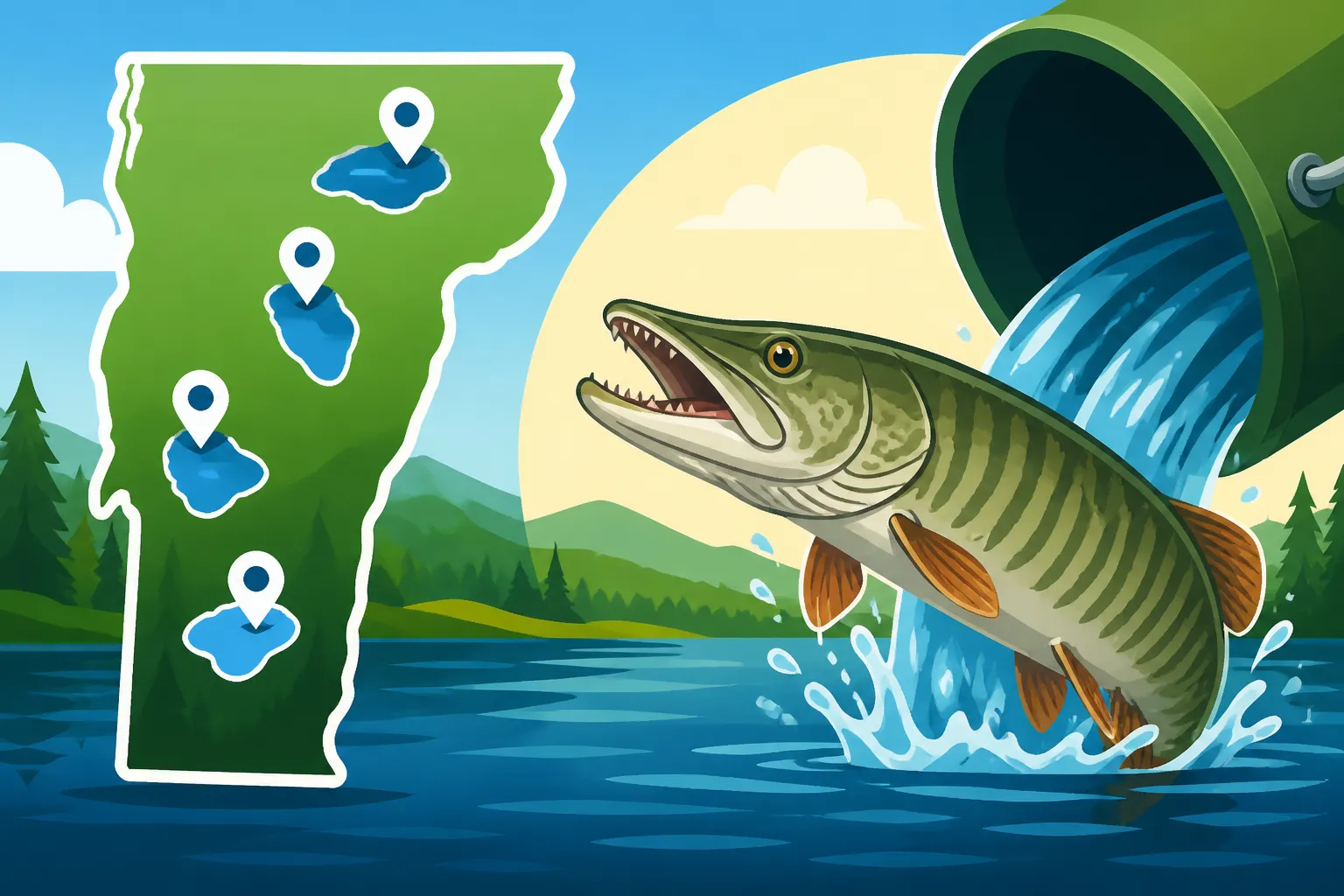
Lake Bomoseen: This is often the first lake that comes to mind when talking about tiger muskies in Vermont. Located in the Rutland area, Lake Bomoseen is Vermont's largest lake entirely within the state's borders. It's a fantastic mixed-fishery lake, known for its smallmouth and largemouth bass, pike, and, of course, tiger muskies. The lake boasts a variety of depths, from shallow, weedy bays to deeper open water, and plenty of submerged structure. The abundant forage base, including yellow perch and various minnows, makes it an excellent environment for tiger muskies to grow to impressive sizes. Anglers often target them around weed lines, rocky points, and sudden drop-offs. If you want a more general guide, check out the Lake Bomoseen Fishing Guide.
-
Lake Dunmore: Nestled in Addison County, Lake Dunmore is another prominent tiger muskie destination. It's a beautiful lake with clear waters, offering great visibility for both the fish and the anglers trying to spot them. Like Bomoseen, it has good depth variations and diverse habitat, including healthy weed beds, rocky shorelines, and ledges. The lake's robust populations of panfish and baitfish provide a steady diet for growing tigers. Fishing pressure here tends to be a bit more focused on the typical warm-water species, which means the tiger muskies often have plenty of space to roam and ambush prey. Our Lake Dunmore Fishing Guide has more detailed information about this spot.
-
Harriman Reservoir (aka Lake Whitingham): Down in Southern Vermont, the Harriman Reservoir in Wilmington is a vast, sprawling body of water that has also seen tiger muskie stockings. This reservoir is significantly different from the natural lakes, with its drowned timber, submerged roads, and long, winding arms. It offers a more rugged and wild fishing experience. The structure here is immense, providing endless ambush points for predatory fish. The sheer size of Harriman and its diverse forage base make it a challenging but rewarding destination for tiger muskie anglers. Navigating this lake can be tricky due to submerged hazards, but those who learn its secrets can find some truly exceptional fishing. For deeper insights into this location, see our Harriman Reservoir Fishing Guide.
While these three are the most consistently mentioned and actively managed for tiger muskies, it's always a good idea to check the latest stocking reports from the Vermont Fish & Wildlife Department, as programs can evolve.
How Stocking Decisions are Made
Deciding which lakes receive tiger muskie stockings is a comprehensive process, far more involved than simply picking a pretty lake. The Vermont Fish & Wildlife Department carefully evaluates several factors to ensure these unique fish have the best chance to thrive and contribute positively to the fishery, while also balancing ecological considerations.
One primary factor is the forage base. Tiger muskies are big eaters, and a lake needs to have a healthy, abundant population of baitfish (like yellow perch, suckers, or alewives) to support their rapid growth to trophy sizes. Without adequate food, the stockings would be unsustainable. Biologists conduct surveys to assess the prey species available.
Another crucial consideration is habitat suitability. These fish need diverse underwater structures—weed beds, rocky points, drop-offs, submerged timber—for ambush points, protection, and temperature regulation. Lakes that offer a variety of these features are prime candidates. Water quality and temperature profiles are also analyzed to ensure the environment is optimal for their survival and growth throughout the year.
The existing fish community plays a role, too. Stocking tiger muskies might be a management tool to help control an overabundant panfish population, or to fill a niche as an apex predator where native muskellunge aren't present. They're not typically stocked in waters where they might outcompete or negatively impact sensitive native species. Finally, angler access and interest are considered. The state wants to provide recreational opportunities, so lakes with good public access, boat launches, and a history of angler interest in large predatory fish are often prioritized. It's a careful balancing act to ensure the stockings benefit both the ecosystem and the fishing community.
Fishing for Tiger Muskie in Stocked Vermont Waters
So you've identified a promising lake, now what? Fishing for tiger muskies is a commitment, requiring specific gear and techniques that differ from your average trout or bass outing. These fish are known as "the fish of 10,000 casts" for a reason, but with the right approach, you can significantly increase your odds of success.
Essential Gear for Tiger Muskie
When it comes to tiger muskie, don't skimp on your gear. These are powerful, toothy predators that will test the limits of your equipment. Investing in the right tackle is not just about catching the fish, but also about safely handling and releasing them.
First up, you'll need a heavy-action rod, typically 7 to 9 feet long, capable of handling large lures and powerful fish. A baitcasting setup is almost universally preferred due to its ability to handle heavy lines and cast big baits. Pair that with a robust baitcasting reel with a strong drag system and high line capacity. You'll want to spool it with braided line, at least 50-80 lb test, for its strength and no-stretch sensitivity.
Crucially, you must use a heavy-duty leader. Tiger muskies have incredibly sharp teeth that can easily slice through monofilament or fluorocarbon. A strong, bite-proof leader made of heavy fluorocarbon (80-130 lb test) or wire (steel or titanium) is absolutely essential. These leaders should be at least 12-18 inches long.
As for lures, think big! Large crankbaits, jerkbaits, inline spinners, spinnerbaits, and soft plastic swimbaits are all popular choices. Colors that mimic local forage like perch, minnows, or shiners are often effective. You can find a huge selection of these specialized muskie lures on platforms like Amazon, offering a wide range of options to match any fishing condition. Make sure your lures have strong, sharp treble hooks. It's also a good idea to have a large, rubberized landing net (to protect the fish's slime coat) and long-nosed pliers or jaw spreaders for safe hook removal, which can also be easily ordered from Amazon. Speaking of landing, having a Best Landing Net for Muskellunge is absolutely critical for safely handling these big fish. For more on line choices, check out Best Line Weight for Muskellunge Fishing.
Best Techniques and Times to Fish
Fishing for tiger muskies is a game of patience and persistence, but certain techniques and understanding their behavior can give you an edge.
Many anglers employ trolling techniques, especially on larger lakes like Bomoseen or Harriman. This involves dragging large crankbaits or bucktails behind your boat, covering vast amounts of water and often targeting specific depths or structures. Vary your speed and direction to entice strikes. For walleye, we often discuss Best Trolling Gear for Lake Champlain Walleye, and while muskie trolling gear is beefier, the principles of covering water and finding active fish are similar.
Casting is another popular and highly active method. Focus your casts around visible structure: weed edges, rocky shorelines, submerged humps, fallen trees, and docks. Work your lures with erratic retrieves, mimicking a wounded baitfish. Often, the strike will come right at the boat, so always be ready for a "figure-eight" maneuver (drawing your lure in a large "8" pattern next to the boat before lifting it out of the water) as a muskie might follow your lure all the way in before deciding to strike.
Tiger muskies are often most active during low-light conditions like dawn and dusk, or on overcast days. During the heat of summer, they might retreat to deeper, cooler water or dense cover. In spring and fall, when water temperatures are more moderate, they tend to be more active throughout the day, often patrolling shallower feeding grounds. Pay attention to water temperature – these fish have a preferred range for activity. Learning how to fish specific structures is key, and while different species, some insights from How to Fish a River for Smallmouth Bass can translate to understanding current breaks and ambush points.
| Lake | Primary Habitat | Key Forage | Best Techniques | Notes |
|---|---|---|---|---|
| Lake Bomoseen | Weeds, rocky points, drop-offs | Perch, minnows | Trolling, Casting | Largest lake entirely in VT, diverse cover |
| Lake Dunmore | Clear water, weeds, ledges | Panfish, baitfish | Casting, Trolling | Excellent water clarity, good access |
| Harriman Reservoir | Drowned timber, submerged roads | Mixed baitfish | Trolling, Casting | Rugged, vast, remote feel, challenging |
Regulations and Conservation
Catching a tiger muskie is a thrilling experience, but it comes with the responsibility of understanding and adhering to Vermont's fishing regulations and practicing sound conservation methods. These magnificent fish are primarily managed as a trophy species, and their long-term survival relies heavily on careful handling and release. You should always consult the official Vermont Fish & Wildlife Department regulations booklet for the most current rules before heading out, but here's a general overview.
Vermont's Tiger Muskie Regulations
Because tiger muskies are a stocked, hybrid species, their regulations are often designed to support a trophy fishery and ensure that the fish stocked have the opportunity to grow to impressive sizes. You won't typically find high daily bag limits for these fish; often, it's a very low limit, if any. The focus is on catch and release.
There are almost always strict minimum length limits in place. This means any tiger muskie you catch below a certain size must be immediately and carefully released. These length limits are crucial for allowing the fish to grow into the large, formidable predators anglers dream of catching. Always carry a reliable measuring tape on your boat or in your tackle bag. The seasons for tiger muskies generally align with other warm-water species, but it's vital to confirm opening and closing dates for the specific lake you plan to fish. Sometimes, special regulations might apply to specific bodies of water, such as restrictions on certain bait types or gear. For general context on muskie rules, looking at Vermont Muskellunge Regulations on Lake Memphremagog can provide a good benchmark, as tiger muskie rules often follow similar patterns to their purebred cousins.
Penalties for fishing without a license or violating regulations can be steep, so make sure you're always in compliance. For detailed information on licenses, check out Where and How to Buy a Vermont Fishing License or Vermont Fishing License Guide for 2026.
Catch and Release Best Practices
Tiger muskies are resilient fish, but proper catch and release techniques are absolutely critical for their survival. A fish that fights hard at the end of your line is already stressed, and improper handling can quickly turn a successful catch into a fatal one.
- Minimize Fight Time: Use appropriate heavy tackle to land the fish as quickly as possible without over-stressing it.
- Use a Large Net: A wide, deep, rubberized landing net is your best friend. This helps cradle the fish, protects its delicate slime coat, and keeps it subdued while you prepare for release. Avoid string nets, which can strip away their protective layer.
- Keep it in the Water: Whenever possible, keep the fish in the water while unhooking it. If you must lift it for a quick photo, support its entire body horizontally, avoiding holding it vertically by the jaw or tail alone, which can damage its spine and internal organs.
- Tools are Key: Have long-nosed pliers, bolt cutters (for cutting hooks if necessary), and jaw spreaders readily accessible. These tools allow you to quickly and safely remove hooks with minimal stress to the fish. You can find excellent options for these on Amazon, often in specialized muskie-specific kits.
- Revival: If the fish seems lethargic after unhooking, gently hold it upright in the water by the tail, supporting its belly, and slowly move it back and forth to force water over its gills. Only release it when it can swim away strongly on its own.
- Take Quick Photos: If taking pictures, do it quickly and get the fish back in the water immediately.
Following these practices ensures that these magnificent tiger muskies continue to provide thrilling challenges for future generations of anglers. For more specific guidance on protecting these fish, read our Muskellunge catch and release survival tips.
Disclaimer
This article is for general informational purposes only and does not constitute professional advice. Laws, prices and regulations vary by location and change over time. Consult a qualified professional for guidance on your specific situation.