How to pattern bass on an unfamiliar Vermont lake
Landing on an unfamiliar Vermont lake to bass fish can feel like trying to solve a puzzle with half the pieces missing. Where do you even start? The vastness of new water, unknown structure, and subtle nuances can be overwhelming, leading to unproductive days and frustrating casts into seemingly empty water. This guide is here to demystify the process, helping you develop a systematic approach to quickly "pattern" bass on any new Vermont lake, turning those question marks into successful catches and a deeper understanding of these incredible fish.
Before You Even Launch: Pre-Trip Reconnaissance
Success on a new lake begins long before your boat ever hits the water. Spending some time doing your homework can dramatically shorten the learning curve and help you avoid wasting precious fishing hours in unproductive areas. Think of it as putting together a mental blueprint of the lake.
Map Study and Satellite Imagery
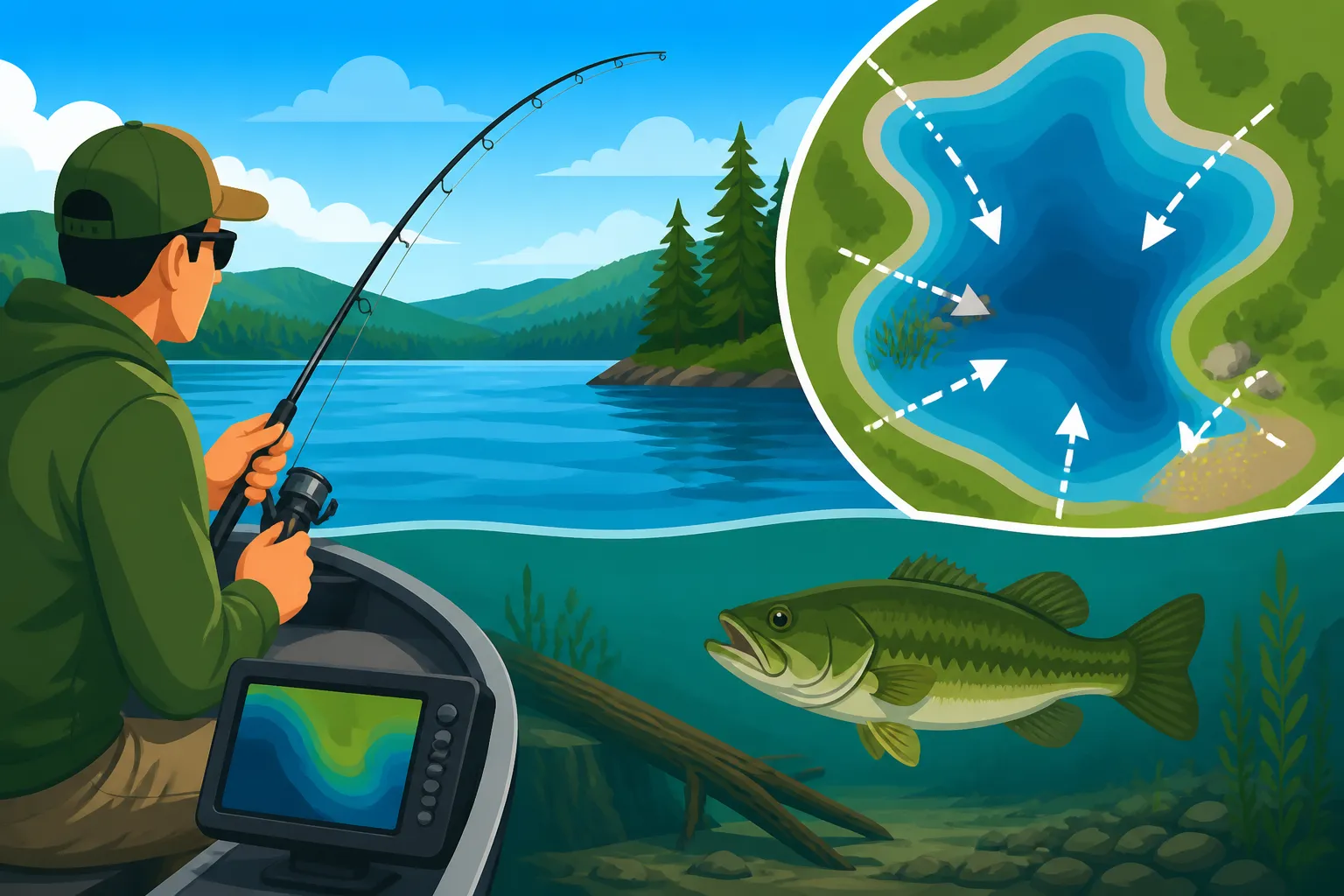
The first step in patterning bass on an unfamiliar lake is to become intimately familiar with its geography and topography, even if only from a screen. Detailed lake maps are your best friends here. Look for depth contours, submerged islands, creek channels, points, and sudden changes in depth. These features are often bass magnets. Satellite imagery, easily accessible through various online platforms, offers a different perspective, showing you visible cover like docks, lily pad fields, emergent weeds, and even clues to bottom composition in shallower, clearer areas. You might be able to spot distinct vegetation lines, rock formations, or even areas of heavy boat traffic that could indicate popular spots (or areas to avoid if you prefer solitude).
Don't just glance at the maps; really study them. Trace potential travel routes for bass between spawning grounds, feeding areas, and deep-water refuges. Imagine how the water would look underwater based on the contour lines. Are there long, tapering points that extend far into the lake? Or are there sheer drops that create sudden depth changes? Both can hold bass, but they require different approaches. You can often find excellent detailed fishing maps, sometimes even waterproof versions, on sites like Amazon, which are incredibly helpful for reference once you're on the water.
Understanding Lake Type and Forage
Vermont lakes come in all shapes and sizes, and understanding the general characteristics of the one you're tackling will give you a significant advantage. Is it a deep, clear, rocky lake like Lake Willoughby, known for cold water species and smallmouth bass? Or is it a shallower, weedier lake with more stained water, potentially holding more largemouth? This information informs the types of forage available and, consequently, what the bass are likely eating.
Common bass forage in Vermont includes various baitfish like alewives, shiners, perch, and smelt, as well as crawfish, frogs, and even juvenile panfish. If the lake is known for a strong crawfish population, then crayfish-imitating lures like jigs and crankbaits should be high on your list. If baitfish schools are prevalent, then lures that mimic slender minnows or shad will be more effective. Knowing the primary forage species helps you select appropriate baits and colors, giving you a better chance of matching the hatch, so to speak. This also ties into seasonal considerations; for instance, understanding when different baitfish might be spawning or schooling can guide your location choices. What walleye eat on Lake Champlain can offer insights into baitfish behavior, which often applies to bass as well.
Checking Recent Reports and Conditions
While every fishing trip is unique, recent reports and current conditions can provide invaluable real-time insights. Before your trip, check online fishing forums, local tackle shop websites, or even social media groups dedicated to Vermont fishing. Anglers often share general trends, water temperatures, and even successful lure patterns, albeit usually without giving away their secret spots!
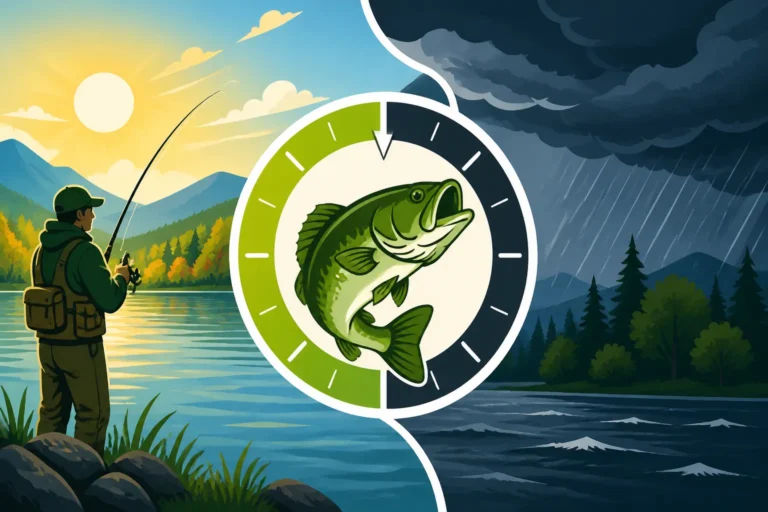
Pay close attention to recent weather patterns. Has there been a cold front moving through? This often pushes bass deeper or makes them lethargic. Is it post-rain with rising water levels and stained conditions? Bass might move closer to flooded cover or creek mouths. Understanding how elements like barometric pressure, recent rainfall, water temperature, and sunlight intensity might be affecting the fish will help you narrow down your search areas and adapt your techniques. For instance, What water temperature smallmouth bass prefer can guide your understanding of where bass might be holding in different parts of the season.
On the Water: Initial Strategy and Observation
Once you're actually on the lake, the real detective work begins. Your goal during the initial hours is to efficiently cover water, eliminate unproductive areas, and gather clues that will help you piece together a pattern.
Covering Water and Eliminating Dead Zones
When you first launch on an unfamiliar lake, resist the urge to immediately start picking apart every little detail. Instead, focus on covering broad areas to quickly eliminate vast stretches of unproductive water. This is where a boat (or a good fishing kayak if you're exploring Best Kayak Fishing Spots in Vermont) comes in handy. Start by hitting some of those high-percentage areas you identified during your map study: main lake points, prominent coves, obvious weed lines, or the mouths of feeder creeks.
Use fast-moving search baits initially – crankbaits, spinnerbaits, or even topwater lures (depending on the season and time of day). These lures allow you to cover water quickly and get a reaction strike from aggressive bass. Don't spend more than 10-15 minutes in a spot without a bite or a strong indication of fish. If you get a bite, mark the spot and continue moving. If you get multiple bites in similar-looking areas, you're starting to develop a pattern. If you don't get any bites, those areas are likely "dead zones" for the moment, and you can cross them off your list. The goal is to quickly find areas with bass, even if they aren't actively biting yet.
Interpreting Your Electronics
Your fish finder is an indispensable tool for patterning bass on an unfamiliar lake. Don't just look for fish arches; learn to interpret the bottom composition, depth contours, and thermocline. A quality fish finder, many excellent models of which can be found on Amazon, will show you hard bottom (rock, gravel) versus soft bottom (mud, silt), which is a key factor in where bass often choose to hold. Best Fish Finders for Vermont Lakes offers more detailed information on selecting and using these devices effectively.
Pay attention to sudden depth changes, ledges, humps, and submerged timber. These are all forms of "structure" that bass relate to. Even if you don't see fish arches directly on the structure, baitfish might be present, or the structure itself provides ambush points for bass. Side-imaging and down-imaging technologies, common on modern units, can paint a much clearer picture of what lies beneath the surface, revealing hidden rock piles or brush piles that might otherwise go unnoticed. Remember, bass are often ambush predators, so finding the right cover on the right structure is key.
Paying Attention to Environmental Cues
Beyond your electronics, be a keen observer of the natural world around you. The lake itself is constantly giving you clues. Look for schooling baitfish breaking the surface – where there's bait, there are often predators. Watch for birds diving into the water, another strong indicator of baitfish presence. Observe the type and health of vegetation; healthy green weeds provide oxygen and cover, attracting both bait and bass.
Pay attention to light conditions. On bright, sunny days, bass will often seek shade or deeper water. On cloudy days, they might be more willing to roam shallower. Wind direction and intensity also play a significant role. A consistent wind can push baitfish into certain areas, concentrating bass, or create current that positions bass in predictable ambush points. Even the presence of other anglers can be a cue – not necessarily to fish exactly where they are, but to observe what kind of areas they are targeting or what techniques they might be employing successfully. Sometimes, seeing a local angler repeatedly cast to a certain type of cover can be a huge hint.
Developing the Pattern: Adapting and Repeating
Once you've found a few scattered fish or a promising area, it's time to refine your approach and truly "pattern" the bass. This means understanding why the fish are in a particular location and what makes them bite.
What Makes a Spot a "Spot"?
Catching a bass is great, but catching a bass and understanding why you caught it is the beginning of a pattern. When you get a bite, ask yourself:
- Depth: How deep was the fish?
- Cover: Was it near a weed line, a rock, a dock, or submerged wood?
- Structure: Was it on a point, a flat, a creek channel edge, or a hump? How to read structure for walleye on Lake Champlain offers a good foundation for identifying productive underwater features.
- Bottom Composition: Was it sand, rock, gravel, or mud?
- Sunlight/Shade: Was it in direct sun or shade?
- Wind/Current: How was the water moving?
The answers to these questions are the "pieces" of your pattern. If you catch several fish from similar depths, next to similar cover, on similar structure, you've found a pattern. For instance, if you consistently find smallmouth bass on rocky points dropping into 15-20 feet of water, that's a strong pattern. Or perhaps largemouth are tucked deep under boat docks along a 10-foot contour line in a particular cove. How to Catch Smallmouth Bass in Vermont Lakes and How to Catch Largemouth Bass in Vermont provide further details on their preferred habitats.
Testing Variables: Depth, Lures, Presentation
Once you identify a promising spot or two, don't just keep throwing the same lure. This is the time to experiment and truly dial in what the bass want. If you caught a fish on a crankbait at 10 feet, try another crankbait that runs slightly deeper or shallower. Try different colors, different retrieve speeds, and even different lure types that mimic the same forage at that depth.
For example, if you're fishing a deep breakline and getting bites on a jig, try a dropshot rig or a Texas-rigged plastic worm to see if a more subtle presentation works even better. Sometimes, a slight modification in your retrieve, like a longer pause or a more aggressive jerk, can be the key. The idea is to systematically change one variable at a time until you maximize your success. Keep a mental (or even written) log of what works and what doesn't. Remember, what works in one spot might not work in another, even if they look similar. The bass will tell you what they prefer. For various options to experiment with, check out Best Tackle for Vermont Smallmouth Bass.
Repeating and Refining Your Success
Once you've caught a few fish and developed a working hypothesis about the pattern, the next step is to test it by applying it to other similar-looking areas on the lake. Go back to your maps and identify other points, coves, or weed lines that share the characteristics of your productive spots.
For example, if you found success on a main lake point with a deep-water access and some scattered rock, look for other main lake points with similar features. If you confirm the pattern in several different locations, you've cracked the code for that particular day and conditions. However, bass patterns are rarely static. They change with the weather, water temperature, time of day, and fishing pressure. Be prepared to adapt and refine your pattern throughout the day. If the bite slows down, consider what has changed (sun angle, wind, boat traffic) and adjust your approach accordingly. The ability to find a pattern, exploit it, and then adapt when it inevitably changes is the mark of a truly successful angler.
Seasonal Nuances for Vermont Bass
While the general principles of patterning bass remain consistent, the specific locations and behaviors of bass in Vermont lakes will vary dramatically with the seasons. Understanding these broader seasonal shifts is crucial for quickly narrowing down your search. For a general overview of seasonal opportunities, see Best Time of Year to Fish in Vermont.
Spring: Pre-Spawn and Spawn Tactics
Spring is a time of transition and anticipation. As ice melts and water temperatures begin to rise (typically into the 40s and 50s Fahrenheit), bass move from their deep wintering grounds to shallower areas in preparation for spawning. This pre-spawn period is often one of the best times for catching large, aggressive fish as they feed heavily to build energy for the spawn.
Look for bass on main lake points, channel swings, and the mouths of creeks or protected bays that offer easy access to deeper water. They'll often stage on the first available cover near these migration routes. As water temperatures climb into the mid-50s to high 60s, bass will move into very shallow, protected areas for the spawn itself – often on sand flats, gravel bottoms, or in emergent vegetation in quiet coves. During the spawn, they are highly localized, guarding nests and fry, and can be very territorial. While it's exhilarating to sight fish for them on their beds, practicing catch and release during this sensitive period is crucial for healthy populations. For rules regarding this, refer to Vermont Bass Catch-and-Release Season, Explained.
Summer: Deep Water and Topwater
When Vermont's lakes warm up significantly, bass often shift their patterns dramatically. Largemouth will typically retreat to dense weed beds, lily pads, and shaded docks, seeking cooler water and ambush points in the cover. Smallmouth, especially in clearer, deeper lakes, will often move offshore to deeper structure like humps, rock piles, and points that drop into significant depths, sometimes suspending over the thermocline if one is present.
Early mornings and late evenings during summer often provide incredible topwater action, especially for smallmouth on rocky main lake points or largemouth around heavy cover. During the heat of the day, focus on fishing deeper structures with jigs, dropshots, or deep-diving crankbaits. Finding schools of baitfish on your electronics in deeper water can be a dead giveaway for schooling bass, ready to feed. Knowing the depths they prefer in summer can make all the difference, as discussed in How deep walleye go in summer on Lake Champlain, a principle that often holds true for bass too.
Fall: Feeding Frenzy and Transition
Fall is another fantastic time for bass fishing in Vermont. As water temperatures begin to cool (dropping from the 60s down into the 40s), bass go on a major feeding binge, trying to pack on weight for the upcoming winter. This means they are often highly active and aggressive.
During early fall, bass will often be found shallower, chasing baitfish schools that have pushed into the backs of coves or along main lake points. Crankbaits, spinnerbaits, and even topwater lures can be highly effective during this period. As the water continues to cool into late fall, bass will typically move deeper, relating more closely to hard structure like rock piles, deep points, and channel edges, similar to their pre-spawn staging areas, but often deeper. They will continue to feed heavily on baitfish, so lures that mimic these forage species are key. This is a time when understanding baitfish migrations and deep-water structure becomes paramount.
Table: Vermont Bass Seasonal Pattern Overview
| Season | Typical Water Temperature | Key Behavior | Primary Locations to Target | Effective Lure Categories |
|---|---|---|---|---|
| Pre-Spawn | 45-55°F | Migrating from deep to shallow, feeding | Main lake points, channel swings, creek mouths, rock piles | Jigs, lipless crankbaits, jerkbaits, spinnerbaits |
| Spawn | 55-68°F | Nesting, protecting beds, highly localized | Shallow coves, protected bays, sand flats, emergent weeds | Soft plastics (wacky worms, creature baits), small jigs |
| Post-Spawn | 68-75°F | Recovering, scattering, some deep/some shallow | Secondary points, weed lines, deeper edges of spawning areas | Senkos, dropshots, finesse jigs, small crankbaits |
| Summer | 70°F+ | Deep structure (smallmouth), heavy cover (largemouth), early/late topwater | Offshore humps, deep weed edges, shaded docks, lily pads | Deep diving crankbaits, jigs, dropshots, topwater, frogs |
| Fall | 60-45°F | Aggressive feeding, following baitfish | Main lake points, steep breaks, schooling bait, river mouths | Crankbaits, spinnerbaits, jerkbaits, swimbaits, jigs |
Remember, every day is a new challenge and a new opportunity to learn something about the lake and its bass. By approaching unfamiliar Vermont lakes with a systematic plan—starting with pre-trip reconnaissance, making keen observations on the water, and then methodically developing and refining a pattern—you'll not only catch more fish but gain a deeper appreciation for the nuanced world of bass fishing. Best Fishing Lakes in Vermont and Best Bass Fishing Lakes in Vermont can give you some excellent options to start practicing these patterning skills.
Disclaimer
This article is for general informational purposes only and does not constitute professional advice. Laws, prices and regulations vary by location and change over time. Consult a qualified professional for guidance on your specific situation.