Best technique for walleye in cold water
Walleye fishing in cold water can feel like you're searching for a needle in a haystack, especially when those active feeding frenzies of warmer months are a distant memory. The fish become lethargic, their metabolism slows, and their willingness to chase a fast-moving lure plummets. This comprehensive guide is dedicated to helping you unlock the secrets of successful walleye fishing when the water temperatures drop, giving you the insights and techniques needed to entice those elusive marble eyes even on the chilliest Vermont days.
Understanding Walleye Behavior in Chilly Vermont Waters
When the mercury dips, everything changes for walleye. They're still out there, of course, but their priorities and their very physiology shift dramatically. Ignoring these changes is often the quickest path to a skunked day on the water, leaving you frustrated and wondering why your usual summer tactics aren't paying off. It's a fundamental shift that requires a different approach, a slower pace, and a keener eye for detail.
Why Walleye Slow Down in Cold Water
Think about yourself on a cold winter day – you're probably not running marathons or chasing after things with the same vigor as you would in July. You're conserving energy, probably opting for comfort and minimal effort. Walleye are no different. As water temperatures drop below 50 degrees Fahrenheit, and especially once they dip into the low 40s or even upper 30s, their metabolism slows significantly. This biological slowdown has several key implications for anglers:
- Reduced Activity Levels: Walleye don't need to eat as often or expend as much energy. They'll often hold tight to structure, conserving precious energy, rather than actively roaming vast areas of a lake or river. Their movements become deliberate, short, and calculated, aimed at efficiency.
- Slower Digestion: A meal takes much longer for a cold-blooded walleye to digest. This means they aren't constantly on the hunt for their next bite. When they do feed, it’s usually a quick, opportunistic strike at an easy target that requires minimal effort on their part. They're looking for an easy meal, not a chase.
- Finicky Bites: The aggressive, rod-bending strikes you might feel in summer often turn into incredibly subtle taps, a slight weight on the line, or even just a feeling of "mush" or slack as they pick up and drop the bait. Detecting these extremely subtle bites is absolutely crucial for success in cold water, requiring heightened focus and sensitive gear.
- Concentrated Schools: While walleye might spread out in warmer water, cold water often sees them congregating in deeper, more stable thermal zones. They'll school up tightly, not just for protection, but because these areas offer consistent conditions and a concentrated food source. This makes them harder to find initially, but potentially very rewarding once a school is located.
It's a complete paradigm shift from the fast-paced action of summer, demanding a patient, nuanced, and often highly technical approach. You're essentially trying to convince a largely inactive fish that your offering is worth the minimal effort it would take to eat it.
Preferred Cold Water Habitats and Depths
In cold water, walleye prioritize stability and access to forage. They're looking for areas where the water temperature is consistent and where they can find baitfish without expending too much energy. This often means deeper water, but it's important to note it's not always the deepest water in a lake. There's a sweet spot, a comfort zone they'll gravitate towards.
- Deep Structure: Points, humps, deep rock piles, and submerged islands that top out near deep water are prime locations. These geological features offer both the necessary depth and cover, providing ambush points and resting areas. Walleye will often sit just off the main structure, moving onto it when conditions are right for feeding.
- Transitions: The edges of sharp drop-offs, where a flat transitions abruptly to deeper water, can hold significant numbers of fish. Walleye might move up onto the shallower flat to feed briefly during periods of increased activity, then quickly retreat to the safety and stability of the depth. These transition zones are often high-traffic areas for both predators and prey.
- Mud Flats and Soft Bottoms: While rocky structure is undeniably key, don't overlook large, soft-bottomed flats adjacent to deep water. These areas often hold baitfish like yellow perch or smelt, which walleye will follow. You might find walleye suspended just over these flats, especially if there's any remaining thermal stratification, or simply using the soft bottom as a consistent, quiet holding area.
- River Channels: In larger lakes like Lake Champlain, old river channels provide natural travel corridors and holding areas in deeper water. These channels offer consistent conditions, act as highways for migrating baitfish, and provide distinct depth changes that walleye utilize. You can learn more about specific walleye locations and habits in our comprehensive guide on Where to Find Walleye on Lake Champlain.
The key is to look for areas that combine deep water access with some form of cover, a stable environment, and potential food sources. Depths commonly range from 20 to 50 feet, but shallower opportunities can exist, especially if there's an abundance of bait or unique, fish-holding structure nearby.
Mastering the Art of Slow Presentation
When walleye are in cold water, aggressive, fast-moving presentations often just spook them or simply aren't enticing enough to trigger a strike. Their predatory instinct is still there, but it's dialed down. The name of the game is slow, methodical, and subtle. You're trying to present an easy meal that requires minimal effort to consume. Think "entice" rather than "provoke."
Jigging: The Subtle Dance
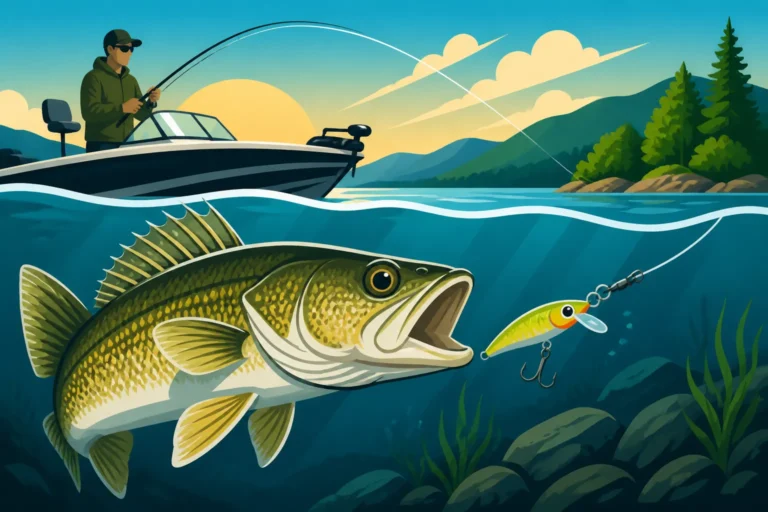
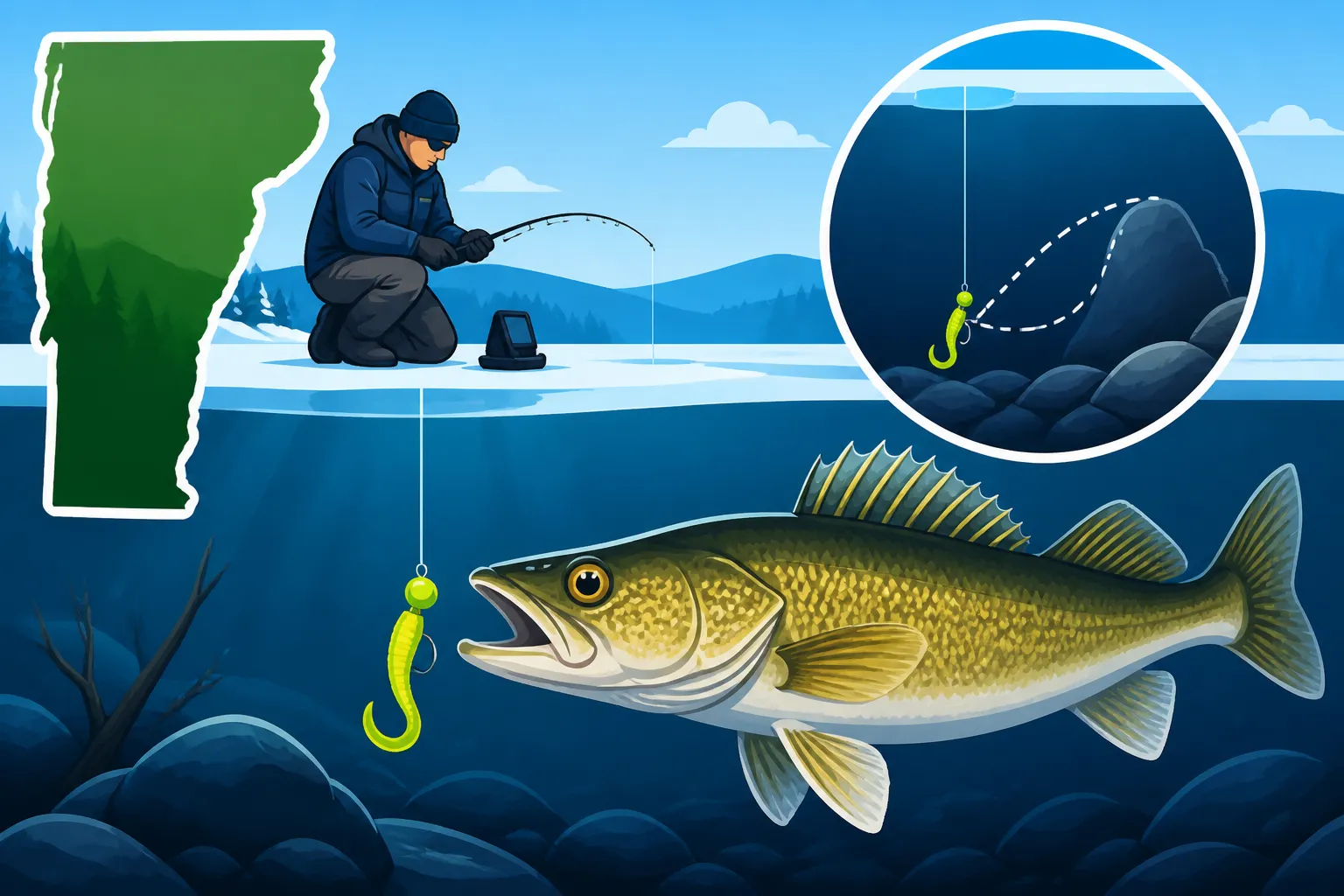
Jigging is arguably the most effective technique for cold water walleye, especially when you've pinpointed a school of fish on your electronics. However, it's a far cry from the rapid-fire jigging you might do for summer bass or even actively feeding walleye. This is a finesse game.
- Vertical Presentation is Key: Position your boat directly over the fish you've marked on your fish finder. This allows for a precise, vertical presentation that keeps your lure in the strike zone longer. This minimizes line angle, maximizes sensitivity, and ensures your bait is exactly where the fish are. A good fish finder for deep lake fishing, with features like CHIRP sonar, which you can easily find on Amazon, is indispensable for maintaining this precision.
- Light Jigs, Slow Drops: Opt for lighter jigs than you might typically, perhaps 1/4 to 3/8 ounce, depending on depth and current. The slower fall of a lighter jig imitates a dying or injured baitfish, which is incredibly appealing to lethargic walleye looking for an easy meal. This slow descent allows the walleye more time to inspect the bait and commit.
- Subtle Jigging Motion: Instead of aggressive snaps or large sweeps, try short, subtle lifts and drops, maybe just 6-12 inches. The movement should be gentle and deliberate. Let the jig flutter back down on a semi-slack line – many bites occur on the fall, and the slack allows the lure to behave naturally. Hold it perfectly still for several seconds at the bottom and after each lift. A common mistake is moving the jig too much or too quickly; patience is truly a virtue here.
- Bait Tipping: Tipping your jig with a live minnow (a shiner or emerald shiner is excellent), a piece of nightcrawler, or even a scented soft plastic (like a Berkley Gulp! Minnow) can make a huge difference. The natural scent, taste, and subtle movement provided by live or scented bait can trigger strikes from otherwise uninterested fish. This technique shares principles with what's covered for Jigging for Perch Through the Ice but is adapted for open water.
Slow Trolling: Covering Water Effectively
While jigging is superb for concentrated fish, slow trolling is excellent for finding scattered walleye or covering larger areas of promising structure without disturbing the fish directly above you. As with jigging, "slow" is the absolute operative word.
- Extremely Slow Speeds: We're talking 0.8 to 1.5 miles per hour, and sometimes even slower, depending on the lure and the fish's mood. If you have a trolling motor that can maintain these super slow, precise speeds, it's a huge advantage. Precision speed control is often the difference between a productive day and a frustrating one.
- Deep Diving Crankbaits: Select crankbaits that are specifically designed to dive to the depth where you expect the walleye to be holding. Colors that imitate common forage like perch, smelt, or shiners are often very effective. The Rapala Down Deep Husky Jerk or Berkley Flicker Shad are popular and proven choices. For more on specific lure options, including colors and dive curves, check out Best Lures for Walleye Trolling on Lake Champlain.
- Long Lines and Planer Boards: Running long lines helps your bait get deeper and presents a more natural, undisturbed action. Using planer boards can spread your lines out, allowing you to cover a wider swath of water and preventing tangles, especially if you're running multiple rods. This also keeps the boat's disturbance away from your lures.
- Bottom Bouncers and Crawler Harnesses: This classic setup is incredibly deadly for cold water walleye. Use a bottom bouncer to keep your bait near the bottom, paired with a slow-spinning crawler harness tipped with a juicy nightcrawler. The slower you move, the more enticing the worm's subtle action becomes, making it irresistible to a hesitant walleye.
- Segmented Trolling Runs: Don't just troll in straight lines. Follow depth contours precisely, make slow, sweeping turns over points, and vary your speed slightly (even by just 0.1 mph) to see what subtle change triggers a bite. Pay close attention to your electronics to stay on structure and mark any fish you see.
Deadsticking and Live Bait Rigs
Sometimes, the best presentation is no presentation at all. Or rather, a presentation that mimics a completely motionless, injured, or dying baitfish. In extremely cold water, walleye may refuse to chase anything, only reacting to something right in front of their face.
- Deadsticking: This involves simply letting a jig or a live bait rig sit motionless on the bottom or suspended just above it. In extremely cold water, a walleye might take 30 seconds or more to commit to a bait. They might mouth it, hold it, then drop it, only to pick it up again. A sensitive rod in a rod holder and extreme patience are your best friends here. You'll need to watch for the slightest twitch in the rod tip or a subtle bow in the line.
- Slip Bobber Rigs: If walleye are suspended over deeper water or holding tightly within submerged weeds, a slip bobber rig with a lively minnow can be incredibly effective. Set your depth precisely to keep the minnow right in their face, allowing it to swim naturally. The bobber provides a clear visual bite indicator, which can be much easier to detect than a subtle rod tip tap, especially in freezing conditions when your hands are cold.
- Three-Way Rigs: For current situations in rivers or certain sections of Lake Champlain with noticeable flow, a three-way rig is an excellent option. This setup allows you to attach a dropper weight and a separate leader with a hook, keeping your live bait (like a minnow or nightcrawler) perfectly in the strike zone, slightly off the bottom, and allowing it to move naturally in the current without dragging the bottom.
Essential Gear and Tackle for Cold Water Walleye Success
The right gear can make or break your cold water walleye trip. You're not just fighting fish; you're often battling the elements, and those subtle bites require sensitive, reliable equipment that won't let you down in challenging conditions. Investing in quality gear for cold weather fishing is an investment in your success and comfort.
Rods, Reels, and Line
Sensitivity is paramount when cold water walleye are barely mouthing the bait. You need to feel every tick, every bump, every subtle "thump" that indicates a fish.
- Sensitive Rods: Opt for a medium-light to medium power spinning rod, typically around 6'6" to 7'6" in length, with a fast or extra-fast action. A high-modulus graphite rod will transmit those subtle bites much better than heavier or fiberglass alternatives. Look for models specifically designed for jigging or finesse applications, as these prioritize tip sensitivity.
- Smooth Reels: A high-quality spinning reel with a smooth, consistent drag system is crucial. It needs to perform flawlessly even in near-freezing temperatures. You don't want a sticky drag to snap your line or lose a big fish when you're fighting it in cold conditions. Choose a reel size (e.g., 2500 or 3000) that balances well with your chosen rod.
- Low-Stretch Line: Fluorocarbon line, either as a main line or a leader, is excellent for cold water. It's nearly invisible underwater, has superior abrasion resistance, and, most importantly, minimal stretch, which significantly enhances your ability to feel those faint bites. Braid with a fluorocarbon leader is another extremely popular choice, offering the best of both worlds: the extreme sensitivity and strength of braid, combined with the stealth and low-stretch of fluoro at the business end. A 6-8 lb test fluorocarbon or 10-15 lb braid with a 6-8 lb fluoro leader is usually sufficient for most walleye applications. You can learn more about specific line choices in Best Fluorocarbon Line for Clear Lake Water.
Lure Selection and Color Choices
While "matching the hatch" (imitating the local forage) is always a good principle, cold water often calls for specific types and colors of lures that can trigger a strike from a hesitant fish.
- Jigs: As mentioned earlier, 1/4 to 3/8 ounce jigs are standard for most cold water situations. White, chartreuse, black, and natural baitfish colors (silver, gold, perch patterns) are perennial favorites. Don't be afraid to experiment with brighter "attractor" colors like hot pink or firetiger, especially in stained water, on overcast days, or when you're trying to provoke a reaction. Brands like Northland Fishing Tackle, Finesse Fishing, and VMC often produce excellent cold-water jigs.
- Blade Baits: These vibrating metal baits (e.g., Johnson ThinFisher, Heddon Sonar, B-Fish-N Tackle B3 Blade Baits) are excellent for vertical jigging. Their tight wobble and flash can trigger reactionary strikes, even from lethargic fish. Again, subtle, slow lift-and-drops are far more effective than aggressive yo-yoing.
- Soft Plastics: Paddle tails, grubs, and minnow imitations on a jig head can be very effective, especially when paired with a good scent. Scented plastics (like those from Berkley Gulp! or PowerBait lines) are a huge bonus here, providing an extra sensory appeal. Try a 3-4 inch minnow or grub profile, especially when tipped with a piece of real bait.
- Deep Diving Crankbaits: For trolling, choose lures that reliably get down to the depth where the fish are. Perch, smelt, shiner, and shad patterns are always good choices, as these imitate common walleye forage. However, don't discount brighter patterns like firetiger or hot pink, which can be surprisingly effective on some days, especially if the water has some stain. Popular models include Rapala's Deep Tail Dancer, Shad Rap, and Berkley's Flicker Shad.
- Spoons: While not always the first choice, a slow-falling, fluttering spoon (like a Swedish Pimple, a Krocodile spoon, or a Daredevle spoon) can be deadly, especially when vertical jigging directly over a school. The flash and erratic, dying-baitfish wobble can be irresistible. Look for spoons with a good amount of flutter on the fall.
Essential Accessories for Cold Weather Comfort and Safety
Don't underestimate the profound impact of cold weather on your ability to focus, detect subtle bites, and fish effectively. Being miserable detracts from your experience and your success.
- Warm Clothing: Layers are absolutely crucial. A good moisture-wicking base layer, insulating mid-layers (fleece or down), and a waterproof/windproof outer shell are non-negotiable. Don't forget a warm hat that covers your ears, insulated gloves or mittens, and thick, warm socks. Frostbite can sneak up on you in Vermont's cold.
- Heated Gear: Small, disposable or rechargeable hand warmers slipped into your gloves or pockets can provide immense relief. Heated gloves, or even a small, safe portable propane heater for your boat, can make a huge difference in maintaining comfort levels and extending your fishing time. Many convenient options for hand warmers are available on Amazon.
- Reliable Electronics: A quality fish finder with excellent sonar and GPS capabilities is your best friend. It helps you not only locate fish but also stay precisely on productive spots. Look for models with good screen resolution and performance in deeper water. Knowing where the fish are is half the battle.
- Safety Gear: Always, always wear a life jacket when on cold water, even if you're a strong swimmer. Cold water immersion is incredibly dangerous and can lead to hypothermia in minutes. Make sure your boat is equipped with all necessary safety gear, including throwable flotation devices, a whistle, and a first-aid kit. Familiarize yourself with Life Jacket Requirements for Vermont Boaters before you head out.
Locating Walleye and Interpreting Their Cold Water Holds
Finding walleye in cold water is often the hardest part of the equation. They're not always where you expect them, and they can be tightly schooled, making them a small target in a big lake. Modern electronics and a good understanding of cold water patterns are your greatest assets.
Utilizing Sonar and Mapping for Precision
Your fish finder isn't just a fancy depth gauge; it's your eyes underwater, allowing you to see what the fish are doing, where they're holding, and how they're reacting to your presence.
- Side Imaging and Down Imaging: These advanced sonar technologies are invaluable for scanning wider areas of the bottom and pinpointing subtle structure that might hold fish. Look for baitfish schools, individual fish arches near the bottom, or even schools suspended in the water column. Side imaging, in particular, can reveal rock piles, humps, or old timber off to the sides of your boat that you might otherwise miss.
- Waypoint Marking: Once you find fish or a productive piece of structure on your sonar, mark it as a waypoint immediately on your GPS. Walleye will often return to the same areas day after day, and having these precise locations saved will save you immense time on future trips. Don't hesitate to mark anything that looks promising.
- Contour Maps: Study your lake's detailed contour maps (available on many fish finders or through apps like Navionics or C-MAP) before you even launch. Identify sharp breaks, humps, points, and old river channels. These are your starting points and provide the framework for your search pattern. Understanding the topography is crucial for predicting where fish might be.
- Interpreting Marks: In cold water, fish arches might be tighter, smaller, or closer to the bottom, indicating less active fish. Don't expect to see huge, suspended schools all the time. Look for subtle indications, or even dense baitfish schools, as walleye will usually be nearby, especially in deep water. Learning to differentiate fish from structure on your screen takes practice but is essential. For more details on what walleye eat, particularly on Lake Champlain, check out our guide on What walleye eat on Lake Champlain.
Key Structural Elements to Focus On
Walleye are inherently structure-oriented fish, and this doesn't change in cold water, though their preferred type of structure might shift slightly towards deeper, more stable options.
- Deep Ledges and Breaklines: These are classic walleye spots, providing both depth transition and cover. Walleye will often sit on the deeper side of the break and move up onto the shallower shelf to feed during periods of activity. Focus on the sharpest breaks or those with adjacent cover like rock or wood. A hard bottom transition from mud to rock, for example, is often a hotspot.
- Humps and Submerged Islands: Any elevated structure in deep water acts as a magnet for walleye and their forage. These features break up current, provide ambush points, and offer diverse depths. Target the top, sides, and especially the deep edges of these features, as walleye will often relate closely to the steepest drops.
- Mouths of Tributaries: While not always the deepest, the mouths of rivers or larger streams entering a large lake can offer slightly warmer water (due to shallower depths or different flow rates) or concentrate baitfish. This makes them temporary walleye havens, especially during early cold snaps. However, always be mindful of Vermont Fishing Season Dates and Closures as some river sections might have specific rules or closures.
- Deep Points: Points extending far into deep water are natural ambush points. Walleye will often sit on the deep side of the point, using it as a current break or feeding lane, and dart up to grab passing baitfish. Look for irregular points with rocky bottoms or adjacent cover.
The Importance of Patience and Repetition
Cold water walleye fishing is not a sprint; it's a marathon. It's a game of patience, persistence, and often, repeating successful patterns until you crack the code for that particular day.
- Slow Down Everything: This bears repeating because it's so critical. From your boat speed to your lure presentation, everything needs to be significantly slower. Give the fish ample time to see your bait, inspect it, and finally commit to a strike. Rushing will only lead to missed opportunities.
- Work an Area Thoroughly: Once you find fish or a promising piece of structure, don't leave quickly after a few unproductive casts. Work the area from multiple angles, with different presentations, for an extended period. A school of walleye might become active for only a short window, and you need to be there when it happens. Make repeated passes over key spots.
- Keep Detailed Records: Note the date, time, water temperature, air temperature, depth, specific lure used, and any other relevant conditions (e.g., wind, cloud cover) when you catch a fish. This detailed data will help you build a pattern over time and inform your decisions on future trips. Understanding Best Time of Year to Fish in Vermont can also help contextualize your efforts.
- Dress Warm, Stay Comfortable: Being cold, wet, and uncomfortable will shorten your trip, reduce your focus, and ultimately diminish your chances of success. Invest in good quality, cold weather gear – waterproof, insulated, and windproof. Staying warm allows you to stay out longer, concentrate better, and feel those incredibly subtle bites. Remember, a wide variety of effective cold-weather fishing apparel can be browsed and purchased on Amazon.
Table: Cold Water Walleye Lure Comparison
| Lure Type | Ideal Depth Range (ft) | Presentation Style | Best Conditions | Pros | Cons |
|---|---|---|---|---|---|
| Jigs (1/4 – 3/8 oz) | 15-40 | Vertical, Slow Lift/Drop | Pinpointed schools, Structure | Highly effective, subtle, bait-tippable | Requires precise boat control |
| Blade Baits | 10-30 | Vertical, Short Snaps | Active fish, Reaction bites | Strong vibration, flash, quick drops | Can be too aggressive for very lethargic fish |
| Deep Diving Crankbaits | 20-50 | Slow Trolling | Covering water, Scattered fish | Covers ground efficiently, varied action | Requires specific trolling speed, can snag |
| Spoons | 15-40 | Vertical, Flutter/Drop | Jigging over structure | Excellent flash, dying baitfish action | Less scent, can be ignored by finicky fish |
| Live Bait (Minnows) | Any | Vertical, Deadstick, Float | All cold water conditions | Natural scent & movement, highly enticing | Can be harder to source, messy, specific rigs |
Successfully targeting walleye in cold water isn't about magic; it's about understanding their changed behavior, adapting your techniques to a slower, more deliberate pace, and having the patience to present baits in a way that appeals to their slower metabolism. By focusing on deep, stable structure, employing incredibly slow and subtle presentations, and utilizing sensitive, reliable gear, you'll significantly increase your odds of bringing home some of Vermont's prized walleye, even when the air bites and the water chills. For those looking for deeper insights into the specific habits and techniques for these fish, our comprehensive guide on Walleye Fishing on Lake Champlain offers even more local details and strategies.
Disclaimer
Fishing regulations and conditions can change. Always consult the official Vermont Fish and Wildlife Department's most current regulations guide before heading out on the water. This guide is for informational purposes only and does not supersede state laws.