Best trolling depth for walleye on Lake Champlain
Oh, the age-old question that keeps many of us Lake Champlain anglers up at night: exactly how deep should I be trolling for walleye? It's a massive, complex lake, and the walleye here are notoriously fickle, always seeming to be just a little bit deeper or shallower than where you're presenting your lure. This guide is all about demystifying that crucial factor – trolling depth – so you can spend less time guessing and more time feeling that satisfying thump of a walleye on your line.
Understanding Walleye Behavior and Lake Champlain's Dynamics
Before we even talk about lures and line, it's absolutely vital to understand what makes walleye tick, and how the vast, diverse environment of Lake Champlain influences their choices. It’s not just about throwing a lure in the water; it’s about knowing why they might be at a certain depth.
The Walleye's Preferred Habitat and Water Temperature
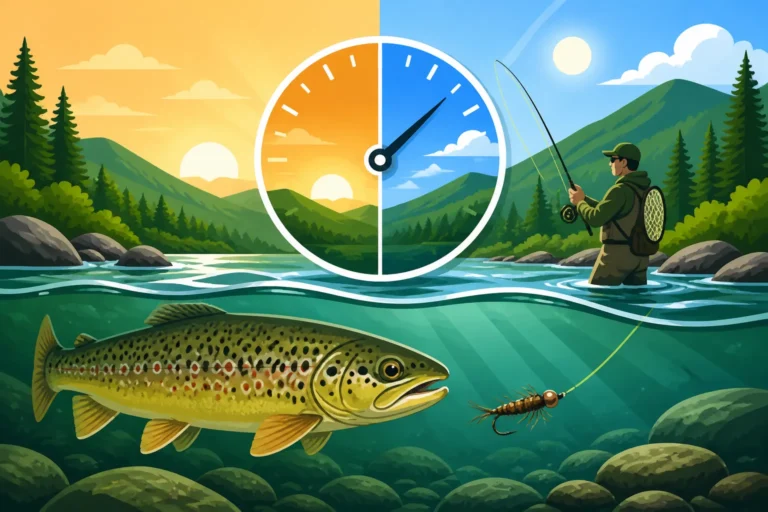
Walleye are masters of camouflage and light sensitivity. They have large, reflective eyes perfectly adapted for low-light conditions, which means they often prefer deeper, darker waters during the day, or shallower areas during dawn, dusk, or on overcast days. They're not sunbathers, that's for sure! But beyond light, water temperature is a huge driver of their depth.
Think about it: just like us, fish have an optimal comfort zone. For walleye, that sweet spot typically falls between 60 to 70 degrees Fahrenheit (15-21 degrees Celsius). In spring and fall, when surface waters are within this range, you might find them shallower. But as the summer sun beats down and the surface warms up, walleye will seek out deeper, cooler water, often congregating around the thermocline – that distinct layer where warm surface water meets colder, deeper water. Finding this thermal break on your fish finder can be a game-changer for locating summer walleye, as it's often where baitfish gather, too. Ignoring temperature and light conditions is like trying to find a polar bear in the Sahara – you're probably looking in the wrong place.
Reading Lake Champlain's Unique Structure and Depths
Lake Champlain isn't just a big puddle; it's an incredibly diverse ecosystem with a labyrinth of underwater features. We're talking about everything from shallow, weedy bays to sprawling deep basins, jagged rock piles, subtle humps, dramatic drop-offs, and expansive flats. Each of these features can hold walleye at different times of the year and even different times of day.
Imagine you're driving through a mountain range; you don't expect to find the same wildlife on a high peak as you would in a sheltered valley. The same applies underwater. Walleye love structure because it provides cover from predators, ambush points for prey, and often cooler water. A subtle depth change from 15 feet to 25 feet might seem insignificant on the surface, but underwater, it could be a critical breakline holding a school of hungry walleye. Understanding your charts, whether on a dedicated fish finder or a mapping app, is paramount. You're looking for those transitions, those hidden bumps, and those steep ledges that scream "walleye highway!"
Seasonal Movements and Their Impact on Trolling Depth
Walleye are migratory, not in the sense of flying south for the winter, but in their movements across the lake throughout the year. These seasonal shifts dramatically impact where you should be trolling.
- Spring (Post-Spawn): After the spawn, which often happens in shallower rocky areas or tributary mouths, walleye are hungry but often recovering. They'll start to move slightly deeper, perhaps 10-25 feet, but still close to those spawning grounds or along emerging weed lines. This is a great time for shallower trolling near structure. You can learn more about exactly When Walleye Spawn on Lake Champlain.
- Summer (Deep Water Migration): This is when Lake Champlain shows its true colors for walleye depth. As surface temperatures climb, walleye head for the cooler, oxygen-rich waters. You'll often find them in the 25-50 foot range, sometimes even deeper, concentrating around deep rock humps, main lake points, or suspended near the thermocline over vast basins. This is where mastering deep trolling techniques becomes crucial. You might find yourself asking How deep walleye go in summer on Lake Champlain.
- Fall (Feeding Frenzy): As water temperatures begin to drop, walleye sense winter approaching and go on a major feeding binge. They'll often move back shallower, sometimes as shallow as 15-30 feet, following schools of baitfish into bays and along main lake points. They can be found spread out, but their aggressiveness makes them a prime target for sustained trolling.
- Winter (Ice Fishing): While not trolling, it's worth noting that ice fishing for walleye on Lake Champlain often targets depths similar to late fall, but they become much more lethargic, requiring different presentation styles. You can learn more about Ice Fishing in Vermont in general for other species too.
Knowing these patterns helps you predict where the fish might be before you even wet a line, greatly increasing your efficiency.
Essential Gear for Precision Trolling Depth
Achieving and consistently maintaining the right trolling depth for walleye on a lake like Champlain isn't just about guessing. It requires a strategic combination of specific gear, all working together to put your lure in the strike zone. Without the right tools, you're just dragging a lure through the water hoping for the best.
The Role of Line Type and Diameter
The line you choose plays a much bigger role in trolling depth than many anglers realize. It's not just about strength; it's about water resistance.
- Monofilament: This is the most common and often cheapest line. Its stretch can be a benefit when a walleye bites, absorbing some shock. However, monofilament is less dense than fluorocarbon and has more diameter for a given breaking strength compared to braid. This means it creates more drag in the water, causing your lure to run shallower than it would on a thinner line, especially at longer lead lengths. A general rule of thumb is that for every 0.001 inch increase in line diameter, a lure will run about one foot shallower.
- Fluorocarbon: Known for its low visibility underwater and higher density, fluorocarbon sinks faster than monofilament. This means your lure will achieve a slightly greater depth on fluorocarbon compared to monofilament of the same breaking strength. It also has less stretch than mono, which can give you better feel for subtle bites or when your lure is fouling.
- Braided Line: Braid has almost no stretch, incredible strength-to-diameter ratio, and excellent sensitivity. Because it's so thin, it creates minimal drag in the water, allowing lures to run deeper than on mono or even fluoro. However, its visibility can be an issue in clear water, so it's common practice to tie on a fluorocarbon leader (6-10 feet) to the end of your braid when trolling with crankbaits. The lack of stretch in braid also means you need to be careful with hooksets and use rods with a softer tip to absorb head shakes.
For precise depth control, especially with crankbaits, many experienced Lake Champlain walleye anglers opt for a main line of 10-20 lb braided line with a fluorocarbon leader. This combination gives you the best of both worlds: deep diving capability and low visibility at the business end.
Diving Lures, Weights, and Planer Boards
Your terminal tackle is where the magic really happens in terms of reaching specific depths.
- Diving Lures (Crankbaits and Spoons): Different lures are designed to dive to different depths based on their lip size, shape, and body design. A smaller lip generally means a shallower dive, while a larger, more aggressive lip means deeper. Understanding the published dive curves for your specific lures, like those from popular brands such as Rapala, Berkley, or Bandit, is incredibly helpful. These curves often indicate how deep a lure will run with a certain amount of line out at a specific trolling speed. For walleye, you'll be using a variety of crankbaits, often referred to as "walleye crankbaits," and occasionally spoons, especially if targeting suspended fish. You can find a huge selection of these, often with detailed dive curve information, on Amazon.
- Snap Weights: These are lead weights that clip onto your main line a set distance in front of your lure. They help pull your lure deeper than its natural dive curve. The beauty of snap weights is their adjustability. You can easily add or remove them, or change their size, to fine-tune your depth. They are often used with crankbaits or spinner rigs.
- Lead Core Line: This specialized line has a lead core wrapped in a braided sheath, designed to sink. It's often "colored" with different segments (e.g., 10 yards per color), allowing you to estimate depth based on how many "colors" you have out. Each color typically sinks a specific amount (e.g., 5 feet per color at a given speed). It's a fantastic way to reach consistent deep depths without bulky weights directly on your line, and it's particularly effective for targeting species like Lake Champlain's walleye in deeper water.
- Bottom Bouncers: While more commonly used for drift fishing or slow trolling with live bait rigs, bottom bouncers are lead weights designed to drag along the bottom without snagging as much as traditional weights. They are great for maintaining constant bottom contact in rocky or uneven terrain where walleye often reside.
- Planer Boards: These aren't for depth, but for spreading your lines horizontally away from the boat. This allows you to run multiple lines at different depths and distances, covering a much wider swath of water without tangling. They're essential for efficient trolling on a big lake like Champlain, especially when walleye are scattered.
Sonar and Fish Finders: Your Underwater Eyes
In modern walleye fishing, your fish finder is arguably the most critical piece of gear for mastering trolling depth. It's your window into the underwater world.
- Locating Fish and Bait: A good sonar unit, especially with DownScan or SideScan capabilities, will show you baitfish schools and individual walleye. If you see walleye consistently at 35 feet, that's where you need your lure. Pay attention to how the fish are oriented to structure, whether they're tight to the bottom, suspended just above it, or relating to a bait ball.
- Mapping Bottom Contours: Detailed mapping (often integrated into higher-end units or available as separate chart cards) allows you to see the exact depth changes, humps, and drop-offs where walleye ambush prey. You can program your trolling routes to precisely follow these contours. Knowing How to read structure for walleye on Lake Champlain is key here.
- Understanding Thermoclines: As mentioned, the thermocline is a prime walleye hangout in summer. Many modern fish finders can clearly display the thermocline, appearing as a distinct band on your sonar screen. Targeting your lures just above, in, or just below this layer can be incredibly effective.
- Adjusting on the Fly: Your fish finder allows for real-time adjustments. If you're marking fish at 30 feet but your lure is running at 20, you know you need to add more weight, increase line out, or change lures to get into the strike zone. Products like the Humminbird Helix or Lowrance Elite series are highly popular among walleye anglers and can be easily purchased online via Amazon.
Mastering Trolling Techniques for Optimal Walleye Depth
Having the right gear is only half the battle; knowing how to use it effectively to control your trolling depth is what truly separates successful walleye anglers from those just burning gas. It's a continuous dance of observation, adjustment, and precision.
The Art of Precision Depth Control with Crankbaits
Crankbaits are a staple for Lake Champlain walleye, and their depth is primarily controlled by three factors: line out, trolling speed, and lure design.
- Line Out: This is the most straightforward factor. The more line you let out, the deeper your lure will dive, up to a point where the line drag starts to counteract the diving lip's action. Every crankbait has a "dive curve" – a chart that tells you how deep it will run with different lengths of line out (e.g., 50 feet, 100 feet, 150 feet) at a standard trolling speed. It's crucial to consult these charts for the specific lures you're using. For instance, a Berkley Flicker Shad might hit 12 feet with 100 feet of line out, while a Rapala Deep Husky Jerk could hit 20 feet with the same line.
- Trolling Speed: Speed profoundly affects depth. Troll too fast, and your lure might "blow out" or run shallower as water pressure pushes it up. Troll too slow, and it won't achieve its maximum diving potential. For most walleye crankbaits, a speed between 1.5 to 2.5 mph is a good starting point. Faster speeds can make lures dive deeper initially, but excessive speed can cause them to plane upwards. Experimentation is key.
- Lure Design: As discussed, the lip size and angle are critical. Always choose a lure designed for the depth you're targeting. Don't try to force a shallow-diving lure to run 40 feet; that's what snap weights or lead core are for. Many anglers use line counter reels, which are invaluable for knowing exactly how much line you have out. This consistency allows you to replicate successful presentations.
When you're out on the lake, keep a mental note (or better yet, a written log) of which lures at what line lengths and speeds are catching fish at specific depths. This data becomes your secret weapon for future trips.
Utilizing Snap Weights and Lead Core for Deeper Presentations
Sometimes, even the deepest diving crankbait won't reach the walleye you're marking, especially during the peak of summer when they descend to 40+ feet. This is where supplementary weights become essential.
- Snap Weights: These are incredibly versatile. You attach your lure to your main line, then measure out a specific amount of line (often 50 feet is a good starting point for what's called the "setback"). Then, you clip a snap weight (e.g., 1-3 oz) to your main line and let out more line. The general rule of thumb for snap weights is often cited as the "50/50 rule" or "20/20 rule," meaning the weight will take your lure roughly half the depth of the line you let out after the weight, or 1 foot for every 2 feet of line. However, this is highly variable based on trolling speed, line type, and lure. A 2-ounce snap weight with 100 feet of line out past the weight can often add 20-30 feet of depth to your lure's natural dive. They're excellent for pinpoint depth control in deeper water, allowing you to cycle through different weights until you find the strike zone. You can find robust snap weight kits that hold up to repeated use on Amazon.
- Lead Core Line: For truly deep walleye, particularly those suspended over basins or clinging to deep structure, lead core line is an incredibly effective tool. Each "color" (usually 10 yards or 30 feet) of lead core will sink a certain amount at a given speed. For example, at 2 mph, 1 color of 18 lb lead core might sink around 5-7 feet, 2 colors around 10-14 feet, and so on. This isn't linear, as drag increases with more line out, but it provides a very predictable way to get lures deep. You'll typically tie a fluorocarbon leader (20-50 feet) to the end of your lead core to connect your lure. When using lead core, you don't typically use diving crankbaits; instead, you'll use shallow-diving cranks, spoons, or spinner rigs, as the line itself provides the depth. Understanding Best trolling depth for walleye on Lake Champlain often involves lead core in summer.
Interpreting Your Electronics and Adjusting on the Fly
Your fish finder is your co-pilot. It's constantly feeding you information, and knowing how to interpret it is paramount to success.
- Spotting the Targets: Look for arches or lines on your screen that indicate fish. Walleye often appear as distinct, strong arches, sometimes tight to the bottom, sometimes suspended. Learn to differentiate them from baitfish schools (which often appear as clouds or dense blobs).
- Identifying the Thermocline: As mentioned, the thermocline is a key feature in summer. Pay attention to the distinct temperature change or a dense layer of baitfish often associated with it. This is your target zone.
- Bottom Composition: Your sonar can often tell you about the bottom. Hard bottoms (rock, gravel) typically show a stronger, thicker return, while soft bottoms (mud, silt) appear thinner. Walleye often prefer hard bottoms.
- Making Adjustments: If your sonar shows fish at 35 feet, and your current setup is only reaching 25 feet, it's time to act. Don't be afraid to change lures, add snap weights, let out more line, or even switch to lead core. The quicker you can adapt, the more fish you'll catch. It's a constant feedback loop between what your electronics tell you and what your gear is doing. Pay attention to factors like speed, current, and wind, which can all affect your presentation.
Seasonal Strategies for Trolling Depth on Lake Champlain
Trolling depth isn't a static number; it's dynamic, constantly changing with the seasons. Understanding the general patterns for Lake Champlain will give you a significant edge.
Spring and Early Summer: Post-Spawn and Emerging Weed Lines
In the cooler waters of spring and early summer, walleye are recovering from the spawn and actively feeding.
- Depths: Expect walleye to be relatively shallow, often in the 10-25 foot range, sometimes even shallower early in the season. They'll be relating to structure near spawning grounds, like rocky points, shoals, and transitional areas where hard bottom meets soft. As the season progresses into early summer, look for them along the edges of newly emerging weed beds, especially in bays and shallower sections of the main lake. This is a good time to understand Vermont Bass Catch-and-Release Season, Explained if you are targeting smallmouth in similar areas.
- Techniques: Medium-diving crankbaits that reach 10-20 feet are excellent choices. Trolling speeds might be a bit slower than in summer, perhaps 1.2-2.0 mph, to entice these post-spawn fish. Keep an eye on your fish finder for baitfish congregating near structure or the first signs of green weeds. If you are targeting areas near the lake bottom, using shallow-running crankbaits with a small snap weight can help you tick the tops of emerging weeds without getting too snagged.
Mid-Summer: The Deep Water Migration
Summer sees Lake Champlain's walleye make their annual pilgrimage to deeper, cooler waters. This is when the depth game truly comes into play.
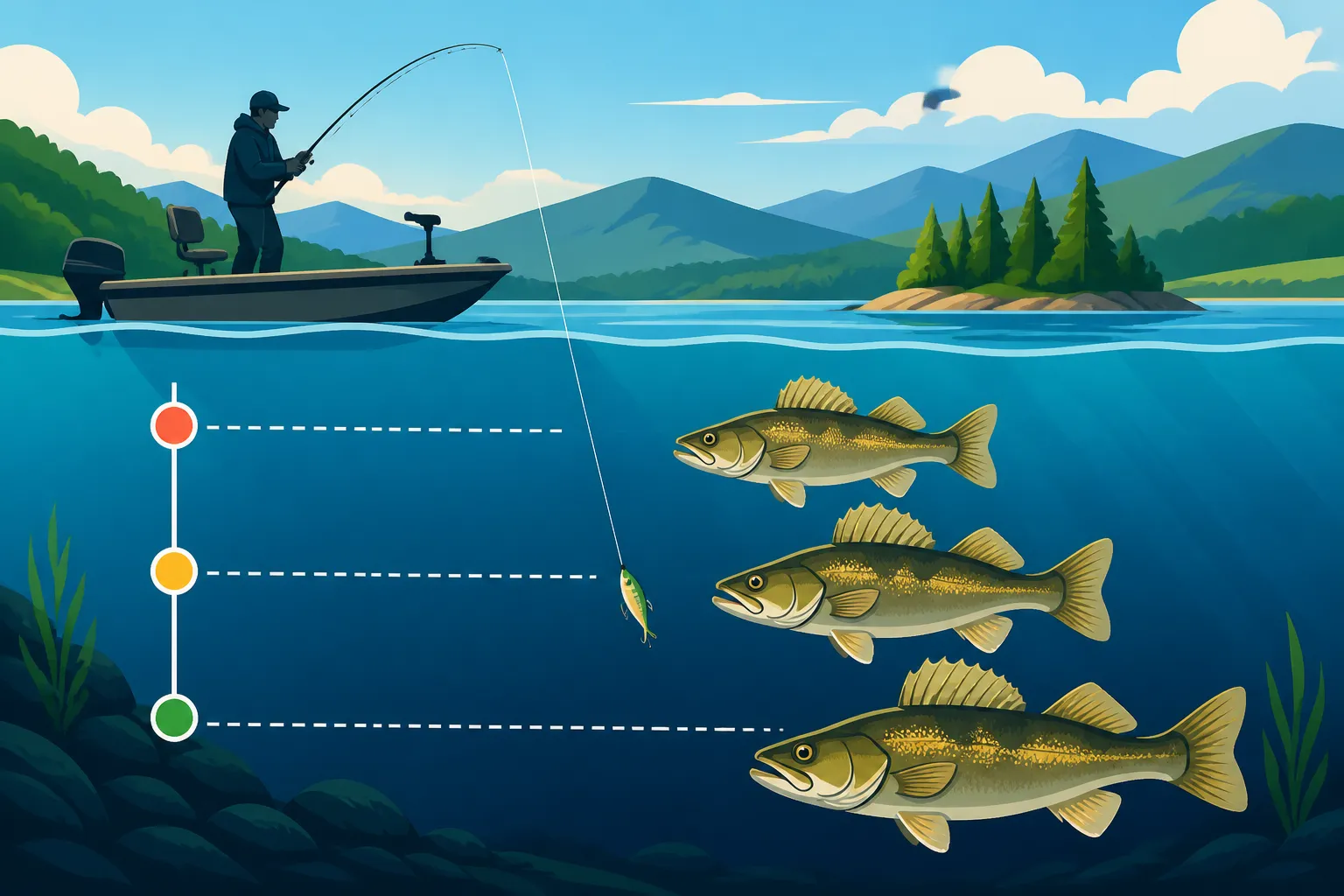
- Depths: This is the time to target depths between 25-50 feet, and sometimes even deeper, especially in the central and northern sections of the lake. Walleye will be tightly related to the thermocline, deep humps, main lake points, and sudden drop-offs into deep basins. They're often suspended, too, following schools of smelt and other baitfish. Knowing How deep walleye go in summer on Lake Champlain is directly applicable here.
- Techniques: Deep-diving crankbaits that can hit 20-30 feet on their own are excellent. Combine these with snap weights or, more commonly, lead core line to get your lures down to 30-50 feet. Trolling speeds might increase slightly to 1.8-2.8 mph to cover more water and trigger strikes from more active, although deeper, fish. Look for steep breaks, submerged islands, and areas where currents might concentrate bait. This is often when anglers ask about Best walleye spots on Lake Champlain.
Fall: Feeding Frenzies and Shifting Depths
As the days shorten and water temperatures begin to cool, walleye enter a high-energy feeding phase in preparation for winter.
- Depths: Walleye will often begin to move back shallower, or at least become less confined to the deepest water. You might find them anywhere from 15-40 feet, depending on the specific water temperature and baitfish concentrations. They will be actively roaming, following schools of baitfish into coves, along main lake points, and over flats adjacent to deeper water.
- Techniques: This is a fantastic time for a mix of deep and medium-diving crankbaits. The aggression of fall walleye often means they'll chase a lure. Trolling speeds can vary, but a good starting point is 1.5-2.5 mph. Experiment with different colors and sizes, as walleye can be quite particular during this time. Lead core can still be effective, especially on clear, sunny days when fish might hold a bit deeper. Pay close attention to your electronics, as the walleye can be spread out, but once you find a school, they're usually willing biters. For some anglers, this is also the best time of day to fish for walleye at dusk.
| Lure Type / Method | Target Depth Range (Approx.) | Common Applications | Key Considerations |
|---|---|---|---|
| Shallow Crankbaits | 5-15 feet | Spring post-spawn, low light, shallow flats, weed edges | Focus on clear, calm days or dusk/dawn. |
| Medium Crankbaits | 10-25 feet | Spring/Fall transitions, main lake points, structure | Vary speed, use line counter for precision. |
| Deep Diving Crankbaits | 20-35 feet | Summer thermocline, deeper structure, fall feeding | Check dive curves, use thin line (braid/fluoro). |
| Crankbait + Snap Weight | 20-45 feet | Deeper summer walleye, specific depth targeting | Adjust weight size based on desired depth & speed. |
| Lead Core Line | 30-50+ feet | Deep suspended walleye, main lake basins, summer | Use with shallow cranks/spoons, know "color" depth. |
| Bottom Bouncers | Bottom contact in 10-40 feet | Rocky bottom, structure, live bait/spinner rigs | Slow trolling/drifting, ideal for specific contour following. |
Ultimately, mastering the best trolling depth for walleye on Lake Champlain is an ongoing process of learning, adapting, and using your tools wisely. Don't be afraid to experiment, keep detailed notes, and most importantly, enjoy the challenge of chasing these incredible fish!
Disclaimer
The information provided in this guide is for general informational and educational purposes only. Fishing regulations, conditions, and fish behavior can change. Always consult the most current Vermont Fish and Wildlife Department regulations before fishing. Fishing involves inherent risks, and proper safety precautions should always be taken, especially when boating or ice fishing.