Lake Champlain Lake Trout Fishing
Standing at the shore of Lake Champlain, it's easy to feel a mix of awe and overwhelm. This colossal body of water stretches for miles, an inland sea that can feel intimidating when you're specifically chasing elusive fish like lake trout. Many anglers arrive with high hopes but quickly get lost in the sheer scale, wondering where these deepwater dwellers even hide. This comprehensive guide is designed to cut through that confusion, giving you the insider knowledge on how to successfully target and catch lake trout on Vermont's largest lake.
Understanding Lake Champlain's Lake Trout
Chasing lake trout on Lake Champlain isn't just about dropping a line; it's about understanding the unique ecosystem they call home and how these incredible fish adapt to it. These aren't your typical stream trout; they're built for the depths and thrive in the specific conditions that Champlain offers.
The Life and Habits of Champlain Lake Trout
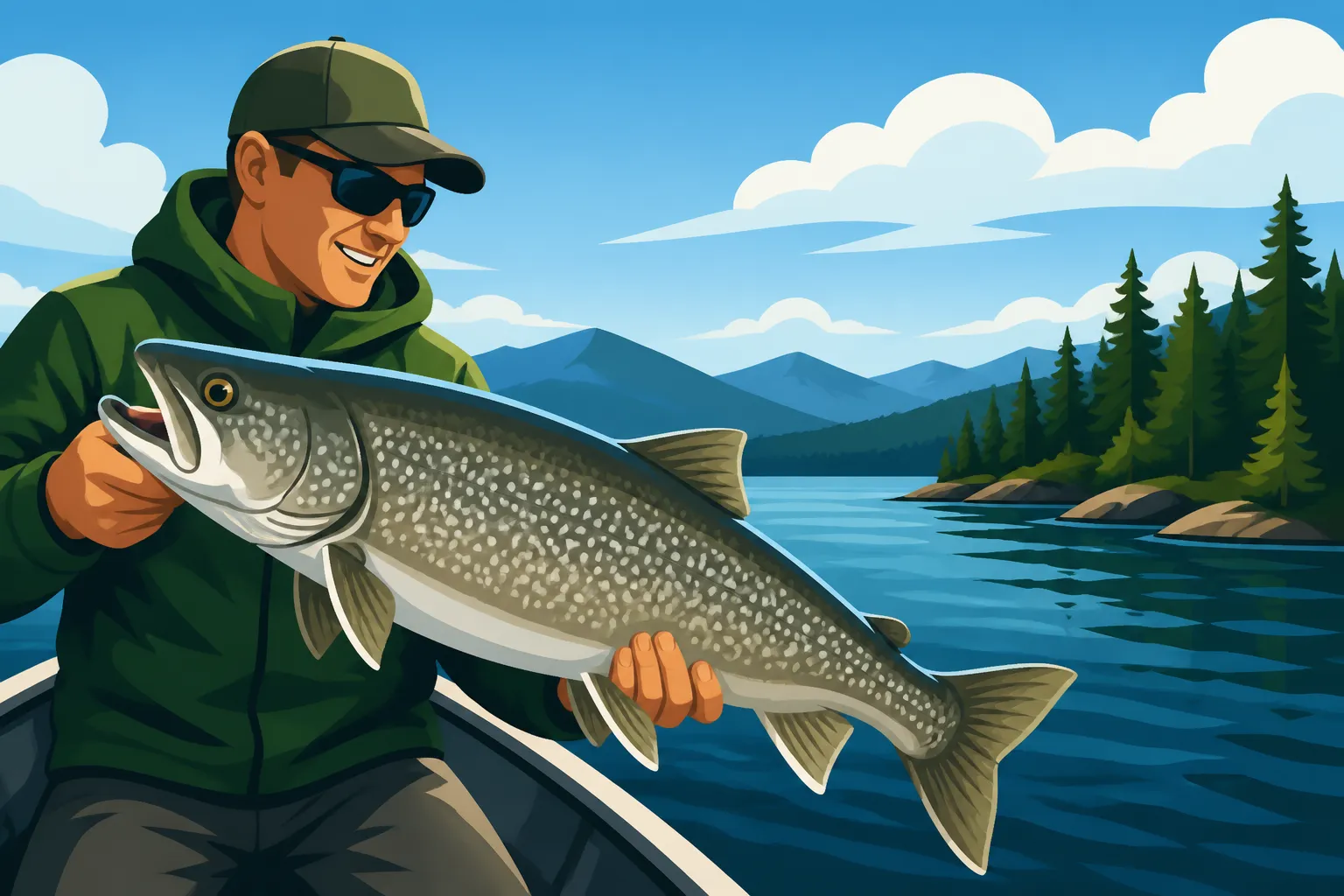
Lake trout ( Salvelinus namaycush ) are truly fascinating creatures, perfectly adapted to the cold, deep waters of Lake Champlain. Unlike their river-dwelling cousins, these fish are pelagic predators, meaning they often suspend in the open water, constantly on the hunt for their next meal. Their lives revolve around temperature and food sources, which dictate their movements throughout the year.
During the warmer months, when the surface waters of Lake Champlain heat up significantly, lake trout retreat to the cooler, oxygen-rich depths. We're talking about water temperatures generally in the mid-40s to low-50s Fahrenheit, which can often be 80 feet or deeper in the summer. They are acutely sensitive to changes in temperature, so even a few degrees can send them moving up or down the water column. Their primary diet consists largely of smaller forage fish like rainbow smelt, alewives, and sculpins. Knowing this is crucial because finding the baitfish often means finding the lake trout. If you can locate schools of smelt on your sonar, you're usually in the right neighborhood for lakers.
These fish can grow to impressive sizes in Lake Champlain. While the average catch might be in the 5-10 pound range, much larger fish are certainly present. You'll hear tales of lakers pushing 20 pounds or more, providing a true challenge for any angler. If you're curious about the potential, you can delve deeper into what to expect regarding Lake Trout Average Size in Vermont Lakes. As the seasons change, so do their habits. In spring and fall, when the entire water column cools down, lake trout can be found much shallower, even as shallow as 20-30 feet, often cruising rocky points and submerged humps. This shallower movement is particularly noticeable during their spawning period in the fall, which we explore in more detail in our guide on Lake Trout Spawning Season in Vermont.
Prime Lake Trout Habitat on Champlain
Lake Champlain is a vast and varied fishery, but when it comes to lake trout, their preferred real estate is quite specific. Forget the shallow weedy bays or muddy flats; lakers are all about the deep, cold, structured zones. Understanding these prime habitats is the first step to successful angling.
They gravitate towards areas with significant depth changes, often referred to as "drop-offs" or "breaks." Imagine an underwater cliff or a steep slope where the bottom plunges from 30 feet to 100 feet in a short distance—that's prime laker territory. These breaks serve as highways and ambush points for predatory fish. Look for areas where these features converge with underwater humps, ledges, or islands. These structures create current breaks and provide excellent cover for both the lake trout and their prey. Think of them as underwater mountain ranges and valleys.
A crucial aspect of their habitat is the availability of coldwater refugia, especially during the peak of summer. These are pockets of deep, cold, oxygenated water where they can escape the warmer surface temperatures. Finding these deeper basins and trenches, often 80 feet to over 150 feet deep, is paramount in summer. You'll notice a stark contrast to where you might target smallmouth bass or walleye, which often prefer shallower, warmer zones. For lake trout, the deeper, the colder, and the more defined the structure, the better. Mapping out these underwater features with good sonar is indispensable. Learning to read your electronics to identify sharp contour changes, isolated humps rising from deep basins, and suspended baitfish schools will significantly increase your odds of finding these elusive fish.
Essential Gear and Tackle for Lake Champlain Lakers
Lake Champlain lake trout fishing isn't just about knowing where they are; it's about having the right tools for the job. These are powerful, deepwater fish, and your gear needs to be up to the task. Skimping on tackle can lead to heartbreak when that trophy laker finally hits.
Rods, Reels, and Line for Deep Water
When you're targeting lake trout on Lake Champlain, your rod, reel, and line setup need to be robust and reliable. These fish fight hard, especially when hooked in deep water, where the pressure difference adds to their pulling power.
For trolling, you'll want medium-heavy to heavy action rods, typically 7 to 9 feet in length. The longer length helps spread out multiple lines and provides a better shock absorber for powerful runs. Conventional reels, or "level wind" reels, are often preferred for trolling due to their durability, line capacity, and smooth drag systems. Brands like Penn, Shimano, or Daiwa offer excellent options. For jigging, a slightly shorter, sensitive but powerful rod (6'6" to 7'6") with a fast action tip and strong backbone is ideal. Pair this with a robust spinning reel in the 3000-5000 size range, capable of handling heavy braided line.
Line choice is critical. For your main line on trolling setups, 20-30 pound monofilament is popular, especially when using downriggers, as it has some stretch to absorb strikes. However, many anglers are switching to 30-50 pound braided line for its no-stretch sensitivity, allowing you to feel every bump and subtle bite. When using braid, a fluorocarbon leader of 15-25 pounds is essential. Fluorocarbon is nearly invisible underwater and offers excellent abrasion resistance against sharp rocks or the laker's rough mouth. For jigging, 20-30 pound braided line with a fluorocarbon leader of similar strength is the go-to. The sensitivity of braid helps detect subtle bites in deep water, and the strength provides confidence when battling a large fish. You can find more specific recommendations for heavy-duty setups in our guide on Best Trolling Gear for Lake Champlain Walleye, many principles of which apply directly to lakers.
Trolling and Jigging Lures
Lake trout on Lake Champlain respond well to a variety of presentations, but two methods stand out: trolling and jigging. Each requires specific lures designed to entice these deepwater predators.
For trolling, spoons are arguably the most popular and effective choice. Brands like Luhr Jensen, Dreamweaver, and Michigan Stinger offer a wide array of spoons in various sizes and colors. Magnum spoons are particularly effective at deeper depths, providing a significant profile and flash. Stickbaits, such as Rapala Deep Husky Jerks or other deep-diving crankbaits, also work well, especially during colder periods when trout might be slightly shallower. Often, trollers will use dodgers or flashers in front of a spoon or a small fly (like a peanut fly or squirt) to add attraction, mimicking a school of baitfish. The flash and vibration can draw lakers in from a distance.
When it comes to jigging, you're usually targeting fish directly under the boat or on specific pieces of structure. Heavy jigging spoons, like Koho spoons, Acme Kastmasters, or Crippled Herrings, in weights from 3/4 oz to 2 oz or more, are excellent for getting down quickly. Tube jigs, often tipped with a piece of bait, are also incredibly effective. Blade baits, like Heddon Sonar or Sebile Vibrato, offer a strong vibration that can trigger reaction strikes. Color choices are important: silver, blue, green, and chartreuse are perennial favorites, often mimicking the smelt that lake trout feed on. Natural baitfish patterns are also always a good bet. Experimentation is key, as the lake trout's preferences can change day by day.
Sonar and Navigation for Success
Fishing for lake trout on Lake Champlain without reliable electronics is like trying to find a needle in a haystack blindfolded. Given the depths these fish inhabit and the vastness of the lake, good sonar and navigation tools are absolutely non-negotiable for consistent success.
A quality fish finder is your most important ally. It allows you to visualize the underwater world, spotting critical structure like humps, drop-offs, and deep rock piles that hold baitfish and, consequently, lake trout. More importantly, it helps you identify schools of baitfish, which are often the key to locating actively feeding lakers. Side-imaging and down-imaging technologies, found on units from brands like Humminbird or Lowrance, provide incredibly detailed views of the bottom and surrounding water, helping you pick out subtle ledges or isolated boulders that might hold fish. If you're looking to upgrade, our guide on Best Fish Finders for Vermont Lakes offers some excellent suggestions.
Beyond just finding fish, navigation is crucial. Lake Champlain can be treacherous, and knowing exactly where you are and where you've been is paramount. GPS functionality on your fish finder or a dedicated GPS unit allows you to mark waypoints of productive spots, underwater structures, or schools of baitfish. This ensures you can return to productive areas easily, even in varying weather conditions or low light.
To effectively present lures at the precise depths where lake trout are holding, especially in summer, you'll need specialized depth control equipment. Downriggers are devices that use a heavy weight and a release clip to carry your lure down to a specific depth, allowing you to troll precisely at the thermocline or over deep structure. Lead core line, a braided line with a lead filament inside, also allows lures to sink to specific depths based on the amount of line let out and boat speed. Planer boards are used to spread out multiple lines away from the boat, covering a wider swath of water, which can be invaluable on a large lake like Champlain. Understanding How deep to troll for lake trout on Lake Champlain is a game-changer, and this equipment makes it possible.
Seasonal Strategies for Lake Trout Fishing
Lake Champlain's lake trout are highly migratory throughout the year, their movements dictated primarily by water temperature and the location of their food sources. To consistently catch them, you need to adapt your strategy to the season. What works in May won't necessarily work in August.
Spring and Early Summer: Shallow to Mid-Depths
As the ice finally recedes from Lake Champlain in late April and May, a new fishing season begins, and it's a fantastic time for lake trout. This period, extending into early summer, is often considered one of the most accessible times to target lakers, as they move significantly shallower than their mid-summer haunts. The entire water column is still relatively cold, meaning lake trout can be found from the surface down to about 60 feet.
During this time, lake trout are actively feeding, recovering from winter, and preparing for the warmer months ahead. They’ll often cruise rocky points, underwater islands, and the mouths of tributaries where cold water might still be entering the lake. Trolling is a highly effective method. Long, slender stickbaits, like Rapalas or Smithwick Rogues, or various spoons in silver, blue, or green patterns, fished relatively shallow (often with just a small inline weight or no weight at all) can be deadly. Many anglers will troll these lures near shorelines or over humps that might only be 20-40 feet deep. The lake trout are often more aggressive and less wary in these shallower conditions.
Jigging can also be productive in early spring, especially over known structural elements like rock piles or sudden drop-offs. Heavy spoons or tube jigs dropped to the bottom and worked vertically can elicit strikes from hungry fish. Pay close attention to water temperatures; as the surface warms up, the trout will begin their slow retreat to deeper, cooler water. This transition period, usually in late June, marks the shift to deeper presentations.
Mid-Summer: The Deep Chill
When the dog days of summer hit Lake Champlain, and the surface temperatures soar, the lake trout embark on their annual migration to the deep. This is where the challenge—and the reward—of laker fishing truly comes into play. You won't find them in the shallow bays now; they're down in the cold, dark depths, seeking out thermal refugia and the abundant schools of smelt that also gravitate to these cooler zones.
During mid-summer, typically from July through early September, lake trout will be found in depths ranging from 80 feet to well over 150 feet, sometimes even deeper. This requires specialized equipment to get your lures down to where the fish are. Downriggers become essential, allowing you to precisely control the depth of your trolled lures. Lead core line is another popular option, with different colors indicating specific depths at certain trolling speeds. Large, flashy spoons, dodgers with flies, or deep-diving stickbaits are effective when trolled at slow speeds (usually 1.5-2.5 mph) through the deepest basins of the lake.
Vertical jigging is also incredibly effective for summer lake trout, especially if you can mark fish directly beneath your boat on your sonar. Heavy jigging spoons, tube jigs, or blade baits in weights from 1 to 3 ounces are necessary to reach these depths efficiently. The key is to present your lure directly to the fish or just above them, as lake trout typically feed upwards. Look for suspended baitfish schools, often appearing as dense clouds on your fish finder; the lake trout won't be far behind. This is a time when understanding Best techniques for deep water summer lake trout becomes paramount.
Fall and Winter: Return to Shallower Feeding
As autumn paints the Vermont landscape with vibrant colors, Lake Champlain begins to cool, signaling another major shift in lake trout behavior. This period, leading into the ice fishing season, sees the lakers once again moving into more accessible depths, offering renewed opportunities for anglers.
In the fall, as the surface temperatures drop and the lake begins to "turn over," the cooler water allows lake trout to roam much shallower. They'll often be found in the 30-70 foot range, actively feeding to build up energy reserves for the upcoming winter and their spawning season. Trolling with spoons and stickbaits over underwater humps, along rocky ledges, and near prominent points can be highly productive. This pre-spawn feeding frenzy can lead to some aggressive strikes. Understanding Lake Trout Spawning Season in Vermont is also helpful, as fish will concentrate in certain areas around that time.
Once winter sets in and Lake Champlain freezes over, a whole new world of lake trout fishing opens up: ice fishing. While challenging, targeting lakers through the ice can be incredibly rewarding. They'll still be found in deeper water, often 30-100 feet, congregating around underwater structure. Jigging with heavy spoons, blade baits, or large tube jigs through the ice is the most common method. Many anglers also use tip-ups rigged with live or dead bait (such as smelt or shiners) to cover more water. Locating them often means drilling many holes over prime structure and constantly checking your sonar. Popular ice fishing access points include Malletts Bay or the areas around South Hero Bay, where you can often find dedicated ice fishing villages. Our guide on Ice Fishing in Vermont provides a broader overview of this popular winter pursuit.
Top Lake Champlain Lake Trout Hotspots
Lake Champlain is enormous, and while lake trout can be found throughout its deep waters, some areas are historically more productive than others. Knowing these hotspots can save you a tremendous amount of time and fuel, putting you directly over prime laker habitat.
The Broad Lake and Deep Basin Areas
When you think of Lake Champlain lake trout, your mind should immediately go to the broad, open waters and the deepest basins. These areas are their primary residences, especially during the warmer months when they retreat from the surface heat. The key is to focus on the truly deep sections, often found in the main body of the lake.
One of the most renowned deepwater zones is the main lake trench running west of Burlington, extending south. This area features significant depths, often exceeding 100 feet, with steep drop-offs and plenty of underwater contour to explore. Another fantastic spot is the broad expanse off Split Rock on the New York side, which, while technically across the border, represents the same type of deep, productive habitat that influences fishing patterns throughout the main lake. Other notable areas include the deep water around the "Gut" between Thompson's Point and Split Rock, or the profound depths south of Charlotte.
When targeting these broad lake basins, you'll want to focus your efforts on depths generally from 80 feet to over 150 feet, depending on the season and the thermocline. Pay close attention to your sonar to identify suspended baitfish schools, which will appear as clouds or streaks in the water column. Lake trout are often found just below or within these baitfish concentrations. Mapping out these areas and understanding the subtle contour changes on your electronic charts will give you a significant advantage in locating these deepwater behemoths.
Island and Structure Fishing
While the deep basins hold plenty of lake trout, the areas around Lake Champlain's numerous islands and prominent underwater structures also offer exceptional opportunities, especially during the spring, fall, and even winter ice fishing seasons. These features provide cover, ambush points, and often create current breaks that attract both baitfish and predators.
The Champlain Islands — North Hero, South Hero, and Isle La Motte — are surrounded by diverse underwater topography that makes them prime lake trout territory. Look for sharp drop-offs around these islands, particularly on their deeper sides, where depths quickly plunge from 30-40 feet down to 80-100 feet. Underwater humps, pinnacles, and ledges that rise from the deeper surrounding water are also magnet for lakers. These isolated structures often hold schools of baitfish, making them ideal feeding grounds.
Specific examples of productive areas include the deep water surrounding Valcour Island (again, technically New York waters but indicative of the type of structure), or the various humps and reefs scattered throughout the central and northern sections of the broad lake. Even closer to the Vermont shore, areas like the deep water off Thompson's Point or the mouth of the Lamoille River can be productive, especially during periods when trout are shallower. For a more detailed look at the island-specific fishing, our guide on Best islands to fish near on Lake Champlain can offer even more insights into these productive spots. When fishing these areas, precise boat control and accurate depth presentations are crucial to staying on top of the structure and the fish.
Hiring a Guide for Lake Trout Success
Let's be honest: Lake Champlain is a massive body of water, and finding lake trout in its depths can feel like an overwhelming challenge, especially if you're new to the lake or to deepwater fishing techniques. The sheer scale, the intricate regulations, and the specialized gear involved can be a steep learning curve for even experienced anglers. This is precisely where the value of a professional fishing guide becomes immeasurable.
Hiring a local Lake Champlain guide offers a significant shortcut to success. These captains spend countless hours on the water, meticulously tracking fish movements, understanding seasonal patterns, and perfecting their techniques. They know the current hotspots, the specific depths the fish are holding at, and which lures are working on any given day. More than just finding fish, they provide all the specialized gear—downriggers, specific rods, and a boat equipped with top-tier electronics—saving you from significant investment and hassle. You step aboard, and everything is already set up for a productive day.
If you're feeling overwhelmed by the sheer size of Lake Champlain and the specific techniques required for lake trout, consider booking a trip with a local guide. Services like FishingBooker can connect you with experienced captains who know the lake trout patterns inside and out, saving you valuable fishing time. Many anglers find that a day with a top-rated guide found on FishingBooker drastically shortens the learning curve, especially for a species as elusive as Lake Champlain lake trout. Imagine hitting the water with a seasoned pro who already knows the best spots and has all the right gear; FishingBooker makes it simple to find such experts. It's an investment not just in catching fish, but in gaining invaluable knowledge about the lake and the species. You can explore more about what guides offer in our Lake Champlain Fishing Guide.
Regulations and Responsible Angling
Fishing for lake trout on Lake Champlain isn't just about technique and location; it's also about respecting the resource and adhering to the specific rules that govern this unique fishery. Understanding and following regulations is crucial for both conservation and avoiding legal trouble.
Understanding Lake Champlain's Specific Rules
Due to its immense size and its shared border with New York State, Lake Champlain has a distinct set of fishing regulations that can differ from other Vermont waters. It's not uncommon for anglers to mistakenly apply general Vermont rules to the lake, which can lead to complications. Therefore, it is absolutely paramount to consult the most current Vermont Fish & Wildlife Department regulations specific to Lake Champlain before you head out. Our comprehensive guide, Vermont Fishing Regulations Explained, offers a great starting point, but always verify directly with the state's official publication.
Key regulations to pay attention to for lake trout often include minimum length limits, daily creel limits (the number of fish you can keep per day), and sometimes specific possession limits. These can vary season to season or even change if the fishery management deems it necessary, so staying updated is critical. For instance, there might be a slot limit, where you can only keep fish within a certain size range, or a limit on the number of fish over a certain size. These rules are put in place to protect the spawning population and ensure the long-term health of the lake trout fishery. It's also vital to understand the difference between daily limits and possession limits, especially if you're staying for multiple days. You can find more granular detail on the specific numbers for different species in Vermont Bag and Possession Limits by Species. Always carry a copy of the regulations with you, whether digitally or in print, and clarify any doubts before you fish.
Catch and Release Best Practices
Lake trout are a magnificent sport fish, and ensuring their long-term viability in Lake Champlain requires responsible angling practices, especially when it comes to catch and release. Many lake trout caught, particularly from deeper waters, may not be intended for the frying pan, and releasing them successfully is a skill unto itself.
One of the biggest challenges with deepwater fish like lake trout is barotrauma. When fish are brought up rapidly from significant depths, the change in pressure can cause their swim bladder to expand, making it difficult for them to swim back down. Signs of barotrauma include a bulging stomach, eyes popping out, or the stomach pushed out through the mouth. To mitigate this, consider using a descending device, which is a weighted clip that allows you to safely lower the fish back to the depth it was caught, re-inflating its swim bladder.
Regardless of depth, always handle lake trout with care. Minimize their time out of the water; every second counts. Use wet hands or a wet, rubberized net to protect their slime coat, which is their primary defense against disease. If possible, remove hooks while the fish is still in the water. Use needle-nose pliers or a de-hooking tool to quickly and cleanly remove hooks. If the fish is deeply hooked, it may be better to cut the line as close to the hook as possible, as the hook may rust out over time, and attempting to remove it could cause more harm. Avoid squeezing the fish's belly or gills. Support the fish horizontally, especially larger ones, to avoid damaging their internal organs. Releasing a strong, healthy lake trout back into Lake Champlain is one of the most rewarding parts of the sport, ensuring future generations can enjoy these incredible fish.
Seasonal Lake Trout Depths & Lure Suggestions
Understanding where Lake Champlain's lake trout are likely to be throughout the year, and what lures to use, is key to success. This table provides a quick reference to help you plan your trips.
| Season | Typical Depth Range (Feet) | Preferred Lure Types | Key Tactics |
|---|---|---|---|
| Early Spring | 20-60 | Stickbaits, Spoons, Jigging Spoons | Trolling near shore, jigging over structure |
| Late Spring/Early Summer | 40-80 | Spoons, Flashers/Flies, Stickbaits | Trolling with downriggers/lead core, jigging |
| Mid-Summer | 80-150+ | Heavy Spoons, Tube Jigs, Stickbaits | Deep trolling, vertical jigging |
| Fall | 30-70 | Stickbaits, Spoons, Jigging Spoons | Trolling, jigging on structure |
| Winter (Ice Fishing) | 30-100 | Jigging Spoons, Blade Baits, Tip-ups | Vertical jigging, live bait on tip-ups |
| (for specific trolling patterns, also check out Trolling Techniques for Vermont Lake Trout) |
Disclaimer
The information provided in this guide is for general informational purposes only and is not intended as legal advice. Fishing regulations, season dates, and limits can change frequently. Always consult the official Vermont Fish & Wildlife Department publications or website for the most current and accurate regulations before engaging in any fishing activities. Adherence to all local, state, and federal laws is the responsibility of the angler.