Nonresident Annual Fishing License Cost in Vermont
Venturing into the beautiful Green Mountain State with a fishing rod in hand is a dream for many, but for nonresidents, the cost and process of getting a fishing license can sometimes feel like navigating a winding river without a map. It’s not just about the price tag; it's understanding what you're buying, if it's the right fit for your trip, and how Vermont’s unique regulations might apply to you. This guide is here to untangle the details of securing a nonresident annual fishing license in Vermont, ensuring you hit the water confidently and legally.
Understanding Vermont's Nonresident Annual Fishing License: Your Gateway to Green Mountain Waters
When you're planning an extended stay or anticipate multiple fishing trips to Vermont throughout the year, an annual nonresident fishing license often becomes the most sensible and cost-effective option. It's more than just a permit; it's your all-access pass to the incredible angling opportunities Vermont has to offer, from the vast expanse of Lake Champlain to the serene, babbling trout streams nestled in the mountains.
What an Annual License Truly Unlocks
An annual nonresident fishing license in Vermont provides you with the freedom to fish almost all of the state's public waters for an entire calendar year, from January 1st through December 31st. This includes everything from the trophy walleye waters of Lake Champlain to the landlocked salmon havens like Lake Willoughby, and countless rivers brimming with various trout species. It’s an expansive permission slip that covers both coldwater and warmwater species, allowing you to pursue brook trout in a remote mountain stream one day and largemouth bass in a local pond the next, without needing to purchase additional endorsements or permits for specific species (beyond the initial license itself, of course).
This comprehensive coverage is a huge benefit for serious anglers or those who simply can't get enough of Vermont's diverse fisheries. Imagine planning a spring trout fishing expedition, then returning in summer for smallmouth bass on a sprawling lake, and maybe even a fall foliage trip that includes some landlocked salmon action. With an annual license, you’re covered for all these adventures, removing the hassle of repeatedly buying short-term permits. You still, however, need to be fully aware of the specific Vermont Fishing Regulations Explained for whatever body of water you're on, as these rules govern bag limits, length limits, and open seasons for various species.
Breaking Down the Nonresident Annual Cost
Let's get down to brass tacks: what's the financial investment for a nonresident annual fishing license? As of the most recent information (and keep in mind these figures are always subject to change by the Vermont Fish and Wildlife Department), a standard nonresident annual fishing license typically costs around $57.00. This price point reflects the difference in residency and the state's resource management funding structure, which often relies on a higher contribution from out-of-state visitors to support conservation efforts, fish stocking programs, and public access maintenance.
Compared to what residents pay – often significantly less, highlighting the distinction in contributing to the local tax base – the nonresident fee ensures that visitors also play a part in preserving the quality of Vermont's fisheries. This fee is a direct investment in the health of the aquatic ecosystems you’ll be enjoying. While it might seem like a notable cost upfront, especially if you’re used to different pricing structures in other states, it’s important to see it as an entry fee to some of the best fishing opportunities in New England. It also means you won't have to worry about the Vermont nonresident 1-day fishing license cost or other short-term options if you plan to fish more than just a few days.
The Value Proposition: Annual vs. Short-Term Permits
Deciding between an annual license and a shorter-duration permit boils down to your fishing plans. Vermont offers Vermont 3-Day and 7-Day Nonresident Fishing Permits which can seem attractive for a quick getaway. However, the math quickly favors the annual option if you're staying longer than a week or planning multiple visits within the same calendar year.
Consider this: if a 3-day nonresident permit might cost around $23.00, and a 7-day around $30.00, it wouldn't take many trips to surpass the annual cost. For instance, two 7-day trips would already put you at $60.00, exceeding the annual fee. Even a single trip lasting more than seven days makes the annual license a better deal. Anglers who frequent Lake Champlain for smallmouth bass throughout the spring, summer, and fall, or those who love to explore different trout streams across the state at different times, will find the annual license an undeniable bargain. It simplifies your fishing planning, eliminates the need to remember expiration dates for multiple short permits, and gives you the flexibility to spontaneously head out whenever the fishing bug bites.
Special Considerations and Discounts for Nonresidents
Vermont's fishing license structure is quite specific, and while it aims to be fair, nonresidents won't find the same array of discounts or age-related exemptions that residents might. However, there are still important categories to understand that could affect your purchase.
Youth and Senior Nonresident Anglers: What You Need to Know
Vermont has clear guidelines regarding age for all anglers, including nonresidents. For the youngest anglers, there's good news: if you're under 15 years old, you generally don't need a fishing license to fish in Vermont. This fantastic rule encourages families to get out on the water and helps foster a love for fishing from a young age. This means a 14-year-old nonresident can fish license-free, but as soon as they turn 15, they'll need to purchase the appropriate license. You can find more details on these specific age requirements in the guide to Vermont Youth Fishing License Rules by Age.
However, it's a different story for senior nonresident anglers. Unlike many states that offer discounted or free licenses for their senior residents, Vermont does not extend a comparable general senior discount to nonresidents. If you're a nonresident senior looking to fish in Vermont, you'll typically pay the standard nonresident annual fishing license fee. While this might be a point of frustration for some, it’s a common practice across states to prioritize resident benefits. Always check the latest regulations directly with the Vermont Fish and Wildlife Department, as policies can occasionally be updated. For Vermont residents, there is a Vermont Senior Fishing License Discount available, but that policy does not extend to non-residents.
The Appeal of a Combination License: Hunting and Fishing for Nonresidents
For the outdoor enthusiast who loves to combine their passions, Vermont offers a nonresident combination hunting and fishing license. This isn't just a convenient package; it can sometimes represent a cost saving compared to purchasing both licenses separately, depending on the specific prices for each activity. As of the current information, a nonresident combination hunting and fishing license is typically priced around $122.00.
If you're already planning a hunting trip to Vermont and enjoy wetting a line during your stay, or vice-versa, this combined license could be an excellent choice. It simplifies your paperwork, as you only have one license to manage for two distinct outdoor pursuits. Before committing, however, it's always wise to calculate the individual costs of a nonresident hunting license and the fishing license to ensure the combination truly offers a benefit for your specific needs. This is especially true if you're only dabbling in one of the activities. Information on these options can be found in our guide to Vermont Combination Hunting and Fishing License Options.
Navigating Reciprocity: Fishing Vermont's Border Waters
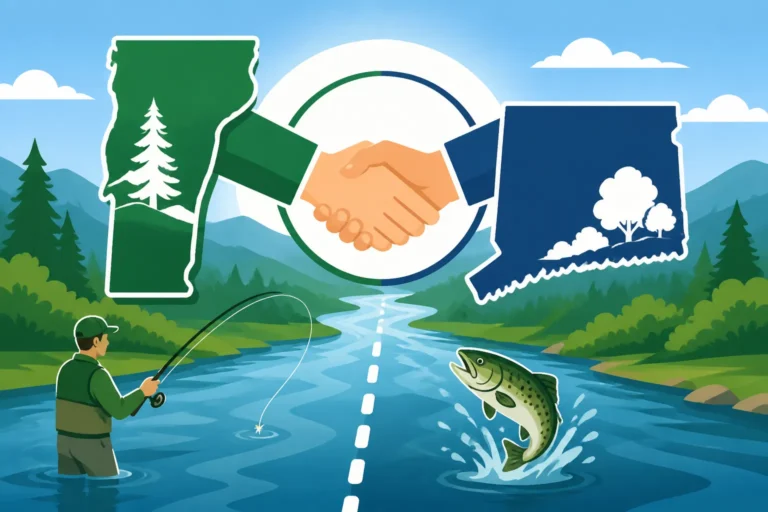
Vermont shares significant waterways with neighboring states, most notably Lake Champlain with New York and the Connecticut River with New Hampshire. For nonresidents, understanding reciprocity agreements on these boundary waters is absolutely critical to avoid unintentional violations.
On Lake Champlain, there's a unique reciprocity agreement between Vermont and New York. If you possess a valid fishing license from either Vermont or New York, you are generally permitted to fish the entire open waters of Lake Champlain, provided you are abiding by the regulations of the state whose license you hold. This means if you have a New York nonresident fishing license, you can fish Vermont waters of Lake Champlain and vice-versa. However, this reciprocity typically does not extend to tributaries or embayments beyond the main lake. For instance, if you fish a Vermont river that flows into Lake Champlain, you'll need a Vermont license. This can be confusing, so always check the specifics. Our detailed guide on Vermont Fishing License Reciprocity on Lake Champlain with New York dives deeper into this topic.
Similarly, the Connecticut River has specific agreements. Anglers fishing the main stem of the Connecticut River that forms the border between Vermont and New Hampshire can often fish with a valid license from either state. However, like Lake Champlain, this usually doesn’t apply to tributaries entering the Connecticut River from the Vermont side. If you're exploring the Vermont-side rivers or streams that feed into the Connecticut, a Vermont license will be necessary. This situation is thoroughly explained in our article on Vermont Fishing License Reciprocity on the Connecticut River with New Hampshire. Always confirm the exact boundaries and rules before you cast a line in these shared waters to ensure you're fully compliant.
Seamlessly Acquiring Your Vermont Nonresident Fishing License
Getting your Vermont nonresident fishing license doesn't have to be a complicated ordeal. The state has made the process quite accessible, offering both digital and traditional avenues for purchase. Choosing the right method often comes down to your preference for convenience versus a more personal, local experience.
The Convenience of Online Purchase
For many modern anglers, buying a fishing license online is the easiest and quickest route. The Vermont Fish and Wildlife Department's official website provides a user-friendly portal where you can purchase your nonresident annual fishing license from the comfort of your home, any time of day or night. This is particularly advantageous for nonresidents who might be planning a trip well in advance or even making a last-minute decision to fish.
The process typically involves creating an account (if you don't already have one), providing some personal information (like your name, address, date of birth, and possibly a hunter education number if you're buying a combination license), and then selecting the type of license you need. You'll pay with a credit card, and once the transaction is complete, you'll usually receive an immediate confirmation email. This email often contains a printable temporary license, or even your official digital license, which means you can literally be ready to fish within minutes of completing your purchase. This efficiency is a game-changer for spontaneous trips or for those who simply prefer to handle paperwork digitally. Our guide on How to Buy a Fishing License Online in Vermont provides a step-by-step walkthrough.
In-Person Options: Local Vendors and Town Clerks
While online purchasing is incredibly convenient, some anglers still prefer the tangible experience of buying a license in person. Vermont offers numerous authorized license agents throughout the state. These agents are typically found in bait and tackle shops, sporting goods stores, and sometimes even general stores in smaller towns. There's a certain charm to walking into a local bait shop, picking up some local lures, grabbing a fresh coffee, and buying your license all at once. It’s a great opportunity to get some firsthand local knowledge about current fishing conditions or hot spots from the folks behind the counter.
Additionally, many town clerks' offices are authorized to sell fishing licenses. This can be a reliable option, especially if you're in a more rural area where a dedicated sporting goods store might not be readily available. When purchasing in person, you'll need to bring valid identification, and payment methods will vary by vendor (cash, card, or check). The benefit here is the immediate physical license in hand and the chance to ask any specific questions you might have about local regulations or fishing opportunities in the immediate area.
Physical vs. Digital: Carrying Your Proof of License
Once you've bought your license, the next crucial step is ensuring you carry proof of it while fishing. Vermont regulations require you to have your license on your person and be able to present it to a game warden or law enforcement officer upon request.
Many anglers choose to print their digital license and carry a physical copy, often laminated or kept in a waterproof wallet to protect it from the elements. This is a dependable method, ensuring you always have a copy that doesn’t rely on battery life or cell service. However, the Vermont Fish and Wildlife Department also typically accepts a digital version displayed on your smartphone. This means you can keep a photo or a PDF of your license readily accessible on your phone. While convenient, it’s important to remember that remote fishing locations might have spotty cell service, and your phone battery could die. It’s always a good practice to have your phone fully charged or to carry a backup physical copy, just in case. The decision between Printing or Carrying a Digital Fishing License in Vermont is a personal one, but preparedness is key.
| License Type | Eligibility | Approx. Cost (2024) | Valid Duration | Key Benefit |
|---|---|---|---|---|
| Nonresident Annual Fishing | All nonresidents (age 15+) | $57.00 | Jan 1st – Dec 31st | Unlimited fishing for the calendar year |
| Nonresident 3-Day Fishing | All nonresidents (age 15+) | $23.00 | 3 consecutive days | Good for short, specific trips |
| Nonresident 7-Day Fishing | All nonresidents (age 15+) | $30.00 | 7 consecutive days | Flexible for week-long vacations |
| Nonresident Annual Combo (H&F) | All nonresidents (age 15+) | $122.00 | Jan 1st – Dec 31st | Combines hunting & fishing, potential savings |
Note: Costs are approximate for 2024 and subject to change by the Vermont Fish and Wildlife Department.
Beyond the License: Crucial Regulations and Best Practices for Nonresidents
While securing your nonresident annual fishing license is the first vital step, understanding and adhering to Vermont's comprehensive fishing regulations is equally, if not more, important. The Green Mountain State is committed to sustainable fisheries, and these rules are designed to protect fish populations and ensure quality angling experiences for everyone.
Demystifying Vermont's Statewide Fishing Regulations
Vermont's fishing regulations cover a broad spectrum of rules, from general statewide provisions to highly specific local restrictions. As a nonresident, it's crucial not to assume that rules you're familiar with from your home state apply here. Key areas you'll need to understand include daily bag limits, which dictate how many fish of a certain species you can keep in a single day, and possession limits, which define the maximum number you can have on hand. Minimum and maximum length limits are also common, often designed to protect juvenile fish or to encourage the growth of trophy-sized specimens.
For instance, Vermont Bass Minimum Length Limits vary for largemouth and smallmouth bass, and these might differ from what you’re used to. Season dates are another major factor; some species, like certain trout, have specific opening and closing dates, while others might be open year-round with specific catch-and-release periods, such as the Vermont Bass Catch-and-Release Season, Explained. Always consult the current year's Vermont Fishing Guide, published by the Vermont Fish and Wildlife Department, or their online resources before heading out. This guide is your ultimate source for navigating the complexities of Reading the Vermont Fishing Regulations Guide.
Spotting and Understanding Special Regulation Waters
Beyond the general statewide rules, Vermont also has numerous "special regulation waters." These are specific lakes, ponds, or stretches of rivers and streams where the rules are stricter or different from the statewide norms. They might include waters designated as "fly fishing only," "catch and release only," or have unique tackle restrictions, bait restrictions, or even different length and bag limits for particular species.
These special regulations are often implemented to protect sensitive wild trout populations, enhance trophy fisheries, or manage specific ecological conditions. For example, some stretches of the Battenkill River are renowned for their wild trout and have very specific fly-fishing-only, catch-and-release rules. Failing to recognize and adhere to these special regulations can lead to serious penalties. Before fishing any new body of water, always cross-reference it with the "Special Regulation Waters" section of the Vermont Fishing Guide. Local knowledge from bait shops or online forums can also be invaluable for identifying these areas.
The Serious Ramifications of Non-Compliance
It cannot be stressed enough: fishing without a proper license or failing to follow regulations can lead to significant consequences. Vermont game wardens are dedicated professionals who enforce these laws diligently, and ignorance is not considered an excuse. The penalties for Fishing Without a License in Vermont: Penalties can range from substantial fines to confiscation of your fishing gear, and even the loss of future fishing privileges in Vermont and potentially other states through interstate compacts.
Imagine driving hundreds of miles to fish, spending money on lodging, bait, and tackle, only to have your trip ruined by a fine and a revoked license because you overlooked a small detail in the regulations. It's a frustrating and costly mistake that is entirely avoidable. Always carry your license, understand the rules for the specific water you're fishing, and err on the side of caution. If you're unsure, ask! The Vermont Fish and Wildlife Department's website and their official guide are your best friends in ensuring a legal and enjoyable fishing trip.
Making the Most of Your Vermont Fishing Adventure
With your nonresident annual fishing license in hand and a solid grasp of the regulations, you're well on your way to a fantastic fishing experience in Vermont. But to truly maximize your adventure, a little extra planning and insight can go a long way.
Strategic Planning: Timing Your Trip for Target Species
Vermont's diverse fisheries mean that different times of the year offer prime opportunities for specific species. If your heart is set on catching wild brook trout, planning a trip during the cooler spring months, particularly around Vermont Trout Season and Stocking Rules, or into the early summer before water temperatures rise too high, is ideal. For those chasing trophy largemouth or smallmouth bass, the late spring through fall often provides excellent action, especially during their active feeding periods.
Walleye enthusiasts often target Lake Champlain in spring and fall, when these elusive fish are more concentrated and aggressive. Landlocked salmon in lakes like Willoughby or Seymour tend to be most active in cooler waters, making spring and fall prime times for trolling. Think about what fish you truly want to target, then research their seasonal patterns and preferred habitats. This strategic timing will dramatically increase your chances of success and lead to a more rewarding trip.
Essential Gear and Preparations for Vermont Waters
While you don't need to break the bank to fish in Vermont, having the right gear can make a significant difference. For trout fishing in rivers and streams, a lightweight spinning rod or a fly rod is essential, along with a selection of appropriate lures, baits, or flies. Waders are almost a necessity for comfortable and effective stream fishing, allowing you to access prime spots. For lake fishing, a medium-action rod suitable for casting various lures like crankbaits, jigs, or soft plastics will serve you well for bass or walleye.
Don't forget the practical essentials: a good pair of polarized sunglasses to cut glare and spot fish, sunscreen, insect repellent (especially in spring and early summer), and layers of clothing, as Vermont weather can change rapidly, even in summer. A small first-aid kit, a sturdy landing net, and a cooler for keeping your catch fresh are also highly recommended. Remember that responsible angling also means having the right tools for safe catch and release, such as needle-nose pliers or a de-hooking tool.
Uncovering Prime Fishing Locations
Vermont offers an abundance of fishing locations, from easily accessible state park ponds to remote backcountry streams. For nonresidents, finding the best spots can sometimes be a challenge without local knowledge. The Vermont Fish and Wildlife Department's website is an invaluable resource, often providing maps of public access points, boat launches, and information on stocked waters.
Exploring specific guides for Best Fishing Lakes in Vermont or Best Trout Streams in Vermont can point you in the right direction. Don't be afraid to visit local bait shops; the staff are often a treasure trove of information about nearby hotspots and current conditions. Online fishing forums and community groups can also offer great insights, though always be mindful of etiquette when asking for specific "honey holes." Whether you're seeking the solitude of a remote pond or the bustling action of a major lake, Vermont has a spot for you, but a little research beforehand will ensure you find the perfect match for your fishing dreams.
Disclaimer
Please note that fishing regulations, license costs, and availability are subject to change by the Vermont Fish and Wildlife Department. While every effort has been made to provide accurate and up-to-date information, it is always the angler's responsibility to consult the official Vermont Fish and Wildlife Department website or the current year's printed fishing guide before engaging in any fishing activities. This guide is for informational purposes only and should not be considered legal advice.