Vermont fishing license for out-of-state guides
Venturing into Vermont's beautiful waters as an out-of-state fishing guide might seem like a straightforward extension of your passion, but the reality is that the Green Mountain State has very specific rules for commercial operations. Many experienced guides from neighboring states mistakenly believe their home-state license or just a standard nonresident fishing license will suffice, only to find themselves in a bind. This comprehensive guide will walk you through exactly what you need to do to legally and successfully operate as an out-of-state fishing guide in Vermont, smoothing out the often-confusing bureaucratic waters.
Understanding Vermont's Fishing Guide License Requirement
It’s a common misconception that if you hold a valid fishing license in your home state, or even if you purchase a standard Vermont nonresident fishing license, you’re all set to take clients out for a fee. However, Vermont, like many states, distinguishes sharply between recreational angling and commercial guiding. The state wants to ensure that anyone profiting from Vermont's natural resources is properly vetted, qualified, and insured. This means an additional layer of licensing is required for anyone offering their services for hire.
Why a Standard Nonresident Fishing License Isn't Enough
Imagine you're an avid angler from New York, and you love the challenge of Lake Champlain's smallmouth bass. You've fished it for years, know all the best spots, and your buddies keep telling you, "You should really guide!" So, you decide to make it official. You go online, grab your Vermont nonresident fishing license cost 2026 and think you're good to go. This is where many out-of-state aspiring guides hit their first snag.
A standard fishing license, whether resident or nonresident, grants you the privilege to personally engage in sport fishing. It does not, however, grant you the right to operate a commercial enterprise where you charge others for the experience or expertise. The state views guiding as a professional service, akin to any other business operation, and therefore has distinct requirements to regulate it. These regulations are in place for several important reasons: public safety, resource protection, and maintaining professional standards within the guiding community. Without a separate guide license, you could face hefty fines and legal complications, even if you’re a fantastic angler.
Key Components of the Vermont Fishing Guide License
So, what exactly does Vermont expect from its fishing guides, especially those coming in from out of state? Beyond that initial nonresident fishing license, you'll need to acquire a specific Vermont Fishing Guide License. This isn't just a simple rubber stamp; it's a commitment to a certain standard of professionalism and safety.
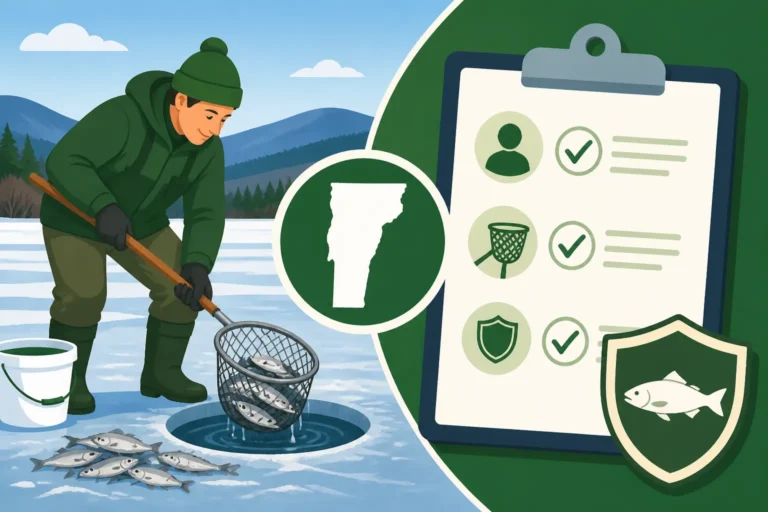
The core requirements typically include:
- Age Requirement: You must be at least 18 years old. This ensures a baseline level of maturity and legal accountability.
- Underlying Fishing License: You must possess a current and valid Vermont fishing license for the season you intend to guide. For out-of-state guides, this means a nonresident license. Think of the guide license as an "add-on" or an "endorsement" to your personal fishing privileges.
- First Aid and CPR Certification: This is absolutely non-negotiable. As a guide, you are responsible for the safety and well-being of your clients. Accidents happen on the water, and being able to respond effectively to medical emergencies, from a scraped knee to a sudden cardiac event, is paramount. Certifications from recognized organizations like the American Red Cross or American Heart Association are typically accepted.
- Boating Safety Education: If your guiding involves operating a motorized watercraft, you'll need to demonstrate proof of a valid boating safety education certificate. This is critical, as navigating Vermont's diverse lakes and rivers safely requires specialized knowledge. Vermont adheres to national standards for boating safety, and courses approved by the National Association of State Boating Law Administrators (NASBLA) or the U.S. Coast Guard Auxiliary are generally accepted. This often ties into the broader Vermont Boating Laws for Anglers that apply to everyone on the water.
- Application and Fees: There's a formal application process and associated fees, which are typically higher for nonresident guide licenses compared to resident ones, reflecting the different fee structures across the state's licensing programs.
- Background Check: Expect to undergo a background check. The state wants to ensure that individuals entrusted with the safety of paying clients have a clean record.
- Liability Insurance: While not always explicitly listed as a licensing requirement, carrying adequate liability insurance is a critical component for any professional guide. Many clients (and wise guides) will seek out guides who are insured. It protects you and your clients in case of an unforeseen incident.
Each of these components is a vital piece of the puzzle. Skipping any one of them can invalidate your license or prevent you from obtaining it in the first place, putting your guiding business at risk before it even starts.
Navigating the Application Process for Out-of-State Guides
The process of becoming a licensed fishing guide in Vermont, especially as a nonresident, might seem a bit daunting at first glance. There's a fair amount of paperwork and preparation involved. But with a clear understanding of the steps and what's expected, it becomes much more manageable. Think of it as investing in your professional credibility and ensuring your peace of mind while on the water.
Essential Prerequisites Before You Apply
Before you even fill out the first form for your Vermont Fishing Guide License, there are several foundational items you need to secure. Trying to rush through these will only lead to delays and frustration.
First and foremost, you need a current, valid Vermont nonresident fishing license. This isn't just a recommendation; it's a mandatory prerequisite. You can't guide in Vermont without personally being authorized to fish there. These are typically available for purchase online through the Vermont Fish & Wildlife Department website, or at authorized vendors across the state. The convenience of buying online makes it easy for out-of-state individuals to secure their recreational fishing privileges. If you’re not sure about the exact process, our guide on How to Buy a Fishing License Online in Vermont can walk you through it.
Next, let's talk about safety certifications. Your First Aid and CPR certification must be current. If yours has expired, or if you've never had one, now is the time to get it. Look for courses from reputable providers like the American Red Cross, the American Heart Association, or local EMS training centers. Many community colleges also offer these courses. They are usually one or two-day commitments, focusing on critical skills like basic life support, wound care, and managing common outdoor injuries. This training isn't just a bureaucratic hurdle; it's a life skill that could genuinely save a client's life.
If you plan to use a boat (and most guides do), you absolutely need proof of a valid boating safety education certificate. These certificates typically demonstrate that you've completed a NASBLA-approved course, which covers essential topics like navigation rules, emergency procedures, responsible boat operation, and environmental awareness. Many states offer online courses that are recognized nationally, making it convenient for out-of-state guides. Be sure your certificate is current and easily accessible.
Finally, while not always a direct licensing prerequisite for every guide, robust liability insurance is a cornerstone of professional guiding. It protects you from potential lawsuits should a client get injured or equipment get damaged during an outing. Many outdoor insurance providers offer specialized policies for fishing guides. Having this in place demonstrates your professionalism and reduces your personal risk. Don't skimp on this one; the peace of mind it provides is invaluable, and many clients will inquire about it.
Step-by-Step Application Submission
Once you have all your prerequisites in order, you're ready to tackle the application for the Vermont Fishing Guide License itself.
- Locate the Application Form: Your first stop will be the official Vermont Fish & Wildlife Department website. They typically have a dedicated section for licenses and permits, including commercial licenses. Search specifically for the "Vermont Fishing Guide License Application." It's important to use the most current form, as requirements can change from year to year.
- Complete the Form Accurately: Read through the entire application carefully before filling it out. Ensure all sections are completed with accurate and truthful information. Any omissions or inaccuracies can lead to delays or rejection. You'll likely need to provide personal details, contact information, and specifics about your guiding experience.
- Gather Required Documentation: This is where all those prerequisites come into play. You'll need to submit copies (or sometimes originals, so check carefully) of:
- Your valid Vermont nonresident fishing license.
- Your First Aid and CPR certification card.
- Your boating safety education certificate (if applicable).
- Proof of liability insurance (if required, or strongly recommended for your own protection).
- A valid photo identification (e.g., driver's license).
- Any other supplemental materials specified on the application, such as letters of reference or a brief resume of your guiding experience.
- Pay the Applicable Fees: The application will clearly state the required fee for a nonresident fishing guide license. Be prepared for this fee to be higher than what Vermont residents pay for the same license, reflecting the state's typical nonresident fee structure. Ensure you use an accepted payment method (credit card, check, money order) as specified by the department.
- Undergo the Background Check: As part of the application, you'll authorize a background check. This is standard procedure for commercial licenses where public safety is a concern.
- Submit Your Application: Carefully review everything one last time. Make copies of all submitted documents for your own records. Then, mail the complete package to the address provided on the application form, or follow any instructions for online submission if that option is available.
Anticipating Processing Times and Approval
After you hit send or drop that envelope in the mail, the waiting game begins. It's crucial to set realistic expectations for the processing and approval timeline. These aren't instant transactions. The Vermont Fish & Wildlife Department needs time to review applications, verify documentation, conduct background checks, and issue the physical license.
Don't wait until the week before your first planned trip to submit your application! A good rule of thumb is to apply several months in advance of when you intend to start guiding, especially if you're targeting a busy season like spring trout opening day or summer bass fishing. This buffer allows for any unforeseen delays, requests for additional information, or even the time it takes for mail to travel. It's not uncommon for the process to take anywhere from a few weeks to over a month.
Once your application is approved, you'll receive your Vermont Fishing Guide License. It’s imperative that you carry this license, along with your regular fishing license and photo ID, whenever you are guiding. Just like your personal fishing license, these documents are subject to inspection by Vermont Fish & Wildlife Wardens. Some guides even opt for a Printing or Carrying a Digital Fishing License in Vermont approach, but always ensure you have a readily accessible, legally accepted format of all required documents.
Important Considerations and Best Practices for Nonresident Guides
Becoming a licensed guide in Vermont is a significant achievement, but it's just the beginning. To truly excel and avoid any legal pitfalls, especially as an out-of-state professional, you need to be aware of a few more critical considerations and integrate some best practices into your operation.
Reciprocity and Boundary Waters
Vermont shares some significant fishing waters with neighboring states, most notably Lake Champlain with New York and the Connecticut River with New Hampshire. These "boundary waters" often have specific reciprocity agreements regarding recreational fishing licenses. For instance, an angler with a New York fishing license can sometimes fish certain parts of Lake Champlain that are technically in Vermont, and vice-versa, as detailed in guides like Vermont fishing license reciprocity on Lake Champlain with New York. The same applies to sections of the Connecticut River, as explored in Vermont fishing license reciprocity on the Connecticut River with New Hampshire.
However, it is absolutely critical to understand that these reciprocity agreements almost universally apply only to recreational fishing privileges, not to commercial guiding licenses. Even if your New York fishing license is valid on the Vermont side of Lake Champlain for personal use, your New York guide license is generally not valid for guiding clients on Vermont waters. You need the specific Vermont Fishing Guide License to legally operate on Vermont's portion of these boundary waters, regardless of any reciprocal agreements for general fishing. Always assume you need a Vermont guide license when guiding in Vermont waters, even if your personal fishing license has some reciprocity. When in doubt, contact the Vermont Fish & Wildlife Department directly for clarification.
Staying Compliant and Avoiding Penalties
Operating as a guide comes with increased scrutiny and responsibility. Non-compliance with Vermont's regulations can lead to serious consequences, impacting your reputation and your ability to guide in the future.
- Know the Regulations: Beyond just your license, you need an intimate understanding of Vermont Fishing Regulations Explained. This includes species-specific bag and possession limits, length limits, season dates, tackle restrictions, and any special regulations for specific waters (like fly-fishing-only sections or catch-and-release zones). As a guide, you are expected to not only follow these rules yourself but also ensure your clients adhere to them. Ignorance is not an excuse.
- Carry Your Documents: Always have your Vermont Fishing Guide License, your Vermont nonresident fishing license, and a valid photo ID on your person or readily accessible in your boat or vehicle when guiding. Wardens conduct routine checks, and being prepared makes these interactions smooth.
- Annual Renewal: Remember that your guide license, like your fishing license, is not a one-time purchase. It expires annually, typically at the end of December. Mark your calendar and renew well in advance to avoid any lapse in coverage.
- Reporting: The state may require guides to submit annual reports detailing their guiding activities, such as the number of clients, species caught, and locations fished. This data helps the Fish & Wildlife Department manage fisheries effectively. Always fulfill any reporting requirements honestly and on time.
- Consequences of Non-Compliance: The penalties for Fishing Without a License in Vermont: Penalties can range from significant fines to confiscation of equipment and even potential jail time for repeat or severe offenses. Operating as an unlicensed commercial guide falls under a more serious category than just recreational fishing without a license. It's simply not worth the risk. Your professional reputation is also on the line; word travels fast in the guiding community.
Gear and Equipment for Guiding in Vermont
While the legal aspects are crucial, success as a guide also hinges on having the right tools for the job. Vermont's diverse fisheries, from the sprawling expanse of Lake Champlain to the intimate mountain streams, demand versatility in your gear selection. As an out-of-state guide, ensuring you have suitable equipment before you arrive is paramount.
You'll want to think about the primary species you'll target. If you're focusing on smallmouth bass, particularly on Lake Champlain, you'll need a good selection of medium-heavy spinning or baitcasting rods, suitable for throwing crankbaits, jigs, and topwater lures. Many guides find excellent deals and a vast selection of these types of lures and rods on platforms like Amazon. For specifics, check out our guide on Best Tackle for Vermont Smallmouth Bass.
If trout fishing in Vermont's rivers and streams is your passion, your gear list will look quite different. Fly rods in weights ranging from 3-wt for small brook trout streams to 6-wt for larger rivers, along with a variety of fly patterns (dry flies, nymphs, streamers), are essential. You'll also need quality waders and wading boots for comfort and safety in varying water conditions. Again, online retailers such as Amazon are great resources for finding specialized fly fishing gear. Our guide on Best Gear for Vermont Trout Fishing dives deeper into what you'll need.
Beyond rods and reels, consider these essentials:
- Reliable Boat/Kayak: If you're using a boat, ensure it's well-maintained, properly registered, and equipped with all required safety gear (life jackets for all passengers, fire extinguisher, sounding device, etc.). A good fish finder is also invaluable for locating structure and fish.
- First Aid Kit: A comprehensive one, beyond what's required for your certification, is a must.
- Safety Gear: Extra life jackets, a throwable flotation device, paddle, anchor, repair kit for your boat, and communications devices (VHF radio, satellite messenger for remote areas).
- Client Comfort: Provide necessities like water, snacks, sunscreen, insect repellent, and rain gear if the weather is questionable. Consider a good cooler, which you can often find affordably on Amazon, to keep drinks and any kept fish chilled.
- Navigation: Reliable GPS unit or mapping apps, along with physical maps, especially for larger bodies of water.
Having the right gear not only makes your trips more successful but also ensures the safety and comfort of your clients, reinforcing your professionalism as a top-tier guide in Vermont.
Disclaimer
Please note that fishing regulations and licensing requirements are subject to change. While this guide aims to provide the most current and accurate information, it is your responsibility to verify all details with the official Vermont Fish & Wildlife Department before engaging in any guiding activities. This article is for informational purposes only and does not constitute legal advice.