Vermont Combination Hunting and Fishing License Options
Navigating the myriad of permits and paperwork required for outdoor pursuits in Vermont can feel like trying to solve a complicated riddle, especially if you're passionate about both hunting and fishing. It's a common frustration to juggle multiple licenses, expiration dates, and distinct sets of regulations. This guide is designed to cut through that confusion, offering a comprehensive look at Vermont's combination hunting and fishing license options, streamlining your access to the Green Mountain State's incredible wildlands and waterways.
Understanding Vermont's Combination License Landscape
For many outdoor enthusiasts in Vermont, the rhythm of the seasons means transitioning from casting lines in spring to tracking deer in fall. If you find yourself holding separate licenses for each activity, you're likely familiar with the hassle of keeping track of them all and the potential for overlooked renewal dates. This is precisely where Vermont's combination hunting and fishing licenses step in, offering a singular, convenient solution.
What Exactly is a Combination License?
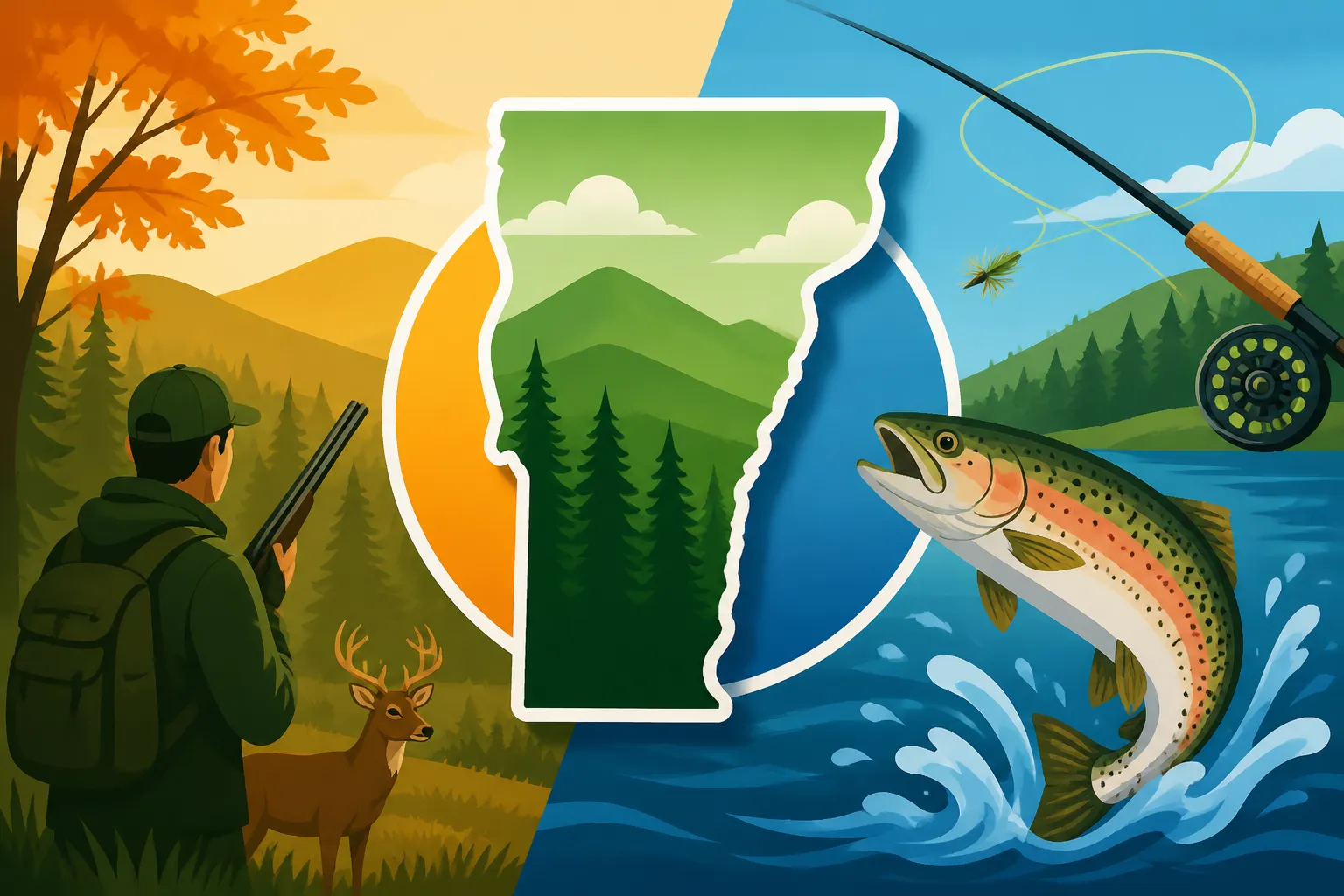
At its core, a combination hunting and fishing license in Vermont is a bundled permit that allows you to legally engage in both general hunting and general fishing activities within the state for a specified period, typically an annual term. Instead of purchasing a separate fishing license and then a separate hunting license, you acquire one document that covers both. This isn't just about convenience; it's often about recognizing the overlap in passion for those who truly embrace Vermont's diverse outdoor opportunities. It streamlines the administrative burden on the individual, making it simpler to stay compliant with state regulations.
However, it's crucial to understand that a combination license typically covers the basic hunting and fishing privileges. It doesn't automatically include specialized permits or stamps required for certain activities. For example, if you plan to hunt migratory birds like ducks or geese, you’ll still need to purchase federal and state migratory bird stamps in addition to your combination license. Similarly, specific big game tags for deer, bear, or moose are usually separate applications or endorsements. We'll delve into these specifics later, but for now, think of the combo license as your fundamental passport to the woods and waters.
Who Benefits Most from a Combo License?
The combination license is an absolute game-changer for individuals who regularly participate in both hunting and fishing throughout the year. If you're someone who enjoys the tranquility of a spring morning trout fishing on a mountain stream, spends summer evenings chasing smallmouth bass on Lake Champlain, and then eagerly awaits the opening of deer season in the fall, this license is practically tailor-made for you. It simplifies your responsibilities, reducing the number of individual permits you need to manage and carry.
Beyond mere convenience, there's often a financial benefit. While the savings aren't always monumental, purchasing a combination license can often be more cost-effective than buying separate resident fishing and hunting licenses individually. This makes it an attractive option for budget-conscious outdoor adventurers who are committed to both pursuits. New residents to Vermont, or those who are just getting into both sports, often find the combination license to be the most straightforward and economical starting point. It provides a clear path to enjoying the state’s rich natural resources without excessive bureaucratic hurdles.
Eligibility Requirements for a Vermont Combination License
Before you even think about the thrill of a trophy trout on the line or the excitement of a successful hunt, you've got to make sure you meet the foundational requirements for a Vermont combination hunting and fishing license. It's not just about wanting to participate; it's about demonstrating eligibility, which includes everything from where you call home to showing you've taken the necessary safety courses.
Vermont Residency Criteria
One of the most significant factors determining the cost and availability of your combination license is your residency status. Vermont distinguishes clearly between residents and nonresidents, and the price difference can be substantial. To qualify as a Vermont resident for licensing purposes, you must have resided continuously in the state for at least six months immediately preceding the date of application. This isn't a casual rule; it's strictly enforced, and you might need to provide proof.
Acceptable forms of proof often include a valid Vermont driver's license, a Vermont vehicle registration, voter registration, or property tax bills. If you're a student attending a Vermont college or university, there are specific rules that might allow you to qualify as a resident, even if your permanent home is elsewhere. On the flip side, nonresidents who regularly visit Vermont for hunting and fishing will need to purchase the nonresident combination license, which, while more expensive, still offers the convenience of a single permit for both activities. Understanding these distinctions is critical, and a thorough review of the criteria outlined in the official Vermont Fish and Wildlife regulations is always recommended to ensure you're applying for the correct license type. For a deeper dive into these costs, you might want to read our guide on Resident vs Nonresident Fishing License Costs in Vermont.
Age Restrictions and Youth Options
Age plays a vital role in who needs a license and what type of license they can obtain. In Vermont, children under the age of 15 are generally exempt from needing a fishing license. This means a young angler, perhaps trying their hand at fishing for yellow perch with a parent on Lake Bomoseen, can often do so without purchasing a permit. However, once a young person turns 15, they are typically required to purchase a fishing license.
For hunting, the rules are a bit different and often require hunter education regardless of age if they are to legally hunt independently. While youth hunting licenses are available and often come at a reduced cost, the combination license specifically targets individuals who are old enough and have completed the necessary certifications for both activities. It's a great stepping stone for young adults who have grown up fishing and are now ready to expand their outdoor interests into hunting. Make sure to check the specific Vermont Youth Fishing License Rules by Age to understand all the nuances for younger participants.
Hunter Education and Bowhunter Certification
Here’s where the "hunting" part of the combination license really comes into play, and it’s non-negotiable for most first-time hunters. Before you can legally purchase a Vermont hunting license – including a combination license – you must successfully complete a hunter education course certified by any U.S. state or Canadian province. This course covers firearm safety, hunting ethics, wildlife identification, and conservation principles, ensuring new hunters are knowledgeable and responsible afield. If you’ve held a hunting license from another state or province in a previous year, you might be exempt from this requirement, but you'll need to show proof.
Similarly, if your hunting plans include archery, specifically for deer during the archery season, you'll need to complete a separate bowhunter education course. This course focuses on bowhunting specific safety, equipment, and ethical considerations. While not always a prerequisite for the general hunting portion of the combination license, it's essential for anyone intending to bow hunt. Without these certifications, you simply won't be issued the hunting privileges included in the combination license. So, plan ahead, find a course, and get certified! Many courses can be found through the Vermont Fish and Wildlife Department's website, or sometimes even through local sporting goods stores like those found through an Amazon search for outdoor recreation gear.
Cost and Validity of Combination Licenses
Understanding the financial investment and the duration of your combination license is just as important as knowing the regulations. Nobody wants to be caught off guard by an unexpected cost or, worse, realize their license has expired mid-adventure. This section breaks down the pecuniary aspects and the lifecycle of your Vermont combination hunting and fishing license.
Breaking Down Resident vs. Nonresident Pricing
The cost of a Vermont combination license varies significantly depending on whether you are a resident or a nonresident of the Green Mountain State. For Vermont residents, the combination license offers a genuinely economical pathway to enjoy both hunting and fishing. The price is set to be affordable for those who contribute to the state's economy and conservation efforts year-round. While specific numbers can fluctuate annually, residents typically pay a significantly lower fee compared to their nonresident counterparts. This resident pricing structure reflects a long-standing practice in wildlife management, where local populations often receive preferential rates.
Nonresidents, while paying a higher fee, still benefit from the convenience of a single license covering both activities. This is particularly appealing for those who frequently visit Vermont to experience its renowned trout streams or chase whitetails in its vast forests. For instance, a nonresident coming for a week-long fishing trip and a separate fall hunting excursion might find the annual combination license more practical than buying two separate, shorter-term nonresident licenses. To get the most current information, it's always best to check the Vermont Fish and Wildlife Department's official website, or consult our dedicated guide on How Much Does a Vermont Fishing License Cost.
License Term and Expiration Dates
Most Vermont combination hunting and fishing licenses are issued on an annual basis. This means they are valid for a specific license year, which typically runs from January 1st to December 31st. Regardless of when you purchase your annual license during the year, it will usually expire on December 31st of that same year. So, if you buy your license in June, it's still only valid until the end of December, not for a full 12 months from the purchase date. This is a crucial detail to remember to avoid unknowingly fishing or hunting with an expired license.
The annual structure simplifies renewals, as everyone renews around the same time. While annual licenses are the most common, Vermont also offers shorter-term options for nonresidents, such as 1-day, 3-day, or 7-day nonresident fishing licenses. However, these shorter terms usually only apply to fishing and typically cannot be combined with hunting privileges in a single, discounted package. Therefore, if you're engaging in both activities, the annual combination license remains the most straightforward option, ensuring you're covered for the entire year's worth of seasons.
Comparing Costs: Combo vs. Individual Licenses
One of the main reasons anglers and hunters opt for the combination license is the potential for cost savings compared to purchasing individual licenses for each activity. Let's look at a hypothetical scenario to illustrate this point.
Suppose a Vermont resident wants to fish and hunt. They could buy a separate annual resident fishing license and a separate annual resident hunting license. Or, they could purchase the resident combination hunting and fishing license. Often, the combination license is priced slightly lower than the sum of the two individual licenses. This small discount adds up over years and represents the state's way of encouraging participation in both conservation-funded activities.
For nonresidents, the savings might be less pronounced, but the convenience factor remains high. Imagine planning a spring trout fishing trip, then a summer bass fishing weekend, followed by a fall archery deer hunt. Instead of buying multiple separate licenses throughout the year (e.g., a 3-day nonresident fishing license, then another 3-day fishing license, then an annual nonresident hunting license), one annual nonresident combination license covers all these general privileges. This simplifies budgeting and ensures continuous legal access.
Here's a simplified example of how costs might compare (note: these are illustrative figures and actual costs may vary, please check official VT Fish & Wildlife website for current pricing):
| License Type | Resident (Approx. Cost) | Nonresident (Approx. Cost) | Notes |
|---|---|---|---|
| Annual Fishing License Only | $28 | $55 | For fishing only |
| Annual Hunting License Only | $28 | $100 | For general hunting only |
| Combination H+F License | $48 | $150 | Covers general hunting & fishing, often a slight saving. |
| Savings (Combo vs. Individual) | $8 (approx.) | $5 (approx.) | Sum of individual licenses would be $56 (R) / $155 (NR). |
As you can see, while the savings aren't a massive windfall, they are consistent and certainly make the combination license a smart choice for active individuals. For the most accurate and up-to-date pricing, always refer to the official Vermont Fish and Wildlife Department website.
How and Where to Purchase Your Combination License
Once you've decided the combination license is right for you, the next step is actually acquiring it. Thankfully, Vermont offers several convenient ways to purchase your license, whether you prefer the ease of online transactions or the personal touch of a local vendor. No matter your preference, having the right information and documents ready will make the process smooth.
Online Purchase Process
In today's digital age, buying your Vermont combination hunting and fishing license online is often the quickest and most hassle-free method. The Vermont Fish and Wildlife Department operates a user-friendly online licensing portal that's accessible 24/7. This means you can purchase your license from the comfort of your home, any time of day or night, even if it's just before heading out for an early morning fishing trip.
The process typically involves creating an account, entering your personal information (including residency details and hunter education certification numbers), selecting the combination license, and completing payment with a credit or debit card. Once the transaction is complete, you'll usually receive an email confirmation with a link to print your license immediately. This printed document serves as your official license. While having a physical copy is often preferred, Vermont also allows for Printing or Carrying a Digital Fishing License in Vermont on your smartphone, as long as it's readable and accessible. This online portal is also how many anglers go about finding and purchasing their annual Vermont Fishing License Guide for 2026.
In-Person Vendors and Agent Locations
For those who prefer a more traditional approach or need assistance with the purchase, Vermont maintains a network of authorized license agents across the state. These agents are typically found in local town clerk offices, sporting goods stores, bait and tackle shops, and some general stores. These locations are excellent resources not only for purchasing your license but also for getting up-to-date information on local conditions, fishing hot spots, or recent stocking reports.
When purchasing in person, you'll need to present valid identification, proof of residency (if claiming resident status), and your hunter education and bowhunter certification numbers. The staff at these locations are usually very knowledgeable and can help ensure you select the correct license type and any necessary endorsements. It’s always a good idea to call ahead to confirm their operating hours and what specific documents they require to make your visit efficient. A simple online search for "Vermont fishing license vendors near me" can help you locate the closest agent.
What to Bring When Buying
Regardless of whether you purchase your combination license online or in person, having the right documentation ready will expedite the process. Here’s a checklist of what you’ll likely need:
- Proof of Identity: A valid driver's license or state ID is usually sufficient.
- Proof of Residency: If you're claiming resident status, be prepared to show documentation like a Vermont driver's license, voter registration, or utility bill with your Vermont address.
- Hunter Education Certificate: Your hunter education certificate number is mandatory for anyone purchasing a hunting license (including a combination license) for the first time in Vermont. If you've previously held a hunting license, you might need to provide proof of that.
- Bowhunter Education Certificate: If you plan to hunt deer with a bow and arrow during the archery season, you'll need this certification number.
- Previous License Information: If you're renewing or have purchased licenses in Vermont before, having your previous license number handy can make finding your profile easier.
- Payment Method: Credit card or debit card for online purchases; cash, check, or card for in-person purchases.
Being prepared with these items ensures a smooth transaction and gets you out into Vermont's beautiful outdoors faster. You can find more detail on where to buy your license in our article Where and How to Buy a Vermont Fishing License.
Specific Regulations and What Your Combo License Covers
Getting your combination license is a great first step, but it's only part of the journey. Understanding what your license actually covers, and more importantly, what it doesn't, is crucial for staying on the right side of the law. Vermont has specific regulations for various species and activities, and a general combination license doesn't grant carte blanche for everything.
Species Covered and What's Excluded
Your Vermont combination hunting and fishing license generally covers the pursuit of most common fish and game species during their respective open seasons. For fishing, this includes popular species like trout (brook, brown, rainbow), bass (largemouth and smallmouth), pike, walleye, perch, and panfish in waters open to public fishing. So, whether you're chasing Smallmouth Bass Fishing in Vermont or reeling in a mess of panfish, your fishing privileges are covered.
On the hunting side, it allows you to hunt small game (like rabbits, squirrels, game birds) and furbearers during their open seasons. However, the critical distinction lies with big game and migratory birds. Your combination license does not include specific tags or permits for hunting deer, bear, or moose. These require separate tags that must be purchased or applied for in addition to your combo license. Similarly, as mentioned earlier, hunting migratory birds like ducks and geese necessitates purchasing both a state migratory bird stamp and a federal duck stamp. Always consult the most current Vermont Fishing Regulations Explained and hunting guides to ensure you're fully aware of any additional permits needed for your target species.
Important Hunting Regulations to Remember
Even with your combination license in hand, successful and legal hunting in Vermont demands a thorough understanding of the specific regulations for each species and season. These regulations are designed to manage wildlife populations, ensure fair chase, and promote safety. For example, deer hunting has distinct seasons for archery, muzzleloader, and regular firearm, each with specific bag limits and antler restrictions that can vary by Wildlife Management Unit (WMU). Failing to understand these nuances can lead to severe penalties, including fines and loss of hunting privileges.
You’ll need to pay close attention to hunting hours, which are typically from one-half hour before sunrise to one-half hour after sunset, though exceptions exist. Equipment restrictions, such as allowable calibers or shot sizes, are also critical. For instance, specific rules apply to the type of broadheads used for bowhunting or the type of shot for turkey hunting. Always tag your game immediately after harvest and report it within the specified timeframe. These are not merely suggestions; they are legal requirements that uphold the integrity of Vermont’s hunting traditions and conservation efforts.
Key Fishing Regulations to Adhere To
Just like hunting, fishing in Vermont comes with a comprehensive set of rules and regulations designed to protect fish populations and maintain healthy aquatic ecosystems. Your combination license gives you the general authority to fish, but you must still abide by species-specific rules for daily limits, possession limits, and minimum length limits. For example, while you might be able to keep five rainbow trout, the limit for landlocked salmon could be two, and they might have a different minimum length. For detailed information, review Vermont Bag and Possession Limits by Species.
Beyond species limits, specific waters might have special regulations. Some streams might be designated "catch and release only," or "fly fishing only," while certain lakes might have unique size or slot limits for particular fish. Special Regulation Waters in Vermont are marked clearly in the regulations guide, and it's your responsibility to know them for the waters you intend to fish. Additionally, understanding Vermont Fishing Season Dates and Closures is paramount, as certain species may be off-limits during spawning periods to ensure population sustainability. Even seemingly minor details, like the number of lines you can fish simultaneously, are regulated. Always carry a copy of the current Vermont Fishing Regulations Guide (available online or from license vendors) and consult it frequently.
Additional Stamps, Permits, and Considerations
While your combination license is a powerful tool, it's not always the final piece of the puzzle. Depending on what you're targeting or how you plan to hunt and fish, you might need additional stamps, permits, or specific applications. Thinking ahead about these extras can prevent disappointment and ensure you're fully prepared for your outdoor adventures.
Migratory Bird and Federal Duck Stamps
If your hunting aspirations include migratory birds, such as ducks, geese, woodcock, or snipe, you’ll definitely need more than just your combination hunting and fishing license. To legally hunt these species in Vermont, you must purchase both a Vermont State Migratory Waterfowl Stamp and a Federal Duck Stamp. The Federal Duck Stamp is a unique piece of conservation history; 98 cents of every dollar spent on these stamps goes directly to conserve wetland habitats for birds and other wildlife. It's not just a permit; it's an investment in the future of waterfowl hunting.
These stamps are typically available at the same vendors where you buy your combination license, including many post offices and online through the Vermont Fish and Wildlife Department's licensing portal. It’s crucial to sign your Federal Duck Stamp across the face with permanent ink to validate it, and it must be carried with you while hunting migratory waterfowl. For anyone serious about waterfowling, these stamps are an annual tradition and a vital contribution to habitat preservation.
Big Game Tags and Lottery Applications
As we touched on earlier, your combination license provides general hunting privileges, but it does not automatically grant you tags for big game animals like deer, bear, or moose. These animals are managed through separate tag systems to ensure sustainable populations. For deer, you'll need to purchase specific deer tags (e.g., archery, muzzleloader, regular firearm) in addition to your combination license. These tags often have specific rules regarding antler points or sex of the animal, depending on the season and WMU.
Moose hunting in Vermont is a particularly coveted experience, managed through a highly competitive lottery system. Applying for a moose permit requires a separate application process and specific deadlines, usually in the spring. Even if you hold a combination license, you must enter this lottery and be drawn to receive a moose permit. Bear hunting also requires a specific bear tag. These additional tags and lottery applications are designed to precisely control harvest numbers, balancing hunting opportunity with long-term wildlife conservation goals. Information regarding these tags and application periods can always be found on the Vermont Fish and Wildlife Department's website, and some resources for application information can be found via a quick search on Amazon for Vermont hunting guides.
Keeping Your License Valid and Accessible
Once you’ve gone through the process of obtaining your Vermont combination hunting and fishing license, along with any necessary stamps or tags, the final step is ensuring it remains valid and accessible whenever you're out in the field or on the water. Losing your license or having it become unreadable can lead to complications during a routine check by a Vermont Warden.
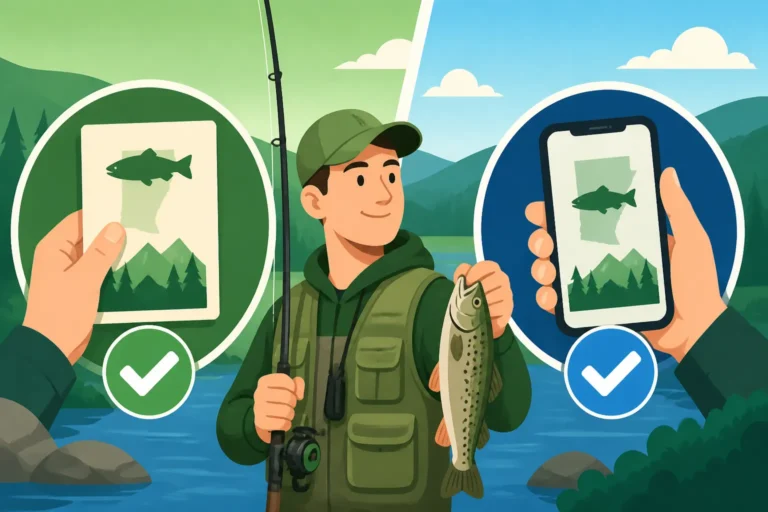
Vermont allows you to carry either a physical, printed copy of your license or a digital version on your smartphone or other electronic device. If you opt for the digital route, make sure your device is charged and the license is easily retrievable, even in areas with no cell service. It's a good practice to take a screenshot of your digital license so it's always available offline. For those who prefer a physical copy, consider laminating it or keeping it in a waterproof wallet to protect it from the elements. If your license does become lost or damaged, the Vermont Fish and Wildlife Department offers a process for Replacing a lost Vermont fishing license, usually for a small fee, through their online portal or authorized agents. Always remember that fishing or Fishing Without a License in Vermont: Penalties can be severe, so proper care and accessibility are paramount.
Disclaimer
Please note that regulations and pricing for Vermont hunting and fishing licenses are subject to change by the Vermont Fish and Wildlife Department. This guide provides general information and should not be considered legal advice. Always consult the official Vermont Fish and Wildlife Department website or their printed regulations guide for the most current and accurate information before engaging in any hunting or fishing activities.