Best baitcaster for pitching jigs to laydowns
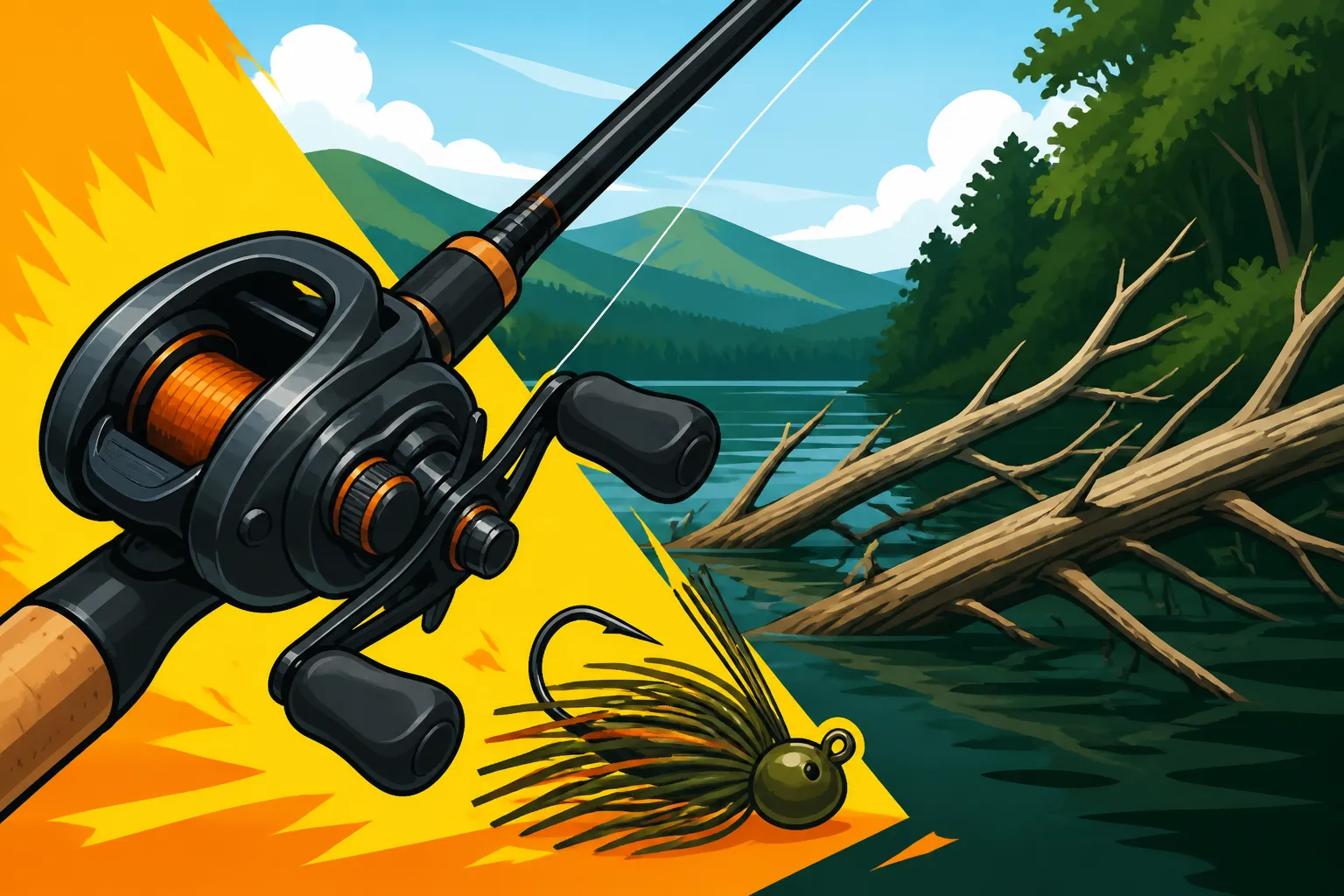
There’s nothing quite like the precision and excitement of pitching a jig into a tight cover, whether it’s a gnarly fallen tree, a dense mat of lily pads, or the shadowy underside of a dock. But if you’ve ever found yourself fighting backlashes or struggling to get your bait exactly where it needs to be, you know the frustration. This guide is all about helping you find the absolute best baitcasting reel specifically designed to make pitching jigs to laydowns a seamless, powerful, and successful part of your Vermont fishing arsenal.
Why Baitcasters Excel for Pitching Jigs to Laydowns
When it comes to putting a jig right on the nose of a lurking bass, no other reel type offers the combination of accuracy, power, and quick response quite like a baitcaster. It's a game-changer for those tricky spots where bass love to hide.
Precision and Control in Tight Spaces
Think about those moments when you're on a Vermont lake, maybe on Lake Champlain or a smaller, more intimate pond, and you spot a perfect laydown – a tree that's fallen into the water, creating an intricate web of branches and submerged timber. A bass might be tucked deep within that cover, waiting for an easy meal. Trying to get a jig into that tiny opening with a spinning reel can be a real headache. You often end up splashing down awkwardly, or worse, getting snagged on an errant branch before your bait even hits the water.
This is where a baitcaster truly shines. The unique design, with its thumb bar release and direct line control, allows for an incredibly accurate and subtle presentation. Instead of a wide arc cast, you're performing a short, controlled pendulum swing, called a pitch, that sends your jig flying low to the water. Your thumb acts as the ultimate braking system, allowing you to feather the line as it leaves the spool, stopping it precisely when your jig lands. This means you can drop your bait with surgical precision into gaps as small as a dinner plate. This level of control is paramount when you're targeting those elusive bass holding tight to structure in places like the thick brushy shorelines of Lake Bomoseen or the countless submerged logs in the smaller rivers. It’s about more than just getting the bait there; it’s about presenting it quietly and perfectly.
Power and Torque for Hauling Fish from Cover
Once that jig lands and a bass takes it, the fight is on, and often, it's a brutal tug-of-war right back into the heavy cover. A spinning reel, while versatile, sometimes struggles with the brute strength needed to quickly extract a decent-sized largemouth or smallmouth from a dense laydown. The gear ratios and spool design simply aren't built for that kind of intense, immediate leverage.
Baitcasters, on the other hand, are engineered for power. Their robust gear trains and direct-drive systems provide superior torque, giving you the upper hand the moment a fish strikes. This power allows you to set the hook hard and immediately start cranking, pulling the fish away from the snags and submerged branches that it desperately wants to wrap your line around. Imagine a feisty Smallmouth Bass Fishing in Vermont on Lake Champlain, or a chunky largemouth in a weed-choked pond, trying to burrow deeper into a mess of branches. With a powerful pitching baitcaster, you have the muscle to turn its head and steer it clear, minimizing the chances of a costly break-off. This isn't just about landing the fish; it's about doing it efficiently and preventing lost lures and valuable fishing time. The strong drag system on a quality baitcaster also provides consistent resistance, tiring out the fish while preventing sudden surges that could snap your line.
Key Features to Look for in a Pitching Jig Baitcaster
Not all baitcasters are created equal, especially when you're looking for one specifically for pitching jigs to cover. Several key features make a reel stand out for this particular technique.
Gear Ratio for Optimal Retrieve
The gear ratio of a baitcaster tells you how many times the spool rotates for every single turn of the handle. For pitching jigs to laydowns, you want a reel with a relatively high gear ratio, typically in the range of 7.1:1 up to 8.1:1 or even higher.
Why so high? Picture this: you've made a perfect pitch into a narrow slot in a laydown. Your jig drops, you feel a subtle thump, and boom – fish on! Now, you need to quickly pick up slack line, set the hook with authority, and then rapidly pull that fish away from the cover before it can wrap you up. A higher gear ratio means you can retrieve a lot of line with each crank of the handle. This speed is crucial for gaining control of the fish immediately after the strike and for getting your jig back quickly after an unproductive pitch, allowing you to make more presentations in a shorter amount of time. It's also incredibly helpful for controlling the fight, preventing the fish from making deep runs back into the branches. While a lower gear ratio might offer more "power" in terms of cranking strength, the sheer speed of a high-ratio reel is generally more advantageous for the rapid line pickup and control required when fishing tight to cover.
Braking Systems and Spool Control
Braking systems are the heart of a baitcaster’s ability to prevent backlashes and allow for precise casting or pitching. There are two main types: centrifugal and magnetic.
- Centrifugal Brake Systems: These systems use small weights that move outwards as the spool spins, creating friction against a brake drum. They offer more consistent braking throughout the cast and are often favored by experienced anglers for their fine-tuning capabilities, particularly for a wide range of lure weights. You usually set them by opening the side plate and adjusting the number of "pins" engaged.
- Magnetic Brake Systems: These use magnets that act on the spinning spool. They are typically adjusted externally with a dial, making them incredibly easy to change on the fly. This external adjustment is fantastic when you're constantly switching between different jig weights or facing varying wind conditions.
For pitching jigs, both systems can work well, but the ability to fine-tune your settings is paramount. When pitching, you're not making long, sweeping casts, but rather short, controlled lobs. This requires a delicate balance of spool tension and braking to prevent the dreaded "bird's nest" backlash. Being able to adjust your brakes to match the weight of your jig (say, a 3/8 oz jig versus a 1/2 oz jig) and the distance of your pitch is key to consistent accuracy. Some reels even combine elements of both, offering the best of both worlds. Look for a reel that offers reliable and easily adjustable braking. You might find many excellent options at retailers like Bass Pro Shops or online marketplaces such as Amazon.
Durable Construction and Ergonomics
Fishing around laydowns can be tough on gear. You're constantly bumping your reel, potentially dropping it, and putting a lot of strain on its internal components when hauling in stubborn fish. Therefore, the construction materials and overall durability of your baitcaster are vital.
Many higher-end baitcasters feature an aluminum frame, which provides excellent rigidity and strength while keeping weight down. Graphite frames are lighter and often more affordable but might flex slightly more under extreme pressure. For pitching jigs, a rigid frame helps maintain gear alignment, ensuring smooth operation and preventing wear and tear. Equally important is the reel's ergonomics. You'll be holding and pitching this reel for hours, so it needs to feel comfortable in your hand. Look for a low-profile design that "palms" well, meaning it fits snugly and comfortably in the cup of your hand. The handle length and knob design also contribute to comfort and leverage during the retrieve. A good, ergonomic design reduces fatigue and allows for greater sensitivity, helping you feel subtle bites even in heavy cover. A well-built, comfortable reel will be a pleasure to use all day long, whether you're working the deep pockets of the Missisquoi River or picking apart isolated cover on a small Vermont pond.
Understanding Line and Rod Pairing for Pitching Jigs
A baitcaster is only as good as the line and rod it's paired with. For pitching jigs to laydowns, you need a setup that can withstand abuse, provide sensitivity, and offer the backbone to pull fish out of thick cover.
Heavy Monofilament or Fluorocarbon for Abrasion Resistance
When you're fishing in and around submerged wood and thick vegetation, your fishing line is constantly rubbing against rough surfaces. Standard monofilament or lighter fluorocarbon lines simply won't cut it, leading to frustrating break-offs and lost fish.
For pitching jigs, you'll want to spool up with a heavy-duty line, typically in the 15 to 20-pound test range.
- Fluorocarbon: This is often the top choice for many serious jig pitchers. It has low stretch, which enhances sensitivity, allowing you to feel every subtle bite and detect the texture of the bottom. More importantly, it has excellent abrasion resistance, far superior to traditional monofilament, making it ideal for grinding against sharp branches and rocky bottoms. Its nearly invisible property underwater is also a huge plus in clear Vermont waters.
- Heavy Monofilament: While less abrasion-resistant than fluorocarbon, a high-quality, heavy mono (like 17-20 lb test) can still be a viable option, especially in stained water where line visibility is less of a concern. It offers a bit more stretch, which can be forgiving on aggressive hooksets, but you'll sacrifice some sensitivity.
- Braided Line with a Fluorocarbon Leader: Some anglers prefer the ultimate strength and sensitivity of braided line (30-50 lb test) for their main line, especially for casting into truly impenetrable cover. However, due to its visibility and lack of abrasion resistance directly at the lure, it's almost always paired with a 15-20 lb fluorocarbon leader. This combination gives you the best of both worlds: the power of braid for pulling fish and the finesse of fluorocarbon at the business end. When selecting your line, always consider the specific type of cover you'll be targeting and the clarity of the water. This strong line setup is crucial for landing those bass, whether you're targeting Largemouth Bass Fishing in Vermont or their smallmouth cousins.
Rod Power, Action, and Length
Your fishing rod is the extension of your arm, and for pitching jigs, it needs to be perfectly matched to the technique and the baitcaster.
- Power: For pitching jigs into laydowns, you need a rod with a medium-heavy (MH) to heavy (H) power rating. This power refers to the amount of force required to bend the rod. An MH or H rod has the backbone necessary to drive a heavy hook into a bass's jaw, pull fish out of dense cover, and handle heavier jigs without feeling overloaded. A rod that's too light will simply not have the leverage or stopping power you need.
- Action: Look for a rod with a fast or extra-fast action. Action refers to where along the rod blank it bends when pressure is applied. A fast action rod bends mostly in the tip section, while an extra-fast action bends only in the very tip. This tip sensitivity allows you to feel subtle bites and the structure you're fishing. The stiff mid-section and butt provide the powerful hookset and fish-fighting leverage crucial for wrestling bass out of laydowns.
- Length: Rod length is a critical factor for pitching accuracy and leverage. For most pitching applications, a rod between 7 feet and 7 feet 6 inches is ideal.
- 7-foot rods offer a good balance of accuracy for tighter pitches and manageability in confined spaces (like boat docks or thick brush).
- 7'3" to 7'6" rods provide slightly more leverage for battling bigger fish and can help with longer pitches when needed, while still maintaining good accuracy.
Consider a dedicated jig-pitching rod from brands like St. Croix, G. Loomis, or Bass Pro Shops' own offerings. Pairing your baitcaster with the right rod creates a balanced system that maximizes your ability to present jigs effectively and land more fish. For more general advice on selecting your casting tools, you might find this guide helpful: Best Fishing Rods for Vermont Lakes.
Setting Up Your Baitcaster for Pitching Success
Getting your baitcaster dialed in properly is half the battle when it comes to effective jig pitching. A poorly set up reel is a recipe for backlashes and frustration.
Spooling and Tension Adjustment
The way you spool your line and adjust your reel's tension are fundamental to smooth, accurate pitching.
- Proper Spooling: When spooling your line, ensure it's wound tightly and evenly onto the spool. Too loose, and you'll get line digging into itself, causing backlashes. Fill the spool almost to the brim, leaving about 1/8 to 1/16 of an inch from the edge. This maximizes casting distance and line capacity but requires careful management to avoid line overflow. You can purchase line in bulk from places like Amazon, but many local bait shops or even Bass Pro Shops locations will spool it for you correctly, ensuring optimal tension.
- Mechanical Brake (Spool Tension Knob): This knob is usually located on the side of the reel, opposite the handle. It controls the friction on the spool's axle. To set it for pitching, attach your jig, hold your rod tip up, and slowly loosen the knob until the jig just barely begins to fall under its own weight. Once it hits the ground, the spool should stop spinning immediately, without any overrun. This is your starting point. You want just enough tension to prevent the spool from spinning freely.
- Braking System (Centrifugal/Magnetic) Adjustment: After setting the mechanical brake, adjust your internal centrifugal pins or external magnetic dial. For pitching, you generally want more braking force engaged than for a long-distance cast. Start with a moderate setting and adjust as needed. If you're getting backlashes as the jig lands, increase the braking. If your pitches are too short or feel restricted, decrease the braking. The goal is to find the sweet spot where you get maximum distance and accuracy without backlashing. This often means running more brake than you would for an open-water cast, as the sudden stop of a pitch is often where backlashes occur.
Mastering the Pitching Technique
Pitching isn't just a fancy cast; it's a specific technique that requires practice and good timing.
- The Basic Motion: Start by lowering your rod tip and allowing your jig to hang down about 6-12 inches from the tip. Point the rod tip at your target. With a smooth, controlled motion, swing the jig forward like a pendulum. As the jig swings out, depress the thumb bar to release the spool, and then guide the rod tip up, "lifting" the jig towards your target.
- Thumb Control is Key: Your thumb is your ultimate brake. As the jig sails towards its target, keep your thumb lightly on the spool. Just before the jig hits the water or your target, apply gentle pressure to stop the spool completely. This prevents line overrun and ensures a quiet, precise entry. It also allows you to stop the jig mid-air if you misjudged your target or need to avoid an unexpected obstacle.
- Practice Drills: The best way to master pitching is practice. Set up targets in your yard – a bucket, a tire, a hula hoop. Start close and gradually increase your distance. Focus on smooth motions, consistent thumb control, and pinpoint accuracy. Don't be afraid to experiment with your reel's brake settings during practice. The more you practice, the more muscle memory you'll build, and the more natural pitching will feel on the water. This technique will be invaluable when you're working tricky spots for How to Catch Largemouth Bass in Vermont or trying to tempt a wary smallmouth.
Top Considerations for Vermont Anglers
Fishing in Vermont presents its own unique set of challenges and opportunities. Choosing the right baitcaster for pitching jigs means considering these local nuances.
Navigating Diverse Vermont Waters
Vermont boasts a fantastic array of fishing environments, from the vast open waters of Lake Champlain to countless smaller, intimate lakes, ponds, and rivers. Each type of water body can present slightly different challenges when pitching jigs.
- Lake Champlain: While known for its expansive waters, Lake Champlain also has numerous bays, coves, and shorelines with docks, fallen trees, and rocky outcrops – prime laydown territory for both smallmouth and largemouth bass. For Lake Champlain Fishing Guide, you might find yourself pitching jigs to rip-rap, bridge pilings, or submerged timber along channels. Your baitcaster needs to be robust enough to handle the potential for larger, stronger fish and the wear and tear of a big lake. The longer rods (7'3" to 7'6") might be more advantageous here for slightly longer pitches and fighting power.
- Inland Lakes and Ponds: Vermont's smaller lakes and ponds, like Lake St. Catherine or Lake Dunmore, often feature abundant natural cover: lily pads, dense weed beds, beaver lodges, and endless fallen trees along the banks. Here, precision pitching is paramount. You're often targeting very specific pockets within heavy vegetation. A slightly shorter rod (7' to 7'2") might offer more finesse and control in tight quarters, especially if you're fishing from a kayak or a smaller boat.
- Rivers and Streams: Even some of Vermont's larger rivers, like the Otter Creek or the Lamoille River, can offer excellent opportunities for pitching jigs around logjams, undercut banks, and current seams where bass and other species hide. Here, the current adds another dimension, making precise jig placement even more critical. The power of your baitcaster is crucial for quickly turning fish out of strong currents and away from snags.
A versatile pitching setup will serve you well across these varied landscapes, but understanding the specific cover you're targeting will help you fine-tune your approach. For example, if you primarily fish smaller ponds with lots of lily pads, a slightly faster gear ratio might be desirable for ripping lures out of weeds quickly.
Balancing Cost and Performance
Let's be real: fishing gear can get expensive, and baitcasters, especially high-performance ones, are no exception. It’s easy to get swept up in the latest and greatest, but for pitching jigs, you can find excellent reels at various price points.
- Investment vs. Budget: Think of a quality baitcaster as an investment. A well-maintained reel can last for many seasons. While top-tier reels from brands like Shimano, Daiwa, or Lew's offer cutting-edge technology and buttery-smooth performance, there are fantastic mid-range options that provide incredible value without breaking the bank. Don't feel pressured to buy the most expensive reel; focus on the features that truly matter for pitching: a good braking system, a high gear ratio, and solid construction.
- Where to Buy: Reputable retailers like Bass Pro Shops often have knowledgeable staff who can help you compare models and find one that fits your budget and needs. They also frequently run sales and promotions. Online platforms like Amazon offer an enormous selection, often with competitive pricing and detailed customer reviews. Just be sure to read reviews and do your research, especially if you're not able to physically handle the reel before buying. Sometimes, opting for a previous year's model can save you a significant amount while still getting you a fantastic reel. Remember, the best baitcaster for pitching jigs isn't always the most expensive one; it's the one that feels right in your hands, performs reliably, and helps you catch more fish.
Here's a quick comparison of key features for pitching jig baitcasters:
| Feature | Ideal for Pitching Jigs | Why It Matters |
|---|---|---|
| Gear Ratio | 7.1:1 to 8.1:1+ | Quick line pickup, fast hook sets, immediate fish control away from cover. |
| Braking System | Adjustable Centrifugal or Magnetic (or combination) | Precise spool control for short, accurate pitches and backlash prevention. |
| Frame Material | Aluminum (more rigid) or Durable Graphite (lighter) | Strength and rigidity for gear alignment, durability, and better fish fighting. |
| Ergonomics | Low-profile, comfortable palmable design | Reduces fatigue during repetitive pitching, enhances sensitivity. |
| Bearings | 6-8+ high-quality (shielded/sealed) | Smooth operation, longer casting/pitching distance, increased durability. |
| Drag System | Smooth, consistent, and strong (15+ lbs) | Prevents line breaks on hard runs, allows for quick adjustments during the fight. |
| Weight | Generally lighter (under 7-8 oz) | Reduces fatigue, especially when paired with a longer rod for extended use. |
This table should give you a good starting point for evaluating different models. When you're ready to put your new reel to the test, consider some of the Best Fishing Lakes in Vermont or even the Best Fishing Rivers in Vermont for some excellent bass action. And always remember to check the Vermont Fishing Regulations Explained before heading out!
Disclaimer
This article is for general informational purposes only and does not constitute professional advice. Laws, prices and regulations vary by location and change over time. Consult a qualified professional for guidance on your specific situation.