Best jig color for winter perch
Oh, the winter perch! They're such a fun fish to target when the lakes freeze over, but let's be honest, trying to crack the code on the "best" jig color can feel like chasing a ghost. You're out there on the ice, bundled up, drilling hole after hole, and sometimes it feels like you're throwing a dart at a board when it comes to lure choice. It's frustrating when one day a chartreuse jig is gold, and the next day they won't touch it. This guide is all about demystifying jig colors for winter perch in Vermont, helping you understand why certain hues work, and giving you a solid strategy to pick the right one for whatever conditions you face.
Understanding Perch Vision and Winter Conditions
Before we even talk about specific colors, it's crucial to understand a bit about how perch see and how Vermont's winter environment impacts light and water. It's not just about what looks good to us in the tackle shop; it's about what looks appealing and visible to a perch under a thick layer of ice and snow. These conditions dramatically alter the underwater world, and savvy anglers adapt their color choices accordingly.
How Water Clarity Affects Color Perception
Vermont's lakes and ponds can vary wildly in water clarity, even in winter. Some smaller, shallower ponds might be stained with tannins or have suspended sediment, creating darker, less clear water. Larger, deeper lakes like Lake Champlain or Lake Willoughby, on the other hand, often boast incredibly clear water, especially away from tributaries.
In clear water, fish can see a wide spectrum of colors quite well. This means natural, subtle hues can be highly effective because they closely mimic the natural forage like tiny minnows or insect larvae. However, in super clear water, fish can also be "spooked" by overly bright or unnatural colors if they have too much time to inspect them. Think of it like trying to sneak up on someone in broad daylight – subtlety is your friend. But in stained or murky water, where visibility is limited, brighter or more contrasting colors become essential. These vibrant shades can stand out better against the dim backdrop, acting like a beacon to attract a perch's attention from further away. It's less about matching a specific baitfish and more about just getting noticed.
The Impact of Ice and Snow Cover on Light
The amount of light penetrating the ice is another massive factor. On a bluebird day with clear ice, quite a bit of sunlight can still filter down into the water column. In these conditions, natural colors often perform wonderfully. The light helps illuminate the jig, allowing its subtle nuances and reflections to be seen.
However, once you get a few inches, or even feet, of snow piled on top of the ice, things change dramatically. That snow acts like a giant blanket, blocking most of the natural light. Underwater, it becomes much darker, sometimes almost twilight conditions even at midday. In these low-light scenarios, colors that absorb and reflect light well, or even emit their own light, become critical. This is where glow-in-the-dark jigs really shine, as they provide their own illumination. Bright fluorescent colors can also become more visible as they stand out more starkly against the dim backdrop, appearing as a more pronounced silhouette. You're trying to give the perch every advantage to spot your offering. When you're fishing on Lake Champlain with heavy snow cover, the difference in light can be astounding compared to a smaller, open pond.
Top Jig Colors for Vermont Winter Perch and Why They Work
Alright, let's dive into the specifics! While there's no single "magic bullet" color that works every single day, certain categories of colors consistently produce results for winter perch across Vermont. The key is understanding when to use them.
Natural Hues: Mimicking Forage
Natural colors are your bread and butter when the fish are a bit finicky or when conditions allow for more subtle presentations. These colors are designed to imitate the actual food sources perch are accustomed to seeing in the water.
- Silver and Gold: These metallic finishes are fantastic imitators of small baitfish like emerald shiners or young yellow perch themselves. Silver is often preferred in very clear water on sunny days, mimicking the flash of a fleeing minnow. Gold can be excellent in slightly stained water or on overcast days, offering a bit more visibility while still appearing natural. Many popular small jigging spoons, like those you might find at Bass Pro Shops, come in these classic finishes, and they are perch magnets.
- Perch, Smelt, and Minnow Patterns: Jigs painted with realistic patterns – stripes, dots, or mottled greens and browns – are designed to perfectly mimic the forage. These are especially effective in clear water when perch have ample time to inspect your lure. If you're targeting big perch, a small jig painted to look exactly like a tiny perch can be irresistible, tapping into their predatory and even cannibalistic instincts.
- Brown, Olive, and Black: These darker, more muted tones are excellent for imitating insect larvae, leeches, or other invertebrate forage that perch often grub for on the bottom. In slightly stained water, or when fishing deeper spots, a dark silhouette can be very effective. Sometimes, the most unassuming jig, like a small tungsten jig in an olive or brown, can out-fish all the flashy stuff. These are particularly good choices if you're fishing a relatively clear, shallow spot where the perch are likely keying in on bottom-dwelling insects.
Bright and Bold: Grabbing Attention
Sometimes, subtlety goes out the window, and you just need to get noticed. This is where your bright and bold colors come into play. They're designed to trigger an aggressive strike, often when perch aren't actively feeding but are drawn in by curiosity or irritation.
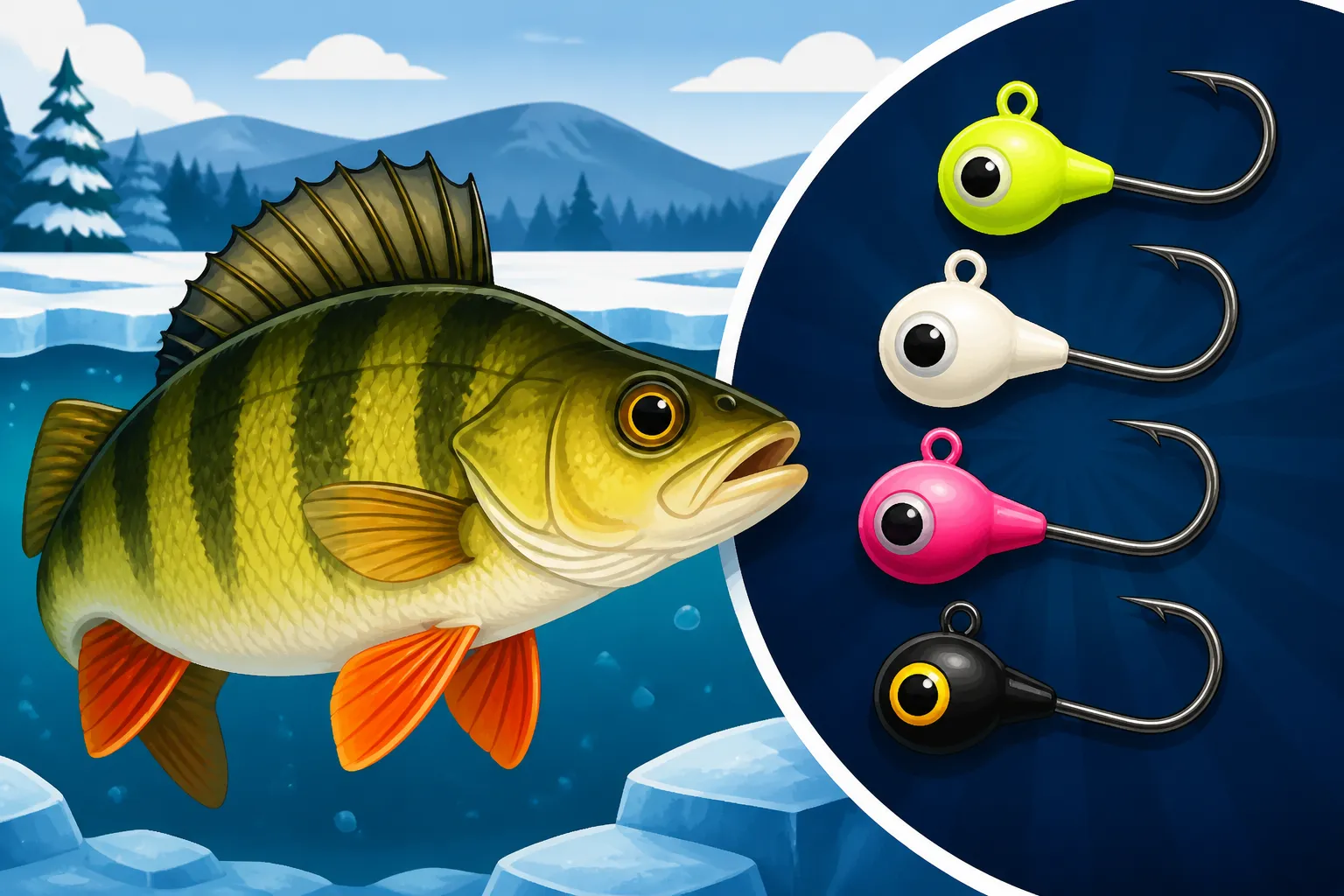
- Chartreuse: This fluorescent yellow-green is an absolute classic for a reason. It's highly visible in almost all water conditions, from clear to moderately stained, and it seems to have a universal appeal to panfish. When perch are active, or when you need to call them in from a distance, a chartreuse jig is often the first one I tie on. It's also great in low-light conditions under heavy snow cover, as it still pops visually.
- Orange and Hot Pink: These vibrant colors are also fantastic attention-grabbers. Orange can mimic certain insect forms or even be seen as a distress signal by a predatory perch. Hot pink, while perhaps not naturally occurring, is a proven fish attractor. Both are excellent choices in stained water or when the bite is tough, and you need to irritate a perch into striking. They create a strong contrast against most underwater backdrops, making them easy to spot.
- Fire Tiger: This classic combination of chartreuse, orange, and sometimes black stripes is an old standby. It offers high contrast and multiple colors, making it versatile for a variety of conditions. When you're unsure which bright color to start with, a fire tiger pattern is a great compromise. I've had many days on Lake Bomoseen where a small fire tiger jigging spoon absolutely crushed perch when nothing else would.
The Power of Glow: Deep Water and Low Light
Glow-in-the-dark jigs are a game-changer, especially in Vermont's deeper lakes or under heavy ice and snow cover where light penetration is minimal.
- Glow White/Green/Orange: These are the most common glow colors, and they're incredibly effective. The luminescence means the jig is essentially emitting its own light, making it visible even in near-total darkness. I'll often 'charge' my glow jigs with a camera flash or a dedicated UV light before dropping them down. This is crucial for deep-water perch, say beyond 20 feet, where natural light simply doesn't reach effectively. It's also invaluable on those heavily overcast days with thick snow cover. If you're fishing in a small ice shanty, the glow can be easily recharged inside without needing much external light. You can find a huge variety of glow jigs on Amazon, making it easy to stock up. When Ice Fishing in Vermont, glow jigs are often essential for success, especially for species like perch that tend to school up in deeper basins.
Here's a quick comparison of when to reach for which general color family:
| Jig Color Category | Best Conditions | Rationale | Example Lures/Techniques |
|---|---|---|---|
| Natural Hues | Clear water, sunny days, finicky fish, shallow depths | Mimics natural forage (minnows, insects) perfectly. Subtle presentation. | Silver/gold spoons, minnow-pattern jigs, brown/olive tungsten jigs |
| Bright & Bold | Stained water, active fish, low light (overcast/snow cover), aggressive presentation | High visibility, attracts attention, triggers reaction strikes. Stands out. | Chartreuse, orange, hot pink, Fire Tiger jigs/spoons |
| Glow Colors | Deep water (>15-20ft), very low light (heavy snow/night), schooling fish | Emits its own light, visible in near darkness, draws fish from distance. | Glow white, green, orange jigs; charged with UV light. |
Beyond Color: Other Factors for Perch Success
While color is a significant piece of the puzzle, it's never the only piece. To truly be successful catching perch through the ice in Vermont, you need to consider a few other critical factors that work hand-in-hand with your jig selection.
Jig Size and Profile: Matching the Hatch
No matter how perfect the color, if your jig is the wrong size or shape, perch might ignore it. Perch, especially jumbo perch, can be surprisingly selective.
- Small and Subtle: For most winter perch fishing, especially on smaller waters or when the bite is tough, small jigs are key. Think 1/32 oz to 1/16 oz, or even smaller in tungsten. Perch are often feeding on tiny insect larvae, zooplankton, or very small baitfish. A small jig often translates to a more natural presentation. If you're fishing on Lake Fairlee, for instance, with its clear waters and abundant panfish, tiny jigs often out-produce larger ones.
- Matching the Forage: Pay attention to what the perch are actually eating. If you clean a few perch and find their stomachs full of tiny minnows, a minnow-profile jig (like a small Rapala Jigging Rap or similar) in a natural color might be deadly. If you find insect casings, then a small, subtle tungsten jig dressed with a wax worm or spike will likely be more effective. The profile of the jig – whether it's long and slender like a minnow, or round and buggy like an insect – is just as important as the color.
Presentation is Paramount: Action and Rhythm
You can have the best-colored, perfectly sized jig in your tackle box, but if you don't present it correctly, it won't matter. Perch are curious, but they can also be cautious.
- Subtle Jiggles and Pauses: Unlike some aggressive species, perch often prefer a more subtle presentation. A common and effective technique for Jigging for Perch Through the Ice involves lifting the jig a few inches, letting it fall, and then holding it perfectly still for several seconds. The pause is often when they strike. A series of tiny "quivers" or "jiggles" of the rod tip can impart enticing action without making the jig dart around too aggressively.
- Finding the Zone: Perch often suspend at a specific depth, especially when chasing schools of baitfish. Your fish finder is your best friend here. Once you mark fish, adjust your jig to that exact depth. Sometimes, they're tight to the bottom; other times, they might be suspended 5 or 10 feet off it. Experiment with different depths until you find where they're willing to bite.
- Bait it Up: While a colored jig is designed to be attractive on its own, tipping it with a live offering often seals the deal. A small piece of wax worm, a spike (maggot), or a mealworm adds scent, taste, and a bit of natural wriggle that can entice even the most hesitant perch. This is particularly effective on those tough days when the fish are just bumping the jig without committing.
Location, Location, Location: Finding the Fish First
This might seem obvious, but no jig color or presentation will work if there aren't any fish under your hole! Perch are schooling fish, and finding one often means finding many.
- Structure and Depth: Look for structure. On Lake Champlain, this could mean fishing over submerged humps, along drop-offs, or near weed lines (if any still remain green under the ice). In smaller ponds, it might be near old creek channels, points, or sudden changes in bottom contour. Perch often relate to structure that offers both cover and access to food. If you're using a Best Fish Finder for Deep Lake Fishing, you'll be able to pinpoint these subtle changes in the bottom.
- Covering Water: Especially when first starting out on a new body of water, be willing to drill multiple holes and move around. Don't be afraid to walk a bit! If you fish a hole for 15-20 minutes without a bite, move to another spot 20-50 yards away. This "search and destroy" method is highly effective for locating those nomadic perch schools. Many anglers use portable Best Ice Augers for Vermont Lakes to make this easier.
- Follow the Bait: Perch are predators, and they follow their food. If you can locate schools of baitfish (often visible on your fish finder), perch won't be far behind. Sometimes, a "dead stick" rod set up next to your jigging hole with a minnow can be just as effective as your active jigging rod, especially for those larger, lazier perch.
Experimentation and Adaptation: The Key to Consistent Catches
The truth about jig colors for winter perch isn't about finding one best color; it's about having a diverse tackle box and knowing how to adapt. Vermont's diverse fishing environments and ever-changing weather mean that what worked yesterday might not work today.
Starting with a Strategic Selection
When you first get out on the ice, especially if you haven't been on that particular body of water recently, it's wise to start with a few different options. My personal approach is usually:
- Natural (Silver/Perch Pattern): Always start with something that looks like food. It's often the safest bet, especially in clearer water.
- Bright (Chartreuse/Orange): If the natural isn't producing, switch to something that screams "look at me!" This is great for active fish or stained conditions.
- Glow (Glow White/Green): If it's deep, dark, or the fish are sluggish, a glow jig is an excellent follow-up choice.
By rotating through these categories, you can quickly narrow down what the perch are responding to on any given day. If you see others catching fish, don't be afraid to politely ask what they're using! Most Vermont anglers are happy to share general tips. You might even discover a new local favorite. For a wide selection to cover all your bases, consider checking out the panfish jig selections at your local outdoor store or browsing online retailers like Amazon.
The Perch School Mentality and Color Changes
Perch are schooling fish, and their behavior can change rapidly. One minute they're smashing anything, the next they're finicky.
- Hot Bites and Cold Spells: When you find an active school of perch, you might catch them on almost anything. This is when those bright, aggressive colors can really shine. But if the school suddenly goes cold, don't just keep fishing the same thing. Often, a slight change – maybe dropping from a chartreuse to a more subtle silver, or downsizing your jig – can re-ignite the bite.
- Leader and Line Choice: Beyond jig color, consider your leader and line. In clear water, a very light fluorocarbon leader (2-4 lb test) can be almost invisible and make a huge difference, especially for larger, wary perch. The lighter line also allows for a more natural action of your tiny jig. Some anglers even prefer a braided main line with a fluorocarbon leader for sensitivity to feel those subtle perch bites. You can read more about Best Fluorocarbon Line for Clear Lake Water for specific recommendations.
- Don't Overlook the Classics: Sometimes, the simplest solutions are the best. A tiny lead jig head with a live bait presentation (wax worm, spike, minnow) can often out-fish the most sophisticated lure. While we talk a lot about jig colors, the combination of color, size, profile, and natural bait is a powerful one.
Ultimately, the "best" jig color for winter perch in Vermont is the one they're biting on that day, in those conditions. By understanding how light, water clarity, and fish behavior influence their choices, and by having a versatile array of colors and sizes, you'll be well-equipped to unlock consistent success on the ice. Keep experimenting, keep learning, and enjoy the thrill of those feisty winter perch!
Disclaimer
This article is for general informational purposes only and does not constitute professional advice. Laws, prices and regulations vary by location and change over time. Consult a qualified professional for guidance on your specific situation.