Best wading boots with felt vs rubber soles
Deciding on the right wading boots can feel like navigating a swift, rocky river blindly, especially when you're thinking about the diverse waters here in Vermont. You're trying to figure out what's going to keep you upright and safe, whether you're tackling slippery riverbeds or slogging through muddy banks. This guide is all about helping you understand the real differences between felt and rubber soles, their pros and cons, and which option truly makes the most sense for your specific Vermont fishing adventures.
The Classic Choice: Felt Soles and Their Place in Vermont Waters
For decades, felt-soled wading boots were the undisputed champions of river grip. There was a reason every seasoned angler swore by them – they just stuck to those slick, algae-covered rocks like glue. If you grew up fishing Vermont's freestone rivers, chances are your first pair of serious waders had felt on the bottom.
Unmatched Grip on Slippery Rocks
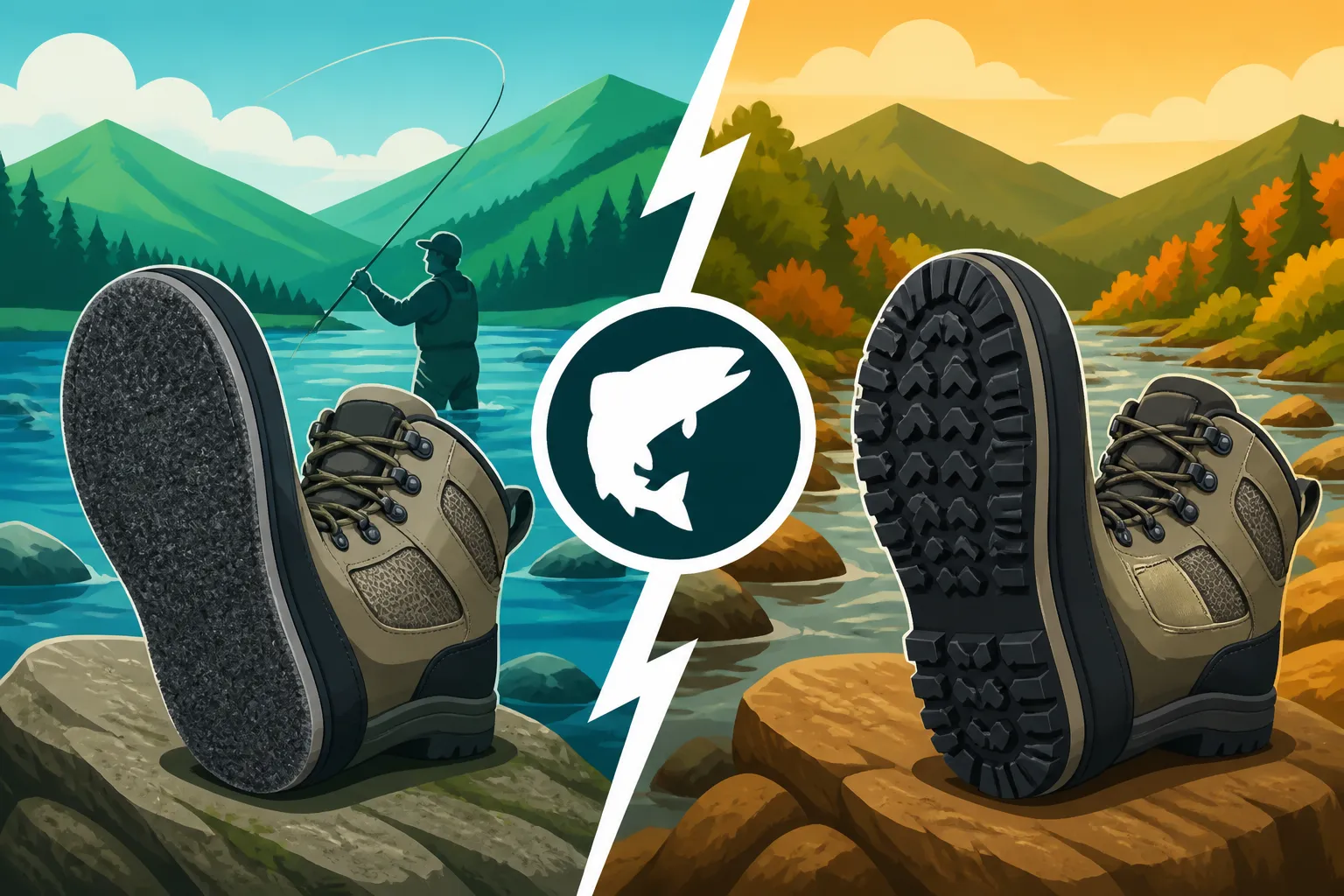
The primary advantage of felt soles lies in their incredible traction on wet, rocky, and often algae-covered surfaces. Think about a classic Vermont trout stream after a spring rain, where every rock is slick with moss and slicker than a greased watermelon. Felt simply conforms to the irregular surfaces of submerged rocks, providing a wide area of friction that few other materials can match. It's like having hundreds of tiny little grippers that dig in and prevent you from slipping.
This superior grip is particularly noticeable in fast-flowing currents. When you're wading across a swift section of the Winooski or carefully navigating a pocket on the White River, the stability felt offers can be the difference between a confident step and an unexpected dip. Many anglers feel a genuine sense of security with felt underfoot, which allows them to focus more on their casting and less on keeping their balance. For anyone who's ever taken an unexpected spill, that confidence is priceless.
Environmental Concerns and Shifting Regulations
While felt's grip is legendary, it comes with a significant caveat: environmental impact. The fibrous material of felt can easily pick up and hold tiny organisms, plant fragments, and even microscopic spores from one body of water and carry them to another. This unwitting transport is a major pathway for the spread of invasive species – things like whirling disease that devastate trout populations, or aquatic plants that choke out native ecosystems.
Many states and even some specific watersheds have already banned felt soles to combat this problem. While Vermont hasn't implemented a statewide ban, the concern among environmental agencies and conservation groups is very real. Anglers are increasingly encouraged to choose alternative soles or, if they do use felt, to meticulously clean and dry their boots between every single fishing trip – and we're talking a deep scrub and complete desiccation, not just a quick rinse. It’s a huge responsibility, and frankly, a lot of work, that many simply can't commit to after a long day on the water.
Durability and Maintenance Realities
Let's be honest, felt soles aren't built for longevity. They wear down, especially if you do a lot of hiking on dry land to get to your fishing spots. The felt can fray, delaminate from the boot, and generally break down faster than a rubber alternative. If you're constantly scrambling over sharp rocks or walking on pavement, you'll see that felt degrade quickly.
Beyond wear and tear, the maintenance of felt is a genuine chore. As mentioned, drying them completely to prevent invasive species spread can take days, especially in damp conditions. And let's not forget the smell – if not dried properly, felt can develop a rather unpleasant odor. This need for constant, thorough cleaning and drying is a practical consideration for any angler, especially those who fish multiple waters or don't have dedicated drying space. For these reasons, even ardent felt supporters are often looking for alternatives or keeping a spare pair of rubber-soled boots handy.
The Modern Contender: Rubber Soles and Their Evolution
As environmental awareness grew and technology advanced, rubber soles rose to prominence as a viable, and often preferred, alternative to felt. Modern rubber wading boots are a far cry from the clunky, slippery options of yesteryear, offering surprising grip and superior versatility.
Versatile Traction for Varied Terrain
One of the biggest advantages of rubber soles is their versatility. Unlike felt, which performs exceptionally well only on wet, submerged rocks, modern rubber soles excel across a broader range of surfaces. Think about those approaches to a river: walking through dirt, mud, gravel paths, or even paved roads. Felt is notoriously poor on these dry or soft surfaces, often feeling like you're walking on ice skates on dry pavement. Rubber, with its aggressive tread patterns, provides much better grip and comfort for the hike in and out.
Today's wading boot manufacturers have invested heavily in developing specialized rubber compounds and intricate tread designs. Brands you might find at Bass Pro Shops or online through Amazon offer proprietary rubber blends that grip surprisingly well on wet surfaces, including wet rocks. While they might not offer the sheer "stickiness" of felt on every single slick rock, their overall performance across diverse terrains makes them a far more practical choice for many Vermont anglers who aren't exclusively wading in pristine, rocky riverbeds.
Enhanced Durability and Low Maintenance
Rubber soles are, generally speaking, far more durable than felt. They resist abrasion better, meaning they stand up to rough trails, sharp rocks, and general abuse without falling apart. You're less likely to see large chunks of rubber delaminate or wear away prematurely. This translates to a longer lifespan for your boots, saving you money in the long run.
The maintenance aspect is also a huge plus. Rubber is much easier to clean thoroughly. A quick rinse with a hose and a scrub with a brush is usually sufficient to remove mud, debris, and potential invasive hitchhikers. They also dry much faster than felt, significantly reducing the risk of odor and the spread of unwanted organisms. This ease of care makes rubber a very attractive option for anglers who are conscious about preventing the spread of invasive species or simply don't want to spend extra time on boot maintenance after a long day of fishing.
Grip Limitations on Slick, Submerged Surfaces
Despite all the advancements, rubber soles do have a notable Achilles' heel: extremely slick, algae-covered, or mossy submerged rocks. On these specific surfaces, especially in strong currents, pure rubber can still feel less secure than felt. It's not that rubber offers no grip, but rather that the level of friction is simply lower compared to felt's ability to conform and grab.
This limitation is most acutely felt when you're in a highly technical wading situation, trying to balance on a single, slick boulder in a fast run. Without any additional traction aids, an angler accustomed to felt might feel a momentary lack of confidence. This is where many anglers still express frustration with rubber, even with the best modern compounds and tread patterns. It's an important trade-off to consider, especially if the majority of your fishing involves extremely challenging wading conditions.
Beyond the Basics: Studded Soles and Hybrid Options
Recognizing the strengths and weaknesses of both felt and rubber, manufacturers have innovated to offer solutions that aim to provide the best of both worlds, or at least mitigate the drawbacks. This often involves adding external elements to rubber soles or creating interchangeable systems.
The Power of Studs: Enhancing Rubber Grip
To overcome the inherent slipperiness of rubber on algae-covered rocks, many anglers opt for studded rubber soles. These boots incorporate small metal or carbide studs directly into the rubber tread. These studs act like tiny cleats, digging into the soft algae and gripping the hard rock beneath, providing a level of traction that often rivals or even surpasses felt on the most treacherous surfaces.
The transformation in grip that studs offer is truly remarkable. Suddenly, those impossibly slick rocks become navigable, and you can wade with much greater confidence. However, studs come with their own set of considerations. They can be noisy on dry land, cause wear and tear on boat floors, and potentially damage delicate stream bottoms if you're not careful. Some areas might even have restrictions on their use due to these concerns. Still, for many who prioritize maximum grip on wet, rocky riverbeds, studded rubber is the ultimate solution. You can often buy boots with pre-installed studs or add them yourself to many rubber-soled boots found at major retailers.
Exploring Hybrid Designs and Interchangeable Soles
Another innovative solution is the development of boots with interchangeable sole systems. These ingenious designs allow anglers to swap out different soles depending on the conditions and environment. Imagine being able to click a felt sole onto your boot for a day on a challenging, rocky trout stream, then swap it for a studded rubber sole for an ice fishing trip on a frozen lake, or a plain rubber sole for a hike into a remote pond.
Companies like Simms and Korkers are leaders in this space, offering modular systems that provide incredible versatility. You might find a wide selection of these systems when browsing fishing gear on platforms like Amazon or in a well-stocked Bass Pro Shops. While the initial investment for these systems might be higher than a single pair of boots, the ability to adapt your traction to any condition without buying multiple pairs of boots can be a huge benefit for the serious angler who fishes diverse waters. It offers a practical way to address both environmental concerns and personal safety preferences.
Making Your Choice: Felt vs. Rubber for Your Vermont Adventures
So, how do you decide what's right for you and your unique Vermont fishing scenarios? It's not a one-size-fits-all answer, and your choice will likely involve a balance of priorities, from safety to environmental responsibility to sheer convenience.
Considering Your Wading Environment
The type of water you fish most frequently in Vermont is probably the single most important factor. If you primarily fish the state's iconic, clear, rocky trout streams – places like the Battenkill or many of the smaller Green Mountain streams – where slick, moss-covered boulders are the norm and you do a lot of precise wading, then the superior grip of felt or studded rubber is going to be incredibly appealing. You'll want to feel secure with every step in that often swift current. How to wade the Battenkill safely is paramount, and your boot choice plays a huge role.
However, if your fishing takes you to diverse locations – perhaps the muddy banks of the Missisquoi River for smallmouth bass, or shoreline fishing on Lake Champlain where you might walk across pavement or gravel to get to the water, or even kayak fishing where you're launching from sandy or muddy shores – then the versatility and durability of rubber soles might be a better fit. Rubber performs far better on dry land and soft bottom conditions, making the approach and exit much more comfortable and less prone to slips. Consider if you're exploring Green Mountain Trout Stream Access or casting from shore on one of the Best Kayak Fishing Spots in Vermont.
Balancing Safety, Convenience, and Cost
There's a real trade-off involved. Your personal safety is always paramount. If you prioritize absolute grip on slick rocks above all else, especially if you have balance concerns or frequently wade challenging waters, then felt (with rigorous cleaning) or studded rubber will give you the most confidence. This is a critical aspect of Wading Techniques for Vermont Trout Streams.
On the other hand, if you value ease of maintenance, durability, and the peace of mind that comes from knowing you're not inadvertently spreading invasive species, then plain rubber or a non-studded rubber sole is a fantastic choice. The convenience of a quick rinse and faster drying time can't be overstated. When considering the Best Gear for Vermont Trout Fishing, don't forget the long-term cost. While felt boots might seem cheaper initially, their shorter lifespan and the need for frequent replacement can add up. Rubber, while sometimes a higher upfront cost, often lasts much longer.
A Personal Decision for Every Angler
Ultimately, the best wading boot sole comes down to your individual fishing style, the specific waters you frequent, and your personal priorities. There isn't a single "right" answer that applies to everyone. Many seasoned Vermont anglers even keep multiple pairs of boots for different situations. One might have a pair of felt boots specifically for dedicated river wading days, and another pair of rubber-soled boots for lake fishing or when doing more hiking.
Think about your typical fishing trip: how far do you walk to the water? What does the riverbed or lake bottom usually feel like? How often do you switch between different bodies of water? Are you diligent about cleaning your gear? Answering these questions honestly will guide you to the choice that offers the best balance of performance, safety, and practicality for your Vermont fishing adventures. Don't forget, a good Best Wading Staff for Fast Current can complement either sole choice significantly by adding an extra point of contact and stability.
Here's a quick comparison to help you weigh the options:
| Feature | Felt Soles | Rubber Soles (Non-studded) | Rubber Soles (Studded) |
|---|---|---|---|
| Grip on Wet Rocks | Excellent (best on slick, mossy rocks) | Fair to Good (varies by rubber compound/tread) | Excellent (best overall grip, penetrates algae) |
| Grip on Dry Land/Mud | Poor (slippery on pavement, collects mud) | Excellent (good traction on varied terrain) | Good (studs can be noisy, wear on surfaces) |
| Durability | Fair (wears down, delaminates) | Excellent (long-lasting, abrasion resistant) | Good (studs can wear down or fall out over time) |
| Invasive Species Risk | High (fibers trap organisms, hard to clean) | Low (easy to clean, quick drying) | Low (easy to clean, quick drying, check for debris) |
| Maintenance | High (requires thorough drying & cleaning) | Low (easy rinse, quick dry) | Moderate (easy rinse, check for stud wear) |
| Versatility | Low (specific to wet rock conditions) | High (suitable for diverse environments) | High (but with surface impact considerations) |
| Surface Impact | Minimal | Minimal | Can damage boat floors, delicate stream beds, rocks |
No matter your choice, remember that your gear is an investment in your safety and enjoyment on the water. Research, consider your personal needs, and make the choice that feels right for you.
Disclaimer
This article is for general informational purposes only and does not constitute professional advice. Laws, prices and regulations vary by location and change over time. Consult a qualified professional for guidance on your specific situation.