Best Downriggers for Walleye Trolling
Trying to consistently connect with those elusive walleye, especially when they're hunkering down in deeper water, can feel like a constant battle against the unknown. You might be trolling your favorite crankbaits or spinners, only to find them running too shallow, far above where the fish are actually feeding. This guide is here to unravel the mystery of downriggers, explaining how these indispensable tools allow you to present your lures precisely at the depths where walleye lurk, turning those frustrating days into successful outings on Vermont's bigger lakes.
Understanding Walleye Behavior and the Need for Downriggers
Walleye are masters of their environment, adapting their behavior to water temperature, light conditions, and baitfish movements. When you're fishing Vermont's larger, deeper lakes like Lake Champlain, understanding these patterns is key, and it often points directly to the necessity of a downrigger. Without a precise way to get your presentation to the fish, you're essentially guessing, and that's a tough way to catch a notoriously finicky eater.
Why Walleye Go Deep
Walleye are highly sensitive to light. This isn't just a preference; it's a biological imperative. Their large, light-gathering eyes, adapted for low-light conditions, make them incredibly efficient predators at dawn, dusk, and even throughout the night. However, during the bright daylight hours, especially in clear lakes, direct sunlight can be too intense for them. To escape this discomfort and maintain their ambush advantage, walleye will often retreat to deeper, darker water, sometimes seeking out submerged structures, thermoclines, or dark bottom contours. These deeper zones provide the ideal low-light environment where they feel safe and can effectively hunt baitfish, which themselves might be pushed deeper by light or predator pressure.
Moreover, water temperature plays a massive role in walleye distribution. As surface waters warm throughout the spring and into the summer, walleye will actively seek out cooler, more oxygenated water. This often means dropping below the thermocline – that distinct layer in the water column where temperatures rapidly change. Finding and consistently fishing this thermocline, or the deeper structure below it, is paramount for summer walleye success. Without a way to consistently deliver your bait to this specific depth, you're merely hoping a fish might rise to your offering, which is far less effective than putting your bait directly in their feeding zone. This depth preference is why tools like downriggers become absolutely essential for anglers targeting walleye in Vermont's deeper lake systems.
The Limitations of Traditional Trolling
Traditional trolling methods, while effective in certain situations and for shallower species, quickly hit their limits when walleye move deep. Crankbaits, even those designed to dive, have a maximum depth they can reach, and that depth is heavily influenced by line type, trolling speed, and the lure's bill design. If walleye are holding at 30 feet, and your deepest crankbait only gets to 15 feet, you're simply not in the game. Adding weight to your line can help, but it often kills the natural action of your lure, making it less appealing to wary walleye. Plus, getting a specific, consistent depth with snap weights or lead core line can be a real challenge; it's more of an art than a science, and variations in speed or current can throw off your presentation immediately.
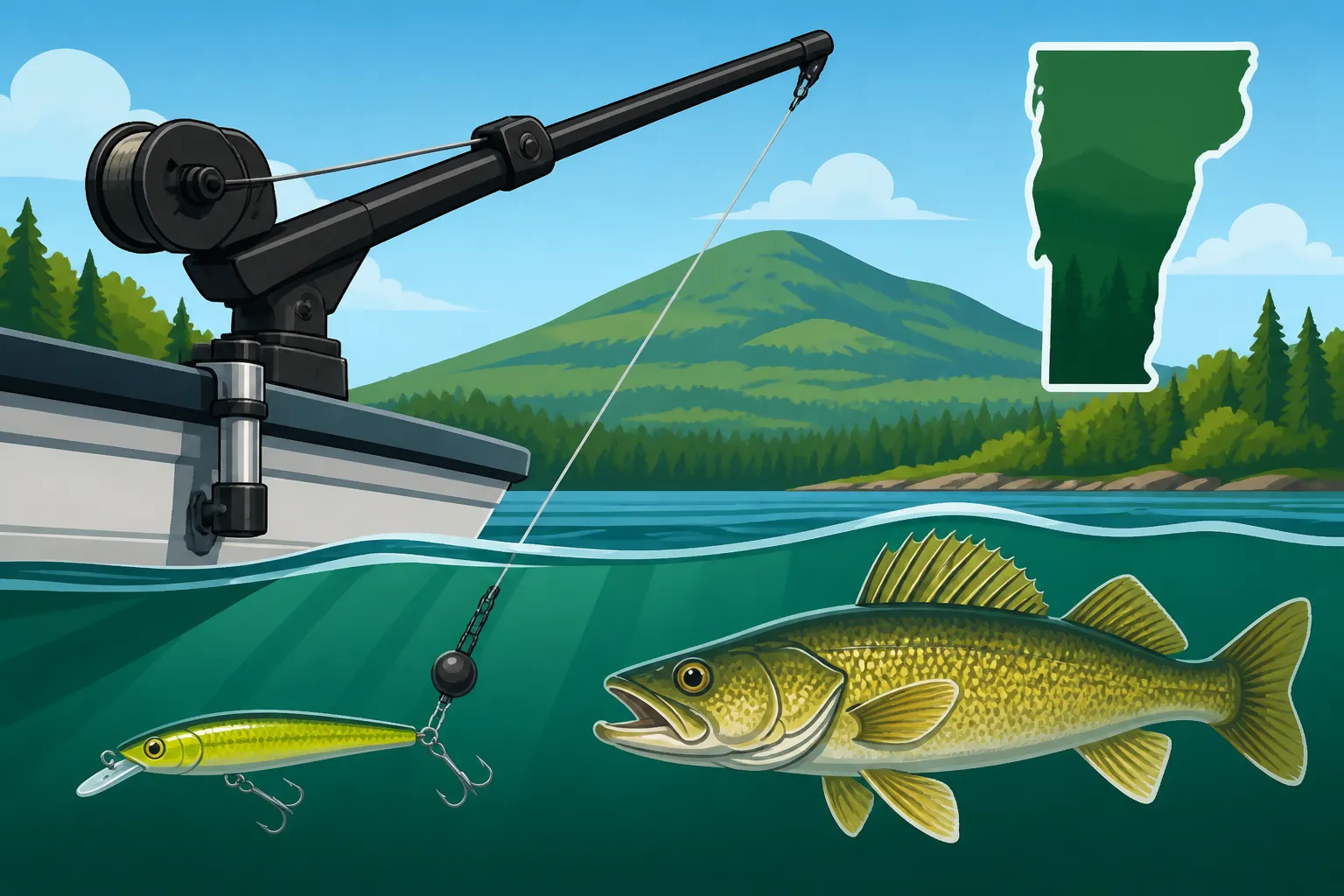
Another significant drawback is the angle of your line. When trolling without downriggers, especially at deeper depths, your line stretches out a long way behind the boat. This long line creates a wide, sweeping arc when turning, making it difficult to keep your lure in a tight strike zone. It also means you're dealing with a lot of line in the water, which can lead to tangles, increased drag, and reduced sensitivity. When a walleye hits a lure running far back on a long line, the stretch in the monofilament or even braided line can make detection difficult and hooksets less solid. Downriggers allow you to run a much shorter length of fishing line from the downrigger release clip to your lure, maintaining better lure action, improving strike detection, and making those crucial turns much more effective for presenting your bait right where the fish are. For more on finding these fish, check out Where to Find Walleye on Lake Champlain.
Types of Downriggers: Manual vs. Electric
When it comes to downriggers, anglers essentially have two main categories to choose from: manual and electric. Both serve the same fundamental purpose – getting your lure to a precise depth – but they achieve it in different ways, each with its own set of advantages and considerations. Your choice will largely depend on your budget, the size of your boat, the depths you plan to fish, and how frequently you'll be adjusting your setup.
Manual Downriggers: Simplicity and Control
Manual downriggers are the workhorses of the deep-water trolling world. They operate with a simple hand crank, much like a traditional fishing reel, allowing you to raise and lower the downrigger ball and your attached fishing line. This simplicity is their greatest strength. There are fewer moving parts, which generally means less can go wrong, and they are typically more affordable to purchase and maintain. For anglers just getting into downrigger fishing, or those who don't venture into extreme depths or troll for extended periods, a manual downrigger can be an excellent starting point. They're particularly well-suited for smaller boats where power consumption is a concern or where space for complex wiring might be limited.
While manual downriggers offer a direct, hands-on feel for the depth, they do require physical effort, especially when retrieving a heavy downrigger ball from significant depths. Imagine cranking up a 10-pound ball from 60 feet multiple times an hour—it can be quite a workout! However, for many anglers, this connection to the gear is part of the appeal. It gives you a sense of direct control over your presentation. When considering a manual downrigger, look for robust construction, a smooth crank mechanism, and a reliable line counter to ensure accuracy. Brands like Cannon and Scotty offer dependable manual models that are widely used for walleye trolling. You can often find a good selection of these at a sporting goods retailer like Bass Pro Shops or even online through Amazon, allowing you to compare features and prices.
Electric Downriggers: Power and Precision
Electric downriggers represent the pinnacle of deep-water trolling convenience and precision. Instead of a hand crank, these units feature an electric motor that does all the heavy lifting, raising and lowering the downrigger ball with the touch of a button. This automation is a game-changer, especially when fishing very deep, making frequent depth adjustments, or running multiple downriggers simultaneously. Imagine you're marking fish at 45 feet, and then suddenly the school drops to 50; with an electric downrigger, a quick button press puts your bait right back in the strike zone without missing a beat or breaking a sweat. This speed and ease of adjustment mean you can react much faster to changes in fish activity or bottom contour.
Beyond mere convenience, electric downriggers often come equipped with advanced features that enhance their precision. Many models include integrated line counters, auto-up features (which quickly retrieve the ball to the surface), and even positive ion control (PIC) that emits a subtle electrical field around your boat, believed by some to attract fish. Some high-end units can also be integrated with your boat's electronics, allowing for even more sophisticated control and data logging. While electric downriggers come with a higher price tag and require a power source, the benefits in terms of reduced fatigue, increased efficiency, and advanced functionality can be well worth the investment for serious walleye anglers. These are invaluable tools for optimizing your Best Trolling Gear for Lake Champlain Walleye setup.
Key Features to Look for in a Walleye Downrigger
Choosing the right downrigger isn't just about picking manual or electric; it's about delving into the specific features that will make your walleye trolling more effective and enjoyable. Not all downriggers are created equal, and understanding what to prioritize can save you frustration and help you connect with more fish. Each component plays a vital role in the overall performance and durability of the unit, especially when dealing with the varied conditions of Vermont's fishing waters.
Boom Length and Strength
The boom is the arm that extends out from the downrigger unit, from which the downrigger ball is deployed. For walleye trolling, especially in larger bodies of water where you might want to run multiple lines or spread your baits out to cover more area, boom length and strength are critical. Longer booms, typically ranging from 24 to 60 inches or more, allow you to position your downrigger balls further away from the boat, reducing prop wash interference and helping to prevent lines from tangling, particularly when executing turns. This wider spread can also be crucial for presenting lures to wary walleye that might be spooked by the boat's presence directly overhead.
However, a longer boom also requires greater strength to handle the stress of heavy downrigger balls, especially in rougher water or when making sharp turns. Look for booms made from sturdy, corrosion-resistant materials like stainless steel or heavy-gauge aluminum. Adjustable booms are a fantastic feature, allowing you to shorten them for storage or specific close-to-boat presentations, then extend them out when you need maximum spread. The ideal boom length will also depend on your boat's beam and how many downriggers you plan to run. Consider how your spread will look with other Best Fishing Rods for Vermont Lakes to ensure everything is streamlined.
Retrieval Speed and Weight Capacity
For electric downriggers, retrieval speed is a significant factor in efficiency and convenience. A faster retrieval speed means less time spent reeling in the downrigger ball after a fish strike or when you need to check your bait, allowing you to get your line back in the water quicker. While "fast" is relative, looking for models that boast quick cycles can make a noticeable difference over a long day of fishing. This is particularly important when fishing deep, as even a small difference in speed can save you valuable minutes.
Weight capacity refers to the maximum weight of a downrigger ball the unit is designed to handle. Most downriggers can comfortably manage 8- to 12-pound balls, which are common for walleye trolling. However, if you anticipate fishing extremely deep, in strong currents, or running larger, heavier balls to combat blowback (the tendency of the ball to swing backward from the boat due to speed and water resistance), ensure your chosen downrigger has a sufficient weight rating. Overloading a downrigger can lead to premature wear and tear or even system failure. It's always better to have a little extra capacity than to push the limits of your equipment.
Line Counter and Rod Holder Integration
A reliable, accurate line counter is an absolute necessity for any downrigger setup, manual or electric. This feature allows you to precisely know the depth of your downrigger ball, which translates directly to knowing the depth of your lure. Consistency in depth is paramount for walleye fishing, as they often hold in a very specific water column. A good line counter ensures you can repeatedly drop your bait to the exact depth where you're marking fish or getting bites. Analog dial counters are common on manual units, while electric models often feature digital readouts for enhanced precision.
Integrated rod holders are another highly valuable feature that many modern downriggers offer. These holders are typically adjustable, allowing you to position your fishing rod at the optimal angle for detecting strikes and keeping your line clear of other rigging. Quality rod holders are robust enough to withstand the violent strike of a hooked walleye and securely hold your rod during trolling. Some downriggers offer double rod holders, which is great if you're running multiple lines from a single downrigger. Proper rod holder placement can make a big difference in both your fishing efficiency and the overall safety of your gear. When evaluating potential downriggers, consider how well these integrated features meet your specific trolling style and boat setup.
Rigging Your Downrigger for Walleye Success
Once you've chosen your downriggers, the real fun begins: rigging them up for ultimate walleye success. This isn't just about hooking up a lure; it's about creating a harmonious system where every component works together to present your bait effectively and detect those subtle walleye bites. Precision in rigging is key to consistently putting fish in the boat, especially when targeting deep-dwelling walleye.
Selecting Downrigger Balls and Clips
The downrigger ball is the weight that carries your fishing line (via a release clip) down to the desired depth. For walleye, common ball weights range from 8 to 12 pounds. The ideal weight depends on your trolling speed, desired depth, and any current you might encounter. Heavier balls tend to run straighter and deeper with less blowback, but they also require more robust downriggers and more effort to retrieve (if manual). Different shapes exist too; round balls are common, while torpedo or pancake shapes are designed to reduce drag and swing. Choose a ball that allows your downrigger to maintain a near-vertical angle with minimal blowback at your preferred trolling speed.
Release clips are perhaps the most crucial component for actual fishing. These clips attach your fishing line to the downrigger wire, holding it under tension until a fish strikes, at which point the line "releases" from the clip, allowing you to fight the fish directly on your rod. There are various types of clips, from simple pinch clips to adjustable tension clips and stacker releases. For walleye, you generally want a clip that holds your line firmly enough to avoid false releases from prop wash or small bumps, but light enough to release on the often subtle bite of a walleye. Adjustable tension clips are fantastic for fine-tuning to your line size and lure resistance. Stacker clips allow you to run multiple fishing lines off a single downrigger wire, creating an even broader presentation. Experiment with different clips to find what works best for your line and lure choices.
Proper Lure and Leader Selection
The lures you use with downriggers for walleye are typically those that have minimal inherent diving ability, allowing the downrigger to dictate their depth precisely. Spoons, stickbaits, and worm harnesses are all excellent choices. For spoons, experiment with different colors and sizes; bright colors work well in stained water, while natural baitfish patterns excel in clear conditions. Stickbaits, both shallow and deep-diving models, can be very effective, but with a downrigger, even a shallow-runner can be presented at extreme depths. Best Lures for Walleye Trolling on Lake Champlain offers great insights into specific patterns.
Leader material and length are equally important. Fluorocarbon leaders are highly recommended for walleye due to their near-invisibility underwater and abrasion resistance. A leader length of 6 to 15 feet is common, providing separation between your main line (which might be braided) and the lure, as well as absorbing some of the shock from a strike. The leader test strength should match your target walleye size and the water clarity; lighter leaders (e.g., 8-12 lb test) are often more effective in clear water, while slightly heavier leaders can be used in stained conditions or around abrasive structure. Always check your leader frequently for nicks and abrasions, as a compromised leader is a recipe for a lost fish.
Setting Up Your Trolling Spread
Creating an effective trolling spread involves more than just dropping lines; it's about strategically positioning your lures in the water column and horizontally to maximize coverage and appeal. With downriggers, you gain incredible control over vertical placement. Many anglers run two downriggers, one off each side of the boat, to cover a wider swath. You can set them at different depths to "stair-step" your presentation through the water column, perhaps one at the top of the thermocline and another just below it.
Consider integrating other trolling methods into your downrigger spread. For example, you might run one or two downrigger lines deep, and then deploy additional lines closer to the surface with planer boards or long lines, creating a multi-layered attack. This is where your rod holders become invaluable. When using stacker clips, you can run two lines per downrigger, placing one lure just above the ball and another, say, 10-20 feet higher up. This allows you to test different depths very efficiently. Keep meticulous notes on what depths, lures, and speeds are getting bites. Often, walleye will show a strong preference for a very specific depth and presentation, and being able to replicate that exact setup is what makes downrigger fishing so deadly effective.
| Feature | Manual Downriggers | Electric Downriggers |
|---|---|---|
| Operation | Hand crank for raising/lowering | Electric motor, button-controlled |
| Effort | Requires physical effort, especially for deep/heavy balls | Minimal physical effort |
| Cost | Generally more affordable | Higher initial investment |
| Retrieval Speed | Slower, dependent on angler cranking | Faster, consistent, often with adjustable speed |
| Features | Basic line counter, often fewer advanced options | Digital line counter, auto-up, positive ion control (PIC), remote control, potential network integration |
| Power Needs | None (except for depth sounder on boat) | Requires 12V DC power source, wiring |
| Maintenance | Simpler, fewer electrical components to troubleshoot | More complex, electrical components, motor maintenance |
| Best For | Beginners, smaller boats, shallower depths, budget-conscious | Experienced anglers, larger boats, deep depths, frequent adjustments, multiple downriggers |
| Ease of Use | Straightforward, but can be tiring | Highly convenient, reduces fatigue |
| Responsiveness | Slower to adjust depth | Quick and precise depth adjustments |
Operating Downriggers on Vermont Waters
Once your downriggers are rigged and ready, operating them effectively on Vermont's walleye waters like Lake Champlain requires a blend of technique, attention to detail, and a bit of intuition. It’s not just about dropping a ball; it’s about reading the water, understanding your electronics, and confidently battling fish on a system that's designed for efficiency.
Reading Your Electronics and Adjusting Depth
Your boat's fish finder or sonar unit is your best friend when downrigger fishing. Before you even deploy a downrigger, spend time idly cruising, watching for baitfish schools, thermoclines, and, most importantly, walleye arches. Walleye often associate with structure like humps, points, or submerged islands, or they might suspend in open water over deep flats, following bait. Pay close attention to the depth at which you mark fish. If you see a cluster of arches at 38 feet, that's your target depth. Your downrigger allows you to put your lure precisely in that strike zone. For help with this, refer to Best Fish Finders for Vermont Lakes.
As you troll, continuously monitor your electronics. Walleye can change their depth preference throughout the day, often moving deeper as light intensity increases or shallower during low-light periods. The beauty of downriggers, especially electric models, is the ability to make instant, precise depth adjustments. If the fish move deeper, a quick tap of a button or a turn of the crank gets your lure back in front of them. It's an active process; don't just set it and forget it. Constant vigilance and responsiveness to what your electronics are telling you will significantly increase your hook-up ratio. Knowing your boat's trolling speed and how it affects blowback is also important. Some units, like certain Humminbird or Lowrance models, can even integrate with electric downriggers for highly advanced control.
Battling Walleye on Downrigger Gear
When a walleye strikes a downrigger lure, the experience is unique compared to traditional trolling. First, your line will "release" from the downrigger clip, often causing your rod tip to spring up with a sudden jolt. This is the moment you've been waiting for! Immediately grab the rod and ensure you have a solid hookset. Because the fishing line from the rod to the lure is much shorter than with conventional trolling, you have a more direct connection to the fish, which aids in feel and setting the hook.
Fighting a walleye that's just come off a downrigger release can be exhilarating. They often make powerful runs, especially those larger Lake Champlain walleye. Keep steady pressure on the fish, using your rod's flex to absorb head shakes and runs. It's crucial to retrieve the downrigger ball quickly, especially if you have multiple lines out, to prevent tangles during the fight. Electric downriggers with auto-up features are fantastic for this, allowing you to focus entirely on the fish. For helpful tips on landing fish, read Muskellunge catch and release survival tips, as many of the same principles apply for careful handling of any trophy fish.
Maintenance and Care for Longevity
Like any piece of fishing equipment, downriggers require regular maintenance to ensure they perform reliably season after season. After each outing, especially when fishing in fresh water like Vermont's lakes, it's a good practice to rinse your downriggers thoroughly with fresh water. Pay special attention to the reel, boom, and any moving parts to remove salt residue, dirt, or grime. Periodically inspect the downrigger cable or braid for frayed spots, kinks, or wear, and replace it if necessary. This cable is under significant tension, and a failure can mean losing an expensive downrigger ball and potentially a trophy fish.
For electric downriggers, regularly check the electrical connections for corrosion and ensure they are clean and tight. Lubricate moving parts as recommended by the manufacturer, typically with marine-grade grease or oil. Store your downriggers in a dry, protected area when not in use, and consider covering them to shield them from the elements. Taking these simple steps will not only extend the lifespan of your downriggers but also ensure they're ready to perform flawlessly every time you hit the water in pursuit of those deep-dwelling Vermont walleye.
Disclaimer
This article is for general informational purposes only and does not constitute professional advice. Laws, prices and regulations vary by location and change over time. Consult a qualified professional for guidance on your specific situation.