Best Tackle for Vermont Smallmouth Bass
Oh, the elusive Vermont smallmouth bass! If you've ever spent a frustrating day on Lake Champlain or one of our gorgeous rivers, casting everything in your tackle box without a single strike, you know the feeling. It's easy to get overwhelmed by the sheer number of lures, rods, and reels out there, leaving you wondering if you have the right gear for these hard-fighting bronzebacks. This guide is here to cut through the confusion and help you select the best tackle to consistently land smallmouth bass in Vermont's diverse waters, from the vastness of Lake Champlain to the trickling mountain streams.
Understanding Vermont Smallmouth Bass Behavior and Habitat
Before you even think about buying a new lure, it's crucial to understand the fish you're targeting. Smallmouth bass are incredibly adaptable, but their behavior and preferred habitats shift throughout the year and across different types of water bodies in Vermont. Knowing these patterns will directly inform your tackle choices, helping you select gear that's effective rather than just popular.
Seasonal Movements and Feeding Patterns
Smallmouth bass are highly seasonal in Vermont. In the spring, as ice melts and water temperatures begin to rise, they move into shallower, warmer waters to spawn. This is a time when they can be very aggressive, protecting their nests, but also a time when you need to be mindful of catch-and-release practices to ensure future generations. Post-spawn, they might be a bit lethargic, but as summer fully arrives, they become incredibly active, often chasing baitfish in open water or hiding in cover waiting for an ambush. As fall approaches, they'll feed heavily to pack on weight for winter, often grouping up on deeper structures. Understanding these phases helps you choose not only the right lure but also the right presentation. For instance, a fast-moving crankbait might be perfect for active summer smallmouth, while a slow-fished tube jig could be the ticket for finicky post-spawn fish.
Knowing when and where they'll be is half the battle. Think about how active they'll be. During the summer, especially on big lakes, they might be willing to chase a topwater bait from a good distance, making for some incredibly exciting blow-ups. But come cooler weather, or after a cold front, they'll hug the bottom, becoming much more subtle in their takes, demanding a finesse approach with light line and subtle presentations. This shift in behavior directly dictates whether you're reaching for a heavy baitcasting setup or a light spinning rod.
Their feeding patterns are also critical. Smallmouth are opportunistic predators. They'll devour everything from crawfish and minnows to insects and even small panfish. Observing the primary forage in the waters you're fishing can give you a significant advantage. If you see crawfish scurrying on the bottom, a brown or green jig with a crawfish-imitating trailer is a no-brainer. If schools of baitfish are dimpling the surface, then a jerkbait or a swimbait that mimics those baitfish is likely to be a winner. This kind of observation helps narrow down the overwhelming number of lure options.
Typical Smallmouth Habitats in Vermont Lakes and Rivers
Vermont offers a stunning variety of smallmouth habitats, from vast, clear lakes to winding, rocky rivers. Each environment demands a slightly different tackle approach. In large, deep lakes like Lake Champlain, smallmouth often relate to offshore structures such as rock piles, humps, and sudden drop-offs. Here, longer casts and deeper presentations are often necessary, requiring different rod lengths and heavier lures. You'll also encounter extensive weed lines and rocky points, all of which are prime smallmouth real estate.
Rivers and smaller inland lakes, however, present their own unique challenges and opportunities. In rivers, smallmouth gravitate towards current breaks, eddies, submerged logs, and undercut banks. These areas require precise casting and often a lighter, more sensitive setup to feel subtle bites in moving water. Shorter rods can be an advantage here, allowing for better maneuverability in tight quarters or when casting around overhead obstructions. Smaller lakes and ponds might have less pronounced structure but will still hold smallmouth around docks, fallen trees, and shallow rock beds.
The type of cover you're fishing will also influence your line and hook choices. Fishing heavy weeds or submerged timber on Lake Champlain might call for braided line to cut through vegetation and power fish out of cover. Conversely, targeting smallmouth on open, clear rock flats might demand a stealthy fluorocarbon leader to avoid spooking wary fish. Knowing your battleground is just as important as knowing your opponent, and in Vermont, that ground varies dramatically from one fishing spot to the next. You'll find yourself adjusting your tackle based on whether you're targeting the expansive, deep waters of Lake Champlain or the swift currents of the Otter Creek.
Forage Base and How it Influences Lure Choice
Smallmouth bass in Vermont have a diverse diet, and matching your lure to their natural forage is a time-tested strategy for success. Their primary food sources generally include crawfish, various minnow species (like emerald shiners and alewives), yellow perch, and a variety of aquatic insects. Understanding what they're eating right now can be the difference between a slow day and a banner day. For instance, during the spring and early summer, crawfish are a huge part of their diet, making jigs with crawfish-imitating trailers incredibly effective.
As the season progresses, especially in larger lakes, smallmouth often shift to a more piscivorous (fish-eating) diet. This is when lures that mimic baitfish really shine. Jerkbaits, swimbaits, and even some crankbaits are designed to look and act like the minnows and perch that smallmouth are actively hunting. The size and color of your lure should also reflect the local forage. If the lake has a strong population of golden shiners, a gold-colored lipless crankbait might be deadly. If alewives are abundant, then a silver or white jerkbait will likely get more attention.
Don't forget the power of "match the hatch" when it comes to insect life, particularly in rivers or during certain times of the year. While smallmouth aren't as insect-focused as trout, a large mayfly hatch or a cicada emergence can certainly draw their attention to the surface. Topwater lures that imitate large insects can be incredibly effective during these times. Keeping an eye on what's happening around and in the water will provide valuable clues. If you turn over a rock and find a crawfish, that's your cue. If you see schools of minnows darting around, grab a baitfish imitation. This subtle art of observation helps you dial in your tackle for maximum effectiveness.
Essential Rod and Reel Combos for Vermont Smallmouth
Your rod and reel are the foundation of your smallmouth bass fishing setup. Having the right combo allows for proper lure presentation, accurate casting, and the power needed to land these tenacious fish. Vermont's diverse smallmouth waters mean that a versatile angler might carry a few different setups, but we can narrow down the essentials.
Spinning Gear for Finesse and Versatility
For many Vermont smallmouth anglers, especially those just starting out or those who prioritize finesse techniques, a good spinning rod and reel combo is indispensable. Spinning gear excels at casting lighter lures like small tube jigs, Ned rigs, or weightless soft plastics, which are often deadly on pressured or finicky smallmouth. The open-face design minimizes line twist and allows for smoother, longer casts with lighter baits, which can be crucial when trying to reach wary fish in clear water or cover a lot of ground.
A typical setup for smallmouth might involve a 6'6" to 7' medium-light or medium power spinning rod with a fast action tip. This combination provides enough backbone to fight a strong bass while maintaining the sensitivity in the tip to detect subtle bites. Pair this with a 2500 or 3000 series spinning reel, which offers a good balance of line capacity and retrieve speed. The smooth drag system on modern spinning reels is also vital when a hard-charging smallmouth makes a sudden run, preventing line breakage on lighter lines. You can find excellent spinning combos at various price points, often available at places like Bass Pro Shops or even online through retailers like Amazon, making it easy to get started without a huge investment.
Spinning gear isn't just for finesse. With slightly heavier line and a medium power rod, you can throw a wide array of lures, from small crankbaits and jerkbaits to spinnerbaits and even smaller topwater plugs. Its versatility makes it a workhorse for many smallmouth scenarios across Vermont, whether you're fishing the rocky shorelines of Lake Willoughby or casting into eddies on the Winooski River. For anglers who only want to carry one or two setups, a versatile spinning combo should definitely be one of them, allowing you to adapt to changing conditions and fish moods.
Baitcasting Gear for Power and Precision
While spinning gear offers versatility, baitcasting setups are the choice for anglers who need more power, precision, and the ability to handle heavier lines and lures. If you're throwing big crankbaits, heavy jigs into thick cover, or large swimbaits, a baitcasting rod and reel will give you the control and torque you need. The direct line feed from a baitcaster offers superior sensitivity, allowing you to feel every bump and tick on the bottom, which is crucial when fishing deep structure on Lake Champlain.
A popular baitcasting setup for smallmouth might be a 6'8" to 7'2" medium-heavy power rod with a fast action. This provides the backbone to set the hook firmly and muscle a strong bass away from cover, while the fast tip maintains sensitivity for detecting strikes. Match this with a quality baitcasting reel that has a smooth retrieve, a robust drag, and a good casting system to prevent backlashes. Gear ratios can vary, but a medium-speed reel (around 6.x:1) is a good all-around choice, allowing you to retrieve a variety of lures effectively. Faster reels (7.x:1 or higher) are great for quickly taking up slack, working topwater baits, or burning spinnerbaits.
The learning curve for baitcasting can be a bit steeper than spinning, primarily due to the potential for backlashes. However, once mastered, the precision of a baitcaster, especially for pitching and flipping into tight spots, is unmatched. It's the ideal choice when you need to place a jig under an overhanging branch on the Lamoille River or accurately cast a crankbait along a deep rock wall on Lake Bomoseen. Many experienced anglers dedicate specific baitcasting setups for different techniques, such as a longer, heavier rod for deep cranking and a shorter, lighter one for pitching jigs.
Selecting the Right Action and Power
When choosing a rod for Vermont smallmouth, "action" and "power" are two terms you'll hear a lot, and they're often misunderstood. Power refers to the rod's lifting strength, or how much force it takes to bend the rod. It's typically categorized as ultralight, light, medium-light, medium, medium-heavy, heavy, and so on. A heavier power rod is designed for heavier lures and lines and for fighting bigger fish or pulling them out of heavy cover. For smallmouth, you'll mostly be looking at medium-light to medium-heavy power rods. A medium-light is great for finesse baits and smaller fish, while a medium-heavy is better for larger lures and bigger, more aggressive smallmouth.
Action, on the other hand, describes where the rod bends when pressure is applied. A "fast" action rod bends mostly in the tip section, offering maximum sensitivity and quick hook sets. This is excellent for lures where you need to feel subtle bites or react quickly, like jigs and worms. A "moderate-fast" action bends more in the upper third, providing a bit more forgiveness and helping to keep fish hooked, which is good for treble-hooked lures like crankbaits and jerkbaits. A "moderate" action bends further down, almost parabolically, and is great for launching lures long distances and absorbing head shakes from fish.
For most Vermont smallmouth applications, a fast or moderate-fast action rod in the medium to medium-heavy power range will serve you well. For lighter finesse techniques, a medium-light power, fast action spinning rod is ideal. If you're throwing larger, heavier lures, a medium-heavy power, moderate-fast action baitcasting rod will provide the necessary backbone and casting performance. Think about the types of lures you'll be throwing most often and the kind of water you'll be fishing when making your selection. The right combination will make a huge difference in your fishing experience and success. Best Fishing Rods for Vermont Lakes offers more insights into selecting rods for various species and conditions.
Line Choices: Matching Your Method and the Water
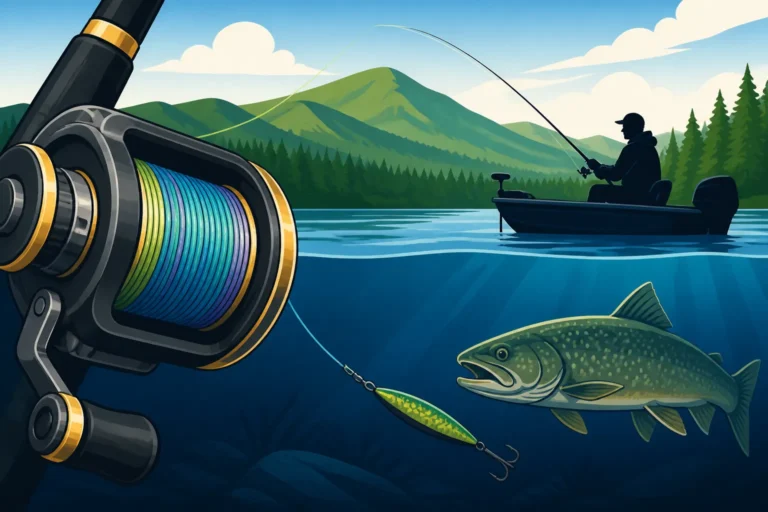
The fishing line is your direct connection to the fish, and choosing the right type, weight, and color can significantly impact your success. Vermont's clear waters and diverse smallmouth habitats demand careful consideration of your line, balancing factors like visibility, sensitivity, and abrasion resistance.
Monofilament for Forgiveness and Topwater
Monofilament (mono) line is the old standby, and it still has a place in a smallmouth angler's arsenal, particularly for certain techniques. Made from a single strand of nylon, mono is known for its stretch, which acts as a shock absorber. This "forgiveness" can be a huge asset when fishing with treble-hooked lures like crankbaits and jerkbaits, preventing hooks from tearing out of a fish's mouth during aggressive strikes or sudden head shakes. It also has a natural buoyancy, making it excellent for topwater presentations where you want your lure to sit high on the surface.
Mono is generally very easy to cast, especially for beginners, and it knots well. While it's not as sensitive as fluorocarbon or braid, its stretch can sometimes prevent light-biting fish from feeling unnatural resistance. For many years, 8-10 pound test monofilament was the go-to for smallmouth bass. It remains a solid choice for general purpose spinning or baitcasting, particularly when fishing waters with less abrasive cover or when you're looking for that forgiving stretch with topwater action. It's also typically the most affordable option, which can be a plus if you're experimenting with different setups.
However, mono does have its downsides. It has more memory than other lines, meaning it can retain spool coils, leading to frustrating tangles over time. It's also more susceptible to UV degradation and water absorption, which can weaken it. For serious smallmouth anglers, mono might serve as a specialty line for specific techniques rather than an all-around workhorse, but its unique properties make it invaluable for specific situations.
Fluorocarbon for Stealth and Sensitivity
Fluorocarbon (fluoro) line has become incredibly popular for smallmouth bass fishing, and for good reason. Its primary advantage is its near-invisibility underwater, thanks to its refractive index being very close to that of water. In Vermont's often clear lakes and rivers, this stealth factor can be a game-changer, especially when targeting wary smallmouth in heavily fished areas or during bright, sunny conditions. This makes it an excellent choice for a leader when paired with braided main line.
Beyond stealth, fluorocarbon offers excellent sensitivity due to its low stretch. This allows you to feel subtle bites, distinguish between a rock and a fish, and detect changes in bottom composition. This sensitivity is crucial for finesse techniques like drop-shotting, Ned rigs, or jig fishing, where you need to feel every contact with the bottom or every light tap from a fish. It's also highly abrasion-resistant, which is a significant advantage when fishing around rocky structures, mussel beds, or submerged timber—common smallmouth haunts in Vermont.
The main drawbacks of fluorocarbon are its higher cost, stiffness (which can make it harder to cast and prone to memory in some brands), and its tendency to sink. The sinking property, while excellent for getting lures down quickly, means it's generally not ideal for most topwater presentations. For most smallmouth applications requiring sensitivity and stealth, 6-12 pound test fluorocarbon is a popular choice. Many anglers will spool their baitcasting reels entirely with fluorocarbon, or use a fluorocarbon leader (6-10 lb test) attached to a braided main line on both spinning and baitcasting setups for the best of both worlds.
Braided Line for Strength and Weedy Areas
Braided line is woven from multiple strands of synthetic fibers, resulting in a line that is incredibly strong for its diameter, has virtually no stretch, and offers superior abrasion resistance in certain situations. For Vermont smallmouth fishing, particularly in situations demanding maximum power and sensitivity, braid is often the answer. Its lack of stretch provides unparalleled sensitivity, transmitting even the lightest bites directly to your rod tip. This is fantastic for feeling a fish "eat" a jig on the fall or detecting a subtle tap when dragging a tube bait along the bottom.
The immense strength of braided line also means you can use a much thinner diameter line than you would with mono or fluoro, which can enhance casting distance. For example, 20-pound test braid has the diameter of roughly 6-8 pound test monofilament. This strength is invaluable when fishing heavy cover like dense weed beds, thick submerged timber, or rocky crevices where you need to pull a big smallmouth out quickly. It also excels when fishing topwater frogs or heavy jigs in situations where you need to power through vegetation. Many anglers prefer 10-20 pound test braid for smallmouth, often with a fluorocarbon leader for stealth.
While braid is incredibly strong, it's not invisible. For this reason, many smallmouth anglers will always tie a fluorocarbon leader to their braided main line, especially in clear water or when using finesse presentations. Braid can also be prone to wind knots on spinning gear if not spooled correctly, and it can be difficult to cut cleanly without sharp scissors. Despite these minor quirks, braided line is a powerhouse for specific smallmouth techniques, particularly when fishing the dense weeds of a warm Vermont lake or when you need maximum hook-setting power from a distance. For more detail on line selection, check out Best Fluorocarbon Line for Clear Lake Water.
Top Smallmouth Bass Lures for Vermont Waters
Now we get to the exciting part: what to tie on! Smallmouth bass are aggressive, curious, and notoriously hard-fighting, making them a blast to catch on a variety of lures. Having a selection of these staples will prepare you for nearly any smallmouth scenario in Vermont, from the calm waters of a local pond to the choppy expanses of Lake Champlain.
Hard Baits: Crankbaits, Jerkbaits, and Topwaters
Hard baits are incredibly effective for smallmouth, especially when they're actively feeding.
-
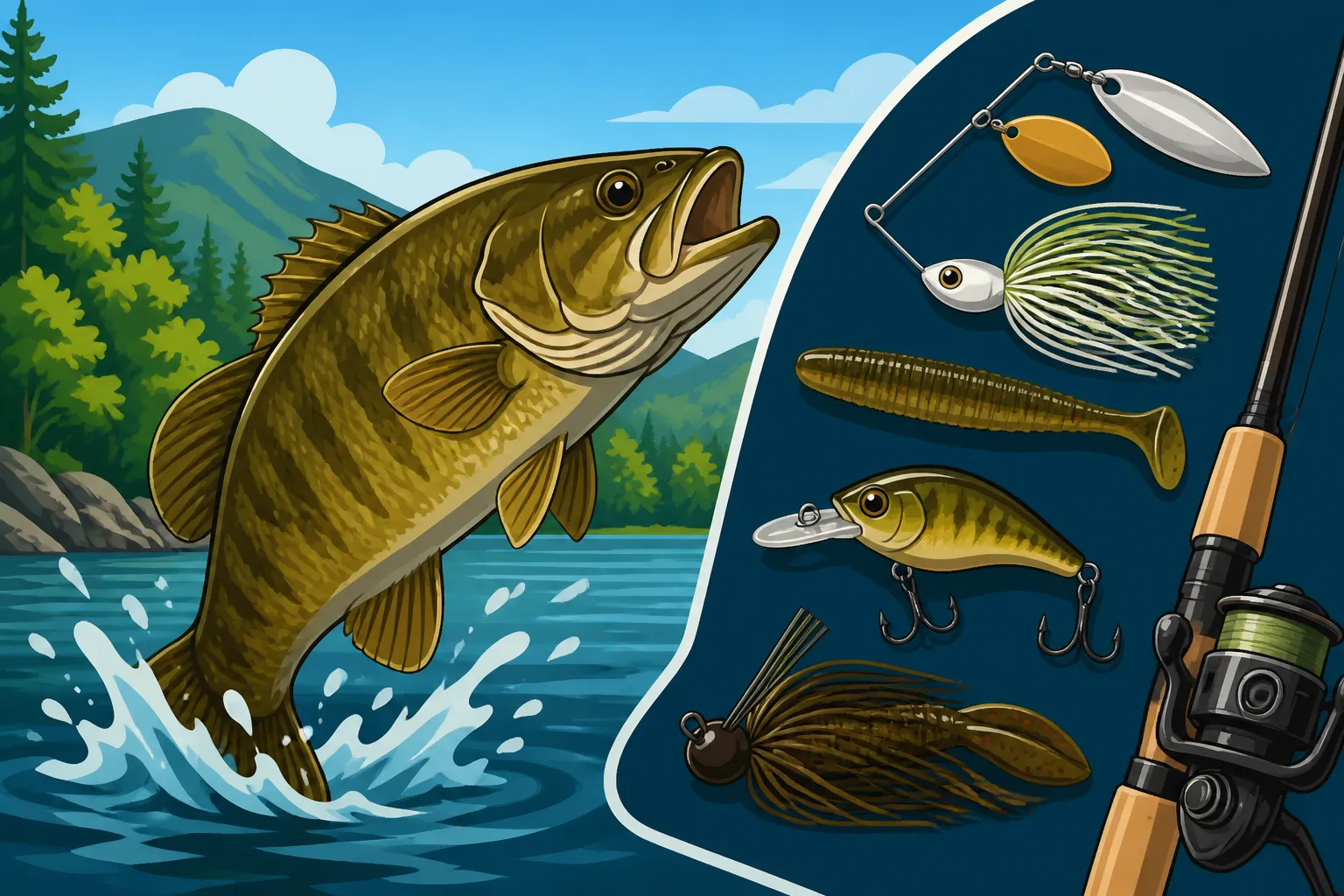
Crankbaits: These lipped plugs dive to various depths depending on their bill design. Shallow-diving crankbaits (with small bills) are excellent for rocky flats, shallow points, and shorelines, especially in the spring or late fall when smallmouth are shallower. Medium-diving crankbaits (medium bills) cover depths of 5-12 feet and are great for probing submerged humps, rock piles, and transitions. Deep-diving crankbaits (long bills) can reach depths of 15+ feet and are essential for targeting offshore structure in large lakes like Champlain during summer. Look for colors that mimic crawfish (browns, oranges) or baitfish (silver, bluegill patterns). Brands like Rapala and Strike King offer a wide range of effective crankbaits.
- Scenario: You're on Lake Champlain in mid-summer, using your fish finder to locate a submerged rock hump in 15 feet of water. A deep-diving crankbait in a crawfish pattern, retrieved steadily, often draws aggressive strikes as it bangs off the rocks.
- For more options, check out Best Crankbaits for Vermont Smallmouth Bass.
-
Jerkbaits: These slender, minnow-imitating lures are designed to be fished with a "twitch, twitch, pause" retrieve, mimicking a wounded baitfish. They are absolutely deadly for smallmouth, particularly in cooler water during spring and fall, but also effective year-round. The erratic action and suspended pause can trigger strikes from even the most finicky fish. Look for natural baitfish colors like chrome, silver, or translucent patterns. Brands like Megabass, Lucky Craft, and Rapala are renowned for their jerkbaits.
- Scenario: It's a brisk spring day, and smallmouth are cruising shallow flats in a Vermont lake, but they're not committing to fast retrieves. Casting a suspending jerkbait and working it with long pauses allows the lure to hang enticingly in their strike zone, often resulting in a violent strike on the pause.
-
Topwater Lures: There's nothing quite like the explosive strike of a smallmouth blowing up on a topwater lure. Poppers, walk-the-dog baits (like Heddon Super Spooks), and prop baits are all fantastic choices, especially in low-light conditions (dawn, dusk, cloudy days) or when smallmouth are actively feeding on the surface during warm summer months. These lures create commotion on the surface, drawing fish up from below. Colors don't matter as much as action and profile for topwaters, but natural baitfish or frog patterns are always a good starting point.
- Scenario: Early morning on a calm section of the Connecticut River. You're casting a walk-the-dog lure near submerged timber. A smallmouth crashes the surface, engulfing the lure in a spectacular splash. This is prime Topwater Fishing for Smallmouth Bass in Vermont action.
Soft Plastics: Tubes, Senkos, and Swimbaits
Soft plastics are incredibly versatile and often imitate the natural forage of smallmouth bass, offering a more subtle and lifelike presentation.
-
Tube Jigs: If there's one soft plastic lure synonymous with smallmouth bass, it's the tube. Tubes imitate crawfish, gobies, and baitfish, and their hollow body allows them to collapse easily when a fish bites, leading to solid hook sets. They can be fished in countless ways: cast and dragged along the bottom, vertically jigged, pitched into cover, or even swam through the water column. Green pumpkin, watermelon, and brown are staple colors. Pair them with internal tube jigs (lead heads that fit inside the tube) for optimal action.
- Scenario: Fishing a rocky point on Lake Dunmore, you rig a green pumpkin tube on a 1/4 oz internal jig head. You cast it out, let it sink to the bottom, and then slowly drag and hop it back, mimicking a crawfish. This often triggers bites from smallmouth hiding in the crevices.
-
Senkos (Stick Baits): The Yamamoto Senko, and its many imitators, are simple yet incredibly effective. Their subtle shimmy on the fall drives bass wild. Rigged weightless wacky style (hook through the middle) or Texas-rigged, they are fantastic for targeting smallmouth around docks, submerged vegetation, or any shallow cover. The slow, tantalizing fall is often when the strikes occur. Green pumpkin, watermelon, and black are perennial favorites.
- Scenario: Pitching a Texas-rigged Senko into lily pads on a calm inland pond in Vermont. The Senko slowly sinks through the pads, and you feel a subtle thump as a smallmouth grabs it before it even hits the bottom.
-
Swimbaits: Mimicking baitfish with a realistic profile and swimming action, swimbaits are a fantastic option for targeting larger, more aggressive smallmouth. They can be rigged on a jig head, an underspin, or a weighted swimbait hook and fished through the middle of the water column or along the bottom. Paddle-tail designs are common, creating a lifelike wobble. Look for colors that match local baitfish like silver, white, or shad patterns.
- Scenario: Trolling or casting a 4-inch paddle-tail swimbait on a jig head over deeper rock reefs on Lake Champlain. The swimbait's realistic action convinces a lurking smallmouth that an easy meal is passing by, resulting in a solid strike.
Jigs and Spinnerbaits for Deeper and Cover Fishing
When smallmouth are tight to cover or holding in deeper water, jigs and spinnerbaits are often the best tools for the job.
-
Jigs (Football Jigs, Skirted Jigs, Hair Jigs): Jigs are incredibly versatile. Football jigs are excellent for dragging along rocky bottoms and offshore humps, imitating crawfish. Skirted jigs, often paired with a plastic trailer, are great for pitching into wood or rock cover. Hair jigs, especially small ones, are fantastic for cold water or when fish are finicky, offering a subtle, wispy presentation. Colors depend on forage, but black/blue, green pumpkin, and brown are essential.
- Scenario: On a windy day, you're fishing a deep breakline on Lake Memphremagog. A 1/2 oz football jig with a crawfish trailer is slowly dragged across the bottom, maintaining contact with the structure and tempting any smallmouth holding tight to the rocks.
-
Spinnerbaits: These lures feature one or more spinning blades (Colorado, Willowleaf, or Indiana) that create flash and vibration, along with a skirted body. They are excellent "search baits" for covering water quickly and are particularly effective around submerged vegetation, wood, and rocky shorelines. The vibration and flash can draw fish from a distance, even in stained water. White, chartreuse, and perch patterns are popular colors.
- Scenario: You're fishing the shallows of a warmer Vermont lake in early summer, where smallmouth are hunting around weed edges. Casting a 3/8 oz spinnerbait with a silver willowleaf blade and retrieving it at a medium pace allows the blade to flash, drawing aggressive strikes from active smallmouth.
Remember that How to Catch Smallmouth Bass in Vermont Lakes offers more specific tips on techniques for these fantastic fish.
Terminal Tackle: The Little Things That Matter
It's easy to focus on rods, reels, and lures, but the small components of your tackle—hooks, weights, swivels—are just as critical. The best lure in the world won't catch a fish if your hook is dull or your knot fails. Paying attention to these details can prevent heartbreak at the boat or shore and ensure you land that trophy Vermont smallmouth.
Hook Selection for Different Lures and Presentations
Choosing the right hook isn't just about size; it's about style, wire gauge, and sharpness. Different lure types and fishing techniques call for specific hook designs.
- Jig Heads: For soft plastics like tubes, grubs, and swimbaits, you'll need various jig heads. For tubes, internal tube jigs (like the Tru-Tungsten Tube Head) are essential, fitting inside the lure for a more natural look. For swimbaits and grubs, exposed ball-head or round-head jigs work well. The hook size should match the size of your plastic, ensuring the hook point is exposed for a solid hook set. Always opt for sharp, strong hooks.
- Worm Hooks (EWG, Straight Shank): When rigging soft plastic worms or creatures Texas-style (weedless), you'll need extra wide gap (EWG) hooks or straight shank worm hooks. EWG hooks are popular for bulkier plastics, allowing the plastic to compress and expose the hook point. Straight shank hooks are often preferred for slender worms and provide a faster, more direct hook set. Again, match the hook size (e.g., 3/0 to 5/0) to the size of your plastic.
- Treble Hooks: The hooks on most crankbaits, jerkbaits, and topwater lures are treble hooks. Over time, these can become dull or bent. Carrying replacement treble hooks (and split ring pliers to change them) is a good idea. Consider upgrading to stronger, sharper trebles like those from Gamakatsu or Owner for better hook penetration and to prevent fish from throwing the hook, especially when targeting larger smallmouth. Ensure the replacement hook size matches the original or is one size larger or smaller if you want to slightly alter the lure's action.
Hook sharpness is paramount. Always check your hooks before you cast. A quick swipe with a hook file can turn a dull point into a sticky-sharp one, significantly increasing your hook-up ratio. A sharp hook means less effort to penetrate the tough mouth of a smallmouth.
Weights: Tungsten vs. Lead and When to Use Them
Weights are essential for getting your lures down to the fish, but the type and material you choose can make a big difference.
- Lead Weights: For decades, lead has been the standard for fishing weights. It's inexpensive and readily available in various shapes (bullet, drop shot, split shot, etc.). Lead weights still work perfectly fine for many smallmouth applications, especially when cost is a concern. However, lead is a relatively soft metal. This means it's less sensitive, transmitting fewer vibrations from the bottom, and can get hung up more easily as it deforms when hitting rocks.
- Tungsten Weights: Tungsten has emerged as a superior alternative to lead for many applications, particularly when fishing soft plastics. Tungsten is much denser than lead, meaning a tungsten weight of the same ounceage is significantly smaller than its lead counterpart. This compact size makes it more streamlined, less prone to snagging, and allows for better penetration through cover. The increased density also provides superior sensitivity, transmitting every bump, rock, and subtle bite much more clearly to your rod. While more expensive, the benefits of tungsten are undeniable for serious smallmouth anglers, especially when fishing finesse rigs like Texas rigs, Carolina rigs, or drop shots.
- Scenario: You're drop-shotting a small grub on a clear, rocky shelf on Lake Champlain. Using a 1/4 oz tungsten drop-shot weight allows you to maintain constant bottom contact and feel the subtlest pecks from wary smallmouth that a lead weight might mask.
Swivels, Snaps, and Leaders for Specific Situations
These small components often go unnoticed but play a vital role in presentation and line management.
- Barrel Swivels/Ball Bearing Swivels: Swivels are used to prevent line twist, especially when fishing lures that spin, like inline spinners, or when using techniques that induce twist, such as trolling or retrieving crankbaits at high speeds. Ball-bearing swivels offer superior anti-twist properties but are more expensive. For smallmouth, a high-quality barrel or ball-bearing swivel is often used when attaching a leader to your main line, especially if you're concerned about line twist.
- Snaps/Snap Swivels: Snaps allow you to quickly change lures without retying. Snap swivels combine a swivel and a snap. While convenient, some anglers avoid snaps directly on lures for smallmouth, as they can sometimes alter the lure's action or be visible to wary fish. However, for quickly changing crankbaits or spinnerbaits, a small, high-quality snap can be a time-saver.
- Leaders: Leaders are indispensable for smallmouth fishing, particularly when using braided main line. A fluorocarbon leader (6-12 lb test, typically 3-6 feet long) tied to your braid provides the stealth of fluorocarbon at the business end while retaining the strength and sensitivity of braid. This is arguably the most common and effective line setup for smallmouth anglers in Vermont's clear waters. For specific insights, you might want to read Best Fluorocarbon Leader for Clear Lake Bass. Proper knots, like the FG knot or Alberto knot, are essential for joining braid to fluorocarbon leaders reliably.
Essential Accessories for a Successful Smallmouth Trip
Beyond your rods, reels, and lures, a few key accessories can significantly enhance your smallmouth fishing experience in Vermont. These items improve fish handling, tackle organization, and personal comfort, making your time on the water more enjoyable and productive.
Landing Nets and Fish Handling Tools
Landing a feisty smallmouth, especially a larger one, can be a challenge, particularly from a boat or kayak. A good landing net is paramount for securing your catch safely and efficiently. Look for a net with rubberized or knotless mesh. This type of mesh is much gentler on the fish's slime coat and fins, minimizing harm, which is crucial for catch-and-release, a common practice for smallmouth. The rubberized coating also prevents hooks from tangling in the net, saving you frustration.
For boat anglers on Lake Champlain, a net with a longer handle might be beneficial to reach over the side, while a shorter, more compact net might be better for wading in rivers or fishing from a kayak. Best Landing Net for Trout or Best Net for Landing a Big Muskellunge from a Boat might offer insights, though you'd be looking for a size in between for smallmouth. Once the fish is in the net, minimize its time out of water. Tools like long-nosed pliers or forceps are essential for quickly and safely removing hooks, especially when a smallmouth has swallowed a lure or has treble hooks deep in its mouth. A fish gripper can also be useful for holding a large, lively smallmouth without damaging its jaw or scales, allowing for a quick photo before release.
Always prioritize the fish's well-being. Wet your hands before handling the fish to protect its slime coat. Support the fish horizontally, especially larger ones, to avoid damaging its internal organs. These practices ensure the smallmouth survives to fight another day, contributing to the healthy fisheries we enjoy in Vermont.
Tackle Storage and Organization
A disorganized tackle box is a frustrating tackle box. Efficient tackle storage means you can quickly find the lure you need, protect your gear, and maximize your fishing time. Modern tackle bags and utility boxes (like those from Plano or other brands available on Amazon) are designed to keep your lures, hooks, and weights neatly organized and easily accessible.
Consider using clear, multi-compartment utility boxes to separate different lure types (crankbaits in one, jigs in another, soft plastics in a third). This not only keeps things tidy but also allows you to see what you have at a glance. For soft plastics, storing them in their original resealable bags or in dedicated binder pages prevents them from melting together or becoming brittle. For boat anglers, a larger tackle bag or backpack might hold multiple utility boxes, while bank anglers or kayak anglers might prefer a smaller, more portable Best Tackle Bag for Bank Fishing or a waterproof dry box for essential items.
A well-organized system allows you to adapt quickly to changing conditions. Imagine you're on the White River and the smallmouth suddenly switch from chasing spinnerbaits to preferring slow-dragged tubes. With organized tackle, you can make the change in seconds, not minutes, keeping your line in the water where the fish are. Taking the time to organize your tackle at home saves valuable fishing time on the water.
Sun Protection and Other Personal Gear
Vermont's sun, especially reflecting off water, can be intense, even on cloudy days. Protecting yourself is crucial for comfort and long-term health.
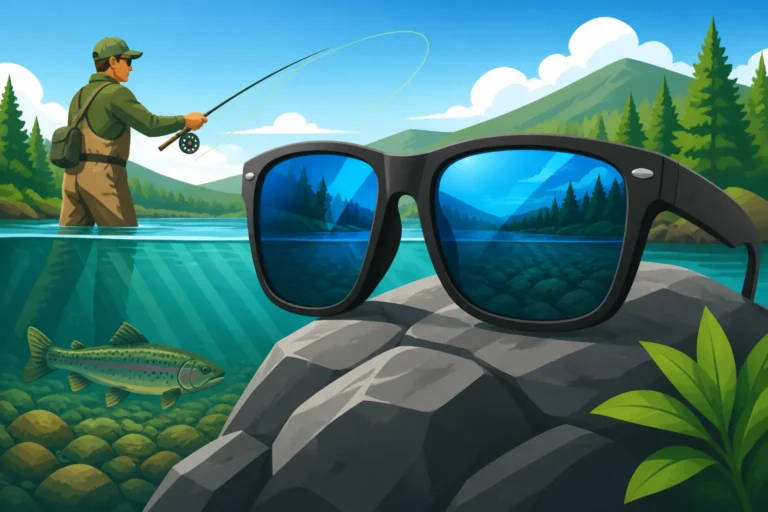
- Polarized Sunglasses: These are not just for style; they're vital for fishing. Polarized lenses cut glare off the water, allowing you to see into the water, spot submerged rocks, weed lines, and even cruising smallmouth. This improves your casting accuracy and helps you avoid snags. Choose lenses with good UV protection.
- Sun Protection: A wide-brimmed hat or a baseball cap, combined with a buff or neck gaiter, will protect your face, ears, and neck from harmful UV rays. Long-sleeved shirts made from breathable, quick-drying UPF-rated fabric are also highly recommended, particularly for full days on the water. Don't forget sunscreen, applied regularly, especially to exposed skin.
- Hydration and Snacks: Fishing is an active pursuit, and staying hydrated is important. Carry plenty of water, especially during warm summer months. Snacks provide energy to keep you focused and comfortable throughout the day.
- Rain Gear: Vermont weather can be unpredictable. A lightweight, packable rain jacket and pants can save a trip from being cut short by an unexpected shower. Many quality options are available at outdoor retailers or through online platforms like Amazon.
Having these personal essentials sorted ensures you can focus on the fishing, rather than being distracted by discomfort or sunburn. A comfortable angler is a more successful angler, and nowhere is this truer than during a long day pursuing smallmouth in Vermont.
Adapting Your Tackle to Specific Vermont Waters
Vermont's smallmouth bass thrive in a variety of environments, from vast lakes to intimate rivers. While general tackle principles apply, optimizing your setup for the specific type of water you're fishing can significantly increase your success. What works best on Lake Champlain might be overkill or inadequate for a smaller inland pond or a flowing river.
Tackle Considerations for Lake Champlain's Expansive Waters
Lake Champlain is a beast, offering some of the best smallmouth bass fishing anywhere. Its sheer size, depth, and diverse structure demand a robust and adaptable tackle approach. When fishing Champlain, think about covering water and reaching deep fish.
- Rods: A 7-foot to 7'6" medium-heavy power baitcasting rod is excellent for launching larger crankbaits, swimbaits, and heavy jigs to cover offshore structures like rock piles, humps, and ledges. For finesse techniques, a 6'8" to 7' medium-light or medium spinning rod is perfect for drop-shotting, Ned rigs, or tubes, allowing for precise control and sensitivity in deeper water.
- Line: Braided line (15-20 lb test) as a main line with a 10-12 lb fluorocarbon leader is a popular choice for baitcasting, providing strength for deep hooksets and abrasion resistance against zebra mussel-covered rocks. For spinning, 8-10 lb fluorocarbon or 10-15 lb braid with a 6-8 lb fluorocarbon leader offers stealth and sensitivity for wary fish in clear water.
- Lures: Deep-diving crankbaits (diving 15-25+ feet) are essential for summer and fall smallmouth on offshore structure. Heavy football jigs (3/8 oz to 3/4 oz) with crawfish trailers are deadly for dragging along the bottom. Large jerkbaits, swimbaits, and blade baits are excellent baitfish imitations. Topwater lures can be explosive during low-light conditions on calm mornings. Don't forget creature baits or tubes on a Carolina rig for covering large, deep areas. For more specific tactics, check out Best Bass Fishing Techniques for Lake Champlain.
The conditions on Champlain can change rapidly, from dead calm to whitecaps. Having versatile tackle, and often multiple rod and reel setups rigged for different techniques, is a common strategy for navigating this magnificent but challenging lake.
Smallmouth Tackle for Inland Lakes and Ponds
Vermont's smaller inland lakes and ponds offer a different smallmouth experience, often with less severe depths and different types of cover. These waters can be fantastic for both boat and bank anglers.
- Rods: A 6'6" to 7' medium-light or medium power spinning rod is often the workhorse here, versatile enough for casting lighter lures around docks, fallen trees, and shallow rock beds. A medium power baitcasting rod might also be useful for throwing slightly heavier jigs or small crankbaits.
- Line: 8-10 lb monofilament or fluorocarbon is generally sufficient. If fishing around dense weeds or lily pads, 10-15 lb braided line with a short fluorocarbon leader can help cut through vegetation and extract fish.
- Lures: Weightless or lightly weighted soft plastics like Senkos (wacky rigged or Texas rigged) are extremely effective around shallow cover. Small tube jigs, grubs on jig heads, and compact swimbaits are also excellent. Shallow-diving crankbaits and smaller spinnerbaits that run just above the weeds can draw aggressive strikes. Poppers and walking baits are fantastic topwater choices, especially in early morning or evening.
These waters often require more precision casting into tight pockets of cover. Consider a shorter rod for better accuracy and maneuverability if you're fishing from shore or a kayak. The focus here is often on targeting visible cover rather than vast, offshore structures.
River Smallmouth Fishing: Current and Cover
Vermont's rivers, like the Lamoille, Winooski, and Otter Creek, are home to thriving smallmouth populations that absolutely love current and rocky cover. River smallmouth are typically lean, mean, fighting machines, and your tackle should reflect that.
- Rods: A 6'6" to 7' medium-light or medium power spinning rod with a fast action is a river smallmouth angler's best friend. The sensitivity helps detect bites in current, and the shorter length allows for easier casting in tight spaces or around overhanging branches. Some anglers also like a medium power baitcasting rod for throwing larger jigs or small crankbaits in heavier current.
- Line: 8-10 lb fluorocarbon is excellent for its abrasion resistance against rocks and its stealth in clear river water. Alternatively, 10-15 lb braided main line with a 6-8 lb fluorocarbon leader provides maximum sensitivity and strength for pulling fish out of current and snaggy areas.
- Lures: Jigs are king in rivers. Tube jigs, crawfish imitating jigs, and hair jigs (often 1/8 oz to 1/4 oz, depending on current) are incredibly effective when dragged or hopped along the bottom in current breaks and eddies. Small inline spinners (Mepps, Panther Martin) and small crankbaits are great for covering water and often trigger reaction strikes. Soft plastic grub tails on jig heads are also deadly.
- Scenario: Wading the Battenkill River, you're targeting eddies behind large boulders. Casting a 1/4 oz tube jig upstream and allowing it to tumble naturally through the current break, you feel a distinct thump as a river smallmouth intercepts it.
River fishing often involves wading, so gear like a good Best Wading Staff for Fast Current and a comfortable sling pack (instead of a large tackle box) are also crucial. You'll want to be mobile and carry only the essentials. For more detailed river strategies, you might want to delve into How to Fish a River for Smallmouth Bass.
Budgeting Your Smallmouth Bass Tackle
Fishing can be an expensive hobby, but it doesn't have to be, especially when you're just getting started targeting smallmouth in Vermont. With smart choices, you can assemble effective tackle without breaking the bank, allowing you more funds for actual fishing trips!
Prioritizing Key Gear Investments
When you're first building your smallmouth tackle arsenal, it's easy to get overwhelmed by the sheer volume of products available. The key is to prioritize your investments. Start with a solid, versatile rod and reel combo. A good quality medium-power spinning combo (around $100-$150 total for rod and reel) will allow you to cast a wide range of lures and handle most smallmouth encounters effectively. You don't need the most expensive carbon-fiber rod or a reel with 12 bearings right off the bat. Focus on smooth drag, comfortable ergonomics, and reliable construction.
Next, invest in quality line. While you can save a few dollars on cheaper line, a poor line choice can lead to lost fish and frustrating tangles. Spool up with a reputable brand of 8-10 lb fluorocarbon or a good quality braided line (with fluorocarbon leader material) within your budget. These two items—a reliable rod and reel, and quality line—are the backbone of your setup and where you should put the majority of your initial budget.
Finally, stock up on a small, but versatile selection of proven smallmouth lures. Don't buy every color of every lure. Start with a few different types: a pack of green pumpkin tube jigs, a few soft plastic stick baits, one shallow-diving crankbait in a crawfish pattern, and one small spinnerbait. These will cover a wide range of situations and help you learn what works in your local waters. You can often find starter lure kits or discounted multi-packs at retailers like Bass Pro Shops or via online shopping platforms like Amazon.
Finding Value in Mid-Range Options
Once you've got the basics covered, you can start to expand your tackle with mid-range options that offer excellent performance without the premium price tag. Many brands produce rods and reels in the $75-$150 range that perform remarkably well and are more than adequate for most smallmouth fishing in Vermont. These mid-range options often incorporate technologies trickled down from their flagship models, providing great value.
Look for sales events or end-of-season clearances. This is a fantastic way to pick up higher-quality gear at a reduced price. You might find a slightly older model of a favorite reel or a previous year's rod series at a significant discount. Online forums and local fishing groups can also be a great resource for finding reliable mid-range recommendations or even gently used gear. Don't be afraid to ask experienced local anglers what budget-friendly gear they trust.
For lures, mid-range options often mean buying a few more proven colors or slightly different sizes. Instead of buying a dozen of one lure, buy 2-3 of several different proven lure types. This allows you to experiment and learn what the fish are keying in on without overspending on lures that might sit unused in your tackle box. Over time, you'll naturally gravitate towards your favorites and can replace or add to those.
When to Splurge (and When to Save)
There are certain components where splurging a little can make a big difference, and others where saving is perfectly acceptable.
-
Splurge on:
- Hooks: Sharp, strong hooks are critical. Spending a little extra on high-quality jig heads, worm hooks, and replacement treble hooks (like Gamakatsu or Owner) will increase your hook-up ratio and prevent lost fish.
- Line: As mentioned, good quality line is worth the investment. It directly impacts sensitivity, casting, and fish landing.
- A "Feel" Rod: Once you're more experienced, you might consider splurging on one really sensitive rod (often graphite or carbon fiber) for specific finesse techniques like drop-shotting or jig fishing. The increased sensitivity will help you detect the lightest bites, which can be invaluable on tough days.
-
Save on:
- Tackle Boxes/Storage: While organization is key, basic plastic utility boxes from any reputable brand will do the job perfectly well. You don't need the most expensive waterproof, bulletproof tackle system unless you're regularly fishing in extreme conditions.
- Many Lure Colors: As tempting as it is to buy every color of every lure, stick to proven natural colors (green pumpkin, watermelon, brown, silver, white) first. Smallmouth are often more interested in action and presentation than minute color variations. You can always expand your color palette once you know which lure types are working for you.
- Entry-Level Reels: For your first or second reel, a reliable, smooth entry-level model is usually sufficient. Focus on proper maintenance (cleaning, oiling) to extend its life rather than chasing the most expensive option.
Ultimately, your budget is personal. The goal is to build an effective smallmouth tackle arsenal that allows you to confidently fish Vermont's waters, enjoy the process, and hopefully, land some fantastic bronzebacks along the way. Best Rod and Reel Combo for Beginners offers a great starting point if you're looking for that first versatile setup.
Here's a quick comparison of popular smallmouth lure categories:
| Lure Type | Primary Forage Imitated | Best Conditions/Depth | Key Features | Typical Rigging/Retrieve |
|---|---|---|---|---|
| Crankbaits | Baitfish, Crawfish | Varying depths (0-25ft+), active fish | Diving bill, buoyant, rattles | Cast, steady retrieve, deflect off structure |
| Jerkbaits | Wounded Baitfish | Cool water, clear water, 5-15ft | Minnow profile, suspending, erratic action | Twitch, twitch, pause; retrieve with slack |
| Topwaters | Insects, Baitfish | Surface, low light, calm water | Creates surface commotion (splash, walk) | Cast, walk-the-dog, pop |
| Tube Jigs | Crawfish, Goby, Baitfish | Bottom, cover, varying depths | Hollow body, skirted, subtle fall | Drag, hop, pitch, vertically jig |
| Soft Stick Baits (Senkos) | Worm, Forage | Shallow to medium depths, cover | Subtle shimmy on fall, soft texture | Weightless wacky, Texas-rigged, Neko rig |
| Swimbaits | Baitfish | Mid-water to bottom, active fish | Realistic profile, paddle tail, natural swim | Jig head, weighted hook, steady retrieve |
| Jigs (Skirted, Football) | Crawfish, Baitfish | Bottom, heavy cover, deeper water | Skirted, heavy, weedless options | Drag, hop, pitch into cover, swim |
| Spinnerbaits | Baitfish, Vibrating/Flash | Shallow to mid-water, cover, stained water | Spinning blades, vibration, flash, skirt | Steady retrieve, slow roll, pump |
Disclaimer
This article is for general informational purposes only and does not constitute professional advice. Laws, prices and regulations vary by location and change over time. Consult a qualified professional for guidance on your specific situation.