Difference between a tiger trout and a brown trout
There's a special thrill that comes from reeling in a beautiful trout in Vermont, isn't there? Whether you're casting a dry fly on the Battenkill or flicking a spinner into a Green Mountain stream, the moment that fish flashes in the water is pure magic. But sometimes, you pull in a fish that makes you pause, a creature that looks almost like a brown trout, but with a pattern so unique it practically screams, "What am I?!" That moment of delightful confusion is often brought to you by the rare and striking tiger trout. This guide is here to clear up that mystery, breaking down the key differences between the familiar brown trout and its exotic, striped cousin so you can confidently identify your next catch.
What Exactly Is a Tiger Trout?
Let's start with the real enigma here: the tiger trout. Unlike your everyday brown or brook trout, a tiger trout isn't a naturally occurring species in the traditional sense. It's a fascinating hybrid, a bit of a genetic marvel, and honestly, a true prize for any angler fortunate enough to hook one. When you catch a tiger trout, you're not just catching a fish; you're witnessing a biological rarity that combines the best (and most striking) features of its parentage. These fish are relatively uncommon, making each encounter particularly special and memorable for those who know what they're looking at.
The Genetic Blend: Brown Trout Meets Brook Trout
The secret to the tiger trout's distinctive appearance lies in its lineage. A tiger trout is a sterile, intergeneric hybrid resulting from the cross between a female brown trout (Salmo trutta) and a male brook trout (Salvelinus fontinalis). Yes, you read that right – two different genera coming together! This hybridization doesn't happen easily or often in the wild, which contributes to their rarity. Typically, these crosses are performed in hatcheries by carefully mixing the eggs and milt of the parent species. The resulting offspring, while vibrant and robust, are almost universally sterile, meaning they cannot reproduce themselves. This is why you won't find self-sustaining populations of tiger trout in most wild systems; they depend on human intervention for their existence. It's a testament to the diverse and sometimes surprising world of fish genetics that such a cross can even occur.
Why Are They So Rare?
Given their unique genesis, it's no surprise that tiger trout aren't something you'll stumble upon every fishing trip. Natural hybridization between brown trout and brook trout is incredibly uncommon. These two species have different spawning times and behaviors, which naturally keeps them separate in the wild. Even if a cross were to occur naturally, the survival rate of the resulting fry would be exceptionally low due to genetic incompatibilities. The vast majority of tiger trout encountered by anglers are the result of deliberate stocking programs by fish and wildlife agencies. These agencies might stock tiger trout for a few specific reasons: sometimes it's for novelty, offering anglers a unique and beautiful trophy fish. Other times, their aggressive predatory nature is utilized to help control overpopulated panfish species in certain ponds, as their sterility means they won't add to the breeding population of predators. Because they don't reproduce, any tiger trout population is entirely dependent on continuous stocking efforts, further explaining their limited distribution compared to their more common relatives.
Understanding the Brown Trout: A Vermont Staple
Now, let's talk about the brown trout. This is probably a fish you're far more familiar with, especially if you spend any time wetting a line in Vermont's diverse waters. Brown trout are beloved by anglers for their striking beauty, wily nature, and impressive fighting spirit. They're a cornerstone of many fisheries here, offering consistent sport and making them one of the most sought-after trout species in the state. While they might not have the "tiger" stripes, their classic speckled patterns are iconic and instantly recognizable once you know what to look for.
A Brief History of Brown Trout in Vermont
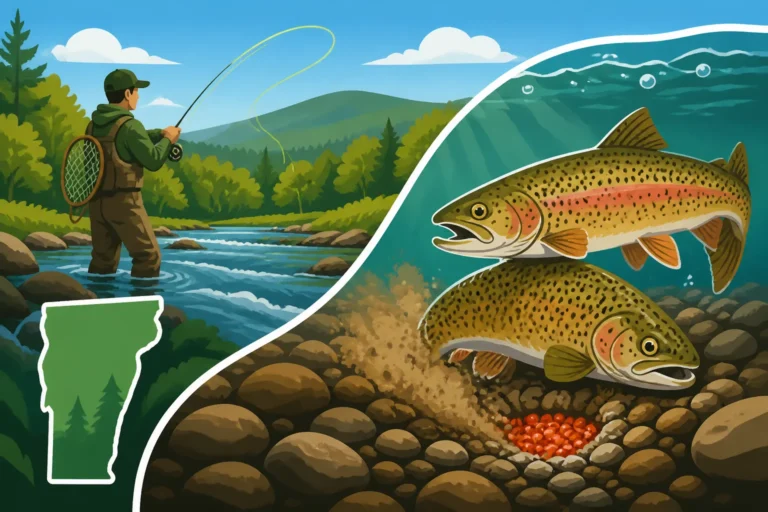
Despite their prevalence, brown trout are not native to North America. They were originally introduced from Europe in the late 19th century, with some of the earliest stockings in the United States occurring in the 1880s. Vermont quickly adopted these hardy fish, recognizing their ability to thrive in a variety of water conditions, often tolerating warmer temperatures and more turbid water than native brook trout. This adaptability allowed brown trout to establish strong, self-sustaining populations in many of Vermont's rivers and streams, often coexisting with or even outcompeting other trout species in certain habitats. Their success story is one of a well-suited introduced species that has become an integral part of our angling landscape, providing excellent fishing opportunities for generations. To learn more about their usual haunts, check out Brown Trout Habits in Vermont Streams.
Classic Brown Trout Features
So, what does a typical brown trout look like? Think of a canvas painted with earthy tones and vibrant spots. Their coloration can vary quite a bit depending on their habitat and diet, but generally, they sport a golden brown to olive-green back, fading into a yellowish or bronze tint on their sides, and a lighter, often cream-colored belly. The most defining characteristic, however, is their spot pattern. Brown trout are adorned with distinct dark spots, often ringed by a lighter halo, scattered across their back and sides. Many also feature red or orange spots, sometimes with light halos, concentrated along their lateral line. Their fins tend to be uniformly colored, typically without the distinctive white leading edges you see on brook trout. The tail fin is usually square, or sometimes slightly forked, and generally lacks any intricate patterns. Understanding these classic features is your first step in confidently distinguishing them from other trout species, including the elusive tiger. If you're looking for gear that helps you spot these beauties, polarized sunglasses, often available on Amazon, can make a huge difference in clear water.
The Head-to-Head Visual Showdown: Tiger vs. Brown
This is where the rubber meets the road! When you've got a fish in hand and you're trying to figure out if it's a common brown or a rare tiger, you need to know the specific details to look for. While they share some underlying genetics, their outward appearance tells two very different stories. Getting this identification right is immensely satisfying and adds a whole new layer of appreciation to your fishing experience.
Markings and Patterns: Stripes vs. Spots
This is arguably the single most important differentiating factor.
- Tiger Trout: Imagine a labyrinth or a fingerprint on the side of a fish. Tiger trout get their name from their incredibly distinctive, dark, worm-like (or vermiculated) patterns. These dark markings are typically interconnected and intricate, resembling stripes or blotches, set against a lighter, often mottled green-brown or grayish background. Crucially, these patterns often extend onto their dorsal, caudal (tail), and adipose fins, creating a truly unique and unmistakable camouflage. It's not just a collection of spots; it's an interwoven tapestry of dark lines.
- Brown Trout: In contrast, brown trout are defined by their spots. They have scattered, usually well-defined dark spots, sometimes with a pale halo, on their back and sides. Many also boast those iconic red or orange spots, frequently encircled by a lighter ring, especially along their lateral line. While the number and intensity of spots can vary, they are almost always distinct, separate spots rather than interconnected, worm-like patterns. Their fins, as mentioned, are generally plain or subtly mottled, not covered in the same intricate vermiculations as a tiger trout's body.
To really get a feel for all the different trout you might encounter, our Trout Species Identification Guide for Vermont is a great resource. You can often find excellent laminated field guides on Amazon that are perfect for keeping in your tackle box for quick reference.
Body Shape, Fin Color, and Other Nuances
Beyond the primary markings, there are other subtle cues that can help you distinguish between the two:
- Body Shape: Brown trout tend to have a more torpedo-like, robust body shape, often appearing a bit chunkier, especially when mature. Tiger trout can also be stout, but their overall profile might appear slightly more streamlined, sometimes retaining a hint of the brook trout's more compact build.
- Fin Coloration: This is where the brook trout parentage of the tiger can sometimes show through. While not as pronounced as a pure brook trout, some tiger trout may exhibit a faint, narrow white leading edge on their pectoral, pelvic, and anal fins, occasionally followed by a dark submarginal band. Brown trout do not have these distinct white leading edges on their fins. Pay close attention to the leading edge of the fins, especially the lower ones.
- Tail Fin: Brown trout typically have a square or slightly forked tail fin. Tiger trout can also have a square or slightly forked tail, but their vermiculated patterns may extend onto it, which is something you would almost never see on a brown trout.
- Mouth: Both species have relatively large mouths for catching prey, extending to or past the eye. This isn't usually a key differentiator, but it's a common trait among aggressive trout species.
Observing these details collectively will build a stronger case for your identification. Having a good, soft-mesh landing net, like those commonly found on Amazon, is crucial for safely handling and observing your catch before release, ensuring minimal stress on the fish.
Here's a quick comparison table to help you keep track of the key differences:
| Feature | Tiger Trout | Brown Trout |
|---|---|---|
| Parentage | Hybrid (Female Brown Trout x Male Brook Trout) | Native to Europe, established in Vermont |
| Reproduction | Generally sterile | Fertile, reproduces naturally |
| Body Markings | Dark, intricate, worm-like (vermiculated) patterns, often interconnected, on a lighter background | Distinct, scattered dark spots (often haloed) and red/orange spots (often haloed); rarely interconnected |
| Fin Markings | Vermiculated patterns often extend onto dorsal, caudal, and adipose fins | Fins generally plain or subtly mottled, no intricate patterns extending from body |
| Fin Edges | May have faint white leading edges on some fins (like brook trout parent) | No distinct white leading edges on fins |
| Base Color | Often mottled green-brown, gray, or olive | Golden brown to olive-green, yellowish sides |
| Rarity in Wild | Extremely rare; mostly hatchery-stocked for specific purposes | Widely established, common in many Vermont waters and streams |
Behavior and Habitat Clues
While visual identification is paramount, understanding the general behavior and preferred habitats can offer supplementary clues, though these should not be used as primary identifiers. Both tiger trout and brown trout are cold-water species, often found in similar environments.
Brown trout are incredibly adaptable and can be found in a wide range of Vermont's waterways, from pristine mountain streams to larger rivers and lakes. They are known for being wary and can be quite challenging to catch, often preferring to hold in complex cover like undercut banks, submerged logs, and deep pools. Their diet is varied, including insects, crustaceans, and smaller fish. You can find them in many Best Trout Streams in Vermont and larger lake environments.
Tiger trout, due to their hybrid vigor and often hatchery origins, can sometimes exhibit a more aggressive feeding behavior. They are effective predators and, when stocked, are often placed in waters where they can grow quickly by preying on forage fish. Their habitat selection will often mirror that of brown trout, favoring cool, oxygenated water with plenty of cover. However, since they are primarily a stocked fish, you are most likely to encounter them in waters that have received specific tiger trout stockings rather than areas with entirely wild, self-sustaining populations. Ultimately, while interesting, habitat and behavior are secondary to the unique visual patterns when making a definitive identification. Knowing Vermont Trout Season and Stocking Rules for particular waters can sometimes hint at their presence.
Angler's Perspective: Why Identification Matters
So, why go through all this trouble to tell one trout from another? Beyond the sheer joy of knowing what you've caught, there are some practical reasons for being able to distinguish between a tiger trout and a brown trout. It enhances your understanding of the fishery, respects the regulations in place, and simply makes you a more knowledgeable and observant angler.
Regulatory Importance in Vermont
In Vermont, for most general regulations, tiger trout are typically managed under the same umbrella as other trout species, often falling under the broader "trout" category for daily limits and possession rules. However, it is absolutely vital to always consult the most current Vermont Fishing Regulations Explained for the specific body of water you are fishing. There might be special regulations in place for particular streams or ponds, or for certain species, that could affect your catch. While rare, a specific water could theoretically have unique rules for a hybrid if it's part of a very specialized management plan. Knowing exactly what you've landed ensures you're always fishing legally and responsibly, contributing to the health and sustainability of Vermont's fisheries.
The Thrill of the Catch: A Unique Experience
Beyond regulations, there's the undeniable "cool factor" of catching a tiger trout. For many anglers, it's a bucket list fish precisely because of its rarity and stunning appearance. That intricate, worm-like pattern is a true work of art, and encountering one is often considered a trophy in itself. It’s a moment that stands out from other fishing memories. Taking a quick photo (and making sure you have a waterproof case for your phone or camera, easily available on Amazon!) to remember the unique markings before a careful release is a common practice. This deep dive into identification isn't just about following rules; it's about appreciating the incredible diversity and beauty that Vermont's waters hold, and savoring those truly unique moments that fishing provides. Whether you're chasing them with traditional gear or trying Fly Fishing for Trout in Vermont, the tiger trout is a testament to the unexpected treasures lurking beneath the surface.
Disclaimer
This article is for general informational purposes only and does not constitute professional advice. Laws, prices and regulations vary by location and change over time. Consult a qualified professional for guidance on your specific situation.