Difference between wild and stocked trout in Vermont
Many anglers hitting Vermont's beautiful rivers and lakes often wonder about the fish they're pursuing: is this a truly wild trout, born and raised in these pristine waters, or one that was introduced from a hatchery? This question isn't just about curiosity; understanding the fundamental differences between wild and stocked trout can dramatically change your fishing strategy, your appreciation for the catch, and your overall experience on the water. This guide will walk you through how to tell them apart, why it matters, and where you're likely to find each type across Vermont.
The Fundamental Divide: What Makes a Trout "Wild" vs. "Stocked"?
At its core, the distinction between a wild and stocked trout boils down to one thing: its origin and how it developed. It’s the difference between a creature shaped entirely by its natural environment and one whose early life was spent under human care. This foundational difference impacts everything from their appearance to their instincts.
The Genesis: Where Do They Come From?
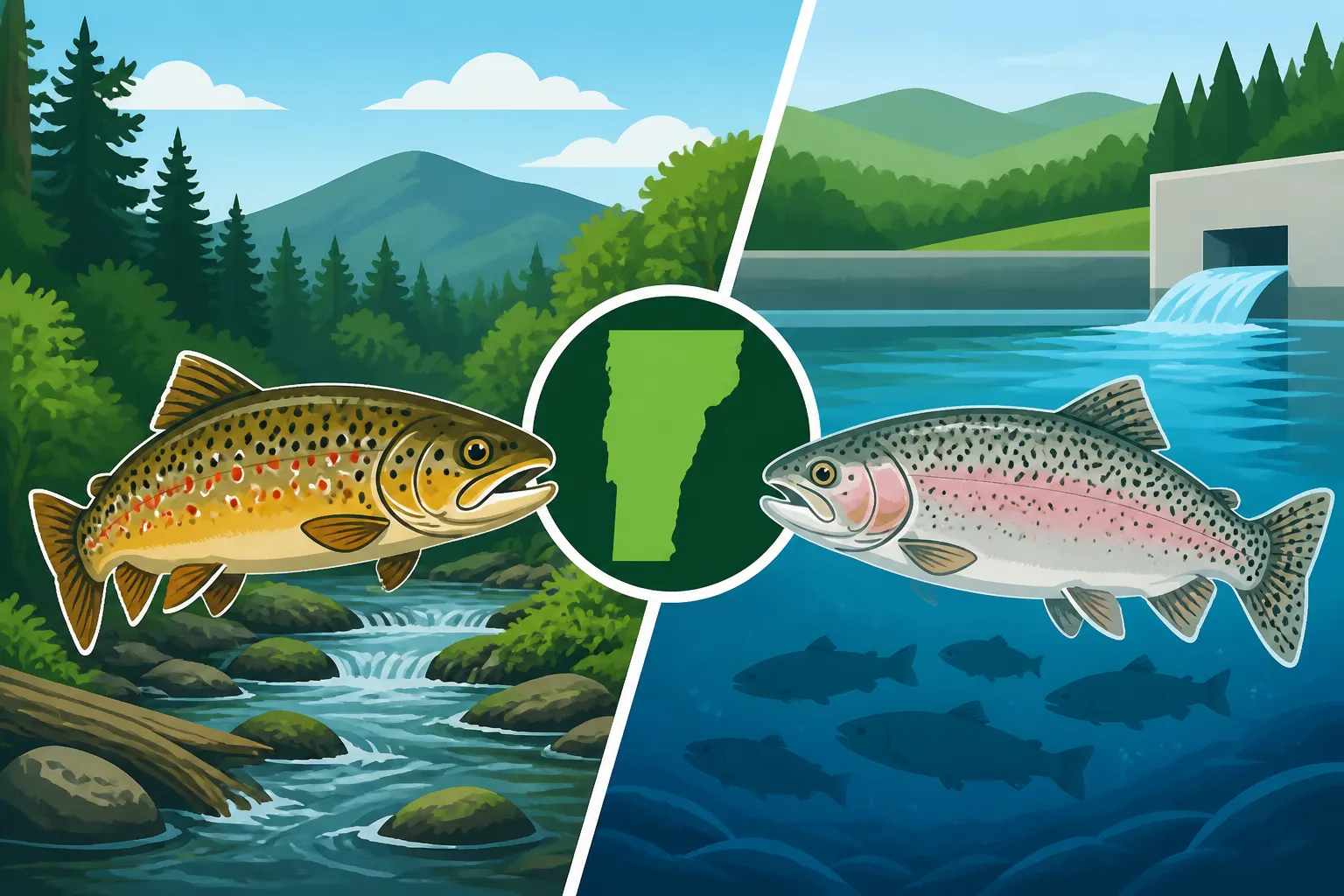
A wild trout starts its life from eggs laid in a redd (a nest dug in the gravel bottom of a stream or lake) by wild parents. These eggs are fertilized naturally, hatch, and the young fry emerge to fend for themselves from day one. Their survival depends entirely on their ability to find food, avoid predators, and adapt to the ever-changing conditions of their stream or lake. They are products of natural selection, honed by generations of life in their specific environment. Think of them as true Vermonters, born and bred in the Green Mountain State's cold, clear waters.
On the other hand, stocked trout begin their lives in a hatchery. Here, eggs are collected, incubated, and hatched in controlled environments, usually in indoor troughs. Once they reach a certain size, they're moved to outdoor raceways, which are essentially long, concrete channels where they're fed commercial pellets daily. They grow quickly, sheltered from predators, and accustomed to a steady food supply. When they reach a catchable size, they are transported and released into public waters, often with a specific purpose, like enhancing recreational fishing opportunities. The Vermont Fish Stocking Search Tool, Explained can help you find out which waters receive these fish.
A Life in the Wild: Adapting to Nature's Challenges
A wild trout's existence is a constant battle for survival. From the moment they hatch, they're learning to forage for insects, small fish, and other natural foods. They develop keen senses to detect predators, whether it's an osprey overhead, a mink on the bank, or a larger fish lurking in the shadows. Their bodies are conditioned by fighting currents, leaping over obstacles, and enduring temperature swings. This struggle for survival makes them incredibly resilient, wary, and often more challenging to catch. They are perfectly tuned to their ecosystem, a testament to the raw, untamed beauty of Vermont's outdoors. They know every rock, every eddy, every hiding spot in their stretch of water.
The Hatchery Life: From Concrete Raceways to Open Water
Hatchery life is, by necessity, quite different. Trout in raceways live in a dense environment, accustomed to competition for the pellets that drop into their water. They don't learn to hunt, nor do they develop the same fear of predators. Their muscle tone, while good, doesn't get the same workout as a wild fish constantly battling currents. When they're released into a new environment, it's often a shock. They might be disoriented, less adept at finding natural food, and more vulnerable to predators or even other wild fish already in the system. Many stocked trout are caught relatively quickly after release, a factor that makes them so popular for recreational fishing, especially for families or beginners. These fish are essentially "farm-raised" and then introduced to the wild.
Spotting the Difference: Physical Cues and Behavioral Tells
Once you've hooked a trout in Vermont, how can you tell if it's a wild survivor or a recent transplant? There are several tell-tale signs, both visual and behavioral, that can help you distinguish between the two. Developing an eye for these details will not only satisfy your curiosity but also make you a more discerning and effective angler.
Visual Identifiers: Fins, Coloration, and Condition
This is often the easiest way to spot the difference. Wild trout, constantly navigating currents and foraging, develop robust, perfectly formed fins. Their fins – particularly the dorsal, pectoral, and caudal (tail) fins – will be sharp, symmetrical, and often unmarked. They're like miniature athletes, every part of them optimized for life in the river. Their coloration tends to be more vibrant and camouflaged, reflecting the specific hues of their native environment, blending seamlessly with rocky streambeds or shady pools. You'll often see distinct parr marks (vertical bars) on younger wild trout, and their overall body shape will be sleek and torpedo-like, built for speed and power.
Stocked trout, on the other hand, often tell a different story. Because they live in crowded raceways and are handled during stocking, their fins can be worn, rounded, or even clipped. Fin erosion, especially on the dorsal and pectoral fins, is a common hatchery mark. Their coloration might be duller, more uniform, and less adapted to the natural background, sometimes appearing "washed out" or overly bright. Their bodies might be thicker or more plump from consistent pellet feeding, rather than the lean, muscular build of a wild fish. If you look closely, you might even spot signs of a damaged snout from bumping against concrete raceway walls. You can find excellent visual guides on Amazon if you search for trout identification books, which can be invaluable for learning these subtle differences.
Consider this comparison:
| Feature | Wild Trout | Stocked Trout |
|---|---|---|
| Fins | Sharp, symmetrical, fully formed, undamaged | Worn, rounded, sometimes frayed or clipped |
| Coloration | Vibrant, natural camouflage, highly variable | Often duller, uniform, less vivid |
| Body Shape | Sleek, torpedo-like, muscular, lean | Often thicker, more "football" shaped, sometimes soft |
| Parr Marks | Often distinct on younger fish | Less defined or absent due to rapid growth |
| Snout/Jaw | Smooth, undamaged | Sometimes worn or chipped from concrete contact |
Behavior on the Line: The Fight and the Flight
The fight a trout puts up can also be a strong indicator. Wild trout are powerful swimmers, accustomed to battling strong currents. When hooked, they often make strong, deliberate runs, digging deep or trying to get into snags and structure. Their movements are explosive and unpredictable, a reflection of their instinctual drive to escape. They're often harder to land and require a more delicate touch and skilled hand. Landing a wild trout is a true test of an angler's skill and patience.
Stocked trout, having lived a more protected life, may not display the same level of aggression or stamina. Their fight can be less energetic, sometimes feeling more like a dead weight or a few short, desperate thrashes. They might tire more quickly, not having the same muscle conditioning as their wild counterparts. While still fun to catch, the experience of battling a stocked fish often lacks the raw power and challenge you'd get from a truly wild one. This isn't to say they don't fight, but the intensity and duration are typically less.
Habitat Preferences and Feeding Patterns
Wild trout are masters of their environment. They instinctively know where to find cover, ambush points for food, and holding lies out of the main current where they can conserve energy. They are often found in specific, often harder-to-reach sections of rivers and streams, such as deep pools, undercut banks, complex riffles, or beneath fallen trees. Their diet is entirely natural, consisting of insects (aquatic and terrestrial), small baitfish, and crustaceans. They are often more selective about what they eat, keying into specific hatches or forage, requiring anglers to "match the hatch" or use very natural presentations. Fishing for them often involves Fly Fishing for Trout in Vermont.
Stocked trout, especially those recently released, might be found in more open, accessible areas where they were originally put in. They might congregate near bridges, culverts, or slower pools. Initially, they are less wary and more opportunistic feeders, sometimes taking almost any bait or lure presented to them because they are accustomed to pellet feeding and a lack of natural predators. As they spend more time in the wild, some stocked fish can "wild up," adopting more natural behaviors and becoming harder to catch. These are often referred to as "holdovers," which we'll discuss later. Their initial willingness to bite makes them ideal for a relaxed day of fishing, but their discerning nature increases over time.
The Angler's Perspective: Why Does It Matter?
Beyond mere identification, understanding the difference between wild and stocked trout holds significant implications for anglers. It shapes expectations, influences ethical considerations, and even dictates the type of gear and techniques you might employ. It's about respecting the fish and the fishery.
The Thrill of the Catch: The Challenge and the Reward
For many seasoned anglers, the pursuit of a wild trout represents the pinnacle of the sport. It's the ultimate challenge—a testament to their skill, patience, and knowledge of the water. The reward of outsmarting a wary, naturally raised fish, one that has survived against all odds, is immensely satisfying. Catching a truly wild Vermont brook trout, for instance, often carries more weight and pride than catching multiple hatchery fish. This quest for wild fish is what drives many to explore remote streams and master advanced techniques. You'll often hear anglers talking about Vermont Trout Opening Day Traditions and the thrill of landing a fresh wild fish.
Stocked trout, while perhaps offering less of a challenge, play an equally vital role in Vermont fishing. They provide fantastic opportunities for beginners, children, and those simply looking for a relaxing day with a higher chance of success. They introduce new anglers to the joy of fishing and help reduce pressure on more sensitive wild populations. The ease of catching them makes fishing accessible and enjoyable for a broader range of participants, fostering a love for the outdoors. It’s a different kind of thrill, but a thrill nonetheless.
Conservation and Stewardship: Protecting Vermont's Native Trout
Understanding the difference is crucial for conservation. Vermont is home to native trout species, particularly the brook trout, which are a cornerstone of healthy aquatic ecosystems. Wild populations are often more sensitive to environmental changes, habitat degradation, and overfishing. By recognizing wild fish, anglers can make informed decisions about catch-and-release practices, especially in waters designated for wild trout management. Protecting these genetically pure strains ensures the long-term health and biodiversity of Vermont's fisheries. The Vermont Catch and Release Fly Fishing Only Waters exist specifically to protect these valuable populations.
Stocking programs are vital for sustaining recreational fishing pressure without depleting wild stocks. They act as a buffer, providing abundant fishing opportunities in easily accessible waters. By focusing harvest pressure on stocked fish, anglers can contribute to the conservation of wild trout. Being a good steward of Vermont's waters means respecting regulations, practicing responsible catch-and-release, and appreciating the role both wild and stocked fish play in our angling heritage. You can often find durable, high-quality nets suitable for catch and release on Amazon by searching "rubber net for trout."
Gear and Technique Adjustments for Each Type
Your approach to fishing often changes significantly depending on whether you're targeting wild or stocked trout.
For wild trout, finesse is usually key. You'll need lighter lines, smaller flies or lures, and a stealthy approach. Fly fishing with delicate presentations, matching natural insect hatches, or using small, natural-looking spinners or spoons is often most effective. Wading quietly, understanding current seams, and knowing how to "read the water" are critical skills. Gear like a lightweight fly rod, precise leaders, and appropriate fly patterns are essential for Fly Fishing for Trout in Vermont. Anglers often use specialized gear, perhaps a 3-weight fly rod from a brand like Orvis or a lightweight spinning setup from Shimano, paired with light fluorocarbon line.
For stocked trout, especially those recently released, your tackle can be a bit more robust. They are less wary, so brighter, more aggressive lures, power baits, or even live worms can be highly effective. Simpler setups, like a spinning rod with monofilament line and a bobber, are common and successful. The focus here is often on getting the bait in front of as many fish as possible. While you can still use flies or finesse tactics, they might not be strictly necessary for success. This makes them perfect for Best Rod and Reel Combo for Beginners.
Where to Find Them: Vermont's Trout Waters
Vermont offers a diverse range of fishing opportunities, from remote mountain streams to popular state park ponds. Knowing where wild and stocked trout typically reside can help you plan your next angling adventure more effectively.
Wild Trout Sanctuaries: Pristine Streams and Remote Ponds
If you're seeking the challenge and beauty of wild trout, head for Vermont's headwater streams, smaller tributaries, and remote ponds, especially those at higher elevations. These waters are often characterized by dense forest cover, rocky bottoms, cold temperatures, and limited accessibility. The Green Mountain Trout Stream Access offers numerous opportunities for these kinds of experiences. You'll find healthy populations of native brook trout in these pristine environments, and sometimes wild brown trout or rainbow trout in larger, self-sustaining river systems. These are the places where the trout have never seen a pellet or a hatchery truck. Think about exploring areas like the Battenkill River's upper reaches or numerous unnamed brooks winding through the vastness of the Green Mountain National Forest. These are often designated as "Wild Trout Waters" or "Trophy Trout Program Waters" by the Vermont Fish & Wildlife Department.
Stocked Trout Havens: Accessible Waters and Popular Spots
Stocked trout are typically released into waters that are easily accessible to the public and can handle a higher fishing pressure. This includes many larger rivers, state park ponds, and accessible sections of major streams. The Vermont Fish & Wildlife Department actively manages these waters, often publishing stocking schedules. Lakes like Lake Bomoseen, Lake Dunmore, and many smaller ponds across the state receive regular stockings of rainbow trout, brown trout, and sometimes brook trout. These locations are perfect for a family outing or for anglers who prioritize consistent action. Many popular fishing access areas on rivers like the Winooski and Lamoille also receive regular stockings to supplement the natural populations and boost recreational opportunities. For instance, you can find great spots highlighted in a Vermont State Park Fishing Guide. These spots are often well-maintained and offer ample parking and easy shore access.
Understanding "Holdovers": A Blended Reality
Sometimes, the line between wild and stocked can blur with "holdover" trout. These are fish that were stocked but managed to survive for an extended period in their new environment, sometimes for months or even years. Over time, these holdovers can adapt to natural feeding patterns, regain some of their natural coloration, and develop more robust fins as they fight currents and forage for natural food. They can become much warier and fight harder, resembling wild fish more closely.
Spotting a holdover can be tricky, as they often bridge the gap in appearance and behavior between newly stocked and truly wild fish. You might still notice subtle fin erosion from their hatchery days if you look closely, but their overall condition will be significantly improved. Fishing for holdovers often requires more skill than catching a freshly stocked fish but offers a rewarding challenge that falls between a pure wild trout and a hatchery-raised one. They represent a testament to the adaptability of trout and the capacity of Vermont's waters to support them even after a human assist. Many of these fish contribute to the success of Spring Trout Fishing Techniques for Vermont Streams as they become more active after winter.
Disclaimer
This article is for general informational purposes only and does not constitute professional advice. Laws, prices and regulations vary by location and change over time. Consult a qualified professional for guidance on your specific situation.