Common Carp in Vermont Waters
Many anglers in Vermont, especially those new to the scene or focused solely on trout and bass, might be surprised to learn that our waters are home to some truly formidable fish: Common Carp. Often misunderstood and overlooked, these powerful bottom-dwellers offer an incredible angling challenge and a unique experience. This guide aims to peel back the layers of misconception surrounding Common Carp in the Green Mountain State, helping you understand their presence, habits, and how you can successfully target them for an exciting fight.
The Unsung Giant: Common Carp in Vermont Waters
When you think of fishing in Vermont, images of leaping trout in crystal-clear mountain streams or feisty smallmouth bass battling on Lake Champlain probably come to mind. But lurking beneath the surface, often in less glamorous but equally abundant waters, are Common Carp. These fish, while not native, have established themselves firmly and offer a powerful, often overlooked, angling opportunity. They might not get the same fanfare as a trophy brook trout, but ignore them at your own peril – they pull harder than almost any other freshwater fish you'll encounter here.
A Brief History of Carp in the Green Mountain State
Common Carp (Cyprinus carpio) are not indigenous to North America; they were introduced from Europe in the late 19th century, primarily as a food fish to supplement dwindling native stocks. Like many introductions, the carp found the conditions here quite favorable, and they quickly spread. In Vermont, they made their way into our larger river systems and lakes, finding abundant food and suitable spawning grounds in the warmer, shallower, and often murkier sections that many native species tend to avoid. This isn't a story unique to Vermont; it's a pattern seen across much of the continent. They are incredibly adaptable and prolific, making their mark on many aquatic environments, and have been part of Vermont's waterways for well over a century now.
Where to Find Them: Vermont's Prime Carp Habitats
Carp are creatures of habit, often preferring warmer, slower-moving waters with soft, silty bottoms where they can root around for food. In Vermont, this means you'll find them predominantly in the shallower bays and fertile backwaters of large lakes like Lake Champlain. The southern end of Lake Champlain, with its expansive weed beds and muddy flats, is particularly renowned for its robust carp population. Rivers such as the lower sections of the Winooski River, Otter Creek, and the Connecticut River also hold significant numbers of carp, especially in areas with slower currents, oxbows, and deeper pools near agricultural runoff. Lake Champlain Fishing Guide can give you a broader look at the opportunities there, but for carp, focus on the shallower, vegetated zones. They love areas where feeder creeks enter larger bodies of water, bringing in a steady supply of nutrients and small organisms. Think about those overlooked spots: quiet coves, marinas, and river bends that might not look "fishy" for trout, but are perfect carp havens.
Dispelling the Myths: Carp as a Desirable Sport Fish
For years, carp have suffered from a rather unfair reputation as "trash fish" or "rough fish." This misconception often stems from their bottom-feeding habits and the mistaken belief that they are dirty or detrimental to water quality (we'll dive into their ecological impact later). However, in many parts of the world, particularly in Europe and Asia, carp are revered as premier sport fish, targeted by dedicated anglers using highly specialized techniques. The truth is, catching a large Common Carp on appropriate tackle is an absolutely exhilarating experience. They are powerful, stubborn fighters that make long, surging runs and can test your gear and your patience. A 20-pound carp from Lake Champlain can feel like a freight train on the end of your line, easily out-muscling many other popular freshwater species. Once you hook into one, you'll quickly understand why so many anglers worldwide pursue them with such passion.
Identifying and Understanding the Common Carp
Before you can effectively target Common Carp, it's essential to know what you're looking for and understand a bit about their biology. They're quite distinctive once you get an eye for them, but sometimes their appearance can lead to confusion with other species.
Distinguishing Features: What Makes a Carp a Carp?
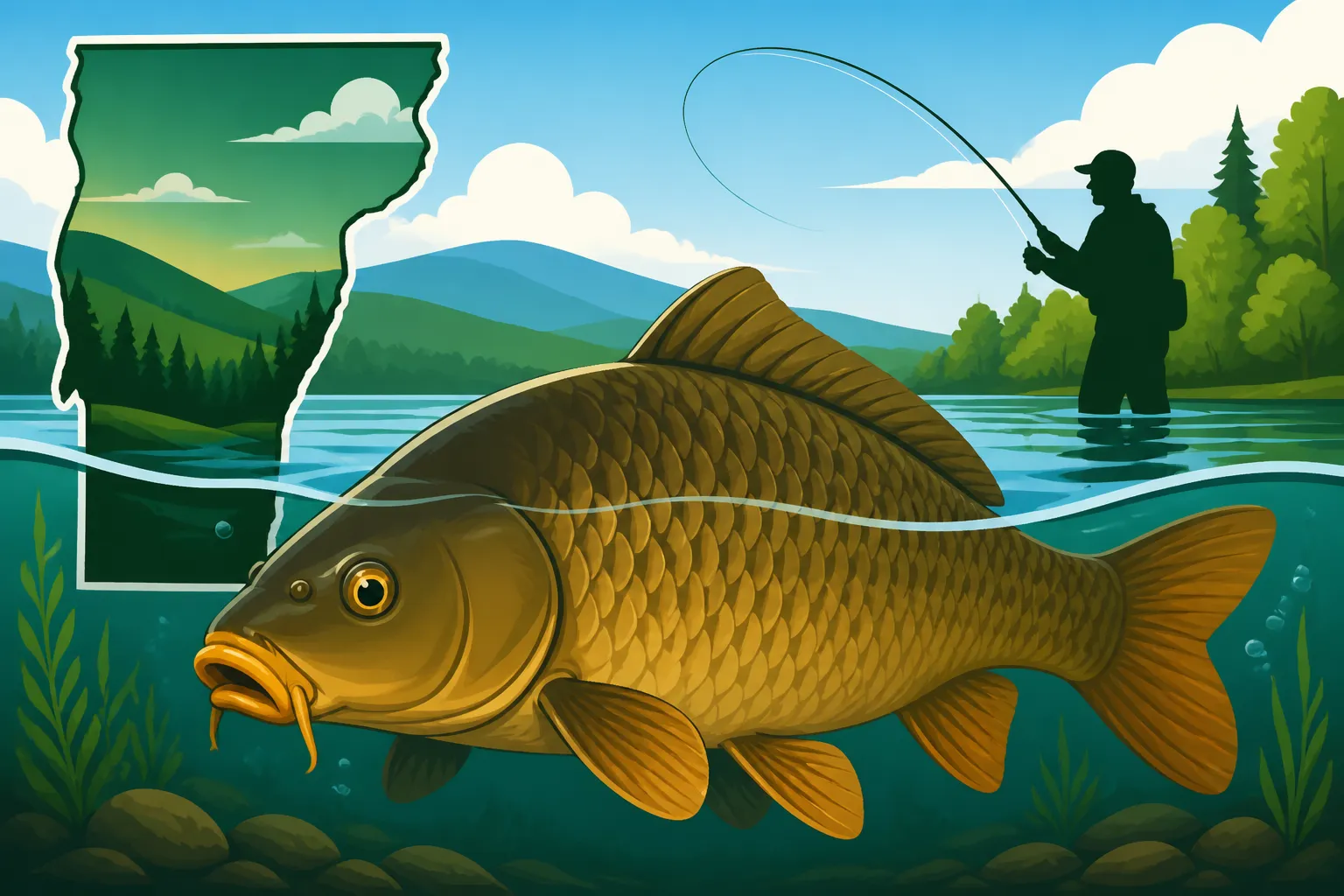
Common Carp have a robust, stocky body that is typically olive-green to brownish on the back, fading to golden bronze on the sides and a yellowish-white belly. Their most defining characteristic is the presence of two pairs of barbels (whiskers) around their mouth, which they use to taste and feel for food on the bottom. Unlike goldfish, which are often confused with carp, true Common Carp always have these barbels. They also possess large, thick scales that are often noticeably outlined, giving them a "netted" appearance. The dorsal fin is long, starting midway down the back and extending almost to the tail, and both the dorsal and anal fins have a strong, serrated spine at the front edge – be careful when handling! You'll rarely see a Vermont carp without these distinct features. Common carp size and habits in Vermont lakes goes into more detail on their typical dimensions in our waters.
Common Carp Varieties in Vermont
While the term "Common Carp" is often used broadly, there are actually a few distinct varieties you might encounter, primarily identified by their scale patterns. All are the same species, just different genetic expressions.
- Scale Carp: This is the most prevalent variety, completely covered in large, evenly distributed scales. They look exactly as you'd picture a classic carp.
- Mirror Carp: These are perhaps the most visually striking. They have very large, irregularly placed scales, often appearing in rows or patches along their sides, with large areas of bare skin in between. It's like looking at a fish with a few shiny "mirror" scales.
- Leather Carp: The most extreme variant, Leather Carp are almost entirely scaleless, with only a few, if any, small, scattered scales. Their skin is smooth and leathery.
You might also hear about "Koi," which are ornamental, selectively bred varieties of Common Carp known for their vibrant colors. While you won't typically find wild koi, sometimes escaped pond fish might show up in local waters, but they are genetically the same species. Regardless of scale pattern, they all share the same powerful fighting characteristics and bottom-dwelling habits.
Life Cycle and Growth: How Big Do They Get?
Common Carp are relatively long-lived fish, with individuals potentially reaching 20 years or more in favorable conditions. They can grow to impressive sizes, particularly in nutrient-rich environments like Lake Champlain. While smaller carp of a few pounds are common, it's not unusual to catch carp weighing 15 to 25 pounds in Vermont. Some truly monster carp can exceed 30 or even 40 pounds, providing a battle you won't soon forget!
Spawning typically occurs in late spring or early summer when water temperatures rise, usually into the mid-60s Fahrenheit. They prefer shallow, heavily vegetated areas for spawning, where females can lay hundreds of thousands of sticky eggs on submerged plants. These eggs hatch quickly, and the young carp grow rapidly, especially in their first few years, taking advantage of abundant food sources. Their robust nature and high reproductive capacity are key factors in their success and widespread distribution throughout Vermont's larger water bodies.
Carp Behavior and Habitat Preferences in Vermont
Understanding carp behavior is paramount to consistently catching them. They aren't random wanderers; they have preferences for certain areas and distinct feeding patterns that savvy anglers can exploit.
Seasonal Movements and Feeding Habits
Carp are opportunistic omnivores, meaning they'll eat just about anything they can find, but they primarily feed on the bottom. Their diet consists of insect larvae, worms, small crustaceans, mollusks, and plant matter. They use their sensitive barbels and protractile mouths to root around in the substrate, often creating tell-tale clouds of mud as they stir up the bottom in search of a meal.
Their movements are largely dictated by water temperature and food availability. In spring, as waters warm, carp move into shallow, sunny bays and coves to feed actively after the colder months, preparing for spawning. This is a prime time to target them close to shore. During summer, they might retreat to slightly deeper water during the heat of the day but will often move into shallows during dawn, dusk, or overcast conditions. In fall, as temperatures begin to drop, they feed aggressively to put on weight for winter, often congregating in deeper holes or channels before eventually settling into winter dormancy in deeper water where they are less active but still catchable, especially during warmer spells.
Preferred Structures and Cover
Carp aren't usually found in open water chasing baitfish like a bass or pike. Instead, they relate closely to structure that offers food and cover.
- Weed Beds: Lush aquatic vegetation provides both cover and a rich foraging ground for carp, harboring countless insects and small organisms. They love to cruise along the edges of weed lines or even push deep into sparse weeds.
- Fallen Trees and Submerged Timber: These offer security and a place for food to accumulate. Fishing near submerged logs or brush piles can be very productive.
- Bridges and Docks: Man-made structures often create current breaks and shade, attracting food and offering sanctuary. Plus, dropped food from human activity can be a bonus.
- Mud Flats and Silt Beds: These soft bottom areas are perfect for carp to root around in for benthic invertebrates. You'll often see signs of their feeding activity – small bubbles rising or muddy patches in otherwise clear water.
- Inflows and Outflows: Areas where small streams or culverts enter a larger lake or river can concentrate food, making them hotspots.
- Rock Piles and Rubble: While less common than weeds or mud, carp will also forage around rocky structures, especially if there's soft sediment in between.
Observing the water for signs like muddy water, rising bubbles, or even the distinctive roll of a carp breaking the surface can lead you to a productive spot.
Water Conditions They Thrive In
Common Carp are incredibly tolerant of a wide range of water conditions, which is one reason for their success. They can thrive in waters that might stress other fish species.
- Temperature: They are warm-water fish, preferring temperatures in the 60s and 70s Fahrenheit, but can tolerate much colder and warmer extremes. This adaptability allows them to inhabit a broad range of Vermont's lakes and rivers.
- Clarity: Unlike many game fish that prefer clear water, carp are quite at home in murky or turbid conditions. Their reliance on scent and taste via their barbels means visibility isn't as crucial for them. In fact, slightly stained water can often be advantageous for carp anglers, as it makes the fish less wary.
- Oxygen Levels: While they need oxygen, carp can tolerate lower dissolved oxygen levels than many trout or salmon species, allowing them to survive in areas that might be inhospitable to other fish during hot summer months or in stagnant conditions.
These characteristics mean that carp often occupy niches that aren't heavily targeted by anglers seeking other species, making them an exciting, less pressured quarry in many Vermont waters.
Mastering the Art of Carp Fishing in Vermont
Carp fishing, particularly the specialized European-style, is a fascinating pursuit that requires a blend of patience, proper gear, and strategic baiting. It's a game of waiting, but the reward is a powerful fight.
Essential Gear for Targeting Carp
Forget the ultralight tackle you might use for panfish; carp demand sturdy equipment. These fish are strong, and they'll quickly expose any weak links in your setup.
- Rods: Look for medium-heavy to heavy-power spinning or baitcasting rods, typically 7 to 10 feet long. Longer rods help with casting heavier baits and provide better leverage during a fight. Specialized "carp rods," often 10-13 feet long with a softer, parabolic action, are popular for their ability to handle powerful runs and protect light lines. You can find a wide selection of these, along with general Best Fishing Rods for Vermont Lakes options, on platforms like Amazon.
- Reels: Large-capacity spinning reels (4000-6000 size) or baitcasting reels with a smooth drag system are essential. "Baitrunner" or "freespool" reels are a favorite among carp anglers, allowing the fish to take line without resistance before you engage the drag and set the hook.
- Line: Monofilament line in the 12-20 lb test range is a good all-around choice due to its stretch, which acts as a shock absorber during powerful runs. Some anglers prefer braided line (20-40 lb test) for its sensitivity and strength, often paired with a fluorocarbon leader for abrasion resistance and stealth in clearer water.
- Tackle:
- Hooks: Sharp, strong hooks are critical. Sizes from 2 to 8 are common, depending on your bait. Barbless hooks are often preferred for easier release and less damage to the fish.
- Weights/Sinkers: Flat, pear-shaped, or method feeders (which deliver a pile of chum with your hookbait) are popular, ranging from 1 to 4 ounces to anchor your bait on the bottom.
- Leaders: Use a strong, abrasion-resistant leader material, either fluorocarbon or a specially designed carp leader, to prevent break-offs on sharp snags or from the carp's rough mouth.
- Rod Holders/Bank Sticks: Since carp fishing often involves waiting, sturdy rod holders are a must to keep your rods secure on the bank.
- Landing Net: A large, carp-specific landing net with fine mesh is indispensable for safely landing big fish.
- Unhooking Mat: A padded unhooking mat is highly recommended to protect the fish when it's out of the water, especially for catch-and-release.
- Bite Alarms: Electronic bite alarms clip onto your rod and signal when a carp takes your bait, allowing you to relax (a bit) while waiting.
Consider checking out Best Tackle Box Setup for Vermont Anglers for general organization tips, but for carp, you'll want dedicated compartments for your heavier weights, specialized hooks, and baiting tools.
Effective Carp Fishing Techniques
Carp fishing is less about casting and retrieving, and more about strategic bait presentation and patient waiting.
- Bottom Fishing (Static Baiting): This is the most common and effective method. You cast your baited rig to a known carp haunt and let it sit on the bottom. The key is to present your bait in a natural, enticing way. Many anglers use a "hair rig," where the bait is tied to a small "hair" extending from the hook bend, leaving the hook exposed for better hooksets.
- Real-life scenario: Imagine you're on the southern end of Lake Champlain, casting a corn-baited hair rig near a lush weed line in a shallow bay. You've pre-baited the area with a handful of loose corn. Your rod is in a bank stick, and the line is slack enough to let a carp pick up the bait without feeling resistance. You're watching for the subtle twitch of your rod tip or listening for the scream of your bite alarm, signaling a powerful run.
- Float Fishing: While less common for large, bottom-feeding carp, float fishing can be effective in shallower waters or for cruising fish, especially in rivers. This involves suspending your bait under a bobber or float, allowing it to drift naturally with the current or hover just above the bottom.
- Real-life scenario: On a calm morning on Otter Creek, you might use a large slip float to present a piece of doughball bait directly over a known carp path, letting the current slowly carry your bait into the strike zone. The float dipping or darting away will signal a take.
- Chumming/Pre-baiting: This is a cornerstone of successful carp fishing. By consistently introducing small amounts of bait (like corn, pellets, or chopped boilies) into an area, you train carp to associate that spot with an easy meal, drawing them in and keeping them there. This can be done hours or even days before you plan to fish, and during your session to maintain interest.
- Real-life scenario: You've identified a promising spot on the lower Winooski River. For a few evenings before your fishing trip, you throw in a few handfuls of fermented corn at the same time. When you arrive to fish, the carp are already accustomed to finding food there, increasing your chances of a bite.
Best Baits and Lures for Vermont Carp
Carp are not picky, but they do have favorites! The effectiveness of various baits is a testament to their omnivorous nature.
- Corn: This is the undisputed king of carp baits. Canned sweet corn, often enhanced with flavors or colors, is incredibly effective and readily available. Many anglers ferment corn to make it even more attractive.
- Doughballs: Simple, homemade doughballs made from flour, water, and various flavorings (garlic, vanilla, anise, etc.) are traditional and highly effective. They can be molded around a hook or hair rig.
- Boilies: These are specialized, hard, flavored bait balls, very popular in European carp fishing. They come in a vast array of flavors, sizes, and colors, designed to be highly attractive and resistant to smaller "nuisance" fish. You can find an incredible variety of boilies, along with other specialized carp baits, through retailers like Amazon.
- Pellets: Sinking or floating pellets, often made from fishmeal, are another excellent choice, especially for pre-baiting.
- Worms: Earthworms, especially larger nightcrawlers, are a natural carp food and can be very effective, particularly if carp are feeding on natural bottom-dwelling organisms.
- Tiger Nuts: A hard, crunchy nut that carp find irresistible, often prepared by soaking and boiling.
- Bread: Simple bread crusts or balls can be effective, especially for surface-feeding carp during warmer months.
- Flies: While not traditional, dedicated fly anglers can even target carp with fly patterns mimicking nymphs, worms, or even bread crusts. Fly Fishing for Trout in Vermont might be focused on trout, but the precision and presentation skills learned there can sometimes be adapted for carp on the fly, too.
| Bait Type | Description | Pros | Cons |
|---|---|---|---|
| Sweet Corn | Canned or fermented kernels. | Highly effective, inexpensive, readily available, easy to use. | Attracts smaller fish, can be easily pulled off the hook. |
| Doughballs | Homemade or store-bought mixture of flour, flavors. | Versatile, customizable, can be made durable. | Can be messy, preparation time, dissolves in water over time. |
| Boilies | Hardened, flavored bait balls (often fishmeal or fruity). | Highly attractive, durable, selective for larger carp, less small fish. | More expensive, specialized, might not be as readily available locally. |
| Pellets | Compressed food pellets (fishmeal, maize, etc.). | Great for chumming, easily digestible, varied sizes. | Can break down quickly, might attract smaller fish. |
| Worms | Live earthworms or nightcrawlers. | Natural food source, good scent trail, universally attractive. | Smaller fish can pick at them, sometimes hard to keep on hook. |
Remember, presentation is just as important as the bait itself. Ensure your hook is well-hidden and your rig is presented in a way that looks natural to a feeding carp.
Common Carp's Ecological Footprint in Vermont
The presence of Common Carp in Vermont's waterways is a complex issue with both environmental considerations and management implications. They are not native to our ecosystems, and like many introduced species, they can have various impacts.
Impact on Aquatic Ecosystems
Common Carp are often cited as having negative impacts on aquatic ecosystems, primarily due to their bottom-feeding habits.
- Habitat Alteration: As they root around in the substrate, carp can stir up bottom sediments, increasing water turbidity. This cloudy water can reduce light penetration, inhibiting the growth of submerged aquatic vegetation which is crucial for native fish, invertebrates, and waterfowl. Reduced plant growth can also destabilize shorelines, increasing erosion.
- Nutrient Cycling: Their feeding activity can release phosphorus from the bottom sediments back into the water column, potentially contributing to algal blooms and eutrophication (excessive nutrient enrichment) in some water bodies.
- Competition with Native Species: Carp can compete with native bottom-feeding fish for food resources. While their primary diet differs from many popular game fish, their sheer biomass and efficiency can impact the overall food web. For instance, Best Techniques for Panfish in Vermont might focus on different species, but carp's presence can still alter the broader food landscape.
- Predation on Eggs: While not their primary diet, carp have been observed to feed on the eggs of other fish species during spawning events, especially in areas where native fish spawn on the bottom.
It's important to note that the degree of impact varies greatly depending on the specific water body, the density of the carp population, and other environmental factors. In large, diverse systems like Lake Champlain, their overall impact might be less pronounced than in a smaller, shallower pond.
Management and Conservation Efforts
Because of their established presence and reproductive success, eradication of Common Carp in larger Vermont waters is generally considered impractical. Instead, management often focuses on mitigating potential negative impacts where they are a concern and, in some cases, utilizing them as a recreational resource.
- Monitoring: The Vermont Fish and Wildlife Department, along with other agencies, monitors fish populations, including carp, to understand their distribution and abundance and assess any significant ecological shifts.
- Habitat Restoration: Efforts to improve water quality and restore aquatic vegetation can help balance ecosystems and create more favorable conditions for native species, even in the presence of carp.
- Angler Engagement: Promoting carp fishing as a sport can contribute to managing their numbers, particularly if anglers practice responsible harvesting in areas where populations are very high and considered detrimental. However, in many areas, catch-and-release is the norm among dedicated carp anglers. Understanding Vermont Fishing Regulations Explained can offer insight into species-specific rules.
- Education: Informing the public about the ecological role of all species, native and non-native, is crucial for fostering a comprehensive understanding of aquatic ecosystems. It's a complex balance, recognizing that Invasive Fish Species in Vermont Waters exist and impact the environment in various ways.
Coexisting with Carp: Balancing Sport and Stewardship
Ultimately, Common Carp are a well-established part of many Vermont fisheries. While their non-native status and potential impacts are acknowledged, they also represent a significant and challenging sport fishing opportunity for a growing number of anglers. Coexisting with carp means:
- Responsible Angling: Practicing catch-and-release with proper handling techniques (like using unhooking mats and large nets) ensures the fish's survival and respects their fighting prowess.
- Awareness: Understanding their biology and behavior, as discussed in this guide, allows anglers to appreciate these fish for what they are – powerful, intelligent, and often very large.
- Supporting Healthy Ecosystems: Participating in efforts to maintain water quality and habitat health benefits all aquatic life, including native species, even if carp are present.
Embracing carp as a sport fish can actually lead to a deeper appreciation for the diverse aquatic life in Vermont and expand your fishing horizons beyond traditional targets.
Enjoying Your Catch: Regulations and Consumption
Once you've hooked into one of Vermont's powerful carp, you'll inevitably wonder about regulations and, perhaps, the possibility of bringing one home for dinner.
Vermont's Regulations for Common Carp
One of the beauties of targeting Common Carp in Vermont is the simplicity of the regulations, or rather, the general lack thereof. Because they are an introduced species, there are typically no closed seasons, no minimum length limits, and no daily bag or possession limits for Common Carp. This means you can fish for them year-round (where waters are open) and keep as many as you wish, assuming local water-specific rules don't contradict.
However, it's always critical to consult the most current Vermont Fishing Guide for any specific body of water you intend to fish, as regulations can sometimes change or be localized. For general reference, the main Vermont Fishing Regulations Explained document is your go-to. The most important overarching rule is that you must possess a valid Vermont fishing license to fish for carp, just like any other species. Where and How to Buy a Vermont Fishing License will guide you through that process.
Are Carp Edible? Preparing and Cooking Your Catch
This is perhaps the most common question and misconception surrounding Common Carp. Many people assume carp are not good to eat, often associating them with muddy flavors. However, in many cultures, carp is a prized culinary fish! The key to delicious carp lies in a few factors:
- Water Quality: Carp from clean, cold, clear waters will generally taste better than those from warm, muddy, stagnant ponds. Lake Champlain carp, for example, are often considered quite good.
- Preparation: Proper preparation can significantly improve the taste.
- Bleeding: Bleeding the fish immediately after capture can help remove impurities from the flesh.
- Filleting and Skinning: Carp have a lot of small, Y-shaped bones. Filleting carefully to remove these bones (or using a grinder for carp patties) is often recommended. Skinning is also popular to remove any strong-tasting fat layer.
- Soaking: Soaking the fillets in a brine, milk, or saltwater solution for a few hours (or overnight) can draw out any "muddy" flavors.
- Cooking Methods: Carp is a versatile fish in the kitchen.
- Frying: Fried carp fillets (often scored to break down small bones) are a classic.
- Baking or Roasting: Whole carp, often stuffed with herbs and vegetables, can be baked.
- Smoking: Smoked carp is a delicacy for many, with the smoking process transforming the texture and flavor.
- Patties/Fish Cakes: Grinding the deboned carp meat into patties or fish cakes is an excellent way to enjoy it, especially if you're concerned about bones.
Don't knock it 'til you try it! With proper handling and preparation, a fresh carp from clean Vermont waters can be a surprisingly tasty meal. For more in-depth discussion, check out Are Carp Good to Eat from Vermont Waters?.
Catch and Release Best Practices
For many dedicated carp anglers, the thrill is in the fight, not necessarily the table fare. Catch-and-release is a common practice, especially for larger specimens that have grown over many years. To ensure the health and survival of these powerful fish, responsible handling is crucial:
- Minimize Fight Time: Use appropriate tackle to land the fish as efficiently as possible, reducing stress.
- Large Landing Net: Always use a large, soft-mesh landing net to safely bring the fish into control.
- Unhooking Mat: Once landed, place the carp on a wet, padded unhooking mat. This protects their slime coat and scales from abrasive surfaces.
- Wet Hands: Always wet your hands before handling the fish to protect its protective slime layer.
- Support the Fish: When lifting for a photo, support the fish horizontally with two hands – one under the head/pectoral fins and one under the tail – to protect its internal organs and spine. Never hold a large carp vertically by the gills or jaw.
- Quick Release: Unhook the fish quickly and carefully, preferably with barbless hooks for easy removal. Get it back into the water as soon as possible.
- Revival: If the fish seems stressed, hold it gently upright in the water, facing into a mild current, until it regains its strength and swims away on its own.
By following these practices, you can ensure that the majestic Common Carp you catch today will be there to offer another angler a thrilling battle tomorrow.
Disclaimer
This article is for general informational purposes only and does not constitute professional advice. Laws, prices and regulations vary by location and change over time. Consult a qualified professional for guidance on your specific situation.