Lake Willoughby best shore fishing spots
Anyone who's ever dreamed of casting a line into Vermont's stunning Lake Willoughby knows it's a gem, but also a bit of a challenge, especially if you're hoping to fish from shore. With its incredible depth and often sheer banks, finding those sweet spots where you can actually reach the fish can feel like a secret only the locals know. This guide is here to unravel that mystery, offering practical advice and pinpointing the best shore fishing spots on Lake Willoughby, ensuring you have the best chance at a memorable catch.
Understanding Lake Willoughby's Unique Shore Fishing Dynamics
Lake Willoughby isn't your average fishing hole; it's a glacial lake, famously deep and clear, often referred to as Vermont's "Lucerne" due to its fjord-like appearance and crystal-clear, cold waters. This very nature, while beautiful, is what makes shore fishing here a different beast. Unlike shallower lakes where fish might hug the banks year-round, many of Willoughby's prized species, like landlocked salmon and lake trout, prefer the colder, deeper water. This means shore anglers need to be strategic, focusing on areas with sudden drop-offs, river inlets, or during specific times of the year when these fish venture closer to the edges.
The lake is a true oligotrophic system, meaning it's nutrient-poor, which contributes to its incredible clarity. While fantastic for sight-seeing, it can make fish quite wary, especially in shallow, easily accessible areas. You won't find many weedy coves teeming with largemouth bass here. Instead, you're targeting cold-water species or smallmouth bass that relate to rocky structure. The frustration of casting into what looks like perfect water, only to come up empty, is real. But with the right approach and knowledge of key locations, shore fishing on Lake Willoughby can be incredibly rewarding, offering a chance at truly impressive catches.
Top Shore Fishing Locations on Lake Willoughby
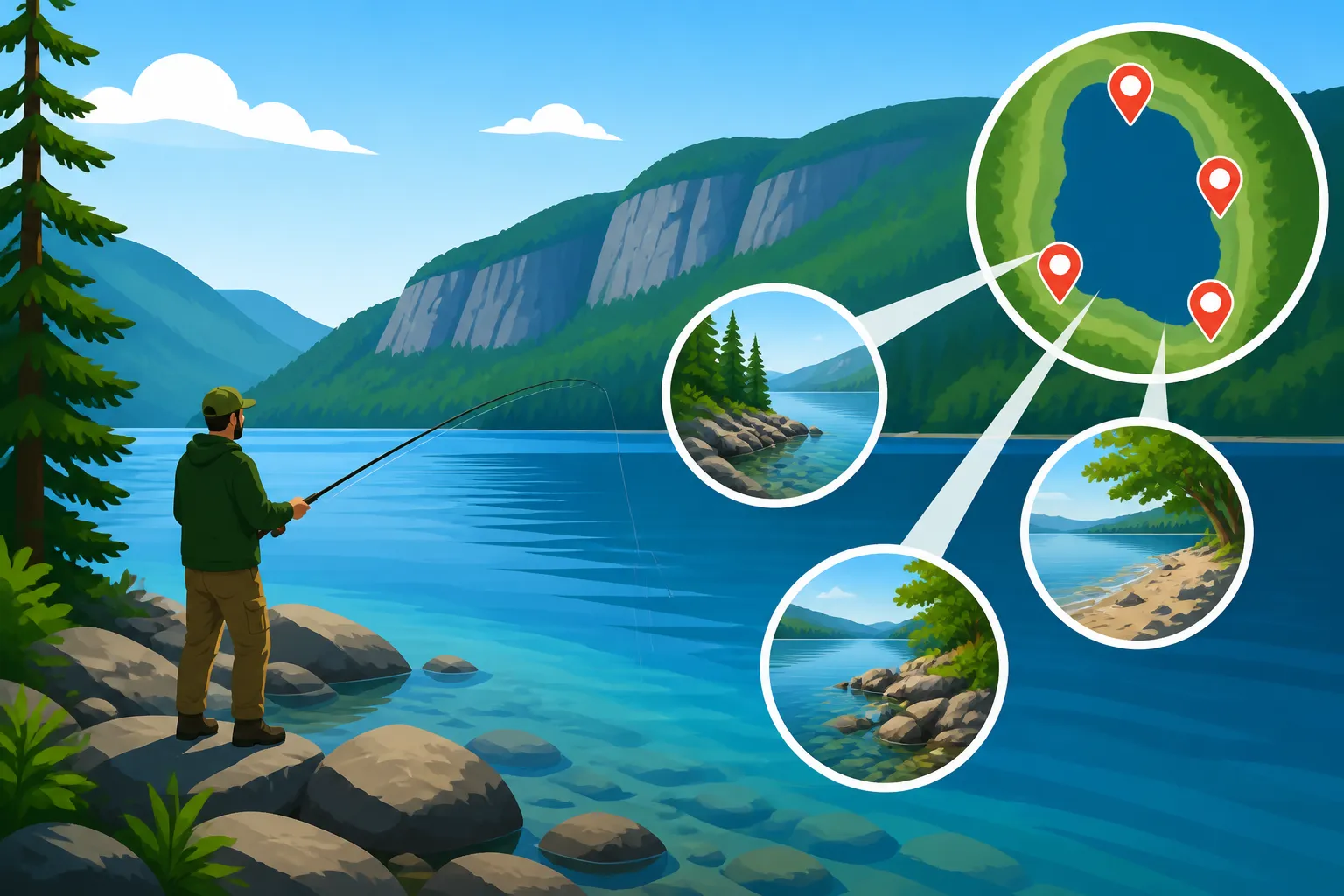
Finding accessible and productive shore fishing spots on Lake Willoughby requires a bit of local insight. Much of the lake's perimeter is privately owned, or the terrain is too steep and rocky for comfortable, safe fishing. However, there are several key areas where you can set up shop and have a legitimate shot at some of Willoughby's renowned fish.
The Public Beach and Surrounding State Forest Park Areas
The most obvious and accessible spot for shore fishing is the main public beach at the southern end of the lake, within the Willoughby State Forest Park. While primarily a swimming area, the edges of the beach, especially away from the main swimming zone, can offer opportunities, particularly for families or those looking to catch smaller panfish. Early morning or late evening, outside of peak swimming hours, are your best bets here.
- Access and Target Species: There's ample parking, and you can walk along the shore. Kids might have fun catching yellow perch or sunfish right off the sandy bottom, especially with a bobber and worms. For more serious anglers, casting out deeper spoons or stickbaits from the rocky sections flanking the main beach can sometimes yield a stray rainbow trout or a smallmouth bass cruising the rocks.
- Technique Considerations: The water here drops off relatively slowly for Willoughby, so long casts are crucial if you're targeting trout or salmon. Small spoons like Kastmasters or Little Cleos, in silver or blue/silver, can be effective. For bass, try suspending a soft plastic jerkbait or a small crankbait around the rocky points where the beach transitions to a more rugged shoreline. Remember, the fish here can be very sensitive to pressure, so a stealthy approach often pays off.
North Beach and North Cove
Moving to the northern end of the lake, North Beach offers another excellent public access point. This area tends to have a slightly different character, often with less immediate recreational pressure than the southern beach. The surrounding North Cove is known for its structure and deeper access closer to shore in some sections.
- Access and Target Species: North Beach has designated parking, and you can access a good stretch of shoreline. This area is generally considered better for pursuing landlocked salmon and lake trout from shore, especially during the cooler months. Smallmouth bass are also prevalent here, particularly around the rocky outcrops and submerged ledges that line the cove. The northern end of the lake tends to be a bit more dynamic, with currents influencing fish movement.
- Technique Considerations: Trolling motorboats often cruise this area, indicating the presence of good structure. For shore anglers, casting heavy spoons or even jigging spoons can reach deeper water. Pay close attention to any sudden changes in depth visible from shore or subtle current lines. Fly fishing can also be productive in certain areas of the cove, especially for smallmouth bass on streamers during summer evenings. Don't be afraid to experiment with different retrieve speeds; sometimes a slow, deliberate retrieve is what it takes for a wary salmon. If you're struggling to locate fish, checking out a local guide on FishingBooker for advanced boat-based tactics might give you insights into the general fish patterns, even if you’re fishing from shore.
The Willoughby River Inlet
The short stretch of the Willoughby River where it enters the lake, near the northern end, can be a hotspot, particularly during certain seasonal runs. This area is a magnet for fish moving between the river and the lake.
- Access and Target Species: Access is often via roadside pull-offs or small parking areas near where the river meets the lake. This spot can be phenomenal for rainbow trout and landlocked salmon, especially in early spring (post-ice out) and late fall, when these species are more active in shallower, moving water or staging for spawning. Smallmouth bass will also congregate near the river mouth, capitalizing on any baitfish flushed out.
- Technique Considerations: The moving water requires different tactics. Spinners (like Mepps or Panther Martins) or small spoons are highly effective. For fly anglers, swinging streamers or nymphing can be incredibly productive. Be acutely aware of specific regulations, as river sections, especially during spawning periods, often have special rules or closures. Always double-check the Vermont Fishing Regulations Explained to ensure you're compliant. The fish here are often actively feeding, so presentations that mimic baitfish or aquatic insects will be key.
Roadside Pull-offs and Rocky Points Along Route 5A
Route 5A, which hugs the eastern shore of Lake Willoughby for a significant stretch, offers several informal pull-offs and rocky points that can provide access to deeper water relatively close to shore. These aren't designated fishing spots, but rather opportunities for the adventurous angler willing to scout a bit.
- Access and Target Species: You'll need to look for safe places to park off the road and be prepared for potentially steep or uneven terrain down to the water. These spots are excellent for targeting lake trout and landlocked salmon, as the sheer cliffs often continue underwater, creating immediate deep-water access. Smallmouth bass will also relate to the abundant rocky structure.
- Technique Considerations: Casting accuracy and distance are paramount here. Heavy spoons, large minnow-imitating stickbaits (like Rapalas or Yo-Zuris), or even heavy jigs tipped with a grub can reach the fish holding in the depths. Early morning is often best, before traffic on Route 5A picks up, and when the light is low, making fish less wary. Remember that these areas can be exposed to wind, so dressing appropriately is key. For more in-depth knowledge about specific fish, you might want to delve into articles like Lake Willoughby Landlocked Salmon Fishing or Lake Champlain Lake Trout Fishing, as many techniques for deep-water species translate well.
Here's a quick summary of potential shore fishing opportunities:
| Location | Primary Target Species | Best Time of Year | Key Techniques | Notes |
|---|---|---|---|---|
| Public Beach (South End) | Panfish, Rainbow Trout, Smallmouth Bass | Spring, Early Summer, Fall | Bobber & Worms, Small Spoons, Small Crankbaits | Family-friendly, crowded during summer days, best early/late. |
| North Beach & North Cove | Landlocked Salmon, Lake Trout, Sm. Bass | Spring, Fall (Salmon/Trout); Summer (Bass) | Heavy Spoons, Jigging Spoons, Streamers (Flies) | Good for deeper water access, less crowded. |
| Willoughby River Inlet | Rainbow Trout, Landlocked Salmon, Sm. Bass | Early Spring, Late Fall | Spinners, Small Spoons, Nymphs, Streamers (Flies) | Seasonal hotspot, check regulations for Vermont Trout Season and Stocking Rules. |
| Roadside Pull-offs (Route 5A) | Lake Trout, Landlocked Salmon, Sm. Bass | Spring, Fall (Trout/Salmon); Summer (Bass) | Heavy Spoons, Jerkbaits, Heavy Jigs | Requires scouting, deep water access, potentially rugged terrain. |
Essential Gear and Techniques for Willoughby's Shore Anglers
Beyond knowing where to go, having the right setup and understanding specific tactics will significantly boost your success rate when shore fishing Lake Willoughby. This lake demands a bit more from your gear.
Rods, Reels, and Line
Given the need for long casts and the potential for larger, powerful fish like landlocked salmon, your standard ultralight combo might not cut it.
- Rods: A medium to medium-heavy spinning rod, around 7 to 9 feet in length, will give you the casting distance and backbone needed. A longer rod provides better leverage for casting heavy lures and fighting strong fish.
- Reels: Pair your rod with a reliable spinning reel in the 3000-4000 series size. It should have a smooth drag system, which is absolutely critical when a landlocked salmon decides to make a blistering run.
- Line: For main line, 10-15 lb braided line is an excellent choice for its sensitivity and incredible casting distance. Always add a fluorocarbon leader (6-10 lb test, 4-6 feet long) for its invisibility and abrasion resistance in the clear water. The clarity of Willoughby means fish are often very line-shy. If you're fishing for panfish with the kids, lighter monofilament is perfectly fine.
Baits and Lures
Willoughby's diverse species mean you'll want a variety in your tackle box.
- Spoons: These are workhorses for Willoughby. Castmasters, Little Cleos, Dardevles, and Acme Kastmasters in silver, blue/silver, or gold patterns are all excellent choices for trout and salmon. Experiment with sizes, from 1/4 oz to 1 oz, to match baitfish profiles and casting distance needs.
- Jerkbaits/Stickbaits: Minnow-imitating lures are key, especially for smallmouth bass and opportunistic salmon/trout. Look for suspending models that allow you to work them slowly in the water column. Rapala Husky Jerks, Yo-Zuri Crystal Minnows, or similar lures in natural baitfish colors (silver, perch patterns) are fantastic.
- Soft Plastics: For smallmouth bass, a 3-4 inch tube jig, grubs on a jig head, or a Ned Rig can be incredibly effective when fished slowly around rocky structure. Worms (e.g., nightcrawlers) are always a safe bet for panfish and even stocked trout, either fished on the bottom or under a bobber.
- Fly Patterns: For the fly angler, streamers like Grey Ghosts, Smelt patterns, or various Woolly Buggers can entice trout and salmon. For smallmouth, larger crayfish or baitfish imitations work well.
Key Shore Fishing Techniques
- Fan Casting: Don't just cast straight out. Fan cast, covering the entire water column in front of you. Start by casting to your left, then gradually move your casts to the right, retrieving at different depths.
- Varying Retrieve: Fish aren't always looking for the same thing. Experiment with retrieve speeds (slow, fast, stop-and-go) and retrieve patterns (jigging, twitching, steady retrieve). For trout and salmon, a steady, medium retrieve with a spoon often works. For bass, a twitch-pause retrieve with a jerkbait can be deadly.
- Work the Drop-offs: Focus your efforts where the bottom drops quickly into deeper water. These are natural ambush points for predatory fish. If you have a portable fish finder, even a simple castable one, it can help you locate these subtle changes in depth from shore.
- Seasonal Adaptations:
- Spring/Fall: This is prime time for trout and salmon to be closer to shore as the entire water column is cool. They're often actively feeding on smelt or other baitfish.
- Summer: During the warmest months, trout and salmon retreat to the deep, cold depths. Your best bet from shore will likely be smallmouth bass, especially early morning and late evening, or targeting areas with natural springs or cooler inflows. If you're interested in pursuing specific species, check out a comprehensive guide like How to Catch Landlocked Salmon in Vermont.
Planning Your Lake Willoughby Shore Fishing Excursion
A little preparation goes a long way, especially when you're fishing a unique lake like Willoughby. From knowing the rules to understanding the conditions, being informed sets you up for success.
Understanding Vermont Fishing Regulations
Willoughby, like many of Vermont's pristine waters, can have specific regulations designed to protect its unique fisheries. Before you even pack your bags, make sure your Vermont Fishing License Guide for 2026 is up to date and you're familiar with the specific rules for Lake Willoughby. These might include length limits, daily creel limits, or even tackle restrictions for certain species. For instance, landlocked salmon and lake trout often have specific size and bag limits. Always consult the official Vermont Fish and Wildlife Department regulations manual, which you can usually find online or at any license vendor. Ignoring these rules can lead to hefty fines, an experience no one wants.
Weather and Water Conditions
Lake Willoughby's clear, deep water is greatly influenced by weather.
- Wind: A strong wind can make casting a challenge, but a light breeze can create a "chop" on the water's surface, breaking up the light and making fish less wary, especially in shallower areas. It can also push baitfish, concentrating them.
- Temperature: Surface water temperature will dictate where species like landlocked salmon and lake trout are holding. In summer, they'll be deep. In spring and fall, they'll be more accessible from shore. Even small temperature changes can affect fish activity. You can often find general water temperature reports online or by chatting with local tackle shops.
- Cloud Cover: Overcast days often mean fish are more active throughout the day, as bright sunlight can push them deeper or into cover.
Safety and Etiquette
- Cold Water: Willoughby's water is cold, even in summer. If you plan to wade, be extremely cautious and aware of sudden drop-offs. A personal flotation device (PFD) is always a good idea, even when shore fishing, especially if you're on rocky, uneven terrain.
- Footwear: Sturdy, waterproof footwear with good grip is essential for navigating rocky shorelines.
- Leave No Trace: Pack out everything you pack in. Preserve the beauty of Lake Willoughby for everyone. If you're fishing in a more remote area or from a roadside pull-off, ensure you leave no trash behind.
- Respect Private Property: Be mindful of posted private property signs, especially around more residential areas of the lake. Stick to public access points unless you have explicit permission.
Sometimes, despite your best efforts from shore, the fish just aren't biting, or you crave the opportunity to explore the entire expanse of Lake Willoughby. In such cases, considering a guided fishing trip can be an invaluable experience. Websites like FishingBooker can connect you with local, experienced fishing guides who know the lake inside and out. They can provide you with a boat, specialized gear, and the expert knowledge needed to target deep-water lake trout and salmon, or even find those elusive schools of smallmouth bass. It's a fantastic way to learn the lake's nuances and often leads to an unforgettable day on the water, greatly expanding your understanding of the fishery, which can then inform your future shore excursions.
Conclusion
Lake Willoughby presents a unique and captivating challenge for the shore angler. Its deep, clear, and cold waters mean you're not just casting a line; you're engaging in a strategic game of patience, observation, and adaptability. While it may not offer the easy shore access of every Vermont pond, the rewards of landing a magnificent landlocked salmon, a hard-fighting lake trout, or a feisty smallmouth bass from its shores are truly unparalleled. By focusing on the public beaches, river inlets, and scouting those critical roadside points along Route 5A, equipping yourself with appropriate gear, and understanding the specific techniques tailored for this incredible body of water, you can transform a potentially frustrating outing into a deeply satisfying Vermont fishing adventure.
Disclaimer
Please note that fishing conditions, regulations, and access points can change. Always consult the latest Vermont Fish and Wildlife Department regulations before heading out. Exercise caution and respect the natural environment.