Best drop-offs to fish on Lake Champlain
Fishing Lake Champlain can feel like trying to find a needle in a haystack, especially when you're after those elusive fish that seem to vanish into thin air. For many anglers, the sheer size of the lake makes identifying productive spots incredibly daunting. This comprehensive guide will pull back the curtain on one of the most consistently rewarding structures – drop-offs – helping you locate and successfully fish these prime areas for various species across Vermont's majestic Lake Champlain.
Understanding Drop-Offs and Their Importance on Lake Champlain
Drop-offs are essential features in any large body of water, but on Lake Champlain, their significance is amplified due to the lake's diverse topography and vastness. These underwater ledges and slopes act as natural magnets for fish, creating consistent hotspots year-round.
Why Fish Congregate on Drop-Offs
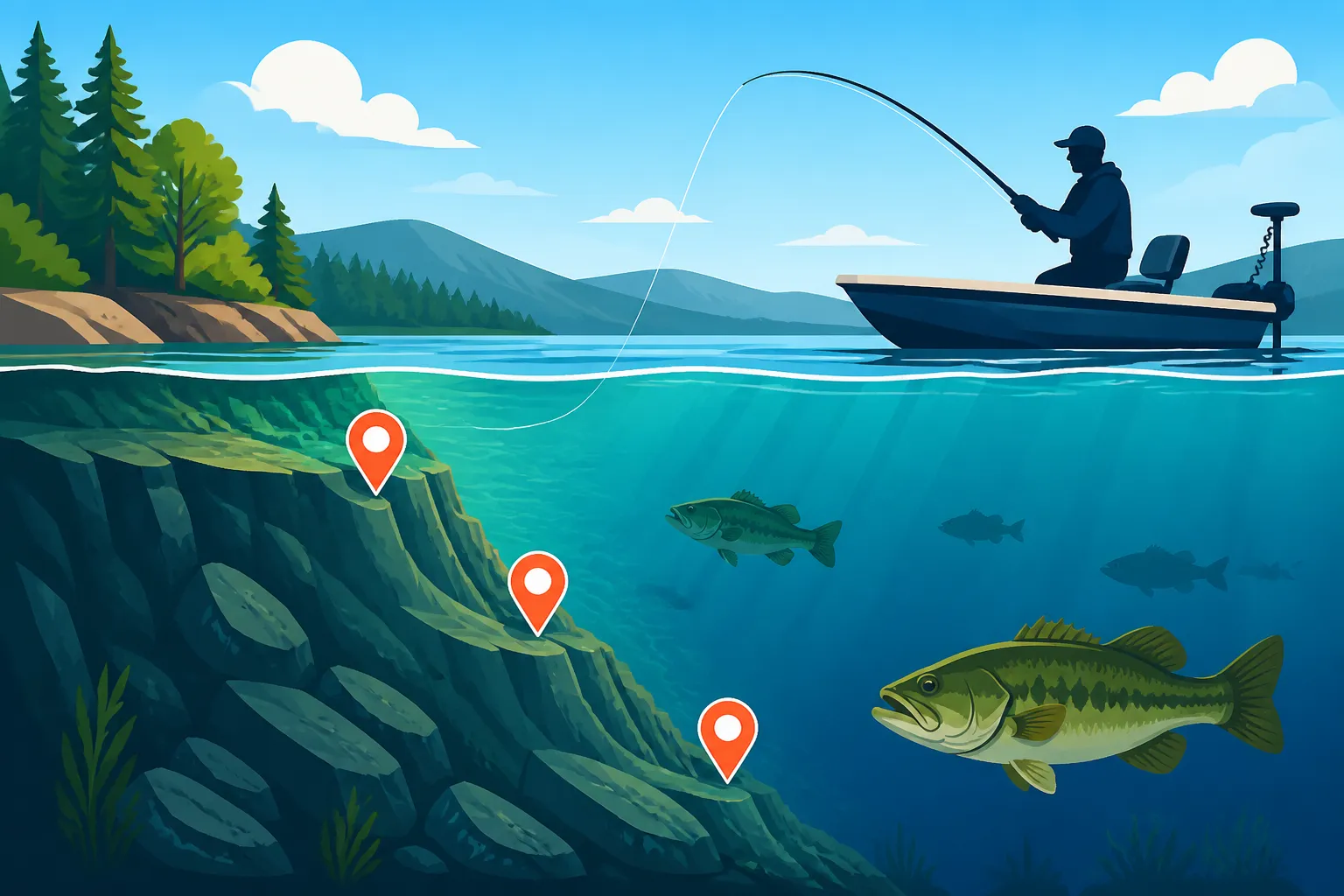
Drop-offs are essentially underwater cliffs, ledges, or sudden changes in depth where the lake bottom plunges from shallow to deep water. Think of them as aquatic highways and supermarkets rolled into one. For fish, these transition zones offer a smorgasbord of advantages that attract them like magnets, making them perennial hotspots for anglers.
Firstly, drop-offs provide crucial cover and ambush points. Predator fish, like walleye, smallmouth bass, and even the formidable lake trout, can lurk in the deeper, darker water, waiting for unsuspecting baitfish to swim over the shallower shelf. This gives them a distinct advantage, allowing them to dart out, grab a meal, and retreat quickly to safety. It's like a drive-thru for them, but they're doing the driving! Similarly, smaller baitfish often relate to drop-offs because the sudden change in depth can disrupt currents, creating eddies where they can rest and find plankton or smaller invertebrates. It's a complex ecosystem thriving on these changes, offering refuge from predators and strong currents, and a stable environment.
Secondly, drop-offs are often associated with other crucial structures. You might find rock piles, weed lines, gravel beds, or even submerged timber right along the edge of a drop-off. These additional features provide even more sanctuary, feeding opportunities, and spawning grounds. A single drop-off on Lake Champlain might hold schools of yellow perch in the weeds on the shallower side, while trophy lake trout cruise the deeper thermocline just beyond the ledge. The sheer diversity of habitat makes these areas incredibly versatile and productive throughout the year, regardless of the target species. The constantly changing depths also offer thermal stratification, allowing different species to find their preferred water temperatures, especially during the warmer summer months when cooler, oxygen-rich water becomes a premium.
Types of Drop-Offs on Lake Champlain
Lake Champlain, being such a vast and varied body of water, boasts an impressive array of drop-off types, each with its own unique characteristics and appeal to different fish species. Understanding these variations can significantly improve your fishing success and help you narrow down your search. From the shallow, riverine southern end to the deep, fjord-like northern basin, the lake offers a spectrum of underwater topography.
You'll encounter gradual slopes, where the depth changes subtly over a long distance. These are often productive for species that patrol wider areas, like cruising smallmouth bass or schools of perch. They might not be as dramatic, but they offer consistent feeding grounds and can be great for trolling. Then there are sharp, abrupt ledges, almost like underwater cliffs. These dramatic drops are often preferred by ambush predators and are fantastic for targeting walleye or lake trout. Imagine a sheer rock face descending into the abyss; that’s where the big ones often hang out. These vertical drops create distinct shadows and current breaks, which are highly attractive to predatory fish looking for an easy meal or a comfortable holding spot.
Beyond the slope, consider the bottom composition. Some drop-offs are predominantly rocky, offering excellent habitat for crayfish and smallmouth bass, providing countless nooks and crannies. Others might transition from sandy flats to deep mud, attracting walleye or even larger schools of baitfish that burrow into the softer substrate. You might also find drop-offs that mark the edge of extensive weed beds, which are absolute magnets for largemouth bass and northern pike, offering dense cover for both predator and prey. A skilled fishing guide from a platform like FishingBooker can often pinpoint these subtle differences and put you right on the fish, leveraging their deep knowledge of Lake Champlain's varied underwater topography. Understanding these nuances is key to knowing which species to expect and how best to approach them, whether you're casting, jigging, or trolling.
Identifying Productive Drop-Offs: Tools and Techniques
Finding these hidden gems on a lake as immense as Champlain requires a combination of technology, traditional navigation, and keen observation. It’s not just about randomly driving around; it’s about strategic exploration that maximizes your time on the water and increases your chances of a successful outing.
Using Marine Electronics Effectively
Modern marine electronics are your absolute best friend when it comes to locating and understanding drop-offs on Lake Champlain. A quality fish finder, particularly one with side-imaging or down-imaging capabilities, can transform your understanding of the underwater world from a flat map to a detailed 3D rendering. Don't just look for arches; learn to interpret the bottom contours and structure.
When you're idling over an area, keep a close eye on your depth sounder. You're looking for those sudden changes in depth readings. A steep drop-off will show a rapid descent in the bottom line on your sonar screen, often appearing as a sharp break or even a "cliff" on the display. Side-imaging is particularly useful here, as it allows you to scan wide swaths of the bottom on either side of your boat, revealing ledges, humps, and deep channels you might otherwise miss directly beneath you. You can often see the exact contour of the drop-off and any associated structure, like boulders or baitfish schools, clinging to its edge. Learning how to use the Best Fish Finders for Vermont Lakes effectively is a game-changer. For example, setting your sensitivity correctly is crucial; too low and you miss details, too high and you get clutter that obscures the target. Many units now come with advanced features that let you map the bottom in real-time, creating your own personalized bathymetric charts, which is invaluable for returning to productive spots. Pay attention to how to dial in your Best Sonar Settings for Finding Structure on Lake Champlain for optimal results, adjusting frequencies and display options to suit conditions.
Once you’ve identified a promising drop-off, don’t just motor past. Slow down and make multiple passes from different angles. Look for schools of baitfish suspended along the drop, or larger fish arches hugging the bottom near the break. Mark these waypoints on your GPS immediately. This meticulous approach allows you to build a detailed picture of the underwater terrain and the fish holding on it, making your subsequent fishing efforts far more targeted and efficient. Remember, the fish don't always sit on the very edge; sometimes they're just over the lip in the shallower water, or slightly deeper, depending on bait presence, light conditions, and angling pressure.
Reading Navigational Charts and Bathymetry
Before you even launch your boat, navigational charts and bathymetric maps are invaluable resources for pinpointing potential drop-offs. These maps, whether paper charts or digital versions on your marine electronics, show depth contours, underwater features, and potential hazards, giving you a powerful pre-fishing advantage.
Look for areas where contour lines are tightly packed together. This indicates a steep drop-off or ledge where the depth changes rapidly. Conversely, widely spaced lines suggest a gradual slope. Pay particular attention to areas where these tight contour lines run alongside points, islands, or submerged humps. These intersections often create prime feeding zones, as they combine depth changes with structure. For instance, on a detailed map, you might spot a long finger of land that extends out into the lake, and the contour lines show a rapid descent off its tip – that’s a classic drop-off hotspot for many species. Combining this pre-trip research with your on-the-water electronics usage will save you a tremendous amount of time and fuel. Sites like NOAA provide detailed charts that can be loaded onto many GPS units, or you can find specific fishing maps for Lake Champlain that highlight these features, often with more granular detail relevant to anglers.
Don't forget to cross-reference these charts with local knowledge or fishing reports. While charts are excellent for identifying structure, they don't tell you where the fish are currently biting. However, they give you the foundation for understanding why fish might be in certain areas. A veteran angler or a charter captain (which you can often book through FishingBooker) will have spent countless hours interpreting these maps and verifying their findings with real-world catches. Understanding the general topography of different sections of Lake Champlain – from the shallower southern portions near Whitehall to the deeper, rockier northern sections – helps you predict where certain types of drop-offs might occur and what species they are likely to hold, even before you leave the dock.
Observing Environmental Cues
While electronics and charts are indispensable, don't underestimate the power of keen observation of environmental cues. Sometimes, the lake tells you where to fish if you know how to listen and interpret the subtle signs Mother Nature provides.
Birds are often excellent indicators of baitfish activity. If you see flocks of gulls diving or hovering over a particular area, especially near a visible shoreline drop-off, there's a good chance baitfish are being pushed to the surface by predatory fish below. This can often happen over a shallow flat that abruptly drops into deeper water, creating a bottleneck for schooling baitfish. Similarly, surface disturbances like schools of baitfish flicking out of the water, or even the occasional swirl from a feeding predator, can point you towards active fish, which might be relating to an unseen drop-off nearby. These visual cues are free and available to every angler, requiring only patience and an attentive eye.
Wind and current also play a significant role. Drop-offs that face into the prevailing wind can concentrate baitfish and nutrients, making them more attractive to predators. The churning water on the windward side can also provide excellent cover for game fish, breaking up light penetration and disguising your presence. For instance, a rocky point that drops sharply into deep water, with waves crashing against it, often signifies a prime smallmouth bass or walleye spot where bait is disoriented. Observing the direction and strength of the wind, and understanding how it affects currents and baitfish movement, can help you predict which drop-offs will be most productive on any given day, guiding your efforts even without looking at a screen.
Key Drop-Off Locations on Lake Champlain
Lake Champlain is a huge body of water, stretching over 120 miles. Pinpointing every single productive drop-off would be a book in itself! However, we can highlight some general areas and types of drop-offs that consistently produce results across different sections of the lake. Remember, the key is to use these as starting points and then refine your search with your electronics and local knowledge.
Northern Lake Champlain Hotspots
The northern reaches of Lake Champlain, particularly around the Inland Sea and the areas north of Burlington towards the Canadian border, are characterized by deeper water, rocky structure, and numerous islands. These features naturally create abundant and highly productive drop-offs that are fish magnets.
Consider the drop-offs around the greater Grand Isle and North Hero area. The channels between these islands, like the Gut between Grand Isle and North Hero, often feature dramatic depth changes where currents funnel baitfish. These areas are fantastic for Lake Champlain Walleye Fishing and smallmouth bass, as the currents bring food to them. Focus on the edges of major reefs and underwater humps that drop into the deeper surrounding water. For instance, near Butler Island or Providence Island, you'll find submerged ledges that attract schools of baitfish, and consequently, larger predators like lake trout and salmon. These deep-water drop-offs are also prime territory for those targeting Lake Champlain Lake Trout Fishing with downriggers. A good starting point would be to examine nautical charts around areas like Cumberland Head on the New York side, or the many islands and ledges found off the Vermont shore in the Inland Sea. These topographical features create natural ambush points and feeding lanes.
Further north, towards Missisquoi Bay and Alburg, the lake becomes shallower overall, but you'll still find critical drop-offs, especially where river channels enter the main lake or where rock shoals give way to slightly deeper flats. These can be dynamite for both smallmouth and largemouth bass, as well as northern pike, especially during the spring and fall when fish are actively feeding in shallower water. The transition areas where muddy flats meet rocky structure along a depth change are often overlooked but incredibly productive, providing both food and cover. A guide service specializing in the northern end of the lake, perhaps found via FishingBooker, would be adept at navigating these complex areas and putting you on fish, leveraging their deep local understanding.
Central and Southern Lake Champlain Gems
Moving south, the character of Lake Champlain changes, but the prevalence of productive drop-offs remains. The central part of the lake, around Burlington and Vergennes, offers a mix of deep main-lake basin, prominent points, and submerged structure, creating a diverse range of drop-off opportunities.
Near Burlington, the many points and coves along the shoreline feature excellent drop-offs. Areas around Shelburne Point, Thompson's Point, or even just outside the Burlington breakwater wall, offer rapid descents into deeper water. These are classic spots for Lake Champlain Smallmouth Bass Fishing, where smallmouth will patrol the shallower rocky shelves before retreating to deeper water when pressured or during bright daylight hours. Trolling the edges of these drop-offs can also yield good results for walleye and lake trout, especially if you understand how to locate schools of baitfish like smelt that they follow. If you're looking for more general guidance on the entire lake, checking out a Lake Champlain Fishing Guide can give you a great overview of various hotspots and their characteristics.
In the very southern part of Lake Champlain, below the Champlain Bridge towards Whitehall, the lake becomes much narrower and shallower, often resembling a large river. Here, drop-offs are often associated with the main channel of the lake or where feeder creeks enter. The deeper holes and ledges along the main channel, particularly where it snakes through the shallower flats, can concentrate walleye and largemouth bass. These aren't the dramatic cliff-like drops of the northern lake, but rather subtle, yet significant, changes in depth that act as fish magnets. You might find a 5-foot flat suddenly dropping to 15 feet – a substantial change in this section of the lake that creates a distinct edge. These areas can be fantastic for fishing jigs or slowly dragging live bait along the contours, mimicking natural prey movement.
Identifying Less-Pressured Drop-Offs
While it's great to know the well-known hotspots, finding less-pressured drop-offs can often lead to better quality and quantity of fish. These are the spots that aren't pounded by every other boat on the weekend, offering a more pristine and productive angling experience.
One way to find these is to look for "secondary" drop-offs. These aren't the main, obvious depth changes, but rather smaller, less pronounced breaks on a larger flat or within a cove. For example, a large bay might have a gradual slope, but within that slope, there's a smaller, submerged hump that drops off on its own. These subtle features, often overlooked on general maps, are easily found with good electronics and careful scanning, especially with side imaging. Fish often relate to these smaller, less prominent features precisely because they offer refuge from angling pressure. They might not hold as many fish as a major structure, but the fish there are often more willing to bite and less wary.
Another strategy is to explore areas a little further away from easily accessible boat ramps or popular fishing access points. Sometimes, a short run to a more remote island, point, or a less-traveled section of shoreline can put you on unpressured drop-offs. These might require a bit more effort to reach, but the reward of a hot bite from unmolested fish is often well worth it. You might even discover a new favorite spot that isn't on everyone else's radar! Also, consider fishing during off-peak hours, like weekdays or very early mornings, when even popular drop-offs see less pressure and fish are more active.
Fishing Strategies for Lake Champlain Drop-Offs
Once you've located a promising drop-off, the real fun begins: how do you actually catch fish there? The strategy often depends on the species you're targeting, the time of year, and the specific characteristics of the drop-off itself, requiring a versatile approach.
Targeting Different Species
Different fish species will relate to drop-offs in their own unique ways, and understanding these patterns is crucial for success. Matching your technique to the target species is paramount.
For smallmouth bass, rocky drop-offs are prime real estate. They love to ambush baitfish from the deeper side of the break or cruise the shallower ledges, especially during periods of low light. During the warmer months, smallmouth will use these areas to move between shallow feeding grounds and deeper, cooler refuge. Try casting a crankbait or a jerkbait parallel to the drop, allowing it to "walk the dog" down the edge. Drop-shot rigs or tube jigs fished vertically can also be deadly when smallmouth are holding tight to the bottom structure. The Best Smallmouth Bass Lures for Lake Champlain in Summer often include these versatile options, offering different presentations for varying moods.
Walleye on Lake Champlain are notorious for associating with drop-offs, particularly those with a gradual slope or a mix of rock and mud. They are often found deeper, especially during the day, using the drop-off as a highway to access shallow feeding flats at dawn and dusk. Trolling with worm harnesses or deep-diving crankbaits along the contours of a drop-off is a classic and highly effective technique. Pay close attention to How deep walleye go in summer on Lake Champlain, as they often follow baitfish into the thermocline. Alternatively, vertical jigging with a blade bait or a Gulp! Minnow can be incredibly effective when you pinpoint a school of walleye with your fish finder. For more specific tactics, refer to our comprehensive guide on How to Catch Walleye on Lake Champlain.
Lake trout are cold-water dwellers and will often be found in the deepest sections of Lake Champlain, using steep drop-offs and underwater structure as their home. Trolling with spoons, stickbaits, or live bait (like smelt) on downriggers is the most common method for these powerful fish, allowing you to present baits at precise depths. They often suspend at specific depths along a drop-off, so understanding Trolling Techniques for Vermont Lake Trout and adjusting your depth accordingly is key. Remember that How deep lake trout go in summer will dictate your approach, often requiring deep presentations. Look for baitfish suspended along the drop-off, as the lake trout will likely be right below them.
Largemouth bass might prefer drop-offs where there's a good mix of cover, like submerged weeds or timber, transitioning into deeper water. They aren't as prevalent in the main lake basin as smallmouth, but in the shallower bays and southern stretches of Champlain, they can be found relating to drop-offs that offer dense cover and ambush opportunities. Pitching jigs, Texas-rigged worms, or spinnerbaits to the edges of these weed lines or woody debris along the drop can be highly effective, especially where the cover meets the deeper water.
Best Lures and Baits for Drop-Offs
The type of lure or bait you choose should mimic the natural forage in Lake Champlain and be appropriate for the species and depth you’re targeting. Varying your presentation is key to finding what the fish want on a given day.
For walleye, a classic choice is a worm harness trolled slowly along the bottom of the drop-off, often tipped with a nightcrawler. Deep-diving crankbaits like Rapala Deep Divers or Bandit Walleye Deep will also get down to where the fish are holding, especially when targeting those Best Lures for Walleye Trolling on Lake Champlain. Jigging spoons or blade baits are excellent for vertical presentations when you mark fish directly beneath the boat, mimicking a wounded baitfish. When they are active, soft plastic swimbaits rigged on a jig head can also be deadly, especially in cooler water.
When targeting smallmouth bass, a variety of lures work well on drop-offs. Tube jigs, drop-shot rigs with small worms or creature baits, and finesse jigs are perfect for probing the rocks and ledges, offering a subtle presentation. When bass are more aggressive, crankbaits that dive to the depth of the drop, spinnerbaits, or even swimbaits can entice strikes, covering more water efficiently. If you're into live bait, a shiner or a crayfish imitation can often tempt hesitant bass, particularly on a weighted hook fished slowly.
For lake trout and salmon, spoons like Mooselook Wobblers, Sutton Spoons, or Northern King Spoons in silver, blue, or green are perennial favorites when trolled on downriggers or lead core line, mimicking flickering baitfish. Large stickbaits, resembling smelt or alewives, are also highly effective, especially after ice-out when these baitfish are abundant. Some anglers swear by live or dead smelt rigged to present naturally along the deep drop-offs. The key is to match the hatch – find out what baitfish are prevalent and select lures that imitate them in size and color, adjusting to what the fish are currently feeding on.
Seasonal Considerations for Drop-Off Fishing
The effectiveness and location of drop-offs can change dramatically with the seasons on Lake Champlain, influenced by water temperature, oxygen levels, and baitfish movements. Adapting your approach with the changing seasons is crucial for consistent success.
Spring: As the ice melts and water temperatures rise, fish begin to move out of their deep wintering grounds. Drop-offs become critical transition zones, offering pathways for fish moving between deep and shallow water. Smallmouth bass will start to congregate on shallower, sun-warmed sections of drop-offs before moving to spawning beds. Walleye will relate to deeper drop-offs near spawning rivers or reefs, staging before their spawn. This is a great time for slower presentations, like jigs or live bait, fished patiently along the breaks, as fish might still be sluggish in the cold water.
Summer: This is perhaps the most consistent time for drop-off fishing, especially for species like walleye, lake trout, and smallmouth bass. As the lake stratifies, fish seek out their preferred water temperatures. Walleye and lake trout will often be found deeper, along the thermocline, hugging the deeper edges of drop-offs where baitfish are also holding for cooler water. Smallmouth bass might be found shallower in the mornings and evenings, moving to deeper sections of drop-offs during the heat of the day. Trolling and vertical jigging are highly effective during the summer months, allowing you to present baits at specific depths.
Fall: As water temperatures cool, fish become very active, feeding heavily in preparation for winter. Drop-offs again become critical feeding highways as baitfish migrate. Baitfish will move around more freely, and predators will follow, capitalizing on the abundant forage. This is an excellent time for aggressive presentations – faster trolling speeds for walleye and lake trout, or casting larger crankbaits and swimbaits for bass along the drops. Fish will often move shallower than in summer, but still relate to the deeper water nearby, using the drop-offs as feeding stations.
Winter (Ice Fishing): Even under the ice, drop-offs are crucial. Fish will often hold on the deeper side of the drop, or just over the lip in slightly shallower water, especially during early and late ice when oxygen levels are better or baitfish are present. Jigging spoons, minnows, or dead sticks with live bait are effective for walleye, perch, and even lake trout through the ice, as fish conserve energy and respond to subtle presentations. Understanding Vermont Ice Fishing Season Dates, and where to find these structures, is vital for success in the colder months. When ice fishing, you'll want to focus on the structure itself, drilling holes strategically along the contour and watching your flasher for fish movement.
| Species | Preferred Drop-Off Type | Typical Depth Range (Summer) | Recommended Lure/Bait | Key Technique |
|---|---|---|---|---|
| Walleye | Gradual slope, rock/mud transition | 20-45 feet | Worm harness, Deep-diving crankbait | Trolling, Vertical Jigging |
| Smallmouth Bass | Rocky ledges, abrupt drops | 10-30 feet | Tube jig, Drop-shot, Jerkbait | Casting parallel, Vertical Finesse |
| Lake Trout | Steep drops, deep main lake structure | 40-100+ feet | Spoons, Large stickbaits, Smelt | Downrigger Trolling, Deep Jigging |
| Largemouth Bass | Weed line edges, timbered drops | 5-20 feet | Jig, Texas-rig, Spinnerbait | Pitching, Flipping, Slow Retrieve |
| Yellow Perch | Gradual slopes, weed edges | 15-30 feet | Small jigs, Live minnows, Worms | Vertical Jigging, Bobber Fishing |
This table provides a quick reference, but always remember that fish are dynamic and adapt to conditions. Flexibility and experimentation are your best tools on the water.
Disclaimer
The information provided in this guide is for general informational purposes only. Fishing conditions and regulations in Vermont can change, and it is the angler's responsibility to consult the latest official Vermont Fish & Wildlife Department regulations before heading out on the water. Always prioritize safety, wear appropriate personal flotation devices, and be aware of weather conditions. The author and publisher are not responsible for any accidents, injuries, or legal infractions incurred while using this information.