Best trolling spread for landlocked salmon
It's a common story in Vermont: you're out on a beautiful lake, the sun is shining, and you're hoping for that elusive landlocked salmon. You know they're there, but getting them to bite can feel like a game of chance. The frustration often comes from simply dragging a single lure around, hoping for the best. This guide is all about changing that – it will show you how to construct a strategic trolling spread designed to put more Vermont landlocked salmon in your net.
The Art of the Trolling Spread for Vermont Landlocked Salmon
Trolling for landlocked salmon isn't just about putting a lure in the water and driving around. It's a calculated dance, a strategic deployment of multiple offerings designed to entice these wary fish. Think of your boat as a mobile buffet, presenting a variety of "dishes" at different depths and distances. Without a well-thought-out spread, you're essentially hoping a salmon stumbles upon your single offering, which, while it can happen, drastically reduces your chances.
Why a Diversified Spread is Your Secret Weapon
Landlocked salmon are creatures of habit, but their habits change with the season, time of day, and even the weather. A diversified trolling spread allows you to cover more water, present different types of forage, and ultimately increase your odds of a strike. Imagine a school of salmon cruising at 20 feet, but your one lure is at 10 feet. You’re missing them entirely! A spread allows you to present lures at 10, 15, 20, and even 25 feet simultaneously. This comprehensive approach means you’re effectively searching for fish rather than just waiting for them to find you. Furthermore, salmon can be finicky eaters. One day they might prefer a bright, flashy spoon, and the next they might want a subtle, natural-looking stickbait or a rigged smelt. With a varied spread, you're essentially conducting a real-time experiment, letting the fish tell you what they're after. How to Catch Landlocked Salmon in Vermont offers more insights into their feeding patterns.
Beyond depth and lure type, a good spread also helps you present different actions. Some lures wiggle frantically, others dart erratically, and some have a subtle swim. Each action can appeal differently to salmon depending on their mood and the behavior of the baitfish they are feeding on. By using various lures in your spread, you increase the likelihood of presenting that perfect combination of depth, color, and action that triggers a strike. It's about being prepared for whatever the salmon are looking for on any given day.
Key Environmental Factors Influencing Salmon Placement
Understanding where landlocked salmon are likely to be is fundamental to deploying an effective trolling spread. These fish are highly sensitive to their environment, especially water temperature and the presence of their preferred baitfish. In Vermont's clear, cold lakes, salmon will actively seek out specific conditions. For example, during the warmer months, they'll often be found near the thermocline – the layer of water where the temperature changes rapidly. This layer typically holds cooler, oxygen-rich water that salmon prefer, and it's also where their primary food source, like smelt, often congregates.
Light penetration also plays a significant role. On bright, sunny days, salmon might retreat to deeper, darker water or hug structure to avoid direct sunlight. Conversely, on overcast days or during low-light periods like dawn and dusk, they may move shallower and become more aggressive feeders. Wind direction and intensity can also influence baitfish schools, pushing them to certain areas of the lake, and where the bait goes, the salmon will follow. Best Time of Year to Fish in Vermont details these seasonal movements. Learning to "read" the water, observing surface activity, and paying attention to these environmental cues will give you a significant advantage in placing your spread directly in the salmon's strike zone.
Building Your Effective Salmon Trolling Arsenal and Deploying Your Spread
Putting together a solid trolling spread requires more than just a handful of lures. It demands the right tools to control depth, present your offerings naturally, and endure the fight of a powerful landlocked salmon. Having a dedicated arsenal allows you to adapt to changing conditions and fish smarter, not harder.
Essential Gear for Controlling Depth and Presentation
Controlling the depth of your lures is paramount when targeting landlocked salmon, especially as they move throughout the water column with the seasons. Downriggers are arguably the most effective tool for precise depth control. They allow you to send a heavy cannonball down to a specific depth, with your fishing line clipped to a release. When a fish strikes, the line releases, allowing you to fight the fish directly without the drag of the weight. This precision is invaluable when salmon are holding to a tight depth contour or a specific thermocline. Many anglers find high-quality downriggers on retailers like Amazon, offering a wide selection for various boat sizes.
For those without downriggers, or as a complementary tool, leadcore line is another excellent option. This specialized fishing line has a lead core wrapped in a braided sheath, causing it to sink. The amount of line you let out (typically measured in "colors," where each color segment is 10 yards) dictates the depth of your lure. It's less precise than a downrigger but very effective for covering a broader depth range. Dipsy divers or similar diving planers can also take lures down to specific depths, offering adjustable dive angles. For horizontal spread, especially if you're running multiple lines, planer boards are fantastic. These boards pull your lines out to the sides of the boat, covering a much wider swath of water than just trailing directly behind. They prevent lines from tangling and allow you to present lures in undisturbed water away from the boat's wake. For an idea of the breadth of gear available, check out options for Best Trolling Gear for Lake Champlain Walleye, which shares many similarities with salmon setups.
When it comes to rods, reels, and line, you want reliability and sensitivity. Medium-heavy to heavy action trolling rods, typically 7-9 feet long, are ideal. They have enough backbone to handle the weight of the trolling gear and the fight of a salmon, while still offering enough tip action to telegraph subtle strikes. Pairing these with conventional or larger spinning reels spooled with 10-20 lb monofilament or braided line is a common choice. Monofilament offers good stretch, which can be forgiving when a salmon makes a sudden run, while braid provides incredible sensitivity and strength for its diameter, often paired with a fluorocarbon leader for stealth.
Crafting the Ideal Lure Presentation: Types and Tactics
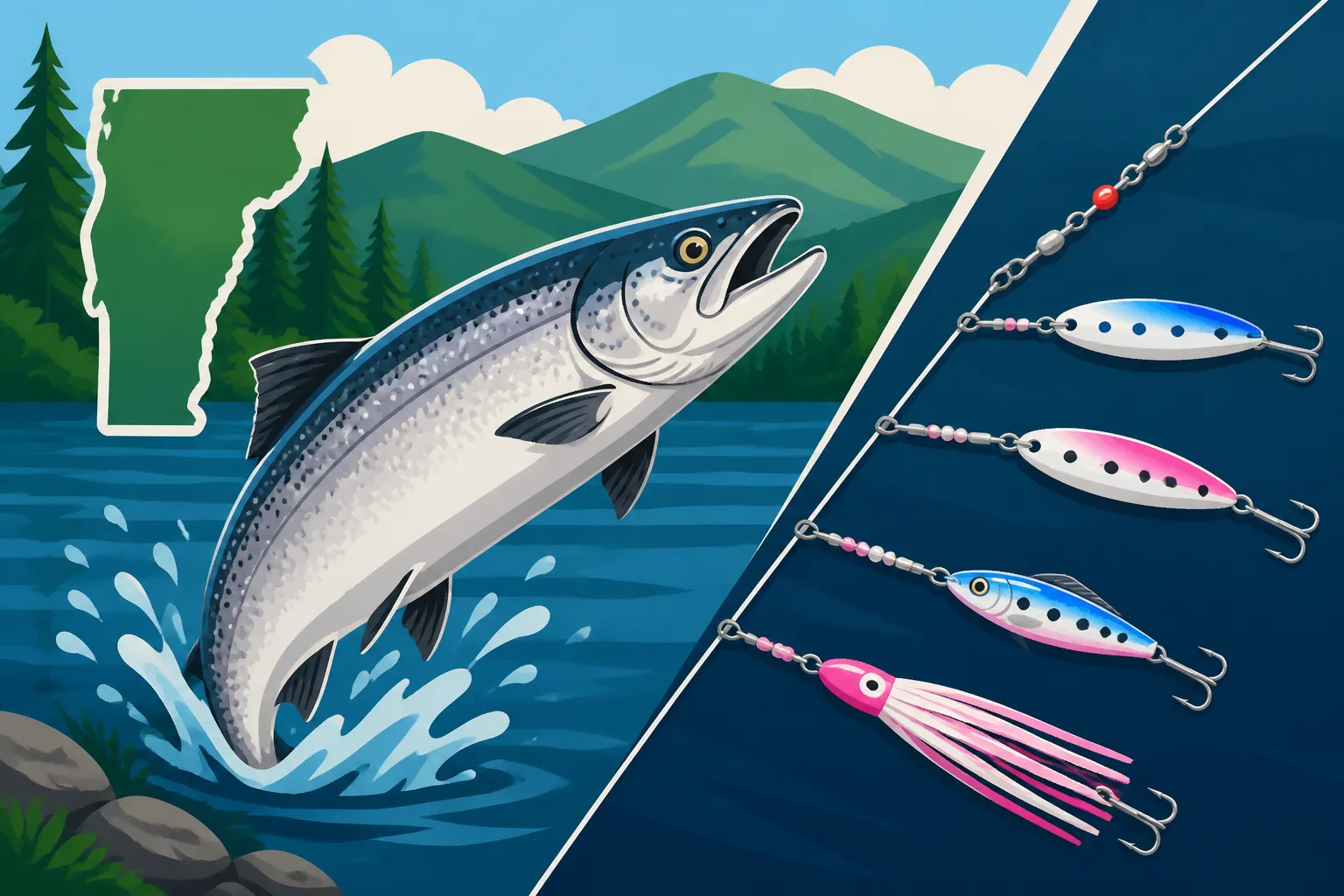
The key to a successful trolling spread lies in diversification – not just in depth, but also in the types and colors of lures you present. Landlocked salmon feed primarily on baitfish like smelt, alewives, and juvenile trout, so your lures should ideally mimic these forage species. Spoons are perhaps the most iconic landlocked salmon lure. Brands like Mooselook, Sutton, and DB Smelt offer a variety of sizes and finishes. Silver, gold, copper, and various patterns (like blue/silver, green/silver, or clown) are all popular. Different spoon designs have different actions, from a wide wobble to a tight flutter, so it's wise to include a few styles. Best lures for walleye trolling on Lake Champlain can give you ideas for general trolling lure types, many of which cross over for salmon.
Stickbaits, or minnow imitators, are another crucial component. These lures often have a more subtle, realistic swimming action and can be particularly effective when salmon are being finicky or when targeting fish closer to the surface. Think about natural baitfish colors, but don't shy away from brighter, more aggressive patterns on cloudy days or in stained water. Small fly patterns, often trolled behind a dodger or flasher, can also be incredibly effective, especially for wary fish. These flies mimic nymphs or small baitfish and can be deadly when salmon are keyed in on subtle presentations. You can find a vast selection of these lures, from classic spoons to new stickbait designs, on platforms like Amazon, making it easy to experiment with different options without running all over creation.
Finally, don't overlook rigged bait. Fresh or frozen smelt, shiners, or even strips of sucker meat can be incredibly potent, especially when presented naturally. Using a bait harness or a simple leader with tandem hooks allows the bait to swim enticingly behind your boat. Sometimes, natural bait is the only thing that will get a strike from a truly stubborn salmon. Varying the color, size, and action across your spread allows you to figure out what the fish want that day. For example, you might run a large, flashy spoon deep on one side, a natural-colored stickbait mid-depth on the other, and a small fly behind a dodger shallower still. This shotgun approach significantly boosts your chances. When you're rigging up, don't forget to review guides like How to rig smelt for landlocked salmon trolling to ensure your bait presentation is perfect.
| Lure Type | Typical Depth Range (with aids) | Best Conditions | Notes |
|---|---|---|---|
| Spoons | 10-60 feet | Bright days, active fish, searching | Flashy, varied sizes/colors, mimic baitfish |
| Stickbaits | 5-30 feet | Clear water, finicky fish, dawn/dusk | Natural swim, effective at shallower depths |
| Flies (with dodger/flasher) | 5-40 feet | Wary fish, subtle presentation, clear water | Mimics small insects/baitfish, adds attraction |
| Rigged Bait (Smelt/Shiners) | 10-50 feet | Slow trolling, stubborn fish, natural scent | Highly effective when salmon are selective |
| Leadcore/Dipsy Diver combos | Variable based on line/setting | Covering multiple depths, no downriggers | Good for broad depth coverage |
Mastering Depth, Speed, and Location for Vermont Landlocked Salmon
Once you've assembled your gear, the real challenge, and the real fun, begins: fine-tuning your approach to match the salmon's preferences. It's a continuous process of observation, adjustment, and learning.
Reading the Water and Your Electronics for Salmon Hotspots
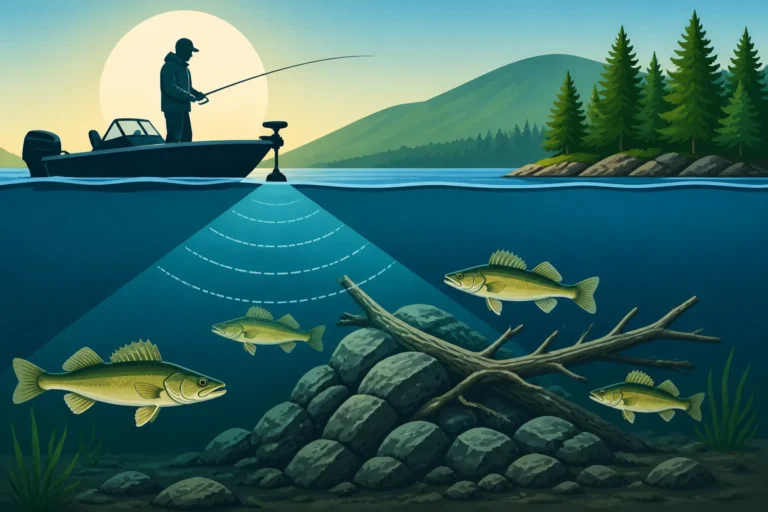
A good fish finder is more than just a depth sounder; it's your window into the underwater world. Learning to interpret the readings from your sonar can dramatically improve your success rate. You're looking for several things: baitfish schools (often appearing as clouds or dense clusters), individual fish arches (especially larger ones near the bait), and the thermocline. The thermocline, as mentioned earlier, is a critical zone where salmon often suspend. Your fish finder should be able to clearly display this temperature stratification. Products from trusted brands like Humminbird or Lowrance are widely available on Amazon, offering various features from basic depth sensing to advanced side-imaging. Understanding your fish finder's capabilities, as explored in Best Fish Finders for Vermont Lakes, is crucial.
Beyond identifying depths, pay attention to underwater structure like humps, points, drop-offs, and submerged rock piles. Salmon, especially larger ones, will often relate to these features, using them as ambush points or resting areas. If you mark fish or bait over a specific piece of structure, make multiple passes over that area. Even without fancy electronics, "reading the water" involves observing surface activity like diving birds, which often indicate baitfish schools near the surface, or subtle swirls that might betray a feeding salmon. Keep a watchful eye on areas where streams or rivers feed into the lake, as these can create current breaks or bring in cooler, oxygenated water.
Adjusting Your Spread for Seasonal Changes and Daily Conditions
The effectiveness of your trolling spread is highly dependent on adapting it to the changing seasons and daily conditions. Vermont's lakes undergo significant transformations throughout the year, and so do the salmon.
-
Spring: Post-Ice Out and Surface Action: Right after the ice melts, salmon are often found higher in the water column, even near the surface. The entire lake is cold and well-oxygenated, and baitfish haven't yet retreated to the depths. This is a prime time for targeting them with shallow-running stickbaits, spoons, or even flies pulled behind a small planer board or without any additional weight. Focus on areas where tributaries flow in, as these can be early feeding grounds. This is a great time to experiment with bolder colors as the fish are often aggressive. Vermont Trout Opening Day Traditions might inspire some early season fishing.
-
Summer: Deep Water Thermocline Tactics: As surface waters warm up, landlocked salmon descend to cooler, deeper parts of the lake. This is when your downriggers, leadcore, and dipsy divers become indispensable. You'll want to precisely target the thermocline, which can be anywhere from 20 to 60 feet deep, depending on the lake and year. Your fish finder will be your best friend here. Focus on the coolest, most oxygenated water where baitfish are abundant. Lure colors might become more subdued, mimicking the natural forage found in deeper, dimmer light. Slowing your trolling speed can also be beneficial in the summer heat.
-
Fall: Pre-Spawn Aggression and Returning to Shallows: As water temperatures begin to cool again in the fall, salmon become very active, often exhibiting aggressive feeding behavior in preparation for spawning. They will begin to move shallower, sometimes even chasing baitfish to the surface, especially during low-light conditions. This transitional period often allows for a mix of shallow and mid-depth presentations. Both flashy spoons and natural stickbaits can be very effective. This can be one of the most exciting times to fish, as salmon are often strong and put up a fantastic fight. Knowing when and where to find them is key, and resources like Best Time of Day to Catch Landlocked Salmon can further guide your strategy.
Beyond seasonal shifts, daily conditions like wind, cloud cover, and even barometric pressure can dictate how and where salmon feed. On windy days, fish might be more active as the chop disrupts the surface and concentrates baitfish. On calm, bright days, they might hold tighter to structure or go deeper. Always be ready to make micro-adjustments to your spread – a slight change in speed, a different lure color, or adjusting a depth by just a few feet can make all the difference.
Disclaimer
This article is for general informational purposes only and does not constitute professional advice. Laws, prices and regulations vary by location and change over time. Consult a qualified professional for guidance on your specific situation.